ICSE Class 10 Computer Applications: Revision Guide
The complete ICSE Class 10 Computer Applications revision guide: paper structure, topic-by-topic notes, 70 executed Java programs, and a 4-week plan.
Read ArticleInsights, tutorials, and stories about coding and technology education
The complete ICSE Class 10 Computer Applications revision guide: paper structure, topic-by-topic notes, 70 executed Java programs, and a 4-week plan.
Read Article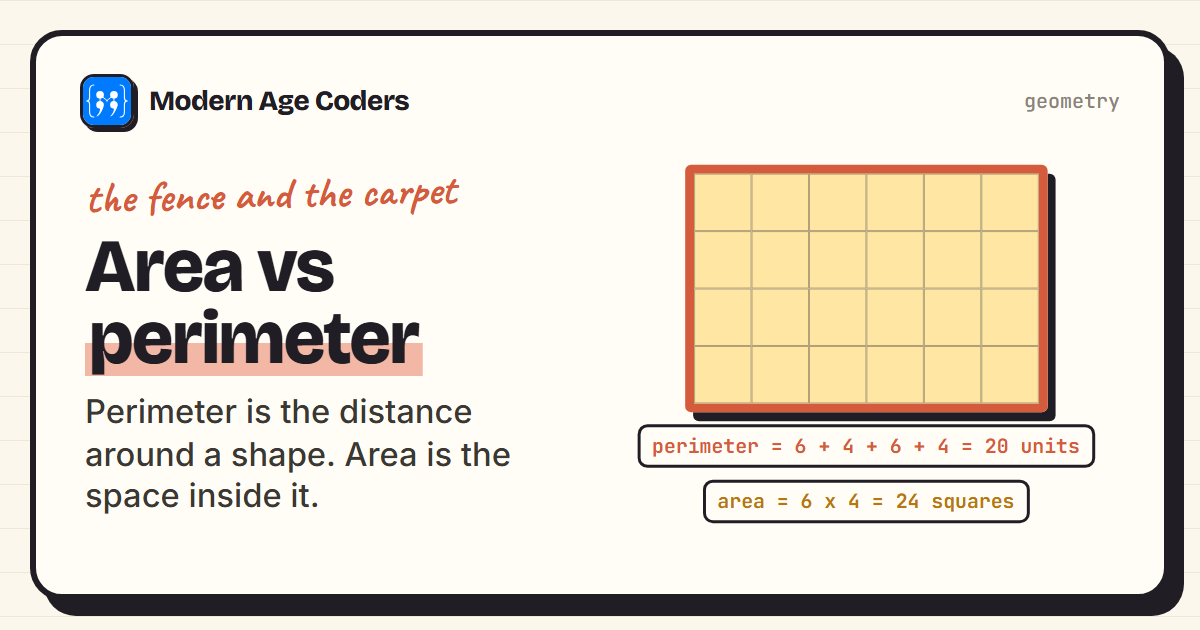
Area vs perimeter explained: what each measures, formulas and units, why one perimeter can give different areas, L-shapes, circles and common mistakes.
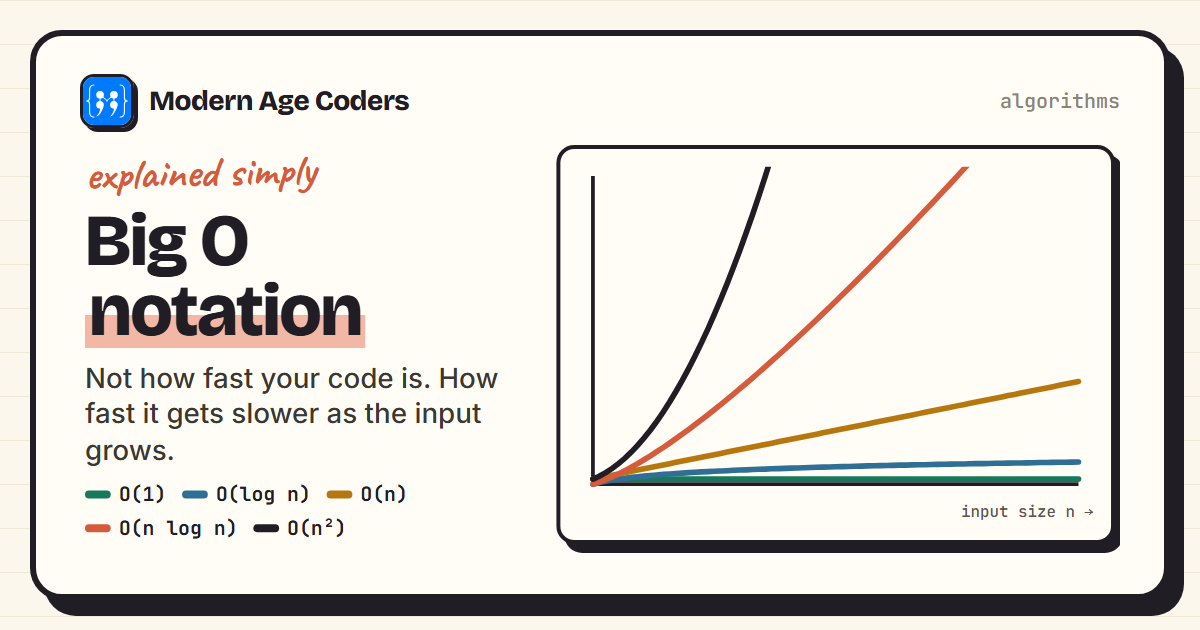
Big O notation explained simply: what O(1), O(log n), O(n) and O(n squared) mean, how to read them from code, with step counts and timings measured.
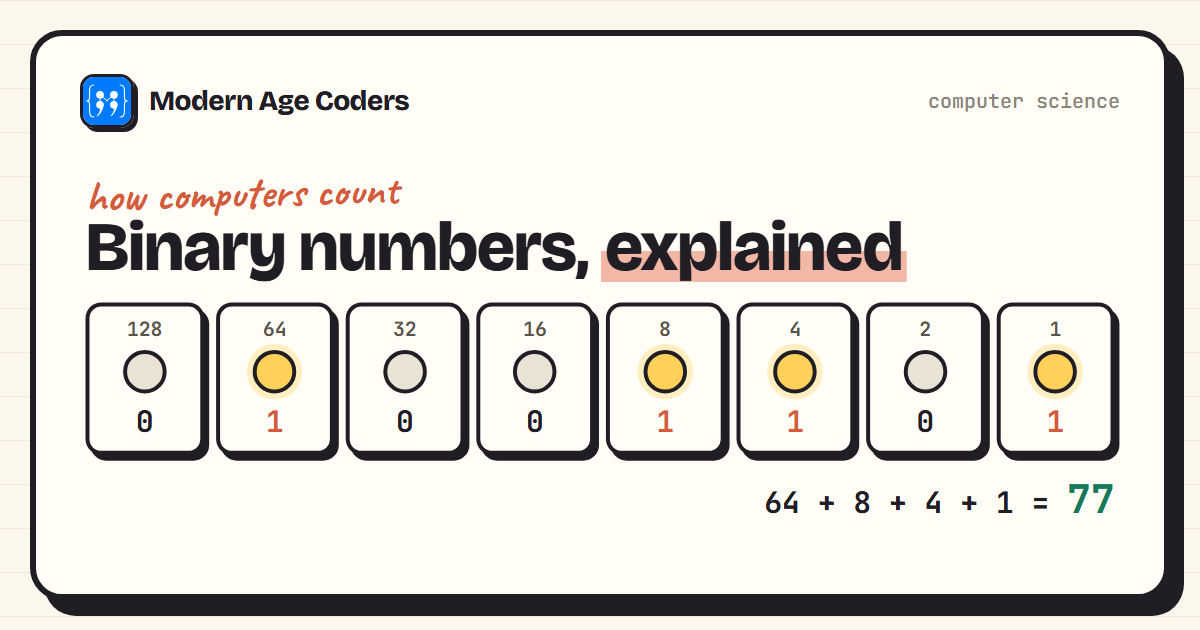
Binary numbers explained simply: why computers use binary, how to convert binary to decimal and back, counting, bits and bytes, addition, overflow and hex.
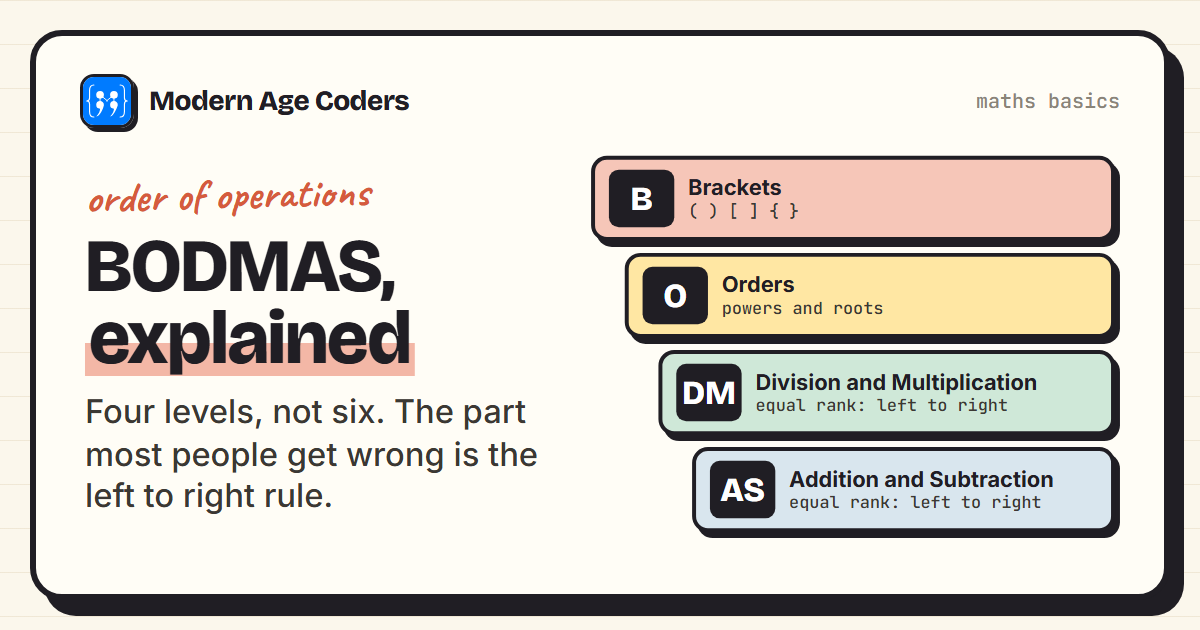
BODMAS explained with worked examples: what each letter means, the left to right rule most people miss, PEMDAS vs BIDMAS, and why 6/2(1+2) is argued.
Coding interview preparation for freshers: what each round tests, a 12-week plan, and how to think out loud, with a worked problem timed two ways.
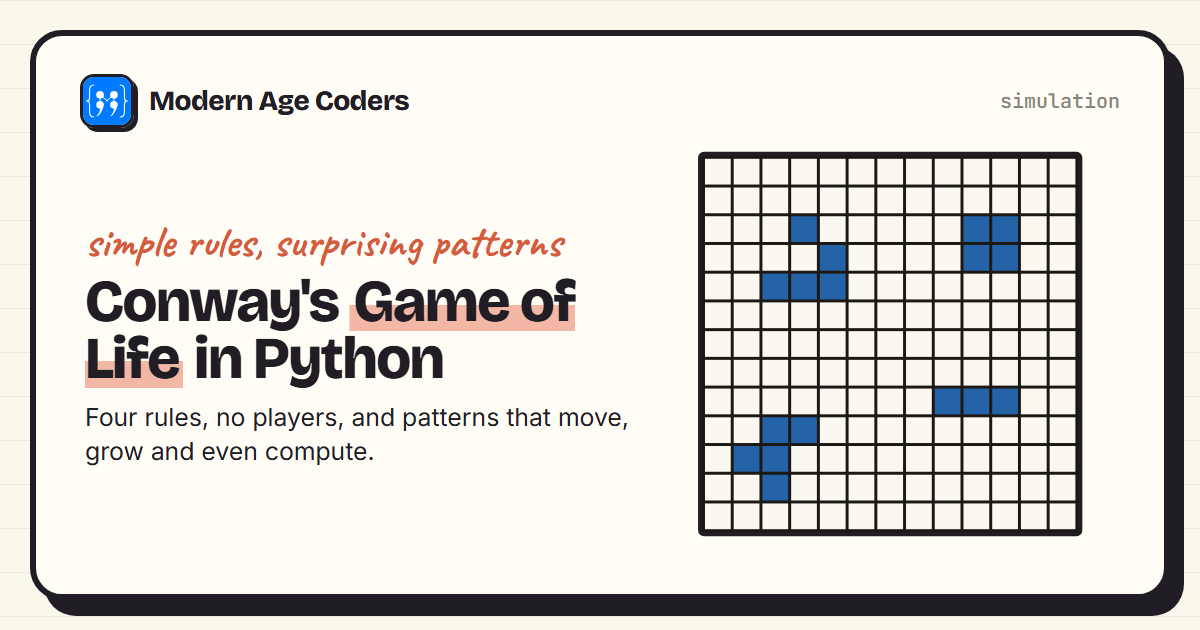
Conway's Game of Life: the four rules, a ten-line Python simulation, gliders and oscillators, and the R-pentomino's 1,103 generations, verified.
Dijkstra's algorithm step by step on a small town map, why greedy shortcuts fail, and how A* checks far fewer places, all run in Python.
What OpenAI and a Stanford study found about AI detectors, why they flag plain human writing, and what to do if you are wrongly accused.
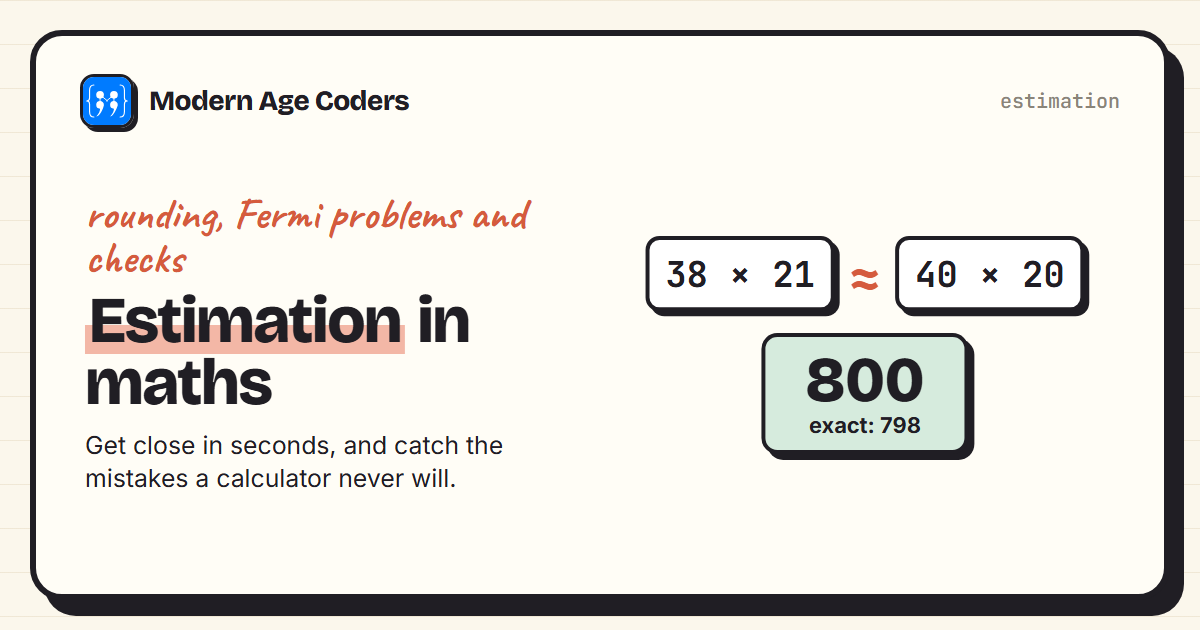
How to estimate in maths: round to 1 significant figure, how accurate it really is, Fermi problems, and using estimates to catch mistakes.
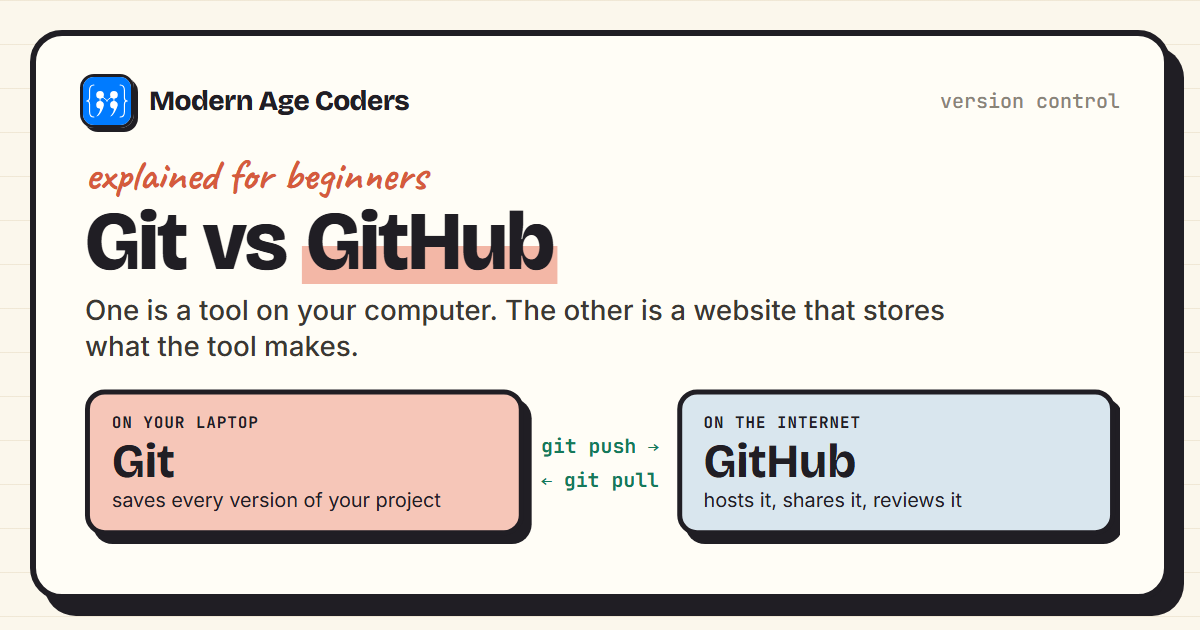
Git vs GitHub explained: Git tracks versions on your computer, GitHub hosts them online. See a real Git session, branches, and where GitHub fits in.
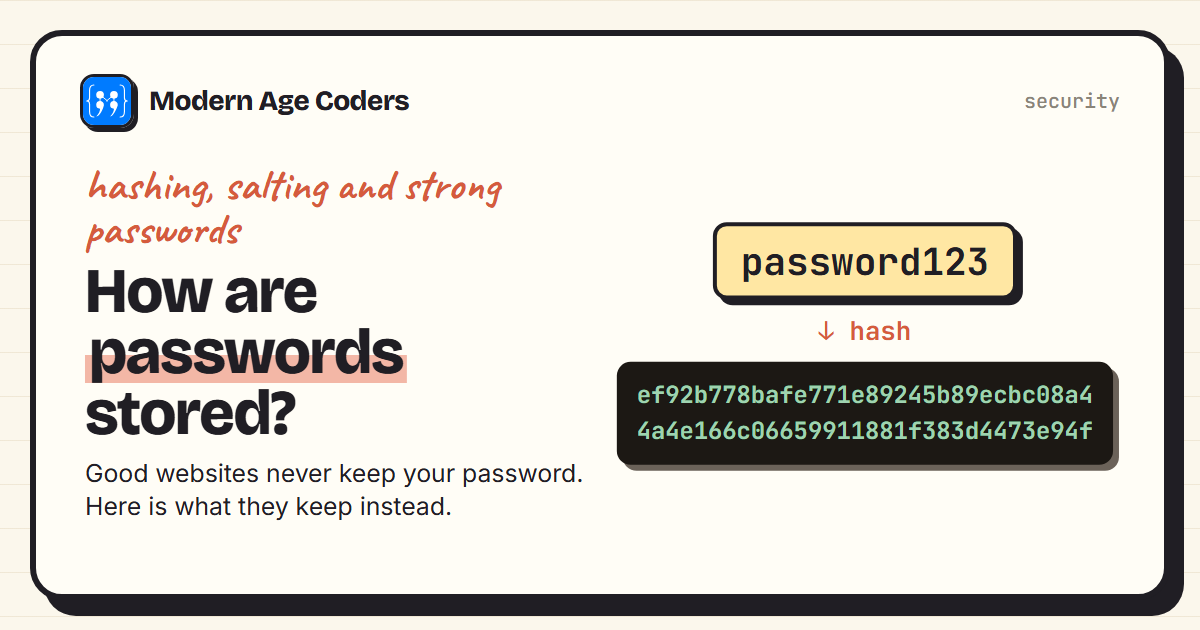
How websites store passwords: hashing, why salts matter, why slow hashes stop attackers, and what makes a strong password, with Python demos.
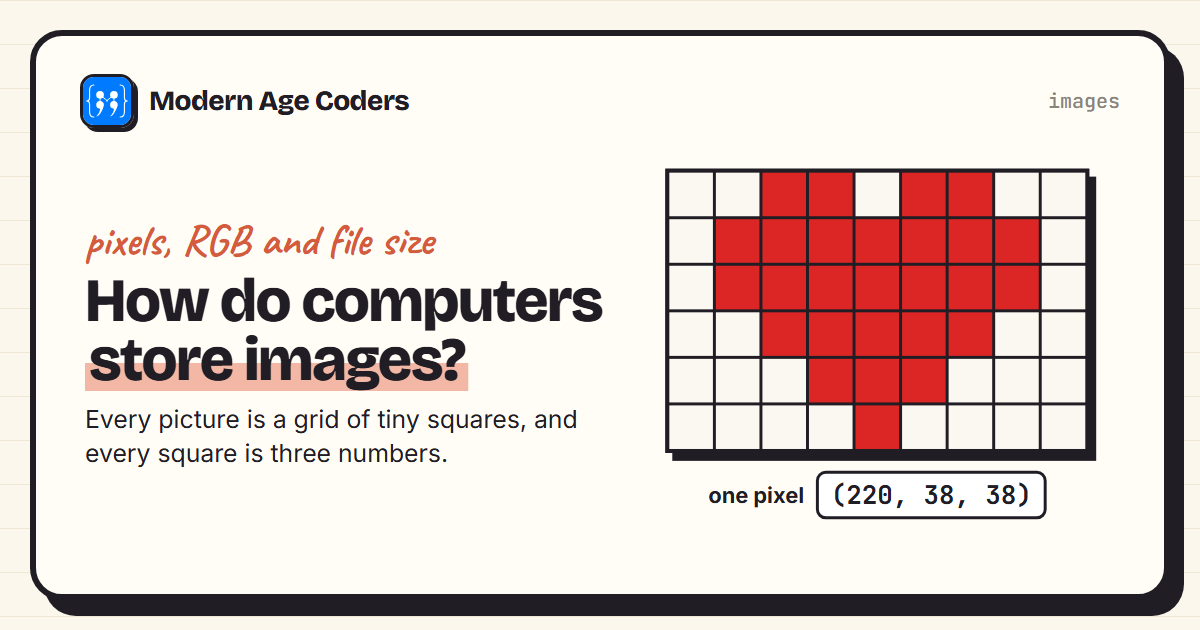
How computers store pictures: pixels, RGB and hex colours, greyscale, and a measured comparison of PNG and JPEG file sizes in Python.
How search engines crawl, index and rank pages: build a tiny one in Python with TF-IDF, then run PageRank on this blog's real links.
How spam filters work: build a Naive Bayes filter in Python, see what it learns, the mistake it makes, and the false alarm trade-off.
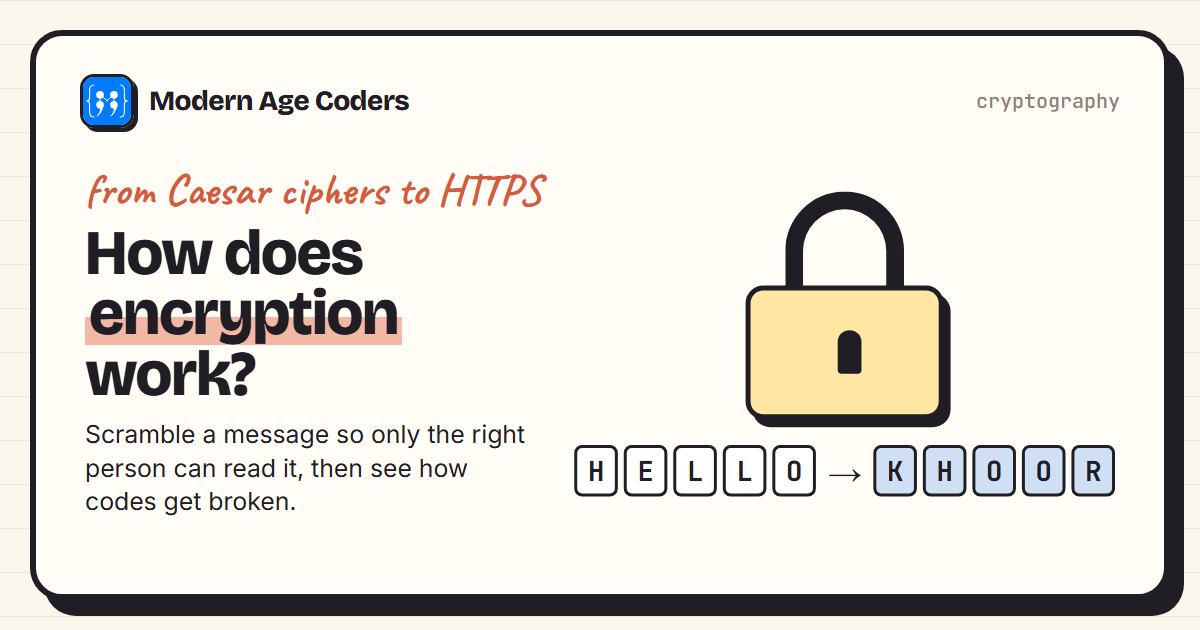
How encryption works, from the Caesar cipher to HTTPS: build and break ciphers in Python, then see how strangers agree a secret key in public.
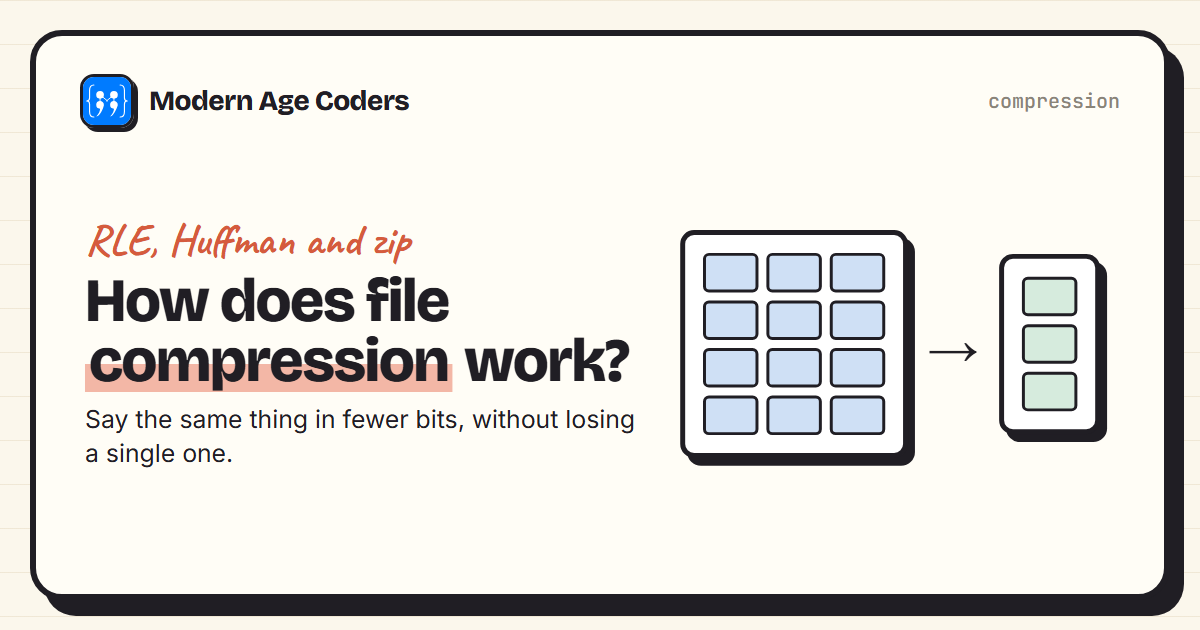
How compression works: build run-length encoding and Huffman coding in Python, measure zlib on real data, and see why random data won't shrink.
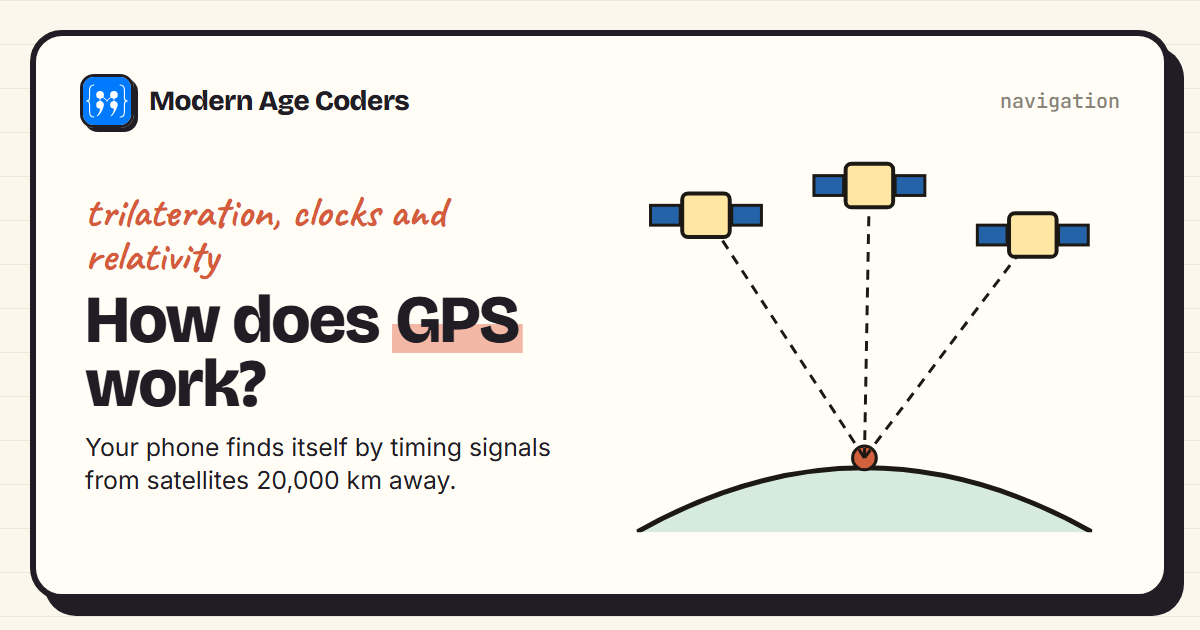
How GPS finds your location: distance from signal timing, trilateration in Python, why four satellites are needed, and the relativity correction.
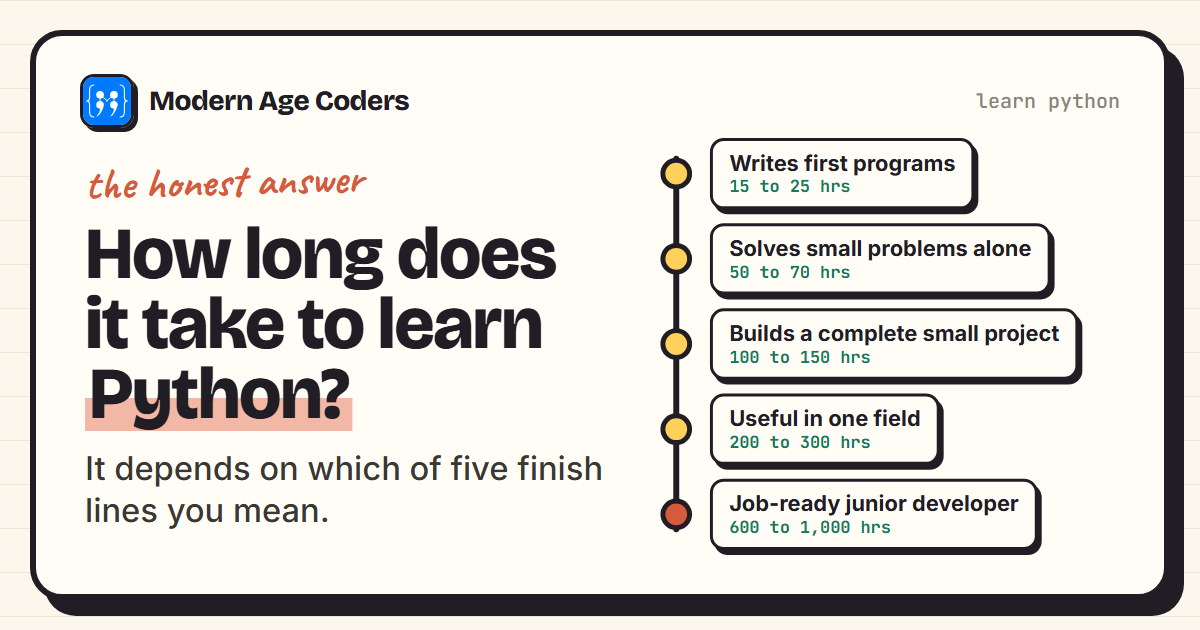
How long it takes to learn Python, split into five milestones with hour estimates, calendar time by schedule, age and goal, and self-tests.
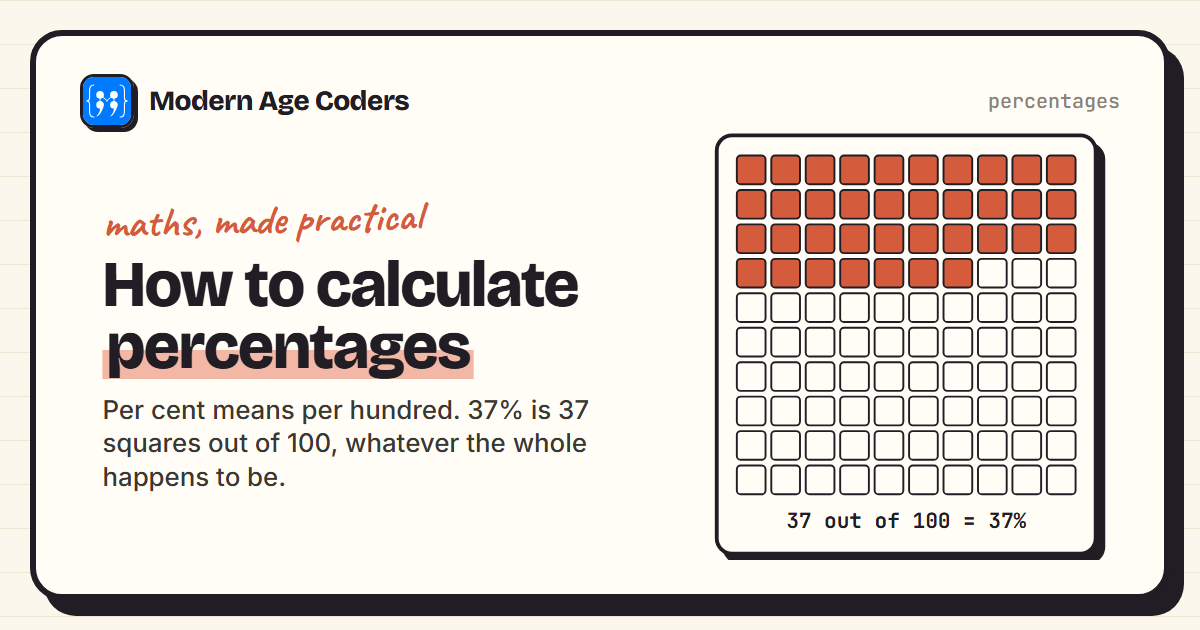
How to calculate percentages: in your head with 10% and 1%, the swap trick, percentage change, reverse percentages, exam marks and common traps.
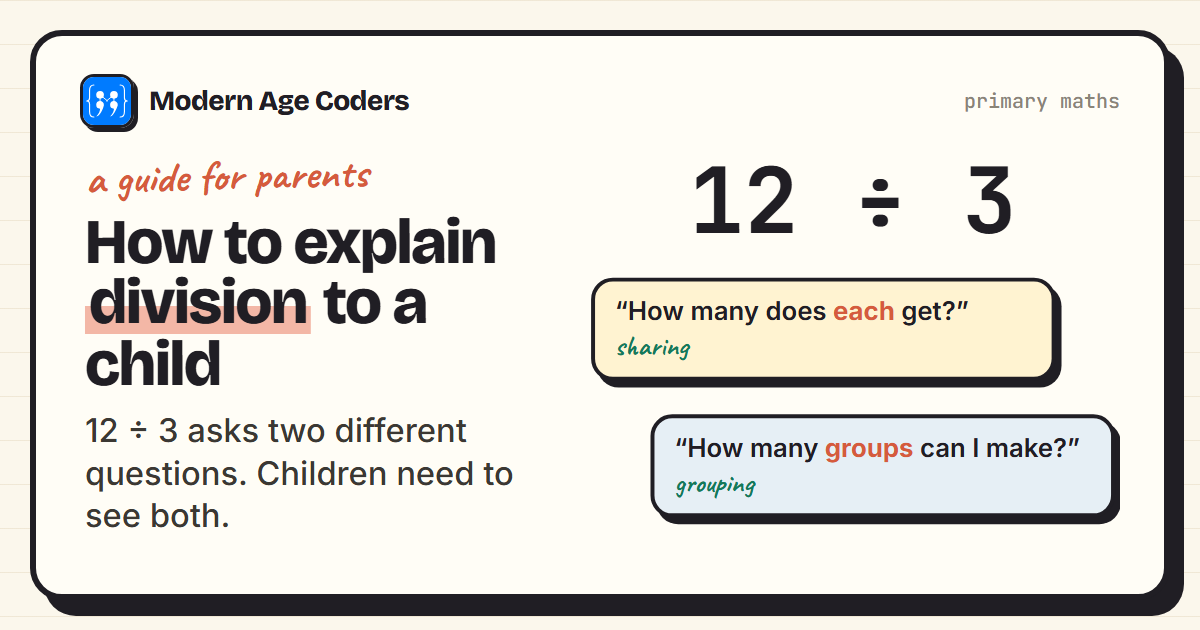
How to explain division to a child: sharing vs grouping, arrays and fact families, remainders in real life, dividing by zero, and the order to teach it.
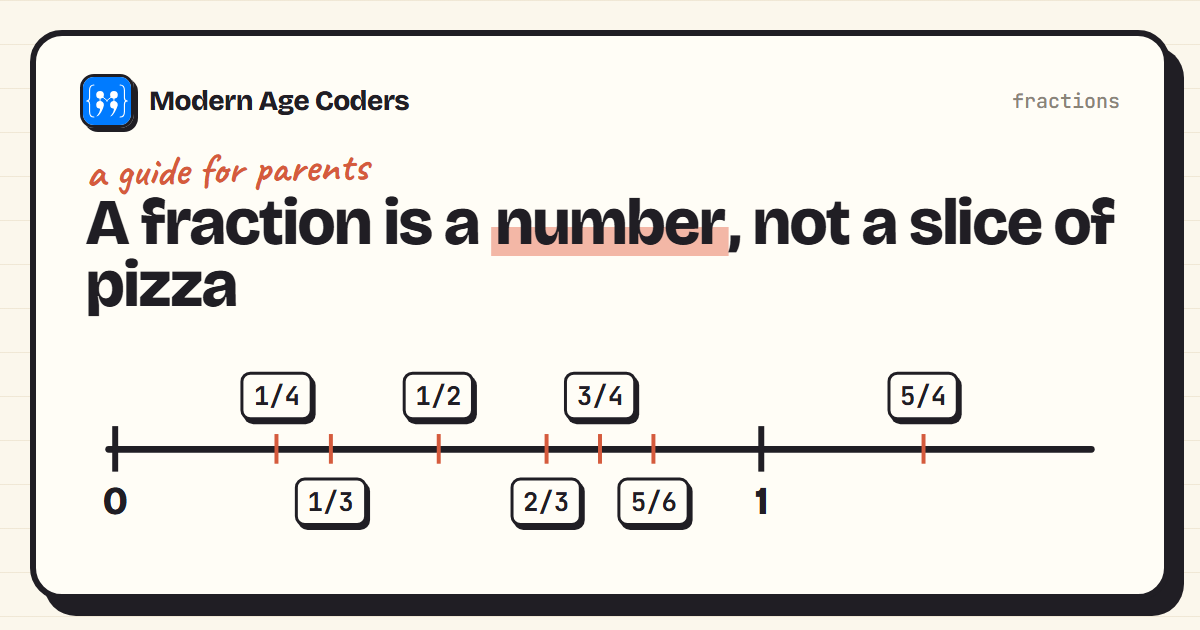
How to help a child understand fractions: the 4 misconceptions behind most mistakes, the number line, fraction walls, the right order, and home activities.
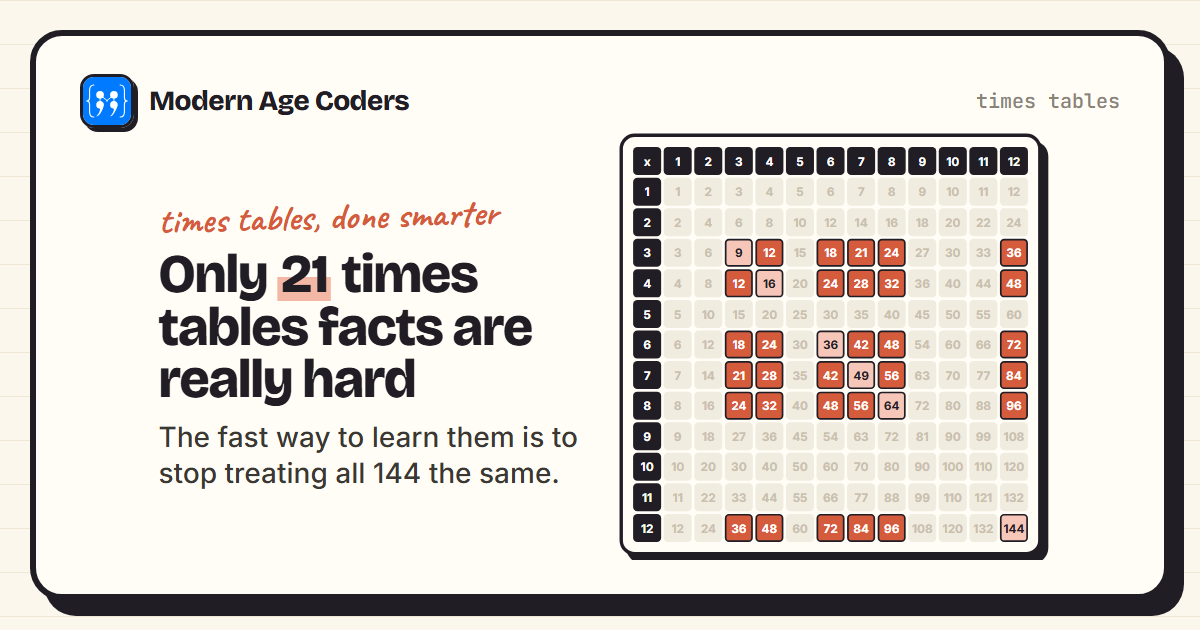
How to learn times tables fast: why only 21 facts are really hard, the best order to learn them, strategies for each table, and a 5-minute daily method.
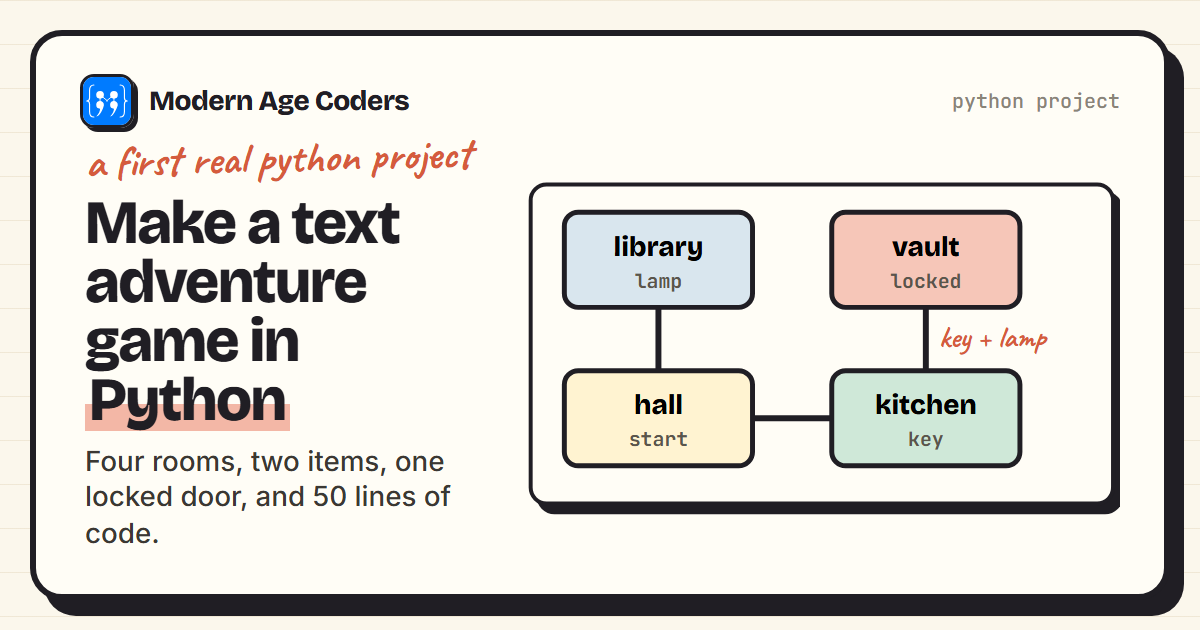
Build a text adventure game in Python: rooms in a dictionary, the game loop, items, a locked door and a win condition, with a real tested playthrough.
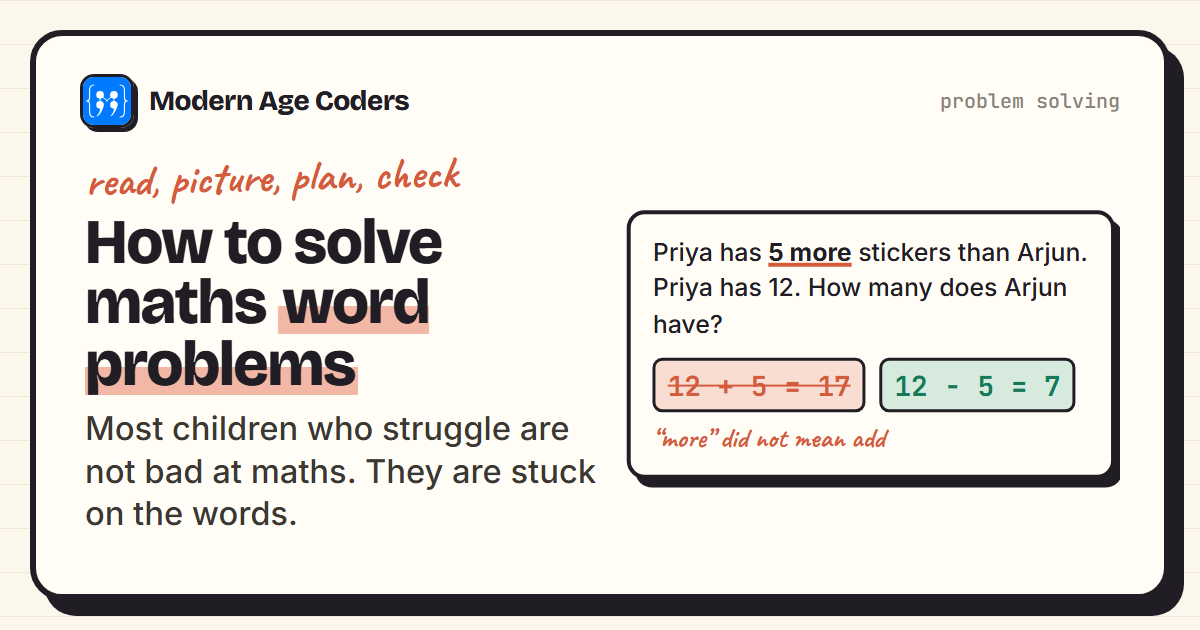
How to solve maths word problems: why children struggle, why the keyword trick fails (tested in code), a four-step method with bar models, and checks.
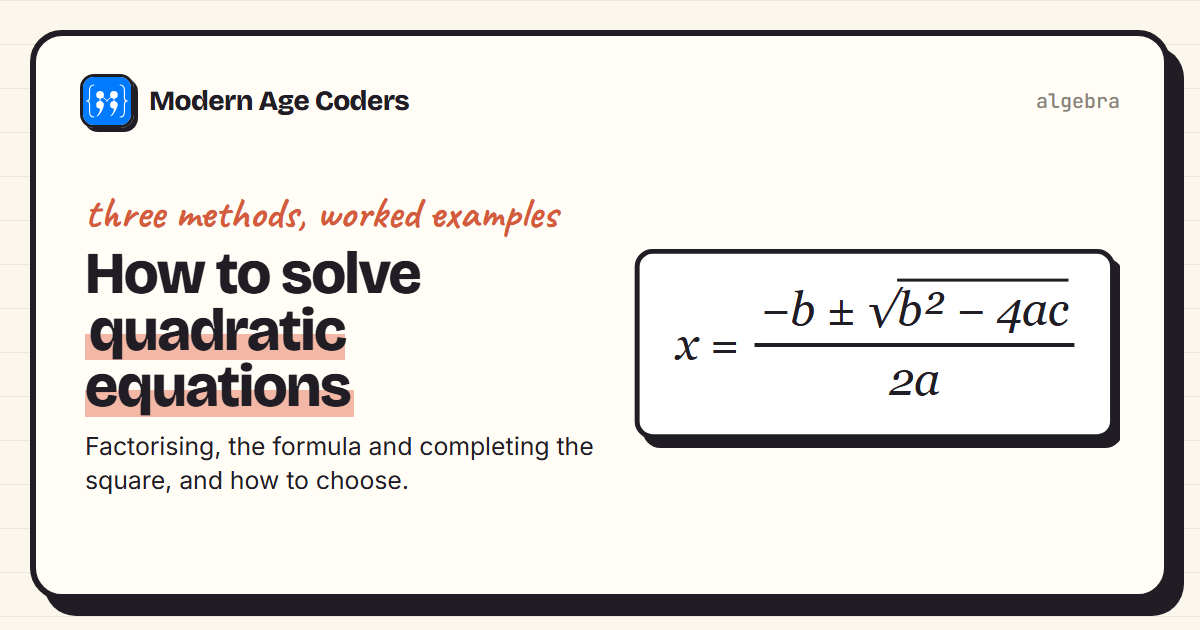
Solve quadratic equations by factorising, the quadratic formula and completing the square, with the discriminant, a real example and Python checks.
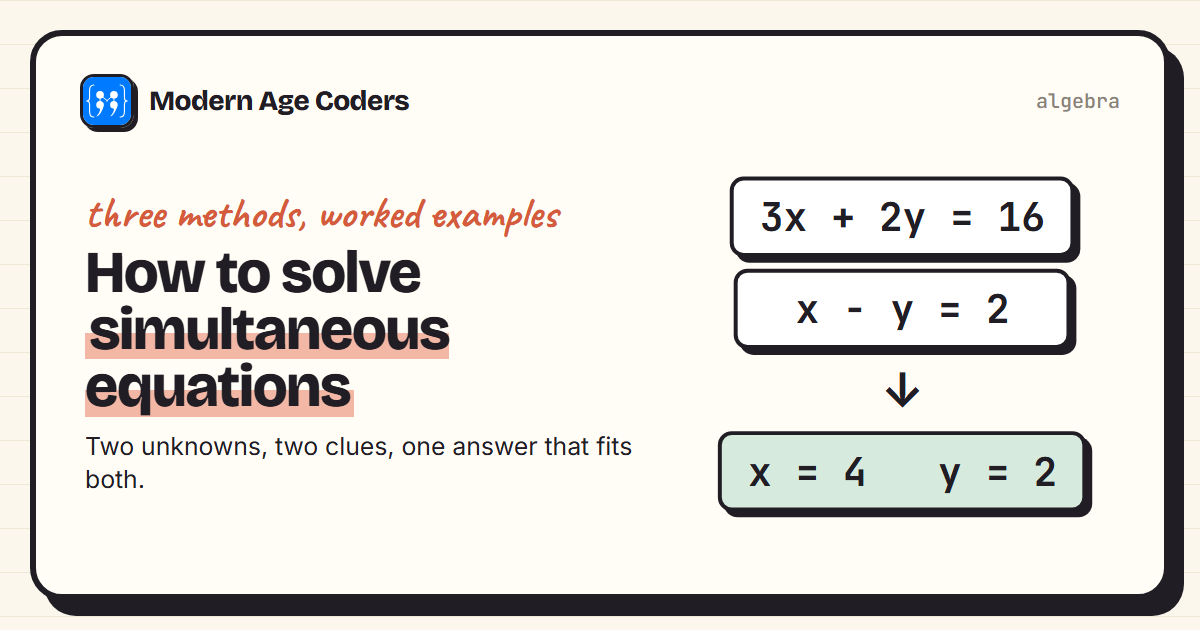
Solve simultaneous equations by elimination, substitution and graphs, with worked examples, word problems and a Python checker.
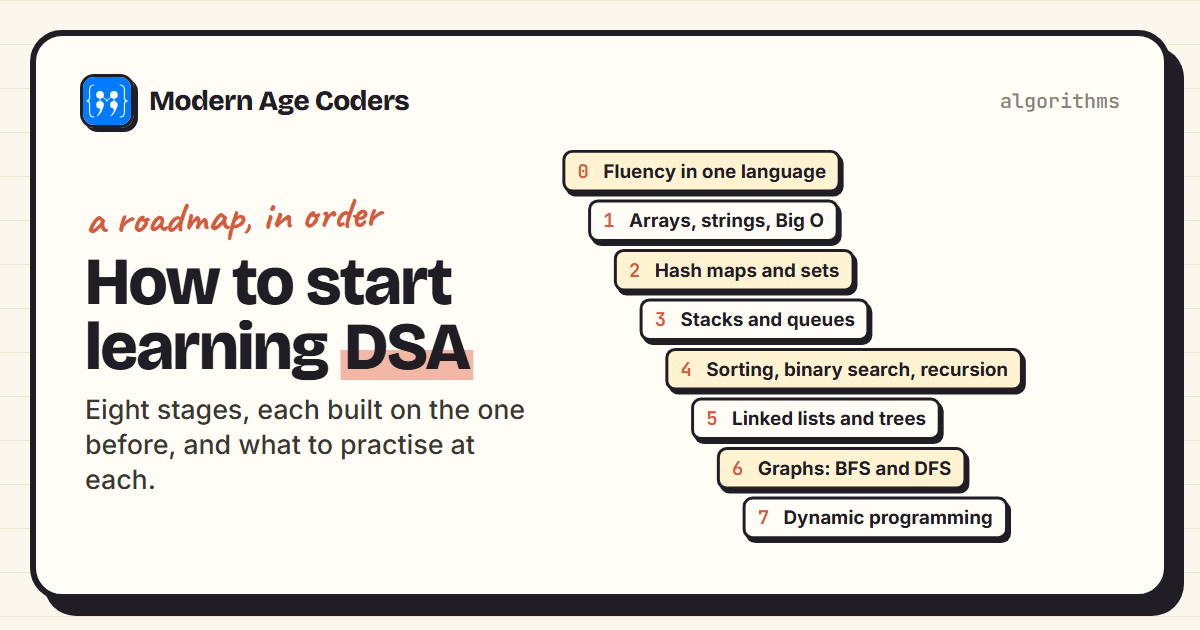
How to start learning DSA: an eight-stage roadmap in order, stacks, queues, hash maps and binary search in real code, and a weekly practice routine.
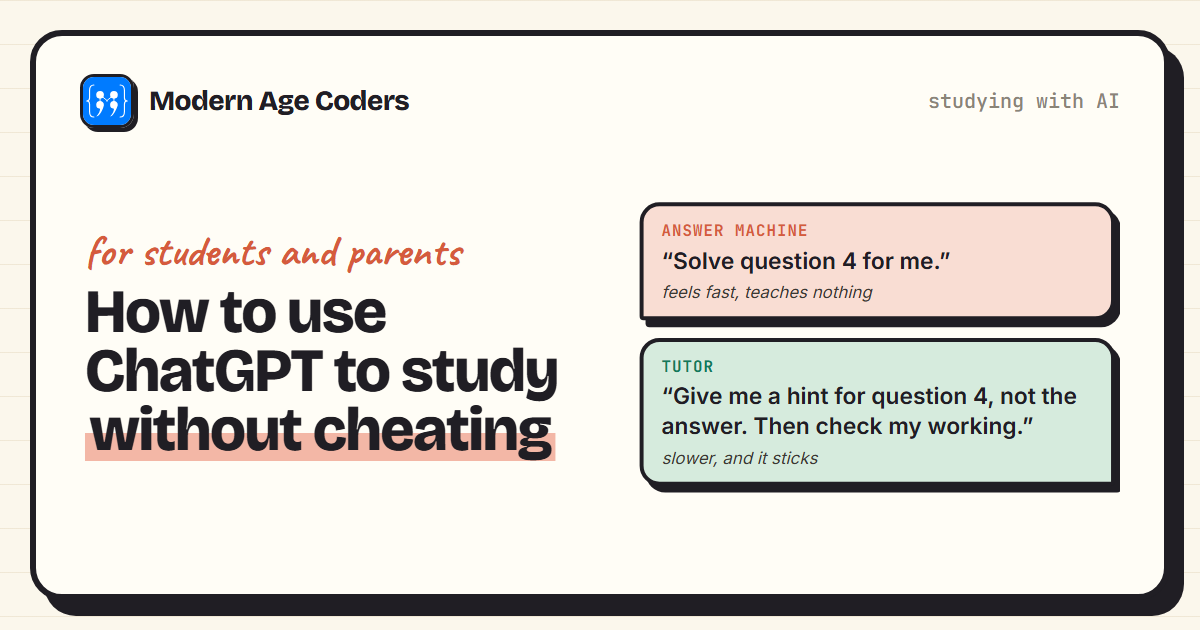
How to use ChatGPT to study without cheating: what research found, six prompts that make AI a tutor, where the line is, and how to catch wrong answers.
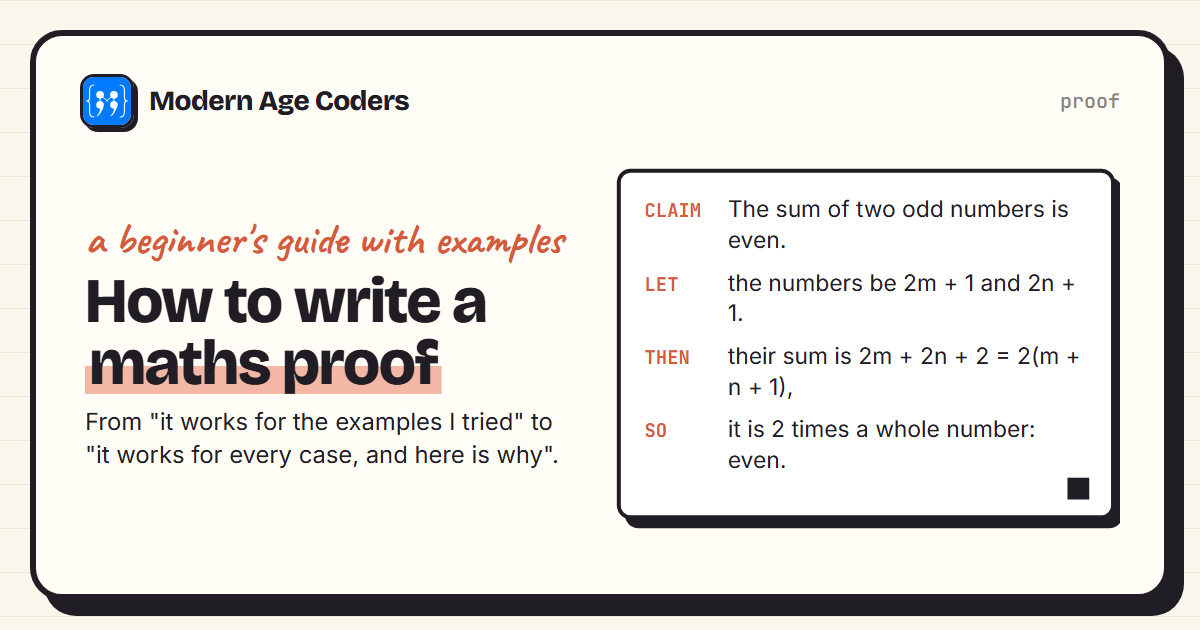
What a proof is, why examples are not enough, and four methods (direct, contradiction, induction, counterexample) with worked examples.
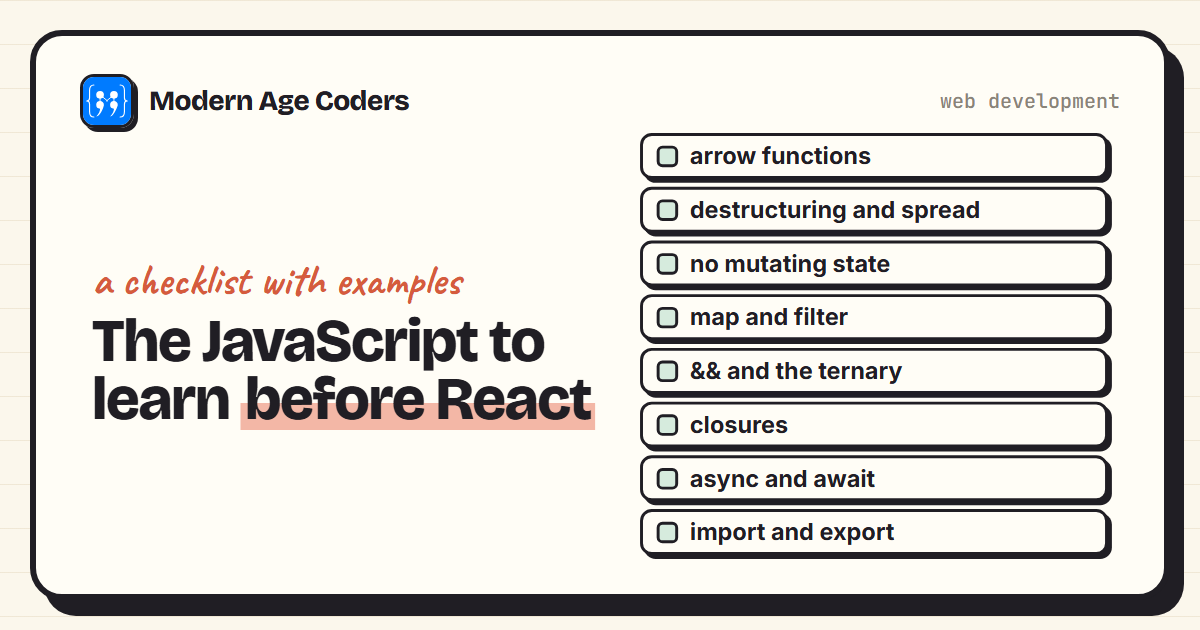
The JavaScript React relies on: spread, map, &&, closures, async and more, each with a runnable example, plus a readiness test and a learning order.
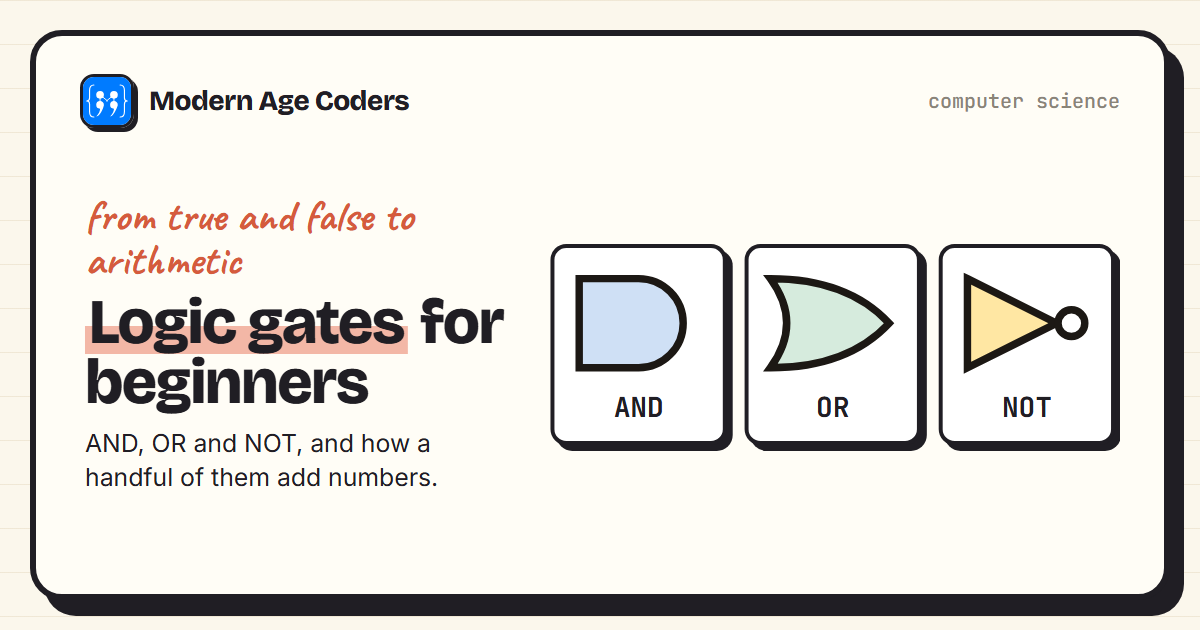
Logic gates and truth tables for beginners, then a working binary adder built from gates in Python and checked against all 256 pairs.
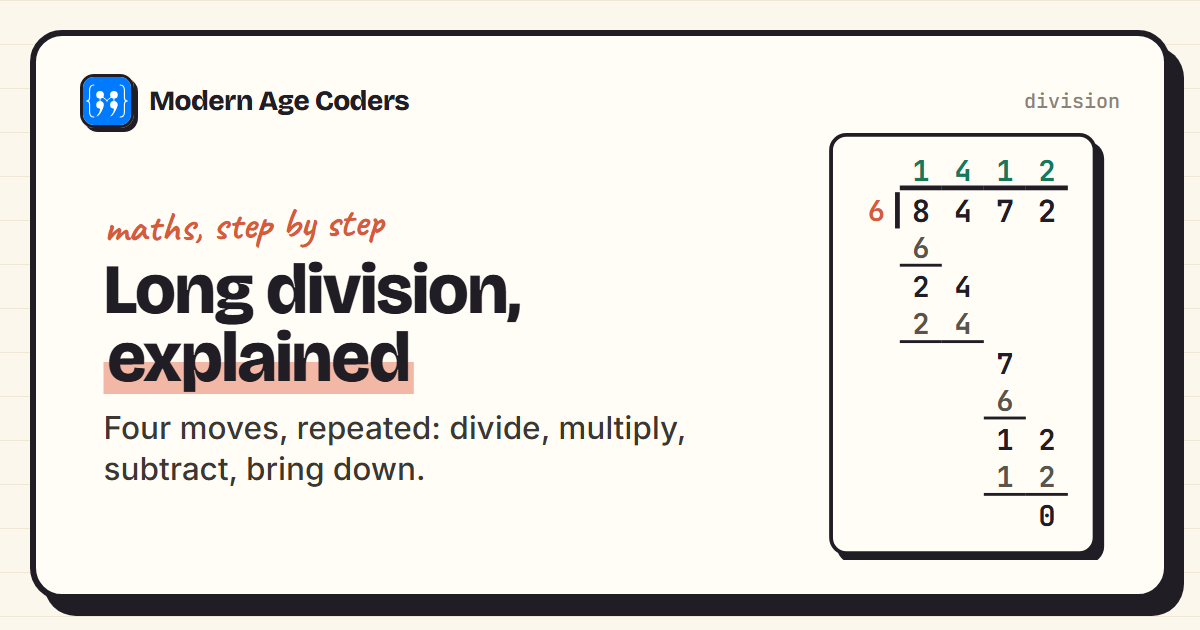
Long division step by step: the four moves, worked examples with remainders, the missing zero mistake, two-digit divisors, and why the method works.
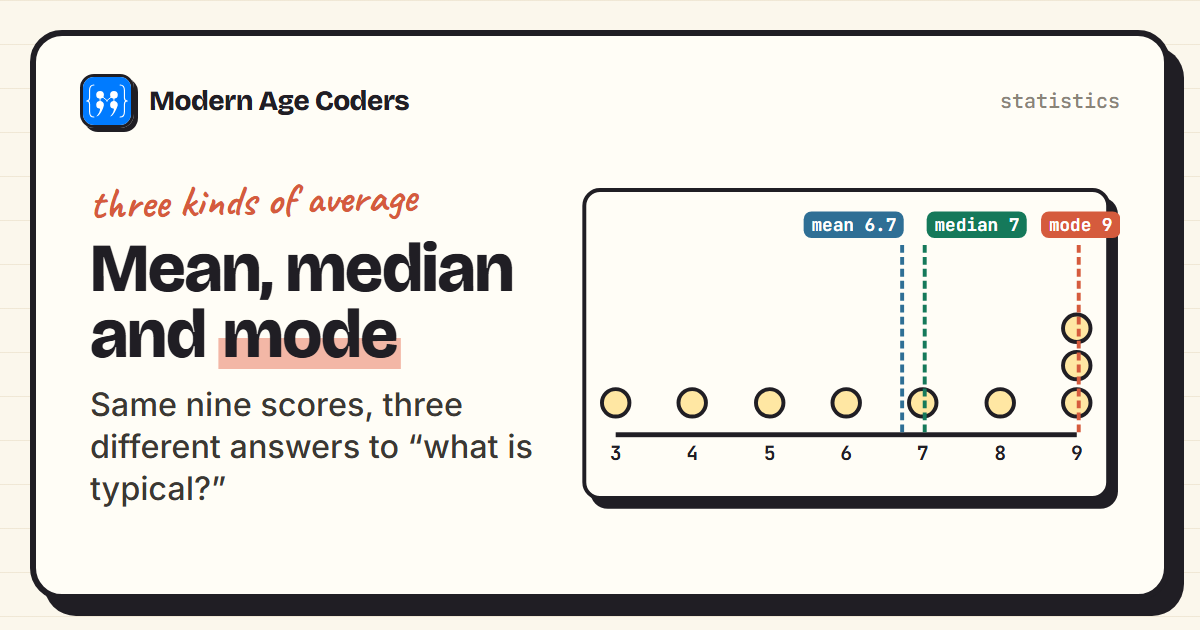
Mean, median and mode explained with worked examples: how to find each, the median of an even set, multiple modes, outliers, frequency tables.
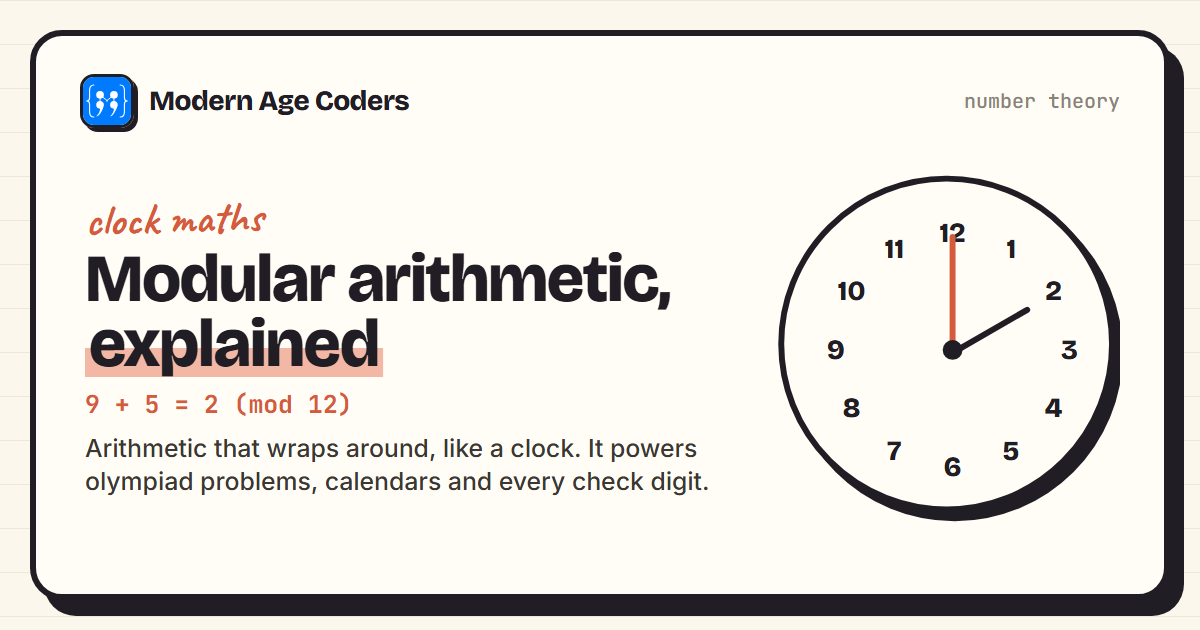
Modular arithmetic from the clock up: last digits of huge powers, why divisibility rules work, ISBN check digits, and the negative-mod trap.
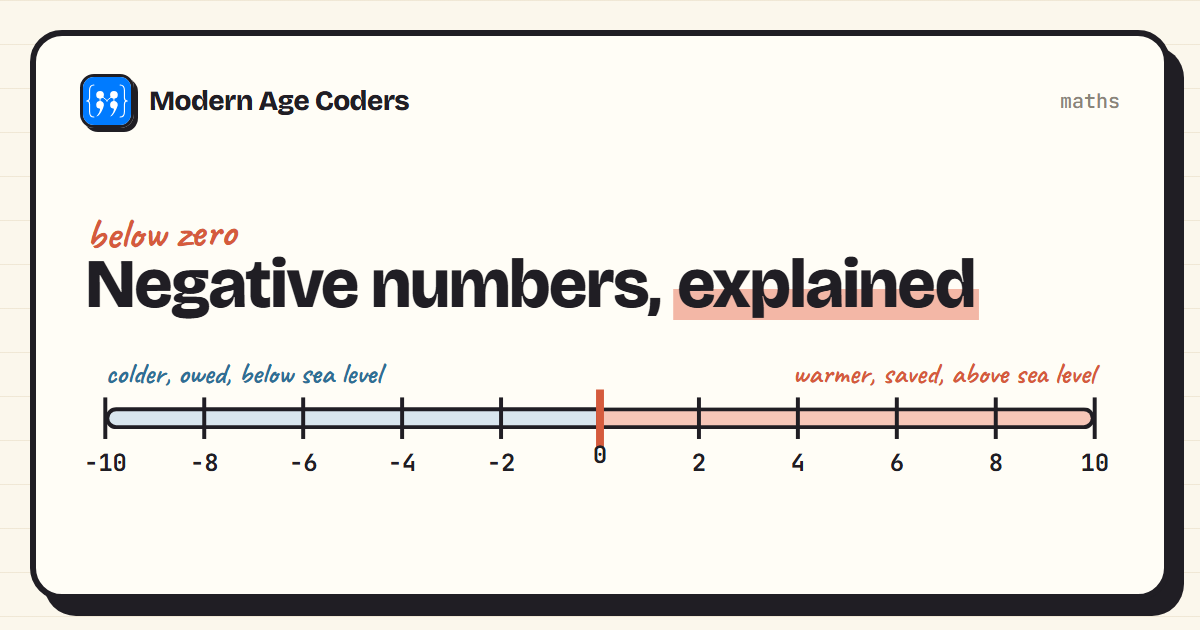
Negative numbers explained: comparing them on a number line, adding and subtracting, why a negative times a negative is positive, and the squaring trap.
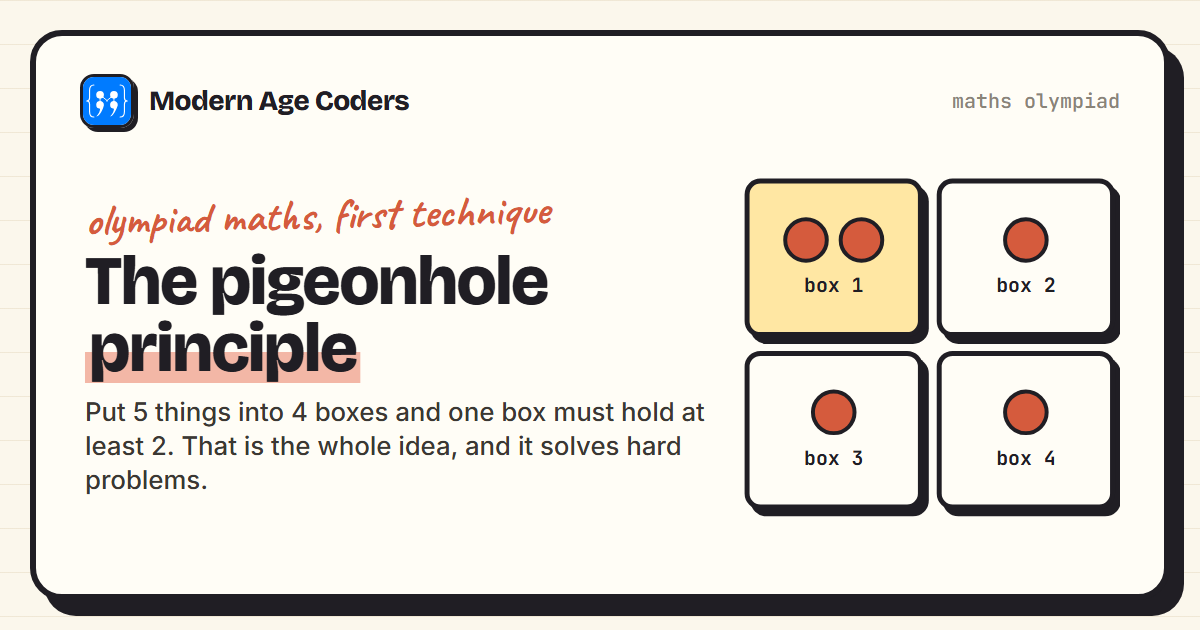
The pigeonhole principle explained with four olympiad-style problems, the general version, and results checked in Python across 59,049 cases.
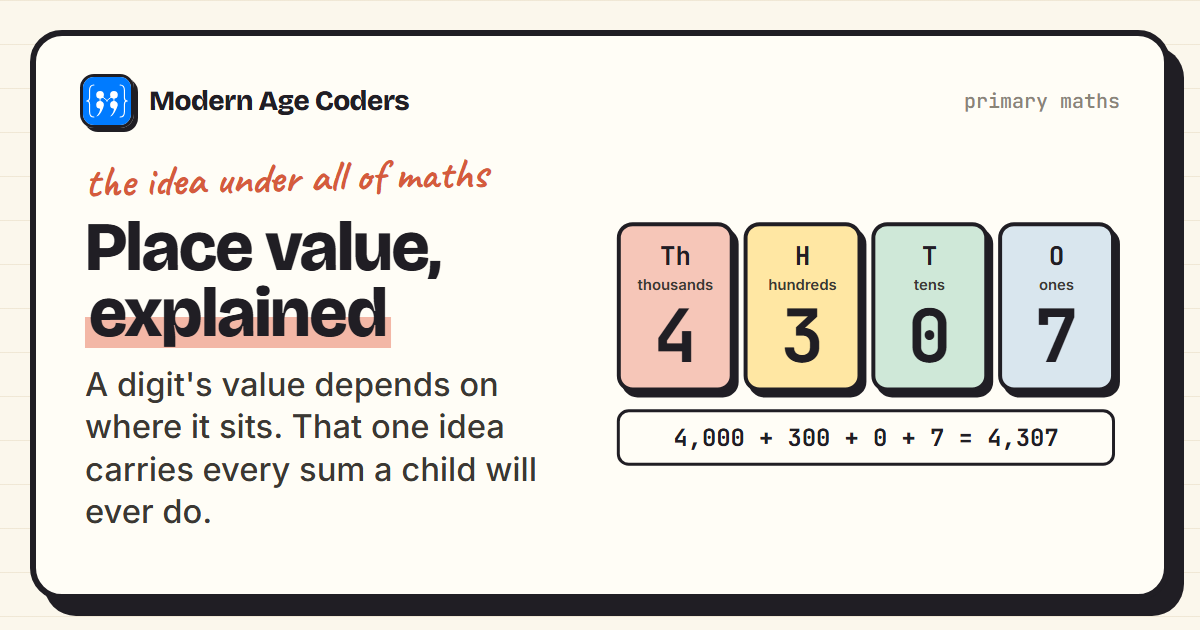
Place value explained for parents and students: teaching it with objects, why zero matters, regrouping, decimals, and Indian vs international numbering.
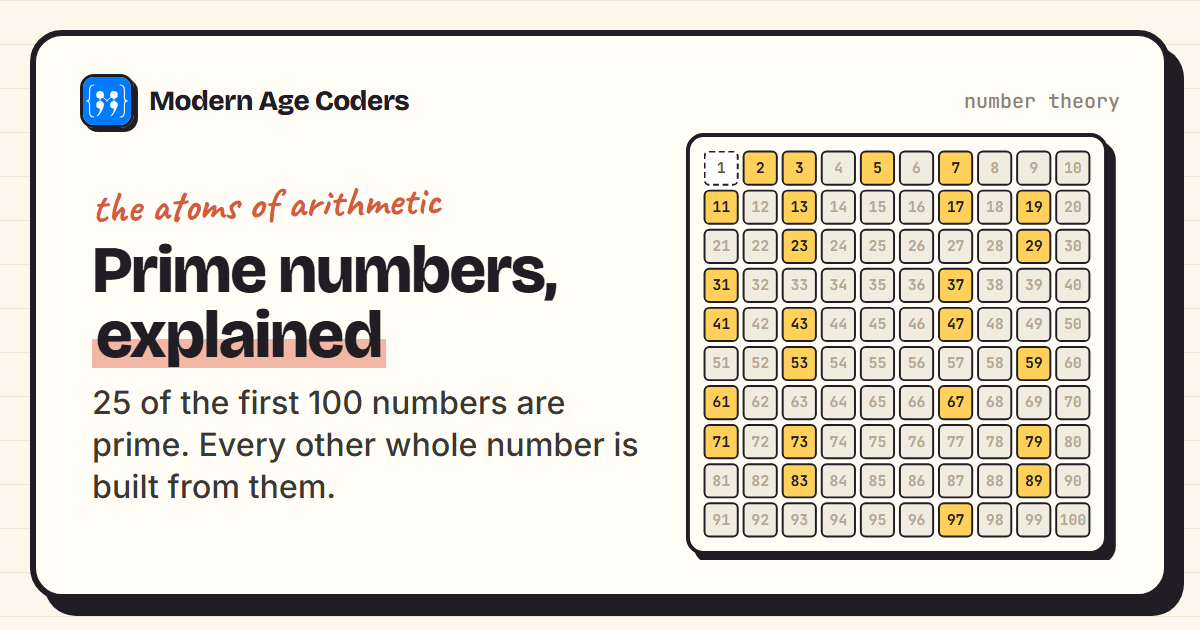
Prime numbers explained: what they are, why 1 is not prime, the sieve of Eratosthenes, prime factorisation, why primes never run out, and real uses.
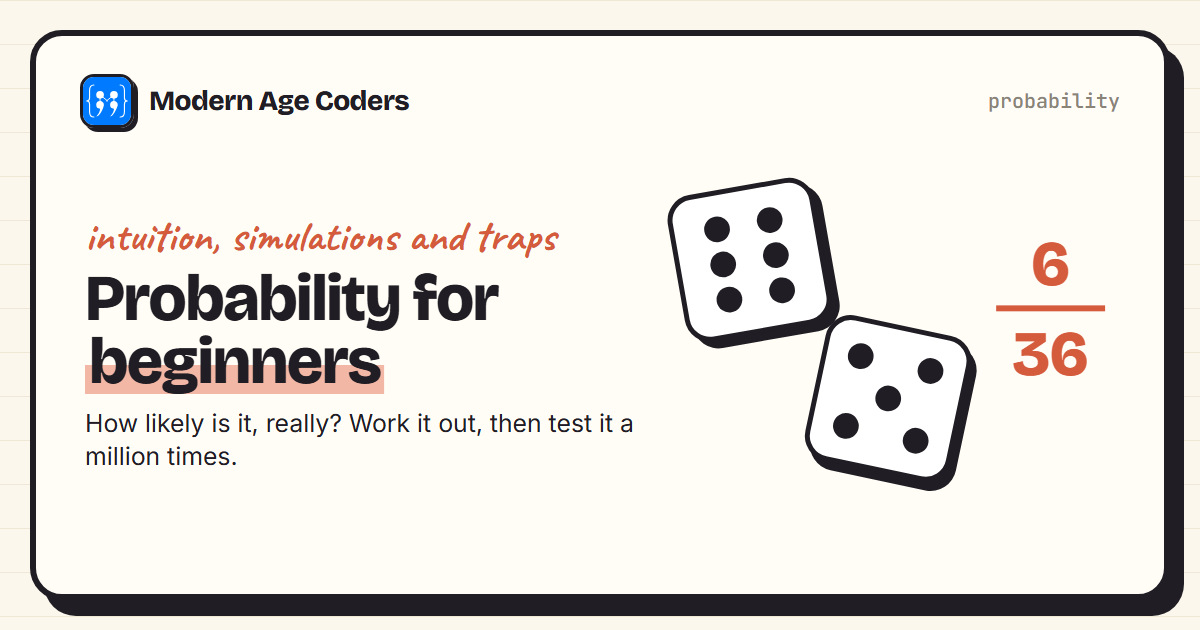
Learn probability from scratch: two dice, the law of large numbers, the gambler's fallacy and Monty Hall, each tested by a Python simulation.
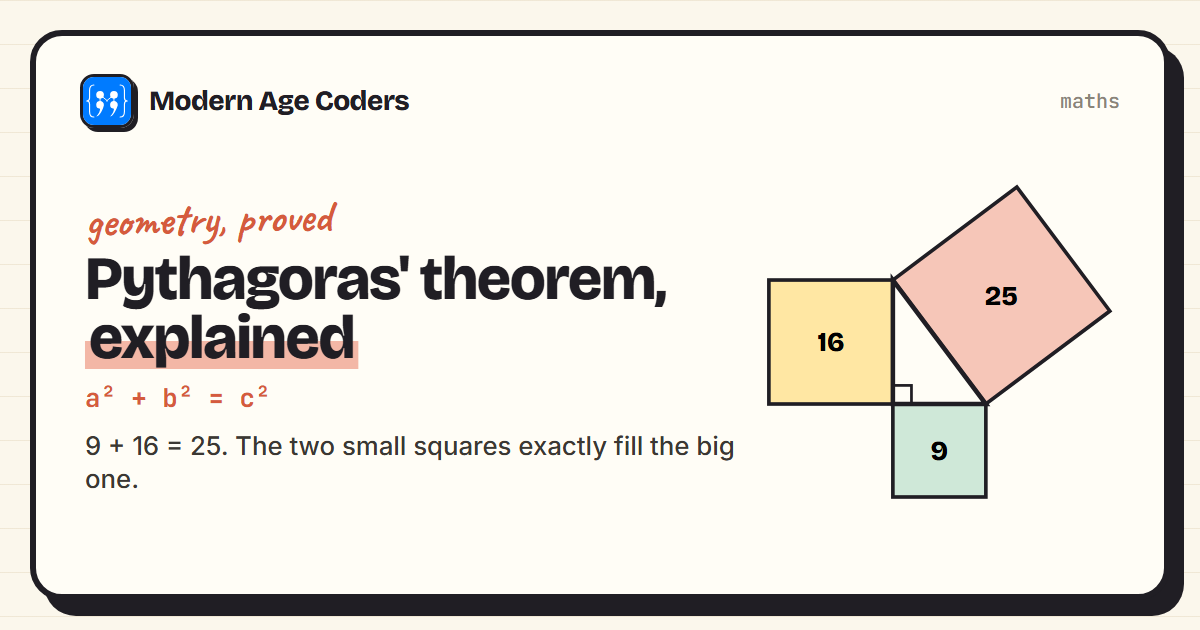
Pythagoras theorem explained: what a² + b² = c² means, a visual proof, when to add or subtract, the converse, triples, distance and real-life uses.
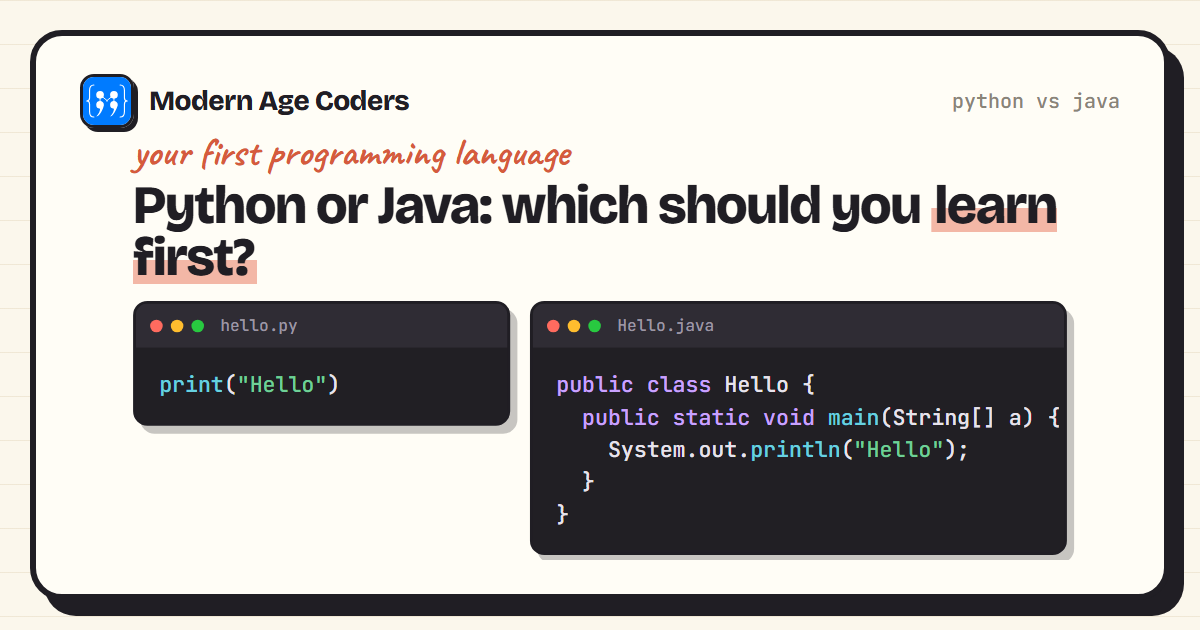
Python vs Java for beginners, tested: the same programs run in both, how each catches mistakes, measured speed, and which to learn first by age and goal.
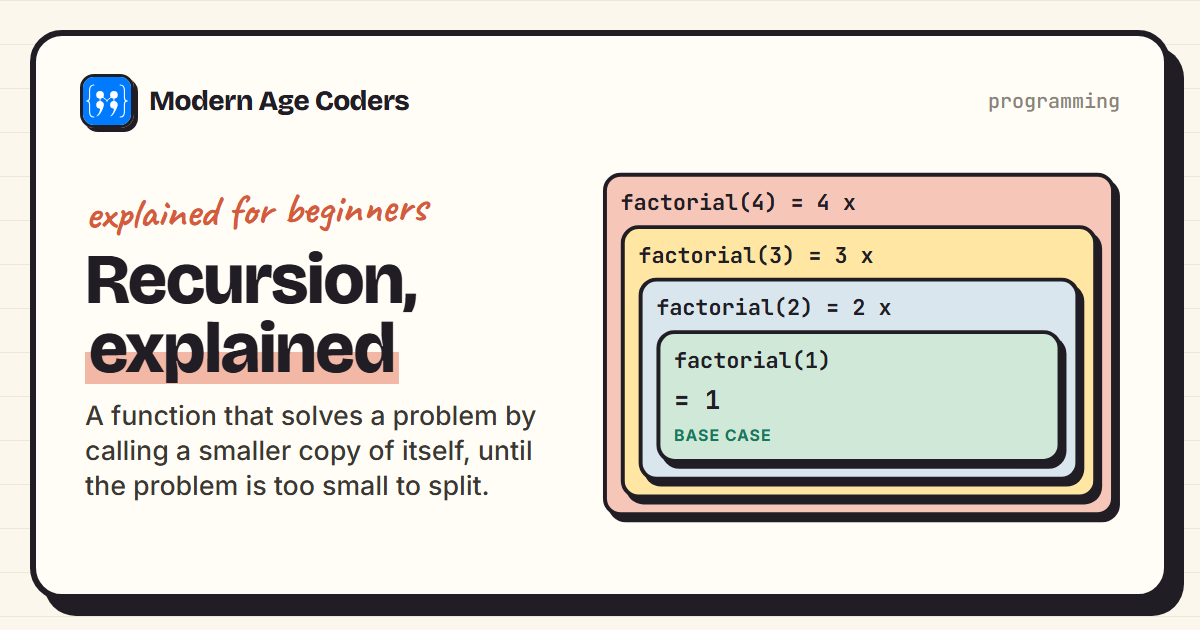
Recursion explained for beginners: base case, recursive case, the call stack traced line by line, RecursionError, memoisation, and when to use it.
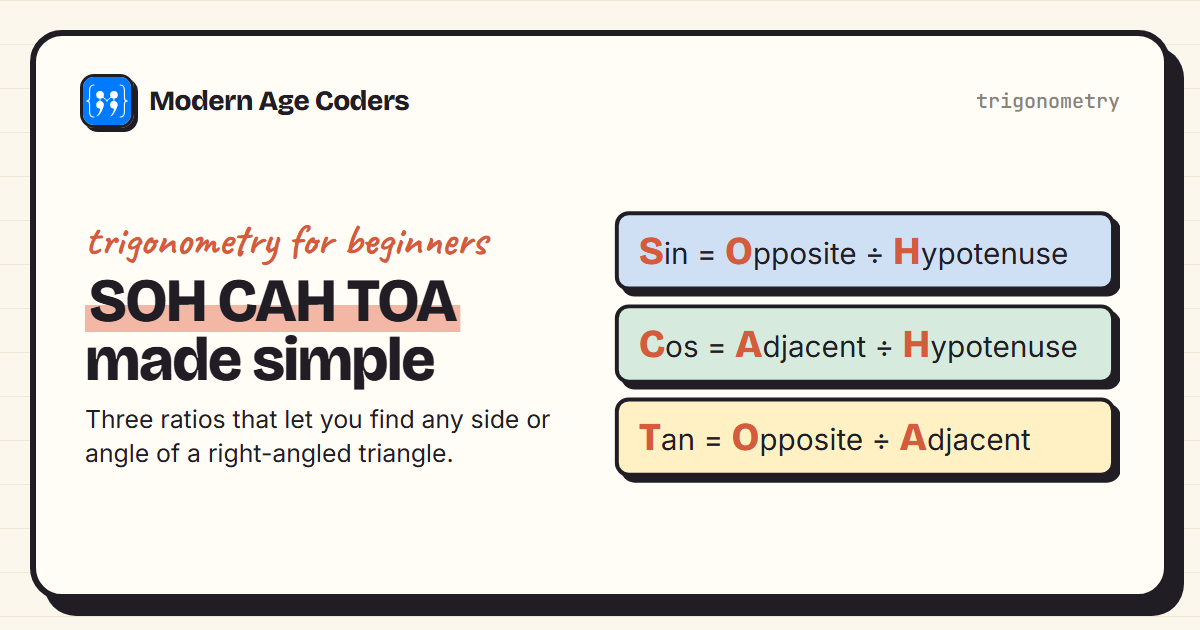
Learn SOH CAH TOA step by step: labelling sides, choosing sin, cos or tan, finding sides and angles, and the calculator mode mistake.
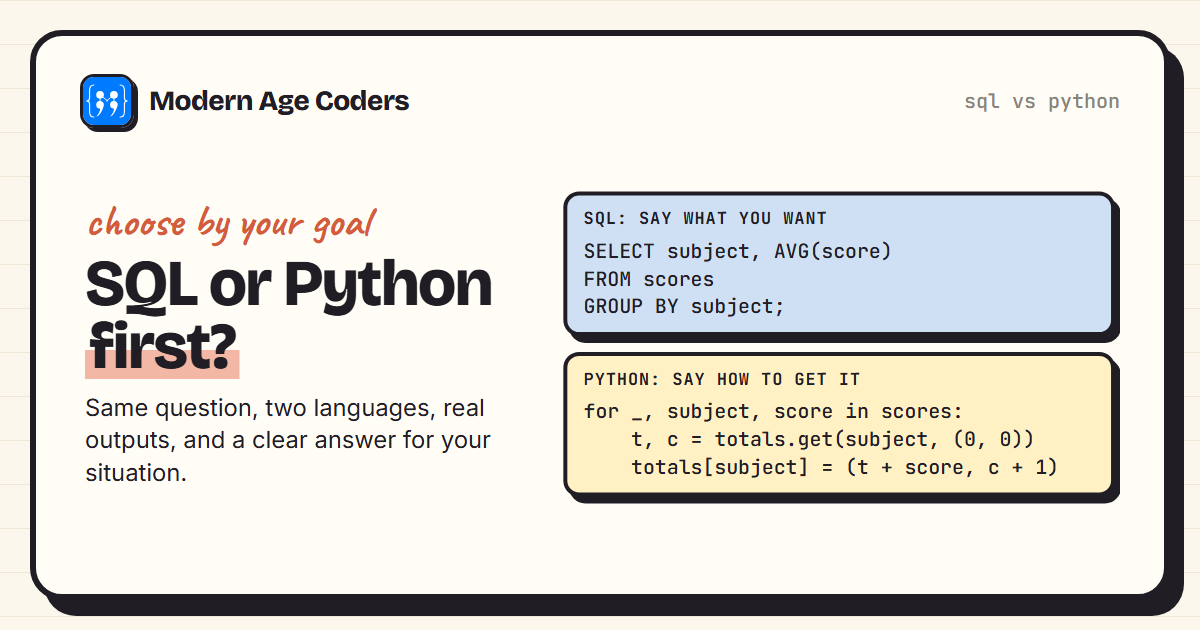
SQL or Python first? The same question in both, a million-row timing test with a surprise, and which to start with for your goal.
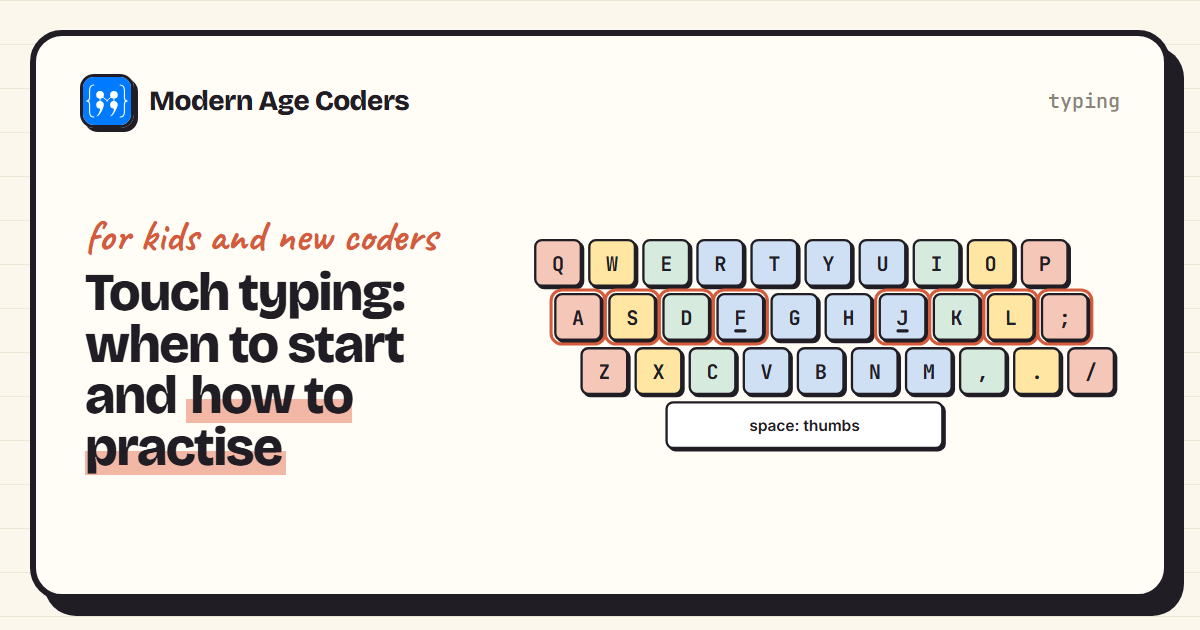
When children are ready for touch typing, the home row, a week-by-week plan, why accuracy beats speed, and which keys coders need most.
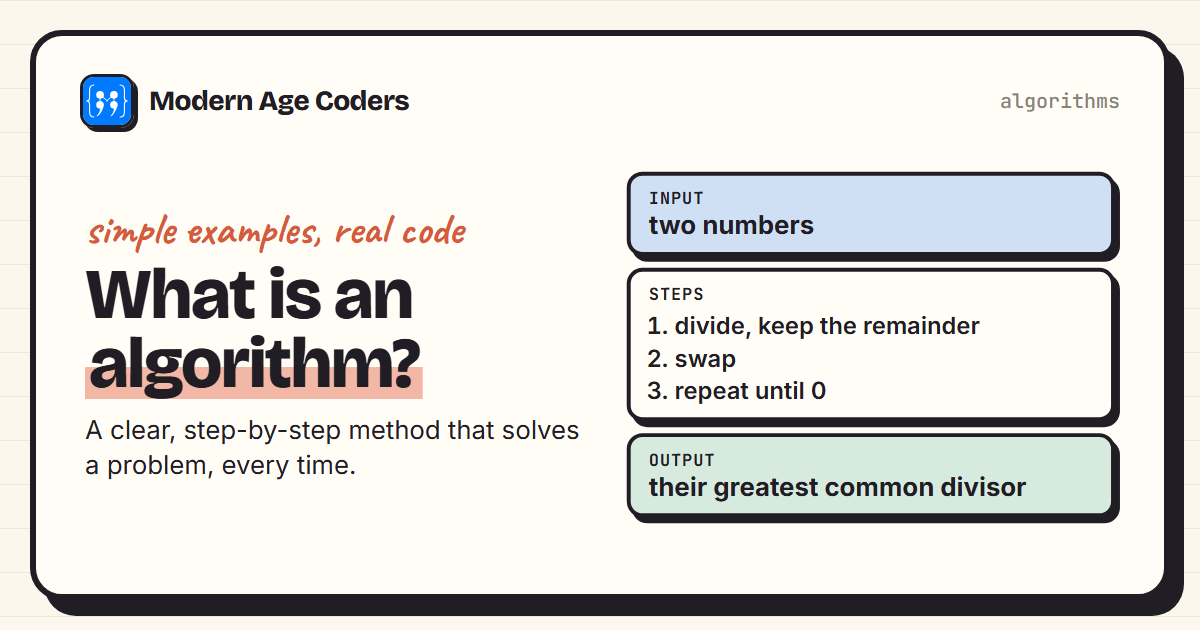
What an algorithm is, everyday examples, and three short Python programs showing why algorithms must be correct and fast, with real outputs.
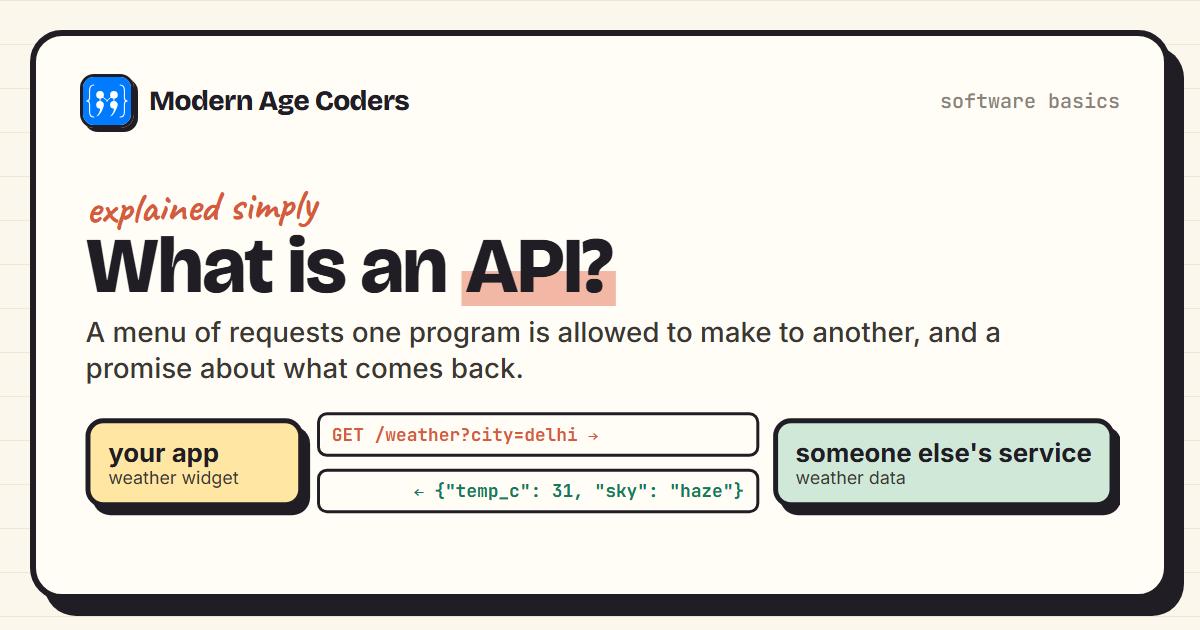
What is an API? A plain-English explanation with a restaurant analogy, a real API built and tested in Python, key vocabulary, and everyday examples.
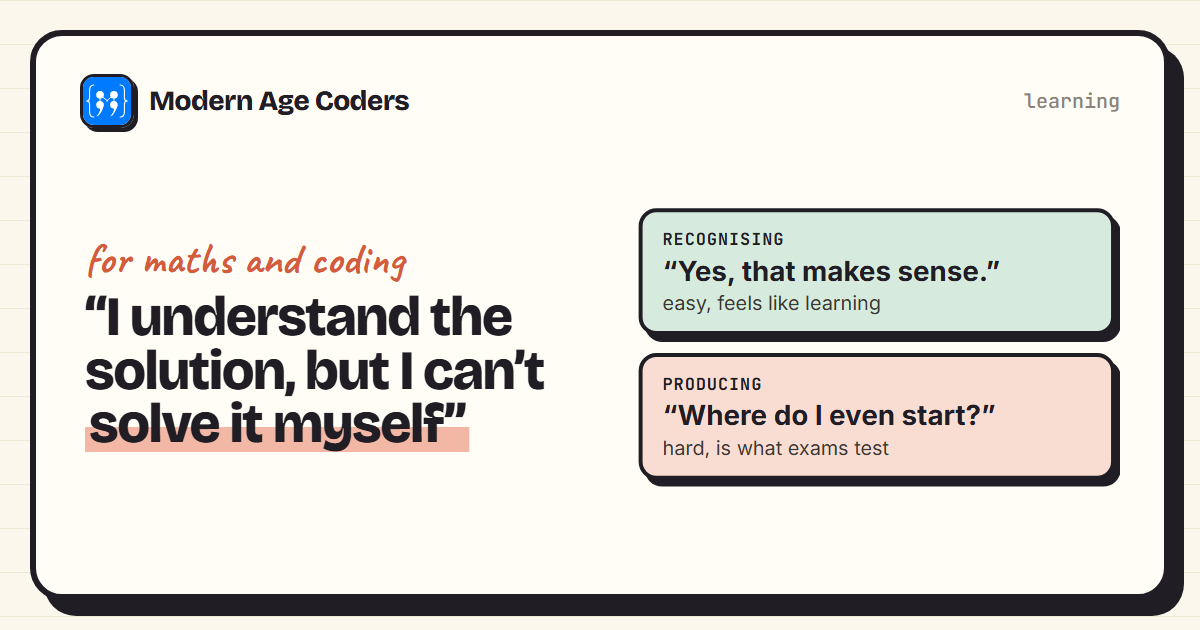
Understanding a solution and solving one are different skills. Why the gap happens, and a close-the-book method that fixes it in maths and coding.
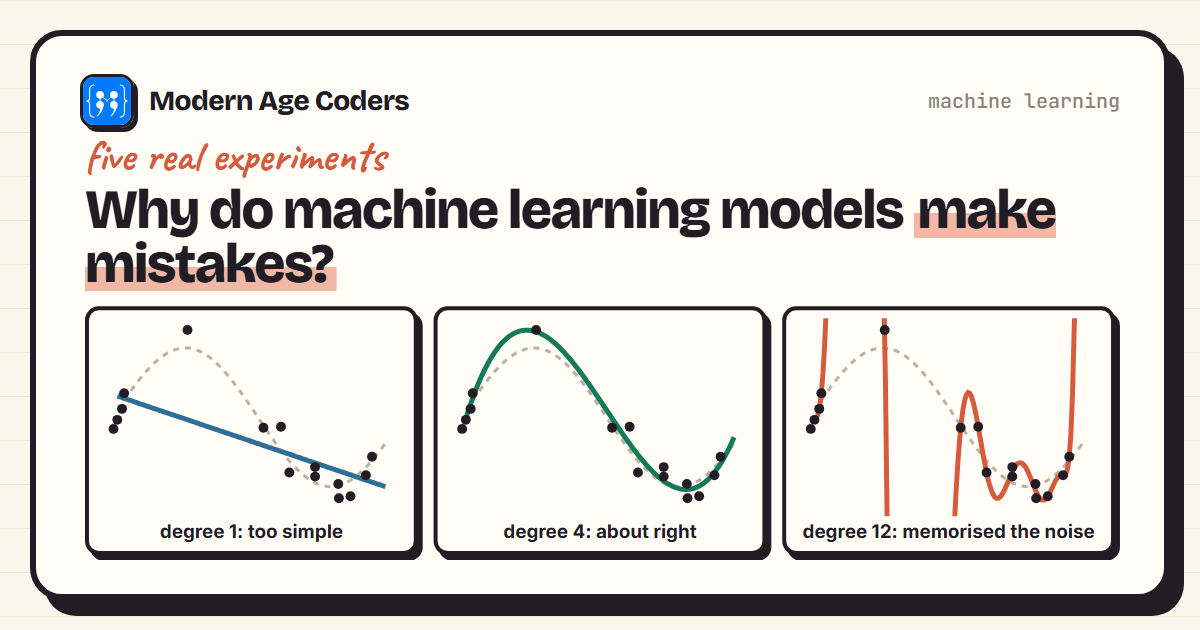
Why machine learning models make mistakes: overfitting, too little data, misleading accuracy, new situations and biased data, each tested in code.
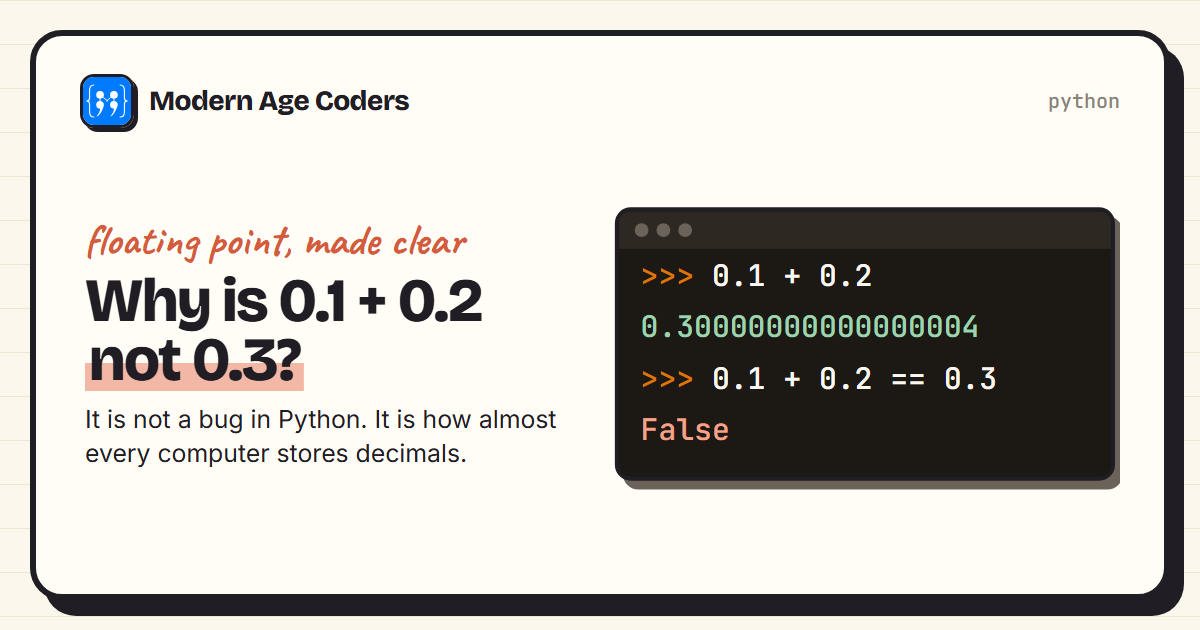
Why 0.1 + 0.2 gives 0.30000000000000004: what Python really stores for 0.1, how small errors grow, and five fixes that work.
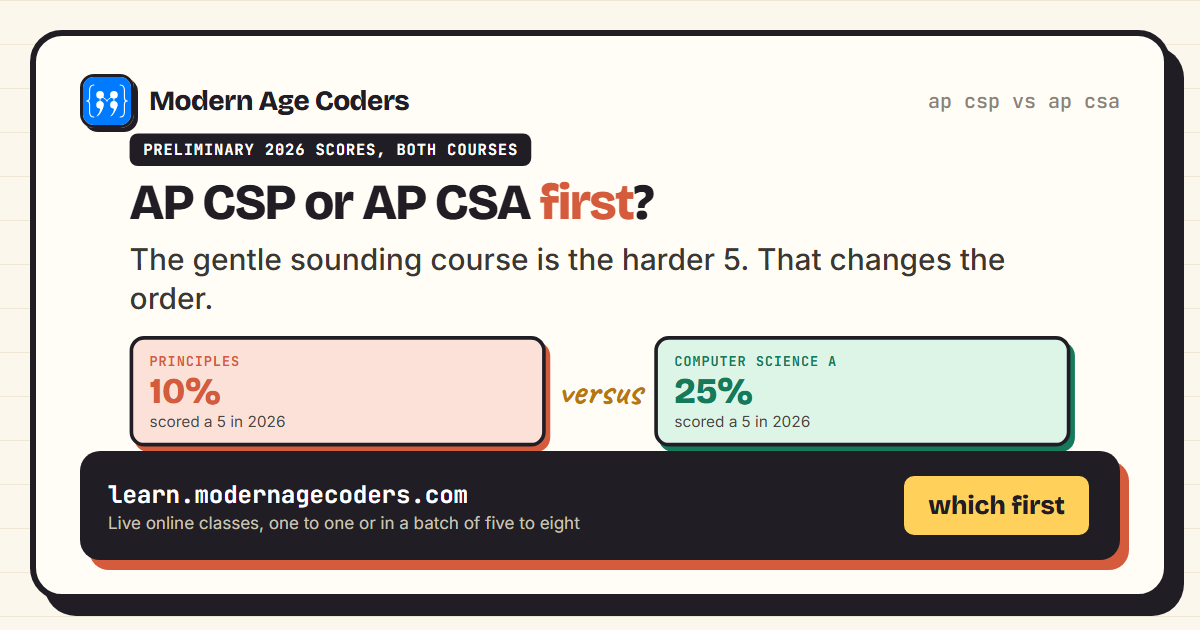
Is AP CSA harder than AP CSP? CSA is harder to learn but more students score a 5. The differences, 2027 exam format and dates, and which to take first.
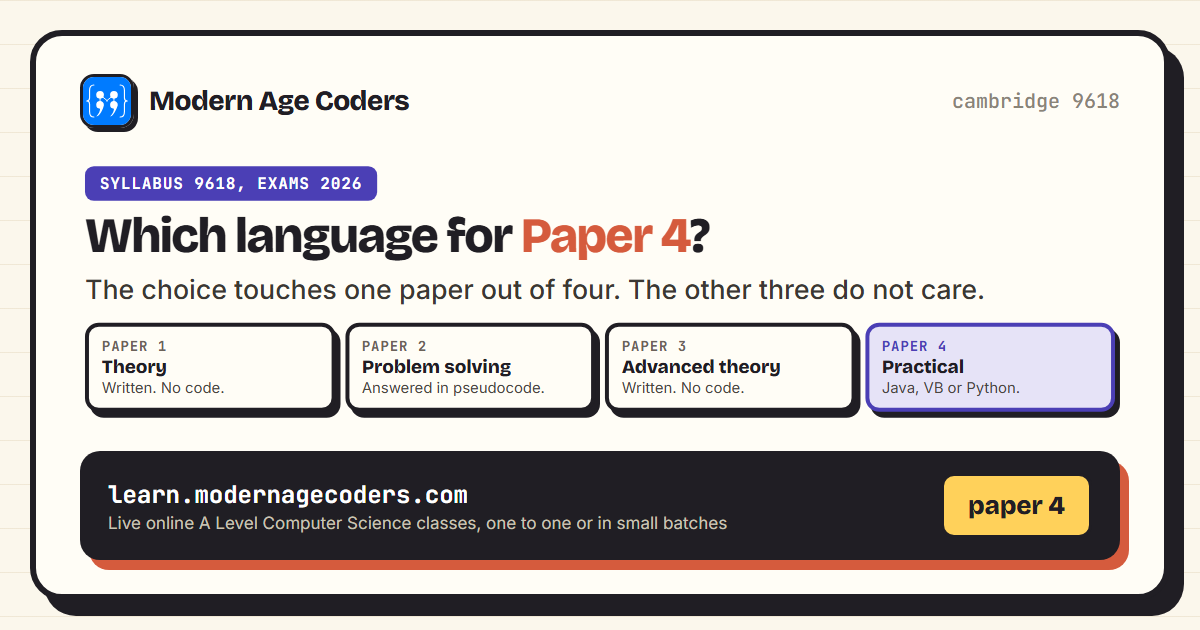
The language choice in Cambridge A Level Computer Science reaches one paper out of four. Here is what Paper 4 asks for, and how to pick without regret.
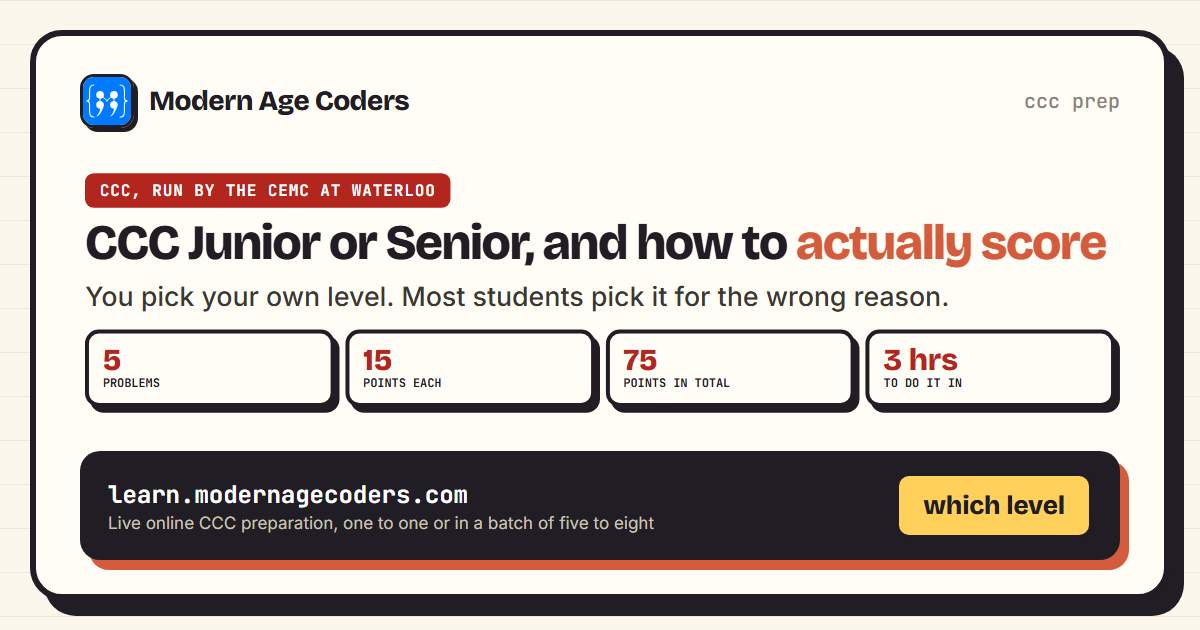
The Canadian Computing Competition lets students pick their own level. How to choose it honestly, and the scoring strategy that beats trying harder.
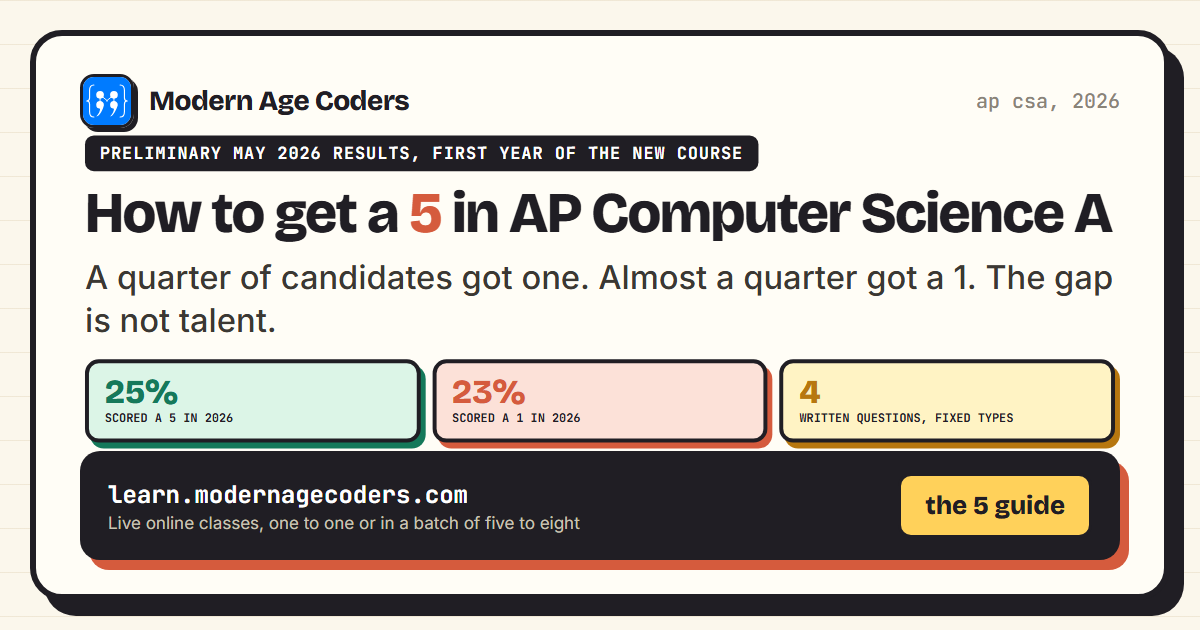
Preliminary 2026 data: a quarter scored 5 and almost a quarter scored 1. What separates them on the new four unit course, question by question.
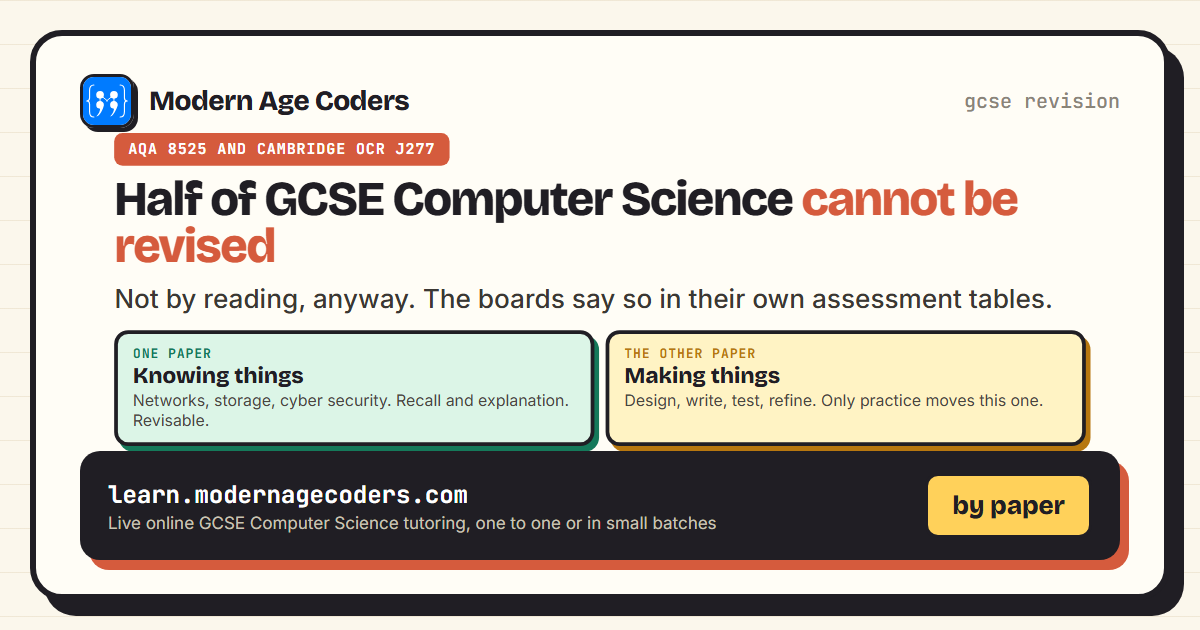
One GCSE Computer Science paper rewards knowing things and the other rewards making them. The boards publish the split, and most revision plans ignore it.
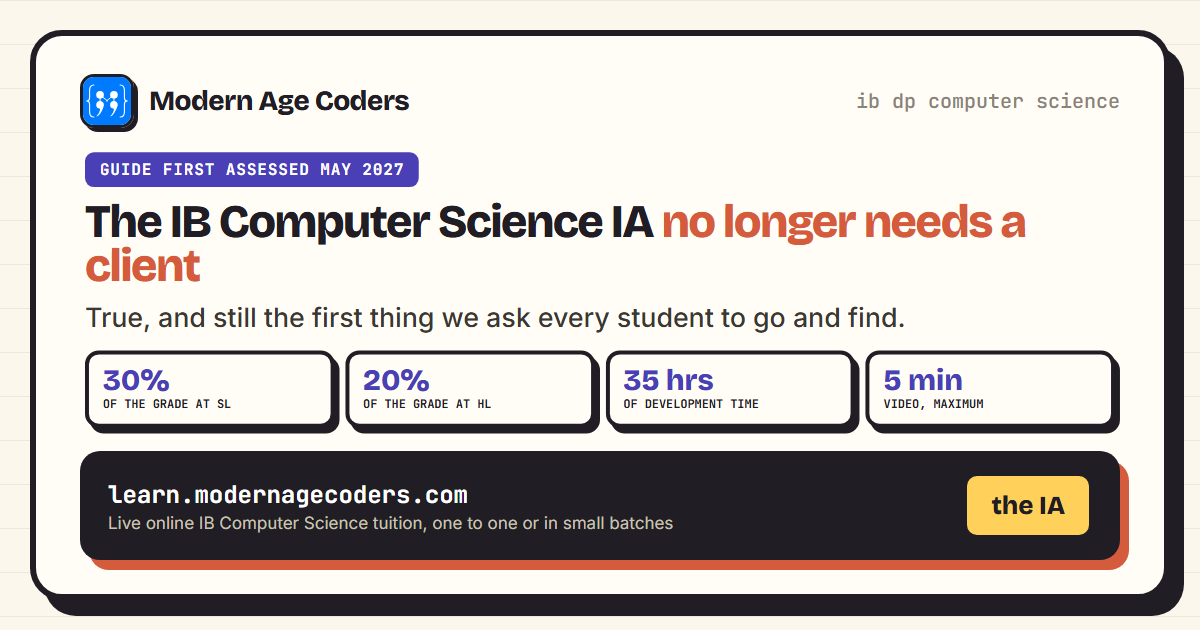
The guide first assessed in 2027 drops the client requirement from the Computer Science IA. Here is what changed, and why a real client still wins marks.
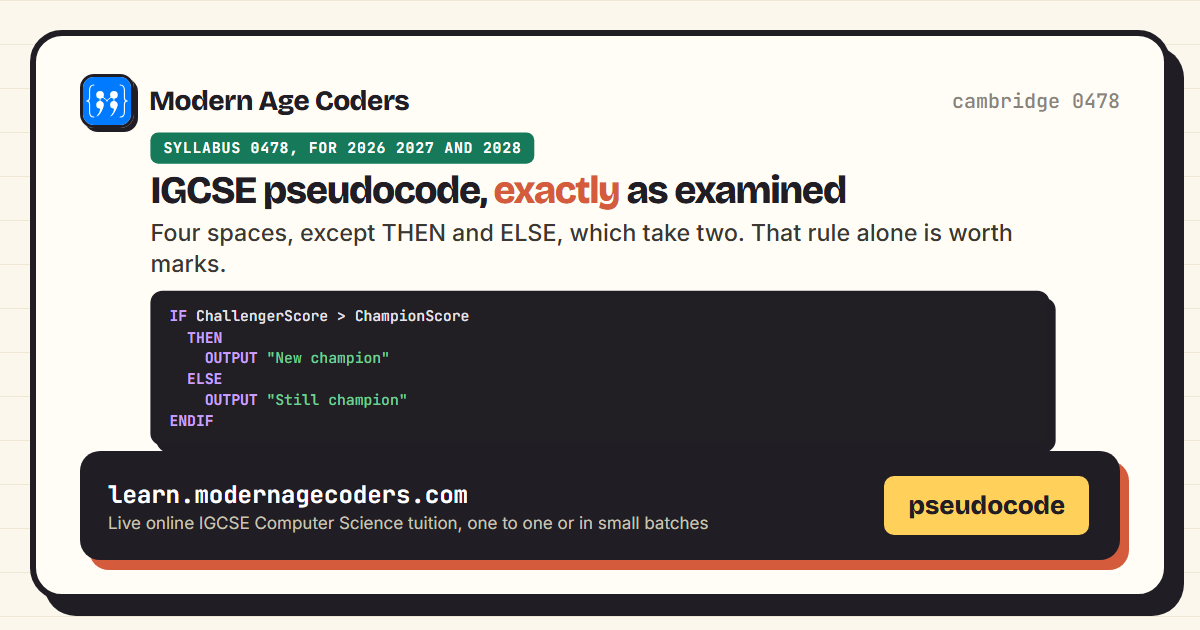
Cambridge publishes the exact pseudocode conventions used in 0478 papers. Here they are, with the indentation and identifier rules almost nobody teaches.
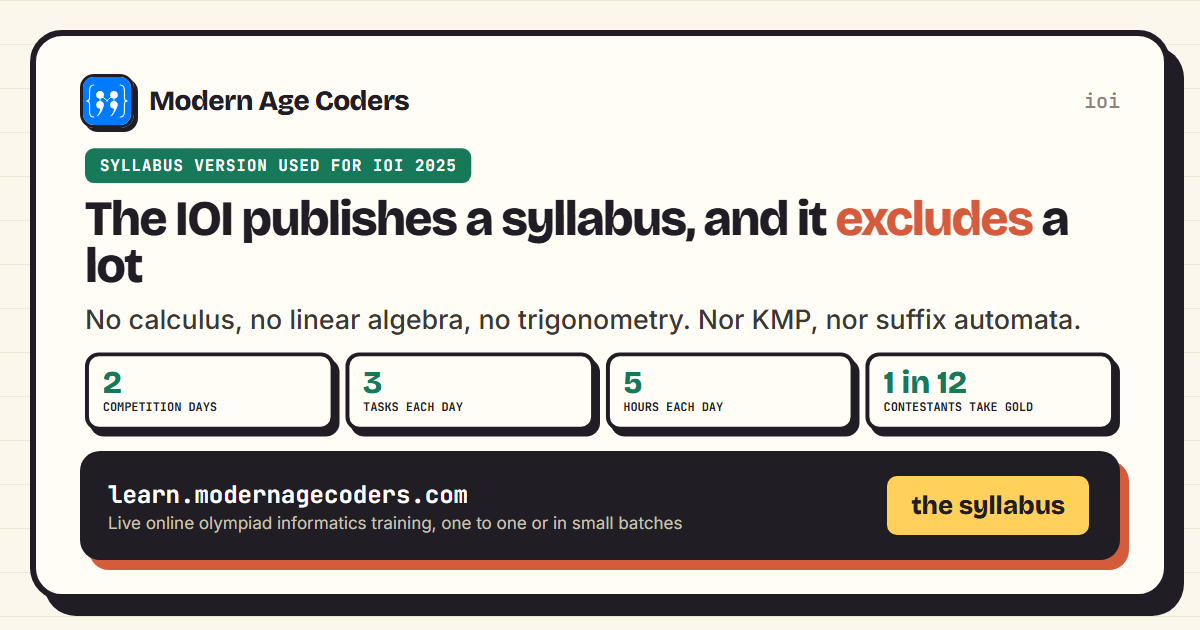
The International Olympiad in Informatics publishes what is in scope and what is not. The exclusions are the useful half, and few students read them.
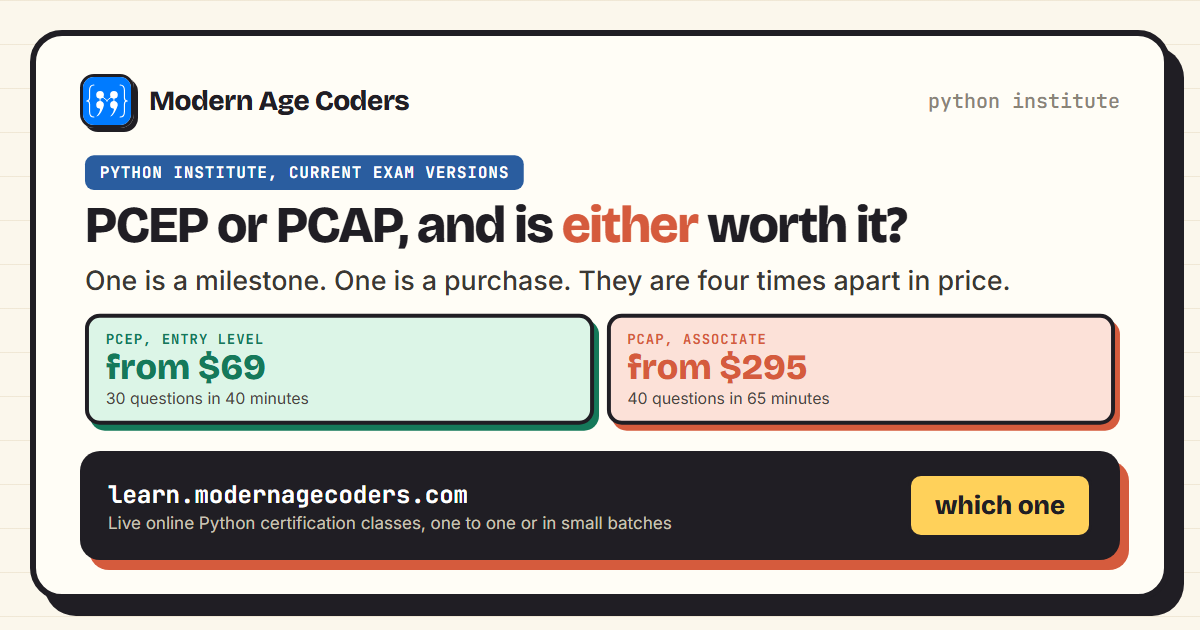
The two Python Institute certifications are four times apart in price and test different things. An honest look at what each proves and who should buy one.
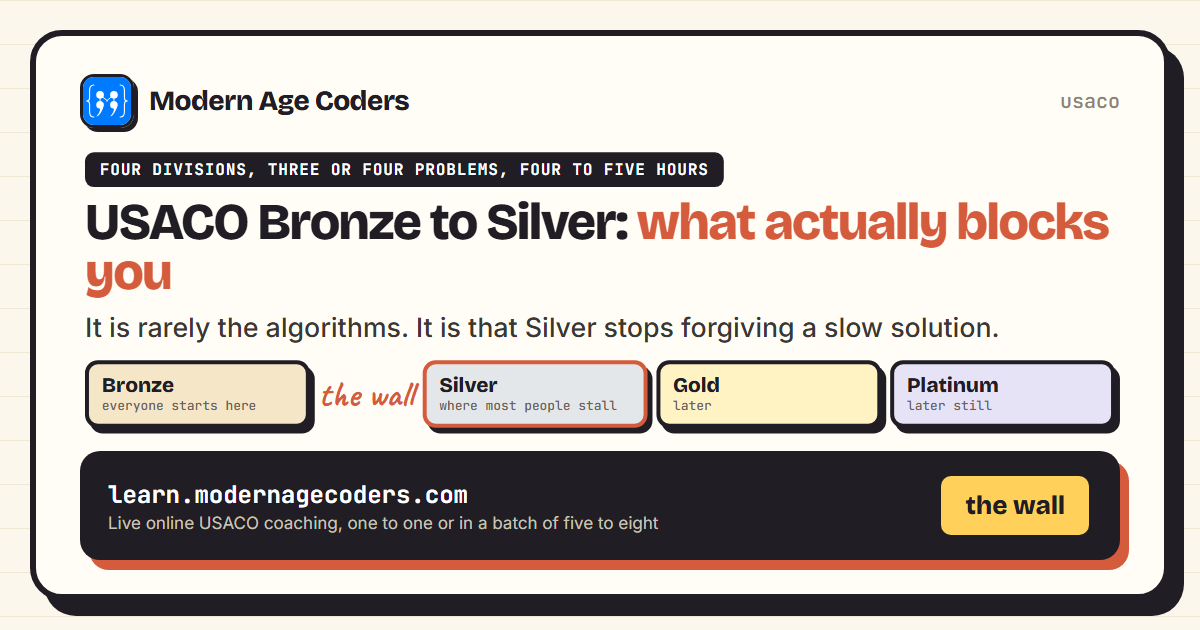
Most USACO students stall at Silver for one reason, and it is not the algorithm list. Here is the real barrier, measured, and how to get past it.
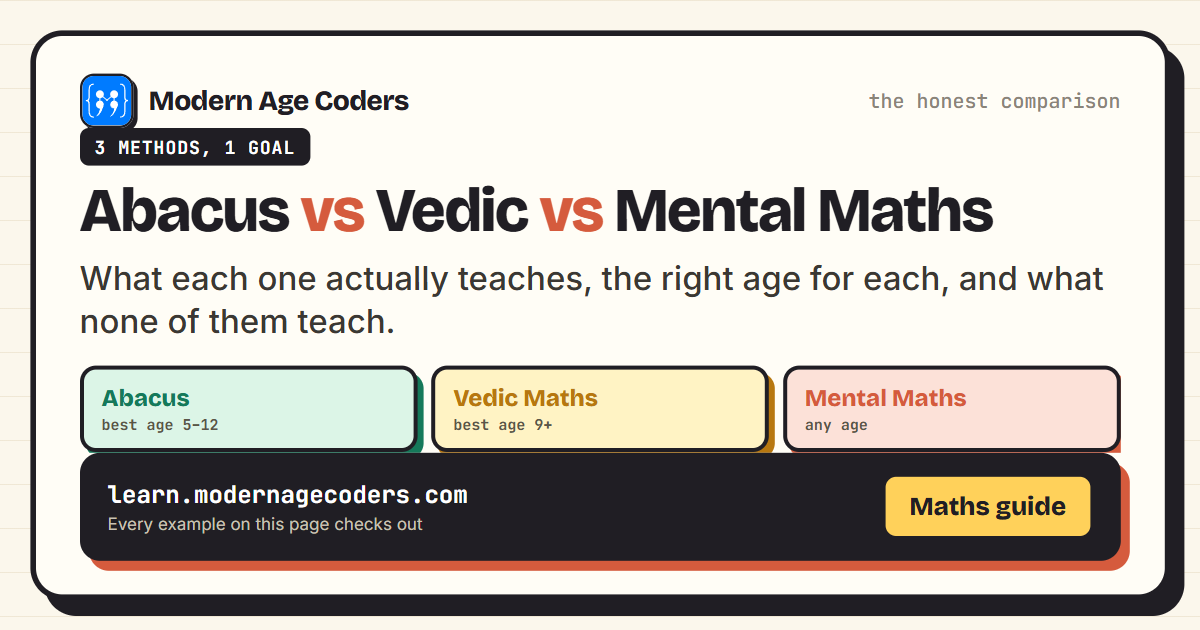
Abacus, Vedic maths, and mental maths compared: what each teaches, the right age, real worked examples, and how to choose for your child.
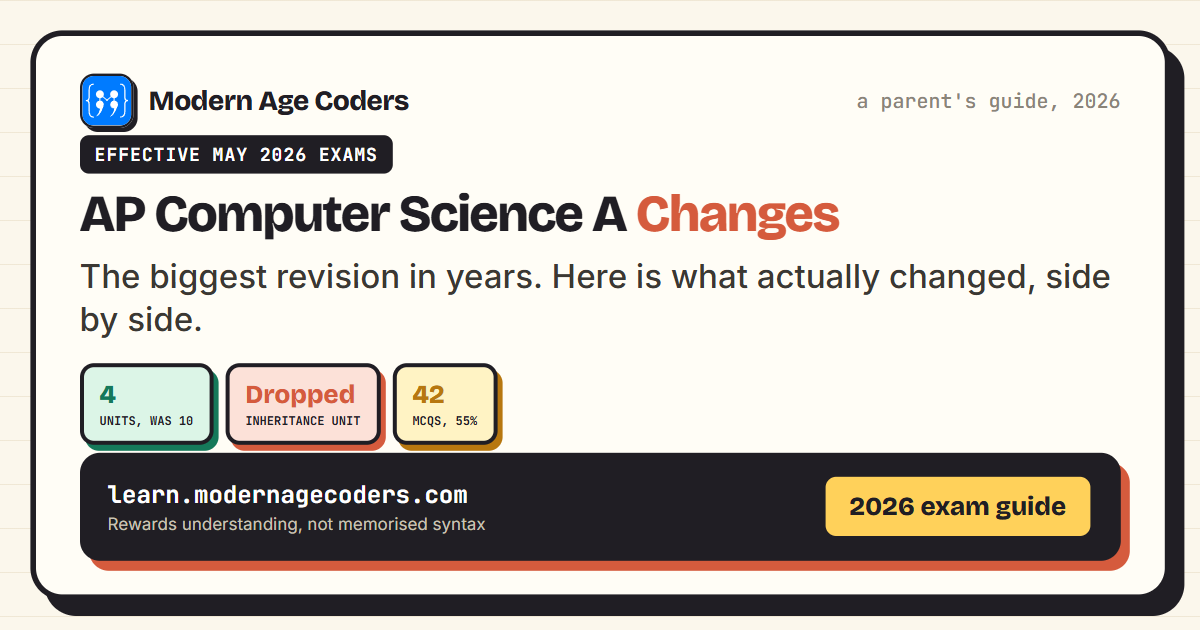
AP Computer Science A was revised for 2025-26: four new units, inheritance dropped, real file and dataset work added, and a new exam format.
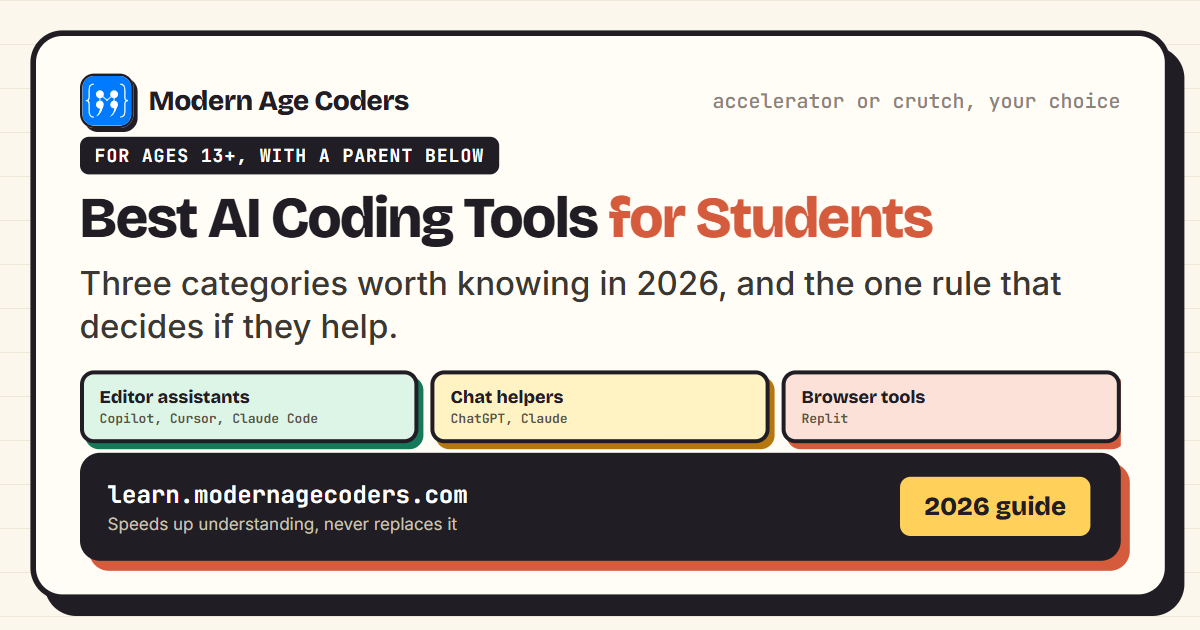
The best AI coding tools for students in 2026, what each is good for, and the one rule that decides whether they help or hurt.
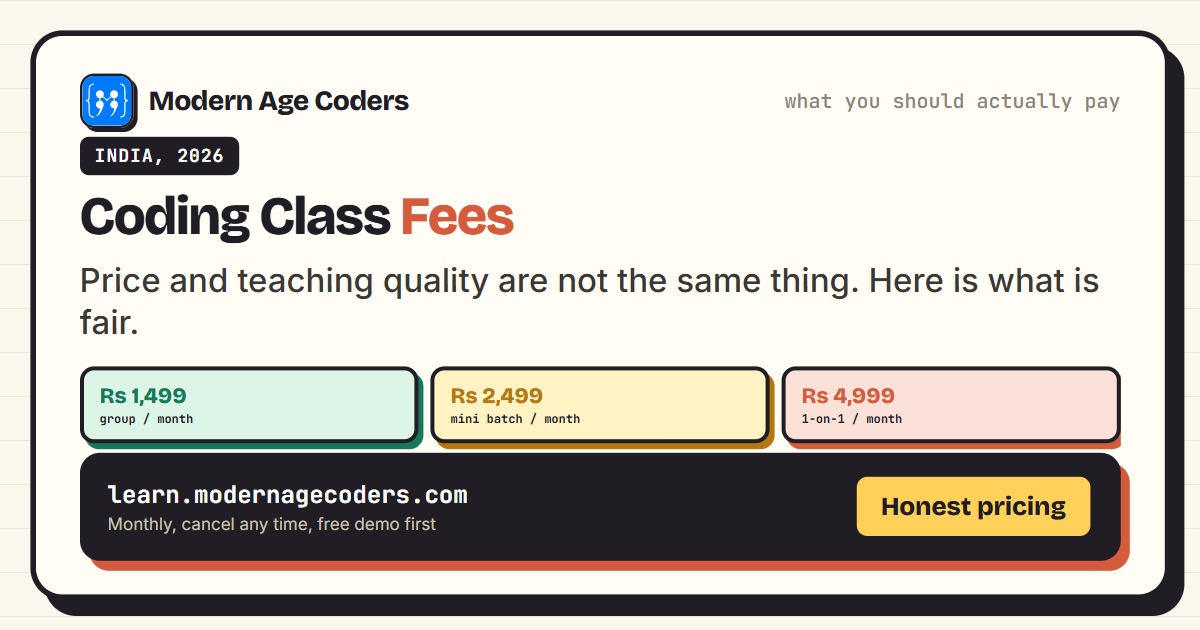
How much do coding classes for kids cost in India in 2026? A clear price comparison, and the traps to avoid.
Coding or AI for your child in 2026? It is not a choice: why coding comes first and the age-by-age roadmap that adds AI on top.
Does online maths tuition actually work? An honest look at what makes it effective, where it falls short, and how to pick one that works.
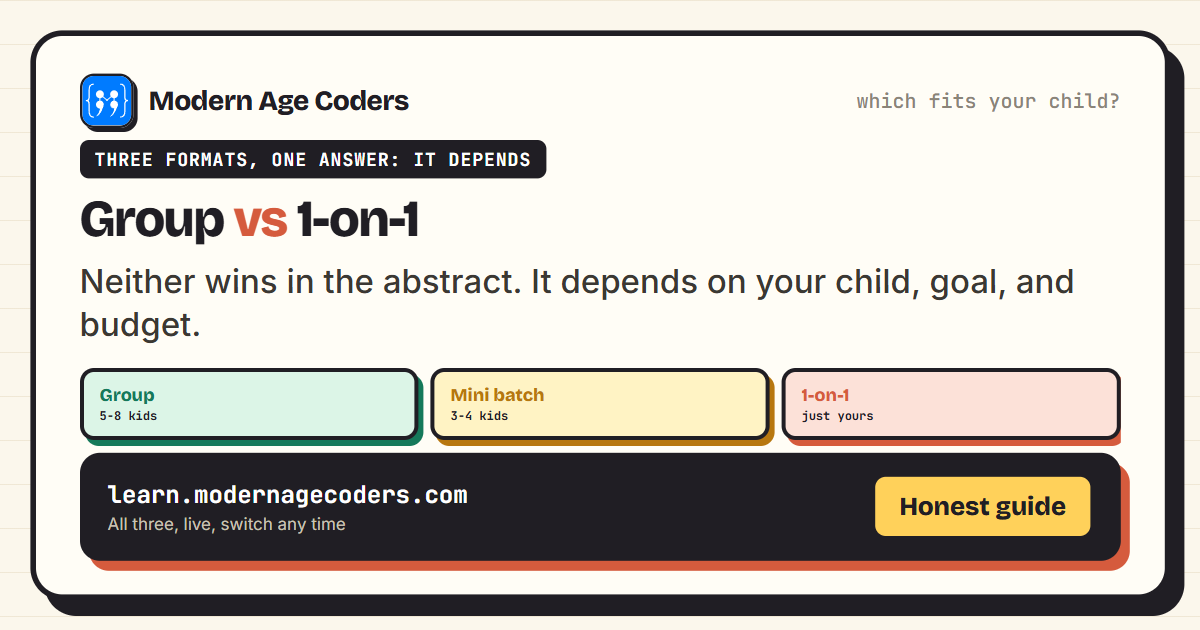
Group or 1-on-1 coding classes for your child? An honest comparison, plus a simple rule for which one to pick.
Maths anxiety is a fear response, not a lack of ability. How to spot it, what causes it, and practical ways to help your child feel calm and capable again.
How to help your child with maths homework the right way: guide instead of solve, what to do when you are both stuck, and when to get real teaching.
How to choose a coding class for your child: questions to ask, red flags to avoid, and the one test that beats any brochure.
How to get better at maths, for real: eight methods that build genuine understanding, plus how to trace and fix the exact gap holding you back.
How to make maths fun for kids, without gimmicks: nine practical ideas that turn maths from a chore into something children actually enjoy.
How to teach your child about AI at home, safely: the ground rules, real age limits, and simple activities by age.
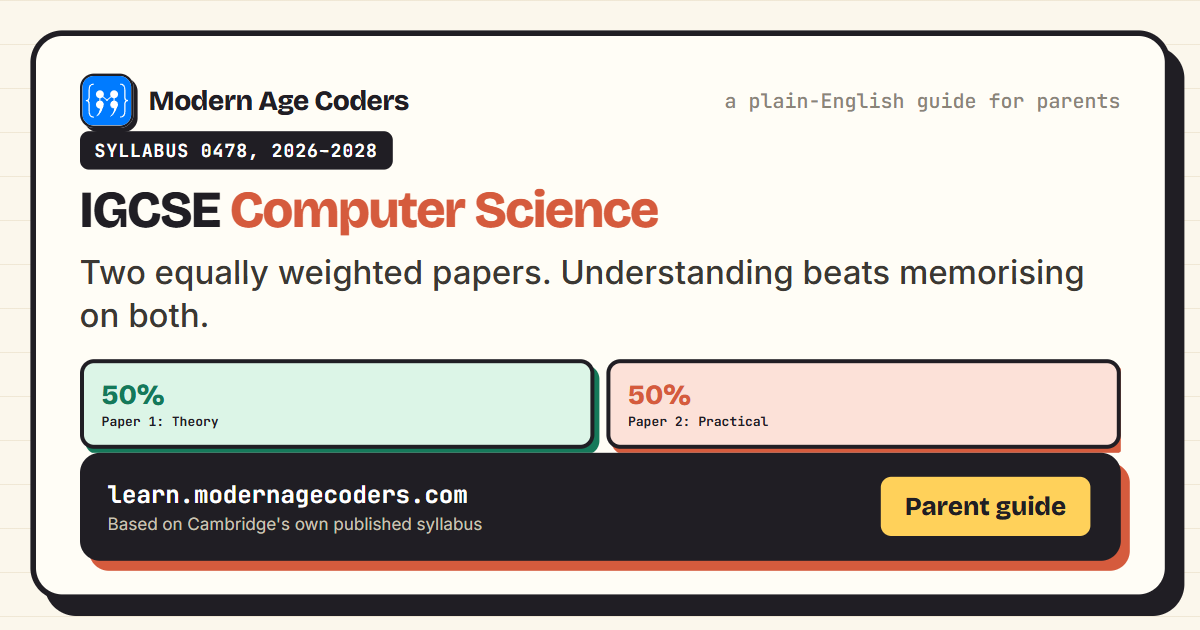
A plain-English guide to Cambridge IGCSE Computer Science 0478: how it is assessed, what your child studies, and how to prepare.
Is coding good for kids? Yes, and not for the reason you think. What it actually teaches, and the right age to start.
AI can write code, so is coding still worth learning? Yes, and here is exactly why, and what changed.
Is Vedic maths actually useful, or just a party trick? What it does well, what it does not teach, and the right age to start.
Thinking of a career change into tech in 2026? The honest answer on whether learning to code is still worth it, and a realistic timeline.
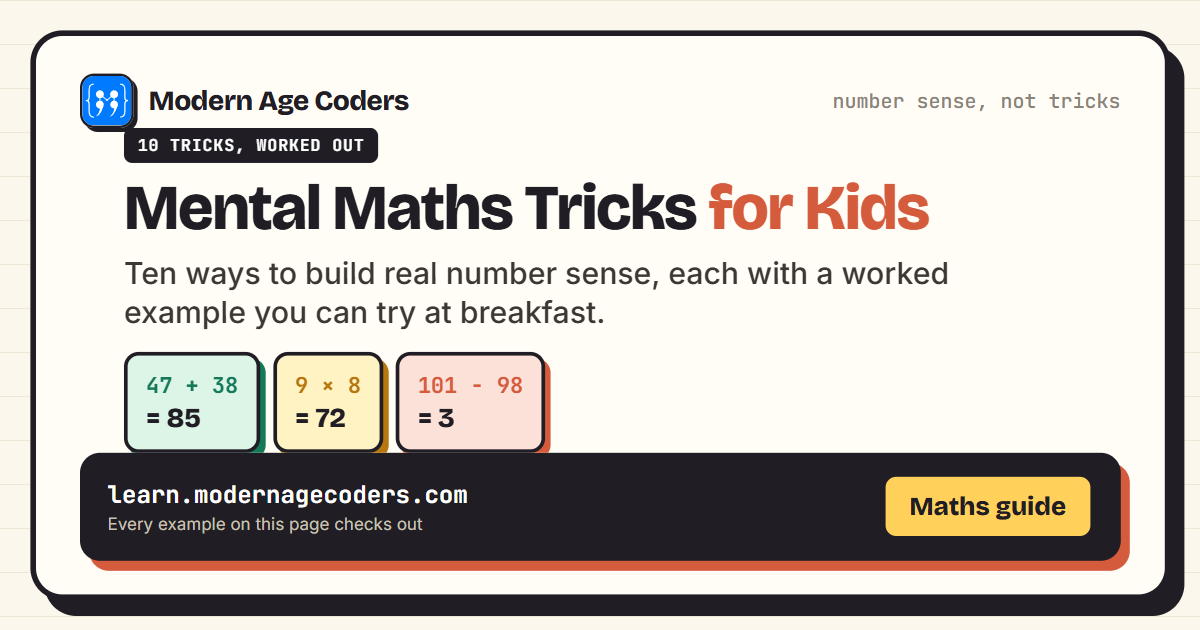
Ten mental maths tricks for kids, each with a worked example, plus a daily practice plan by age and why understanding beats memorising.
Wondering if your child is ready to start coding? Seven clear signs of readiness, and how to start once they are there.

The UAE approved a mandatory AI curriculum for all public schools, kindergarten to grade 12. What it teaches and what it means for parents.
Vibe coding vs learning to code properly: why vibe coding is a great tool but a poor teacher, and how your child should use AI.
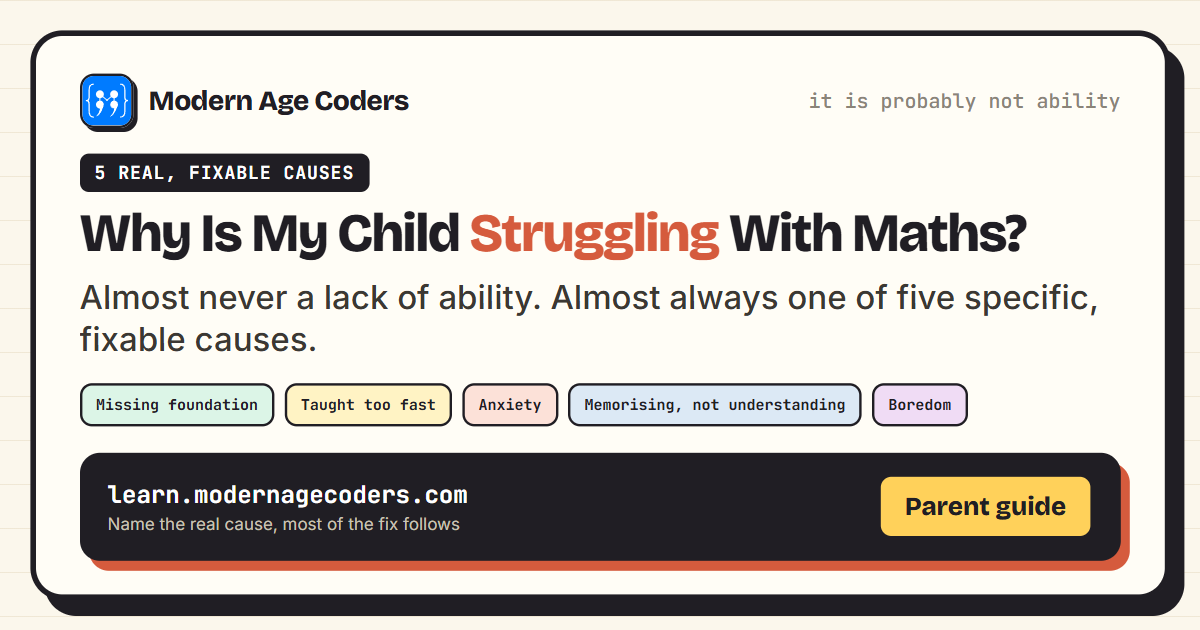
Why is your child struggling with maths? The real, fixable reasons, from a missing foundation to anxiety and pace, and what to do about each one.
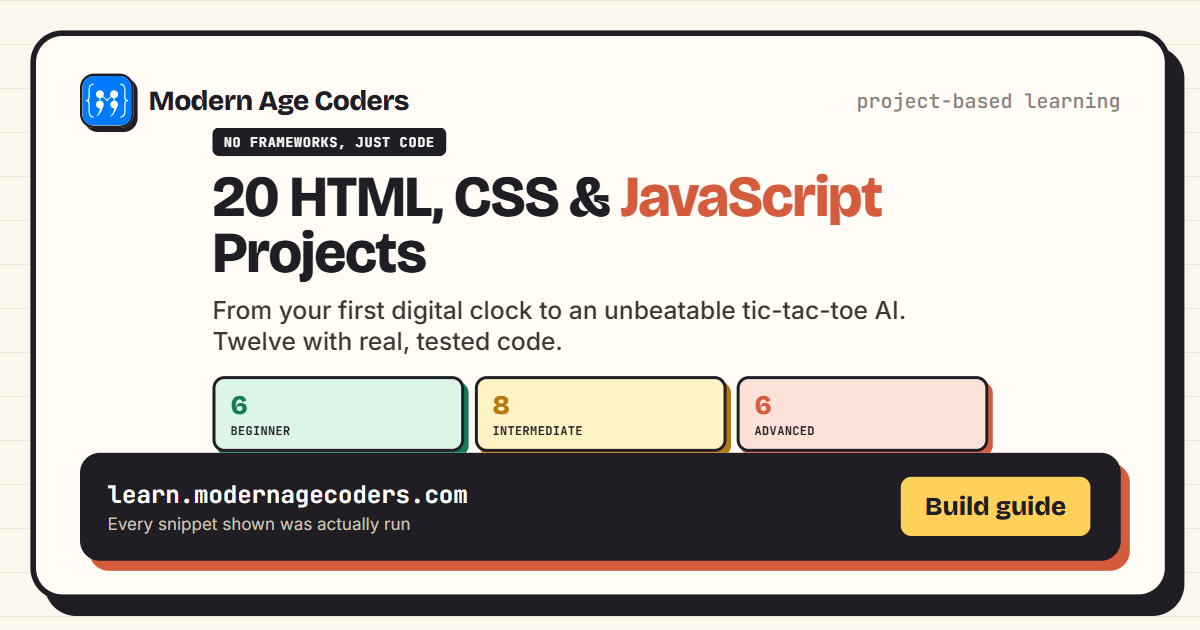
20 HTML, CSS, and JavaScript project ideas from beginner to advanced, each with the exact skills it teaches and real tested code for 12 of them.
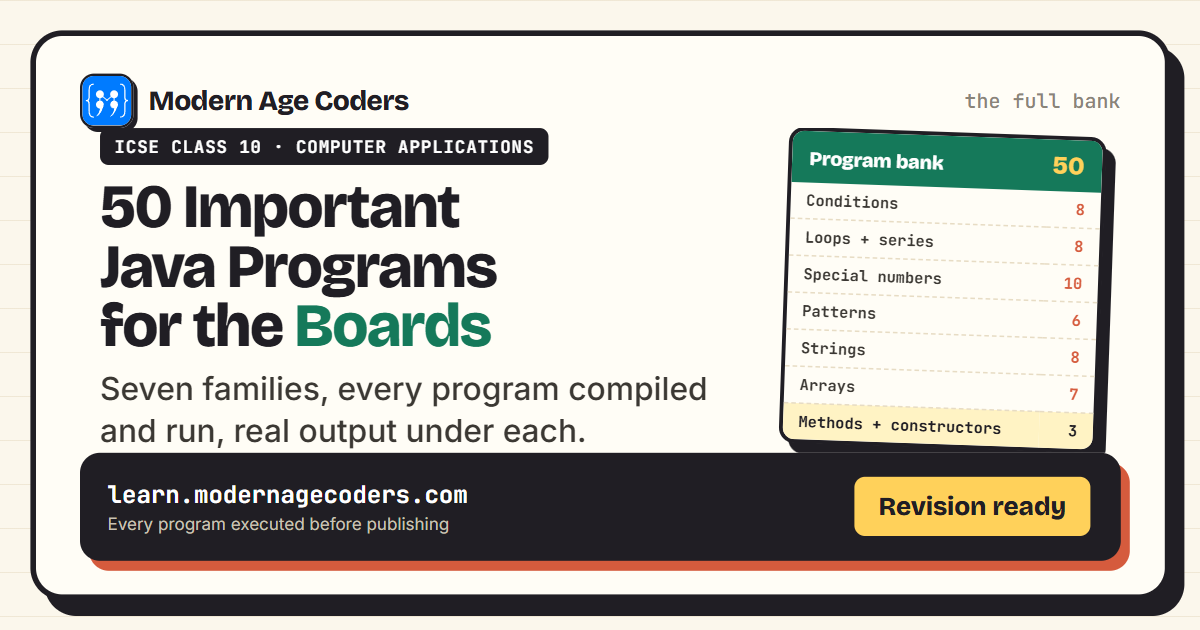
The complete ICSE Class 10 Java program bank: 50 board-style programs in 7 families, every one compiled and run, with its real output shown.
The complete ICSE Class 10 Computer Applications revision guide: paper structure, topic-by-topic notes, 70 executed Java programs, and a 4-week plan.
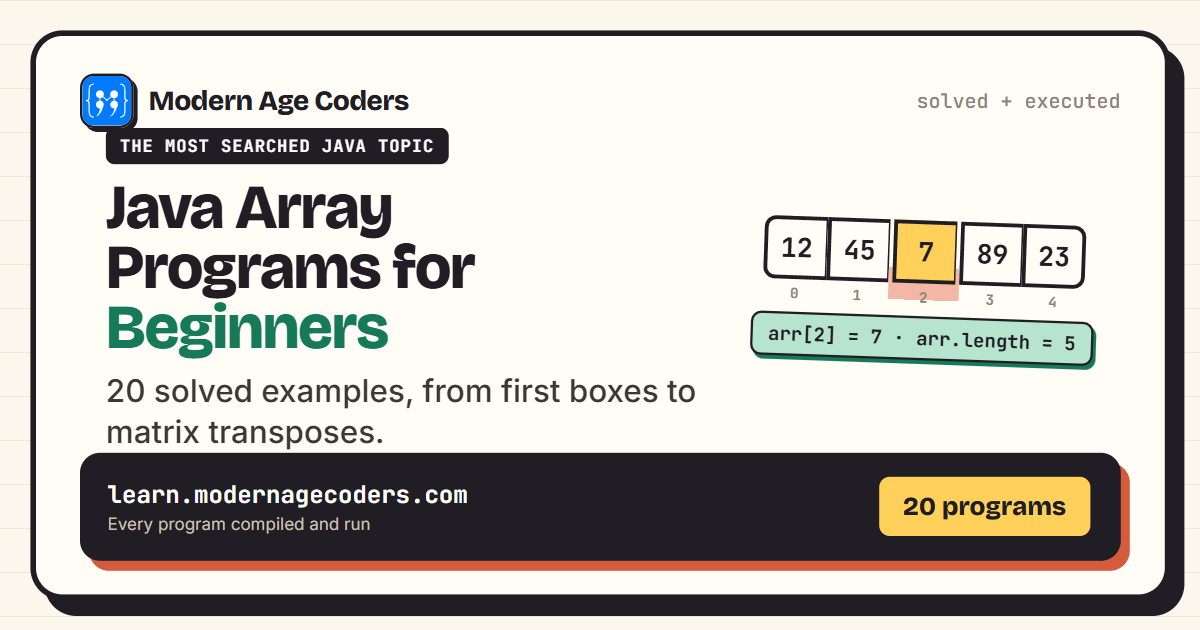
20 Java array programs for beginners, solved and executed: storing, searching, bubble and selection sort, string arrays, and 2D matrices with output.
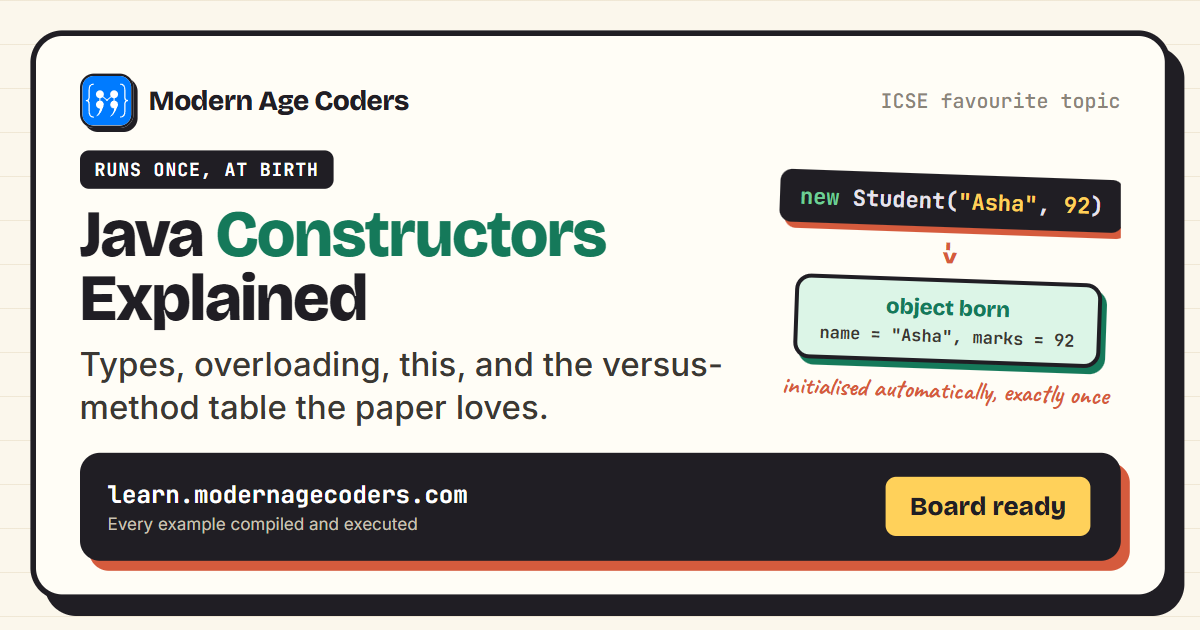
Constructors in Java explained for ICSE and CBSE: default, parameterised, copy, overloading, this, and constructor vs method, all run with real output.
A free, ordered path through every Python tutorial on this site: five stages from your first line of code to exam-ready, all with tested code.
Python vs JavaScript compared honestly: syntax, territories, speed, and jobs, with the same program run in both languages and real outputs shown.
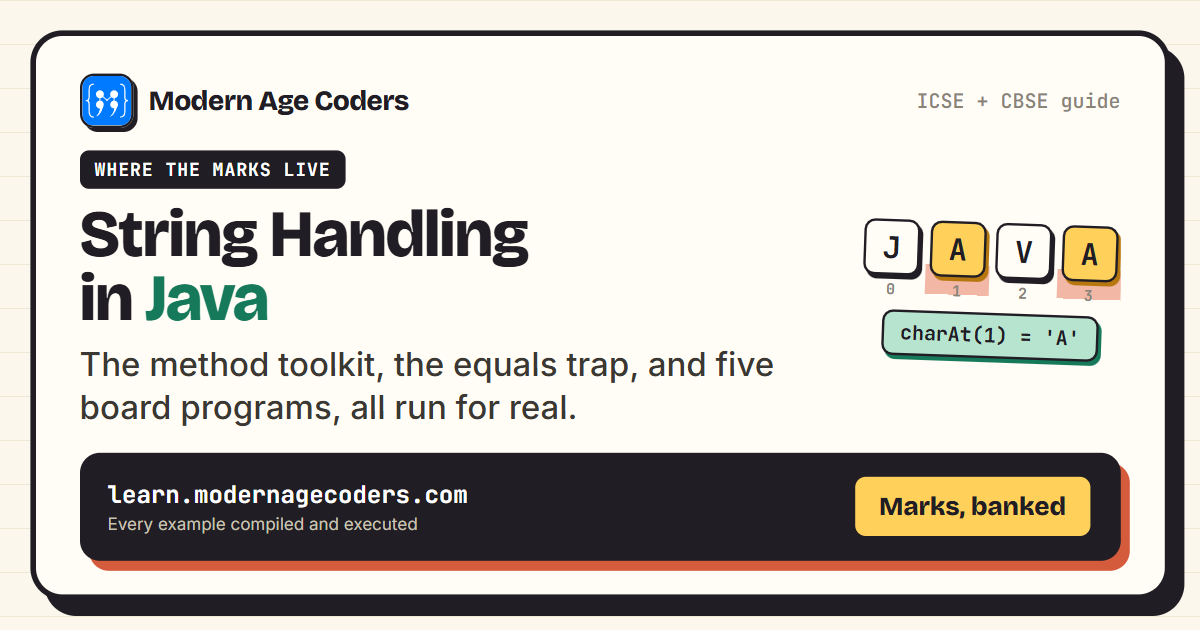
String handling in Java for ICSE and CBSE: the method toolkit, equals vs ==, immutability, substring rules, and 5 board programs with real output.
Exception handling in Python explained: try, except, else, finally, raise, and custom exceptions, with real tracebacks and tested examples.
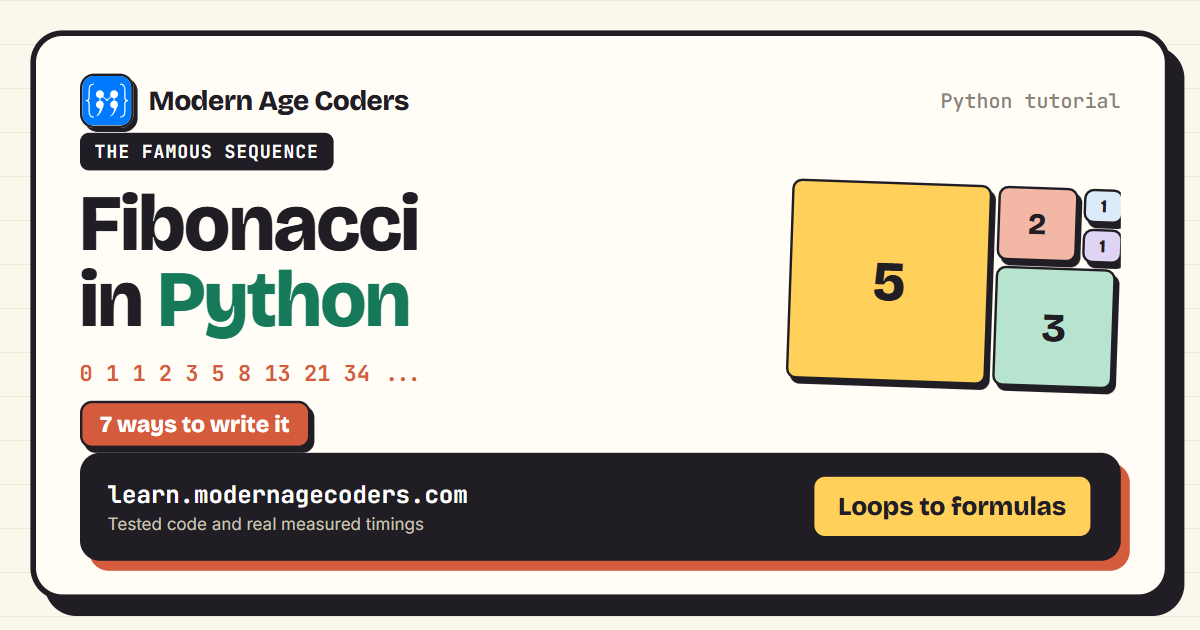
Write the Fibonacci series in Python 7 ways: loops, lists, recursion, memoization, generators, and Binet's formula, with tested code and real timings.
Learn how to reverse a string in Python with slicing, reversed(), loops, and recursion. Copy-paste code, clear examples, and the fastest method.
Learn the Python dictionary properly: create, read, update, loop, merge, sort, and nest, with 20 tested examples and the mistakes to avoid.
Lambda functions in Python explained: the anatomy, the key argument, map and filter, when not to use them, and 10 tested examples with output.
List comprehension in Python explained from scratch: the three-slot pattern, where the if goes, and 15 tested examples from squares to generators.
A beginner's Python OOP tutorial: classes, objects, __init__, self, methods, inheritance, and encapsulation, taught with one running Student example.
20 Python programs for the CBSE Class 12 Computer Science board exam: functions, text, binary and CSV files, and the stack, all tested with output.
30 star pattern programs in Python with code and real output: triangles, pyramids, diamonds, grids, number and alphabet patterns, from two simple loops.
Learn to find the HCF and LCM in Python using math.gcd, math.lcm, loops, and the Euclidean algorithm, with copy-paste code and clear examples.
The top 20 Java programs for ICSE Class 10, each with the exam-style question and tested BlueJ code: special numbers, strings, arrays, patterns and more.

Leap year program in Python: the logic (divisible by 4, not by 100 unless by 400), code with if-else, a function, one line and calendar.isleap, with output.
Our certification exam is intentionally tough. We filter for real skills, real thinking, and real effort. No shortcuts. No freebies. Here's why our certificate actually means something.
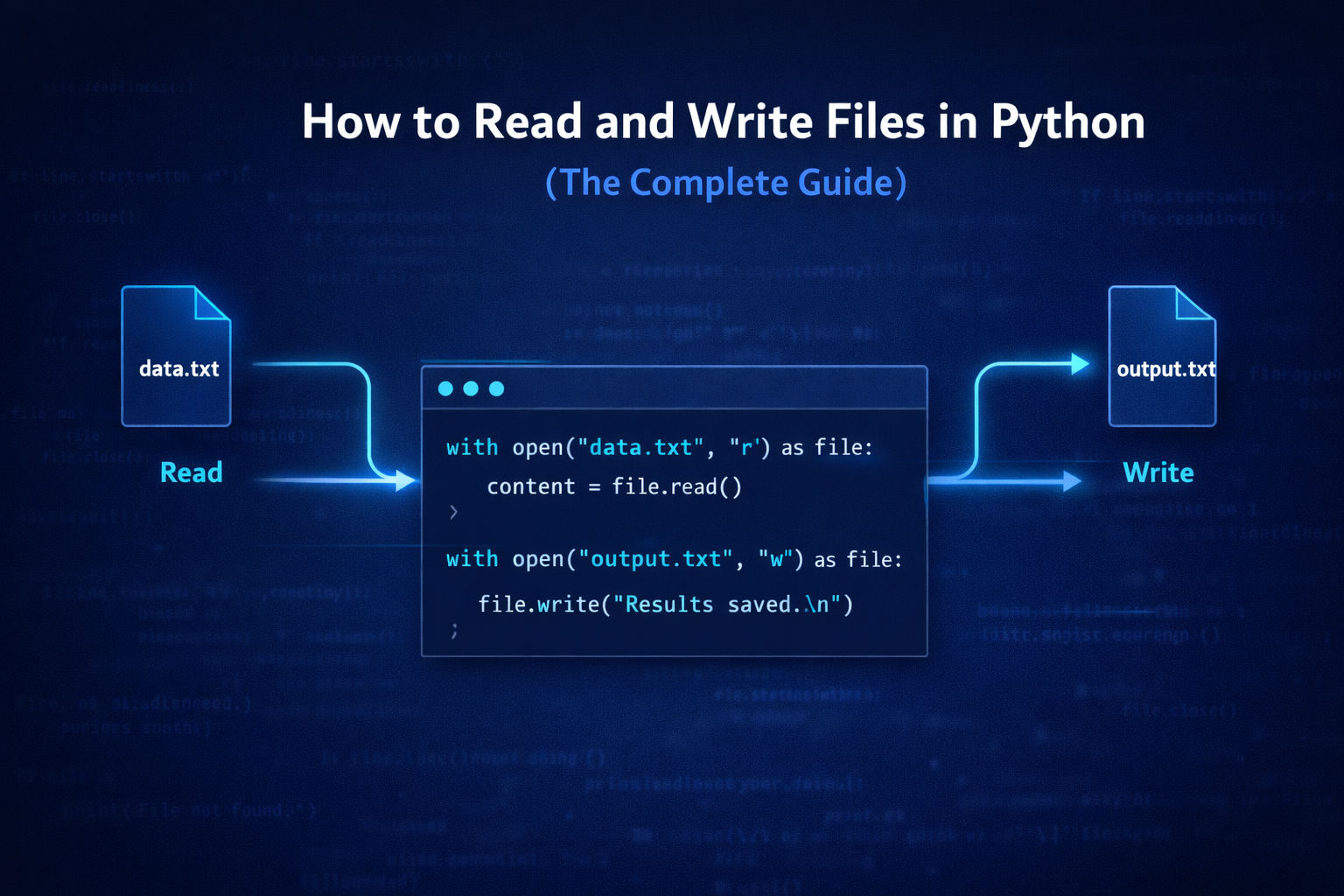
Stop losing your data every time your script closes. Learn exactly how to read and write files in Python with this straightforward, step-by-step guide.
Looking for the best Byju's alternative in 2026? Compare top platforms like Modern Age Coders, WhiteHat Jr, Vedantu, Toppr, Unacademy, and Code.org. Live 1:1 classes, coding + maths combo, honest pricing comparison inside.
Find the best online CBSE maths tuition for Class 6 to 12 in India. Live 1:1 classes, expert tutors, CBSE-aligned syllabus, and proven results. Book a free demo today.

Comprehensive guide to the best data science courses in India for 2026. Compare IITs, IIMs, online platforms, and live classes. Covers salaries, skills, career paths, and how to build a data science portfolio.
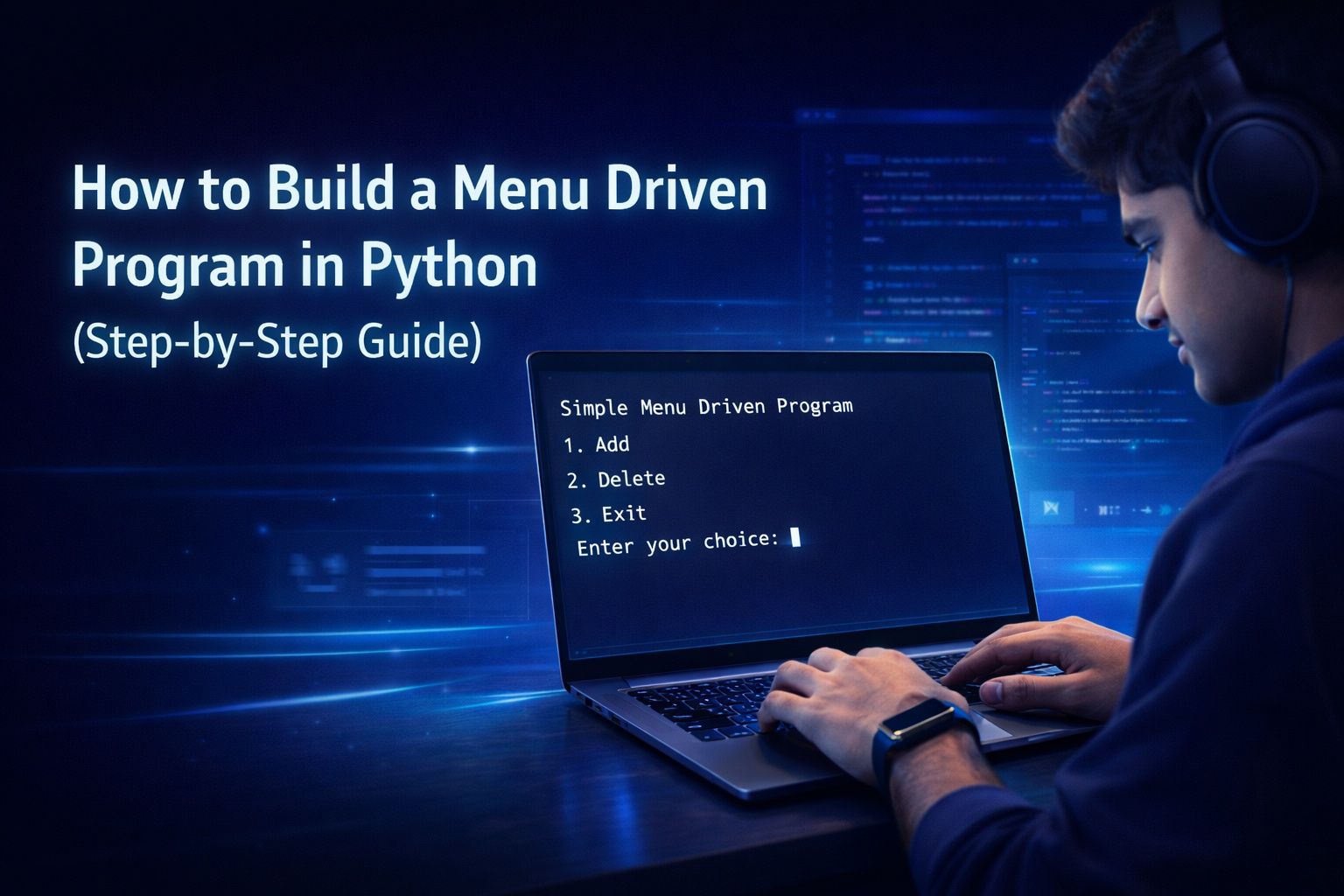
Build a menu driven program in Python with a while loop and if-elif, see its real output, stop bad input crashing it, and print today's menu with a script.

Explore why STEM education for girls in India matters, the gender gap in tech, inspiring Indian women in STEM, government initiatives, and how programs like Princess Coders and Queen Coders empower girls to lead in technology.
35 simple Python programs for beginners, each with complete code and the real output it prints: numbers, loops, primes, strings, lists, files and utilities.

Looking for a WhiteHat Jr alternative? Compare features, pricing, and curriculum. See why parents worldwide are choosing Modern Age Coders for coding + maths education.
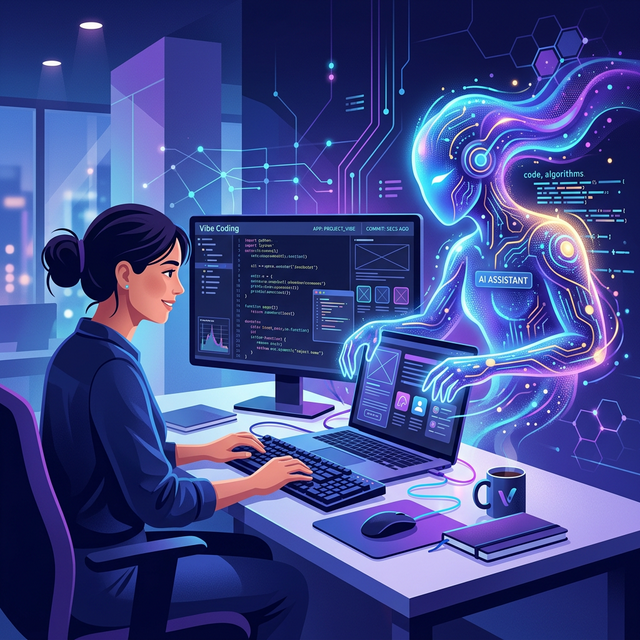
What vibe coding is, who coined it, how the describe-and-check loop works, the main tools compared, the security risks, and how kids, teens and adults learn it.
The 10 best free vibe coding platforms and tools in 2026: what each free tier gives you, which have no hard limit, who each suits, and how to learn it live.
Master Python file built-in methods: read(), write(), seek(), tell(), close() and more. Complete guide with examples for beginners to handle files efficiently in 2026.
Learn about file types in Python: text files, CSV, JSON, Excel, PDF, and binary files. Complete guide for beginners with examples and best practices in 2026.
Discover what type of data generative AI works best with. Learn about text, images, code, audio, and structured data for AI models. Complete guide for beginners in 2026.
Start coding with 30+ easy Java programs for Class 8 students. Practice basic concepts with simple examples and real coding exercises.
Learn the essential responsibilities of developers using Generative AI. Complete guide covering security, ethics, legal compliance, and best practices
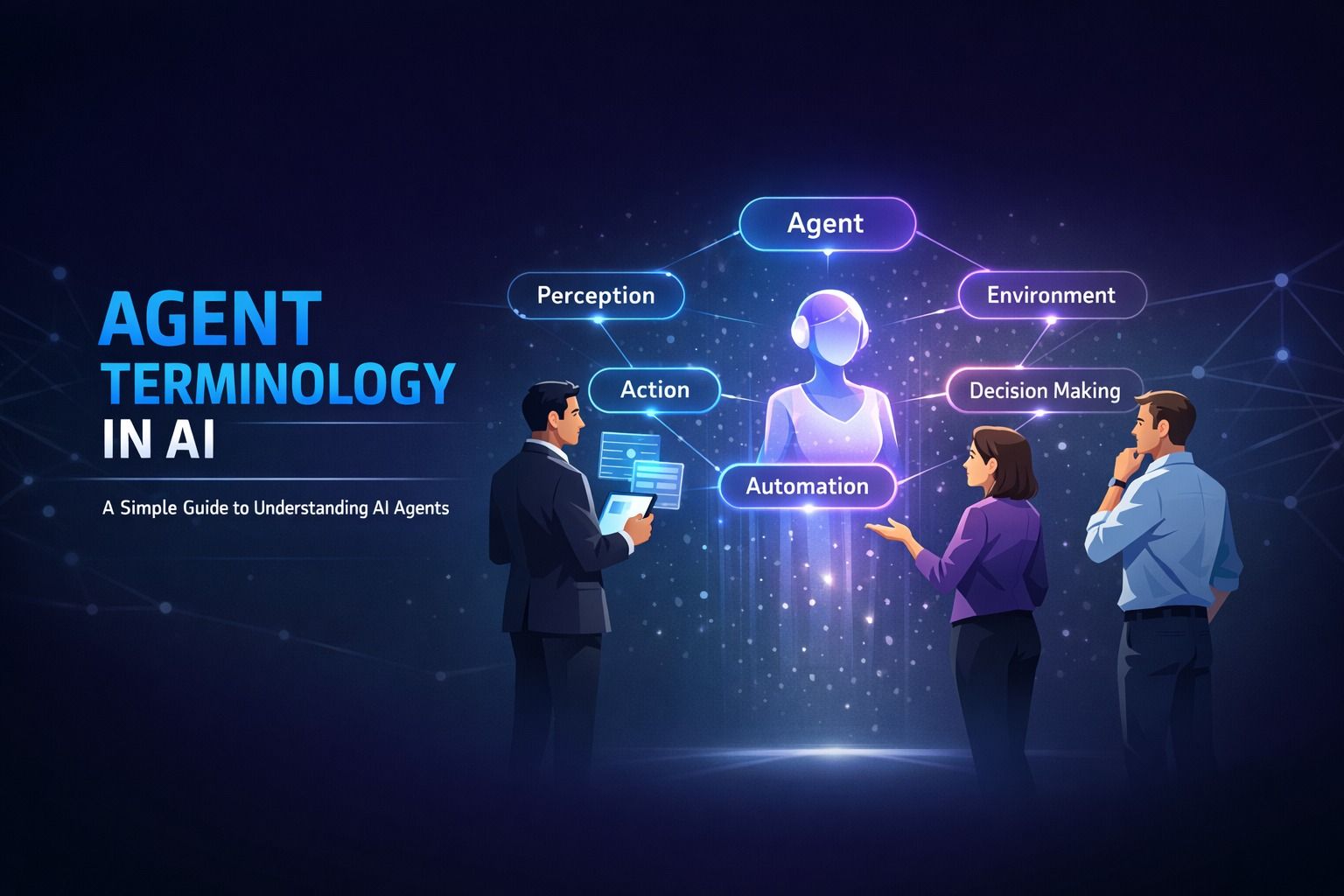
Decode AI agent terminology in ai with this beginner-friendly guide. Learn about autonomous agents, LLMs, multi-agent systems, and how AI agents work in simple terms.
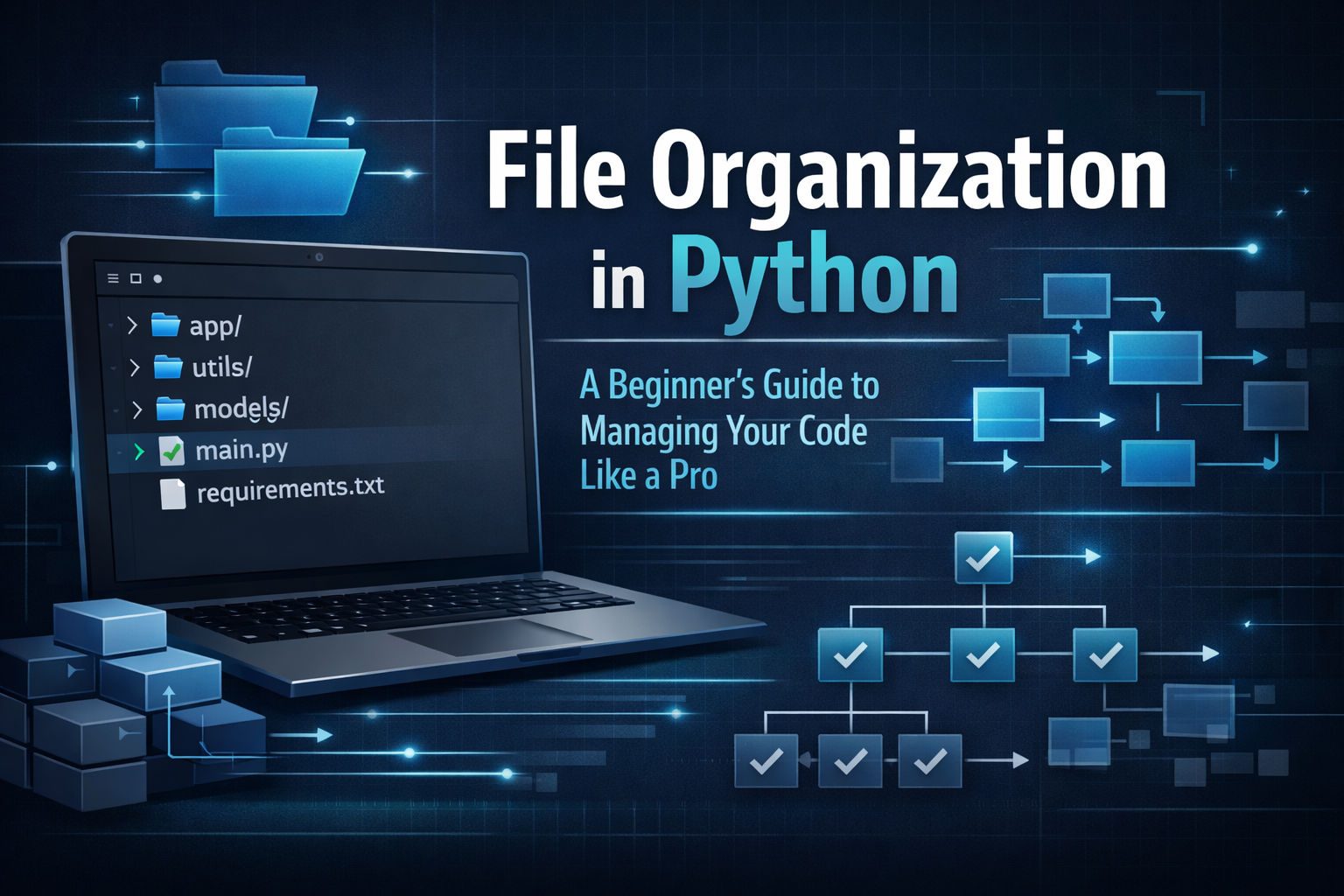
Learn how to organize Python files like a professional developer. Simple guide for beginners covering project structure, best practices, and common mistakes to avoid.
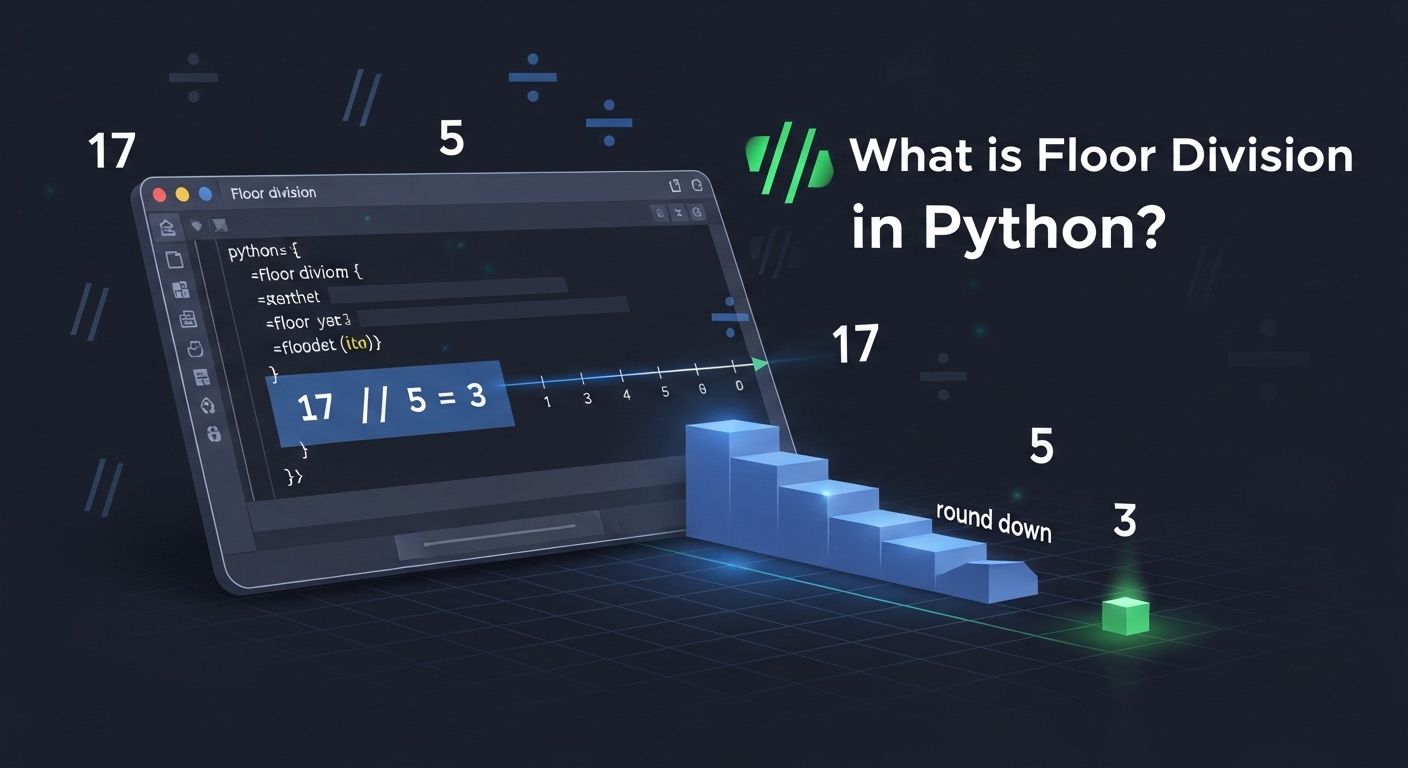
Master floor division in Python operator //. Learn syntax, examples, differences from regular division, and practical use cases.
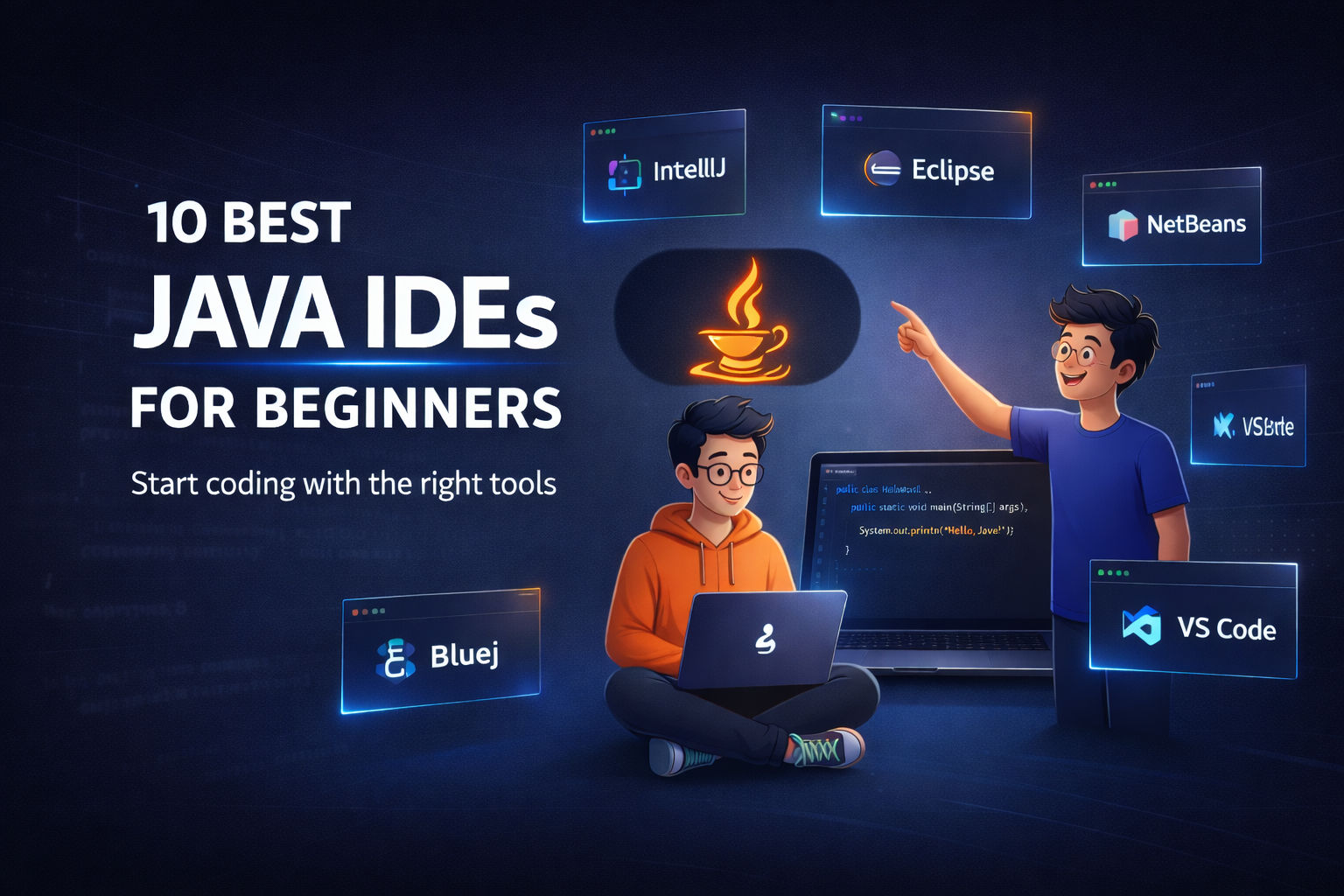
The best Java IDE for beginners in 2026: IntelliJ IDEA, Eclipse, NetBeans, VS Code, BlueJ, jGRASP and Greenfoot compared, versions checked in September.
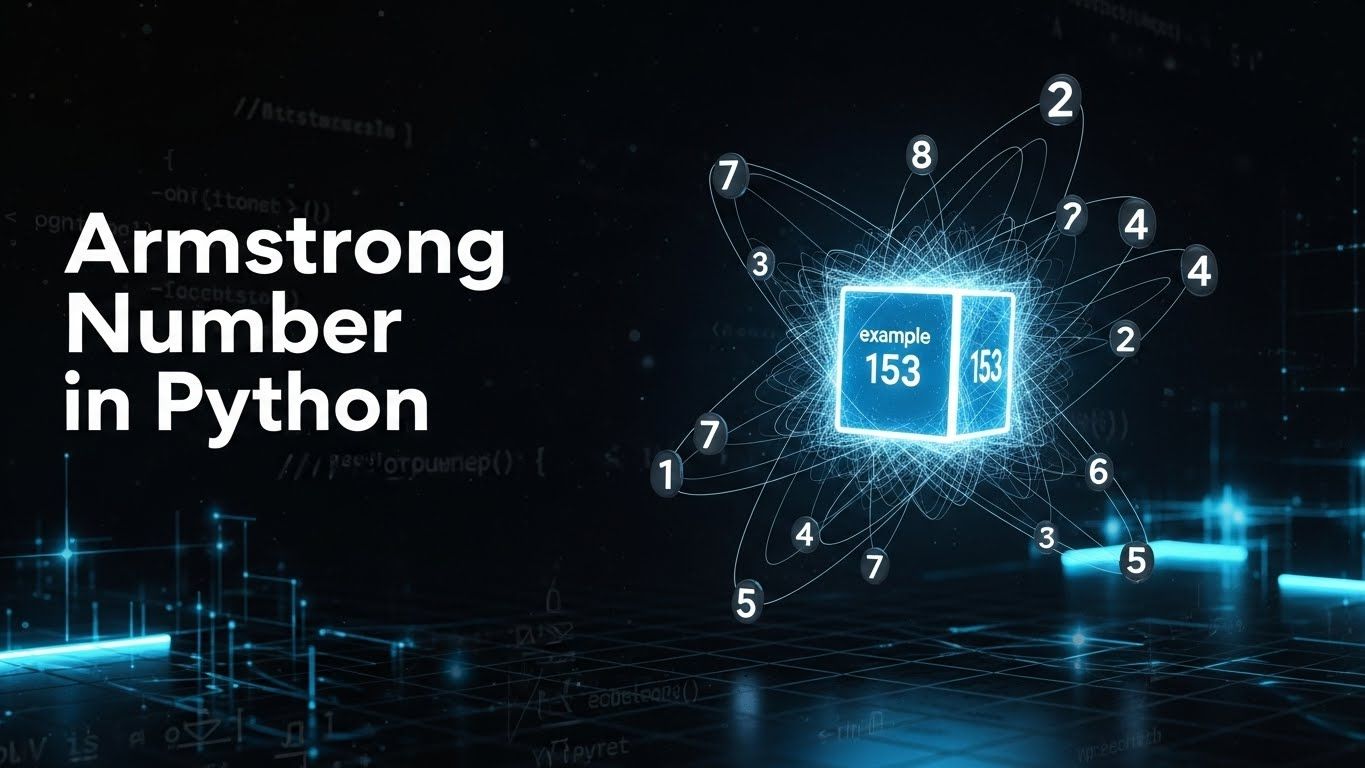
What an Armstrong number is, every one up to 7 digits (there are no 2-digit ones), how many exist, and Armstrong number programs in Python with real output.
Complete guide to teaching coding to 5-year-olds. Best apps, screen-free activities, and tips for young learners. Start today!
How to start coding with a 6 year old: readiness signs, the best visual tools (ScratchJr, Kodable, Code.org), 20 to 30 minute sessions, and a first live class.
What a 7 year old should learn in coding: loops, conditions, events, variables, the best free platforms, a first month week by week, and real progress signs.
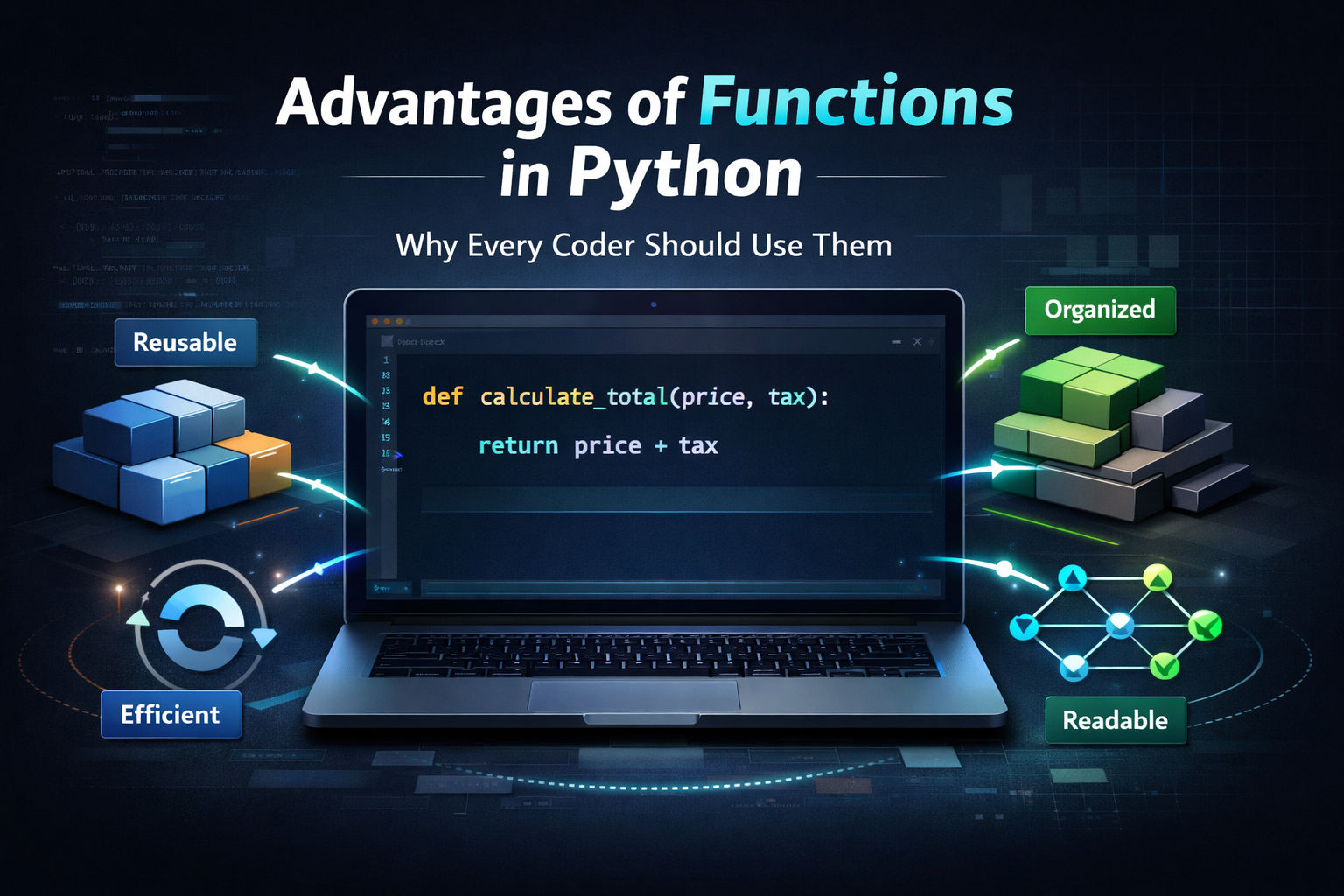
The advantages of functions in Python for students: reusability, less repetition, readability, easier testing and more, each shown with code and its output.
Complete guide to teaching Java for kids. Best age, resources, projects, and tips for young programmers. Perfect for ages 11+.
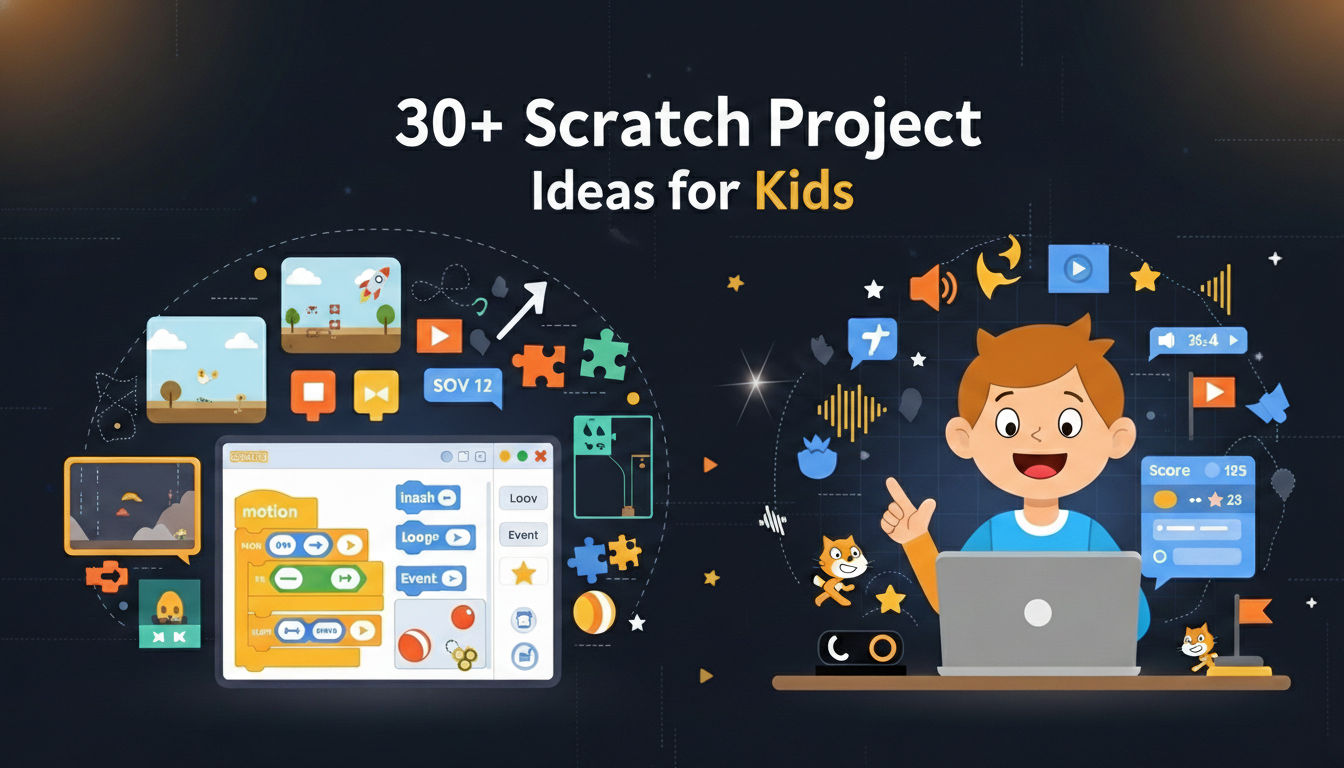
30+ Scratch project ideas for kids sorted by level: simple starter projects for first-time coders, intermediate game ideas, and advanced Scratch projects for 12 year olds and up. Each one lists what it teaches, how long it takes and the steps, plus the live Scratch course that goes with it.
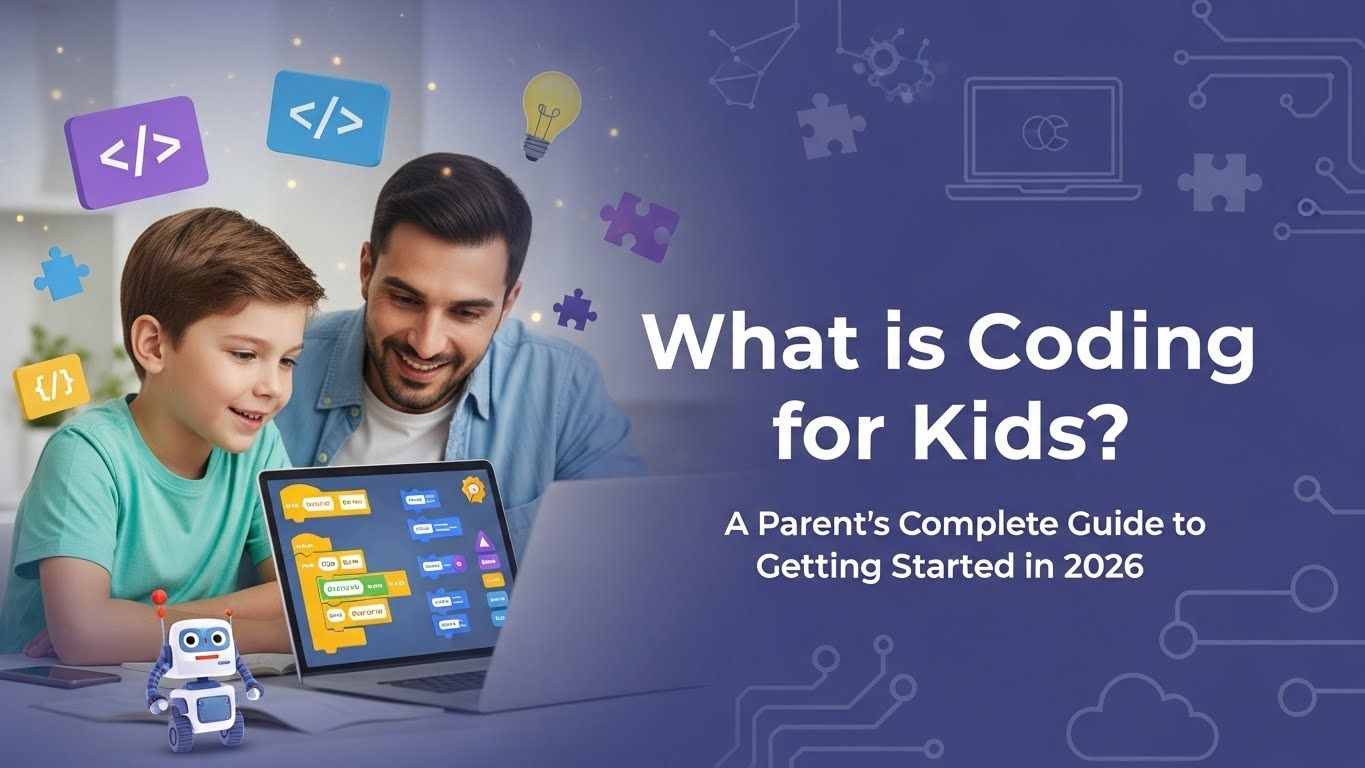
Discover why kids should learn coding, best platforms, languages by age, free resources, and how to start. Complete parent's guide for 2026.

The best coding courses online for students in 2026-27, free and paid, compared on teaching format, projects, fees and support. From freeCodeCamp and CS50 to live small-batch classes, with a path for each goal and what a fair course fee looks like.

Discover the powerful connection between coding and mathematics in engineering and science. Learn how programming brings mathematical concepts to life.
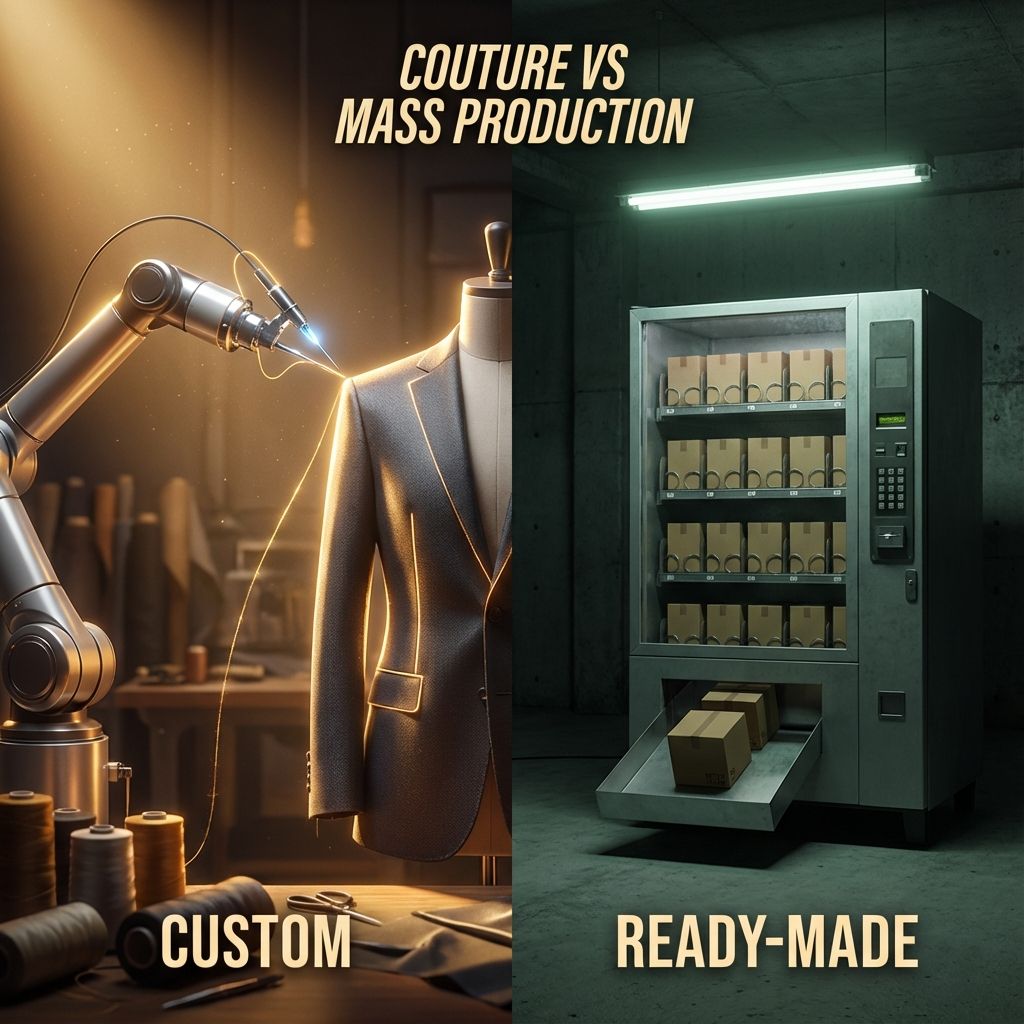
Compare custom software with ready-made solutions. Detailed comparison tables, decision framework, cost analysis, and real examples to help you choose wisely.
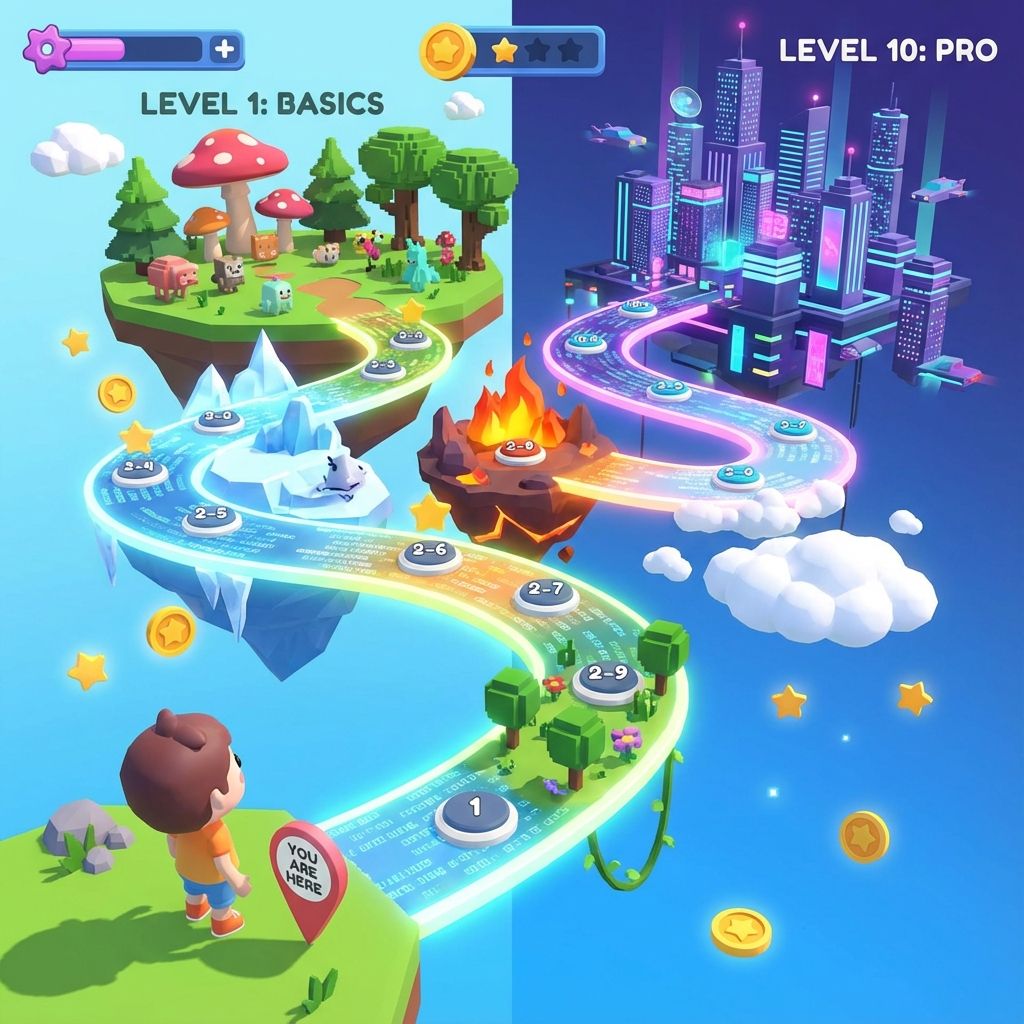
Master data science, AI, and math skills for 2025. Complete guide with skill assessments, learning paths, and resources for tech professionals.
What is Blockly? A free, open-source block coding library that turns blocks into real JavaScript or Python. How kids use it, Blockly vs Scratch, and what next.
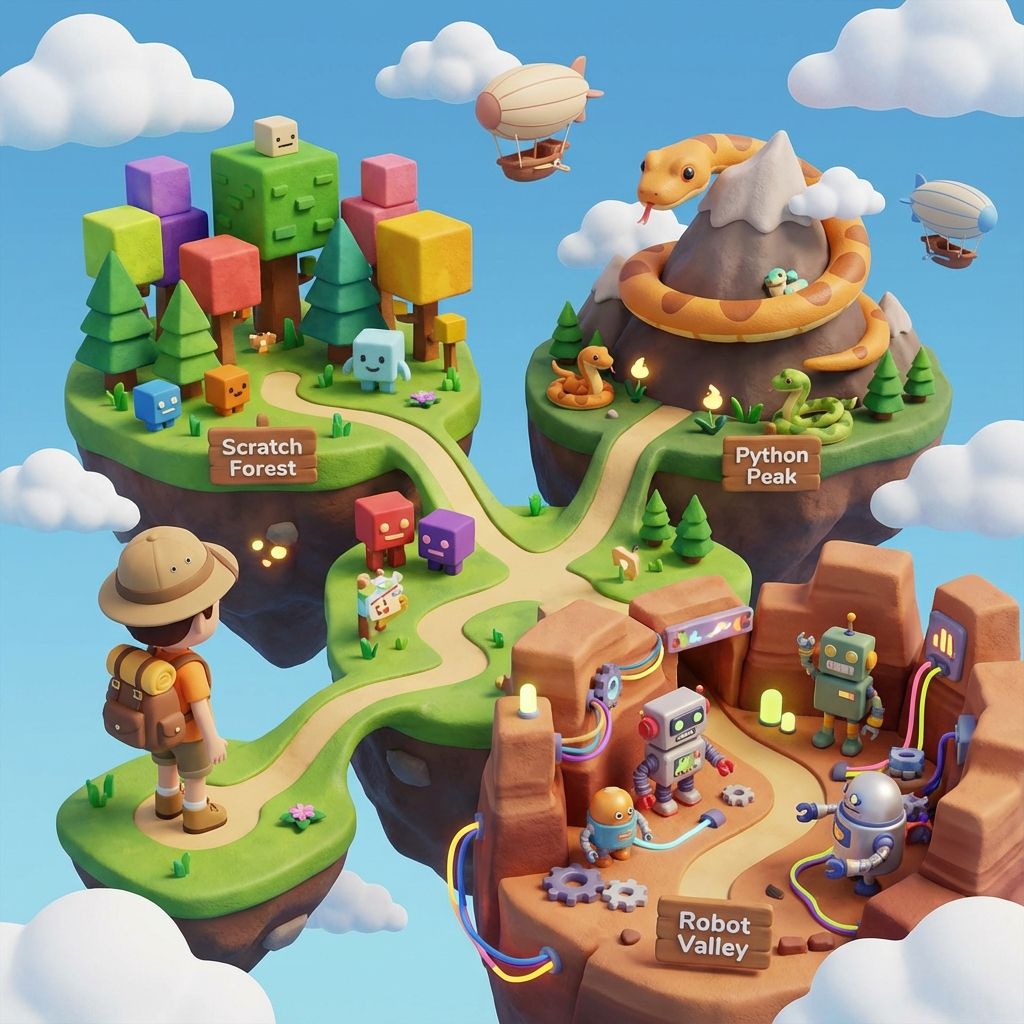
Effective strategies, tools, and best practices for teaching kids coding. Perfect guide for parents and educators to start their child's journey.
Learn JavaScript with 7 hands-on projects! Master variables, functions, DOM manipulation, and event listeners. Build calculators, todo lists, and more.
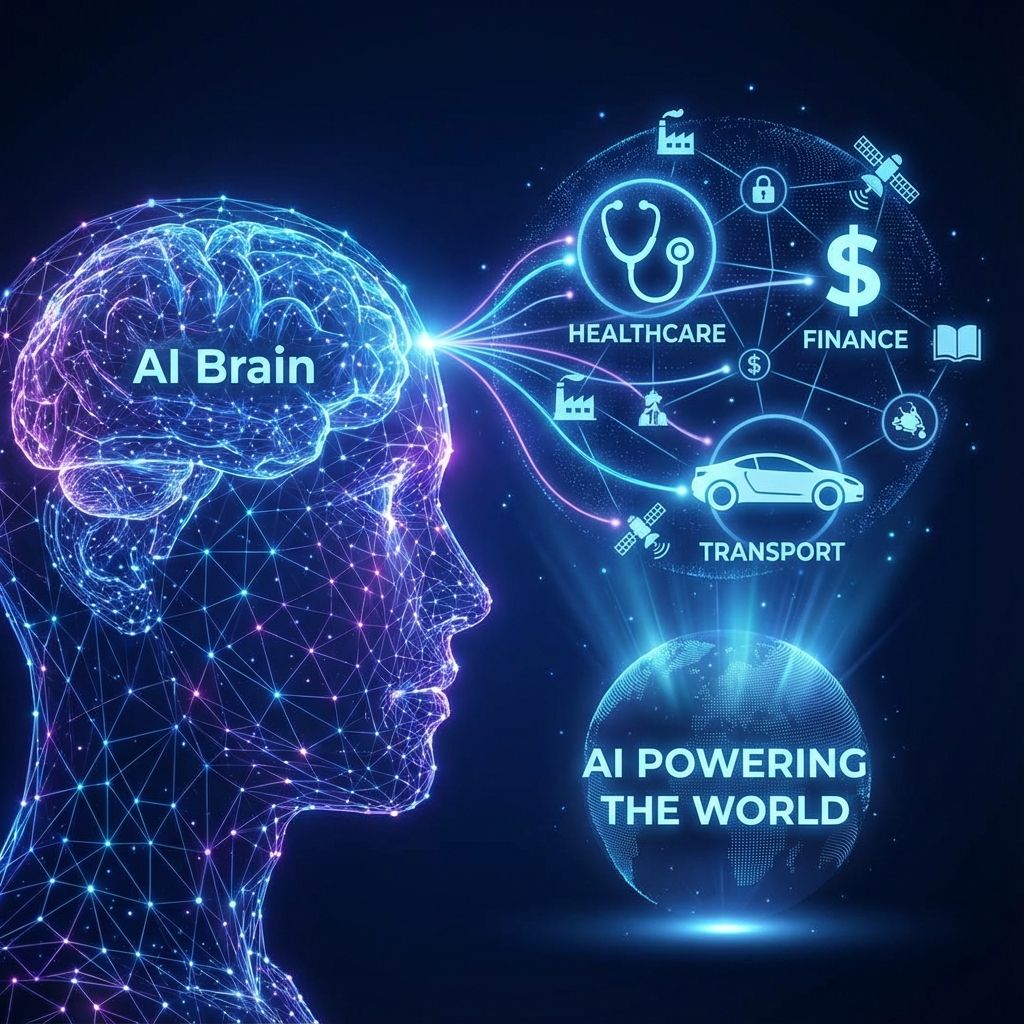
Learn Python for beginners with our free step-by-step guide. Covers variables, loops, functions, OOP, and your first project. Start coding Python today!

Discover how mobile apps boost customer engagement and drive business growth. Learn proven strategies to increase loyalty and revenue.
Plain-English cloud computing guide for business owners. Learn what the cloud is, real cost comparisons, migration tips, and how to get started, no tech jargon.
Discover how data analytics transforms business decisions. Real examples, practical tools, implementation guides, and metrics that drive growth.
Compare outsourcing vs in-house development with detailed cost analysis, decision framework, and industry stats. Make the right choice for your business.
Learn how AI and automation help SMBs cut costs by 40%, boost revenue, and compete smarter. Real examples, ROI data, and implementation guides included.
Stay ahead with the most in-demand tech skills for 2025. From AI to cloud computing, discover what skills will define the future and how to learn them.

Complete guide for professionals transitioning from non-tech to tech careers. Role-specific paths, salary data, networking strategies, and success stories.

The great debate: should students focus on competitive programming or practical development skills? We break down the pros, cons, and how to balance both.

Discover why Python is the most valuable skill for professionals. Learn salary impact, industry use cases, and a complete learning path for career growth.

Complete guide: school curriculum framework, parent action checklist, resource guide. Prepare kids for tech careers with proven strategies & tools.

Early coding: 41% higher earnings, 3x entrepreneurship rates, stronger academics. Research-backed benefits & age-specific guides.

How much math do you need for programming? What each field uses, and how algebra, logic, sets, sequences and logarithms appear in real Python code with output.

India's coding revolution: $254B tech sector, 112 unicorns, 5.4M jobs. NEP 2020 & Digital India creating unprecedented opportunities.

Discover why having a digital presence is essential for businesses. Learn ROI statistics, case studies, and how websites and apps drive growth in 2025.

Learn coding while working full-time. Practical strategies for time management, skill selection, and career transitions for busy professionals.
Discover why hands-on project-based learning is essential for mastering programming. Learn how building real projects accelerates skill development.

Practical guide for college students to build portfolio projects. 50+ project ideas, GitHub tips, and time management strategies.

The definitive 2026 guide to programming languages for college students. Updated salary data, AI-era job market stats, and career paths for Python, JavaScript, Java, Go, Rust & more.

Complete guide for parents teaching coding at home. Choose the right tools, create learning routines, and support your child's journey.
Compare top robotics kits for kids with pricing. Learn how STEM kits develop logical thinking, problem-solving, and engineering skills.
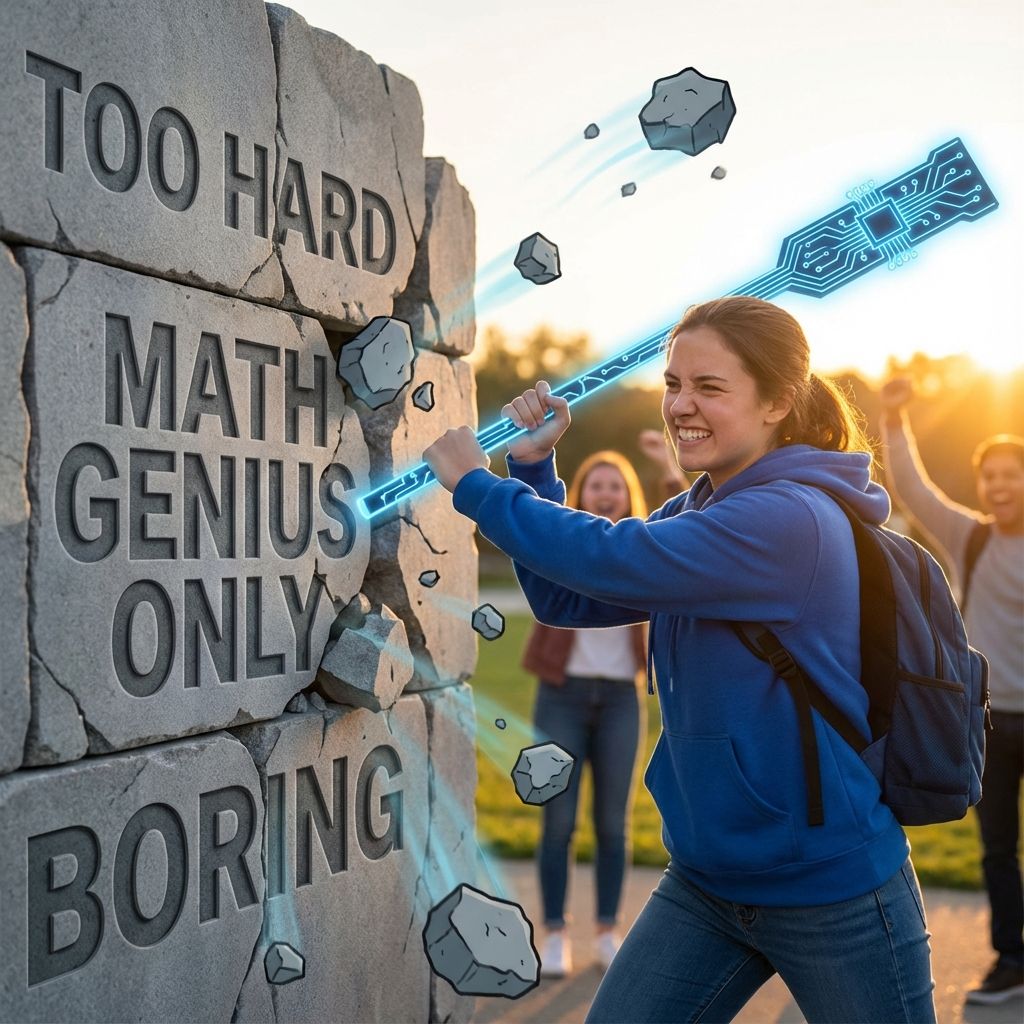
Debunking coding myths for students. From 'coding is only for geniuses' to 'it's too late', the truth parents need to know.
The best coding games for kids in 2026 by age: Scratch, ScratchJr, CodeAI (formerly Code.org), Blockly Games, CodeCombat and more, free or paid, facts checked.
Scratch vs Python: Scratch is free drag-and-drop blocks for ages 8 to 13+, Python is typed text code. The real differences, side-by-side code and which first.

Discover the research-backed connection between coding and math skills. Learn how programming develops mathematical thinking and problem-solving.
Kids coding languages by age, updated for 2026-27: Scratch from 6, Python from 11, then the advanced coding languages for teens (JavaScript, Java, C++). Coding milestones for 8 to 10 year olds, 11 to 13 and 14 to 18, and the live course that matches each step.

Discover why coding is essential as reading for children in 2025. Learn how programming prepares kids for the future with statistics and expert insights.
Complete AI guide: Learn what AI is, languages, career paths, ethics, and 5 projects. Your roadmap from zero to AI expert in 12-18 months.
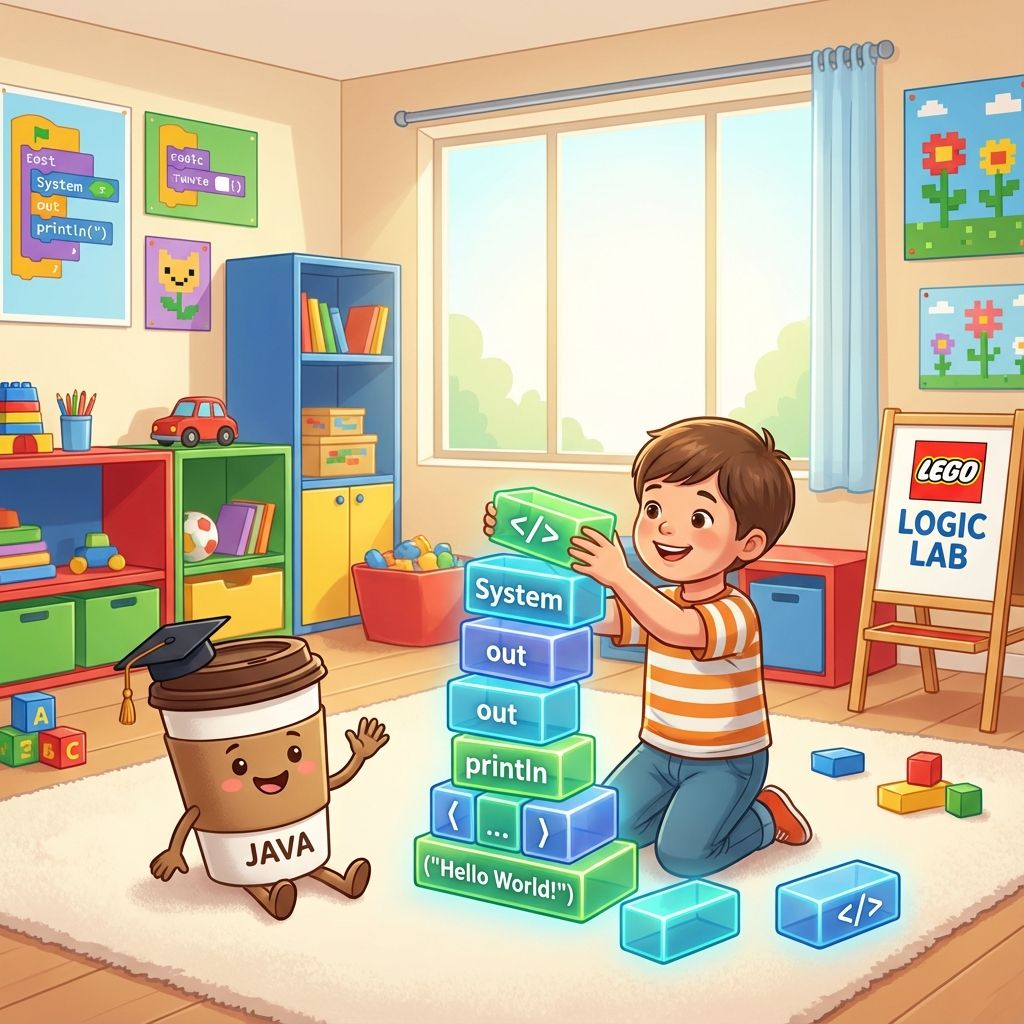
Master 10 essential Java programs for school students. Complete solutions, explanations, and practice exercises for beginners.

Master 10 essential Java programs with complete solutions and explanations. Perfect for college students, interviews, and exams.

Discover what makes Modern Age Coders different. Learn about our teaching philosophy, expert instructors, and why thousands trust us.

Discover why coding is the most valuable skill for teens. Learn how it transforms futures and opens doors to endless career opportunities.

A step-by-step 60-day plan for teen developers to go from app idea to published on the App Store or Play Store. Real timeline, real tools, real success.

Worried about your child using ChatGPT for homework? Discover 10 parent-approved AI tools that help kids learn safely without doing the work for them.
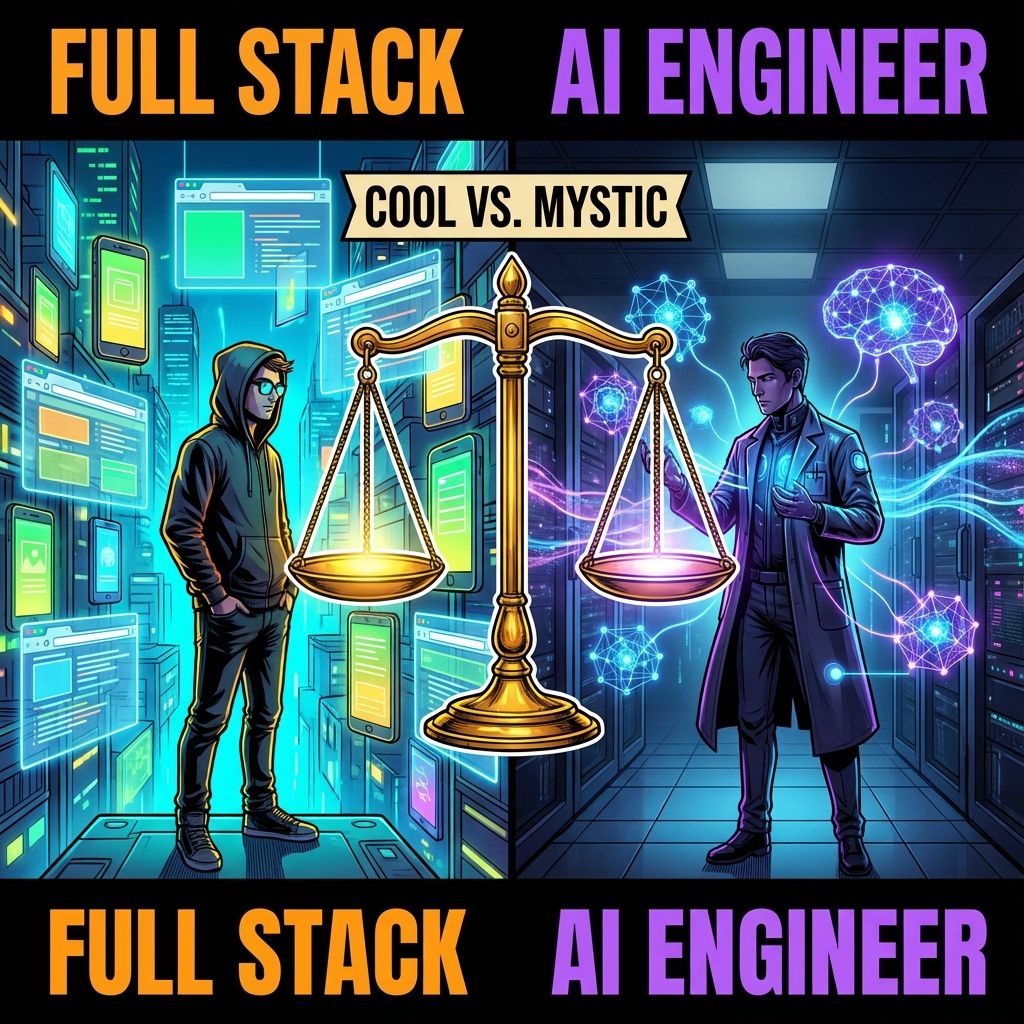
Confused between Full Stack Development and AI Engineering? We break down salaries, job demand, skills, and career growth for both paths in the Indian market.

Discover what's missing from CBSE and ICSE tech curricula. Learn how parents can bridge the gap and prepare students for real-world tech careers.
Minecraft vs Roblox for kids: Minecraft Education is the gentler start from about 7, Roblox Studio is real typed code (Luau) from about 10. Which to choose.

Coding is as essential as English today. Discover why 2026 is the perfect year to start and how it opens doors to endless opportunities.