BUILD / KIDS / 01
Python and AI for Kids
A real language from the first week, not a drag and drop stand-in. Turtle graphics, small games, then the idea that a machine can infer a rule from examples.
Open the syllabusWorldwide · Live online · Ages 6 to 67
The world filled up with courses that teach you to talk to a chatbot. Almost none teach you to make one. We think that gap is the whole opportunity, so we teach the part underneath: how data becomes a model, how a model is trained, how you prove it works, and how you fix it when it does not. Live classes, small groups, a teacher who knows your name, in more than 25 countries.
Teaching since 2020 · 10,000+ students · rated 4.9 across 547 Google reviews
In short
Modern Age Coders teaches machine learning by building it. Students aged 6 to 67 learn Python, the mathematics that machine learning runs on, and the full loop of preparing data, training a model, measuring its error and improving it. Classes are live and online in small batches, priced from USD 100 a month, and taught to local evening hours in more than 25 countries. The first class is free.
The distinction
Parents and career changers are being offered a choice they cannot see, because both options are labelled "AI course". These are the two, stated plainly, so you can decide which one you are buying.
We are not against AI tools. Our students use them, and we teach them properly, including the part most courses skip: how to notice when the tool is confidently wrong. A student who cannot audit an output is not empowered by it, they are dependent on it.
But a generation taught only to prompt cannot staff the national AI programmes now being funded across the Gulf, Europe and Asia. Those posts want engineers who can be handed messy records and return a defensible result. That is a different education, and it is this one.
The curriculum
This is the honest shape of the work. Notice how late the model appears, and how much of the job is judgement rather than code. Courses that begin at stage four produce students who can run a notebook and cannot tell you whether the result means anything.
Stage 01
Python until it stops being a translation exercise. Loops, functions, data structures, files. Not enough to impress anyone, just enough that the language disappears and the problem is the only thing left in front of you.
Stage 02
Loading, cleaning, joining, plotting. Where most of the real hours go, and where most mistakes are made silently. Students learn that a missing value is a decision, not an inconvenience, and that they own the decision.
Stage 03
Linear algebra for how data is shaped, calculus for how a model improves itself, statistics for knowing whether an improvement is real. Introduced at the moment it explains something the student has already seen happen.
Stage 04
Regression before neural networks, because a student who can interpret a coefficient can later interpret a network, and one who skipped it never can. Classification, clustering, trees, then depth.
Stage 05
Splitting data honestly, reporting error in real units, and resisting the number that flatters you. The moment a student can say how wrong their own model is without flinching is the moment they became an engineer.
Stage 06
Putting the model somewhere other people can use it, then seeing it meet inputs you never imagined. Deep learning, language models, retrieval and agents sit here, on top of foundations that hold them up.
The catalogue
Age bands here are not difficulty settings on one course. Each is a separate curriculum, written for what a learner at that stage can hold in their head, and it ends somewhere different.
BUILD / KIDS / 01
A real language from the first week, not a drag and drop stand-in. Turtle graphics, small games, then the idea that a machine can infer a rule from examples.
Open the syllabusBUILD / KIDS / 02
Why a model is confident and wrong at the same time, and how a child can check it. The most useful habit available at this age, taught before the tools arrive.
Open the syllabusBUILD / KIDS / 03
Children instruct AI tools to build something, then read the result and repair it. Instructing is the easy half. Judging is the half that transfers.
Open the syllabusBUILD / TEEN / 01
The spine of this page as a single course. Python, the mathematics, classical algorithms, neural networks, vision and language, with a trained model closing every stage.
Open the syllabusBUILD / TEEN / 02
Stage two on its own, at depth. Cleaning, joining, plotting, and finding the outlier that would have quietly ruined every later result.
Open the syllabusBUILD / TEEN / 03
Two years from first line to genuinely advanced. The right start if a teenager is arriving without code and wants the AI track standing on something solid.
Open the syllabusBUILD / TEEN / 04
Shipping real projects with AI assistance while learning to review what the assistant produced. Teens finish able to build, and able to defend every line.
Open the syllabusBUILD / PRO / 01
The complete engineering route. Supervised and unsupervised methods, deep networks, training discipline, evaluation that survives review, and deployment.
Open the syllabusBUILD / PRO / 02
How language models are trained, fine tuned and grounded against your own documents, and how agents are constrained so they fail loudly rather than quietly.
Open the syllabusBUILD / PRO / 03
For professionals who want the applied half first. Machine learning and language processing pointed at the reports and pipelines already on their desk.
Open the syllabusBUILD / PRO / 04
The employment shaped route. Statistics, SQL, feature engineering, modelling and communication, closing with a portfolio built to be read by a hiring manager.
Open the syllabusBUILD / PRO / 05
The interview gate, and the reason a model that works on a thousand rows still works on ten million. Taught as problem solving rather than recall.
Open the syllabusBUILD / ALL / 06
Mathematics from early number sense to university level, web and app development, game development, and exam preparation for AP, IGCSE, IB and CBSE.
Open all coursesBefore you pay anyone
We would rather you could tell a good programme from a bad one, even if you decide the good one is somebody else's. Each of these is a question you can ask any provider, and the answer tells you most of what you need to know.
If week one is neural networks, ask what happened to the data. Practitioners spend most of their time on collection, cleaning and features. A course that skips to the interesting part produces students who can run a notebook and cannot tell you whether the output means anything.
Ask how error is reported. If the answer is accuracy and nothing else, be careful. A model that predicts "no" every time scores 99 per cent accuracy on a problem where the answer is yes once in a hundred. Knowing why that number is worthless is the difference between training a model and believing one.
Twenty students submitting the same iris classifier have not built portfolios, they have built copies. Ask what a finished student's work looks like and whether you can open it. If it cannot be opened, it cannot be assessed by an admissions reader or a hiring manager either.
"No mathematics required" is a sales position, not a curriculum. It is true for exactly as long as the student never has to explain a result. Every serious next step, a university machine learning module, a research group, a real engineering role, assumes linear algebra and statistics. Postponing it does not remove it, it just moves the wall further down the road.
Ask whether a human watches the student write code. Most of what a good teacher does is interrupt at the moment a misconception forms. Video cannot do that, and an auto-grader marks the output rather than the reasoning that produced it. If a course is recorded, it is a book with a higher price.
The same five. Then take the free first class, which is a real class, and judge the teaching rather than the brochure. If it is not right for your child we would rather you found out in week one than in month six.
The depth series
Written for people who want to know why rather than which button. No prerequisites beyond curiosity for the first half, and real code in every one of them.
Where we teach
Each page below is written for one market: the national AI strategy your government has actually published, the exam board your child actually sits, the universities they are actually aiming at, class times in your evening, one flat fee in US dollars, and a first machine learning project built on data from your own country.
Not listed? We teach students in more than 25 countries and the class runs in English wherever you are. Leave a number and we will find a slot that works in your timezone.
Student work
Not mockups, not screenshots from a brief. Working applications at real addresses that you can open right now. More in Student Labs.
AI and ML
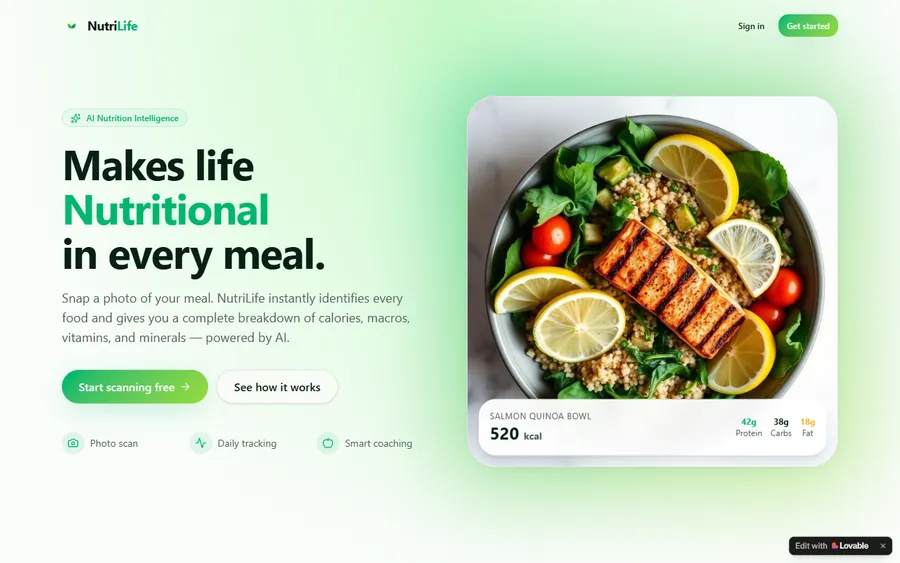
An AI nutrition coach that reads what you eat and moves you toward a target.
AI and ML
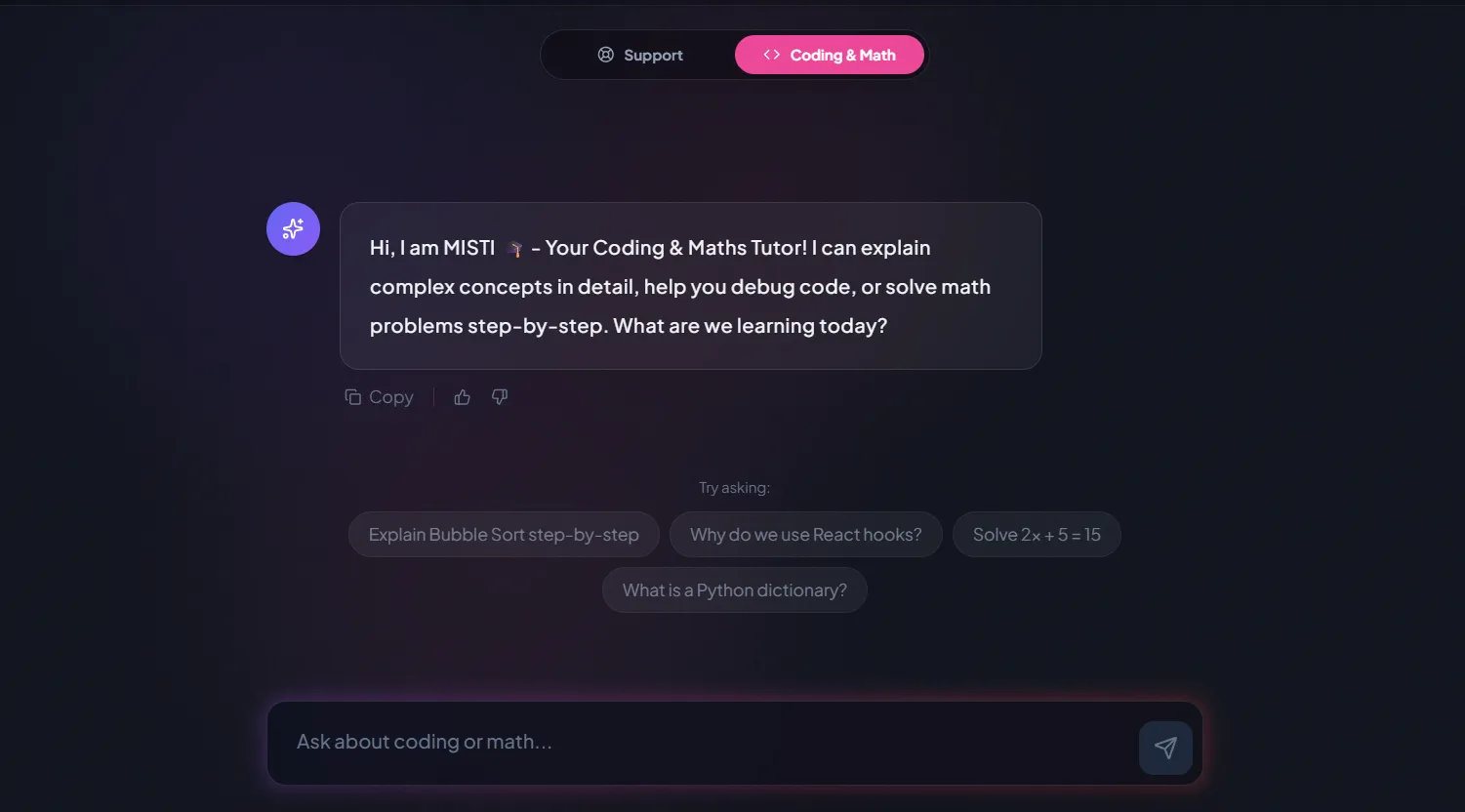
A chatbot that answers mathematics and programming questions, written and deployed by a student.
AI and ML
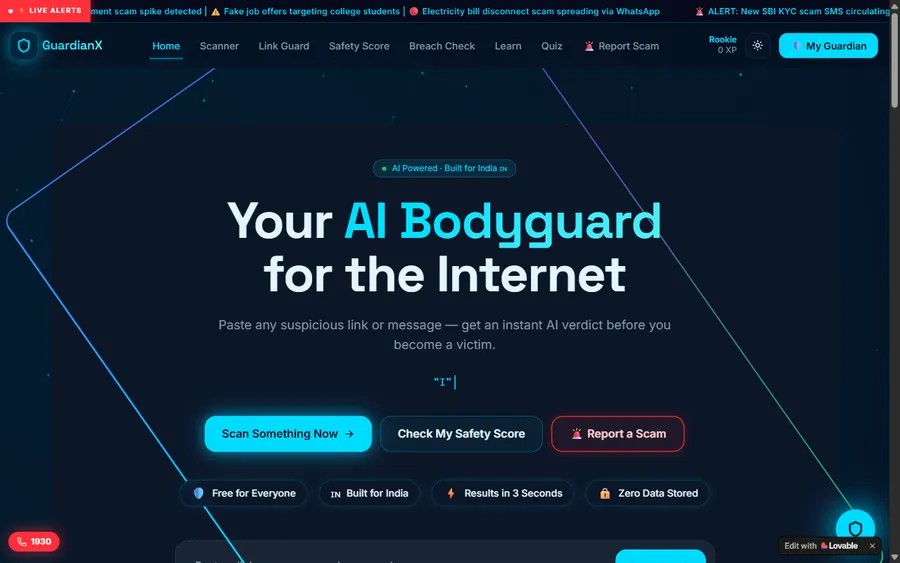
An assistant that helps a young person recognise unsafe situations online.
Web app
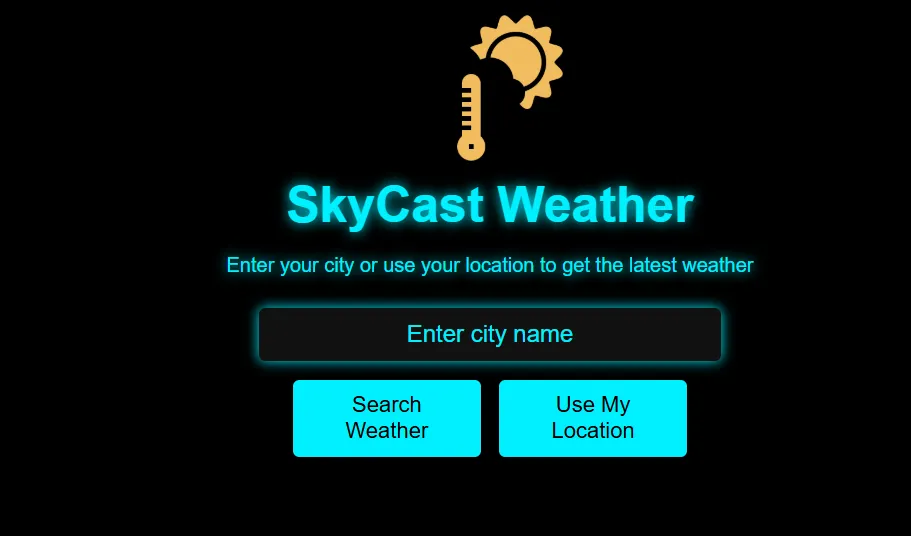
A weather forecasting site with live conditions for any location, in a clean responsive interface.
Fees
Monthly, with no admission fee and no annual lock in. The fee is a flat USD 100 a month for group classes and USD 150 for one to one, billed in US dollars, everywhere outside India.
Free first class
USD 0
no card needed
Group batch
USD 100
per month
One to one
USD 150
per month
What families say
Real reviews from real families. We do not write testimonials and we do not commission them.
★★★★★
"My son has been attending this coding class for the past couple of months, and I've been genuinely impressed with both his progress and the teaching."
Poonam Rathore
Parent
★★★★★
"Modern Age Coders has been a game-changer for me. I struggled to grasp IT concepts and coding before joining, but their classes transformed everything. I can now confidently write complex programs with ease."
Samriddha Mondal
Student
★★★★★
"One of the most wonderful education centres out there. Education is not limited to school syllabus but focuses on skill development."
Vansh Agarwal
Student
★★★★★
"I highly recommend this computer coding class! The teachers are incredibly knowledgeable and passionate about coding."
Ritu Kedia
Parent
★★★★★
"I absolutely love it here! I made new friends and learned important valuable coding skills while having the fun of my life."
Yug Rathore
Student
★★★★★
"The classes are excellent. The teachers explain concepts very clearly and make code fun and easy to understand."
Pragyen Diwan
Parent
Questions
Using AI means operating a finished product: you type an instruction and evaluate what comes back. Building AI means creating the thing that produces the answer. You gather and clean data, choose a model, train it, measure how far its predictions sit from the truth, diagnose why, and improve it. The first is product literacy and it expires when the product changes. The second is engineering and it does not.
You need less than people fear and more than the marketing suggests. The working set is linear algebra for how data is represented, calculus for how a model improves itself, and statistics for knowing whether a result means anything. We teach all three inside the machine learning rather than as a prerequisite course, so you meet each idea at the moment it explains something you just built. Students who arrive convinced they are bad at mathematics usually change their mind once it stops being abstract.
We teach from age 6 to age 67, but the entry point differs. A six year old starts with Python, drawing, and the idea that a computer can learn a rule from examples instead of being told it. A teenager starts with real data and their first trained model. An adult usually starts with the problem already on their desk. What does not change is the order: understand the data, then the model, then the evaluation.
Yes, briefly and properly, which is roughly six weeks rather than a career. Knowing how to brief a model well and how to catch a confident wrong answer is genuinely useful. Where it goes wrong is when it is sold as an AI education. Prompting rests on the behaviour of a specific product in a specific year. Model building rests on mathematics that has not changed in decades. We teach the first as a tool and the second as the subject.
Working software at a real address, not slide decks. Students train models on published datasets from their own country, then move to their own ideas. Past students have shipped an AI nutrition coach, a chatbot that explains mathematics and coding, an online safety assistant and a weather forecasting application, all live on the public web where anyone can open and inspect them.
Group batches of fifteen to twenty students are USD 100 a month and one to one teaching is USD 150 a month, billed in US dollars everywhere outside India. We teach live online to students in more than 25 countries, with class times set to local evenings rather than to our own convenience. The first class is free and does not require a card.
Live, always, with the same teacher week after week. Screens are shared in both directions so the teacher watches a student write code and interrupts at the moment the mistake happens, rather than marking it days later. Nothing on this site is a recorded course sold as a class, and nothing is auto-graded.
No, and we will not claim otherwise. A degree gives you theory depth, a credential and time. What this gives you is the practical half taught properly and early: real code, trained models, an evidence portfolio, and the mathematics that university machine learning courses assume you already have. Most of our university-age students take it alongside a degree, not instead of one.
Start here
Leave a number with your country code and a mentor calls you back at an hour that suits your timezone. The first class is a real class, and it doubles as a placement check so you start at the right level rather than the average one.
Prefer to read first? See how we teach, the full catalogue, or what students have built.