Table of Contents
- 1. The Origins: How Andrej Karpathy Coined 'Vibe Coding' and Changed Software Forever
- 2. How Vibe Coding Actually Works: The Iterative Loop Explained Step-by-Step
- 3. The 2026 Statistics That Prove Vibe Coding Is Not a Fad
- 4. The Complete Tool Arsenal: Every Major Vibe Coding Platform Compared
- 5. Why Vibe Coding Is the Ultimate Democratizer of Technology
- 6. The Dark Side of the Vibe: Security Risks, Vulnerabilities, and the 45% Problem
- 7. The Generational Shift: How Vibe Coding Is Remaking Tech Education for Every Age Group
- 8. The Evolution: From Vibe Coding to Agentic Engineering
- 9. The Future: Multi-Agent Teams, Multimodal Input, and Self-Healing Software
- 10. Vibe Coding vs Traditional Coding: The Honest Comparison
- 11. How to Start Vibe Coding Today: A Practical Roadmap
- Vibe Coding: Questions People Ask
- Conclusion: The Vibe Coding Manifesto: Build or Be Built Over
The software development landscape is undergoing its most radical transformation since the invention of high-level programming languages. We are moving away from manually typing out syntax line-by-line and entering the era of Vibe Coding, a paradigm shift so significant that it was named the Collins English Dictionary Word of the Year for 2025, adopted by 92% of US developers, and is projected to power a $8.5 billion global market by 2026.
But what exactly is vibe coding? Is it just a fleeting buzzword, or does it represent a fundamental paradigm shift in how digital logic is conceived and deployed? In this deeply detailed guide, the most comprehensive on the internet, we will dissect every layer of this revolution: the philosophy behind it, the exact mechanics of how it works, a head-to-head comparison of every major tool powering the movement, the alarming security risks that 45% of AI-generated code carries, the jaw-dropping industry statistics reshaping the job market, and why mastering vibe coding is no longer optional for anyone who wants to remain relevant in the next decade of digital creation.
Vibe coding, defined (updated September 2026): vibe coding is building software by describing what you want in natural language, letting an AI write the code, running it, and describing the next change, in a loop, instead of typing the code yourself. The term comes from a February 2025 post by Andrej Karpathy. The human still decides what to build, checks that it works and owns the result; what changes is that the first draft of every line is written by a model. The rest of this guide explains where the term came from, how the loop works in practice, which tools people use, where it goes wrong, and how it is being taught to kids, teens and adults.
📊 Vibe Coding by the Numbers (March 2026)
92% of US developers use AI coding tools daily. 46% of new code on GitHub is AI-generated. 78% of organizations have integrated AI into core dev workflows. The AI coding assistant market is projected to reach $8.5 billion by 2026. Gartner forecasts 60% of all new code will be AI-generated by end of 2026. Collins Dictionary named 'vibe coding' the Word of the Year 2025.
1. The Origins: How Andrej Karpathy Coined 'Vibe Coding' and Changed Software Forever
The term 'vibe coding' was not born in a corporate boardroom or an academic paper. It emerged from a single tweet in February 2025 by Andrej Karpathy, one of the most respected AI researchers alive. Karpathy is a founding member of OpenAI, former Director of AI at Tesla (where he led the Autopilot vision team), a Stanford lecturer, and the creator of some of the most influential neural network implementations in history.
In that now-legendary post, Karpathy described his evolving relationship with writing software. Instead of painstakingly coding every function, class, and API endpoint by hand, he found himself describing what he wanted to an AI, accepting its suggestions, running the code, seeing what happened, and iterating through conversation. The code itself became almost irrelevant. What mattered was the intent, the direction, the vibe.
I increasingly fully give in to the vibes, embrace exponentials, and forget that the code even exists. You just describe what you want, look at the result, and iterate. It's vibe coding. The hottest new programming language is English.
, Andrej Karpathy, February 2025
This wasn't just a catchy phrase. It was the articulation of a profound shift that millions of developers had been feeling but couldn't name. Traditional programming forces human brains to perform an exhausting translation: converting abstract goals ('I want a blue button that saves user data to a database') into highly specific, rigid machine syntax across multiple files of HTML, CSS, SQL, JavaScript, and configuration. This translation bridge is where traditional programming is slow, error-prone, and fundamentally exclusionary, gatekeeping software creation to those willing to spend years learning arcane syntax rules.
Vibe coding burns that bridge. Instead of getting bogged down in boilerplate code, dependency conflicts, missing semicolons, and cryptic error messages, the developer communicates the 'vibe', the overarching vision, the intent, the desired outcome. The AI interprets that intention and generates the underlying code structure. You aren't writing code; you are steering it. You aren't a typist; you're an architect.
The cultural impact was immediate and explosive. Within months of Karpathy's tweet, 'vibe coding' became one of the most discussed concepts in technology. Collins English Dictionary officially named it the Word of the Year for 2025, a recognition that transcended tech circles and placed the concept firmly in mainstream consciousness. Merriam-Webster also added a formal definition. The concept resonated because it captured a universal truth: AI had crossed a threshold where conversing with a machine in plain English could produce functional, deployable software.
💡 The Two Faces of Vibe Coding
Karpathy himself distinguished two approaches: 'Pure' Vibe Coding, fully trusting AI output for rapid prototyping and throwaway projects, where speed matters most. And Responsible AI-Assisted Development, using AI as a powerful collaborator while meticulously reviewing, testing, and understanding the generated code. The most successful vibe coders master both modes and know exactly when to deploy each one.
Interestingly, even Karpathy acknowledged the limitations. When building his own project, Nanochat, he admitted that he resorted to 'hand-coding' certain parts because AI agents 'didn't work well enough' for his specific needs. This honesty is crucial, vibe coding is not magic. It is a fundamentally new skill that requires deep understanding to wield effectively, which is exactly why structured learning paths have become so critical.
2. How Vibe Coding Actually Works: The Iterative Loop Explained Step-by-Step
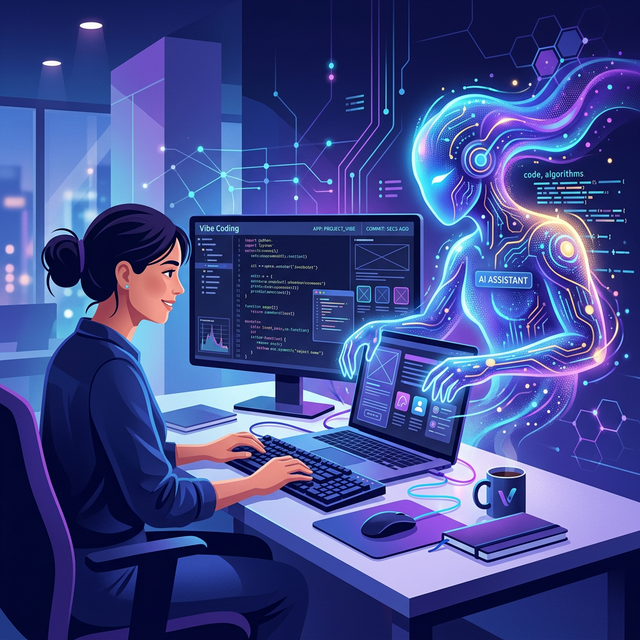
A common misconception about vibe coding is that you simply tell an AI, 'Build me a billion-dollar SaaS app,' press Enter, and walk away. That is not reality, and anyone who tells you otherwise is selling you a fantasy. Vibe coding is a highly iterative, actively directed process. It requires a new skillset that is distinct from traditional syntax-typing, yet deeply reliant on computational thinking, architectural reasoning, and clear communication. The core of this methodology is known as the Vibe Coding Loop.
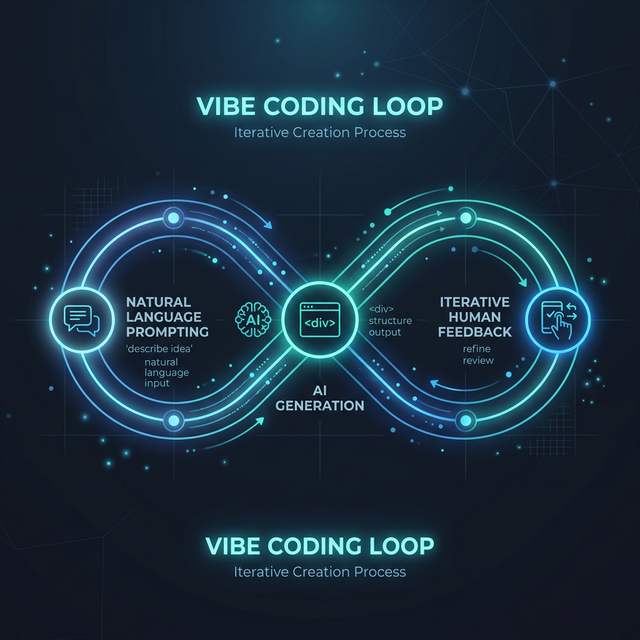
Step 1: The Architectural Prompt: Your Blueprint in Plain English
The process begins with a comprehensive natural language prompt. Unlike a quick Google search, a vibe coding prompt is an architectural blueprint written in English. You must clearly define the overarching goal, the aesthetic rules (dark mode, glassmorphism, minimalist), the required libraries or frameworks (React, Tailwind, Supabase), the intended user flow (landing page → sign up → dashboard), and any constraints (mobile-first, under 3 seconds load time). The quality of your prompt directly determines the quality of your output. A vague prompt yields vague code. A precise, well-structured prompt yields production-quality scaffolding.
Professional vibe coders often spend 20–30 minutes crafting their initial prompt before ever touching the AI, writing out the full system specification, listing edge cases, defining data models, and specifying error handling expectations. This front-loading of thought is what separates a skilled vibe coder from someone who just types 'make me an app' and gets disappointed.
Step 2: AI Orchestration and Code Generation
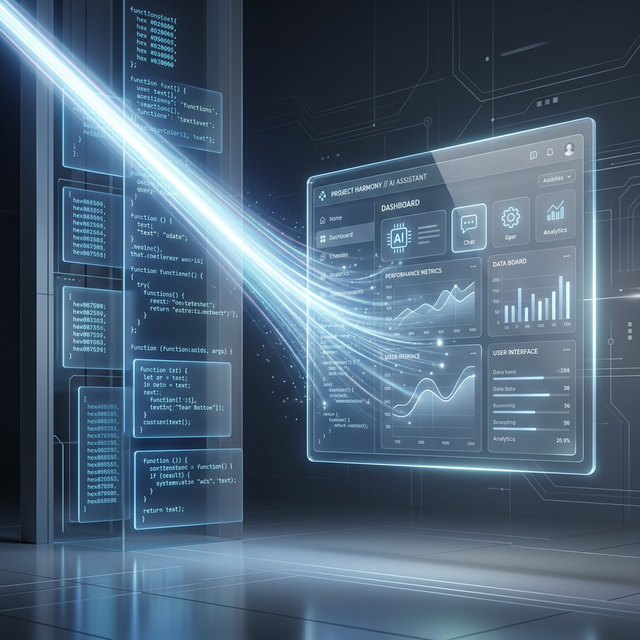
The Large Language Model (LLM) processes the prompt and outputs functional code. But in advanced modern environments like Cursor IDE, Bolt.new, or Lovable, the AI agent goes far beyond outputting a block of text you have to copy-paste. It creates file structures, spins up virtual containers (WebContainers), installs NPM dependencies, configures the database connection, generates database schemas, sets up authentication flows, writes API routes, creates React components with proper state management, applies CSS styling, and spins up a live preview of the application instantly. All from a single prompt.
Step 3: The Human 'Vibe Check': Quality Assurance Through Intuition
This is where the term 'vibe' truly applies and where human value becomes irreplaceable. The developer looks at the resulting application and evaluates its holistic feel. Does it execute effectively? Does the animation have the right bounce? Does the logic hold under edge cases? Is the colour palette inviting? Does the user flow feel intuitive? In this phase, the human isn't acting as a code typist. They become a QA Engineer, UX Designer, Product Manager, and Security Auditor simultaneously. The 'vibe check' is an incredibly sophisticated cognitive process that AI cannot perform on itself.
Step 4: Micro-Iteration: Refining Through Conversation
Instead of opening a file to manually tweak a CSS margin or fix a JavaScript event listener, the vibe coder returns to the conversational interface: 'Make the header 20% smaller, add more padding to the cards, fix the bug where the form submits twice when double-clicked, and add a loading spinner to the submit button.' The AI interprets these new directives, updates the codebase autonomously across multiple files, and re-renders the live preview. Each iteration takes seconds, not hours, a feedback loop so fast it fundamentally changes the economics of software development.
Step 5: Review, Secure, and Ship
The final (and most critical) step that separates professional vibe coders from amateurs: reviewing the generated code for security vulnerabilities, performance bottlenecks, and architectural anti-patterns. As we'll explore in detail later, studies show that up to 45% of AI-generated code contains OWASP Top 10 vulnerabilities. The responsible vibe coder scans for hardcoded API keys, SQL injection risks, missing authentication checks, and misconfigured CORS headers before deploying to production. Only after this human review does the code ship.
3. The 2026 Statistics That Prove Vibe Coding Is Not a Fad
Let's move beyond philosophy and look at the hard data. As of March 2026, the numbers surrounding AI-assisted development are staggering, and they make one thing clear: vibe coding is not a trend. It is the new default.
| Metric | Statistic | Source |
|---|---|---|
| US developers using AI coding tools daily | 92% | Stack Overflow / GitHub Survey 2026 |
| Global developers using AI tools weekly | 82% | GitHub Developer Survey |
| New code on GitHub that is AI-generated | 46% | GitHub Copilot Data 2026 |
| Organizations with AI in core dev workflows | 78% | McKinsey Tech Report |
| Gartner's forecast for AI-generated new code by end 2026 | 60% | Gartner Research |
| Predicted AI-generated code by 2027 | 90% | Multiple industry forecasts |
| Google/Microsoft new code that is AI-generated | 30% | Company earnings reports |
| Productivity increase from AI coding tools | 20–55% | Academic & industry studies |
| Developer time saved on coding, testing, docs | 30–60% | GitHub / JetBrains surveys |
| AI coding assistant market size (2026) | $8.5 billion | Market research reports |
| New GitHub users adopting Copilot in first week | ~80% | GitHub data |
| AI-generated code with OWASP vulnerabilities | 45% | Veracode / Wiz Security 2026 |
| Increase in open-source vulnerabilities per codebase (AI-driven) | 107% | 2026 OSSRA Report |
These numbers tell a clear story: the question is no longer whether you should learn vibe coding. It's how fast you can get proficient at it. The developers who thrive in the next decade will be those who can seamlessly blend traditional engineering knowledge with AI-powered development workflows. Those who resist this shift will find themselves increasingly outpaced by competitors who can ship features in hours that used to take weeks.
Perhaps the most telling statistic is this: while 92% of developers now use AI tools, developer trust in AI code accuracy has actually declined even as adoption increases. This paradox underscores the critical need for continued human oversight, testing, and validation, and reveals why education in both traditional coding fundamentals AND AI orchestration is more important than ever.
4. The Complete Tool Arsenal: Every Major Vibe Coding Platform Compared
Vibe coding is made possible by a new breed of AI development environments that go far beyond standard ChatGPT autocomplete. These tools represent the transition from 'AI Assistants' to 'AI Co-Engineers', platforms that understand your entire codebase, execute terminal commands, create file structures, manage databases, and deploy applications autonomously. Here is the most comprehensive comparison of every major tool powering the vibe coding revolution in 2026.
| Tool | Type | Best For | Key Superpower | Free Tier? |
|---|---|---|---|---|
| Cursor IDE | AI Code Editor (VS Code fork) | Professional developers, complex multi-file apps | Composer Mode: multi-file editing from a single prompt, Agent Mode for autonomous coding | Yes (free tier) |
| Claude Code | Terminal-Based AI Engineer | Senior engineers, large codebase navigation, CLI workflows | Agent Teams (multi-Claude collaboration), automated security scanning, voice input in 20 languages | Subscription |
| Bolt.new | Browser AI App Builder | Rapid prototyping, hackathons, MVPs | WebContainers: full Node.js in browser, zero local setup, instant preview and deployment | Yes (free tier) |
| Lovable | AI Full-Stack App Builder | Non-technical founders, product managers, MVP validation | Generates clean React + Supabase code, Agent Mode for autonomous development, pre-publish security scanning | Yes (free tier) |
| v0.dev (Vercel) | AI UI Component Generator | Frontend developers, designers | Generates polished React/Next.js + Tailwind components from text or screenshots, Design Mode for visual refinement | Yes (free tier) |
| Windsurf IDE | AI-First IDE (Cascade Agent) | Speed-focused heavy coders, enterprise teams | Cascade agent predicts next 3 coding steps, Code Integrity security layer (Jan 2026), memory tracking across sessions | Yes (free tier) |
| GitHub Copilot | AI Pair Programmer | All developers, students (free!) | Inline completions, Copilot Chat, deep GitHub integration, works inside VS Code and JetBrains | Free for students |
| Firebase Studio | Cloud AI Dev Environment | Google ecosystem developers, Firebase apps | Gemini AI integration, multimodal prompts (text + images + drawing), deep Firebase/Firestore integration | Yes (free tier) |
| Replit Agent | Collaborative Cloud IDE + AI | Education, beginners, cloud-hosted projects | 30+ integrations, multiplayer coding, built-in hosting, AI Agent for full app generation | Yes (free tier) |
🏆 Cursor IDE: The Gold Standard for Professional Vibe Coding
Cursor is widely considered the #1 tool for professional vibe coding in 2026. Built as a fork of VS Code (so all your extensions work), it deeply integrates AI into every aspect of the coding experience. Its Composer Mode is the killer feature: describe a change in English, and Cursor will edit 10, 20, even 50 files simultaneously to implement the logic, acting as a true junior developer that understands your entire project structure. Agent Mode takes this further by letting the AI autonomously plan and execute complex multi-step tasks, including creating files, running terminal commands, and resolving errors. It supports multiple AI models (GPT-4, Claude, Gemini), has a privacy mode with zero data retention, and a new Plan Mode that maps out complex architectural changes before executing them.
🤖 Claude Code: The Terminal-Based AI Engineer
Claude Code by Anthropic represents a newer, more agentic frontier. Unlike browser-based tools, Claude Code operates in your terminal, understanding your entire repository, reading your git history, running tests automatically, and executing bash commands on your behalf. In early 2026, Anthropic introduced Agent Teams, where multiple Claude instances collaborate in parallel on tasks with a lead agent coordinating efforts. It features automated security scanning, multi-agent code review for pull requests, voice input in 20 languages, and a revolutionary Cowork feature that lets Claude directly operate GUI applications like browsers, Slack, and Figma. Powered by Opus 4.6 with a massive 1M token context window, it can understand and navigate even the largest codebases.
⚡ Bolt.new & Lovable: Zero-to-One App Builders
Bolt.new and Lovable represent the pinnacle of 'zero-to-one' vibe coding, taking you from nothing to a fully functional, deployed application in minutes. Bolt.new uses WebContainers to run a complete Node.js environment directly in your browser, no local setup, no terminal, no installation. Describe an app, and within 30 seconds it generates a React frontend, Node.js backend, styles it, and gives you a live URL. Lovable takes a similar approach but focuses on generating clean, maintainable TypeScript and React code with Supabase backend integration, generating proper authentication, row-level security, Stripe payments, and GitHub sync. It includes Agent Mode for autonomous development, Chat Mode for collaboration, and Visual Edits for direct UI modification.
🎨 v0.dev & Firebase Studio: Specialized Powerhouses
v0.dev by Vercel specializes in generating polished frontend components. Feed it a description, a screenshot, or even a Figma file, and it generates production-ready React components with Tailwind CSS. Its Design Mode (mid-2025) allows visual refinement of spacing, colours, and layouts while preserving the underlying code structure, bridging the gap between designer and developer. Firebase Studio from Google is the evolution of Project IDX, a cloud-based development environment deeply integrated with Firebase and powered by Gemini AI. It supports multimodal prompts (describing apps using text, images, and drawing tools), offers deep integration with Firestore, Authentication, and Cloud Functions, and can auto-generate security rules using Gemini 2.5 Pro.
5. Why Vibe Coding Is the Ultimate Democratizer of Technology
Historically, creating software meant learning esoteric languages (C++, Java, Python), understanding complex build tools (Webpack, Docker, Kubernetes), and battling cryptic syntax errors for hours. This created a massive technical barrier to entry, gating software creation to a tiny percentage of the global population, primarily young men in wealthy countries with access to computer science education.
Vibe coding removes syntax as the primary bottleneck. If you can speak clearly, organize your thoughts logically, and understand what makes a good user experience, you can build software. This is unleashing a wave of creativity from domain experts, doctors building patient management systems, lawyers creating contract analysis tools, teachers designing educational apps, and marketers building analytics dashboards, professionals who previously had to hire expensive development agencies to digitize their specialized knowledge.
🌍 A New Kind of Literacy: Computational Speaking
We are witnessing the biggest shift in digital literacy since the invention of the web browser. We are moving from coding literacy (knowing how to type syntax) to 'computational speaking' (knowing how to articulate complex systems to an AI). The most valuable skill in 2026 is no longer memorizing syntax. It is having the vision of what to build and the clarity to describe it perfectly to an AI system. This is a skill that can be taught to anyone, from an 8-year-old to a 60-year-old professional, and it is the foundation of every Modern Age Coders vibe coding curriculum.
The economic implications are enormous. Gartner predicts that by end of 2026, 75% of enterprise developers will be using AI coding assistants. Startups that used to need 5 developers and 6 months to build an MVP can now prototype in a weekend with 1 person using Lovable or Bolt.new. A 13-year-old in Mumbai with a laptop and an internet connection now has the same software creation capability that cost a Silicon Valley startup $500,000 to access just five years ago.
6. The Dark Side of the Vibe: Security Risks, Vulnerabilities, and the 45% Problem
Here's the part nobody wants to talk about, but that we at Modern Age Coders believe is the most important section of any honest guide to vibe coding. Vibe coding without understanding security is like giving a teenager a Ferrari without teaching them to drive. The speed is exhilarating, but the crash can be catastrophic.
The Alarming Statistics
- 45% Vulnerability Rate: Research by Veracode across 100+ LLMs found that 45% of AI-generated code contains high-risk security flaws. In Java specifically, the failure rate was a staggering 72%. This means nearly half of all code that AI writes for you has the potential to be exploited by hackers.
- 107% Increase in Vulnerabilities: The 2026 Open Source Security and Risk Analysis (OSSRA) report found a 107% increase in open-source vulnerabilities per codebase, driven primarily by AI-assisted development practices, developers blindly accepting AI-suggested dependencies without auditing them.
- 40–60% Failure Rate in Security-Sensitive Code: Academic studies consistently find that 40–60% of AI-generated code handling security-sensitive operations (authentication, encryption, input sanitization) contains exploitable issues.
- Declining Developer Trust: Despite 92% adoption, developer trust in AI code accuracy has actually declined year-over-year. Developers use AI tools more than ever but trust them less, a paradox that highlights the critical need for security education.
The OWASP Top 10 Vulnerabilities AI Loves to Create
OWASP (Open Worldwide Application Security Project) has recognized these emerging threats and developed the OWASP Top 10 for LLM Applications. Here are the most common ways AI-generated code fails:
- SQL Injection & Cross-Site Scripting (XSS): AI frequently fails to properly sanitize user inputs before database queries or HTML rendering. A contact form generated by AI might allow an attacker to inject malicious SQL that exposes your entire user database.
- Hardcoded Credentials & API Key Exposure: AI models regularly embed API keys, database passwords, and secrets directly into source code. When that code gets pushed to GitHub (which AI also often does automatically), your credentials become public within minutes.
- Missing Authentication & Authorization Checks: AI-generated API endpoints frequently lack proper access control. An admin-only endpoint might be accessible to any logged-in user, or even unauthenticated requests, because the AI focused on functionality but forgot security boundaries.
- Insecure Dependency Chains: AI suggests packages and libraries at lightning speed, but rarely checks if those dependencies have known vulnerabilities, are maintained, or are even legitimate (dependency confusion attacks).
- Overly Permissive Database Access: AI-generated database configurations often grant overly broad access permissions, the principle of least privilege is rarely applied without explicit human instruction.
The Spaghettification and 90% Problem
- The Spaghettification of Code: Because the human isn't writing the code line-by-line, the underlying logic can become a disorganized, tangled mess over time if the AI isn't prompted strictly. If you continually ask the AI to 'just fix this bug', it may create complex, fragile workarounds that eventually break the entire application. This creates 'debt without authorship', code that nobody fully understands and nobody can confidently maintain.
- The 90% Problem: Vibe coding is incredible at getting you 90% of the way to a finished product in record time. However, fixing that last 10%, the obscure edge cases, complex database concurrency issues, severe performance bottlenecks, or platform-specific quirks , often requires deep, traditional engineering knowledge that pure vibe coders don't possess.
- The Context Gap: AI models frequently lack architectural context of existing large-scale systems. Generated code might work perfectly in isolation but conflict with established patterns, introduce circular dependencies, or break existing functionality when integrated into a real enterprise codebase.
⚠️ The Golden Rule of Vibe Coding
Never deploy code to production that you cannot read, understand, and debug yourself. AI is a powerful assistant, but the human remains the accountable engineer. This is why the most progressive coding institutes teach BOTH traditional coding fundamentals AND AI orchestration, because the best vibe coders are actually excellent traditional developers who use AI to multiply their output, not replace their understanding.
7. The Generational Shift: How Vibe Coding Is Remaking Tech Education for Every Age Group
If vibe coding is the future of how software gets built, our educational systems must adapt, not in years, but immediately. Teaching a student traditional, slow typing-based programming without introducing AI orchestration is like teaching them to use an abacus instead of a calculator. They will be fundamentally uncompetitive in the workplace.
However, and this is the critical nuance that most 'learn AI coding in 5 minutes' YouTube videos miss, teaching students to purely rely on AI without deeply understanding the underlying logic is incredibly dangerous. As we've shown with the 45% vulnerability rate, blind trust in AI-generated code leads to security disasters, unmaintainable codebases, and a generation of 'prompt copy-pasters' who can't debug their own applications.
The solution is a dual-track approach: mastering both foundational programming logic AND AI orchestration. This philosophy, learning to be a developer FIRST and a vibe coder SECOND, is what drives the most progressive coding education today. Organizations like Modern Age Coders (MAC) have completely reconstructed their curriculum to pioneer this methodology across all age groups, proving that vibe coding isn't just a tool for senior engineers. It's the new standard for tech education at every level.
👧 For Kids (Ages 8–12): Building Digital Superpowers Through Play
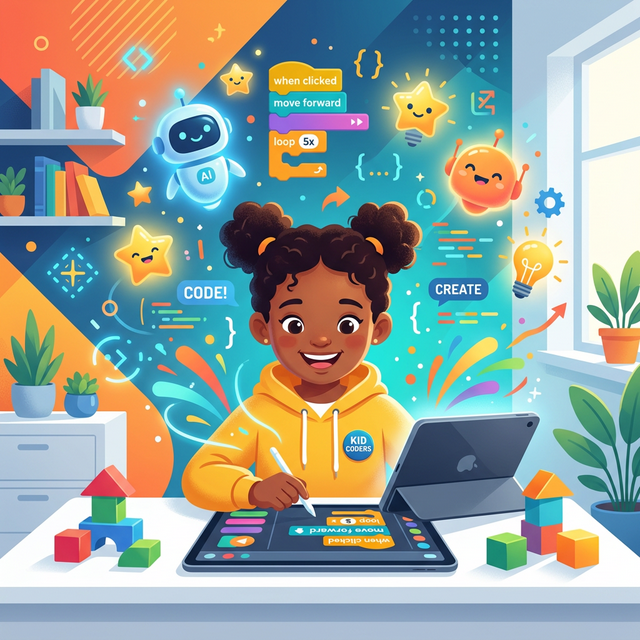
For children, vibe coding is pure magic, and it solves one of the oldest problems in kids' coding education. Traditional coding for kids has a brutal drop-off rate: children get excited about building games, but then quit in frustration when a missing semicolon or a misspelled variable name breaks everything. Block coding (Scratch) solved part of this problem, but kids eventually outgrow blocks and hit the same syntax wall.
We teach exactly this, live: Vibe Coding for Kids runs for ages 8 to 12 in a batch of 5 to 10 or 1-on-1, one hour per class, with a free demo first, and the parents' guide to vibe coding answers the "is this a good idea" question honestly.
Vibe coding creates a seamless bridge. In programs like the Vibe Coding for Kids course at Modern Age Coders, children aged 8–12 start with logic-building through Scratch (loops, conditionals, events, variables), master game development with score systems and collision detection, and then naturally transition to real vibe coding using tools like Replit Agent, Bolt.new, and Google Gemini. A 9-year-old can now describe a quiz game in plain English and watch Bolt.new build it live in their browser. They learn prompt engineering intuitively, discovering that clearer, more specific communication with AI yields better results. By the end of 12 weeks, kids have built 15+ projects including apps they created purely by talking to AI, and they've developed digital literacy skills that will compound for a lifetime.
🧑💻 For Teens (Ages 13–17): Real Portfolios, Real Languages, Real AI Tools
Teenagers are capable of building software that solves real-world problems. They just need the right tools and guidance. The Vibe Coding for Teens program acts as a powerful accelerator. Instead of spending 12 weeks learning nothing but basic Python syntax (the traditional approach), teens use Cursor IDE, GitHub Copilot (free for students!), v0.dev, Bolt.new, and Lovable alongside learning Python and JavaScript fundamentals. They learn the language AND use AI to scale their output 10x simultaneously.
The live version is Vibe Coding for Teens, ages 13 to 17: Python, web and AI projects with a mentor on screen, so the teen learns to read and judge the code the AI writes, not only to prompt for it. Our vibe coding for teens page describes a typical term.
The curriculum is deliberately dual-track: teens hand-code enough to deeply understand variables, loops, functions, APIs, and DOM manipulation, and then use AI tools to build ambitious projects at a pace that would be impossible with typing alone. By the time they apply to college or local internships, they have 12+ real, deployed projects in their portfolio, live web apps, custom API integrations, AI chatbots, and professional portfolio websites. That's a resume better than most college seniors had just a few years ago.
🎓 For College Students & Pros (Ages 18+): Agentic Engineering & Production-Grade Development
At the college and professional level, 'vibe coding' evolves into its most powerful form: Agentic Engineering. Companies in 2026 don't want employees who just copy-paste from ChatGPT; they want engineers who can orchestrate advanced AI tools to build secure, scalable, production-grade systems, and who can review, debug, and audit every line the AI generates.
In the Vibe Coding for College: Placement Track, students master the complete MERN stack (MongoDB, Express.js, React, Node.js), tackle Data Structures and Algorithms with 100+ LeetCode problems for placement preparation, build and deploy Machine Learning models, learn System Design for senior interviews, and use Cursor IDE, Claude Code, and Windsurf as their daily development toolkit. Critically, they are specifically taught how to perform OWASP security audits on AI-generated code, a skill that is currently commanding massive premium salaries in the industry. The program includes mock interviews, career coaching, and students graduate with a production-grade capstone deployed on AWS with CI/CD pipelines.
8. The Evolution: From Vibe Coding to Agentic Engineering
If vibe coding (2025) was the era of 'chatting with AI to write code,' then agentic engineering (2026) is the era of 'directing AI agents that autonomously plan, execute, test, and iterate on software.' The distinction is critical: vibe coding treats AI as a conversational assistant; agentic engineering treats AI as an autonomous team member with its own initiative.
In agentic engineering workflows, developers define goals, constraints, and quality standards, then let AI agents pursue those objectives through multi-step tasks like planning architecture, writing code, running tests, debugging failures, and iterating on solutions. The developer becomes a 'systems orchestrator' or 'manager of agents' rather than writing every line themselves.
This is already happening in practice. Cursor's Agent Mode lets the AI plan and execute complex changes across dozens of files. Claude Code's Agent Teams feature enables multiple Claude instances to work in parallel, one handling the frontend, another the backend, another writing tests, coordinated by a lead agent. Windsurf's Cascade agent doesn't just complete the current line; it predicts the next three coding steps in the process. Google's Firebase Studio combines multimodal input (text, images, drawing) with autonomous code generation and Firebase deployment.
Gartner predicts that by end of 2026, 90% of software engineers will transition from hands-on coding to AI process orchestration, focusing on 'expressing intent' rather than writing syntax. The developers who master this transition will become the most valuable engineers in the industry. Those who resist it will not.
9. The Future: Multi-Agent Teams, Multimodal Input, and Self-Healing Software
Vibe coding and agentic engineering are merely the prologue to the next era of software development. Over the next few years, we will see the mainstream rise of Autonomous Multi-Agent Systems, and the implications are profound.
Multi-Agent AI Development Teams
Instead of chatting with one AI to write your code, you will direct an entire virtual tech company. Frameworks like Microsoft's AutoGen and CrewAI already enable this. You define specialized AI agents, an AI UX Designer, an AI Frontend Developer, an AI Backend Engineer, an AI Security Auditor, an AI QA Tester, each with defined roles, goals, and tools. You provide the overarching vision, and they debate, construct, test, review code for vulnerabilities, and deploy the application autonomously. AutoGen excels in open-ended, complex problem-solving with dynamic agent negotiation. CrewAI provides structured, role-based pipelines ideal for repeatable workflows. Production systems in 2026 are already using hybrid approaches: CrewAI managing the overall workflow with AutoGen handling reasoning-intensive subtasks.
Multimodal Input: Beyond Text Prompts
We will shift away from text-based prompts entirely. The future of vibe coding involves multimodal inputs, drawing an architecture diagram on a whiteboard, taking a photo with your phone, speaking aloud, 'Build this pipeline and connect it to my Snowflake database,' and watching the code generate in real-time. Firebase Studio already supports this with its multimodal prototyping agent. Claude Code's voice input works in 20 languages. Cursor is expected to understand diagrams, mockups, and video walkthroughs by end of 2026.
Self-Healing Software and Vibe Environments
The concept of a 'vibe environment' is gaining traction in 2026, an integrated development ecosystem that combines AI code generation with context injection (linking to Jira tickets, Slack conversations, Figma designs), zero-trust security scanning (Snyk, DeepCode AI), and automated testing suites. Software is becoming self-assembling and self-healing: AI agents that monitor production applications, detect errors, write fixes, test those fixes, and deploy patches, all autonomously. The developer's role shifts from writing fixes to reviewing and approving the AI's proposed remediation.
10. Vibe Coding vs Traditional Coding: The Honest Comparison
This is a question we get asked constantly: 'Should I still learn traditional coding, or just learn vibe coding?' The answer is unambiguous: you need both. Here's an honest comparison:
| Aspect | Traditional Coding | Vibe Coding | Best Approach |
|---|---|---|---|
| Speed to MVP | Weeks to months | Hours to days | Vibe coding for prototyping |
| Code Understanding | Deep, you wrote every line | Variable, depends on review diligence | Traditional foundation + AI acceleration |
| Security | Developer-controlled | 45% vulnerability risk without review | Traditional security knowledge applied to AI output |
| Scalability | Architect-designed from start | Can create architectural debt | Traditional architecture + AI implementation |
| Learning Curve | Months to years | Weeks (with coding foundation) | Learn fundamentals first, then vibe code |
| Debugging Complex Issues | Manual but precise | AI can struggle with edge cases | Human debugging skills remain essential |
| Career Value | Foundational and timeless | Multiplier on existing skills | Both: traditional skills + AI proficiency |
| Creativity & Experimentation | Limited by typing speed | Unlimited rapid iteration | Vibe coding for exploration |
The conclusion is clear: traditional coding skills are the foundation; vibe coding is the force multiplier. A developer who understands arrays, algorithms, HTTP, databases, and security, and ALSO knows how to leverage Cursor, Claude Code, and Lovable, is 10x more valuable than someone who only knows one or the other. This dual mastery is the philosophy driving every curriculum at Modern Age Coders.
11. How to Start Vibe Coding Today: A Practical Roadmap
Ready to embrace the vibe? Here is a practical, step-by-step roadmap based on age and experience level:
🟢 Complete Beginner (Ages 8–12 or Adults with Zero Coding)
- Start with Scratch 3.0. Learn loops, conditionals, events, and variables through block coding
- Explore Google Teachable Machine, train your first AI model
- Try Bolt.new (free tier), describe a simple app and see it appear instantly
- Practice prompt clarity, the more specific you are, the better AI responds
- Consider a structured program like the Vibe Coding for Kids course for guided, age-appropriate learning with 15+ projects
🟡 Intermediate (Ages 13–17 or Adults Learning to Code)
- Learn Python fundamentals, variables, loops, functions, file handling
- Learn HTML, CSS, JavaScript, build real web pages
- Set up Cursor IDE and GitHub Copilot (free for students!). Start coding with AI
- Build 3 projects: one hand-coded, one AI-assisted, one fully vibe-coded. Compare the experience.
- Deploy a live website with Netlify or Vercel
- The Vibe Coding for Teens program provides a structured 12-week path with 12+ deployed projects and portfolio
🔴 Advanced (College Students, Career Changers, Professionals)
- Master the MERN stack (MongoDB, Express, React, Node.js) using Cursor IDE
- Learn Claude Code for terminal-based agentic engineering workflows
- Study DSA for placement interviews, AI can't solve LeetCode Hards for you (yet)
- Build and deploy an ML model, understand TensorFlow, scikit-learn, model deployment
- Learn OWASP security auditing for AI-generated code. This skill commands premium salaries
- The Vibe Coding for College track is a 12-week intensive covering MERN, DSA, ML, System Design, and placement preparation
Vibe Coding: Questions People Ask
Telling an AI what you want in plain language, letting it write the code, running the result, and telling it what to change next, over and over, instead of typing the code yourself. You still decide what to build and check that it works.
Andrej Karpathy, in a post in February 2025 describing a way of working where he "fully gives in to the vibes" and lets the AI write the code while he describes and checks. The phrase spread within weeks and is now used for the whole approach.
It produces real programs, and it needs real judgement: knowing what to ask for, reading what came back, testing it and catching the security mistakes AI-written code makes. What it removes is typing syntax from memory. People who understand the fundamentals get far more out of it than people who only prompt, which is why we teach the fundamentals alongside the tools.
Yes, with a teacher or an adult in the loop, because the tools are built for adults and a child needs help judging what the AI produced. We run live courses for ages 8 to 12 and 13 to 17 that pair the AI tools with Scratch, Python and web projects, in a batch of 5 to 10 or 1-on-1.
Conclusion: The Vibe Coding Manifesto: Build or Be Built Over
Software development is no longer confined to those willing to spend years memorizing syntax. Vibe coding has opened the floodgates of innovation to anyone with a compelling idea, deep domain expertise, and the ability to articulate a clear vision. A 9-year-old in Bangalore can now build a fully functioning quiz app by talking to Bolt.new. A college student in Delhi can deploy a production MERN application on AWS using Cursor IDE in a fraction of the time it took their seniors. A marketing professional can prototype a customer analytics dashboard without writing a single line of code themselves.
But here is the truth that every honest guide must emphasize: vibe coding amplifies skill. It does not replace it. The developers who thrive in this new era will be those who understand what AI builds for them. Who can read the code, spot the security flaw, optimize the database query, and architect the system for scale. The AI handles the typing; the human handles the thinking.
As AI continues to scale in reasoning capabilities, the economic value is shifting drastically from the manual execution of code to the ideation, architecture, security review, and validation of products. The 92% adoption rate. The $8.5 billion market. The 46% AI-generated code on GitHub. The 45% vulnerability rate that demands human oversight. These numbers tell a clear story: mastering vibe coding, both the power and the responsibility, is the highest-leverage skill you can acquire today.
Whether you are an eight-year-old taking your first coding class, a teenager building your first professional portfolio, or a college student desperate to crack tech placements, the path forward is clear. Learn the fundamentals. Master the AI tools. Understand the security implications. Build something that matters.
Start describing. Start generating. Start reviewing. Embrace the exponentials, and see what you can build when you finally give in to the vibes, responsibly.
🚀 Ready to Start Your Vibe Coding Journey?
Modern Age Coders offers structured vibe coding programs for every age and skill level, from kids building their first game to college students deploying production applications. Every course teaches BOTH traditional coding fundamentals AND cutting-edge AI tools, because the best vibe coders are great engineers first. Explore our courses and join the thousands of students already building the future.