Table of Contents
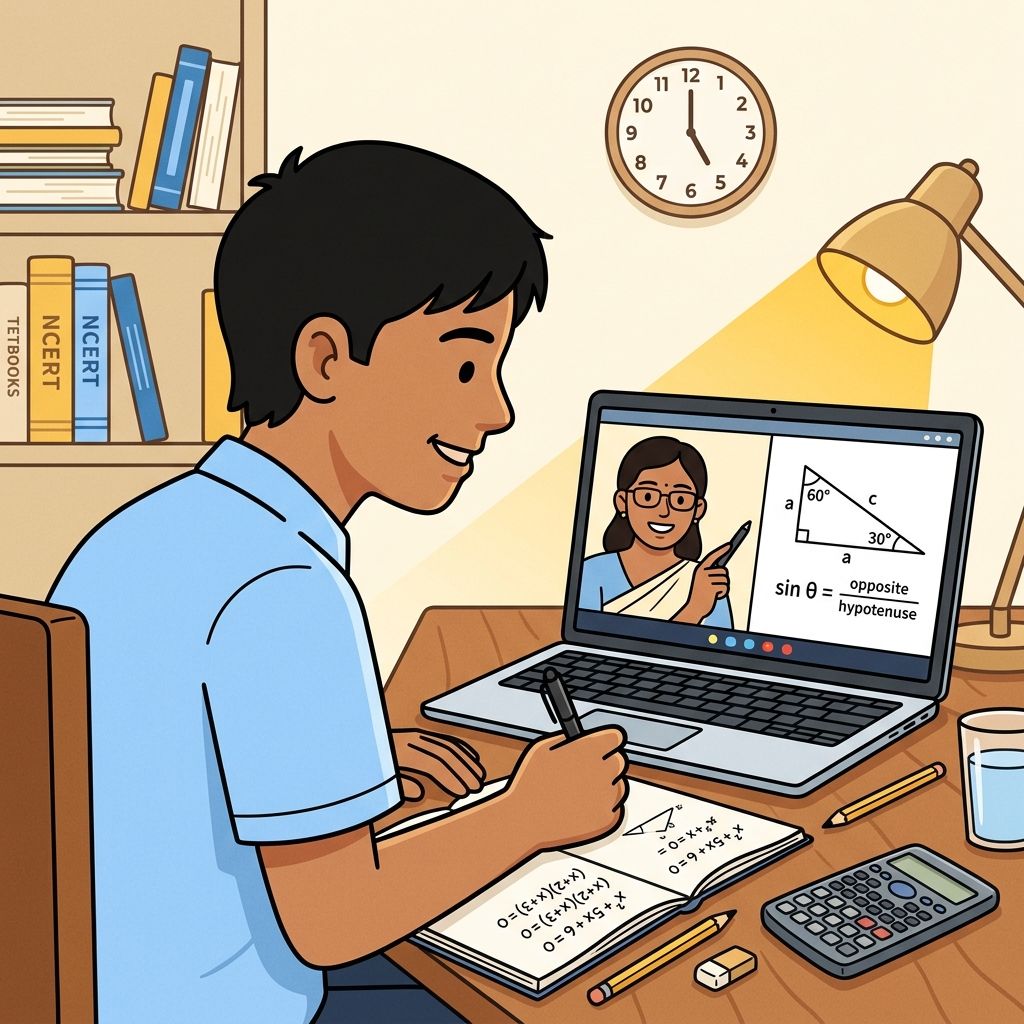
Plenty of parents assume maths must be taught face to face, and worry that online tuition is a weaker version of the real thing. It can be, if it is done badly. But done well, live online maths tuition genuinely works, and in some ways works better than a traditional tutor. The honest answer is that it depends entirely on what kind of online tuition it is.
The short answer
Yes, online maths tuition works, as well as or better than in-person, when it is genuinely live and either one-to-one or a small batch, with a real teacher who sees your child, notices when they are stuck, and helps in the moment. Recorded videos and large online classes do not work well, because there is no one teaching your child specifically. The format matters far less than whether real teaching is actually happening.
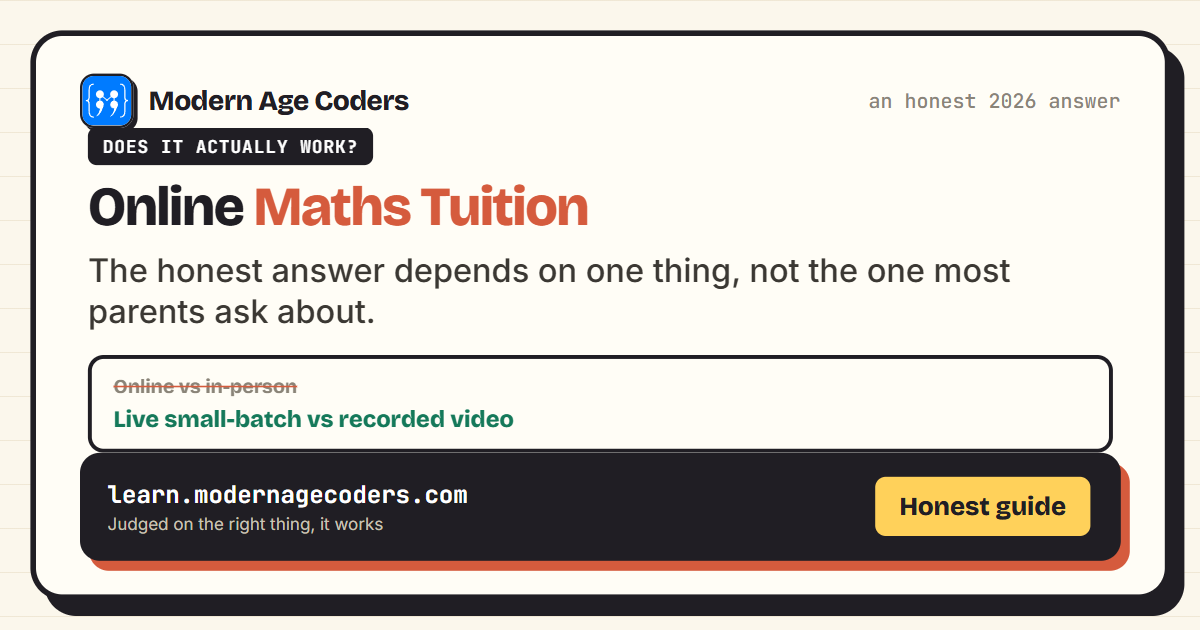
The question is not online versus in-person. It is live small-batch teaching versus recorded video and huge classes. A great teacher on a screen beats a mediocre one in a room, and both beat a recording with no teacher at all.
Four formats, compared honestly
| Format | Real-time feedback | Attention per child | Typical cost |
|---|---|---|---|
| Live, one-to-one online | Immediate | Full attention | Highest |
| Live, batch online (15 to 20 students) | Fast, teacher circulates | High | Moderate |
| Live, large online class (20+ students) | Rare, mostly one-way | Low | Low to moderate |
| Recorded video course | None | None, self-paced only | Lowest |
In-person tuition sits on this same scale, not a separate one. A crowded in-person classroom behaves like a large online class, and a distracted one-to-one home tutor who mostly checks their phone behaves like a recorded video with extra steps. The format on the label matters far less than where a specific provider actually sits on this table.
Why good online maths tuition works
- Real, live teaching. A live teacher explains, corrects and adapts to your child in the moment, exactly as they would in a room.
- Small batches or one-to-one. Your child is seen and helped, not lost in a crowd.
- Access to better teachers. Online, you are not limited to tutors who live nearby; you can have an expert from anywhere.
- No travel. Lessons happen from home, saving time and stress and making a regular routine easier to keep.
- Interactive tools. A shared digital whiteboard lets teacher and child write, draw and solve together in real time.
- Recordings for revision. Many live classes are recorded, so your child can revisit a tricky explanation later, which an in-person class rarely offers.
Where online tuition can fall short
Online tuition fails when it is not really teaching. Pre-recorded video with no live teacher cannot notice when your child is confused. Very large online classes give each child almost no attention. And a distracted child in a room with no supervision may drift. The fix is not to avoid online tuition; it is to choose the kind that is genuinely live, small, and interactive, and to set your child up in a quiet space to focus.
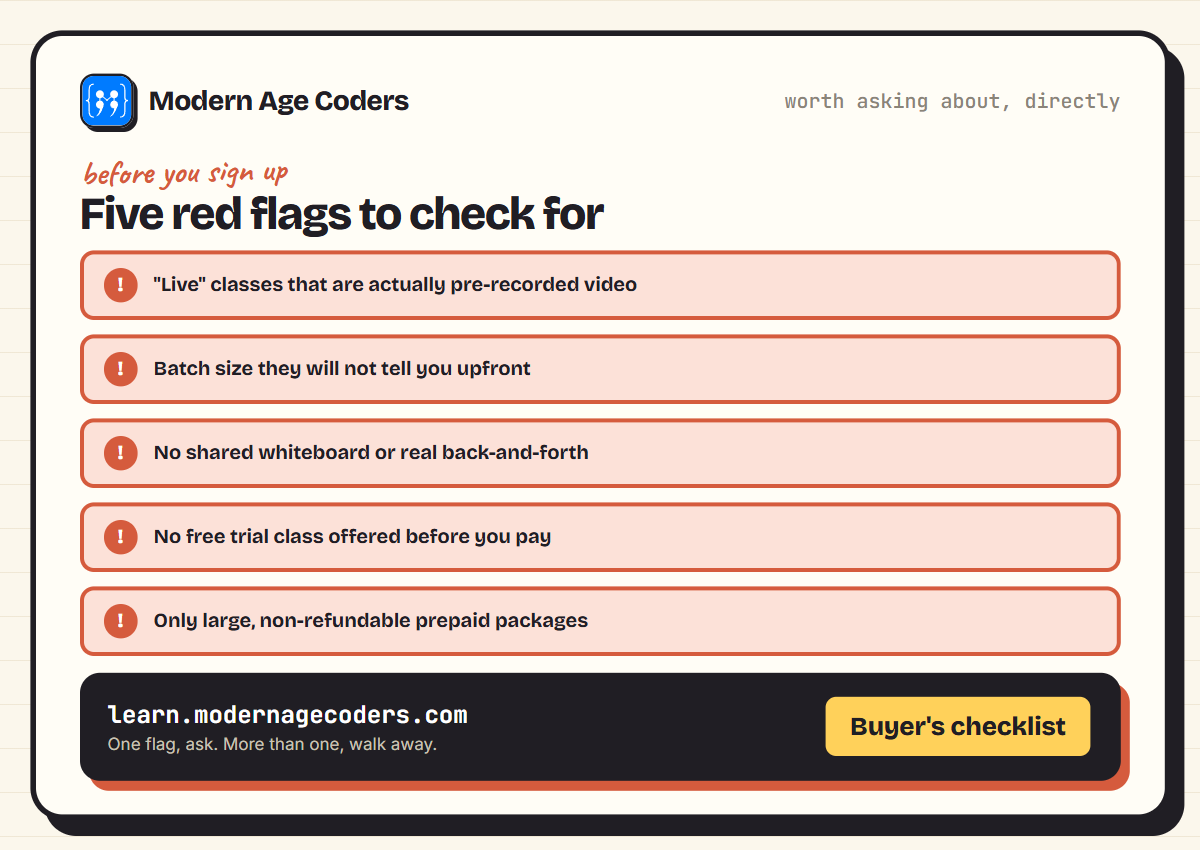
Five red flags before you sign up
How to pick online maths tuition that works
- Confirm it is genuinely live, not recorded video sold as live.
- Ask the batch size. Small groups or one-to-one, not dozens of children.
- Check for interactive teaching: a shared whiteboard, real back-and-forth, real feedback.
- Take a free trial class and watch how the teacher engages your child.
- Prefer monthly billing you can stop, not a big prepaid lock-in.
Children do not need another app that teaches them to copy code. They need a mentor who teaches them to think.
, Shivam Khemka, Founder of Modern Age Coders
The bottom line
Online maths tuition really does work, when it is live, small-batch or one-to-one, and genuinely interactive. It brings expert teachers, small batches and lower cost to your child from anywhere. Recorded video and huge classes do not. Modern Age Coders teaches maths live in small batches for ages 6 to 67, covering CBSE, ICSE and international boards, and is rated 4.9 across 547 Google reviews. Take the free demo class and judge the teaching for yourself before you decide.
Frequently Asked Questions
Yes, when it is genuinely live and either one-to-one or a small batch, with a real teacher who sees your child and helps in the moment. Done that way it works as well as or better than in-person. Recorded video and very large online classes do not work well, because no one is teaching your child specifically.
It can be as good or better. A great teacher on a screen with a shared whiteboard, small batch and real feedback beats a mediocre tutor in a room. Online also gives access to expert teachers from anywhere, no travel, and recordings for revision. What matters is the quality of teaching, not whether it is on a screen.
It fails when it is not really teaching: pre-recorded video with no live teacher, or very large classes where each child gets little attention. A distracted child with no supervision can also drift. The fix is to choose genuinely live, small, interactive tuition and to set your child up in a quiet space to focus.
Confirm it is genuinely live rather than recorded, ask the batch size and keep it small or one-to-one, check for interactive teaching with a shared whiteboard and real feedback, take a free trial to watch the teacher engage your child, and prefer monthly billing you can stop over a prepaid lock-in.
Live online maths tuition works well from about age six, once a child can engage with a teacher for a full lesson, and right through school and beyond. Younger children may need a parent nearby to help them settle. As with any age, the key is genuinely live, small-batch teaching.
Usually only a little. A large class with twenty or more students gives each child close to the same attention as a recorded video, since the teacher cannot realistically check on everyone. It is not worthless, but if the budget allows, a small batch or one-to-one class delivers a meaningfully different result for a moderate difference in cost.
Yes, with the right setup. A quiet room with no phone nearby, a genuinely interactive lesson rather than passive video, and a teacher who actively involves the child rather than talking at them all help enormously. A distracted child in a poorly run large class will drift regardless of whether it is online or in a room.