Table of Contents
- The Reality of Computer Education in Indian Schools
- What Exactly Are CBSE and ICSE Missing?
- CBSE vs. ICSE: Is One Better Than the Other?
- The Teacher Problem No One Talks About
- What Skills Actually Matter in 2025
- How Parents Can Bridge the Gap
- Age-Wise Learning Roadmap
- Success Stories: Students Who Bridged the Gap
- What Good Supplementary Education Looks Like
- Addressing Common Parent Concerns
- The Long Game: Why This Matters for Your Child's Future
- How Modern Age Coders Can Help
- Frequently Asked Questions
- Conclusion
Here's a scenario that plays out in lakhs of Indian homes every year: A student scores 95% in CBSE Class 12 Computer Science. Parents are thrilled. Relatives are impressed. Everyone assumes this kid is ready for a career in tech.
Then the student enters an engineering college or tries to build something real, and suddenly realizes they can't. They know the theory of loops and arrays. They've memorized SQL syntax. But ask them to build a simple website, create an app, or solve a real coding problem? They freeze.
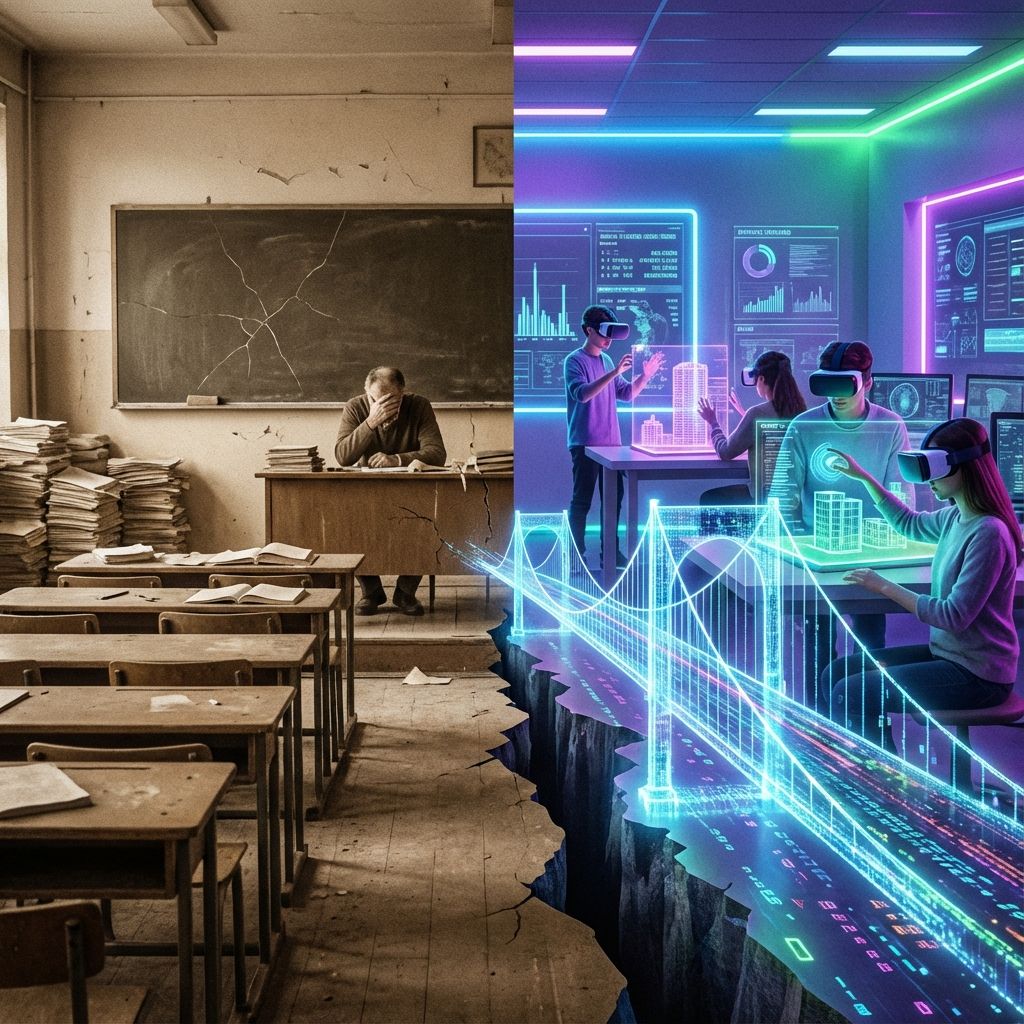
This isn't the student's fault. It's a systemic problem with how CBSE and ICSE boards approach technology education. And if you're a parent who thinks school is enough to prepare your child for today's tech-driven world, this article might be a wake-up call.
The Reality of Computer Education in Indian Schools
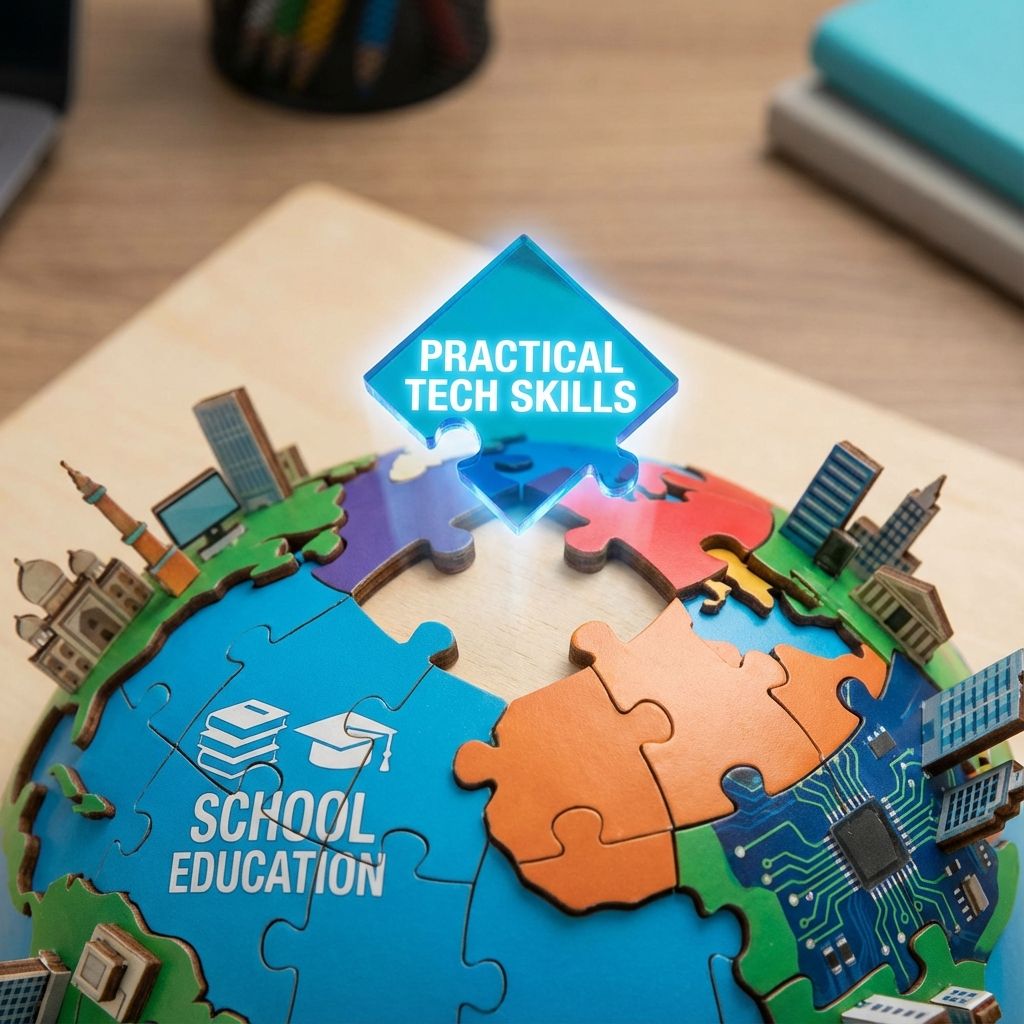
Let's be clear about what's happening in most CBSE and ICSE schools today. Computer Science or Information Technology is treated as just another subject to score marks in, not as a practical skill that students will use in their careers.
The focus is overwhelmingly on:
- Memorizing definitions and theory
- Writing code on paper (yes, paper) during exams
- Learning outdated technologies that the industry abandoned years ago
- Completing practical files that are often copied rather than understood
- Passing board exams rather than building actual competence
Meanwhile, the tech industry has moved on. Companies are looking for students who can build real projects, collaborate using modern tools, and solve problems creatively. The disconnect between what schools teach and what the world needs is staggering.
A Telling Statistic
According to various employability reports, only 3-5% of Indian engineering graduates are considered employable in product-based tech companies. The foundation problem starts much earlier, in school.
What Exactly Are CBSE and ICSE Missing?
Let's get specific. Here are the critical gaps between what boards teach and what students actually need:
1. No Real Project-Based Learning
School 'projects' typically mean copying code from a guide, running it once, and submitting a printed file. Students rarely build anything from scratch or solve original problems.
In the real world, coding is about building, apps, websites, games, tools. It's about starting with a blank screen and turning an idea into something functional. This creative, problem-solving aspect is almost entirely absent from board education.
2. Outdated Programming Languages and Tools
CBSE recently moved to Python, which is a step forward. But many schools still emphasize C++ in ways that feel stuck in the 1990s. More importantly, students aren't exposed to the ecosystem of modern development:
- No version control (Git/GitHub)
- No exposure to web technologies (HTML, CSS, JavaScript frameworks)
- No understanding of APIs, cloud computing, or databases beyond basic SQL
- No awareness of mobile app development
- No introduction to AI/ML concepts (despite India's AI ambitions)
3. Zero Focus on Computational Thinking
Boards test whether students can write the syntax for a for-loop. They don't test whether students can break down a complex problem, design an algorithm, or think through edge cases.
Computational thinking, the ability to approach problems like a programmer, is more valuable than any specific language. It's what makes someone genuinely good at tech. And it's completely ignored in favor of rote memorization.
4. No Collaborative or Industry-Standard Practices
Software development is collaborative. Developers work in teams, review each other's code, use project management tools, and follow established workflows. None of this is part of school education.
Students graduate without ever having used GitHub, worked on a team project with version control, or experienced code review. They enter college or the workforce completely unprepared for how real development works.
5. Exams That Reward Memorization, Not Understanding
Here's the absurdity: students write code on paper during board exams. They're evaluated on syntax accuracy and whether their handwritten program 'looks' correct, not on whether it actually runs or solves the problem efficiently.
If you are staring down those exact papers, we keep two practical question banks: 20 Python programs for CBSE Class 12 and 20 Java programs for ICSE Class 10, every program executed before publishing, with its real output shown. Both now roll up into our complete ICSE Computer Applications revision guide.
This teaches students to memorize code patterns rather than understand logic. It's the opposite of how programming works in reality, where you run code, see errors, debug, and iterate.
The Core Problem
Indian boards treat Computer Science as a theoretical subject like History or Geography. But coding is a skill, like learning to swim or play an instrument. You can't master it through textbooks alone.
CBSE vs. ICSE: Is One Better Than the Other?
Parents often ask whether CBSE or ICSE offers better tech education. The honest answer? Neither is adequate, but they have different weaknesses.
CBSE Computer Science
CBSE updated its curriculum to include Python, which is positive. The syllabus covers programming, databases (MySQL), and data structures. However:
- Implementation varies wildly by school, some have good labs, many don't
- The focus remains on board exam preparation, not practical skills
- Projects are formulaic and rarely involve creative problem-solving
- Teachers often lack industry experience and teach from outdated perspectives
ICSE Computer Applications/Science
ICSE has traditionally been more application-oriented than CBSE. The syllabus covers Java and has a slightly more practical bent. However:
- Java, while useful, isn't the most beginner-friendly language
- The curriculum still emphasizes syntax over problem-solving
- Like CBSE, exam patterns reward memorization
- No exposure to modern web or mobile development
The bottom line: choosing between CBSE and ICSE won't solve the fundamental problem. Both boards are designed for a different era of technology education.
The Teacher Problem No One Talks About
Here's an uncomfortable truth: many Computer Science teachers in Indian schools aren't equipped to teach modern tech skills. This isn't to blame them. It's a systemic issue.
Most teachers were trained years ago when the tech landscape was completely different. They haven't worked in the software industry. They haven't built real applications. They know the syllabus, but they don't know the industry.
When students ask questions beyond the textbook, about how apps are really built, what companies actually look for, or how new technologies work, teachers often can't answer. The result is students who learn to pass exams but have no idea what professional tech work looks like.
Some schools are exceptions. Some hire teachers with industry backgrounds or provide ongoing training. But they're the minority, not the norm.
Not Blaming Teachers
Teachers work with the curriculum they're given and the training they've received. The problem is systemic, boards, training institutions, and schools all need to evolve together.
What Skills Actually Matter in 2025
If board syllabi aren't preparing students for the real world, what should they be learning? Here's what actually matters for students who want to thrive in tech:
Foundational Skills
- Computational Thinking: Breaking down problems, recognizing patterns, designing solutions
- At least one programming language learned deeply: Python is a great choice
- Basic data structures and algorithms: Not just definitions, but knowing when to use what
- Debugging and problem-solving: The ability to figure out why code isn't working
Practical Development Skills
- Web Development basics: HTML, CSS, JavaScript
- Version Control: Git and GitHub are industry standards
- Database fundamentals: Both SQL and NoSQL concepts
- API understanding: How different systems communicate
- Command line comfort: Basic terminal/shell usage
Emerging Technologies (Awareness Level)
- Artificial Intelligence and Machine Learning concepts
- Cloud computing basics (AWS, GCP, Azure)
- Mobile app development fundamentals
- Cybersecurity awareness
- Data Science introduction
A good first step into cybersecurity for students is understanding encryption itself. Our guide to how encryption works has students build a Caesar cipher in Python, break it two ways, and see the idea behind the padlock in their browser.
Soft Skills for Tech
- Reading documentation and self-learning
- Collaborative problem-solving
- Technical communication
- Building and presenting projects
Notice how most of these aren't in any board syllabus? That's the gap parents need to fill.
How Parents Can Bridge the Gap
Alright, so school isn't enough. What can you actually do about it? Here's a practical roadmap:
1. Start Early, But Start Right
Don't wait until Class 11 to think about tech education. Begin introducing coding concepts in middle school or even earlier. Visual programming tools like Scratch and Blockly are perfect for ages 7-12. They build logical thinking without the frustration of syntax.
By the time students reach high school, they should already understand basic programming logic, loops, conditionals, variables. The board syllabus then becomes revision rather than first exposure.
2. Prioritize Projects Over Courses
Completing a course means nothing if the student can't build. Encourage project-based learning from the start. Simple projects at first:
- A personal website or portfolio
- A simple calculator or quiz app
- A game like Tic-Tac-Toe or Snake
- Automation scripts for everyday tasks
More complex projects later:
- A full-stack web application
- A mobile app that solves a real problem
- A machine learning project using real data
- Contributions to open-source projects
A portfolio of projects speaks louder than marks when it comes to college applications and job interviews.
3. Supplement with Structured External Learning
Find quality coding programs that complement school education. Look for courses that:
- Focus on practical, project-based learning
- Teach modern, industry-relevant technologies
- Provide mentorship and feedback, not just video content
- Include collaborative elements and real-world simulations
Weekend classes or after-school programs work well without overwhelming students who are already managing school workloads.
4. Encourage Self-Learning Culture
The tech industry evolves so fast that self-learning is the most important skill of all. Encourage your child to:
- Explore YouTube tutorials and free resources
- Read documentation (a skill schools never teach)
- Join coding communities and forums
- Participate in coding competitions and hackathons
- Follow tech news and trends
Students who develop curiosity and self-motivation will continue growing long after formal education ends.
5. Don't Neglect Board Exams: Strategize
Here's the practical reality: marks still matter for competitive exams and college admissions. You can't ignore board preparation entirely.
The smart approach is to build real skills throughout the year and focus on board exam strategy closer to the exams. For students with strong fundamentals, scoring well in CS is easier because they actually understand the concepts rather than just memorizing them. Our courses are designed to complement school education, not replace it.
Balance is Key
Good marks AND real skills isn't an impossible goal. Students with genuine understanding often score better anyway, and they're prepared for what comes after.
Age-Wise Learning Roadmap
Not sure where to start? Here's a suggested path based on age:
Ages 7-10 (Classes 2-5)
- Visual programming: Scratch, Blockly, Code.org activities
- Logic puzzles and computational thinking games
- Introduction to how computers and the internet work
- Basic typing skills
- Fun robotics or electronics kits (optional)
Ages 11-13 (Classes 6-8)
- Transition from blocks to text-based coding (Python)
- Basic web development: HTML, CSS
- Simple game development projects
- Introduction to algorithms and problem-solving
- First personal projects
Ages 14-16 (Classes 9-10)
- Deeper Python or JavaScript learning
- Full web development: HTML, CSS, JavaScript, basic backend
- Database fundamentals (MySQL)
- Git and GitHub for version control
- Building portfolio projects
- Participation in coding competitions
Ages 17-18 (Classes 11-12)
- Advanced programming and data structures
- Specialization exploration: web, mobile, data science, AI/ML
- Full-stack development or app development
- Internships or freelance projects (if time permits)
- Open-source contributions
- Board exam preparation alongside real skill-building
Students who follow a roadmap like this enter college or the workforce with years of practical experience, a massive advantage over peers who only have board exam knowledge.
Success Stories: Students Who Bridged the Gap
We've seen this transformation happen countless times. Here are a few examples:
"My school taught C++ from a 2008 textbook. I started learning Python on my own in Class 9, built some web projects, and by Class 12 I had a GitHub portfolio. I got into a top NIT and had internship offers in first year because I could actually build things, not just write programs on paper.", Arjun, B.Tech Student
"ICSE taught me Java syntax but not how to think. Weekend coding classes changed everything: I learned to solve problems, not just memorize solutions. Scored 96 in boards AND built an app that got 10,000 downloads.": Priya, Class 12 Graduate
"My parents thought school CS was enough. I struggled in my first semester of engineering. Everyone seemed ahead. I spent that year catching up on things I should have learned earlier. Now I mentor school students so they don't make the same mistake.": Rahul, Software Engineer
What Good Supplementary Education Looks Like
Not all coding programs are created equal. Here's what to look for when choosing supplementary education for your child:
Green Flags
- Project-based curriculum where students build real things
- Small batch sizes with individual attention
- Instructors with industry or teaching experience
- Focus on concepts and problem-solving, not just syntax
- Regular assessments through projects, not just quizzes
- Exposure to modern tools and technologies
- Community elements: peer learning, group projects
Red Flags
- Only pre-recorded videos with no live interaction
- Curriculum that mirrors outdated board syllabi
- Claims of 'job guarantees' for school-age children
- No emphasis on projects or portfolios
- One-size-fits-all approach without adapting to student level
- Overloading students with too many technologies superficially
Addressing Common Parent Concerns
We hear these concerns regularly from Indian parents:
"Won't extra coding classes overburden my child?"
It depends on how you structure it. 2-3 hours per week of engaging, project-based learning is manageable for most students and often feels more like play than study. The key is quality over quantity and finding programs that energize rather than drain.
"Should I wait until Class 11 when CS becomes a main subject?"
This is one of the biggest mistakes parents make. By Class 11, students are already juggling board prep, JEE/NEET coaching, and multiple subjects. Starting earlier, when there's less pressure, builds a foundation that makes Class 11-12 easier, not harder.
"My child is in Commerce/Humanities. Does coding matter for them?"
Absolutely. Tech skills are valuable across all careers. Commerce students benefit from understanding data analysis, automation, and fintech. Humanities students can leverage tech in media, research, and communication. Basic digital literacy is essential regardless of stream.
"Isn't school syllabus designed by experts? Why second-guess it?"
Board syllabi are designed by committees that work slowly and prioritize standardization. The tech industry moves at a completely different pace. What was relevant when curricula were designed may be outdated by the time students graduate. Supplementation isn't about disrespecting boards. It's about acknowledging reality.
The Long Game: Why This Matters for Your Child's Future
Let's zoom out and look at the bigger picture. In 10 years, your child will be in the workforce. What will that world look like?
- AI and automation will transform every industry
- Digital skills will be baseline requirements for most jobs
- The ability to build, not just consume, technology will be a differentiator
- Careers that don't exist today will be common
- The gap between the tech-literate and tech-illiterate will widen
Students who graduate with only board-level knowledge will spend years catching up, during college and early career. Students who build real skills early will have years of advantage.
This isn't about turning every child into a software engineer. It's about giving them fluency in the language of the future, regardless of what career they choose.
The Real Dividend
Kids who learn to code learn to think differently. Problem-solving, logical reasoning, creativity, these skills transfer far beyond programming.
How Modern Age Coders Can Help
At Modern Age Coders, we've designed our programs specifically to fill the gaps that Indian schools leave. Our approach includes:
- Project-based learning where students build real applications
- Curriculum aligned with industry needs, not outdated syllabi
- Small batches with personalized attention
- Instructors who understand both education and technology
- Progressive pathways from visual coding to advanced development
- Portfolio development that matters for college and careers
We work with students from Class 3 onwards, building foundational skills early and advancing them systematically. By the time they reach Class 12, they're not learning to code. They're already coders. Want to learn more? Contact us for a free consultation.
Frequently Asked Questions
Not completely. It covers some basics like Python, SQL, and data structures. But the implementation is too theoretical and exam-focused. It's a starting point, not a complete education.
Often, yes. Students with genuine understanding tend to score better than those who only memorize. Plus, practical experience makes concepts stick better.
Having good infrastructure is positive, but what matters is how it's used. If students are still following the same textbook approach, the fancy computers don't change much.
Basic tech literacy is valuable in every field. Medical professionals use health-tech, lawyers work with legal-tech. Even if they don't code professionally, understanding technology is increasingly important.
Visual programming can start as young as 5-6 years. Text-based coding typically works well from age 10-11 onwards. Earlier is generally better, as long as it's age-appropriate and enjoyable.
Ask them to show you what they've built. Can they explain their project? Can they modify it or build something new without step-by-step guidance? Real learning shows in the ability to create independently.
Quality matters more than format. Good online programs with live interaction, mentorship, and projects can be excellent. Poor in-person classes can be ineffective. Evaluate the curriculum and approach, not just the delivery method.
Conclusion
The gap between what CBSE and ICSE schools teach and what students actually need for tech careers is real and significant. Pretending otherwise doesn't serve our children.
But this isn't a cause for panic. It's a call to action. The gap can be bridged. Students can score well in boards AND develop real-world skills. They can enter college and careers with practical experience, not just textbook knowledge.
It requires intentional effort: starting early, prioritizing projects, supplementing school education with practical learning, and fostering a culture of curiosity and self-improvement.
The students who will thrive in the coming decades aren't those with the highest marks. They're those who can actually build, create, and solve problems. Give your child that advantage. Don't let school be the ceiling of their learning.
The Time is Now
Every month you wait is a month of potential learning lost. Start bridging the gap today. Your child's future self will thank you.