
Table of Contents
- Myth #1: You Need to Be a Math Genius to Code
- Myth #2: Coding Is Only for Future Software Engineers
- Myth #3: It's Too Late to Start in High School
- Myth #4: Girls Aren't as Good at Coding as Boys
- Myth #5: You Need an Expensive Computer to Learn Coding
- Myth #6: Coding Is Boring and Isolating
- Myth #7: School Computer Science Class Is Enough
- Myth #8: AI Will Make Coding Obsolete
- Myth #9: You Need to Learn Multiple Languages to Be Good
- Myth #10: Coding Success Requires Natural Talent
- The Reality: What Coding Education Actually Looks Like
- Ready to Start? Here's How
- Frequently Asked Questions
- Conclusion
Every week, we hear the same concerns from parents and students. 'My child isn't good at math, can they still learn coding?' 'Isn't my teenager too old to start?' 'Coding is for people who want to become software engineers, right?'
These questions come from a good place, parents want to make informed decisions about their children's education. But they're also based on myths that have been floating around for years, myths that stop countless students from discovering a skill that could transform their futures.
Let's tackle these misconceptions head-on. By the end of this article, you'll have a clear picture of what coding education actually involves and whether it's right for your child (spoiler: it probably is).
Myth #1: You Need to Be a Math Genius to Code
This is probably the most common myth we encounter, and it stops so many students before they even try.
The Truth
Most coding doesn't require advanced math. Building websites, creating apps, making games, these involve logic and problem-solving, not calculus or complex equations. The math you need for most programming is basic arithmetic that any school student already knows.
Yes, some specialized fields like machine learning or game physics require stronger math skills. But that's like saying you need to understand aerodynamics to drive a car. Most people don't need that level of depth.
Here's what coding actually requires:
- Logical thinking, if this happens, then do that
- Pattern recognition, spotting similarities and structures
- Problem decomposition, breaking big problems into smaller steps
- Persistence, trying different approaches when something doesn't work
- Creativity, imagining solutions and building things
Notice what's not on that list? Advanced mathematics. In fact, many students who struggle with traditional math excel at coding because it's a different kind of thinking, more creative, more practical, more immediately rewarding.
Real Talk
Some of the best coders we've taught were students who said they 'hated math.' Coding helped them see logic and problem-solving in a new light, and many actually improved their math grades as a result.
Myth #2: Coding Is Only for Future Software Engineers
'My child wants to be a doctor/lawyer/artist, why would they need coding?'
We hear this constantly. And it reflects a fundamental misunderstanding of what coding skills actually provide.
The Truth
Coding isn't just about becoming a programmer. It's about understanding how the digital world works and having the power to create within it. In 2025, that's relevant to virtually every career.
- Doctors use data analysis to understand patient outcomes and medical research
- Lawyers leverage technology for legal research, document automation, and case analysis
- Artists create digital art, interactive installations, and use creative coding tools
- Business professionals automate tasks, analyze data, and build tools for their teams
- Scientists process research data, run simulations, and visualize findings
- Journalists use data journalism and interactive storytelling
- Architects use computational design and parametric modeling
Beyond specific careers, coding teaches thinking skills that transfer everywhere: breaking down complex problems, thinking systematically, debugging when things go wrong, and creating solutions from scratch.
Even if your child never writes a line of code professionally, understanding how software works gives them an advantage in any field. They'll be the person who can talk to developers, understand technical possibilities, and leverage technology effectively.
The New Literacy
Coding is becoming like reading and writing, a fundamental skill that enhances everything else you do, regardless of your profession.
Myth #3: It's Too Late to Start in High School
'My child is already in Class 10/11/12. Isn't it too late to start coding now?'
The Truth
Absolutely not. While starting earlier has advantages, high school is actually an excellent time to begin coding. Here's why:
- Teenagers have stronger abstract thinking abilities than younger children
- They can learn text-based programming languages directly without needing visual tools first
- They're more motivated by career relevance and practical applications
- They can build more sophisticated projects faster
- College applications and career planning provide clear goals
Many successful developers started coding in high school or even later. Mark Zuckerberg started seriously coding around age 12, but plenty of tech professionals began in college or even as adults switching careers.
The key isn't when you start. It's how you learn and how consistently you practice. A motivated high schooler can become proficient in 6-12 months of dedicated learning.
In fact, starting in high school has a unique advantage: students can immediately apply coding to college applications, internships, and early career opportunities. The skills they build now have immediate, tangible value.
Myth #4: Girls Aren't as Good at Coding as Boys
This myth is not only wrong. It's harmful. And unfortunately, it still influences how some parents think about coding education for their daughters.
The Truth
There is zero evidence that gender affects coding ability. None. The gender gap in tech exists because of social factors, stereotypes, lack of role models, unwelcoming environments, not because of any inherent difference in capability.
Historically, women were pioneers in computing. Ada Lovelace wrote the first computer algorithm. Grace Hopper invented the first compiler. The programmers who sent humans to the moon were largely women. The idea that coding is 'for boys' is a recent cultural invention, not a fact.
In our experience teaching thousands of students:
- Girls perform just as well as boys in coding courses
- Girls often show stronger collaboration and communication skills in team projects
- When given supportive environments, girls are just as likely to pursue advanced coding
- Many of our top-performing students are girls
The tech industry desperately needs more women. Companies with diverse teams build better products. By encouraging your daughter to code, you're not just helping her. You're helping shape a more inclusive future for technology.
For Parents of Girls
Expose your daughter to female role models in tech. Show her that women code, lead tech companies, and shape the digital world. Representation matters.
Myth #5: You Need an Expensive Computer to Learn Coding
'We can't afford a high-end laptop. Can my child still learn to code?'
The Truth
You don't need expensive hardware to start coding. Most beginner and intermediate programming can be done on:
- A basic laptop or desktop computer (even 5+ years old)
- Chromebooks (many coding tools work in browsers)
- Tablets with keyboard attachments (for some platforms)
- School computer labs
- Library computers
Many coding platforms are entirely browser-based, Scratch, Replit, CodePen, Google Colab. You don't need to install anything or have powerful hardware. If your computer can run a web browser, it can run these tools.
Even for more advanced work, you don't need gaming-level specs. A computer with 4GB RAM and a basic processor can handle Python, web development, and most learning projects. Only specialized work like machine learning with large datasets or game development with complex graphics requires more powerful machines, and students can access cloud computing for those needs.
Don't let hardware concerns stop your child from starting. Start with what you have, and upgrade only if and when it becomes necessary.
Myth #6: Coding Is Boring and Isolating
'My child is social and creative. Won't they find coding boring?'
The Truth
This myth comes from outdated stereotypes of programmers as antisocial people typing in dark basements. Modern coding is nothing like that.
Coding is creative. You're literally creating something from nothing, games, apps, websites, art, music, stories. Many artists and creative people find coding to be an incredible new medium for expression.
Coding is social. Professional developers work in teams, collaborate on projects, review each other's code, and solve problems together. Coding communities are vibrant, hackathons, open source projects, online forums, coding clubs.
Coding is engaging. There's a reason people get 'lost' in coding for hours. The combination of problem-solving, creativity, and immediate feedback creates a flow state that's genuinely enjoyable.
- Creative kids can build games, animations, digital art, and interactive stories
- Social kids can collaborate on projects, join coding communities, and participate in hackathons
- Competitive kids can enter coding competitions and challenges
- Curious kids can explore how their favorite apps and games work
The key is finding the right entry point. A child who loves games might start with game development. An artistic child might enjoy creative coding or web design. A social child might thrive in group coding projects.
Myth #7: School Computer Science Class Is Enough
'My child takes Computer Science at school. Do they need additional coding education?'
The Truth
School CS classes provide a foundation, but they often fall short of what students need for real-world skills. Here's why:
- Outdated curriculum: Board syllabi often lag years behind industry practices
- Theory over practice: Focus on memorizing concepts rather than building projects
- Limited technologies: Schools teach specific languages without broader context
- Exam-oriented: Designed to pass tests, not develop practical skills
- Large class sizes: Limited individual attention and hands-on guidance
We've written extensively about the gap between school CS education and real-world requirements. The bottom line: school provides awareness, but supplementary education provides competence.
This doesn't mean school CS is worthless. It's a starting point. But students who want to actually build things, prepare for tech careers, or stand out in college applications need more than what boards provide.
The Supplement, Not Replace Approach
Good external coding education complements school learning. Students understand school concepts better because they've applied them in real projects, and they bring practical context to theoretical lessons.
Myth #8: AI Will Make Coding Obsolete
'With AI writing code now, why should my child learn coding? Won't it be automated away?'
The Truth
This is a newer myth, born from the hype around AI tools like ChatGPT and GitHub Copilot. And while it's understandable, it misses the bigger picture.
AI is changing coding, not eliminating it. Here's what's actually happening:
- AI tools help programmers write code faster. They don't replace programmers
- Someone still needs to know what to build, how to architect systems, and how to verify AI output
- AI-generated code often has bugs and security issues that humans must catch
- Understanding code is essential to effectively use AI coding tools
- The demand for developers continues to grow despite AI advances
Think of it like calculators and math. Calculators didn't make math skills obsolete. They made mathematicians more productive. AI is doing the same for coding.
In fact, knowing how to code becomes MORE valuable in an AI world. People who understand programming can leverage AI tools effectively, while those who don't are left behind. The future belongs to humans who can work with AI, not be replaced by it.
Learning to code now prepares students to be AI-augmented developers, the most productive and valuable kind.
Myth #9: You Need to Learn Multiple Languages to Be Good
'There are so many programming languages. Does my child need to learn all of them?'
The Truth
Quality beats quantity. It's far better to know one language deeply than five languages superficially.
Here's the secret experienced programmers know: once you truly understand one programming language, learning others becomes much easier. The core concepts, variables, loops, functions, data structures, transfer across languages. The syntax changes, but the thinking stays the same.
For most students, we recommend:
- Start with one language and get genuinely comfortable with it
- Python is excellent for beginners, readable, versatile, widely used
- Build real projects in that language before moving on
- Add languages strategically based on goals (JavaScript for web, Swift for iOS, etc.)
- Focus on concepts that transfer, not just syntax memorization
A student who deeply understands Python and has built several projects is far more capable than one who has surface-level knowledge of Python, JavaScript, Java, and C++.
Myth #10: Coding Success Requires Natural Talent
'Some kids just 'get' coding and others don't. My child probably doesn't have the talent.'
The Truth
This is perhaps the most damaging myth of all. It creates a fixed mindset that prevents students from even trying.
Coding is a skill, not a talent. Like playing an instrument, speaking a language, or playing a sport. It's learned through practice, not inherited through genes.
Yes, some students pick up coding faster than others initially. But initial speed doesn't predict long-term success. What matters is:
- Persistence: Willingness to keep trying when stuck
- Curiosity: Interest in understanding how things work
- Practice: Regular, consistent effort over time
- Good instruction: Learning from effective teachers and resources
- Growth mindset: Believing that abilities can be developed
We've seen 'naturally talented' students plateau because they didn't develop persistence. We've seen 'slow starters' become excellent programmers because they kept at it. The tortoise often beats the hare in coding.
Every student can learn to code. The question is whether they'll put in the effort and whether they'll have the support to push through challenges.
The Growth Mindset
"I can't code" should become "I can't code yet." Every expert was once a beginner. Every successful programmer has a history of bugs, errors, and confusion. That's not failure. That's learning.
The Reality: What Coding Education Actually Looks Like
Now that we've busted the myths, here's what coding education actually involves:
- Starting with age-appropriate tools and gradually increasing complexity
- Building real projects that students are proud of
- Learning to think systematically and solve problems
- Making mistakes, debugging, and learning from errors
- Collaborating with peers and learning from instructors
- Developing persistence and a growth mindset
- Having fun while building valuable skills
It's not about becoming a genius or having special talent. It's about consistent practice, good guidance, and the willingness to learn.
Ready to Start? Here's How
If you've made it this far, you're probably considering coding education for your child (or yourself). Here's how to begin:
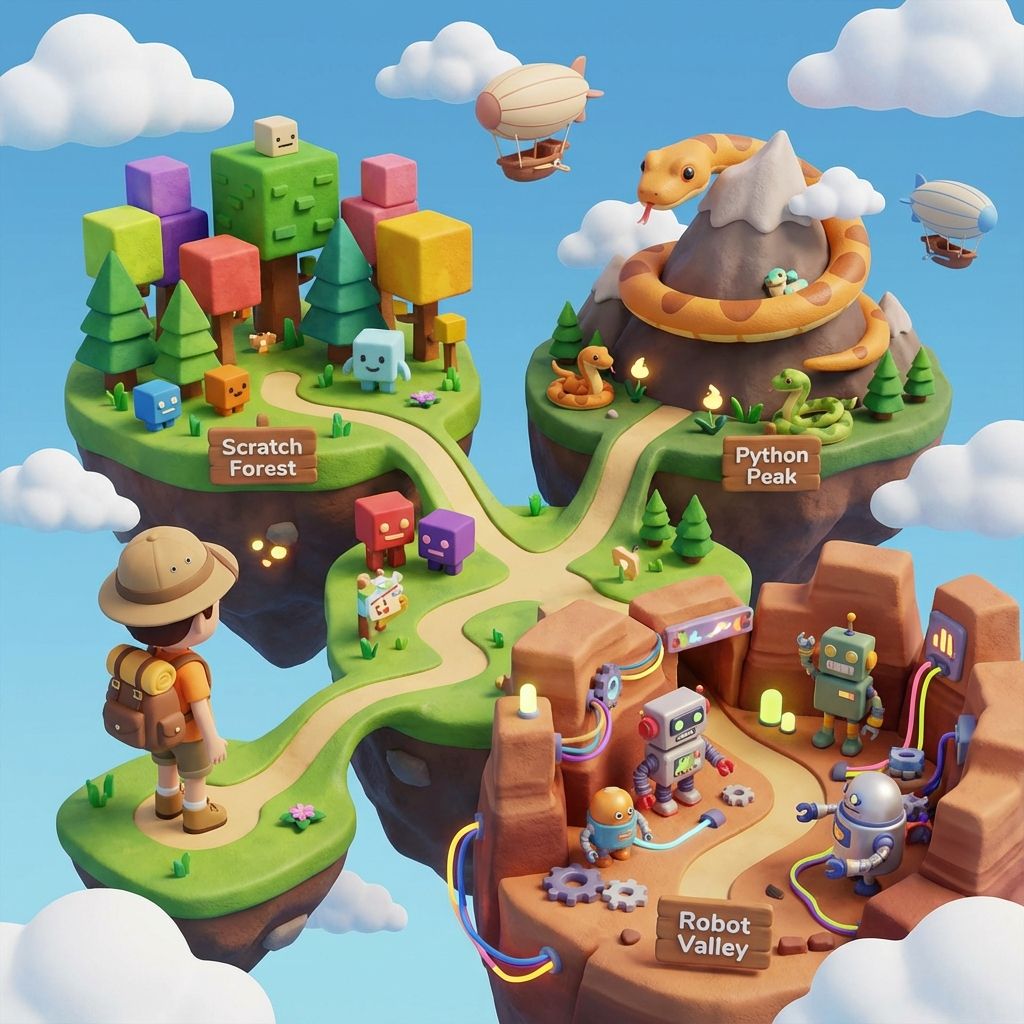
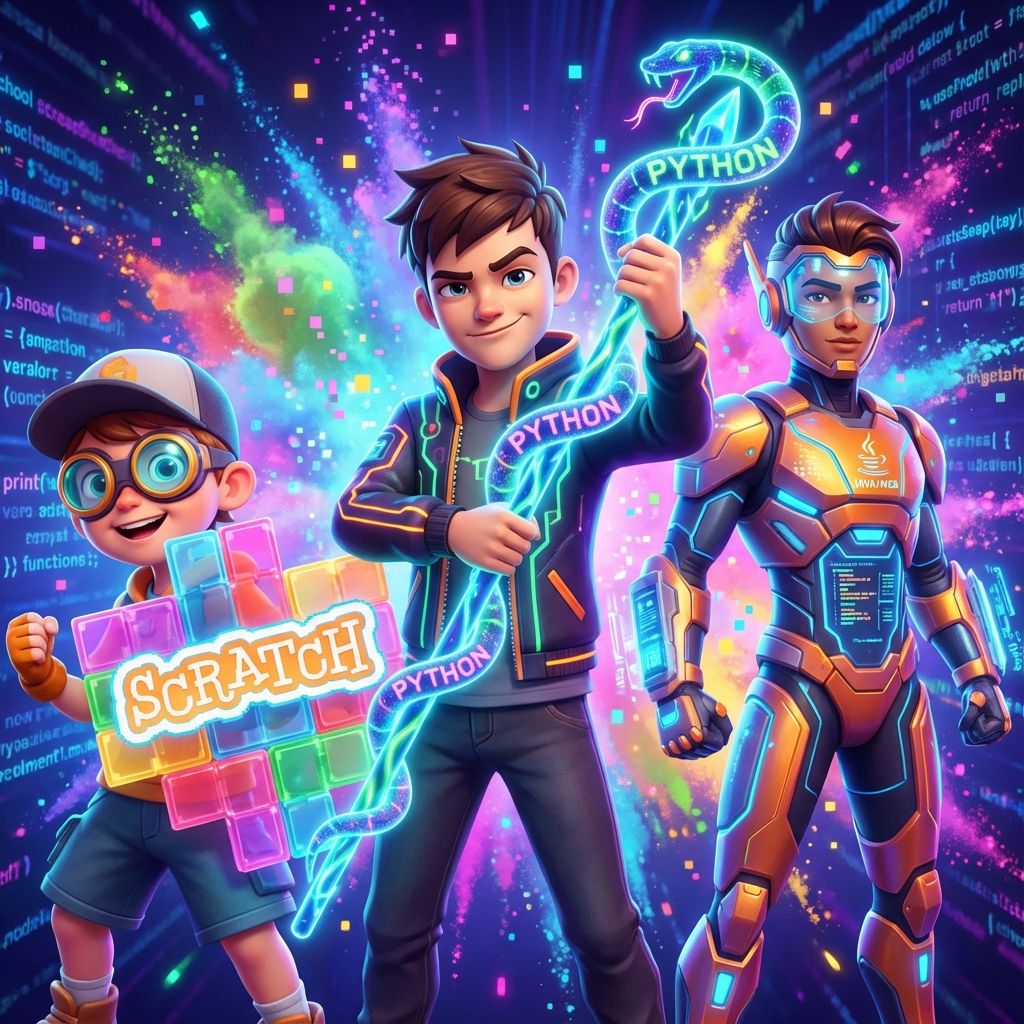
- Choose an age-appropriate starting point: Scratch for younger kids, Python for teens and older
- Find structured learning: Self-teaching is possible but guided courses accelerate progress
- Set realistic expectations: Proficiency takes months, not days
- Focus on projects: Building things is more valuable than completing tutorials
- Join a community: Learning with others is more effective and enjoyable
Don't let myths hold you or your child back. Coding is accessible, valuable, and learnable by anyone willing to put in the effort.
Frequently Asked Questions
There's no single 'best' age. Kids as young as 5-6 can start with visual programming tools. Teens can jump directly into text-based languages. Adults can learn at any age. The best time to start is now.
Basic proficiency can be achieved in 3-6 months of consistent practice. Becoming job-ready typically takes 1-2 years. But learning never really stops, even experienced developers are always learning new things.
Yes, when done right. Quality online education with live instruction, projects, and community support can be just as effective as in-person learning, often more convenient and accessible.
Absolutely. A bad first experience often comes from wrong tools, poor instruction, or mismatched expectations. Try a different approach, different language, different projects, different teaching style. Many successful coders had false starts.
Yes. Coding develops logical thinking, problem-solving, and persistence, skills that transfer to math, science, and other subjects. Many students see academic improvement after learning to code.
Conclusion
The myths surrounding coding education are powerful, but they're just that, myths. Coding doesn't require math genius, isn't just for future engineers, isn't too late to start, and isn't boring or isolating.
What coding does require is curiosity, persistence, and good guidance. With those ingredients, any student can learn to code and benefit from the skills it builds, regardless of their background, gender, or career aspirations.
Don't let outdated stereotypes and misconceptions hold your child back from one of the most valuable skills they can learn. The digital future belongs to those who can create, not just consume. Help your child become a creator.
Take the First Step
Every coding journey starts with a single line of code. Ready to begin? We're here to guide you every step of the way.