
Table of Contents
- The World Runs on Code (And You Should Understand It)
- Reason #1: Career Opportunities Are Insane
- Reason #2: It Teaches You How to Think
- Reason #3: You Can Build Literally Anything You Imagine
- Reason #4: It's Actually Fun (No, Really)
- Reason #5: You'll Stand Out (In All the Right Ways)
- Reason #6: Future-Proof Your Career
- Reason #7: Start Your Own Business
- But I'm Not a 'Tech Person': Can I Still Learn?
- Where to Start: A Practical Roadmap for Teens
- What Parents Need to Know
- Common Challenges (And How to Overcome Them)
- Success Stories: Teens Who Learned to Code
- The Best Time to Start Was Yesterday. The Second Best Time Is Now.
- Frequently Asked Questions
- Conclusion
Let's be real, when you hear 'learn to code,' you probably picture someone hunched over a computer in a dark room, typing mysterious commands that only geniuses understand. Maybe you think it's boring. Maybe you think it's too hard. Maybe you're wondering why you'd even need it when you're planning to be a doctor, artist, or entrepreneur.
Here's the truth: coding has become one of the most powerful skills a teenager can have, regardless of what career path you're considering. It's not about becoming a programmer (though that's a great option). It's about understanding the language that runs the world around you and gaining the ability to create, innovate, and solve problems in ways that weren't possible before.
This article will show you exactly why coding matters for your generation, what doors it opens, and how it can transform your future, whether you're 13 or 19, tech-savvy or tech-curious.
The World Runs on Code (And You Should Understand It)
Think about your typical day. You wake up to an alarm on your phone (coded). You check Instagram or Snapchat (coded). You stream music on Spotify (coded). You order food through an app (coded). You play games, watch Netflix, message friends, do homework online, all coded.
Code is literally everywhere. It's the invisible force powering the digital world you live in. And here's the thing: right now, you're just a consumer of that world. Learning to code transforms you into a creator.
Imagine understanding how your favorite apps work. Better yet, imagine being able to build your own. That's not some distant fantasy. It's completely achievable for any teenager willing to learn.
Did You Know?
Mark Zuckerberg started coding at 12. Elon Musk at 10. But you don't need to start that early, many successful developers started as teenagers or even adults. It's never too late to begin.
Reason #1: Career Opportunities Are Insane
Let's talk money and opportunities, because yes, that matters. The tech industry isn't just growing; it's exploding. And the demand for people who can code far exceeds the supply.
The Numbers Don't Lie
- Software developers earn an average starting salary of ₹6-12 lakhs per year in India (and $70,000+ in the US)
- Tech jobs are projected to grow 22% by 2030, much faster than most other fields
- Remote work opportunities mean you can work for companies anywhere in the world
- Freelance developers can earn ₹1,000-5,000 per hour depending on skills
- Even non-tech companies desperately need people with coding skills
But here's what's even better: coding skills give you options. You're not locked into one career path. You can be a web developer, mobile app creator, game designer, data scientist, AI engineer, cybersecurity expert, or even start your own tech company.
Careers That Need Coding (That Might Surprise You)
- Digital Marketing: Automate campaigns, analyze data, build landing pages
- Healthcare: Medical apps, health tech, bioinformatics
- Finance: Fintech, algorithmic trading, financial analysis tools
- Entertainment: Game development, animation, music production software
- Journalism: Data journalism, interactive storytelling, news apps
- Fashion: E-commerce platforms, virtual try-ons, design tools
- Environmental Science: Climate modeling, conservation tech, sustainability apps
See the pattern? Whatever you're passionate about, coding can enhance it. It's not about abandoning your dreams. It's about supercharging them with technical skills.
Reason #2: It Teaches You How to Think
Forget the career stuff for a moment. One of the most underrated benefits of coding is how it rewires your brain for problem-solving.
When you code, you learn to break down massive, overwhelming problems into smaller, manageable pieces. You learn to think logically. You learn to debug, which is just a fancy way of saying you learn to find and fix mistakes systematically.
These skills transfer to literally everything in life:
- Struggling with a tough math problem? Break it down like code.
- Planning a big project? Think in steps and sequences.
- Facing a personal challenge? Debug it, identify the issue, test solutions, iterate.
- Making decisions? Use logical reasoning and pattern recognition.
- Learning anything new? Apply the same systematic approach coding teaches.
Everybody in this country should learn to program a computer because it teaches you how to think.
, Steve Jobs
Coding isn't just about computers. It's about developing a mindset that makes you better at solving any problem you encounter.
Real Talk
The most valuable thing coding teaches isn't syntax or languages. It's resilience. You'll fail constantly, debug endlessly, and eventually succeed. That builds mental toughness you can't get from a textbook.
Reason #3: You Can Build Literally Anything You Imagine
This is where coding gets exciting. Have an idea for an app? You can build it. Want to create a game? You can code it. Need a website for your side hustle? You can make it. Frustrated by something that doesn't exist? You can create it.
Coding is the ultimate creative tool. It's like having a superpower where your imagination is the only limit.
Real Projects Teens Have Built
- A 15-year-old built an app to help students find study groups and made ₹50,000 selling it
- A 17-year-old created a mental health chatbot that's now used by thousands
- A 16-year-old designed a game that went viral on social media
- A 14-year-old built a website for their parent's small business and started freelancing
- A 13-year-old automated their homework organization and shared it with classmates
These aren't child prodigies or geniuses. They're regular teens who learned to code and decided to create something. You could be next.
Start Small, Dream Big
You don't need to build the next Instagram on day one. Start with:
- A personal portfolio website showcasing your interests
- A simple calculator or to-do list app
- A quiz game about your favorite topic
- A bot that automates something annoying in your life
- A website for a school club or local organization
Every big project starts small. The key is starting. Check out our Frontend Development course or App Development course to begin building real projects.
Reason #4: It's Actually Fun (No, Really)
Okay, we know what you're thinking: 'Fun? Coding? Sure, Jan.' But hear us out.
Modern coding isn't like the boring computer classes your school might have. It's interactive, visual, and immediately rewarding. You write a few lines of code, hit run, and boom, something happens on screen. That instant feedback is addictive.
Plus, coding connects to things you already love:
- Love gaming? Learn game development and create your own worlds
- Into art and design? Code interactive animations and digital art
- Music fan? Build music apps or learn audio programming
- Social media addict? Understand how platforms work and build your own
- Problem solver? Coding is literally one big puzzle after another
- Competitive? Join coding competitions and hackathons
The best part? You can see your progress immediately. Unlike studying for exams where results come weeks later, coding gives you instant gratification. Your code either works or it doesn't, and when it finally works after debugging, that feeling is unbeatable.
The 'Aha!' Moment
Every coder remembers their first program that actually worked. That rush of 'I built this!' is what keeps people coding for life. You'll experience it too.
Reason #5: You'll Stand Out (In All the Right Ways)
Let's talk about college applications, internships, and future opportunities. Having coding skills on your resume makes you memorable.
Think about it: thousands of students apply to the same colleges with similar grades and test scores. But how many can say they built an app, contributed to open-source projects, or won a hackathon? That's what makes admissions officers stop and pay attention.
How Coding Helps Your Applications
- Demonstrates initiative and self-learning ability
- Shows you can complete complex projects independently
- Proves technical skills that most applicants lack
- Provides concrete portfolio pieces to showcase
- Opens doors to tech-focused scholarships and programs
- Makes you valuable for research positions and internships
Even if you're not applying to computer science programs, coding skills signal that you're forward-thinking, adaptable, and capable of learning hard things. Those qualities matter everywhere.
Beyond College: Real-World Advantages
- Get internships while your peers are still job hunting
- Freelance and earn money during high school or college
- Build side projects that could become businesses
- Network with other developers and tech professionals
- Qualify for remote work opportunities worldwide
Coding isn't just a skill. It's a differentiator that opens doors others don't even know exist.
Reason #6: Future-Proof Your Career
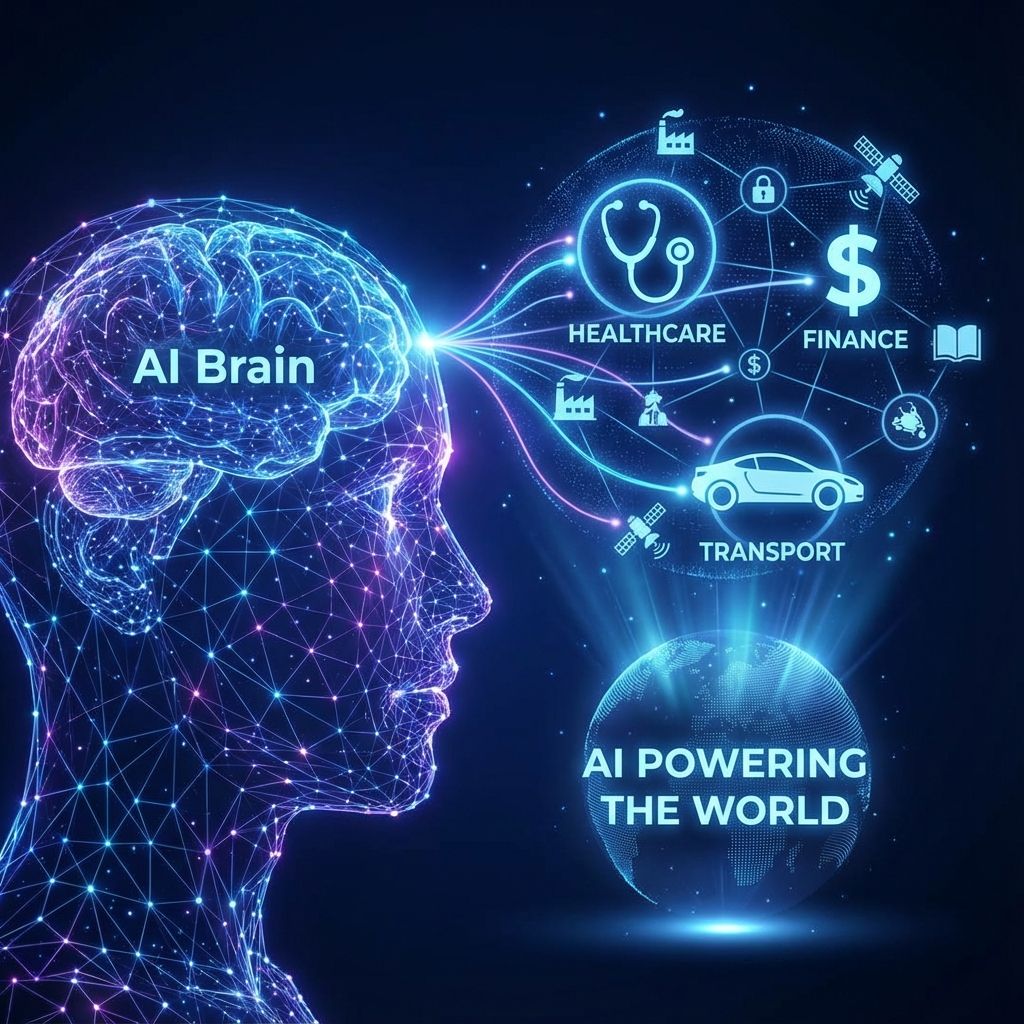
Here's something most adults won't tell you: many of the jobs that exist today won't exist in 10-20 years. Automation and AI are changing everything.
But here's the good news: the people who understand technology, who can code, who can work alongside AI, who can build and adapt, will thrive. Coding is one of the most future-proof skills you can learn.
Why Coding Won't Be Automated Away
You might have heard that AI will replace programmers. That's not quite accurate. AI is becoming a tool that makes coders more productive, not obsolete. Think of it like calculators didn't replace mathematicians. They just changed what mathematicians focus on.
- AI needs humans to give it instructions and direction
- Someone has to build, maintain, and improve the AI systems
- Creative problem-solving and innovation still require human thinking
- Understanding code helps you use AI tools more effectively
- The demand for tech skills keeps growing faster than supply
Learning to code now means you'll be ready for whatever the future throws at you. You'll be the one creating the future, not just reacting to it.
The AI Advantage
Teens learning to code today have a huge advantage: AI tools like GitHub Copilot and ChatGPT can help you learn faster and build better. You're learning in the best era for coding education ever.
Reason #7: Start Your Own Business
Want to be your own boss? Coding gives you the power to build businesses without needing investors, partners, or even much money.
Think about it: with coding skills, you can build an app, launch a website, create a SaaS product, or offer freelance services, all from your bedroom. No office, no employees, no massive startup costs.
Teen Entrepreneur Opportunities
- Build and sell apps on app stores (passive income potential)
- Freelance web development for local businesses
- Create and sell website templates or themes
- Offer coding tutoring to younger students
- Build automation tools and sell subscriptions
- Create digital products like plugins or extensions
- Start a tech YouTube channel or blog teaching others
The best part? You can start small while still in school. Build something on weekends, test it with friends, iterate based on feedback. By the time you graduate, you could have a real business running.
Even if your first project doesn't become the next big thing, the experience of building and launching something is invaluable. You'll learn more from one real project than from a hundred tutorials.
But I'm Not a 'Tech Person': Can I Still Learn?
This is the biggest myth we need to destroy. There's no such thing as a 'tech person' or 'non-tech person.' Those are just labels people use to avoid trying something new.
Coding is a skill, not a talent. Just like learning to play guitar, speak Spanish, or cook, anyone can learn it with practice and patience. Some people might pick it up faster, but that doesn't mean others can't learn it.
Common Myths Debunked
- Myth: 'You need to be good at math': Reality: Basic logic is enough. Most coding doesn't require advanced math.
- Myth: 'It's too late to start as a teen': Reality: Many successful developers started in their teens or even later.
- Myth: 'You need expensive equipment': Reality: Any laptop or even a tablet can work for learning.
- Myth: 'It's boring and tedious', Reality: Modern coding is interactive, creative, and immediately rewarding.
- Myth: 'Only boys can code': Reality: Some of the best programmers are women. Coding has no gender.
- Myth: 'You need to be naturally smart': Reality: You need to be willing to learn and persistent when stuck.
The only real requirement for learning to code is curiosity and willingness to push through frustration. If you can do that, you can code.
Truth Bomb
Every expert coder was once a complete beginner who had no idea what they were doing. The difference between them and someone who never learned? They kept going when it got hard.
Where to Start: A Practical Roadmap for Teens
Okay, you're convinced. But where do you actually begin? The internet is full of coding resources, which can be overwhelming. Here's a clear path forward.
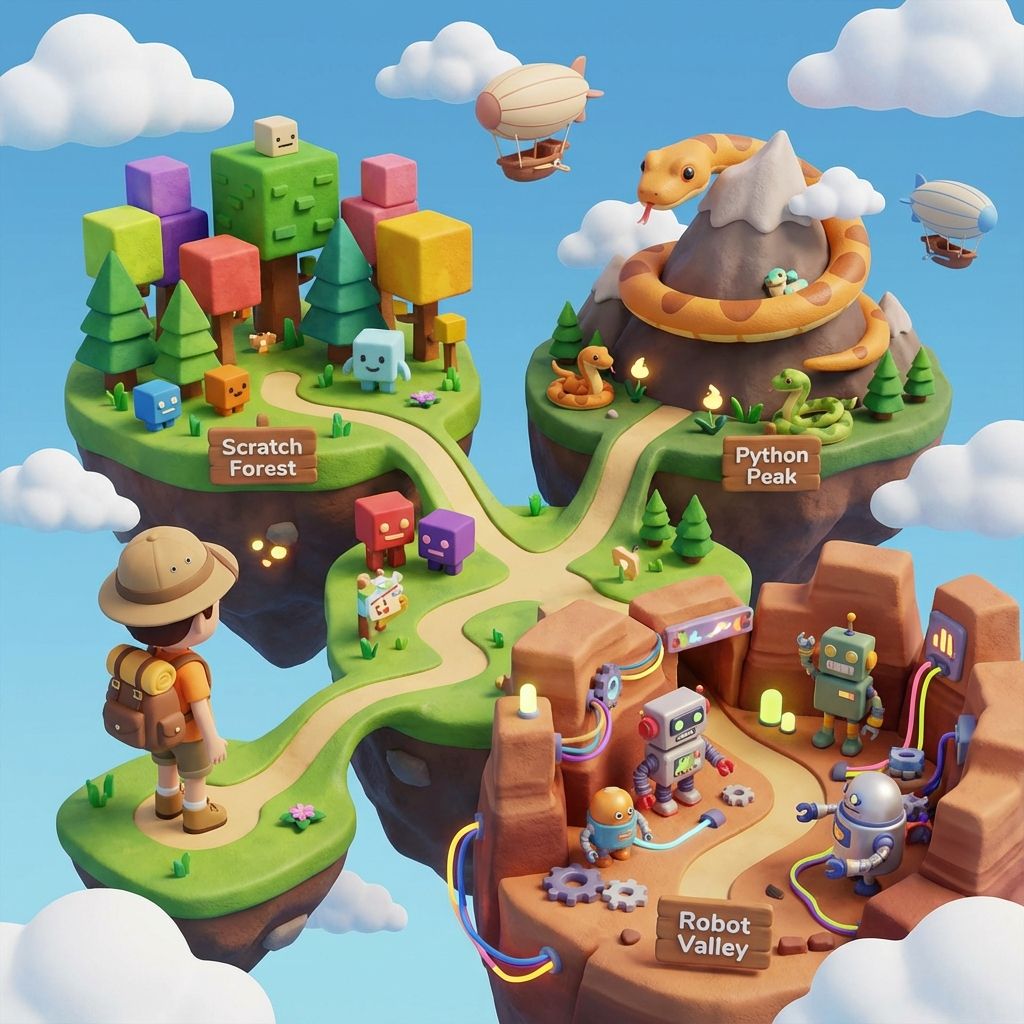
Step 1: Choose Your First Language
Don't overthink this. Your first language doesn't lock you in forever. Pick based on what you want to build:
- Want to build websites? Start with HTML, CSS, and JavaScript
- Interested in apps? Try mobile app development or Flutter
- Love games? Learn Python with Pygame or try Unity with C#
- Curious about AI? Python is your best friend
- Just exploring? Scratch or Python are great starting points
Step 2: Find Quality Learning Resources
Free tutorials are great for exploring, but structured courses help you learn faster and avoid bad habits. Consider:
- Modern Age Coders: Structured courses designed specifically for teens with real projects
- freeCodeCamp: Comprehensive free curriculum for web development
- Codecademy: Interactive lessons with instant feedback
- YouTube: Great for supplemental learning and specific topics
- Udemy: Affordable courses on virtually every coding topic
Step 3: Build Real Projects (Not Just Tutorials)
This is where most beginners get stuck. They complete tutorial after tutorial but never build anything themselves. Don't fall into this trap.
After learning basics, immediately start building:
- Clone a simple app you use daily (calculator, to-do list, weather app)
- Build something for yourself (study tracker, habit tracker, budget app)
- Create something for friends or family (quiz game, photo gallery, event planner)
- Contribute to open-source projects on GitHub
- Participate in hackathons or coding challenges
Projects teach you more than any tutorial ever will. They force you to problem-solve, debug, and actually apply what you've learned.
Step 4: Join a Community
Coding alone can feel isolating. Find your people:
- Join coding Discord servers or Reddit communities
- Attend local coding meetups or hackathons
- Connect with other teen coders on Twitter or LinkedIn
- Start or join a coding club at school
- Find a coding buddy to learn alongside
Community keeps you motivated, helps when you're stuck, and exposes you to different perspectives and approaches.
Step 5: Stay Consistent (Not Intense)
You don't need to code for hours every day. In fact, that's a recipe for burnout. Instead:
- Aim for 30-60 minutes of focused practice daily
- Code 4-5 days a week, take breaks on others
- Focus on understanding, not rushing through material
- Celebrate small wins, every bug fixed is progress
- Don't compare your chapter 1 to someone else's chapter 20
Consistency beats intensity every time. Six months of regular practice will take you further than one month of cramming.
What Parents Need to Know
If you're a parent reading this, here's what you should understand about your teen learning to code:
It's Not Just for 'Computer Kids'
Your teen doesn't need to be obsessed with computers or video games to benefit from coding. Artists, writers, athletes, musicians, all can use coding to enhance their passions.
It Won't Distract from Studies
Actually, coding often improves academic performance. The logical thinking and problem-solving skills transfer to math, science, and even essay writing.
You Don't Need to Understand It to Support It
You don't need to code yourself to encourage your teen. Just show interest, ask about their projects, celebrate their progress, and provide resources when needed.
It's an Investment in Their Future
Whether your teen becomes a professional developer or not, coding skills will serve them in virtually any career path. It's one of the highest-ROI skills they can learn.
For Parents
The best thing you can do is create space and time for your teen to learn. Coding requires focus and uninterrupted practice. Support that, and they'll thrive.
Common Challenges (And How to Overcome Them)
Learning to code isn't always smooth sailing. Here are the obstacles you'll face and how to push through them:
Challenge: 'This Is Too Hard'
Solution: Everyone feels this way at first. The key is breaking problems into smaller pieces. Can't solve the whole thing? Solve just the first step. Then the next. Progress compounds.
Challenge: 'I Keep Making Mistakes'
Solution: Good! Mistakes are how you learn. Professional developers debug constantly. The difference is they've learned to see errors as puzzles to solve, not failures.
Challenge: 'I Don't Have Time'
Solution: You don't need hours. Even 20-30 minutes daily adds up. Cut one episode of Netflix or 30 minutes of social media scrolling. You have the time. It's about priorities.
Challenge: 'Everyone Else Is Better Than Me'
Solution: Stop comparing. You're seeing their highlight reel, not their struggle. Focus on being better than you were yesterday, not better than someone else.
Challenge: 'I Don't Know What to Build'
Solution: Build solutions to your own problems. What annoys you? What could be easier? What do you wish existed? Start there.
Success Stories: Teens Who Learned to Code
Still not convinced? Here are real examples of what teens have achieved with coding:
- Tanmay, 16: Built a study planner app, now used by 5,000+ students. Got early admission to his dream college.
- Priya, 15: Started freelancing web design, earning ₹15,000/month while still in school.
- Arjun, 17: Created a mental health chatbot for his school project, won a national competition.
- Sneha, 14: Built a website for her mom's bakery business, learned marketing and business skills too.
- Rohan, 16: Contributed to open-source projects, got internship offers from tech companies.
These aren't exceptional geniuses. They're regular teens who decided to learn and stuck with it. You could be next.
The Best Time to Start Was Yesterday. The Second Best Time Is Now.
Look, we could keep listing reasons why coding matters. We could share more statistics, more success stories, more future predictions. But at some point, you just need to decide: are you going to learn this skill or not?
Every day you wait is another day you could have been building, learning, and growing. Your future self will either thank you for starting today or wish you had.
The good news? You're already ahead of most people just by reading this article. You're curious. You're considering it. Now take the next step.
- Pick a language that interests you
- Find a course or tutorial to start with
- Block out 30 minutes today to write your first line of code
- Join a community of learners
- Commit to showing up consistently
That's it. That's all you need to do to begin. The rest will follow.
Your Coding Journey Starts Here
Six months from now, you'll wish you had started today. So start today. Your future self is counting on you.
Frequently Asked Questions
There's no 'best' age, but the teenage years are ideal. You're old enough to grasp complex concepts but young enough to have time to build serious skills before college or career. That said, it's never too late to start.
Basic proficiency: 3-6 months of consistent practice. Job-ready skills: 6-12 months. Mastery: years of continuous learning. But you can build real projects within weeks of starting.
No! Most coding can be done on any laptop or even a tablet. You don't need expensive equipment to start. A basic computer with internet access is enough.
Absolutely. There are tons of free resources: YouTube, freeCodeCamp, Codecademy's free tier, documentation, and community forums. Paid courses offer structure and support, but free learning is totally viable.
Most coding doesn't require advanced math. Basic arithmetic and logic are enough for web development, app development, and many other areas. Don't let math anxiety stop you.
AI is a tool that makes programmers more productive, not obsolete. Someone still needs to direct the AI, review its output, and solve complex problems. Learning to code now means you'll be ready to work alongside AI effectively.
Yes! Coding projects demonstrate initiative, technical skills, and problem-solving ability. They make your application stand out and can qualify you for tech-focused scholarships and programs.
That's okay! Not everyone will love coding, and that's fine. But you won't know until you try. Give it a genuine shot for a few weeks before deciding. The skills you learn transfer to other areas anyway.
Conclusion
Coding isn't just another skill to add to your resume. It's a superpower that transforms how you think, what you can create, and what opportunities are available to you.
Whether you want to build apps, start a business, get into a top college, earn money as a teen, or just understand the technology shaping your world, coding gives you the tools to do it.
The teenagers who learn to code today will be the innovators, entrepreneurs, and leaders of tomorrow. They'll be the ones creating solutions, building businesses, and shaping the future, not just watching it happen.
So here's the real question: do you want to be someone who uses technology, or someone who creates it? Do you want to consume the future, or build it?
The choice is yours. But if you're ready to take control of your future, to build things that matter, and to develop skills that will serve you for life, then it's time to start coding.
Your journey begins with a single line of code. Write it today. Explore our courses designed specifically for teens, or reach out to us if you have questions. We're here to help you succeed.
Ready to Begin?
The world needs more teen coders who aren't afraid to build, create, and innovate. Be one of them. Start today, stay consistent, and watch what you can achieve.