WWM / 1
11 plus maths, West Midlands
Year 5 maths for timed sections.
Open the syllabusWolverhampton and Walsall · West Midlands Grammar Schools test maths · Live online, small groups or one to one
Wolverhampton Girls' High School and the two Queen Mary's schools in Walsall do not set their own 11 plus. They belong to the Shropshire, Wolverhampton and Walsall consortium within the West Midlands Grammar Schools partnership, and every child sits the same GL Assessment test as children applying to Birmingham or Warwickshire. Two local details are worth knowing. Queen Mary's Grammar School describes the maths as "Numerical Reasoning", where the partnership calls the same sections "Mathematics", which can send families looking for the wrong kind of practice. And both Queen Mary's schools say the Minimum Qualifying Score is set by governors after the results are in: for 2027 entry it is "subject to analysis and Governors' confirmation in November 2026". There is no number to aim at beforehand, only the maths. This page sets out what the partnership and the schools publish, then teaches a set of Year 5 facts that make many short questions instant: fraction, decimal and percentage equivalents.
Maths only · We do not teach English or reasoning · No connection with any of the schools
In short
West Midlands Grammar Schools says any child wanting a place at a selective grammar school in Birmingham, Shropshire, Walsall, Wolverhampton or Warwickshire must sit its entrance test. Locally that means Wolverhampton Girls' High School, Queen Mary's Grammar School and Queen Mary's High School. The papers, written by GL Assessment, alternate short timed blocks of English, verbal reasoning, non-verbal reasoning and maths, all multiple choice, with maths counting for a quarter. Scores are age-standardised around a median of 200, and the Queen Mary's schools say the Minimum Qualifying Score is confirmed by governors after the results. Last cycle, for 2027 entry, families registered between Tuesday 5 May and 4pm on Friday 26 June 2026, and children sat the test on Saturday 12 September. We teach the maths, live online. Nothing is charged for a trial session; after that the monthly fee is USD 100 for a shared class and USD 150 for a teacher to themselves.
Starting points
Maths comes in short timed sections inside mixed papers. Choose by how quickly your child reaches for a known fact.
BLACK COUNTRY / 1
Year 5 content for timed multiple-choice sections, equivalents included.
Open the syllabus →
BLACK COUNTRY / 2
Fractions, decimals and percentages that come without working.
Open the syllabus →
BLACK COUNTRY / 3
For children who need Year 3 and 4 maths settled first.
Open the syllabus →A regional test
Wolverhampton's council pages do not cover the 11 plus, Walsall's school directory blocked our reader, and Wolverhampton Girls' High School's admissions page would not render for us. So this page relies on West Midlands Grammar Schools and the two Queen Mary's schools, read on 26 September 2026.
| Step | Date | As published |
|---|---|---|
| Registration opens | Tuesday 5 May 2026 | Through the West Midlands Grammar Schools registration. |
| Reasonable adjustments | 4pm, Friday 12 June 2026 | Deadline for requests. |
| Registration closes | 4pm, Friday 26 June 2026 | No registrations after this time. |
| Entrance test | Saturday 12 September 2026 | At a test centre allocated by home address. |
| Results | By Friday 16 October 2026 | Standardised score sent to parents. |
| Late test | Tuesday 2 March 2027 | For late registrations, as Queen Mary's High School lists it. |
According to the partnership, a child faces two papers of roughly fifty to sixty minutes including instructions, each cut into separately timed blocks that alternate between English, verbal reasoning, mathematics and non-verbal or spatial questions, every one of them multiple choice. Mathematics carries a quarter of the weighting, non-verbal a quarter, English and verbal reasoning together a half.
Queen Mary's Grammar School adds that "Candidates MUST write answers on the separate answer sheets provided", and that each paper is normally about 50 minutes, with around an hour of administration.
Queen Mary's High School says children are allocated the test centre closest to their home address and cannot choose one. The test is the same everywhere in the partnership, so a child in Bilston sits the same paper as a child in Stratford-upon-Avon.
Both Queen Mary's schools say places depend first on reaching the Minimum Qualifying Score and then on each school's admission rules. We keep out of those rules entirely.
Sources: West Midlands Grammar Schools, the entrance test and partnership schools; Queen Mary's Grammar School, September 2027 entry; Queen Mary's High School, Year 7 September 2027 entry. Modern Age Coders has no connection with the partnership, GL Assessment, either council or any school.
Two names, one section
A small wording difference between the partnership and one of its schools can send families looking for the wrong kind of practice.
West Midlands Grammar Schools lists the four section types as "English Comprehension, Verbal Reasoning, Mathematics and Non-Verbal/Spatial Reasoning", and weights "25% for mathematics".
Queen Mary's Grammar School, describing the same test, says it assesses "Verbal Reasoning, Non-Verbal Reasoning and Numerical Reasoning". Same provider, same papers, same day: the "Numerical Reasoning" there is the partnership's mathematics.
Families who read "numerical reasoning" sometimes buy books of number puzzles and code-breaking that sit outside the school curriculum. The familiarisation guide published for this very test puts it plainly: the maths draws on classroom learning, stretched by a few harder items.
So the preparation is the primary maths curriculum, and in particular the facts that let a child answer short questions quickly inside a timed section. That is where we spend the time.
On scoring, the Queen Mary's schools explain that results across the partnership use "an age-weighted standardisation around a median score of 200": half of children score above 200 and half below, after allowing for age. The Minimum Qualifying Score for 2027 entry is set by governors in November 2026, after the results. We never guess it, and we would be wary of anyone who did.
The lesson
The Year 5 curriculum asks children to know "percentage and decimal equivalents of 1/2, 1/4, 1/5, 2/5, 4/5 and those fractions with a denominator of a multiple of 10 or 25". In a timed section, knowing them is much faster than working them out.
| Fact | Our question | Answer |
|---|---|---|
| 1/4 = 0.25 = 25% | What is 25% of 64? | 16: a quarter of 64 |
| 1/5 = 0.2 = 20% | Which is larger, 0.2 or 1/4? | 1/4, which is 0.25 |
| 2/5 = 0.4 = 40% | What is 40% of 35? | 14: two fifths of 35 |
| 4/5 = 0.8 = 80% | A test has 25 questions. A child gets 80% right. How many is that? | 20 |
| 7/10 = 0.7 = 70% | Put 0.65, 7/10 and 68% in order, smallest first. | 0.65, 68%, 7/10 |
| 9/25 = 0.36 = 36% | Write 9/25 as a percentage. | 36%: multiply top and bottom by 4 |
The curriculum chooses these fractions carefully: halves, quarters, fifths, and anything over 10 or 25, because each converts to hundredths in one step. A fraction over 25 becomes a percentage by multiplying top and bottom by 4; a fraction over 10, by multiplying by 10.
In a timed section of a multiple-choice paper, questions like "which is larger, 0.2 or 1/4?" appear in many disguises. A child who has to convert each time spends the section converting. A child who simply knows that 1/4 is 0.25 answers and moves on.
Ordering mixed forms, as in the fifth row, is where the facts pay off most. Turning everything into hundredths, 65, 70 and 68, makes the order obvious. Children who try to compare 0.65 with 7/10 directly often get it wrong.
Percentages of amounts follow straight from the facts: 40% of 35 is two fifths of 35, which is 14. We teach the fact first, then the calculation, so the calculation is short.
Source: national curriculum in England, mathematics, Year 5 fractions (including decimals and percentages), statutory requirements. The questions are written by Modern Age Coders.
Our approach
This test is the same one Birmingham and Warwickshire children sit, so the lessons from those pages apply too. Here is what we emphasise for Wolverhampton and Walsall families.
Equivalents, tables and number bonds known instantly, because each maths section is short and timed.
Number, fractions, measures, shape and data, as the familiarisation guide says the maths draws on classroom work.
Short mixed practice so the first maths question after a reasoning section is answered as carefully as any.
For more on the shared test, see our pages for Birmingham, on working without a ruler or protractor, and Warwickshire, on questions that may be harder than end-of-Key-Stage-2 levels.
We do not reproduce GL familiarisation material. Our questions are our own, written to the Year 5 curriculum.
English and reasoning make up three quarters of the weighting, and we teach neither. Families should plan for them separately.
We do not advise on which school to name, catchments or places. The schools publish their own admission arrangements.
Wolverhampton and Walsall
Five schools make up the Shropshire, Wolverhampton and Walsall consortium on the partnership's list. The three below sit in the two boroughs this page is about.
| School | Town |
|---|---|
| Wolverhampton Girls' High School | Wolverhampton |
| Queen Mary's Grammar School | Walsall |
| Queen Mary's High School | Walsall |
The consortium also includes Haberdashers' Adams and Newport Girls' High School in Shropshire, which use the same test.
Tettenhall or Willenhall, Aldridge or Bloxwich: our teacher appears on the same screen at the same hour, and the class is built from children at your child's stage wherever they live.
For coding lessons across the West Midlands, see our Birmingham coding page.
We have no connection with any of these schools, the partnership, GL Assessment or either council.
Source: West Midlands Grammar Schools, partnership schools, read 26 September 2026. The town column is ours.
Towards September 2027
For children now in Year 5, registration should open in May 2027 and the test fall early in Year 6. The partnership and schools publish exact dates.
| When | Stage | You will see |
|---|---|---|
| Autumn, Year 5 | 1. Tables and bonds | Multiplication facts and number bonds instant |
| Winter, Year 5 | 2. Equivalents | Halves, quarters, fifths, tenths and twenty-fifths converted without working |
| Spring, Year 5 (register by late June) | 3. The rest of Year 5 | Measures, shape and data as secure as number |
| Summer holiday | 4. Timed sections | Short maths sections answered accurately against a clock |
Facts are the fastest thing to improve. If time is short, we start there.
At the trial lesson we will say honestly what the time allows.
Fraction, decimal and percentage fluency carries through secondary maths. Some pupils continue with maths through coding.
Children who enjoyed the puzzles can look ahead to the UKMT Junior Maths Challenge, listed on our competitions calendar.
Courses
Arranged by stage, with the syllabus behind each card.
WWM / 1
Year 5 maths for timed sections.
Open the syllabusWWM / 2
Equivalents and tables on demand.
Open the syllabusWWM / 3
The years before Year 5.
Open the syllabusWWM / 4
For younger siblings.
Open the syllabusWWM / 5
Percentages, ratio and algebra.
Open the syllabusWWM / 6
Foundation and higher.
Open the syllabusWWM / 7
For strong, curious pupils.
Open the syllabusWWM / 8
Convert fractions to percentages in Python.
Open the syllabusWWM / 9
Logic in blocks.
Open the syllabusWWM / 10
The first typed language.
Open the syllabusWWM / 11
Speed on firm foundations.
Open the syllabusWWM / 12
Maths in modern software.
Open the syllabusLesson times
Teaching is live from India. Primary pupils in Wolverhampton and Walsall have early-evening or weekend-morning lessons by the UK clock, and our teachers move their hours when the UK changes its clocks.
After school
A settled early-evening hour.
Weekend mornings
Fresh, for tired weekday learners.
School holidays
Short extra sessions.
Who notices the same slip twice.
A few honest lines after lessons.
Matched by level.
No GL material reproduced.
For a stubborn topic.
Maths lessons, nothing wider: English, reasoning and admissions belong elsewhere.
Student work
Four projects our students built and published, each on foundations like the fractions and percentages of Year 5. More on the student labs page.
AI and ML
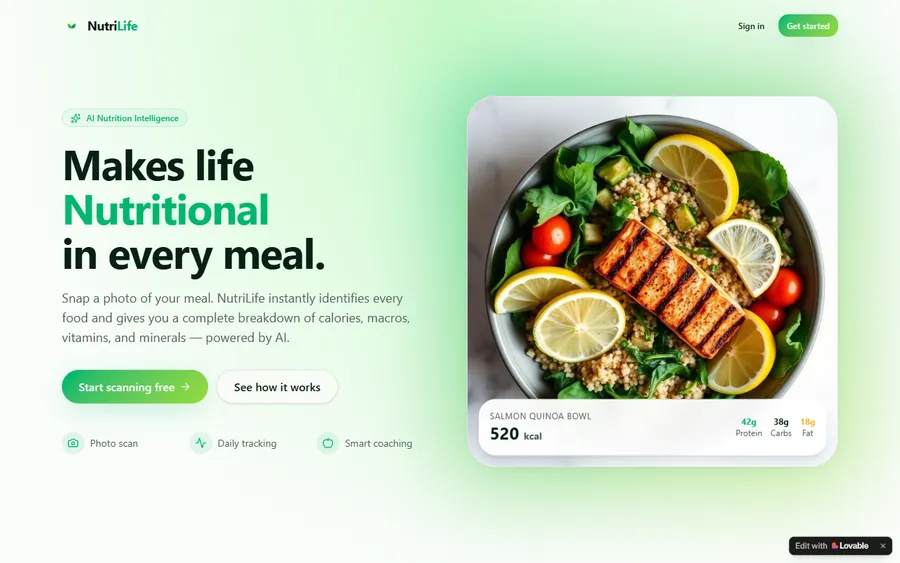
An AI nutrition coach that reads what you eat and works you toward a target.
AI and ML
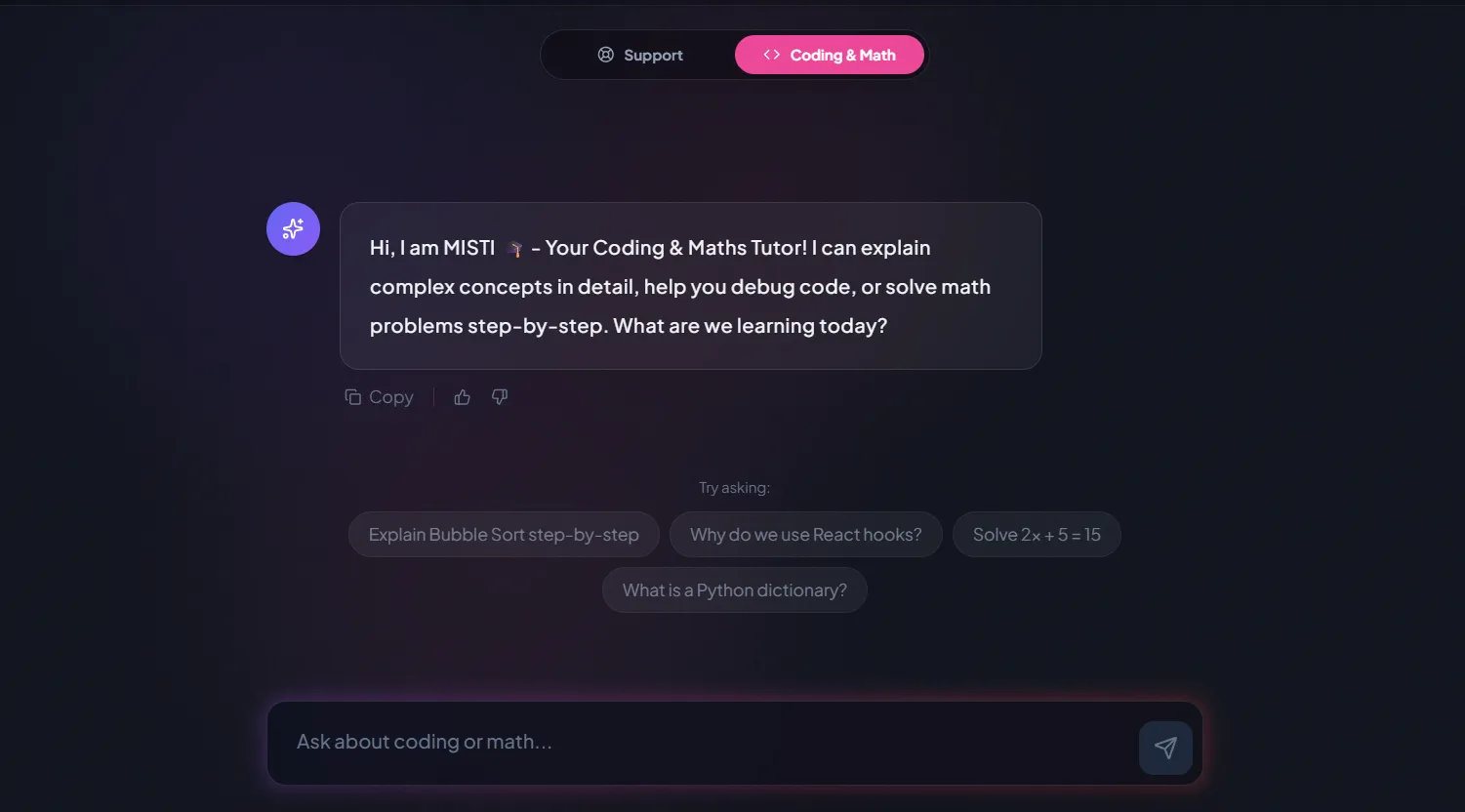
A chatbot that answers mathematics and programming questions, built and deployed by a student.

AI and ML
An assistant that helps a young person recognise unsafe situations online.
Web app
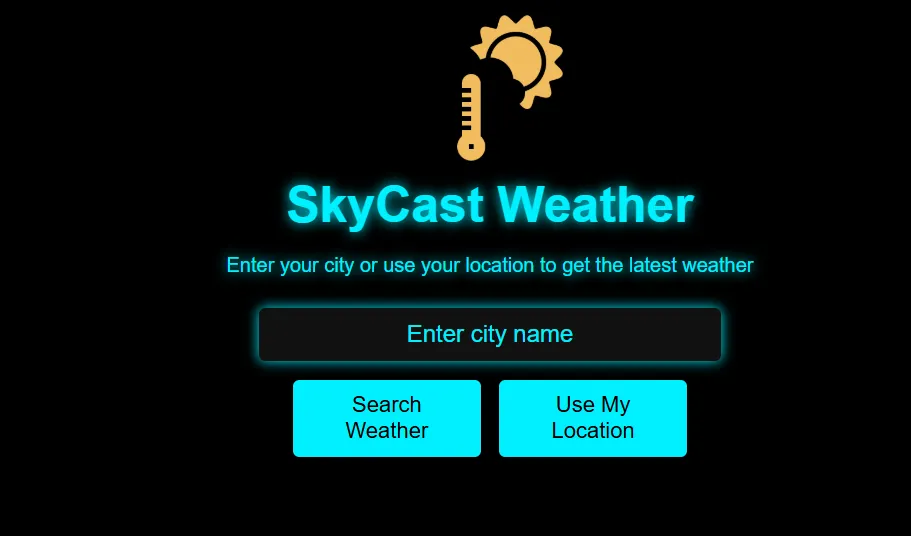
A weather forecasting site with live conditions for any location.
Fees
Every family outside India pays one monthly US dollar price. No joining fee; stop whenever you like.
Group batch
USD 100
a month, billed in US dollars
One to one
USD 150
a month, billed in US dollars
What families say
Parents' reviews, straight from Google.
★★★★★
"The one step solution for my son. Modern Age Coders make learning coding so simple that kids love it. The teachers explain complex concepts clearly with practical exercises and interactive content."
Ria Mukherjee
Parent
★★★★★
"Modern Age Coders has been a game-changer for me. I struggled to grasp IT concepts and coding before joining, but their classes transformed everything. I can now confidently write complex programs with ease."
Samriddha Mondal
Student
★★★★★
"One of the most wonderful education centres out there. Education is not limited to school syllabus but focuses on skill development."
Vansh Agarwal
Student
★★★★★
"My child Dhairya is really enjoying the Modern Age Coders classes. This is his first online class and he eagerly looks forward to it. I can already see his improvement, and the teachers are very cooperative."
Sonam Oswal
Parent of Dhairya
★★★★★
"Modern Age Coders have wonderful teachers who teach in a clear, easy and practical way. The teacher boosts students' confidence and inspires them to learn without hesitation."
Sonu Goyal
Parent
★★★★★
"I highly recommend this computer coding class! The teachers are incredibly knowledgeable and passionate about coding."
Ritu Kedia
Parent
Wolverhampton and Walsall questions
Wolverhampton Girls' High School, Queen Mary's Grammar School and Queen Mary's High School, as part of the Shropshire, Wolverhampton and Walsall consortium within West Midlands Grammar Schools.
Yes. West Midlands Grammar Schools says children applying to selective grammar schools in Birmingham, Shropshire, Walsall, Wolverhampton and Warwickshire sit its entrance test.
It is how Queen Mary's Grammar School describes the maths sections of the same GL test that the partnership calls "Mathematics". The preparation is primary maths.
The partnership publishes the weightings as 50% English and verbal reasoning, 25% non-verbal reasoning and 25% mathematics.
The Queen Mary's schools say the Minimum Qualifying Score is set by governors after the results; for 2027 entry it was subject to confirmation in November 2026. Scores are standardised around a median of 200. We do not predict scores.
On 26 September 2026 neither Queen Mary's school showed 2028-entry dates yet. Last cycle's pattern was registration in May and June of Year 5 and a Saturday test in mid-September of Year 6.
Queen Mary's High School says children are allocated the test centre closest to their home address and cannot select one.
No. Three quarters of the weighting is English and reasoning, and we teach neither; nor do we comment on school choices or places.
No. We write our own questions.
The first lesson is free. After that, USD 100 a month in a small group or USD 150 a month one to one.
Related
The same test seen from Birmingham and Warwickshire, our national page and coding.
The shared test's equipment rules and angle questions.
Why "harder than Key Stage 2" means depth.
Programming for West Midlands children.
The national overview.
Maths challenges, by date.
Nations, cities, boroughs and counties, all in one index.
Start here
A school year, the school you are aiming for, and a sentence about maths at home is plenty. The trial is taught properly, and you get a plain report on it.
Some parents like to read everything first: the course catalogue lists what each class covers, how we teach walks through a lesson hour, and our roadmap joins the years together.
WhatsApp us · +91 91233 66161 · contact@modernagecoders.com
WhatsApp is quickest. We teach from India, with an Indian number and no office in the West Midlands.