EXM / A
11 plus maths for Essex
Key Stage 2 to Year 5, conventions included.
Open the syllabusEssex · CSSE 11+ and the CCHS entrance test · Live online, small groups or one to one
The headteachers of the CSSE schools once wrote down, in a short document still linked from the consortium's own website, the qualities they hope the 11+ will find. Most are what you would expect: curiosity, perseverance, "understanding of all concepts taught at primary school". Two are about maths, and one of those is unusual: "appreciation of numerical conventions". It is a phrase worth unpacking. Conventions are the agreed ways maths is written: what 3² means and why it is not 6, where the comma goes in 405,090, why area is in cm² and volume in cm³. They are small, they are in the Year 5 curriculum, and a child who is shaky on them loses marks on questions they otherwise understand. This page sets out the two Essex tests, the CSSE test for Colchester and Chelmsford's grammar schools and the separate test at Chelmsford County High School for Girls, and then teaches the conventions.
Maths only · We do not teach English or creative tasks · No connection with the CSSE or any Essex school
In short
Essex has two selective tests. The CSSE test is used by Colchester Royal Grammar School, Colchester County High School for Girls and King Edward VI Grammar School in Chelmsford, along with seven Southend schools: an English paper and a sixty-minute Mathematics paper, each worth half the marks, based on Key Stage 2, with no calculators and a minimum total standardised score of 303. For 2027 entry it was sat on Saturday 19 September 2026, and the CSSE says 2028-entry dates will be published by Easter 2027. Chelmsford County High School for Girls runs its own FSCE test, sat this cycle on Thursday 3 September 2026, drawing on Key Stage 2 subjects up to Year 5, which may include maths. We teach the maths for both, live online. The first lesson costs nothing; regular tuition is USD 100 monthly in a small group or USD 150 monthly one to one.
Starting points in Essex
Choose by whether your child's errors are about ideas or about how maths is written down.
ESSEX / 1
Key Stage 2 to Year 5, with the notation and conventions that cost careless marks.
Open the syllabus →
ESSEX / 2
Square numbers to 144 and small cubes known instantly, for a paper with no calculator.
Open the syllabus →
ESSEX / 3
For Year 4 children whose place value and tables are not yet secure.
Open the syllabus →Two Essex tests
Essex County Council's admissions page returned an error to our reader, so this page relies on the CSSE and on Chelmsford County High School for Girls. Both read on 26 September 2026.
| CSSE 11+ | Chelmsford County High School for Girls | |
|---|---|---|
| Schools | CRGS, CCHSG, KEGS in Essex; seven more in Southend | CCHS only |
| Provider | Set by the consortium | Future Stories Community Enterprise (FSCE) |
| Maths | A sixty-minute Mathematics paper, 50% of the total | Maths may be among the subjects tested |
| Registration | 12 May to 19 June 2026 | 13 April to 3 June 2026 |
| Test | Saturday 19 September 2026 | Thursday 3 September 2026 |
| After the test | Results emailed 12 October 2026 | Qualifying standard set, then the Creativity paper judged |
The CSSE describes its test as "two tests. One in English and one in Mathematics", with "The Mathematics paper" lasting sixty minutes. The papers are standardised and weighted, each worth 50% of the marks, and based on Key Stage 2. Calculators of any description are not permitted. Offers are not made to any child with a total standardised score under 303.
The three Essex CSSE schools are Colchester County High School for Girls, Colchester Royal Grammar School and King Edward VI Grammar School in Chelmsford. The other seven CSSE schools are in Southend, and share the same test.
Chelmsford County High School for Girls describes itself as "a selective, non-denominational girls' school with Academy Status" and has adopted the FSCE test. FSCE says its content comes from Key Stage 2 subjects "up to and including the Year 5 programme of study", that subjects "may include" mathematics among several others, and that maths is tested through written and mental methods, with no calculators.
The school's arrangements say papers other than Creativity are marked and age-standardised, a qualifying standard is agreed, and then Creativity is judged by trained staff. Places after that are for each school to explain, and we leave them to their own documents.
Sources: CSSE, home page, 11+ Information Guide, Selective Test 2027 Entry, and "Preparing for the 11+" (October 2016); Chelmsford County High School for Girls, Admission to Year 7 September 2027, its admissions arrangements and FSCE guide. Essex County Council's admissions page returned HTTP 403. Modern Age Coders has no connection with the CSSE, FSCE, the council or any Essex school.
What the heads look for
The CSSE's "Preparing for the 11+" note dates from October 2016, but it is still linked from the consortium's examination page, and its description of what the schools value has not been withdrawn.
Among the qualities the CSSE headteachers list are "understanding of all concepts taught at primary school", "ability to work at pace and assimilate information quickly", "appreciation of numerical conventions" and "ability to apply mathematical concepts".
The last is familiar: using what you know in a new setting. The third is less often discussed. Numerical conventions are the shared rules for writing and reading maths, and "appreciation" suggests understanding why they exist, not just obeying them.
The same note says a few hours spent getting familiar with "the style of responses required in the papers" is advisable, and "can be done at home, using materials and papers available on the CSSE website". It adds that "Headteachers share a concern that extensive coaching for the 11+ is inappropriate, ultimately counterproductive".
We take that seriously. What we offer is not coaching to a paper but teaching of the primary curriculum, with the conventions properly understood. A child who understands the maths will cope with any paper; a child drilled on papers will not necessarily cope with secondary school.
The note also contains score guidance and statistics from 2016. We do not repeat them: they are ten years old, the CSSE sets cut-offs from each year's results, and quoting old numbers as if they were targets would mislead.
The lesson
The Year 5 curriculum asks children to "recognise and use square numbers and cube numbers, and the notation for squared (²) and cubed (³)". Around that sit other conventions worth securing.
| Convention | Our question | Answer and the point |
|---|---|---|
| Squared | What is 3²? Is it 6 or 9? | 9: 3 × 3, not 3 × 2 |
| Cubed | What is 2³? | 8: 2 × 2 × 2. Writing 6 means reading ³ as × 3 |
| Square numbers | Which of 36, 48 and 64 are square numbers? | 36 and 64: 6² and 8² |
| Area units | A square has sides of 5 cm. Is its area 20 cm, 25 cm or 25 cm²? | 25 cm²: area is always in square units |
| Volume units | A cube has edges of 4 cm. What is its volume? | 64 cm³, the cube of 4, in cubic units |
| Place-value commas | Write four hundred and five thousand and ninety in digits. | 405,090: commas group digits in threes |
Most of these look trivial to an adult. For a ten-year-old under time pressure they are exactly where marks go. The classic slip is reading 3² as 3 × 2. Another is writing an area in cm, or a volume in cm². The number is right and the answer is wrong, because the convention was missed.
Understanding why helps it stick. 5 cm × 5 cm is 25 square centimetres because the answer counts squares with 1 cm sides. A cube of 4 cm has 4 × 4 × 4 small cubes inside it, which is why cubic centimetres and cube numbers share a name.
Squares and cubes also link to the rest of Year 5. Square numbers have an odd number of factors; cube numbers turn up when counting cubes in a solid; both appear in the curriculum's own examples of equivalence, such as 4 × 35 = 2 × 2 × 35.
We teach conventions a little every week rather than in one lesson. Each set of practice questions includes one or two where the notation or the unit matters, so the habit of reading symbols carefully becomes automatic.
Source: national curriculum in England, mathematics, Year 5 multiplication and division, and measurement (statutory requirements and guidance). The questions are written by Modern Age Coders.
Our approach
Given what the CSSE heads have written, here is exactly what we do and do not do for Essex families.
Key Stage 2 maths to Year 5, every strand, until it is secure. Conventions and notation are part of every lesson, not an afterthought.
A few timed practice sessions late on, to get used to an hour-long paper. The CSSE's free papers are the right place to see the real format.
Our questions are our own. We do not reproduce CSSE or FSCE material, and FSCE says its question types change each year anyway.
For the CSSE test, maths is a whole paper of sixty minutes and half the total, so breadth and stamina matter. For the CCHS test, maths may be one subject among several, and the content is again Year 5 and earlier. The same teaching serves both.
We do not teach English, creative writing or the other subjects FSCE may include. Families should plan for those separately.
FSCE's guide says the types of questions, subjects, content and format change from year to year, so that no tutor or company can claim to know the test. We agree, and we do not claim to.
We give no advice on the choice between schools, priority areas, or places. The schools and the council publish those rules.
Colchester, Chelmsford and beyond
The CSSE names its Essex schools, and CCHS runs its own test. We list them only to show what this page covers.
| School | Test used |
|---|---|
| Colchester Royal Grammar School | CSSE 11+ |
| Colchester County High School for Girls | CSSE 11+ |
| King Edward VI Grammar School, Chelmsford | CSSE 11+ |
| Chelmsford County High School for Girls | Its own FSCE test |
Southend's seven CSSE schools use the same test as the three here; our Southend 11 plus page covers them.
For coding in the county towns, see our pages for Colchester and Chelmsford.
Lessons are live on video, in groups of five to ten matched by level, so a child in Witham, Braintree or Maldon is taught exactly as a child in Colchester or Chelmsford.
We have no connection with the CSSE, FSCE, Essex County Council or any of these schools.
Towards September 2027
For a child now in Year 5, both tests should fall in September 2027; the CSSE and CCHS will publish exact dates.
| When | Stage | You will notice |
|---|---|---|
| Autumn, Year 5 | 1. Number and notation | Squares, cubes and large numbers written and read correctly |
| Winter, Year 5 | 2. Operations and fractions | No-calculator methods fast and accurate |
| Spring and summer, Year 5 | 3. Measures and shape | Units always right: cm, cm², cm³ |
| Summer holiday | 4. An hour of maths | A full paper finished with care to the end |
A late start still helps if the order holds: understanding before speed.
We will say honestly at the free lesson what the time allows.
Notation is the language of secondary maths. Many children continue with maths through coding, where symbols must be exactly right for a program to run.
Some go on to the challenges on our competitions calendar.
Our courses
Grouped by stage, each linked to its syllabus.
EXM / A
Key Stage 2 to Year 5, conventions included.
Open the syllabusEXM / B
Squares, cubes and tables on demand.
Open the syllabusEXM / C
Earlier years, made secure.
Open the syllabusEXM / D
Number sense for younger children.
Open the syllabusEXM / E
Indices, algebra and geometry.
Open the syllabusEXM / F
Foundation and higher, all boards.
Open the syllabusEXM / G
Non-routine problems for keen minds.
Open the syllabusEXM / H
Exponents and units in Python.
Open the syllabusEXM / I
Logic for younger coders.
Open the syllabusEXM / J
The first typed language.
Open the syllabusEXM / K
Shortcuts for fluent calculators.
Open the syllabusEXM / L
Mathematics behind modern tools.
Open the syllabusTiming
We teach live from India. Primary lessons sit in the early evening or on weekend mornings by UK time, and our teachers move their hours when the UK clocks change.
Early weekday evenings
Soon after the school day.
Weekend mornings
When children are freshest.
School holidays
Short, extra sessions.
Who knows your child's habits by the second week.
A few frank lines after lessons.
Grouped by level.
No CSSE or FSCE content copied.
When one child needs focused help.
No English or creativity coaching; no admissions advice.
Student work
Four projects built by students at our school, grounded in the primary maths they once learned. More on the student labs page.
AI and ML
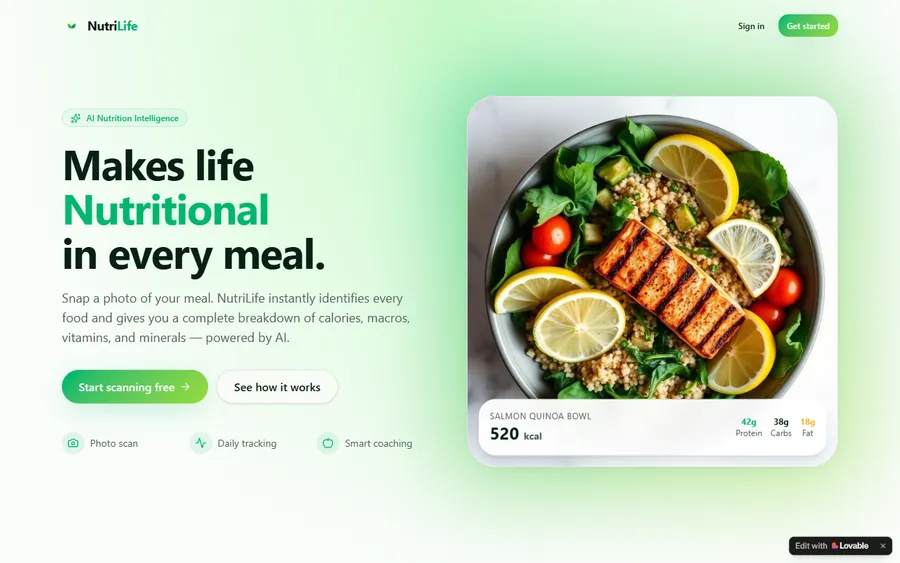
An AI nutrition coach that reads what you eat and works you toward a target.
AI and ML
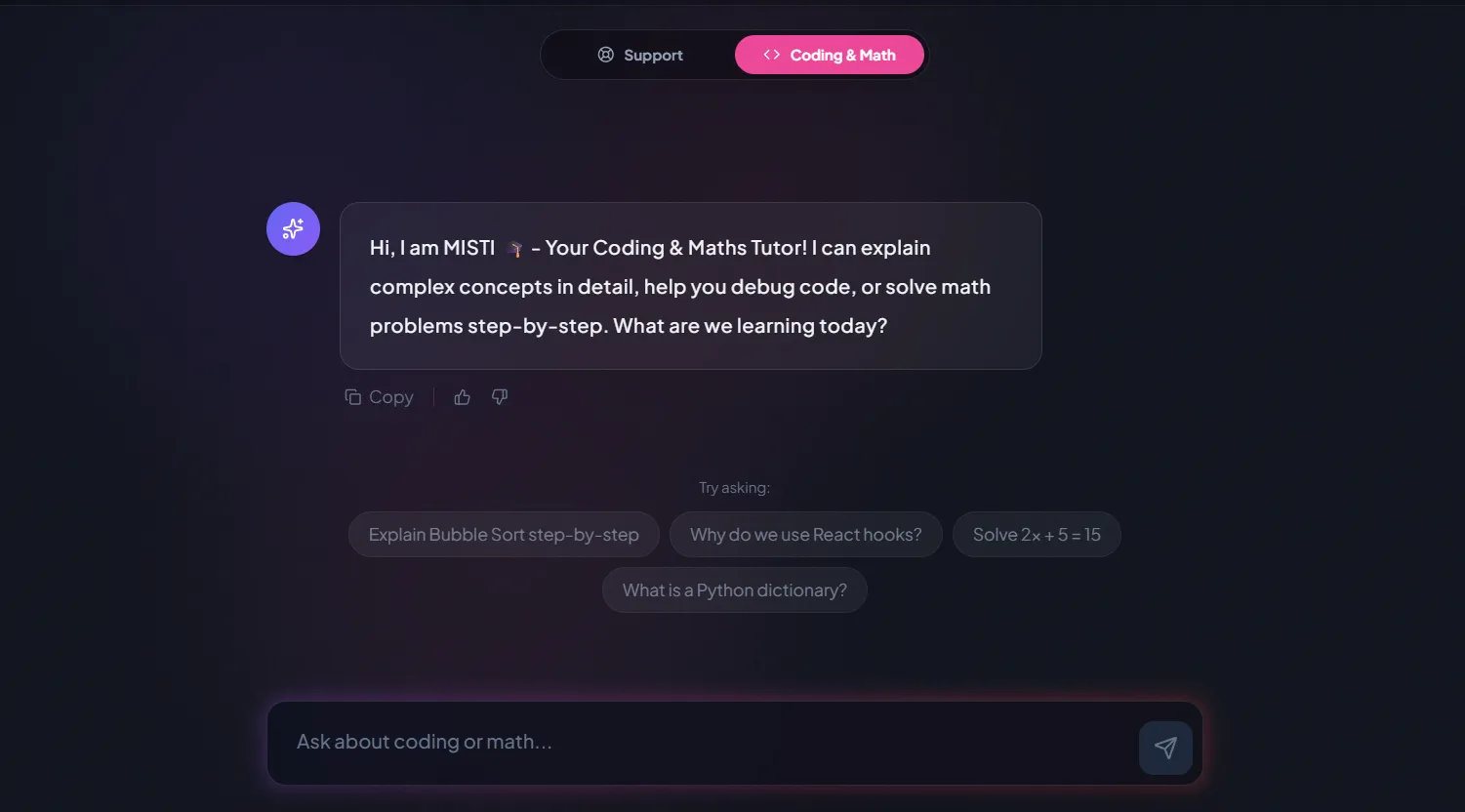
A chatbot that answers mathematics and programming questions, built and deployed by a student.

AI and ML
An assistant that helps a young person recognise unsafe situations online.
Web app
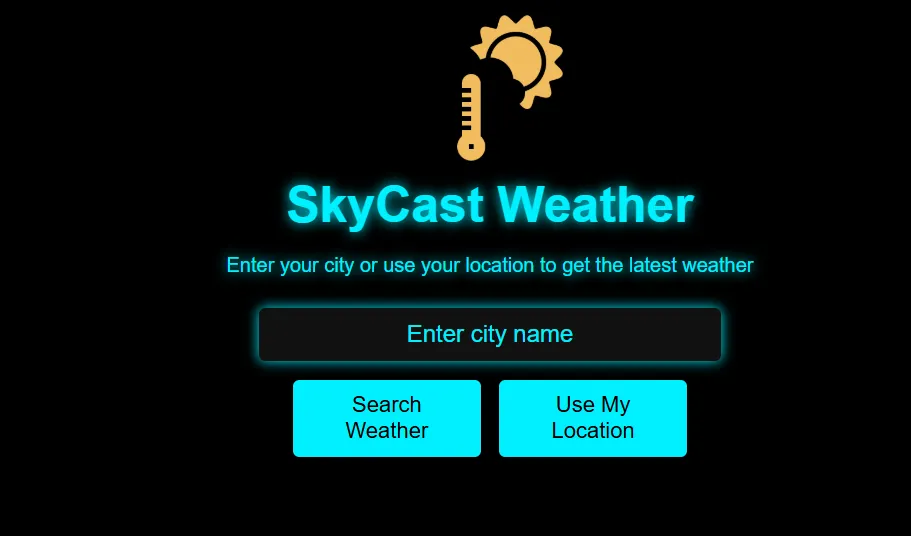
A weather forecasting site with live conditions for any location.
Fees
One US dollar rate per month for every family outside India. Nothing to join, cancel whenever you like.
Group batch
USD 100
a month, billed in US dollars
One to one
USD 150
a month, billed in US dollars
What families say
What parents wrote on Google, reproduced exactly.
★★★★★
"The one step solution for my son. Modern Age Coders make learning coding so simple that kids love it. The teachers explain complex concepts clearly with practical exercises and interactive content."
Ria Mukherjee
Parent
★★★★★
"Modern Age Coders has been a game-changer for me. I struggled to grasp IT concepts and coding before joining, but their classes transformed everything. I can now confidently write complex programs with ease."
Samriddha Mondal
Student
★★★★★
"One of the most wonderful education centres out there. Education is not limited to school syllabus but focuses on skill development."
Vansh Agarwal
Student
★★★★★
"My child Dhairya is really enjoying the Modern Age Coders classes. This is his first online class and he eagerly looks forward to it. I can already see his improvement, and the teachers are very cooperative."
Sonam Oswal
Parent of Dhairya
★★★★★
"Modern Age Coders have wonderful teachers who teach in a clear, easy and practical way. The teacher boosts students' confidence and inspires them to learn without hesitation."
Sonu Goyal
Parent
★★★★★
"I highly recommend this computer coding class! The teachers are incredibly knowledgeable and passionate about coding."
Ritu Kedia
Parent
Essex questions
Colchester Royal Grammar School, Colchester County High School for Girls and King Edward VI Grammar School in Chelmsford, together with seven schools in Southend.
A sixty-minute Mathematics paper, worth half the total, based on Key Stage 2 of the National Curriculum, with no calculators allowed, according to the CSSE.
No. It has its own entrance test from Future Stories Community Enterprise (FSCE). For 2027 entry it was sat on Thursday 3 September 2026.
FSCE says the subjects tested may include mathematics among others, drawn from Key Stage 2 up to the Year 5 programme of study, with written and mental calculation and no calculators.
It is one of the qualities the CSSE headteachers list in their "Preparing for the 11+" note. In Year 5 maths it covers things like squared and cubed notation, units of area and volume, and how large numbers are written.
Their note says a few hours of familiarisation at home is advisable and that extensive coaching is inappropriate and ultimately counterproductive. We teach the maths curriculum rather than coach to a paper.
The CSSE says dates will be published by Easter 2027. CCHS publishes its own. For 2027 entry, the CSSE test was on 19 September 2026.
No. We teach maths only, and we do not advise on applications or places.
No. The CSSE offers its own free familiarisation papers; we write our own questions.
The first lesson is free. After that it is USD 100 a month in a group or USD 150 a month one to one.
Related
The Southend CSSE schools, coding in Essex towns, and our national page.
The seven Southend schools using the CSSE test.
Programming for Colchester children.
Programming for Chelmsford children.
Our general 11 plus maths page.
Dated maths challenges.
Every UK area covered.
Start here
Tell us the year group and which test you are thinking about. We teach a real lesson, then give you a plain account of what we saw.
Reading first? The course pages hold every syllabus, how we teach describes a lesson, and the roadmap shows the route onward.
WhatsApp us · +91 91233 66161 · contact@modernagecoders.com
WhatsApp is the quickest route. We are an Indian school with an Indian number, and we have no premises in Essex.