COMP / MATH / 01
Maths with small programs
Patterns and puzzles explored in code, for primary and lower secondary pupils.
Open the syllabusUnited Kingdom · 2026 to 2027 · Checked with each organiser
The UK has a competition for almost every young mathematician and programmer, from a 45-minute puzzle challenge a six-year-old can do in class to the olympiads that choose national teams. They are run by different bodies, on different dates, with different rules about age, school year and nation, and no single official list brings them together. This page does. Each date below was read at the organiser's own website in September 2026. Where an organiser had not yet published next season's dates, the page says so rather than guessing, and competitions whose current arrangements we could not confirm are named at the end without details.
Dates checked at each organiser · No medal promises · Original practice only
In short
The 2026-27 UK competition year opens with UKMT's Mathematical Olympiad for Girls on 22 September 2026 and runs through the Senior Mathematical Challenge on 7 October, the Primary Mathematics Challenge from 9 to 20 November, UK Bebras in November, the British Informatics Olympiad over December and January, the Perse Coding Team Challenge from 25 January 2027, and the Junior Mathematical Olympiad on 15 June 2027. Beyond school, the UK Olympiad in AI chooses the team for the International Olympiad in AI, held in Singapore from 4 to 10 July 2027. Most of these are entered through a school, and many are free. We teach the problem solving, programming and mathematics underneath them in live online classes for ages 6 and up; we do not run or enter any competition, and we promise no results. A first class is free; groups are USD 100 a month and one-to-one USD 150.
Courses behind the competitions
Competitions test reasoning, not memory. These three build it at three stages.
COMP / 01
For primary and lower secondary pupils: puzzles and patterns solved with small programs, good grounding for the Primary Mathematics Challenge and Bebras.
Open the syllabus →
COMP / 02
For the UKMT challenges and olympiads: written solutions, proof and the habit of checking every case.
Open the syllabus →
COMP / 03
For the British Informatics Olympiad and team coding challenges: algorithms, timing and careful testing.
Open the syllabus →The calendar
Dates are as each organiser published them when we checked in September 2026. Most competitions are entered through a school, so a teacher usually registers pupils.
| When | Competition | Run by | Who and how |
|---|---|---|---|
| 22 September 2026 | Mathematical Olympiad for Girls; Mathematical Competition for Girls | UKMT | Two papers for girls, sat in school |
| September 2026 to January 2027 | National Cipher Challenge | University of Southampton | Registration opens 24 September; weekly codes to crack online |
| Late September 2026, final 26 November 2026 | Sentinus Young Innovators: Young Coder and Young Mathematician of the Year | Sentinus | Northern Ireland; entrants under 19 on 1 July 2027; final at Ulster University, Belfast |
| 7 October 2026 | Senior Mathematical Challenge | UKMT | Senior pathway, sat in school |
| A two-week window in November 2026 | UK Bebras Challenge | Raspberry Pi Foundation | Free, 45 minutes, ages 6 to 19, sat in school |
| 9 to 20 November 2026 | Primary Mathematics Challenge | Primary Mathematics Challenge | Primary pupils, sat in school |
| 18 November 2026 | Andrew Jobbings Senior Kangaroo; British Mathematical Olympiad Round 1 | UKMT | Follow-on rounds for strong senior entrants |
| December 2026 and January 2027 | British Informatics Olympiad, round one | British Informatics Olympiad | A 3-hour programming test sat in school |
| 20 January 2027 | British Mathematical Olympiad Round 2 | UKMT | By qualification from Round 1 |
| 25 January to 5 February 2027 | Perse Coding Team Challenge, round 1 | The Perse School | Free, UK pupils up to Year 11 or S4; round 2 from 1 to 12 March |
| 27 January 2027 | Intermediate Mathematical Challenge | UKMT | Intermediate pathway, sat in school |
| 15 to 19 March 2027 | Sixth Form Gold Rush | The Perse School | The Perse challenge's round for sixth formers |
| 18 March 2027 | Grey and Pink Kangaroo; Cayley, Hamilton and Maclaurin Olympiads; Primary Kangaroo | UKMT | Follow-on rounds by qualification |
| 5 May 2027 | Junior Mathematical Challenge | UKMT | Junior pathway, sat in school |
| 15 June 2027 | Junior Kangaroo; Junior Mathematical Olympiad | UKMT | Follow-on rounds from the Junior Challenge |
| 4 to 10 July 2027 | International Olympiad in Artificial Intelligence, Singapore | IOAI | The UK team is chosen through the UK Olympiad in AI |
Some competitions run all year or had not set 2026-27 dates when we checked. The European Astro Pi Challenge 2026/27 is free for under-19s, with Mission Zero taking about an hour and Mission Space Lab two to six hours; it is an ESA Education project run with the Raspberry Pi Foundation. The Big Bang Competition is free for young people aged 11 to 18 and awards UK Young Engineer, Young Technologist and Young Scientist of the Year, but had not announced its next dates.
The UK Olympiad in AI (UKOAI) is a free online test for secondary students living in the UK; the 2026 test was on 7 March 2026, and the 2026 International Olympiad in AI took place in Astana, Kazakhstan, from 2 to 8 August.
Coolest Projects UK, the Raspberry Pi Foundation's showcase, took place in Bradford in May 2026, and a 2027 event had not been dated. FIRST LEGO League, in LEGO Education's own words, comes to an end after the 2026-2027 BIOGLOW season; LEGO League starts in August 2027.
Three we could not confirm and so do not describe: the Oxford University Computing Challenge, the TeenTech Awards and the CyberFirst Girls Competition, whose NCSC page now points to the government's TechFirst programme. Check with the organiser before planning around any of them.
Sources: UKMT competitions; Primary Mathematics Challenge; British Informatics Olympiad; Raspberry Pi Foundation, UK Bebras 2026; National Cipher Challenge; Perse Coding Team Challenge; UK Olympiad in AI; IOAI; Astro Pi; Sentinus Young Innovators 2026; EngineeringUK, the Big Bang Competition; LEGO Education. Read 20 September 2026.
By age
Most learners do not jump straight to an olympiad. They start with something short and friendly, find they enjoy it, and move up.
The Primary Mathematics Challenge and UKMT's Primary Kangaroo on the maths side, UK Bebras for computational thinking from age 6, and Astro Pi's Mission Zero, which takes about an hour. In Scotland, the Scottish Mathematical Challenge is open to upper primary pupils, mainly P7.
The Junior Mathematical Challenge and its follow-on rounds, the Perse Coding Team Challenge for pupils up to Year 11, the National Cipher Challenge, and Enterprising Maths in Scotland for teams drawn from S3 and S4.
The Intermediate and Senior Challenges, the Cayley, Hamilton and Maclaurin papers, the British Mathematical Olympiad, the British Informatics Olympiad, the UK Olympiad in AI, the Big Bang Competition, and Mathématiques sans Frontières in Scotland for S4 to S6.
undefined
Who can enter
Read the eligibility line of any competition before planning around it. Some are open to the whole UK, some to part of it, and some depend on a school entering you.
| Competition | Who can enter, in the organiser's terms |
|---|---|
| British Informatics Olympiad | Students in full-time pre-university education in mainland Britain |
| UK Olympiad in AI | Secondary school students living in the UK |
| Perse Coding Team Challenge | UK pupils up to Year 11 (S4 in Scotland); free |
| UK Bebras Challenge | Students aged 6 to 19; free |
| Astro Pi | Young people under 19; free |
| Big Bang Competition | Young people aged 11 to 18; free |
| Sentinus Young Innovators | Applicants under 19 on 1 July 2027; finals in Belfast |
| Scottish Mathematical Challenge | Individual pupils in Scottish secondary schools and upper primary schools, mainly P7 |
Notice the British Informatics Olympiad's phrase: mainland Britain. A family in Northern Ireland should check with the organiser before a child prepares for it, and look at Sentinus Young Innovators, which is based in Belfast and has a Young Coder of the Year category.
Most of the maths challenges are entered by schools. If a school does not take part, ask the organiser how else a pupil can sit the paper, rather than assuming there is no route.
Preparing well
Good preparation looks like good learning: regular, varied and honest about what the learner can do alone.
| Do | Why | Avoid |
|---|---|---|
| Use the organiser's own past papers | They show the real style and difficulty, and they are the organiser's to share | Copied or reworded papers passed around online |
| Solve, then write the reasoning down | Olympiads mark the argument, not just the answer | Checking only whether the final number matches |
| Test programs on nasty inputs | Informatics rounds run hidden tests | Stopping when the sample input passes |
| Work on a little each week | Problem solving grows slowly and stays | A cram in the last week |
| Treat a low score as data | It shows which idea to learn next | Treating a result as a verdict on the child |
undefined
Where we fit
A competition is a good reason to learn more. It is not the only one, and a class should serve the learner either way.
A teacher who explains why a method works, weekly practice that builds on itself, and someone to read a written solution or a program and say where it breaks.
Enter a pupil for a school-based paper, guarantee a qualifying score, or replace the organiser's rules and instructions.
If a learner is not enjoying it. The skills competitions test are worth having regardless, and a class can build them with no competition in view at all.
One page each
Each page below is written for one competition: what the organiser actually asks for, what a learner should practise, and where the real past papers live.
Astro Pi Mission Zero and Space Lab · British Informatics Olympiad · British Mathematical Olympiad · Cayley, Hamilton and Maclaurin · Coolest Projects UK · CyberFirst Girls Competition · First competitions for primary children · FIRST LEGO League · Junior Mathematical Olympiad · Mathematical Olympiad for Girls · Maths olympiad training · National Cipher Challenge · Oxford University Computing Challenge · Perse Coding Team Challenge · Primary Maths Challenge · Scottish Mathematical Challenge · Sentinus Young Innovators · Student hackathons in the UK · Team Maths Challenges · The Big Bang Competition · UK Bebras Challenge · UK Olympiad in AI · UKMT Kangaroo rounds
Stepping up
Ages are rough. Learners move on when their work shows the next habit is in place.
| Roughly | Stage | The habit it builds |
|---|---|---|
| Ages 6 to 9 | 1. Puzzles | Reading a problem slowly and finding what it really asks |
| Ages 9 to 12 | 2. Challenges | Quick, careful reasoning under a time limit |
| Ages 11 to 14 | 3. First programs | Turning a method into code and testing it |
| Ages 13 to 16 | 4. Olympiad papers | Writing an argument or program that holds for every case |
| Ages 15 to 18 | 5. National selection | Depth, speed and calm on problems never seen before |
A strong twelve-year-old can sit an intermediate paper, and a beginner of sixteen can start at stage 2 and move quickly. What matters is the habit, not the birthday.
The coding roadmap shows the programming topics in order.
Autumn and late winter are busy on the calendar above. Learners often raise their practice for a few weeks before a round and ease off after it.
Adults who enjoy puzzles use the same stages for their own sake.
The catalogue
Grouped by what they prepare for. Each card opens its syllabus, and a free class shows which fits.
COMP / MATH / 01
Patterns and puzzles explored in code, for primary and lower secondary pupils.
Open the syllabusCOMP / MATH / 02
Written solutions for challenge and olympiad papers, checked case by case.
Open the syllabusCOMP / MATH / 03
A first typed language, handy for Bebras-style thinking and simple simulations.
Open the syllabusCOMP / CODE / 01
Contest problems, time limits and the discipline of testing edge cases.
Open the syllabusCOMP / CODE / 02
The toolkit behind informatics olympiad problems, reasoned out on paper first.
Open the syllabusCOMP / CODE / 03
For sixth formers and students aiming at the harder rounds.
Open the syllabusCOMP / PROJ / 01
Models trained and evaluated honestly, the ground the AI olympiad covers.
Open the syllabusCOMP / PROJ / 02
Building a working project fast, then presenting it clearly.
Open the syllabusCOMP / PROJ / 03
Ciphers, puzzles and safe, legal security thinking.
Open the syllabusThe classes
Lessons are live and online. India, where our teachers work, is five and a half hours ahead of the UK in winter and four and a half in summer, so most competition learners take a slot after school or at the weekend, fixed in UK time.
After school
Short, regular problem sessions for primary and secondary pupils.
Weekend mornings
Longer blocks for olympiad papers and programming rounds.
Evenings
For sixth formers fitting practice around A levels or Highers.
The teacher reads the full argument or program, not just the final answer.
Written in each competition's style, never lifted from its papers.
Five to ten learners at a similar level, so explanations are shared and argued over.
For a learner aiming at a particular round with little time left.
Clear notes on what went wrong and which idea to learn next.
No scores, medals or selections are promised, because no teacher can deliver them.
Student work
Four published examples of student work. There are more on the student labs page.
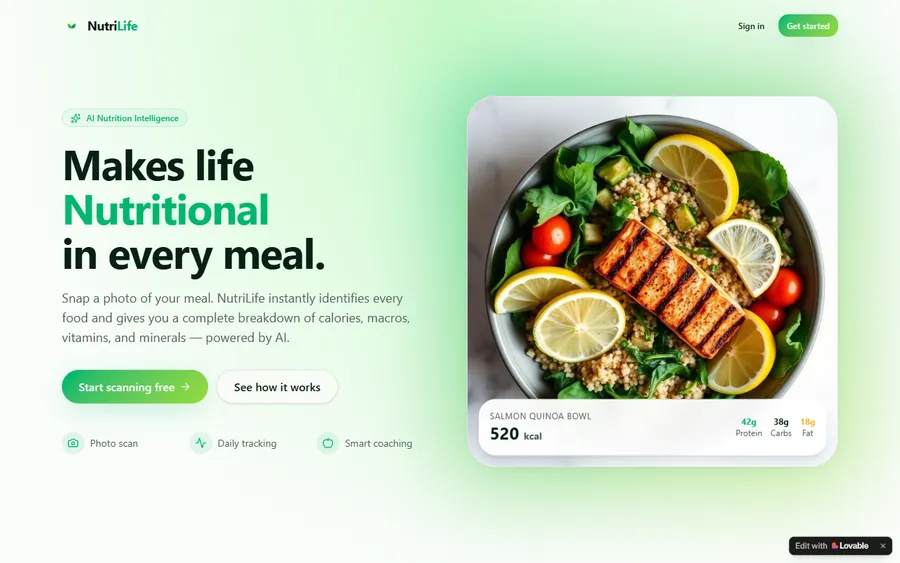
AI and ML
An AI nutrition coach that reads what you eat and works you toward a target.
AI and ML
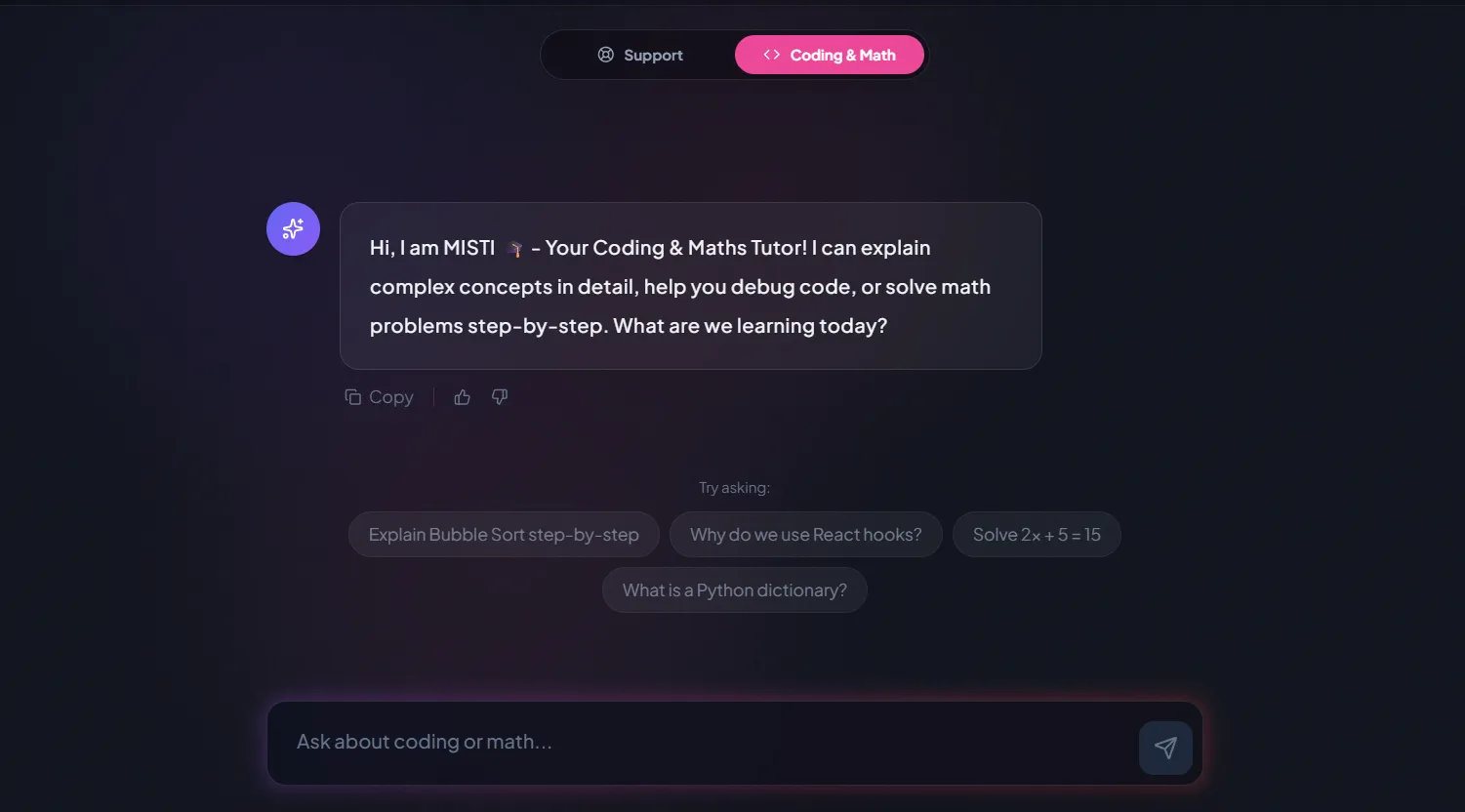
A chatbot that answers mathematics and programming questions, built and deployed by a student.
AI and ML
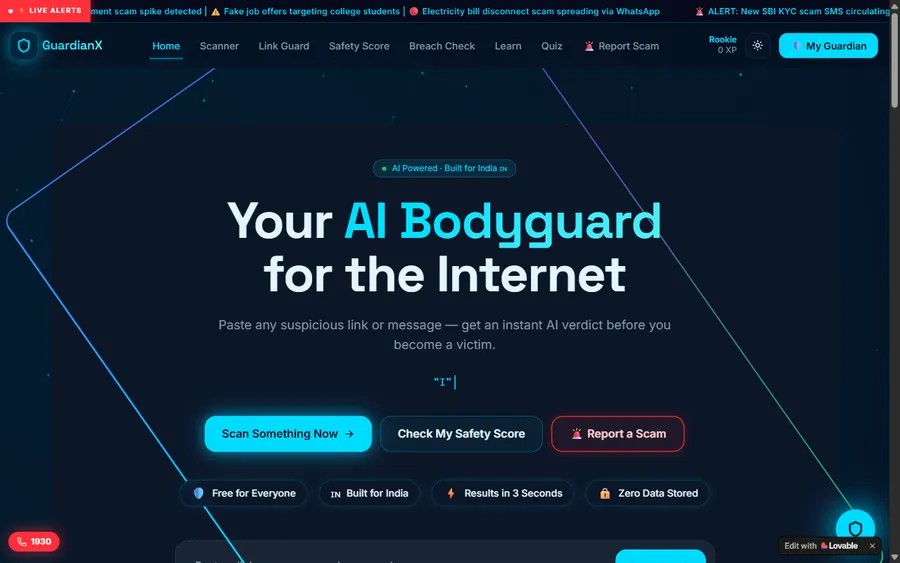
An assistant that helps a young person recognise unsafe situations online.
Web app
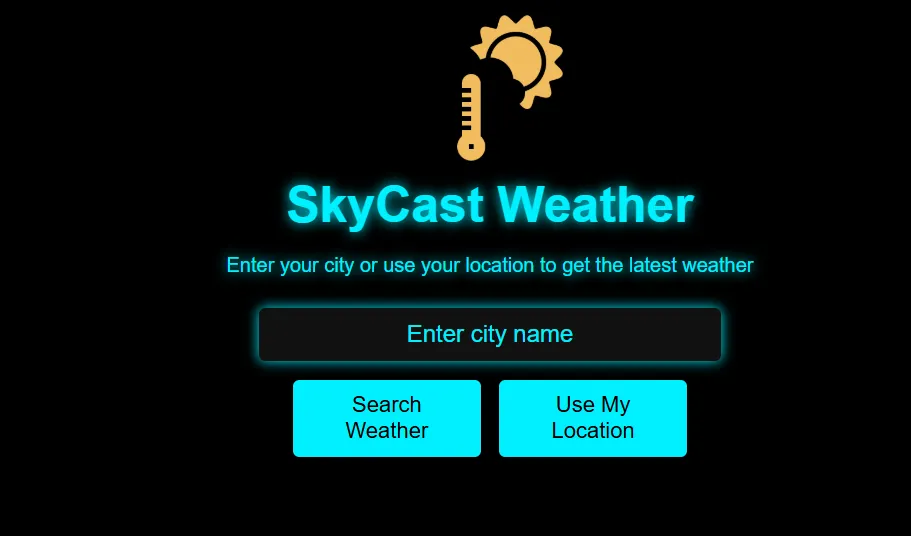
A weather forecasting site with live conditions for any location.
Fees
Monthly, in US dollars, as for every family outside India. Nothing to pay before the first class.
Free first class
USD 0
no card required
Group batch
USD 100
a month, billed in US dollars
One to one
USD 150
a month, billed in US dollars
What families say
What families wrote on Google, reproduced as it stands.
★★★★★
"The one step solution for my son. Modern Age Coders make learning coding so simple that kids love it. The teachers explain complex concepts clearly with practical exercises and interactive content."
Ria Mukherjee
Parent
★★★★★
"Modern Age Coders has been a game-changer for me. I struggled to grasp IT concepts and coding before joining, but their classes transformed everything. I can now confidently write complex programs with ease."
Samriddha Mondal
Student
★★★★★
"One of the most wonderful education centres out there. Education is not limited to school syllabus but focuses on skill development."
Vansh Agarwal
Student
★★★★★
"My child Dhairya is really enjoying the Modern Age Coders classes. This is his first online class and he eagerly looks forward to it. I can already see his improvement, and the teachers are very cooperative."
Sonam Oswal
Parent of Dhairya
★★★★★
"Modern Age Coders have wonderful teachers who teach in a clear, easy and practical way. The teacher boosts students' confidence and inspires them to learn without hesitation."
Sonu Goyal
Parent
★★★★★
"I highly recommend this computer coding class! The teachers are incredibly knowledgeable and passionate about coding."
Ritu Kedia
Parent
Questions about competitions
UKMT lists the Junior Mathematical Challenge on 5 May 2027, with the Junior Kangaroo and Junior Mathematical Olympiad on 15 June 2027. The Intermediate Challenge is on 27 January 2027 and the Senior Challenge on 7 October 2026.
A programming competition whose first stage is a 3-hour test taken in schools during December and January, open to students in full-time pre-university education in mainland Britain. It leads to a final and, for the top four, the International Olympiad in Informatics.
Yes. UK Bebras is free and open from age 6, and takes 45 minutes in school; the Primary Mathematics Challenge runs from 9 to 20 November 2026; and UKMT's Primary Kangaroo is on 18 March 2027.
The UK Olympiad in AI is a free online test for secondary students living in the UK and selects the UK team for the International Olympiad in AI, which will be held in Singapore from 4 to 10 July 2027.
The organiser describes it as open to students in mainland Britain, so check with the organiser directly. Sentinus Young Innovators, based in Belfast, has a Young Coder of the Year category.
LEGO Education says FIRST LEGO League comes to an end after the 2026-2027 BIOGLOW season, and that LEGO League begins in August 2027.
No. Most competitions here are entered by schools or directly with the organiser. We teach the mathematics, programming and problem solving they draw on, and we promise no results.
We write fresh practice in each competition's style and point learners to the organisers' own past papers, which remain theirs to publish.
The first class is free. After that it is USD 100 a month in a group of five to ten, or USD 150 a month one to one, with no fee to join and no annual contract.
At a fixed weekly slot agreed in the free class, usually after school or at the weekend. India is five and a half hours ahead of the UK in winter and four and a half in summer.
Related pages
Deeper pages on single competitions and on UK learning.
The Junior, Intermediate and Senior Challenges in depth.
Where the British Informatics Olympiad leads.
How programming contests build on one another.
An online contest many UK students also take.
The four school systems, and every UK page.
Seven checks for any provider.
Start here
Tell us the learner's age and which competitions interest them. The first class is a real session on the kind of problem those competitions set.
Read first if you prefer: every course page has a syllabus, how we teach explains the method, and the roadmap sets out the order of topics.
WhatsApp us · +91 91233 66161 · contact@modernagecoders.com
WhatsApp from a UK mobile is free and usually quickest. Our number is Indian, and we say so; there is no UK office.