Abacus & Mental Maths for Kids
First the beads move on the desk. Then they move in the head.
Syllabus updated August 2026
Questions? WhatsApp +91 91233 66161 or email connect@modernagecoders.com
Recordings are free with a Google sign-in. These recordings show how we teach, not the exact syllabus of this course.
Our promise
The world's best learning experience, open to everyone.
- World-class instructorsEvery class is taught by an instructor who specialises in that exact field.
- No compromise on qualityEvery lesson, project and piece of feedback is held to the highest standard.
- Education for everyoneLearners aged 6 to 67, from first-time beginners to working professionals, in 25+ countries.
If you want the highest quality, Modern Age Coders is the right choice.
Book a Priority DemoHow long this course takes
This course runs 8 months (32 weeks) at 2 live classes/week + 10-15 minutes of bead practice daily. The range allows for background and pace: a complete beginner uses the full span, and a student with prior knowledge finishes sooner. The syllabus below is planned to the shorter end, with margin kept for revision.
For personalised duration planning, call +91 91233 66161 and we'll map a schedule to your goals.
At a glance
- Who it is for
- Ages 5 to 10, no prior maths needed beyond counting.
- Prerequisites
- Counting to 10 comfortably. Everything else, including number bonds, is built in the course
- Format
- Live, interactive classes with a real instructor, never pre-recorded videos. Live classes run about one hour.
- Language
- English or Hindi, depending on the batch.
- Duration
- 8 months (32 weeks)
- Weekly commitment
- 2 live classes/week + 10-15 minutes of bead practice daily
- Class size
- Group batches of 5 to 10 students, mini batches of 3 to 4, or 1-on-1.
- Certificate
- Certificate from Modern Age Coders, awarded on passing the final assessment
- Watch first
- Free recordings of real classes for ages 6 to 12, free with a Google sign-in. These recordings show how we teach, not the exact syllabus of this course.
- Live demo
- Optional. Enrol directly on this page, or book a Priority Demo: a full live class of about 45 to 60 minutes with a mentor reserved for you.
- Questions
- WhatsApp +91 91233 66161 or email connect@modernagecoders.com.
How we teach
Deep understanding. Real projects. Expert guidance.
Learn coding, AI and maths through careful explanations, practical demonstrations, and hands-on problem-solving. Our instructors guide you from the foundations to advanced ideas, helping you understand what happens, why it happens, and how to build it yourself.
You will explore concepts step by step, write and improve code, investigate mistakes, ask questions, and apply your knowledge to meaningful projects. Lessons are designed around active participation, thoughtful feedback, and growing independence.
Expert-led live teaching, with practical participation built into every lesson.
- Students explain their thinking.
- Instructors demonstrate, then guide practice.
- Learners code, solve, or build during lessons.
- Questions and misconceptions get attention.
- Assignments receive useful feedback.
- Progress is checked before advancing.
How to join Abacus & Mental Maths for Kids: From First Beads to Anzan
Four steps from this page to the first class. See a full class first with a Priority Demo, or choose a plan and enrol today.
Rated 4.9 across 547 Google reviews. Monthly billing, cancel any time.
How enrolment works
See a full class first (optional)
Book a Priority Demo: a live class of about 45 to 60 minutes with a mentor reserved for you, today or tomorrow. After the class the mentor sends a written skill report and a personal learning roadmap on WhatsApp. If you enrol, the demo fee is adjusted against your first month's fee. Share your demo Order ID with us on WhatsApp and we take it off.
Book a Priority DemoDemo fee ₹499Choose a plan
Group batch (5 to 10 students), mini batch (3 to 4 students, India only) or 1-on-1 with your own mentor. Every plan is live online, and each class runs about one hour. The cards below show classes per week and the monthly fee in your currency.
Enrol and pay the first month
Press Enrol Now on your plan, fill in the student's name, email and phone, and pay through secure Razorpay checkout: UPI, cards or net banking in India, and debit or credit card from any other country.
Fix your class timings
After payment, message us on WhatsApp or call +91 91233 66161 with the student's name, the course and your preferred time slot. We confirm the batch, send the class link and schedule the first class at your chosen time.
Billing is monthly and you can cancel any time.
International Students (Outside India)
Billed monthly in US dollars, the same price in every country. Contact us with any questions.
Questions before you enrol? Talk to our team.
Ask about class timings, the right level for your child, what they need to know already, or payment. Parents and adult learners can reach us on WhatsApp, by email or by phone.
Program Overview
The abacus is one of the oldest maths teaching tools still in serious use, and it earns its place: a child who adds on an abacus is not memorising answers, they are physically moving quantities and watching place value work. This 8-month live course takes children aged 5 to 10 from holding the abacus correctly to anzan, the stage where the abacus is imagined and sums are done entirely in the head.
The progression is deliberate and unhurried. Months 1 and 2 build bead fluency and the small-friend pairs that make 5. Months 3 and 4 cross the tens with big friends and take numbers to three digits. Months 5 and 6 begin visualisation: eyes closed, imaginary beads, short mental rows that grow week by week. Months 7 and 8 add multiplication on the abacus and finish with a mental-only graded test the child can be genuinely proud of.
We are straightforward about what this course builds: real arithmetic fluency, comfortable number sense, and the habit of focused daily practice. Those are worth having on their own. We do not dress them up as brain development or IQ gains, because those claims are not ours to make.
What Makes This Program Different
- A real progression to anzan: visualisation is trained deliberately from month 5, not left to chance after a year of bead drills
- Small-friend and big-friend rules are taught as number bonds, so the abacus work strengthens school maths instead of sitting beside it
- Live classes built for young attention spans: short activity blocks, bead races, dictation games, and a teacher who can see every child's abacus on camera
- Daily practice is 10-15 minutes by design, small enough that families actually keep it up for eight months
- Honest milestones: parents see dictation scores and row lengths, not vague level names
- Class pace grouped by age, because a 5-year-old and a 9-year-old need different speeds through the same material
Your Learning Journey
Career Progression
Detailed Course Curriculum
Explore the complete week-by-week breakdown of what you'll learn in this comprehensive program.
Topics Covered
- The parts of the abacus: frame, rods, the bar, one upper bead worth 5, four lower beads worth 1
- Holding and clearing the abacus the correct way, every time
- Finger rules: thumb pushes ones up, index finger brings them down, index works the 5-bead
- Setting and reading the numbers 1 to 9
- Bead patterns as pictures: seeing 7 as 5 and 2 without counting
- Simple bead races: who can set the called number first
Projects You Build
- My abacus card: the child draws bead pictures for the numbers 1 to 9 and reads them back from the drawing
Practice & Assignments
Ten minutes daily: set and read 20 called numbers between 1 and 9, parent calls, child sets, fingers checked in class
Topics Covered
- The tens rod: setting 10 to 99 and reading two-digit numbers
- Place value felt physically: why 34 is three beads on one rod and four on another
- Direct addition: sums like 2 + 6 where beads simply move up
- Direct subtraction: taking beads away without touching the 5-bead
- Mixed setting drills: 3, 30, 33 and hearing the difference
- Number dictation games at a gentle pace
Projects You Build
- Two-digit dictation sheet: 20 numbers set from hearing alone, scored and kept as the month 1 record
Practice & Assignments
Ten minutes daily: 15 direct additions and subtractions within each rod, plus 10 two-digit setting drills
Assessment
Month 1 check: set and read two-digit numbers from dictation, plus 10 direct sums, done live in class
Topics Covered
- The small friends: 1 and 4, 2 and 3, the pairs that make 5
- Why 3 + 4 needs a trick when only two lower beads are free
- The small-friend move: add 5, take away the friend
- One rule at a time: +4 as +5 take 1, then +3, +2, +1 cases
- Saying the move aloud while doing it, so the rule settles in
- Friend flashcards: answering the make-5 partner instantly
Projects You Build
- Make-5 rainbow chart: the child's own picture of the pairs that make 5, used at home during practice
Practice & Assignments
Ten minutes daily: 20 small-friend additions with the rule spoken aloud, plus one round of make-5 flashcards
Topics Covered
- The reverse move: take 5, give back the friend
- Subtraction cases one at a time: -4, -3, -2, -1 through the 5-bead
- Mixing direct sums and small-friend sums in one row
- Rows of three numbers: 4 + 3 - 2 worked straight through
- Accuracy first, speed second: the rule for the whole course
- Month 2 games: friend bingo and beat-the-teacher rows
Projects You Build
- Row book started: a notebook of daily rows with date and score, kept for the rest of the course
Practice & Assignments
Ten to fifteen minutes daily: 15 mixed small-friend sums and 5 three-number rows, logged in the row book
Assessment
Month 2 check: 20 mixed direct and small-friend sums plus three-number rows, done live with finger technique reviewed
Topics Covered
- The big friends: 1 and 9, 2 and 8, 3 and 7, 4 and 6, 5 and 5
- Why 8 + 5 cannot stay on one rod, shown with beads
- The big-friend move: add 10 on the next rod, take away the friend
- Cases in order: +9, +8, +7 down to +1 through ten
- Carrying seen physically: the tens rod clicking up
- Make-10 flashcards until the pairs are instant
Projects You Build
- Make-10 rainbow chart to sit beside the make-5 chart at home
Practice & Assignments
Ten to fifteen minutes daily: 20 big-friend additions with the move spoken aloud, plus make-10 flashcards
Topics Covered
- The reverse move: take 10, give back the friend
- Borrowing felt on the rods: why 12 - 5 reaches to the tens rod
- Subtraction cases in order: -9 through -1 across ten
- Mixed rows using direct, small-friend and big-friend moves together
- Reading the row before moving: planning which rule each number needs
- Steady dictation: teacher calls a row of four one-digit numbers
Projects You Build
- Mixed-rules row sheet: 15 rows solved and marked with which friend rule each step used
Practice & Assignments
Fifteen minutes daily: 15 mixed sums crossing ten and 5 dictated rows, all logged in the row book
Assessment
Month 3 check: 20 sums mixing all rules so far, plus a live dictation round of four-number rows
Topics Covered
- Combined cases: sums like 6 + 7 that need the 5-bead and the tens rod in one move
- Working the combined move slowly, then at row speed
- Two-digit plus one-digit sums: 34 + 8 across the rods
- Two-digit plus two-digit: working rod by rod from the left
- Row stamina: five-number rows of one-digit numbers
- Speed ladders: same row sheet, three timed attempts across the week
Projects You Build
- Speed ladder record: one row sheet attempted three times with times and scores charted by the child
Practice & Assignments
Fifteen minutes daily: 12 combined-move sums and 6 two-digit additions, plus one speed ladder attempt
Topics Covered
- The hundreds rod: setting and reading 100 to 999
- Three-digit addition and subtraction, one rod at a time
- Money sums: rupees and coins set on the abacus
- Simple word problems answered on the abacus: bought, spent, left
- Dictation with two-digit numbers in the rows
- Phase 2 wrap-up: every rule on one revision mat
Projects You Build
- Shop game record: a pretend-shop worksheet of five purchases totalled and checked on the abacus
Practice & Assignments
Fifteen minutes daily: 10 three-digit sums, 5 money questions and one dictated row, logged in the row book
Assessment
Month 4 milestone: mixed paper of 30 questions covering all bead rules up to three digits, done in class
Topics Covered
- What anzan is: seeing the abacus with eyes closed and moving beads that are not there
- Air abacus: fingers moving over an empty desk while the mind keeps the picture
- Setting single numbers mentally and saying them back
- First mental sums: rows of two small numbers, beads imagined
- Checking every mental answer on the real abacus straight after
- Why we slow down here: the picture must be solid before speed
Projects You Build
- Eyes-closed challenge card: ten single-number settings done mentally and verified, signed off in class
Practice & Assignments
Ten minutes daily: 10 two-number mental rows with immediate abacus checks, plus air-abacus warm-ups
Topics Covered
- Flash practice: numbers shown briefly on screen, set mentally
- Rows of three one-digit numbers done fully in the head
- Keeping the bead picture steady when a friend rule fires
- Two-digit numbers held mentally: tens and ones rods imagined together
- Confidence rules: wrong answers are checked on beads, never scolded
- Month 5 game: slow-speed flash rounds as a class
Projects You Build
- Flash round scorecard: three class flash rounds with scores tracked by the child
Practice & Assignments
Ten to fifteen minutes daily: 10 three-number mental rows and one flash practice round on the family device
Assessment
Month 5 check: live mental round of three-number rows plus flash settings, real abacus used only for verifying
Topics Covered
- Rows of four, then five one-digit numbers done mentally
- Listening anzan: the teacher speaks the row, nothing is shown
- Holding the running answer while the next number arrives
- Two-digit mental sums: one addition at a time, pictured on two rods
- Recovering a lost picture: reset, breathe, rebuild the beads
- Personal pace: row length moves up only when accuracy holds
Projects You Build
- Listening log: ten dictated mental rows across the fortnight with scores and row lengths recorded
Practice & Assignments
Fifteen minutes daily: 8 mental rows at your current length and 2 listening rows read out by a parent
Topics Covered
- Test craft for small people: neat answers, skipped questions returned to, no rubbing out storms
- Mixed mental paper practice: rows, flash settings, listening sums
- Two-digit rows of three numbers for the stronger picture-holders
- Class review of the phase: what got longer, what got faster
- Preparing the level test with a practice run
- Celebrating honestly: certificates say what the child can actually do
Projects You Build
- Level test one: a graded mental-only paper of rows, flash and listening sums, marked and kept
Practice & Assignments
Fifteen minutes daily: one full practice paper across the week, split into daily pieces, logged in the row book
Assessment
Phase 3 milestone: level test one, mental-only, with results shared with parents alongside the row book
Topics Covered
- Multiplication as repeated addition, shown with bead groups first
- Tables 2 to 5 practised with bead patterns and chants
- Setting up a multiplication on the abacus: where each number lives
- Two-digit times one-digit: 23 x 3 worked rod by rod
- Answer sense: is 23 x 3 nearer 60 or 600, asked before working
- Keeping addition sharp: short mental rows as every class's warm-up
Projects You Build
- Table pattern cards: bead-picture cards for the 2, 3, 4 and 5 tables made by the child
Practice & Assignments
Fifteen minutes daily: one table chanted, 8 abacus multiplications and 4 mental warm-up rows
Topics Covered
- Tables 6 to 9 with bead patterns, taken at each child's pace
- Two-digit times one-digit across the harder tables
- Carrying inside multiplication: when a product spills to the next rod
- Sharing sums: simple division as dealing beads into groups, kept light
- Mixed papers: additions, subtractions and multiplications together
- Month 7 dictation: rows now include a times question
Projects You Build
- Mixed paper folder: three 20-question mixed papers completed, marked and filed across the fortnight
Practice & Assignments
Fifteen minutes daily: 10 multiplications across tables 6 to 9 and one short mixed paper piece
Assessment
Month 7 check: 20-question mixed paper including two-digit multiplications, done live in class
Topics Covered
- Mental rows pushed to each child's honest edge: longer or faster, not both at once
- Two-digit mental rows for ready students, one-digit mastery for the rest
- Mental one-digit multiplication for the strongest picture-holders
- Flash rounds at higher speeds, accuracy floor held at 80 percent
- Reading the row book: eight months of scores tell the child's own story
- Capstone paper structure walked through, no surprises
Projects You Build
- Row book review page: the child charts their own week 8 versus week 30 row length and speed
Practice & Assignments
Fifteen minutes daily: capstone-style mixed mental practice split across the week, logged in the row book
Topics Covered
- Final practice run of the capstone paper with review
- The capstone: a graded mental-only test of rows, flash, listening and times questions
- Family demonstration: each child performs three mental sums for the class and parents
- What the certificate says: the exact skills demonstrated, nothing inflated
- Keeping the skill: a 10-minute weekly routine for after the course
- What comes next: higher abacus levels, school maths courses, and later Vedic maths
Projects You Build
- Capstone graded mental-only test, marked and reported to parents with the full row book
- Family demonstration: three mental sums performed live
Practice & Assignments
Gentle final week: one short mental round daily and rest before the test, confidence over cramming
Assessment
Course milestone: capstone mental-only test and family demonstration, plus certificate review
Projects You'll Build
Build a professional portfolio with 10+ records and artifacts, from first bead pictures to a graded mental-only test real-world projects.
Weekly Learning Structure
Certification & Recognition
Technologies & Skills You'll Master
Comprehensive coverage of the entire modern web development stack.
Support & Resources
Career Outcomes & Opportunities
Transform your career with industry-ready skills and job placement support.
Prerequisites
Who Is This Course For?
Career Paths After Completion
Course Guarantees
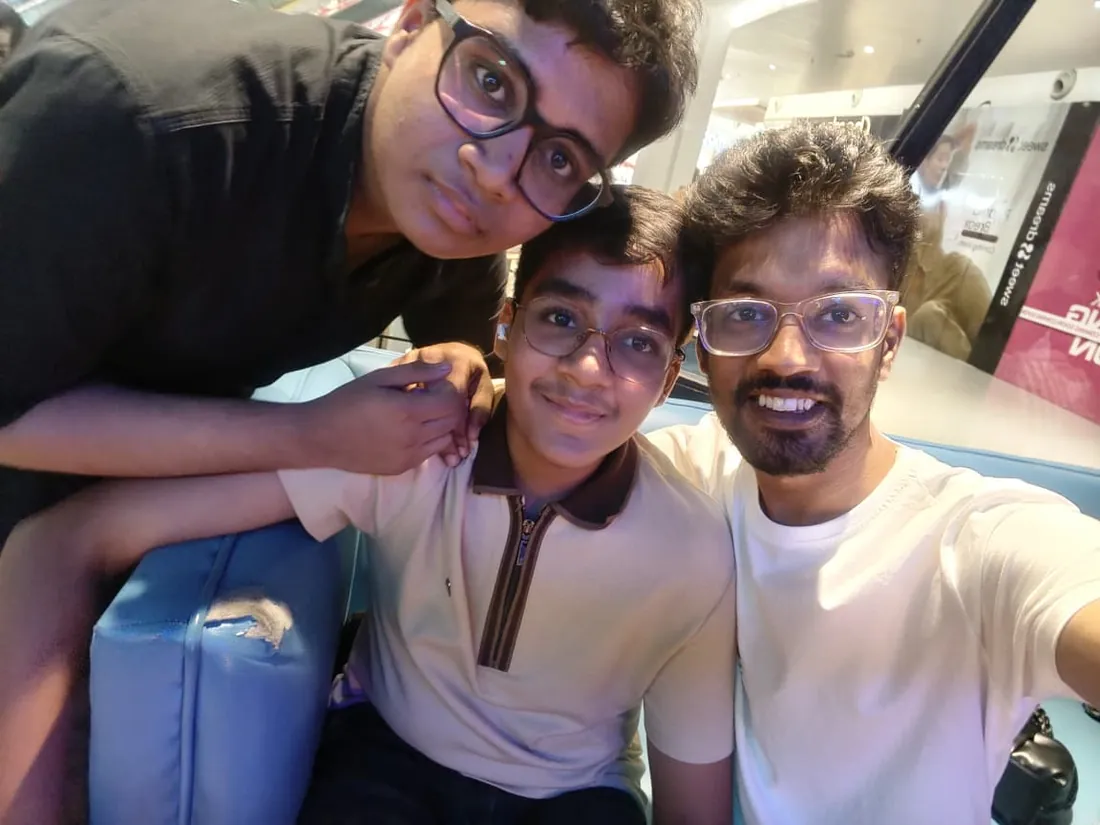
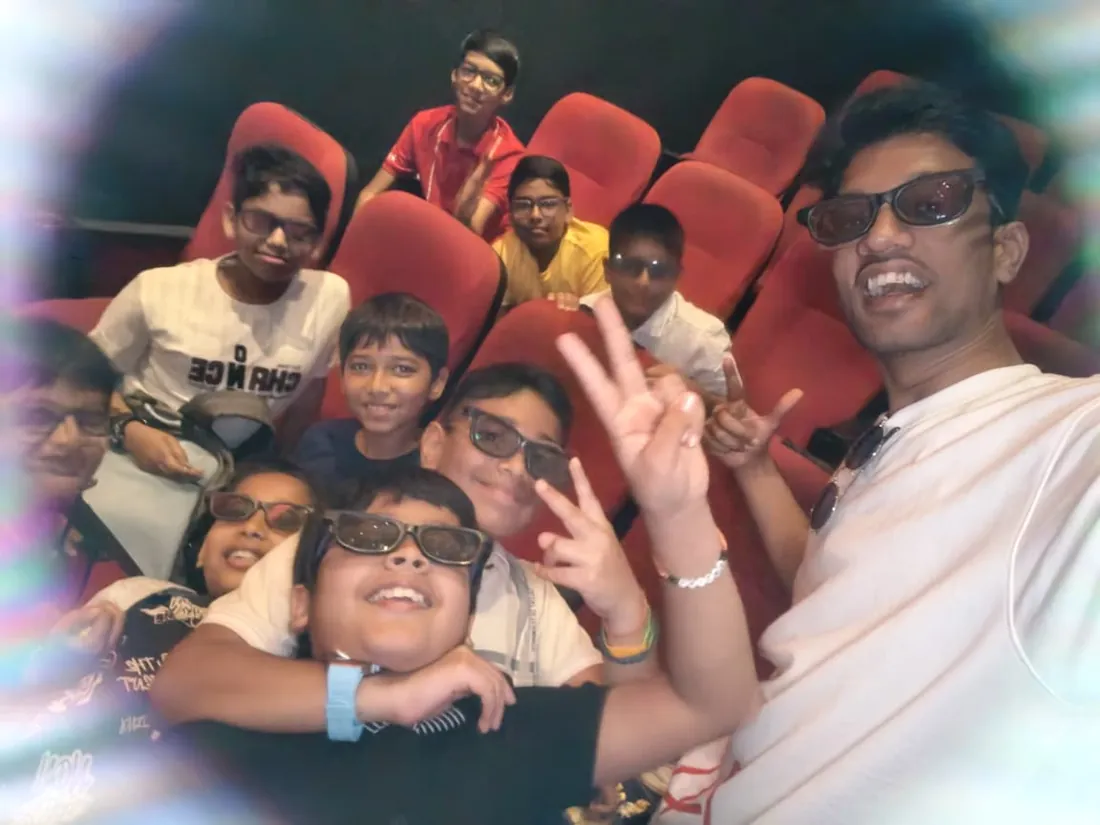
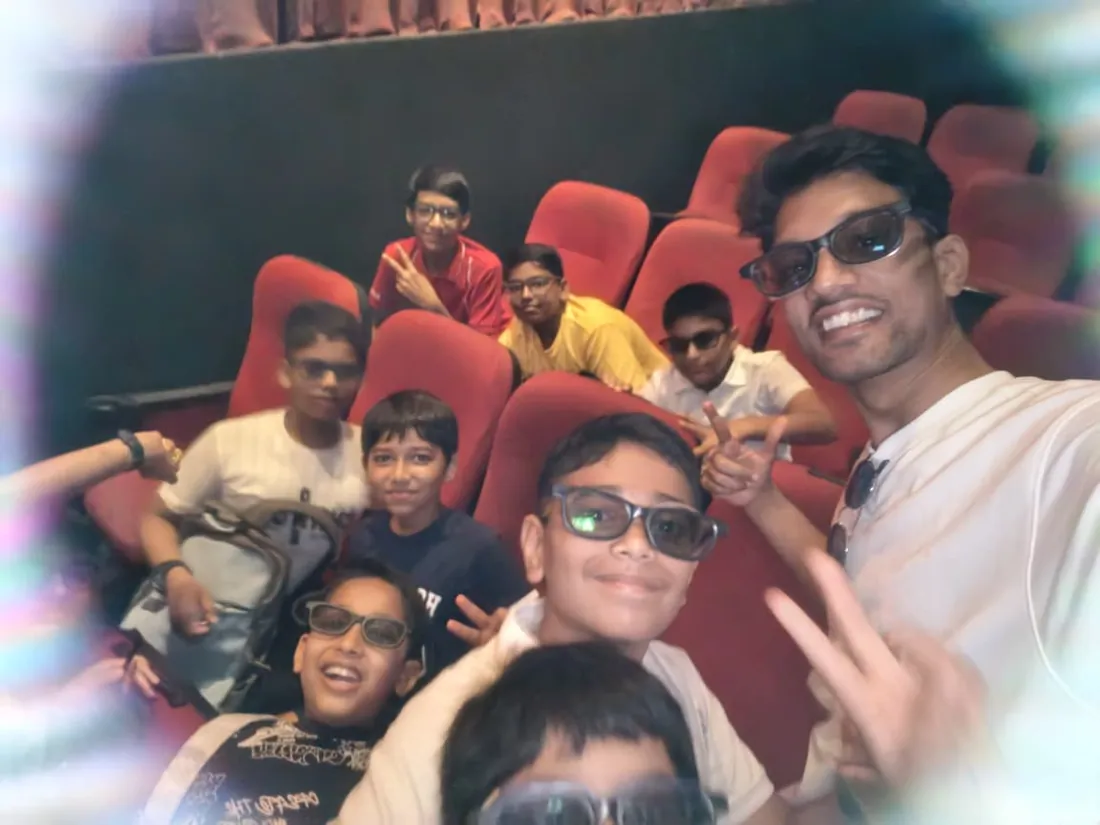
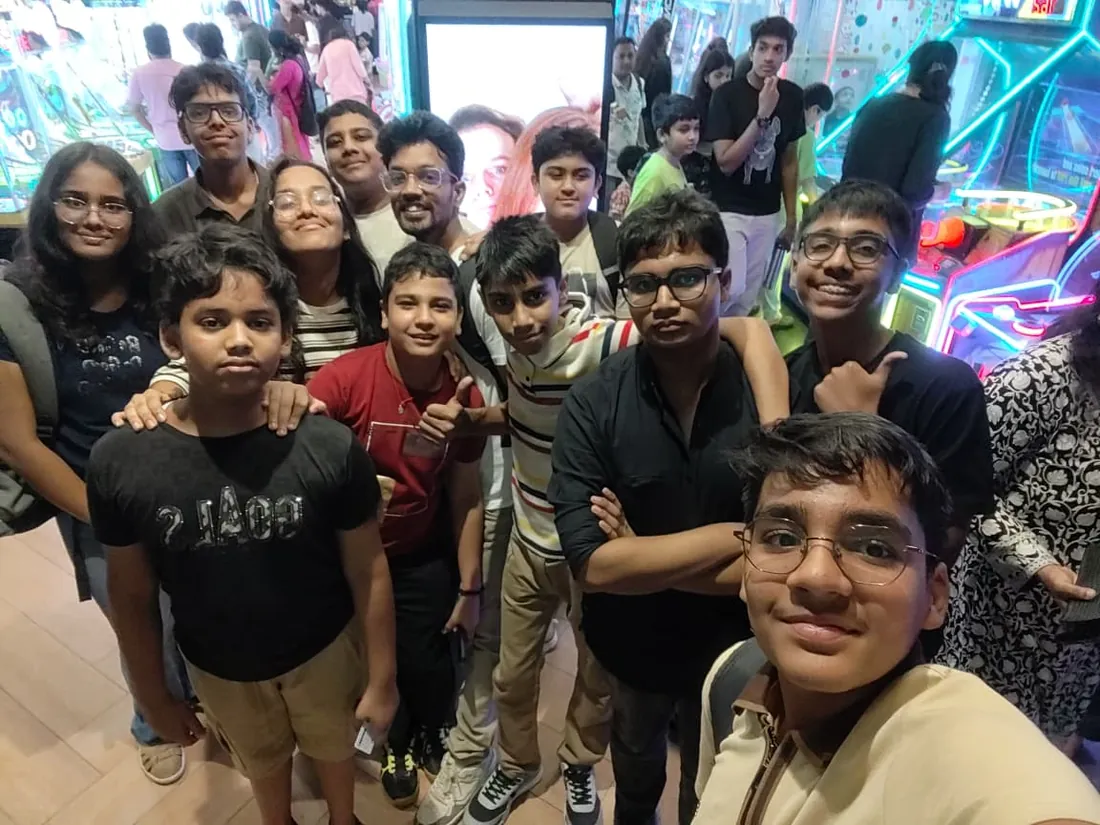
Real students. Real moments. Real joy.
These are our actual student meetups. No stock photos, no filters. Swipe through and meet the community you'll be joining.



































What families say
Straight from the parents and students who learn with us. Rated 4.9 across 547 Google reviews.
“Mivaan enjoys the class. He understands the concepts and completes his tasks with excitement. He started taking interest in coding… truly amazing class.”
“I absolutely love it here! I made new friends and learned important valuable coding skills while having the fun of my life. It's not just coding here, it's outings, bonding and most importantly preparing you for your future. Definitely five stars.”
“What stands out most is how excited my son is before every class. He looks forward to learning, problem-solving, and sharing what he's built. I've noticed a big boost in his confidence!”
“Modern Age Coders has been a game-changer for me! I struggled to grasp IT concepts and coding before joining, but their classes transformed everything. I'm now the topper in my class and can confidently write complex programs with ease.”
“Modern Age Coder have wonderful teachers who teach in a clear, easy and practical way. The teacher boosts students' confidence, keeps them updated with technology, and inspires them to learn without hesitation.”
“The one step solution for my son. Modern Age Coders make learning coding so simple that kids love it.”
“Coding classes here make learning very interesting and conceptual. The teachers teach us in a very easy-to-understand and efficient manner.”
“One of the most wonderful education centres out there. Education is not limited to school syllabus but focuses on skill development. Learning here has been a wonderful journey and still continuing.”
“I highly recommend this computer coding class! The teachers are incredibly knowledgeable and passionate about coding. They make every session engaging and insightful.”
“My child Dhairya is really enjoying the Modern Age Coder IT classes. This is his first online class, and he eagerly looks forward to it.”
“Very good classes. Don't worry about coding. They teach the best, especially Shivam sir.”
“Very good classes. Makes learning very easy and interactive.”
Hear it from our students
Real parents and students in their own words, on our public YouTube channel.
Straight answers about Abacus & Mental Maths for Kids: From First Beads to Anzan
- Who should take this course?
- Ages 5 to 10, no prior maths needed beyond counting. It suits children aged 5 to 7 meeting numbers for the first time, who learn best with something to hold and move; children aged 8 to 10 who want arithmetic to feel easy before bigger school maths arrives; kids who switch off at written sums but light up when maths is beads, races and games.
- What will they learn and build?
- The abacus is one of the oldest maths teaching tools still in serious use, and it earns its place: a child who adds on an abacus is not memorising answers, they are physically moving quantities and watching place value work. This 8-month live course takes children aged 5 to 10 from holding the abacus correctly to anzan, the stage where the abacus is imagined and sums are done entirely in the head.
- How deeply are topics covered?
- The course runs 8 months (32 weeks) at 2 live classes/week + 10-15 minutes of bead practice daily, across 4 phases listed week by week in the syllabus below. A structured, well-paced curriculum taught step by step, with hands-on practice in every session.
- Who teaches it?
- Modern Age Coders mentors, who teach the live classes themselves. You can watch them at work in the free class recordings before you decide.
- How do practice, feedback and assessment work?
- Classwork every session, a task after every class, monthly reviews that mix in earlier topics, and a friendly final assessment of everything learned that decides the certificate: real knowledge and real work, with a free retest after revision if needed. Doubt support between classes over WhatsApp, so you are never left stuck. A certificate you earn by passing the final assessment, with a free retest after revision if needed.
- What does it cost?
- Three monthly plans: a group batch, a mini batch and 1-on-1. Prices are shown in your currency in the plans section. Monthly billing, cancel any time.
- When can classes take place?
- Live classes are scheduled around your week. Group batches meet at a fixed weekly slot; 1-on-1 students choose their own. International students are scheduled in their own timezone. Ask on WhatsApp for the current slots.
- Can I watch the teaching before deciding?
- Yes. Full recordings of real 6 to 12 classes are free to watch, free with a Google sign-in. These recordings show how we teach, not the exact syllabus of this course. Some classes are in English and some in Hindi; everyone follows at their own pace. Watch a class end to end, like you are in it. Sessions are interactive and each moment builds on the last.
- Can I enroll without a live demo?
- Yes. Choose a plan on this page and enrol directly; a demo is not required. If you would like to see a full class with a mentor first, book a Priority Demo.
- How do I reach you with a question?
- WhatsApp +91 91233 66161, email connect@modernagecoders.com, or call +91 91233 66161. Tell us the student's age and what they have learned so far, and we will point you to the right plan and batch.
Common Questions About Abacus & Mental Maths for Kids: From First Beads to Anzan
Get answers to the most common questions about this comprehensive program
Still have questions? We're here to help!
Contact UsRelated Courses You May Like
Continue your learning journey with these recommended programs
 Elementary Mathematics
Mental Maths for Kids: Number Sense, Not Tricks (Ages 5-10)
Live mental maths course for kids ages 5-10: number bonds, decomposition and estimation build real n...
Explore Course Web Development
JavaScript for Teens: Interactive Websites & Browser Games
JavaScript course for teens ages 13-18: live online classes from first variables to interactive page...
Explore CourseRelated Articles & Guides
Deepen your knowledge with these hand-picked articles
 Mathematics
8 min read
Mathematics
8 min read
Abacus vs Vedic vs Mental Maths: A Clear Comparison
Abacus, Vedic maths, and mental maths compared: what each teaches, the right age, real worked exampl...
Read Article Mathematics
7 min read
Mathematics
7 min read
10 Mental Maths Tricks for Kids, With Worked Examples
Ten mental maths tricks for kids, each with a worked example, plus a daily practice plan by age and ...
Read ArticleReady to start Abacus & Mental Maths for Kids: From First Beads to Anzan?
Book a Priority Demo to see a full live class with a mentor reserved for you, today or tomorrow. Or choose a plan and enrol now.
Questions? WhatsApp +91 91233 66161 or email connect@modernagecoders.com