BTM / a
11 plus maths preparation
The Year 5 curriculum, at three depths.
Open the syllabusBarnet · Grammar school entrance test maths · Live online, small groups or one to one
Barnet has no single 11 plus. Its three grammar schools, Queen Elizabeth's School, The Henrietta Barnett School and St Michael's Catholic Grammar School, each run their own entrance test, and maths appears in each at a different moment. At QE it is one of two multiple-choice papers in a single sitting. At Henrietta Barnett there is no maths in the first round at all; it arrives as a 50-minute paper in Round Two, for the top 300 from Round One, about a month later. At St Michael's it sits among multiple-choice papers taken by invitation. The one thing all three share is the content, which is primary school maths, and it pays to know it deeply rather than in outline. This page sets out what each school publishes, and uses one Year 5 topic, factors and primes, to show what deep means.
Maths only · No verbal, non-verbal or English coaching · No link with any Barnet school
In short
Barnet's three selective state schools set their own tests. Queen Elizabeth's School holds one sitting of two multiple-choice papers, maths and English; for September 2027 entry it ran on 16 and 17 September 2026, and QE publishes a combined score of 225 or higher as the standard its Governors require. The Henrietta Barnett School tests verbal reasoning, non-verbal reasoning and English in Round One, then invites its top 300 to a Round Two of a 60-minute English paper and a 50-minute maths paper, on 6 October 2026 for this cycle. St Michael's Catholic Grammar School holds entrance tests by invitation, with multiple-choice papers including maths and a written English paper, on 11 September 2026 this cycle. None of the three publishes past papers. We teach the maths, live online, deep enough for any of them. Try a lesson without paying; staying on costs USD 100 monthly in a group or USD 150 monthly for one to one.
Starting points in Barnet
Depth matters more than format here: none of the three schools shows its papers.
BARNET / i
Year 5 content taught deeply enough for a QE sitting, a St Michael's paper or a Round Two at HBS.
Open the syllabus →
BARNET / ii
For confident children aiming at a school-set paper with no published resources.
Open the syllabus →
BARNET / iii
Tables, squares and primes known by heart, so harder questions get the time.
Open the syllabus →Three schools, three tests
The London Borough of Barnet's admissions pages would not load for our reader, so this page relies on the three schools' own admissions pages, read on 26 September 2026.
| School | Where the maths is | Dates this cycle |
|---|---|---|
| Queen Elizabeth's School | Two multiple-choice papers, maths and English, "sat in a single session" | Requests 1 May to noon, 8 July 2026; test 16 and 17 September 2026; results provisionally 1 October |
| The Henrietta Barnett School | Round One has no maths; Round Two has "a 50 minute Maths paper" | Round One 2 to 4 September 2026; Round Two Tuesday 6 October 2026 for the top 300 |
| St Michael's Catholic Grammar School | Multiple-choice entrance tests including maths; English is a written paper | Applications 14 April to 4pm, 7 July 2026; tests Friday 11 September 2026, by invitation |
QE describes its test briefly and clearly: "We only have one round of testing in a single session." Its two papers are multiple choice, the scores are standardised for age by the company that supplies the tests and then combined, and "a combined score of 225 or higher" meets the standard its Governors require for a boy to be considered. QE links GL Assessment's maths familiarisation materials from its sample papers page.
Henrietta Barnett's first round is "in Verbal, Non-Verbal reasoning and English", with GL familiarisation booklets available. Its second round, for the 300 highest-ranked candidates, adds "a 50 minute Maths paper". The school says it gives no further detail of content and releases no past papers or resources for Round Two.
St Michael's holds its entrance tests by invitation. Its familiarisation page offers papers designed by the test provider for verbal reasoning, non-verbal reasoning and maths, and notes that these "are not reproductions of past papers". The English test "is a written paper, not multiple choice", and the school says it cannot give further information on style or timings.
How each school uses its results for places, including priority rules, is published in each admissions policy and is not something we advise on. We teach the maths.
Sources: Queen Elizabeth's School, entrance test FAQs, admissions and sample papers pages; The Henrietta Barnett School, admissions; St Michael's Catholic Grammar School, admissions 2027-28 and familiarisation page. Barnet council's admissions pages were not readable to us. Modern Age Coders has no connection with any of these schools or the council.
When the maths counts
For a family applying to more than one of these schools, the calendar of maths matters as much as the content.
Maths and English in one sitting in mid-September. There is no second chance at a later round, so the maths has to be ready by then, alongside the English.
Round One in early September has no maths. The 50-minute maths paper comes in October, only for those invited, and the school publishes nothing about its content.
Maths is one of several multiple-choice papers on a single day in September, taken with verbal and non-verbal reasoning and a written English paper.
Henrietta Barnett's pattern is the unusual one. A child can be strong in maths and never reach the maths paper, because Round One ranks on verbal, non-verbal and English. And a child who does reach Round Two has about a month between the rounds, during which maths is suddenly the whole story.
That month is not the time to begin maths preparation. It is the time to keep it warm. We plan for a child applying to HBS to finish the Year 5 content well before September, then to hold it with short, regular practice through the first round.
For QE, maths shares one sitting with English. Its FAQ explains that the two scores are combined, so strength in one paper can support the other. We do not speculate about balance; we make sure the maths is not the weaker paper.
St Michael's publishes provider-designed maths familiarisation booklets and a parents' guide. Families should use those to see the format. We do not copy them, and the school asks that others do not reproduce them.
What deep looks like
With no past papers from any of the three schools, depth in the curriculum is the only safe preparation. Factors and primes show what depth means in Year 5.
| Level | Question | What it takes |
|---|---|---|
| Recall | List the prime numbers up to 19. | 2, 3, 5, 7, 11, 13, 17, 19: known, not worked out |
| Method | Find all the factor pairs of 36. | 1 × 36, 2 × 18, 3 × 12, 4 × 9, 6 × 6: nine factors in all |
| Connection | Why does 36 have an odd number of factors when 24 has an even number? | 36 is a square number: 6 pairs with itself |
| Test | Is 91 prime? | No: 91 = 7 × 13, the classic trap |
| Reasoning | Which numbers must you try to show that 97 is prime? | Only 2, 3, 5 and 7, because 11 × 11 = 121 is already past 100 |
The national curriculum for Year 5 asks children to "identify multiples and factors, including finding all factor pairs of a number, and common factors of 2 numbers", to use the words prime, prime factor and composite, and to "establish whether a number up to 100 is prime and recall prime numbers up to 19". Those are the first two rows.
The last three rows are the same topic, pushed. They are still Year 5; nothing in them needs algebra or Year 6. But a child who can answer them has understood factors, not just memorised a list, and that difference shows the moment a question is written in a way they have not met.
The last row is the one we enjoy most. To decide whether a number up to 100 is prime, you only need to try dividing by 2, 3, 5 and 7. Any factor larger than 10 would have to pair with one smaller than 10, and those smaller ones have already been tried. It is a proof a Year 5 child can follow, and it turns a slow search into four quick checks.
Common factors follow the same way. The common factors of 24 and 36 are 1, 2, 3, 4, 6 and 12, and a child who lists factor pairs neatly finds them without guessing. Squares, primes, factor pairs: one idea seen from several sides.
Curriculum wording from the Department for Education's mathematics programmes of study, the Year 5 statements on factors, multiples and primes. Every question in the table is ours; none comes from a school's test.
Our approach
QE shares sample materials, St Michael's shares familiarisation booklets, Henrietta Barnett shares nothing for Round Two. Our answer is the same for all three.
We teach every Year 5 topic at three depths, as in the factors table: recall, method, then reasoning. Recall makes the easy questions quick. Method makes the standard questions reliable. Reasoning handles the question nobody expected, which is the question a school-set paper is most likely to include.
We mix formats deliberately. Multiple choice prepares for QE and St Michael's; written answers prepare for a paper like Round Two, whose format is not published. A child who can do both is ready for either.
We never claim knowledge of any of the three schools' papers. Our questions are our own, written to the curriculum and to the formats the schools describe. We do not reproduce QE's sample papers or St Michael's provider booklets.
We also do not teach verbal reasoning, non-verbal reasoning or English. For Henrietta Barnett in particular, that means we help with the second round, not the first, and families should plan for that.
None of the three schools' calendars leaves room to learn maths in the autumn of Year 6. The work belongs in Year 5, steadily, with the summer used to practise timed papers in both formats.
Barnet and around it
QE is in Barnet, Henrietta Barnett in Hampstead Garden Suburb and St Michael's in North Finchley. Our lessons need no journey to any of them.
A family considering more than one of these schools is preparing for more than one test, with more than one date. The maths underneath is the same primary content, and the same teaching serves all three.
For coding and computing in the borough, see our Barnet coding page.
Classes are put together by ability. A pupil aiming at QE, Henrietta Barnett or St Michael's may share a screen with children from Leicester or Bristol working at the same level, never more than ten of them.
We have no connection with any of the three schools or with the London Borough of Barnet, and we offer no advice on applications, faith criteria or places.
The year ahead
For a child in Year 5 now, the next tests should fall in September and October of Year 6, on dates each school will publish.
| When | Stage | Signs of readiness |
|---|---|---|
| Year 4 | 1. Recall | Tables, squares to 12 × 12 and primes to 19 known instantly |
| Autumn and spring, Year 5 | 2. Method | All Year 5 topics done accurately with written methods |
| Summer term, Year 5 | 3. Reasoning | Explains why, not just how, as in the prime test by 2, 3, 5 and 7 |
| Summer holiday | 4. Both formats | Timed multiple-choice papers and written papers, alternating |
A late start still helps if the order holds. Recall and method first; reasoning grows out of them.
At the free lesson we will say candidly what a few months can achieve.
Factors and primes lead straight into secondary number theory. Some children continue with maths through coding and write their own prime finders.
Puzzle-lovers find the national maths challenges, month by month, on our competitions calendar.
Course list
By stage, each with its full syllabus a click away.
BTM / a
The Year 5 curriculum, at three depths.
Open the syllabusBTM / b
Primes, squares and tables at speed.
Open the syllabusBTM / c
Tables and place value, made solid before any test practice.
Open the syllabusBTM / d
Number sense built by hand, then in the head.
Open the syllabusBTM / e
Prime factorisation, algebra and more.
Open the syllabusBTM / f
All three exam boards, taught to the specification.
Open the syllabusBTM / g
Number theory and problems that stretch.
Open the syllabusBTM / h
Write a prime checker; test a conjecture.
Open the syllabusBTM / i
A visual first language with real logic.
Open the syllabusBTM / j
Typed programming for capable primary pupils.
Open the syllabusBTM / k
Shortcuts for pupils who already understand the standard methods.
Open the syllabusBTM / l
Where factor-style thinking meets data and code.
Open the syllabusHours
Our teachers are in India. We keep primary lessons within sensible UK hours, after school or on a weekend morning, and handle the twice-yearly clock change on our side.
After school, weekdays
An hour before the evening winds down.
Saturday or Sunday morning
For children who tire after school.
Holidays
Brief extra sessions in the breaks.
Every week, so progress and slips are both noticed.
Short and honest, including what has not clicked yet.
Grouped by level, so the teaching fits.
Nothing from any Barnet school's materials is reproduced.
One to one for a specific gap or a child who prefers it.
No reasoning or English coaching, no admissions advice.
Student work
Four projects published by students at our school, each resting on primary number work like this. More on the student labs page.
AI and ML
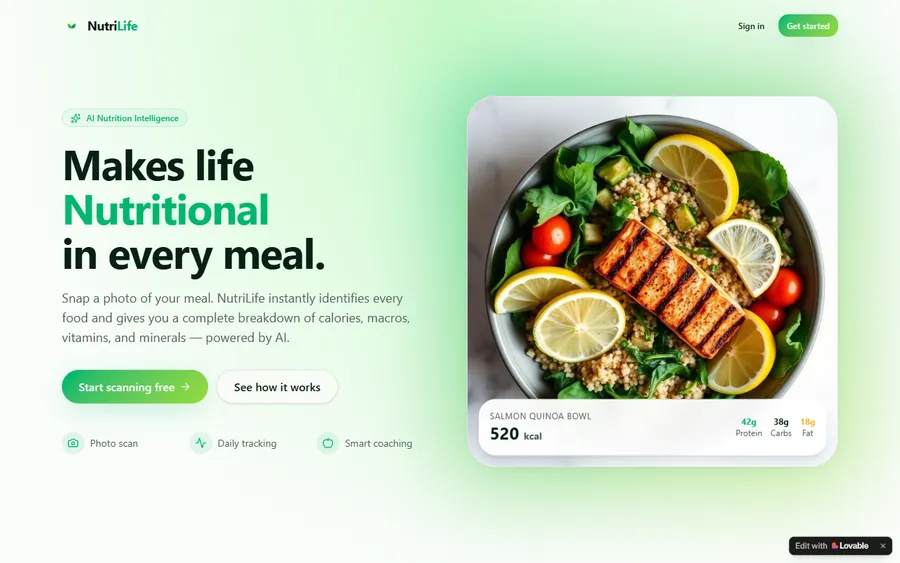
An AI nutrition coach that reads what you eat and works you toward a target.
AI and ML
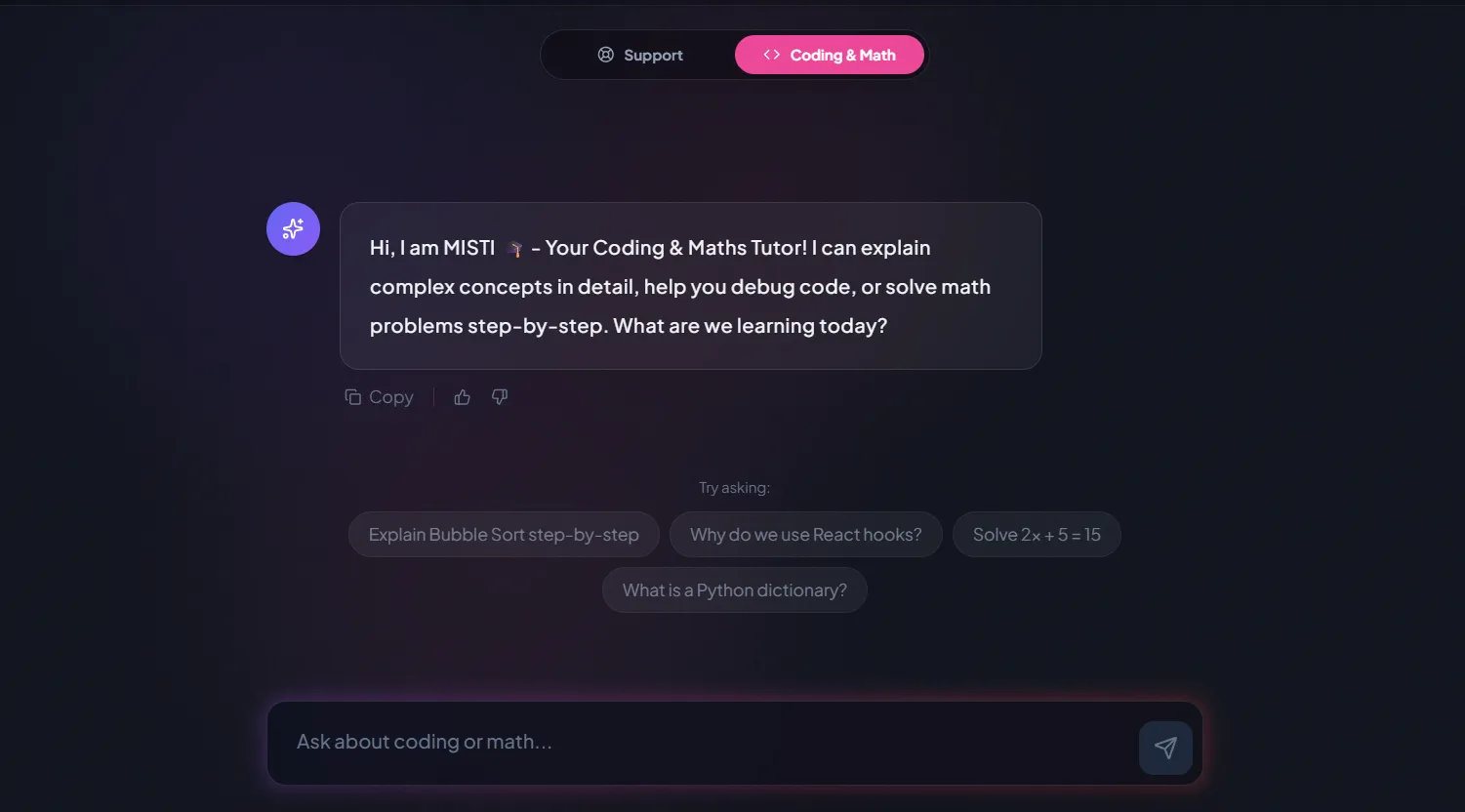
A chatbot that answers mathematics and programming questions, built and deployed by a student.
AI and ML
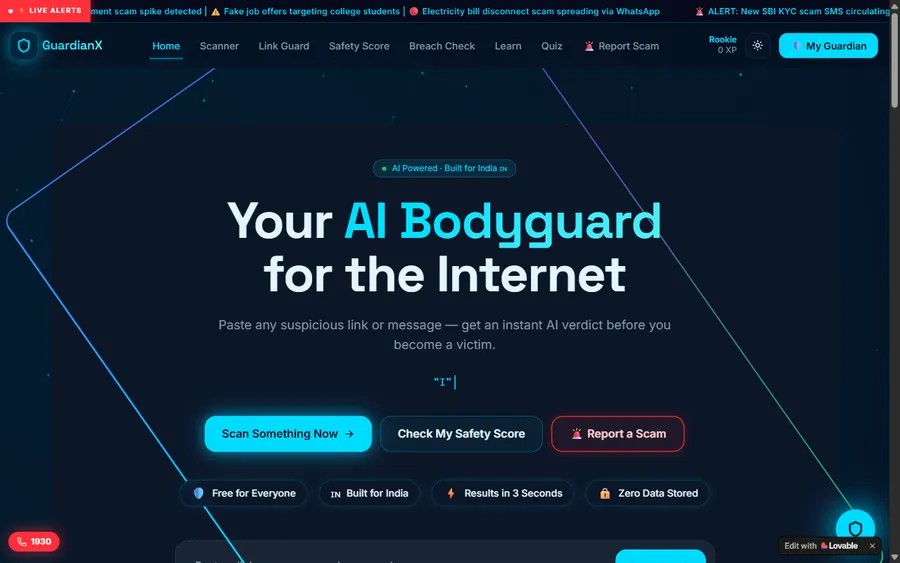
An assistant that helps a young person recognise unsafe situations online.
Web app
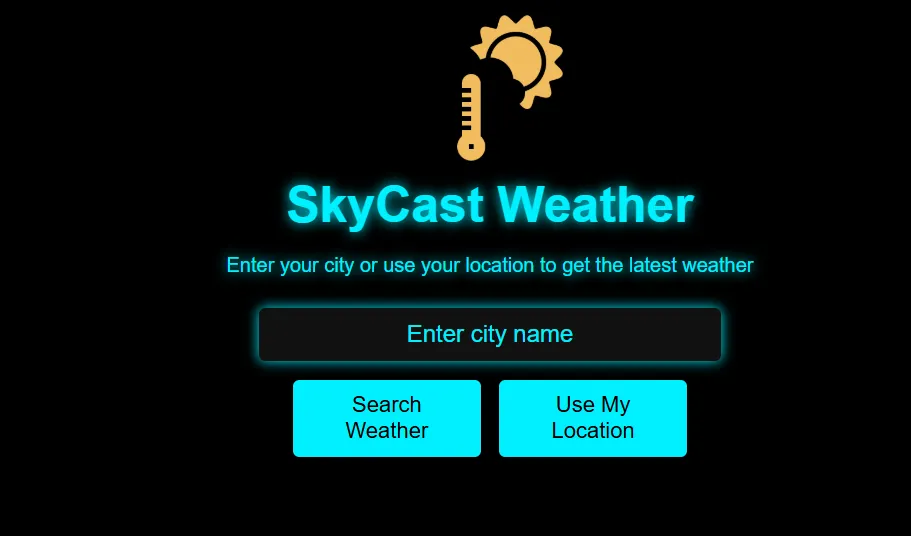
A weather forecasting site with live conditions for any location.
Fees
A monthly fee in US dollars, identical for all families outside India. Stop at any time; there is no contract.
Free first class
USD 0
no card required
Group batch
USD 100
a month, billed in US dollars
One to one
USD 150
a month, billed in US dollars
What families say
Unedited words from families who reviewed us on Google.
★★★★★
"The one step solution for my son. Modern Age Coders make learning coding so simple that kids love it. The teachers explain complex concepts clearly with practical exercises and interactive content."
Ria Mukherjee
Parent
★★★★★
"Modern Age Coders has been a game-changer for me. I struggled to grasp IT concepts and coding before joining, but their classes transformed everything. I can now confidently write complex programs with ease."
Samriddha Mondal
Student
★★★★★
"One of the most wonderful education centres out there. Education is not limited to school syllabus but focuses on skill development."
Vansh Agarwal
Student
★★★★★
"My child Dhairya is really enjoying the Modern Age Coders classes. This is his first online class and he eagerly looks forward to it. I can already see his improvement, and the teachers are very cooperative."
Sonam Oswal
Parent of Dhairya
★★★★★
"Modern Age Coders have wonderful teachers who teach in a clear, easy and practical way. The teacher boosts students' confidence and inspires them to learn without hesitation."
Sonu Goyal
Parent
★★★★★
"I highly recommend this computer coding class! The teachers are incredibly knowledgeable and passionate about coding."
Ritu Kedia
Parent
Barnet questions
No. Queen Elizabeth's School, The Henrietta Barnett School and St Michael's Catholic Grammar School each run their own entrance test, with their own dates and formats.
QE says its test is two multiple-choice papers, English and Mathematics, sat in a single session, with one round only. Scores are age-standardised and combined, and QE publishes a combined score of 225 or higher as the standard its Governors require.
No. The school says Round One covers verbal reasoning, non-verbal reasoning and English. The top 300 are invited to Round Two, which includes a 50-minute maths paper.
The school says it gives no further detail about the content and releases no past papers or resources for Round Two. We prepare children with the full primary curriculum in depth.
St Michael's holds multiple-choice entrance tests by invitation, including maths, and publishes provider-designed maths familiarisation booklets. Its English test is a written paper.
None had been published when we checked on 26 September 2026. For 2027 entry, St Michael's tested on 11 September, QE on 16 and 17 September, and Henrietta Barnett held Round One on 2 to 4 September and Round Two on 6 October 2026.
None of the three schools publishes past papers. QE links sample materials, and St Michael's publishes familiarisation booklets. We write our own questions.
No. Round One is verbal reasoning, non-verbal reasoning and English, none of which we teach for the test. We teach the maths for Round Two.
No. Applications, priority criteria and places are for the schools and your local authority. We teach maths.
Nothing for the first lesson. From then on, a seat in a small group is USD 100 per month and private tuition USD 150 per month; you can stop whenever you choose.
Related
Coding in Barnet, the national 11 plus page, and other selective areas nearby.
Programming lessons for Barnet children and teens.
How we approach 11 plus maths across England.
Two schools with two-stage tests, south-west London.
For families in the neighbouring borough.
From the Primary Maths Challenge to the UKMT, dated.
Every area we write about.
Start here
Tell us the school year and which school you are thinking about. We teach a real lesson and tell you honestly what we saw.
Prefer to read? All course syllabuses are online, how we teach explains our lessons, and the roadmap shows the path onwards.
WhatsApp us · +91 91233 66161 · contact@modernagecoders.com
A WhatsApp message usually gets the speediest reply. Our team and phone number are in India, and there is no Barnet or London office.