SLM / 01
11 plus maths preparation
The Year 5 curriculum for the consortium paper.
Open the syllabusSlough · Slough Consortium 11+ maths · Live online, small groups or one to one
Among the answers the Slough Consortium of Grammar Schools gave parents in its April 2026 briefing is one that most families skim past: "Children can wear an analogue watch if they wish to. No smartwatches are permitted." Each of the two papers takes 60 to 65 minutes, the number of questions is not published and varies from year to year, and there is a clock on the wall. A child who can glance at a watch and know, instantly, how much of the paper is left has a real advantage over one who has to work it out. That skill is ordinary Year 5 maths: reading time, working out elapsed time, converting between units of time and reading timetables. This page sets out what the consortium publishes about its examination, including the change of provider for children now in Year 5, and then teaches the maths of time.
Maths only · We do not teach verbal or non-verbal reasoning · No connection with the Slough Consortium
In short
Slough's four grammar schools, Herschel, Langley, St Bernard's Catholic and Upton Court, share one 11+ examination run by the Slough Consortium of Grammar Schools, independently of Slough Borough Council. Families register once, free of charge. The consortium describes two multiple-choice papers of 60 to 65 minutes, one covering maths and non-verbal reasoning and the other verbal skills, with no negative marking and rough work allowed. A standardised score of 111 or above, which the consortium says marks the top 35% of those tested, makes a child eligible to be considered. For September 2027 entry registration ran from 1 May to 5 June 2026 and the test was on Saturday 19 September 2026. From the September 2027 sitting, Quest Assessments replaces GL, with a similar structure and the same 111 line. We teach the maths, live online. The opening lesson is free, and from then on it is USD 100 a month for a group or USD 150 a month one to one.
Starting points in Slough
Pick by what slows your child down, not by the number of practice papers done.
SLOUGH / 1
The Year 5 curriculum for a multiple-choice paper, with time and timetables taught properly.
Open the syllabus →
SLOUGH / 2
Fast recall so that the watch shows time to spare, not time running out.
Open the syllabus →
SLOUGH / 3
For a Year 4 child who still needs place value and tables to settle.
Open the syllabus →The consortium exam
Slough Borough Council says the 11+ is run entirely by the consortium. The consortium's April 2026 briefing answers, published by its schools, are the fullest source. Read on 26 September 2026.
| September 2027 entry | September 2028 entry | |
|---|---|---|
| Registration | 10am, 1 May to 10am, 5 June 2026 | Not yet published |
| Examination | Saturday 19 September 2026 | September 2027 |
| Provider | GL Assessment | Quest Assessments |
| Format | Two multiple-choice papers, 60 to 65 minutes each | "Similar to those used under the previous provider" |
| Eligibility score | 111 or above | "Will continue to be set at 111" |
The briefing describes one paper as covering "Maths and Non-verbal Reasoning" and the other as verbal skills; in answer to a different question it says "Each paper consists of a mixture of the three elements". Either way, maths shares its time with non-verbal reasoning. The consortium does not publish the weighting of the elements or the number of questions, which "may vary from year to year".
Answers go on a separate sheet that is scanned and marked by software. There is no negative marking. Children may use "any white space in the question booklets for rough work and /or the spare paper provided", but must not write notes on the answer sheet.
On practice material the consortium is candid: GL provides familiarisation material showing the question-and-answer format, but GL's other practice papers "are not specifically for the Slough examination". There are no mock tests. For the September 2027 sitting, Quest Assessments takes over, and Herschel Grammar School's page says the structure and format will be similar.
The four grammar schools are the test centres, and the same papers are used in the morning and afternoon sessions at all four. How each school then admits children is set out in its own arrangements, and we do not advise on it.
Sources: Slough Borough Council, secondary school admissions; Slough Consortium of Grammar Schools, Parents' 11+ Examination Briefing, April 2026, questions and answers, published by Langley Grammar School; the consortium registration portal; Herschel Grammar School, Year 7 admissions 2028. Modern Age Coders has no connection with the consortium, its schools, GL, Quest or the council.
The 111 line
The consortium explains its eligibility score more clearly than most, and the explanation is worth understanding, not memorising.
"The standardised score has a midpoint of 100. A child scoring 100 is in the middle of the range." And: "The scale is fixed so that a score of 111 means that the child falls in the top 35% of the range. When the results are published, 35% of those taking the test will score 111 or above."
In other words, 111 is not a number of marks. It is a position. However hard or easy a particular year's papers are, the same share of children reaches it.
Thirty-five per cent is seven in every twenty. If a thousand children sat the test, about 350 would reach 111. A family cannot aim at a raw mark, because nobody outside the provider knows what raw mark will correspond to 111 in a given year.
That is why we never quote targets. What a child can control is how much of the maths they get right, calmly, in the time. The rest is set by everyone else who sits the paper.
The consortium adds that a score of 111 or above "is not an offer of a place and does not guarantee a place". Allocation depends on each school's admission arrangements. That is the schools' business, not ours.
The lesson
Time questions test several things at once: reading a clock, adding in base 60, and pulling the right number out of a table. The Year 5 curriculum names each part.
| Stop | Bus A | Bus B | Bus C |
|---|---|---|---|
| Station | 07:48 | 08:13 | 08:41 |
| High Street | 07:55 | 08:21 | 08:49 |
| Park Road | 08:06 | 08:33 | 09:02 |
| School Lane | 08:19 | 08:47 | 09:18 |
How long does Bus A take from Station to School Lane? From 07:48 to 08:19 is 12 minutes to 08:00 and 19 more: 31 minutes. Counting on through the hour beats subtracting 748 from 819, which gives the wrong answer, 71.
A child must be at School Lane by 08:50. Which is the latest bus they can catch from High Street? Bus B, leaving 08:21 and arriving 08:47. Bus C arrives at 09:18.
Which bus is slowest from Station to School Lane? A takes 31 minutes, B 34, C 37. The answer needs three elapsed times, each done carefully.
The national curriculum asks Year 5 pupils to "solve problems involving converting between units of time" and to "complete, read and interpret information in tables, including timetables". Both sit inside the questions above. The trap in each is treating times as ordinary decimal numbers: 08:19 minus 07:48 is not 71 minutes, because an hour has 60 minutes, not 100.
We teach counting on through the hour, with a quick sketch of a number line: from 07:48 to 08:00, then from 08:00 to 08:19. It is slower to explain than to do, and it never gives 71.
The watch connects the lesson to the exam room. A 60 to 65 minute paper starting at, say, 09:40 ends at about 10:40 to 10:45. Half-time is around 10:10. A child who can read that from an analogue face at a glance, and knows roughly how far through the booklet they should be, paces without panic.
We practise with an analogue clock face on screen during timed work, so that reading the minute hand becomes automatic. Children who do not wear a watch simply use the room clock the same way.
Sources: national curriculum in England, mathematics, Year 5 measurement and statistics (statutory requirements); Slough Consortium briefing, April 2026, on watches and paper length. The timetable is invented for teaching.
How we prepare
The consortium publishes neither the number of questions nor the weighting of maths. Preparation has to be robust to both.
Number, fractions, measures, geometry and statistics, each taught until quick and correct, because nobody outside the provider knows which will carry most weight.
When the number of questions is unknown, pacing by time rather than by question number is safer. That is where the watch, or the wall clock, earns its place.
For the September 2027 sitting the questions come from Quest instead of GL, in a similar structure. Curriculum-based preparation is untouched by the change.
Familiarisation material from the provider is the right way to see the layout. For the 2027 cycle the schools published GL booklets; for 2028 entry, watch the schools' pages for whatever Quest provides. We do not reproduce either.
Rough work is allowed in the booklet margins and on spare paper, so we teach tidy, short working. It makes checking possible without losing time.
Maths shares a paper with non-verbal reasoning. We teach the maths only; families wanting help with non-verbal reasoning need someone else, and we tell them so at the start.
Every question we use is our own, written to the Year 5 curriculum and the published format: multiple choice, an answer sheet, no negative marking.
Slough and around
The four consortium schools are the test centres. We list them only to show which exam this page covers.
| School | Role on test day |
|---|---|
| Herschel Grammar School | Test centre |
| Langley Grammar School | Test centre |
| St Bernard's Catholic Grammar School | Test centre |
| Upton Court Grammar School | Test centre |
The consortium says families outside Slough, including in Reading, register directly with it, and that its test is its own even though other areas also use GL. The paper is the same whichever centre a child attends.
Reading's two selective schools set their own tests, which are separate from this one; this page is only about the Slough Consortium examination.
Our lessons are live on video, so a child in Langley, Burnham or Cippenham is taught with others at the same level of Year 5 maths, from anywhere, in groups of five to ten.
We have no connection with the consortium, any of its schools or the council, and we do not advise on applications or places.
Sources: Herschel Grammar School, Year 7 admissions 2028; Slough Consortium briefing, April 2026.
Timeline
For a child now in Year 5, the next consortium exam is in September 2027, early in Year 6, with Quest as the provider.
| When | Stage | Signs it is done |
|---|---|---|
| Autumn, Year 5 | 1. Number | Tables, place value and mental calculation are fast and dependable |
| Winter, Year 5 | 2. Measures and time | Elapsed time and timetables answered without the 71-minute mistake |
| Spring and summer, Year 5 | 3. The full curriculum | Fractions, geometry and statistics as secure as number |
| Summer holiday | 4. Paced papers | Uses a watch or clock to pace a full paper and finishes it |
Starting in the spring still works if number comes first and timed papers last.
At the free lesson we will say honestly what the time available can do.
Time and timetables become speed, distance and rates in secondary school. Some pupils go on to maths through coding and build their own timetable tools.
Keen problem solvers try the national challenges on our competitions calendar.
Course list
Arranged by stage, with the syllabus behind each card.
SLM / 01
The Year 5 curriculum for the consortium paper.
Open the syllabusSLM / 02
Speed that leaves time on the watch.
Open the syllabusSLM / 03
Clocks, tables and place value, made secure.
Open the syllabusSLM / 04
A visual start for younger children.
Open the syllabusSLM / 05
Speed, distance, time and more.
Open the syllabusSLM / 06
Every exam board, taught to specification.
Open the syllabusSLM / 07
For the child who wants harder problems.
Open the syllabusSLM / 08
Program a clock; calculate journeys.
Open the syllabusSLM / 09
Timers and events in a visual language.
Open the syllabusSLM / 10
The move to typed programming.
Open the syllabusSLM / 11
Faster arithmetic on firm ground.
Open the syllabusSLM / 12
Time series and data, a few years on.
Open the syllabusWhen we teach
We teach live from India and schedule primary children in the early evening or on weekend mornings by the UK clock. When the UK clocks change, our teachers' hours move, not yours.
Weekdays after school
Early enough that nobody is tired.
Weekend mornings
A calm hour at the start of the day.
Holidays
Extra short sessions in the breaks.
The same person weekly, who knows each child's habits.
A few frank sentences after lessons.
Children matched by level.
No GL, Quest or consortium material is copied.
For a specific weakness, such as time.
No reasoning coaching and no admissions advice.
Student work
Four projects published by students at our school, built on the arithmetic of Year 5 and beyond. More on the student labs page.
AI and ML
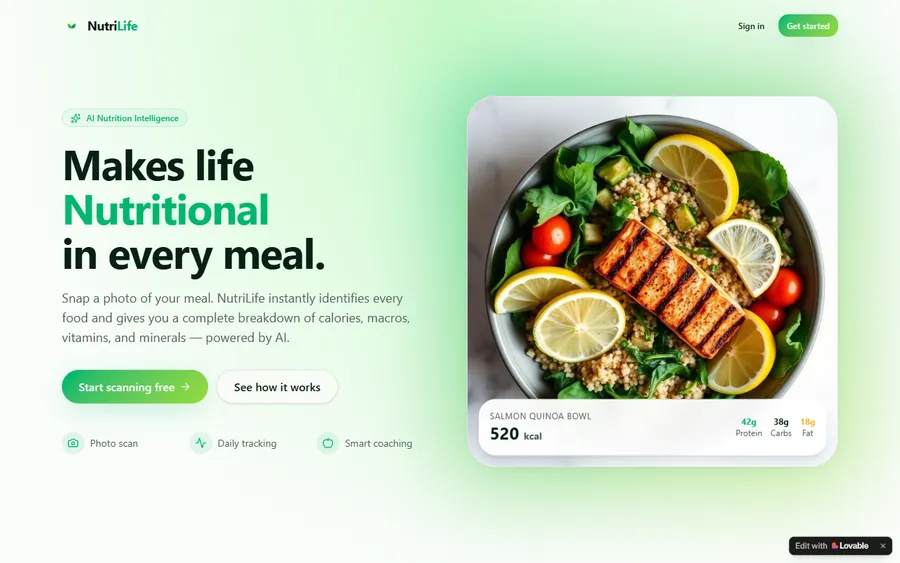
An AI nutrition coach that reads what you eat and works you toward a target.
AI and ML
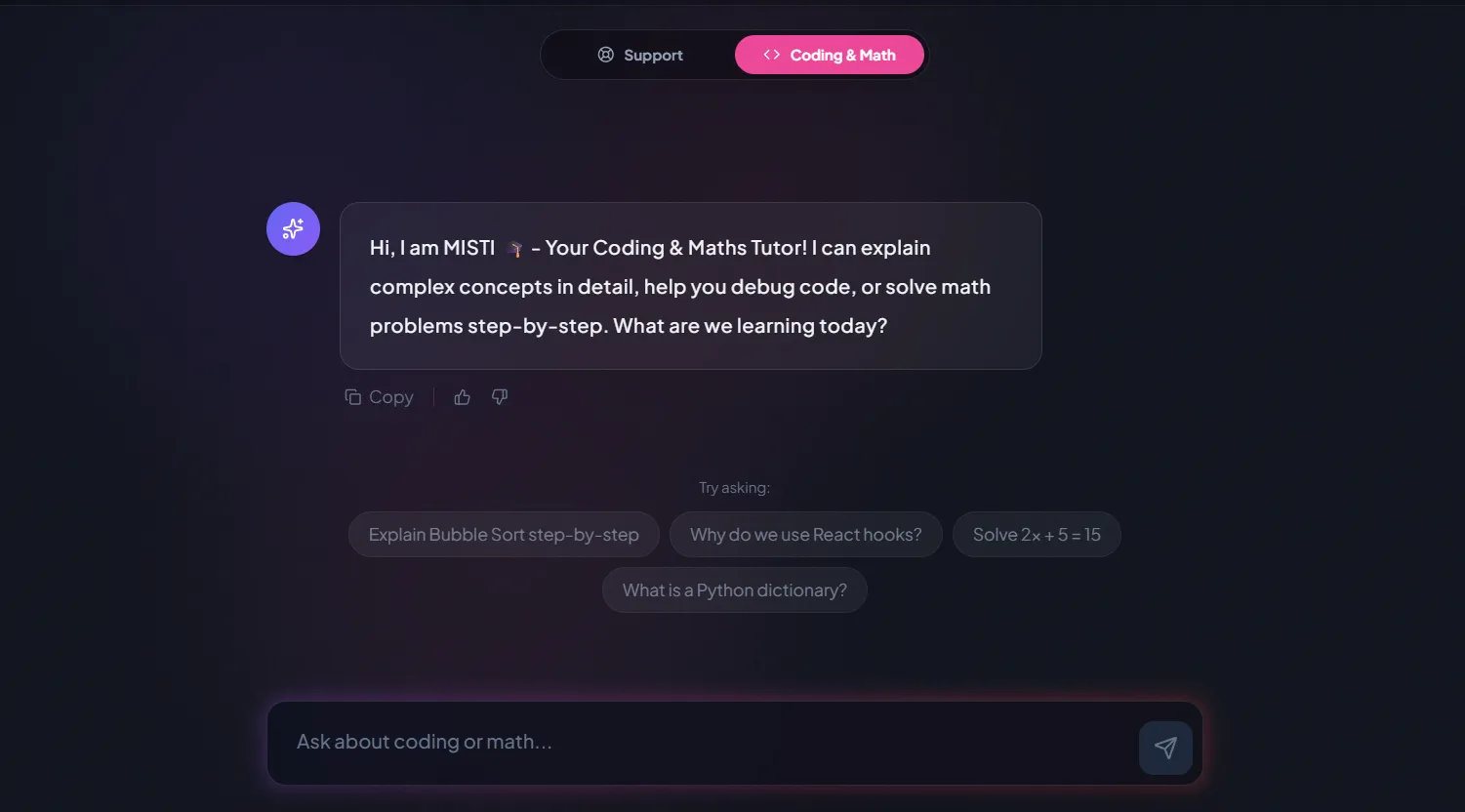
A chatbot that answers mathematics and programming questions, built and deployed by a student.
AI and ML
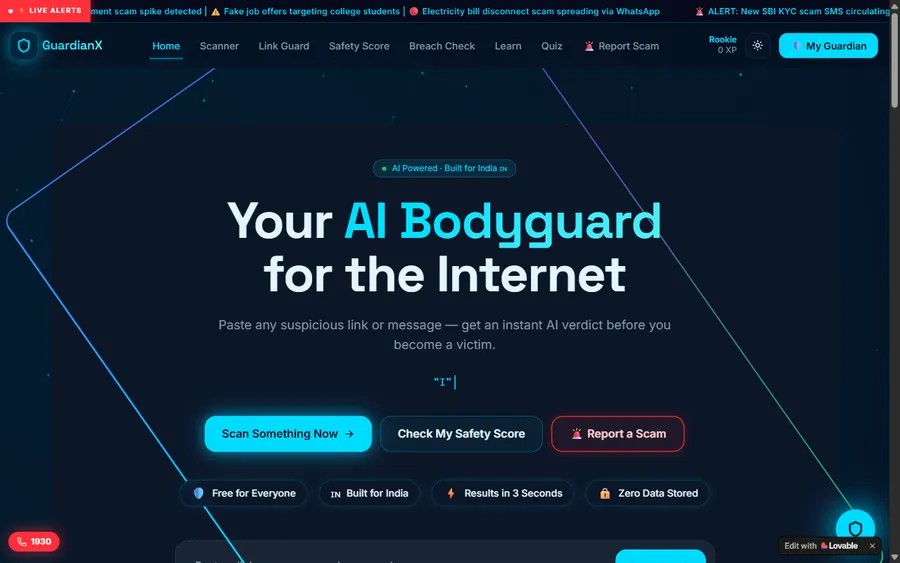
An assistant that helps a young person recognise unsafe situations online.
Web app
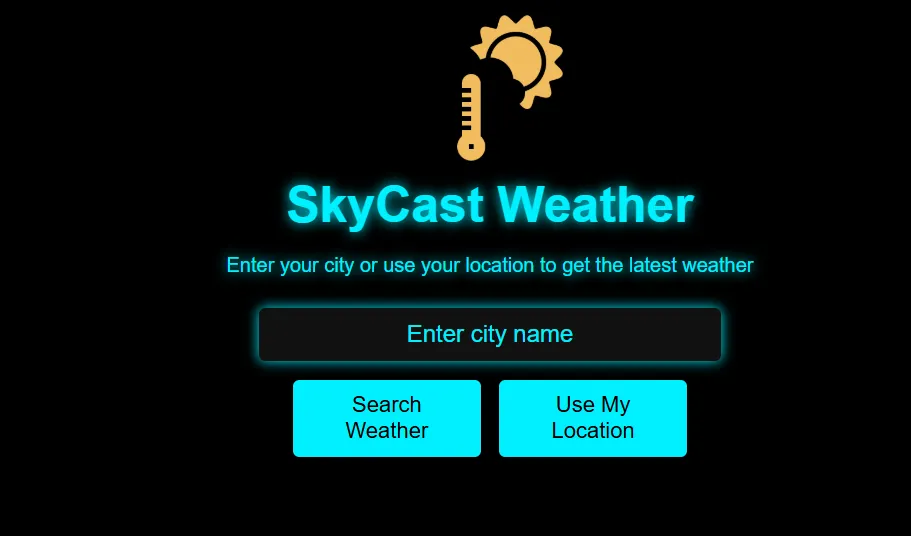
A weather forecasting site with live conditions for any location.
Fees
One monthly price in US dollars, the same for all families outside India. No joining fee and no notice period.
Free first class
USD 0
no card required
Group batch
USD 100
a month, billed in US dollars
One to one
USD 150
a month, billed in US dollars
What families say
Straight from our Google reviews, unchanged.
★★★★★
"The one step solution for my son. Modern Age Coders make learning coding so simple that kids love it. The teachers explain complex concepts clearly with practical exercises and interactive content."
Ria Mukherjee
Parent
★★★★★
"Modern Age Coders has been a game-changer for me. I struggled to grasp IT concepts and coding before joining, but their classes transformed everything. I can now confidently write complex programs with ease."
Samriddha Mondal
Student
★★★★★
"One of the most wonderful education centres out there. Education is not limited to school syllabus but focuses on skill development."
Vansh Agarwal
Student
★★★★★
"My child Dhairya is really enjoying the Modern Age Coders classes. This is his first online class and he eagerly looks forward to it. I can already see his improvement, and the teachers are very cooperative."
Sonam Oswal
Parent of Dhairya
★★★★★
"Modern Age Coders have wonderful teachers who teach in a clear, easy and practical way. The teacher boosts students' confidence and inspires them to learn without hesitation."
Sonu Goyal
Parent
★★★★★
"I highly recommend this computer coding class! The teachers are incredibly knowledgeable and passionate about coding."
Ritu Kedia
Parent
Slough questions
The consortium describes two multiple-choice papers of 60 to 65 minutes, one covering maths and non-verbal reasoning and the other verbal skills. It does not publish the number of questions or the weighting of each element.
The consortium says children can wear an analogue watch if they wish, but no smartwatches. There is also a clock easily visible in the exam room.
The consortium says the standardised score has a midpoint of 100 and that 111 marks the top 35% of those taking the test. A score of 111 or above makes a child eligible to be considered, but is not an offer of a place.
No. The consortium says there is no negative marking.
Yes. Herschel Grammar School says the consortium has contracted Quest Assessments for the examination in September 2027, with a similar structure and format and the eligibility score still set at 111.
September 2027, for September 2028 entry. Exact registration and test dates had not been published when we checked on 26 September 2026. For 2027 entry, registration ran from 1 May to 5 June 2026 and the test was on 19 September 2026.
No. The consortium says there are no mock tests or official practice papers, and that GL's general practice papers are not specifically for the Slough examination.
No, only the maths. We also do not advise on applications or places.
The consortium says there is no charge for the 11+ test. Families register once for all four schools.
Your first lesson is free. Afterwards, group lessons are USD 100 a month and private lessons USD 150 a month, and you can stop at any point.
Related
Coding across the UK, the national 11 plus page, and neighbouring selective areas.
How we teach 11 plus maths across England.
The county next door, with its own transfer test.
Another GL test, with strict equipment rules.
Dated maths challenges for keen pupils.
Where a primary child begins with code.
Every UK area we cover.
Start here
Tell us the school year and how comfortable your child is with time and timetables. We teach a real lesson and then tell you frankly what we saw.
Would you like to read first? See the courses and syllabuses, how we teach, and the roadmap.
WhatsApp us · +91 91233 66161 · contact@modernagecoders.com
WhatsApp is the quickest way to reach us. We are in India, with an Indian number, and have no UK office.