KENT / PREP / 01
11 plus maths preparation
Year 5 content, taught for unfamiliar questions.
Open the syllabusKent · Kent Test maths · Live online, small groups or one to one
There is one fact about the Kent Test that changes how a family should prepare, and almost nobody says it out loud: the paper is sat in the first full week of Year 6. A child registered in Year 5 walks into the test having had perhaps six days of Year 6 teaching. Whatever the maths section asks, it cannot be asking about a year of school that has not happened yet. So the work that pays is not racing ahead into Year 6 content. It is making Year 5 arithmetic quick and certain, then practising it on questions the child has never seen in that form before. This page sets out what Kent County Council publishes about the paper, what the maths on it can and cannot be, and how we teach it online.
Maths only · No promises about a threshold · Admissions stay with the council and the schools
In short
The Kent Test is two multiple-choice booklets with a separate answer sheet, one for reasoning and one for English and maths, plus a writing exercise. In the council's 2015 familiarisation booklet, the most recent edition we have been able to read, the English and Maths test "takes around 1 hour, with 25 minutes for the English section (plus 5 minutes practice) and 25 minutes for the Maths section (plus 5 minutes practice)", and the maths covers "a variety of topics taught in most schools up to the start of Year 6". For September 2027 entry the council registered children in Year 5 between 1 June and 1 July 2026, Kent primary pupils sat the test on Thursday 10 September 2026, and decisions went out after 4pm on 15 October 2026. Twenty-five minutes of Year 5 arithmetic, asked in unfamiliar ways: that is the target, and it is a teachable one. A first lesson is free; group teaching is USD 100 a month and one to one USD 150.
Where a Kent child starts
Choose by how secure the arithmetic is, not by how close the test date feels.
KENT / 01
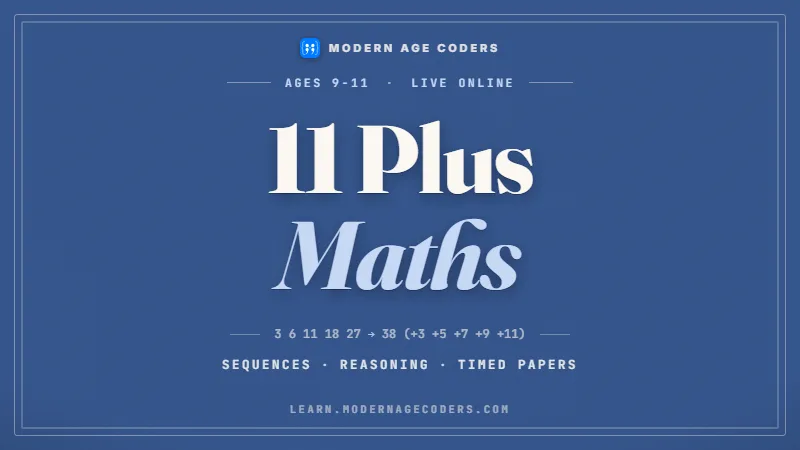
The core course: number, fractions, measures and the kind of problem that hides its method.
Open the syllabus →
KENT / 02
For a child in Year 4 or early Year 5 whose foundations still wobble under time pressure.
Open the syllabus →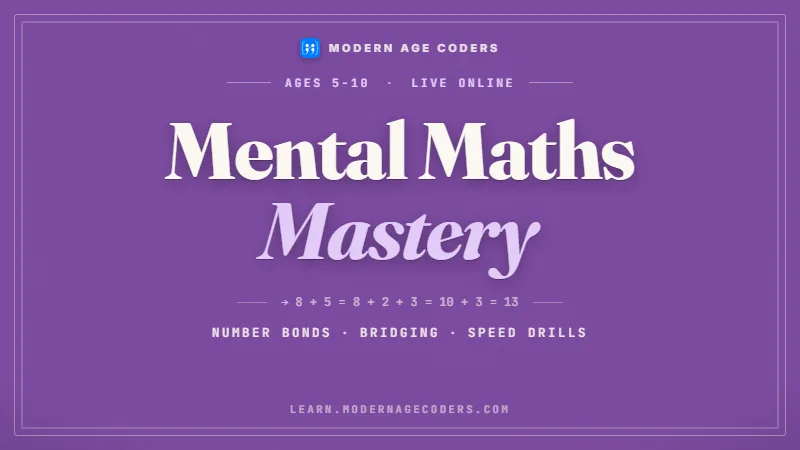
KENT / 03
Twenty-five minutes is short. Calculation that happens in the head buys the thinking time.
Open the syllabus →What the paper is
Kent County Council's website returns an error to automated readers, so everything below comes from council documents we could actually open, and each is named. Read on 20 September 2026.
| Stage | When | Detail as published |
|---|---|---|
| Registration | 1 June to midnight 1 July 2026 | Online at the council's Kent Test pages, by a parent of a child then in Year 5. Requests for access arrangements for a disability or special educational need are discussed with the primary school and are not accepted after 1 July 2026. |
| Test day, Kent primaries | Thursday 10 September 2026 | Children at a Kent primary school sit the test in their own school. |
| Test day, everyone else | Saturday 12 or Sunday 13 September 2026 | Children at primary schools outside Kent, or educated at home, sit it at an allocated test centre, notified by email at the end of August. |
| Decisions | Thursday 15 October 2026 | Emailed after 4pm to the address used to register the child. |
Two booklets, then. The council's familiarisation booklet describes one called Reasoning and one called English & Maths, both made of timed, multiple-choice questions, with answers marked on a separate sheet that a computer reads. There is also a writing exercise: Upton Junior School's 2026 information for parents, restating the council, gives it 40 minutes including 10 minutes of planning, and says it is not marked but may be used by a local headteacher panel.
The separate answer sheet is worth a sentence of its own, because it is the one part of the format that catches children out. Every answer is a line drawn through a small box next to a number, and the number on the sheet has to match the number of the question. A child who skips a question in the booklet and forgets to skip the box loses everything after it.
Medway is not Kent for this purpose. The council's leaflet says plainly that "Schools in Medway, Bexley and Bromley are outside the Kent Local Authority area", and Medway runs its own selective test on its own timetable. A family in Rainham or Strood is not preparing for the same paper as a family in Ashford, and this page is about the Kent one.
One thing this page will not do is advise on admissions. Which schools to name, how oversubscription criteria work, appeals and waiting lists are the council's business and each school's, published by them and changed by them. We teach the maths.
Sources: Kent County Council's Kent Test leaflet for September 2027 entry, published as a PDF by Barton Green Primary School; Kent County Council's Kent Test Familiarisation Booklet, 2015 edition; Upton Junior School, 2026 Kent Test information for parents. The council's own site returns HTTP 403 to us and we have not quoted anything from it that we could not read elsewhere in a council document. Modern Age Coders has no connection with Kent County Council or any grammar school.
The thing nobody says
Count the school days. The conclusion is not an opinion about teaching; it is arithmetic on a calendar.
At Great Chart Primary School in Ashford, children returned for the autumn term on Wednesday 2 September 2026, after a staff development day on the Tuesday. Kent primaries vary by a day or two, not by a month.
Kent primary pupils sat the Kent Test on Thursday 10 September 2026. At Great Chart that is the seventh school day of Year 6, two half terms before the first Year 6 report.
Whatever Year 6 teaches, it has not taught it yet. The council's booklet says as much: the maths covers "a variety of topics taught in most schools up to the start of Year 6".
| Maths | Year taught | On a paper sat in week one of Year 6? |
|---|---|---|
| Long multiplication, four digits by two | Year 5 | Yes. Taught, practised, and fair game at speed. |
| Short division, four digits by one | Year 5 | Yes, including what to do with the remainder. |
| Equivalent fractions, mixed numbers, thousandths | Year 5 | Yes. The curriculum states that percentages, decimals and fractions are different ways of expressing proportions. |
| Perimeter, area, volume, converting metric units | Year 5 | Yes, usually wrapped inside a word problem. |
| Formal long division by a two-digit number | Year 6 | Not taught yet. A child who can divide sensibly by other means is not behind. |
| Ratio and proportion as a named topic | Year 6 | Not taught yet, though sharing and scaling questions can be met with Year 5 fraction sense. |
| Algebra: formulae, sequences, two unknowns | Year 6 | Not taught yet. This is the section parents drill hardest and need least. |
That last row is where money and evenings go to die. A tutor who starts a Year 5 child on algebra because "the 11 plus has algebra" is teaching for a paper the child will sit a year later, somewhere else. The Kent maths section stretches inside Year 5 ground instead: the council's booklet says a small number of questions are "based on things you will have been taught but may be more difficult than you are used to. This is so you can show how you use the maths skills you already have to solve new kinds of problem."
Read that sentence as a syllabus and the work becomes obvious. Known content, unknown shape. Not more topics, but more ways in.
It also explains why past papers alone stop working. A child who has done forty papers has seen forty shapes and learned to recognise them. The test is written to defeat recognition: the same fraction idea arrives as a recipe, a bus timetable, a length of ribbon. Recognition runs out; fluency does not.
The national picture says the foundations are not automatic either. In the Department for Education's provisional key stage 2 results for 2025/26, 75 per cent of pupils in England met the expected standard in maths and 63 per cent met it in reading, writing and maths together. Meeting the expected standard is a long way below answering unfamiliar questions against a clock.
Sources: the national curriculum in England, mathematics programmes of study (years 5 and 6); Department for Education, key stage 2 attainment, 2025/26 provisional; Great Chart Primary School term dates 2026-27; Kent County Council's familiarisation booklet, 2015 edition.
How it is scored
Understanding the scoring stops two mistakes: panicking about a summer birthday, and believing anyone who quotes you a target mark.
A child does not get a mark out of forty. They get three standardised scores, one for English, one for maths and one for reasoning, and an aggregate of the three. Standardisation compares a child's performance with everyone else's on the same test, and then adjusts for age so that a child born in August is not measured against a child born the previous September as though they were the same age.
That adjustment is real and it is arithmetic, not sympathy. It does not make a summer-born child's answers better; it stops eleven months of extra life counting as extra ability.
The qualifying bar is set for each year's cohort and published in the autumn, after the papers are marked. Upton Junior School's 2026 information told Kent parents last year's figures and then said, in as many words, that the current year's threshold would be available in October. Numbers from a previous year are history, not a target.
You will find tutors and websites quoting a precise aggregate as though it were a law. Different sites quote different minimums for the same test, which is the usual sign of a number that moves. We teach the maths and let the council publish the bar.
One more thing follows from the scoring, and it is the reason the maths section deserves separate attention: the aggregate is only part of the picture, because the three scores are reported separately as well. A child who is strong in English and reasoning and shaky in maths is not carried by an average in the way a single mark out of a hundred would carry them. Maths is a third of the reported picture and it is the third that responds fastest to teaching, because arithmetic fluency is trainable in a way that reading speed at ten largely is not.
Source: Upton Junior School, 2026 Kent Test information for parents, restating Kent County Council. We print no threshold: the council publishes it each October.
What we actually do
Content, speed and format are three different problems. Most preparation only works on the first.
Times tables to twelve, halves and doubles, fraction and decimal equivalents, ten per cent of anything. Recalled, not worked out. Every second saved here is a second available for thinking.
The same idea in a new costume, every week: a fraction question dressed as a recipe, an area question dressed as a garden path, a division question that never says divide.
Working under twenty-five minutes, choosing what to leave, checking the answer-sheet number against the question number. Format practice is short and late, not the whole course.
A child who cannot decide quickly loses more marks than a child who does not know a topic. In a multiple-choice paper the decision is the work: four options, one right, and often two designed to catch the two commonest errors. We teach children to estimate first and eliminate, because an estimate rules out two options in seconds and turns a hard question into a coin toss at worst.
We also teach when to move on. A twenty-five minute paper punishes stubbornness. Children rehearse leaving a question, marking its number, and coming back, so that on the day it is a habit rather than a decision made in a panic.
What we do not do is promise anything. No provider can know a threshold before it is set, no provider can know a cohort, and a tutor who promises a grammar school place is selling something they do not own. We will tell a family honestly where a child is against Year 5 content, and what a term of work is likely to change.
Nor do we reproduce Kent Test papers. The council publishes its own familiarisation material for that. Our practice questions are written by us, in the same spirit but not the same words, which is also why they cannot be memorised.
Across the county
Lessons are live and online, so the twelve districts are all the same distance away. Census 2021 usual residents, from the Office for National Statistics.
| District | Usual residents | Towns families come from |
|---|---|---|
| Maidstone | 175,781 | Maidstone, Staplehurst, Marden, Headcorn |
| Canterbury | 157,429 | Canterbury, Whitstable, Herne Bay |
| Swale | 151,677 | Sittingbourne, Faversham, Sheerness |
| Thanet | 140,587 | Margate, Ramsgate, Broadstairs |
| Ashford | 132,747 | Ashford, Tenterden, Charing |
| Tonbridge and Malling | 132,201 | Tonbridge, West Malling, Snodland |
| Sevenoaks | 120,515 | Sevenoaks, Swanley, Edenbridge |
| Dartford | 116,754 | Dartford, Greenhithe, Swanscombe |
| Dover | 116,411 | Dover, Deal, Sandwich |
| Tunbridge Wells | 115,314 | Royal Tunbridge Wells, Southborough, Paddock Wood |
| Folkestone and Hythe | 109,759 | Folkestone, Hythe, Romney Marsh |
| Gravesham | 106,902 | Gravesend, Northfleet, Higham |
Those twelve add to 1,576,077 people, and they are one county with one test and twelve very different journeys to a classroom. A family in Romney Marsh and a family in Dartford have the same registration deadline and nothing like the same options for a Tuesday evening. Online teaching removes that difference entirely: the lesson is the same lesson in Sheerness and in Sevenoaks.
It also removes the quiet cost nobody prices in. An hour of tuition that needs forty minutes of driving each way is a three-hour commitment for the adult and a tired child at the end of it.
Medway, again, is its own authority with its own test, and so are Bexley and Bromley across the boundary. If you live there, the timetable and the paper on this page are not yours, and we will say so in the free lesson rather than take the booking.
We teach children in Kent alongside children in the rest of the United Kingdom and well beyond it. A group is formed by level, not by postcode, which is what makes small groups possible at all at this age.
Source: Office for National Statistics, Census 2021, usual residents by local authority district, via Nomis. District town lists are ours, not the council's.
When to start
Registration closes at the start of July in Year 5. Work backwards from that, not from the test date.
| Stage | Rung | The sign it is secure |
|---|---|---|
| Year 4 | 1. Number sense | Knows tables to twelve without counting, and can say what half of 37 is without a pencil |
| Early Year 5 | 2. Written methods | Long multiplication and short division come out right when the numbers are ugly |
| Late Year 5 | 3. Unfamiliar problems | Reads a wordy question and can say what kind of maths it is before doing any |
| Summer before the test | 4. Clock and format | Finishes twenty-five minutes of mixed questions and keeps the answer sheet in step |
A child who begins in the spring of Year 5 can still gain a great deal, but the order does not change: fluency, then unfamiliar problems, then timing. Skipping to timed papers with shaky tables produces fast wrong answers.
If the arithmetic is genuinely insecure, we will say so, and we will say what six months can reasonably do.
The maths does not stop mattering in October. Children carry on with us into secondary work, and many move across into maths through coding, where the arithmetic they drilled becomes something they can build with.
For a child who turns out to enjoy the puzzles more than the exam, the Primary Maths Challenge and the UKMT ladder are on our competitions calendar.
The full list
Arranged by the age the course suits, with the syllabus behind every card.
KENT / PREP / 01
Year 5 content, taught for unfamiliar questions.
Open the syllabusKENT / PREP / 02
The foundations the paper assumes are already there.
Open the syllabusKENT / PREP / 03
Number sense rather than tricks, for speed under a clock.
Open the syllabusKENT / PREP / 04
From first beads to calculating without them.
Open the syllabusKENT / NEXT / 01
Pre-algebra and geometry, the ground Year 7 assumes.
Open the syllabusKENT / NEXT / 02
AQA, Edexcel and OCR, taught to the board.
Open the syllabusKENT / NEXT / 03
For the child who finishes early and wants harder.
Open the syllabusKENT / CODE / 01
Python as a way of seeing why a method works.
Open the syllabusKENT / CODE / 02
A first language, built on the same logical habits.
Open the syllabusKENT / CODE / 03
Typed code, once the ideas are comfortable.
Open the syllabusKENT / MORE / 01
Methods that make mental arithmetic quicker.
Open the syllabusKENT / MORE / 02
Where the maths goes, a few years later.
Open the syllabusHow lessons run
Teaching is live on video from India, which runs five and a half hours ahead of the UK in winter and four and a half in summer. For primary children we keep to early evening UK time and never later.
Early weekday evening
Straight after school, while the day is still fresh.
Weekend morning
For families who would rather keep weeknights free.
Holiday weeks
Shorter, more frequent sessions when school is out.
The same person sees the same mistakes twice and can do something about them.
A short honest note on what went well and what did not, not a score to frame.
Enough voices in the room for a child to hear a better method than their own, few enough that nobody hides.
We write the practice ourselves. No Kent Test paper is reproduced here.
For a specific gap, or for a child who freezes in a group.
We teach maths. Places, thresholds and appeals belong to the council and the schools.
Student work
Four published projects by students at our school, most of them older than Year 5 and all of them once ten. More on the student labs page.
AI and ML
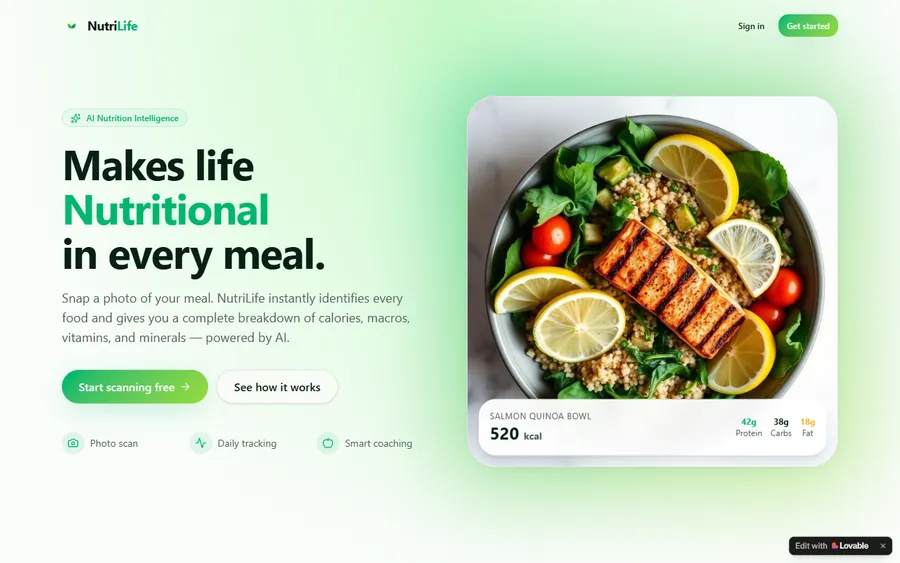
An AI nutrition coach that reads what you eat and works you toward a target.
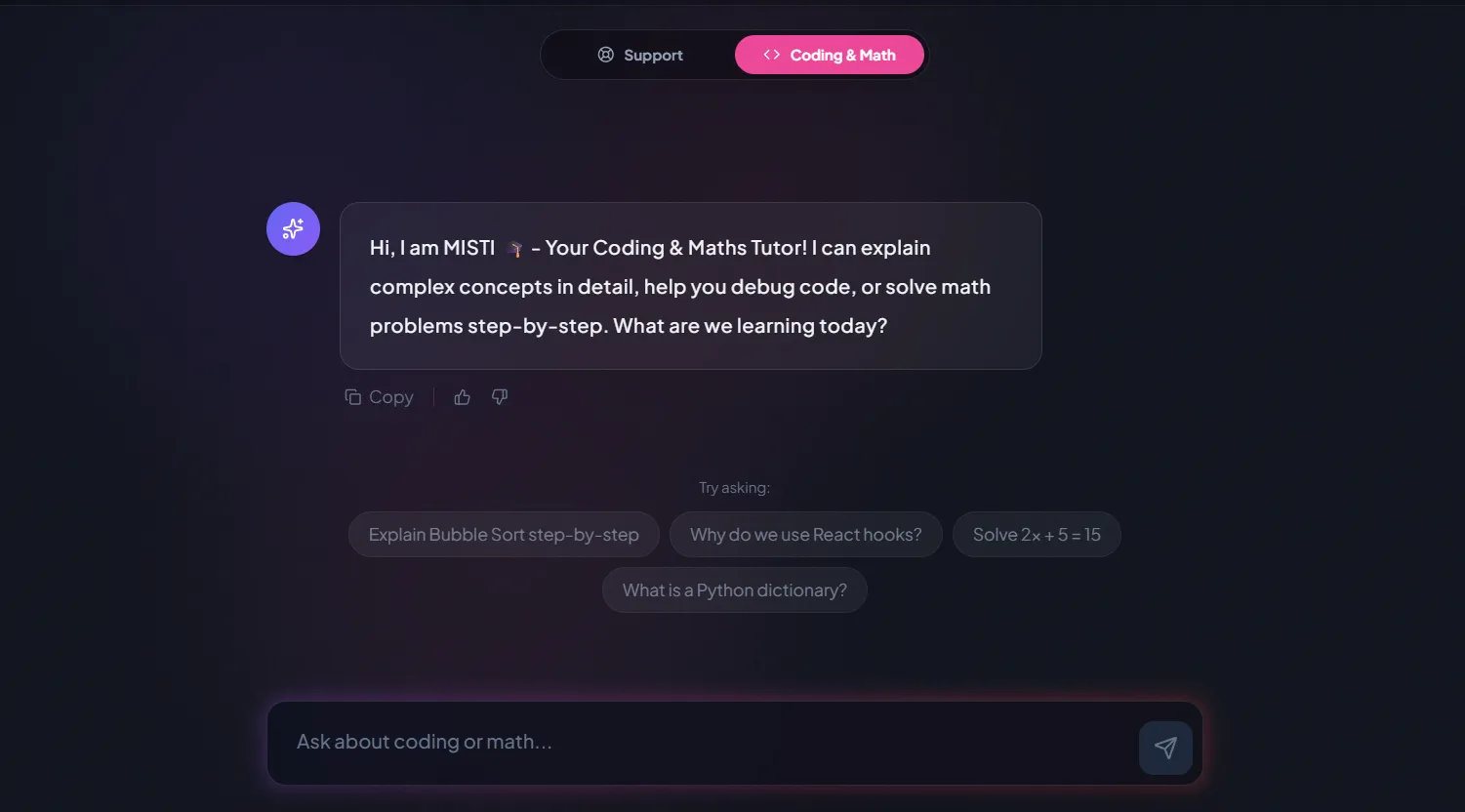
AI and ML
A chatbot that answers mathematics and programming questions, built and deployed by a student.

AI and ML
An assistant that helps a young person recognise unsafe situations online.
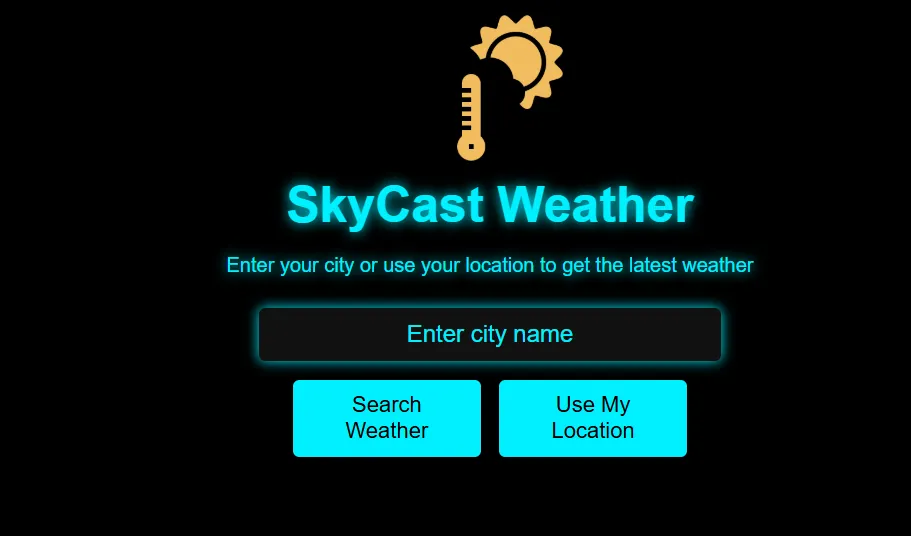
Web app
A weather forecasting site with live conditions for any location.
Fees
A monthly rate in US dollars, the same everywhere outside India. Nothing to join, nothing to cancel.
Free first class
USD 0
no card required
Group batch
USD 100
a month, billed in US dollars
One to one
USD 150
a month, billed in US dollars
What families say
Written by parents on our Google profile, reproduced word for word.
★★★★★
"The one step solution for my son. Modern Age Coders make learning coding so simple that kids love it. The teachers explain complex concepts clearly with practical exercises and interactive content."
Ria Mukherjee
Parent
★★★★★
"Modern Age Coders has been a game-changer for me. I struggled to grasp IT concepts and coding before joining, but their classes transformed everything. I can now confidently write complex programs with ease."
Samriddha Mondal
Student
★★★★★
"One of the most wonderful education centres out there. Education is not limited to school syllabus but focuses on skill development."
Vansh Agarwal
Student
★★★★★
"My child Dhairya is really enjoying the Modern Age Coders classes. This is his first online class and he eagerly looks forward to it. I can already see his improvement, and the teachers are very cooperative."
Sonam Oswal
Parent of Dhairya
★★★★★
"Modern Age Coders have wonderful teachers who teach in a clear, easy and practical way. The teacher boosts students' confidence and inspires them to learn without hesitation."
Sonu Goyal
Parent
★★★★★
"I highly recommend this computer coding class! The teachers are incredibly knowledgeable and passionate about coding."
Ritu Kedia
Parent
Kent Test maths questions
A Kent school's 2026 information for parents gives the English and Maths paper one hour. For the split inside that hour we can only point at Kent County Council's familiarisation booklet of 2015, the most recent edition we have been able to read, which gives 25 minutes for the English section plus 5 minutes of practice and 25 minutes for the maths section plus 5 minutes of practice. The council publishes the current booklet on its own site.
The council's 2015 familiarisation booklet describes multiple-choice questions covering topics taught in most schools up to the start of Year 6, with a small number of harder questions that use those same skills on unfamiliar problems. In practice that is upper key stage 2 number, fractions, decimals, percentages, measures and shape.
It is not the best use of the time. Algebra, ratio and proportion and formal long division are introduced in Year 6 in the national curriculum, and the test is sat in the first full week of Year 6. Depth in Year 5 content beats a thin pass over Year 6 content.
For September 2027 entry, children at Kent primary schools sat it on Thursday 10 September 2026, and children elsewhere on Saturday 12 or Sunday 13 September 2026 at an allocated centre. Registration ran from 1 June to midnight on 1 July 2026, while those children were in Year 5.
We do not publish a target. Three standardised scores and an aggregate are reported, adjusted for age, and the qualifying bar is set for each cohort and published by the council in the October after the test. Anyone quoting you a certain number for next year is guessing.
No. The council's own leaflet says schools in Medway, Bexley and Bromley are outside the Kent local authority area, and Medway runs its own selective test. If you live there, tell us in the free lesson and we will say so.
No. Admissions, oversubscription criteria, headteacher assessment and appeals are published by Kent County Council and by each school, and they are the people to ask. We only teach the maths.
No. We write our own practice questions. The council publishes its own familiarisation material, which is the right place for the exact format.
Year 4 or early Year 5 if you have the choice, because fluency takes months and cannot be hurried. Starting in the spring of Year 5 still helps, as long as the order is fluency, then unfamiliar problems, then timing.
The first lesson is free. After that a place in a group is USD 100 a month and one to one is USD 150 a month, with nothing to pay to join and no term you are locked into.
Related pages
The national version of this page, the competitions a keen mathematician grows into, and the rest of the UK.
The national page, covering GL and CEM style papers.
From the Primary Maths Challenge upwards, month by month.
For families over the boundary, or moving.
What a primary-age child learns first, and in what order.
Four school systems, and every UK page we publish.
Questions worth asking any provider, ours included.
Start here
Tell us the school year and what the maths feels like at home. The free lesson is a real lesson: we teach something, and afterwards we tell you honestly what we saw.
Would rather read than ring? The syllabus for each course sits on its own course page, our approach is set out on how we teach, and the roadmap shows what follows what.
WhatsApp us · +91 91233 66161 · contact@modernagecoders.com
WhatsApp reaches us fastest and costs a UK mobile nothing. Our number is an Indian one, as we say on every page, and we keep no office in Britain.