PLM / A
11 plus maths, Plymouth
Year 5 maths, deep and quick.
Open the syllabusPlymouth · 11 plus maths with Quest Assessments · Live online, small groups or one to one
In Plymouth the 11 plus is split across two Saturdays, and the second one belongs to maths. On the first, children sit English comprehension. A week later they come back for a Quest Assessments maths paper which, in Plymouth High School for Girls' words, is "40 minutes, 60 questions", in two sections. There is no verbal, non-verbal or spatial reasoning at all. Sixty questions in forty minutes is about forty seconds each, which tells you what kind of questions they must be: short, direct, and answerable quickly by a child who really knows Year 5 maths. The schools also say, in a note aimed at tutors, what they want: "full understanding and application of Year 5 content", and nothing beyond it. This page sets out what the schools and the council publish, then teaches one Year 5 topic that suits quick, visual questions: reflection and translation on a grid.
Maths only · We do not teach English or the DHSB writing task · No connection with any Plymouth school
In short
Plymouth City Council says the city has three grammar schools, Devonport High School for Boys, Devonport High School for Girls and Plymouth High School for Girls, admitting by an entrance exam. The schools use Quest Assessments: an English comprehension paper and a maths paper, both multiple choice, with no verbal, non-verbal or spatial reasoning; the boys' school adds a creative writing task. In 2026 the maths paper was 40 minutes and 60 questions, in two sections. For September 2027 entry, registration ran from 27 April to 31 August 2026, English was sat on Saturday 12 September and maths on Saturday 19 September 2026. The schools say no content beyond Year 5 is assessed, and they also run an optional practice exam each July. We teach the maths, live online. A first session is free of charge; ongoing Plymouth pupils pay USD 100 monthly for a place in a small class, or USD 150 monthly for private teaching.
Plymouth starting points
At about forty seconds a question, secure knowledge matters more than clever tricks. Choose by what slows your child down.
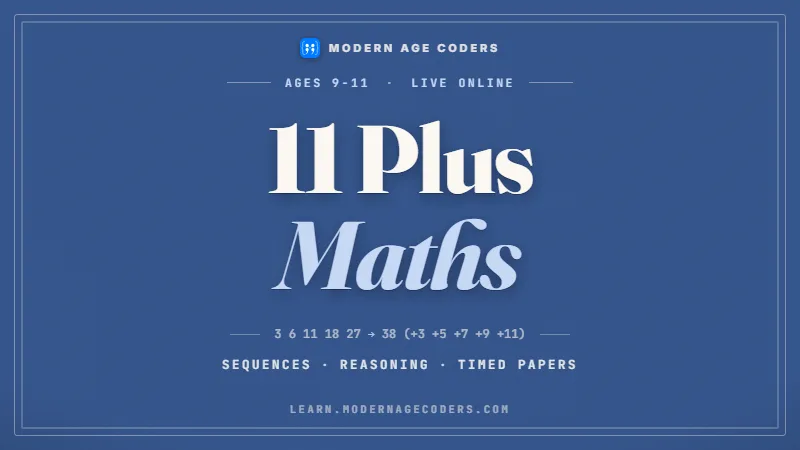
PLYM / 1
Year 5 content made quick and certain for a sixty-question paper.
Open the syllabus →
PLYM / 2
Facts that come without counting, so forty seconds is plenty.
Open the syllabus →
PLYM / 3
For children who need earlier maths settled before speed.
Open the syllabus →The Plymouth exam
Plymouth City Council points families to the schools, which publish the details. Plymouth High School for Girls' pages and Devonport High School for Girls' timeline were our main sources, read on 26 September 2026.
| Step | Date | As published |
|---|---|---|
| Registration | 27 April to noon, 31 August 2026 | With PHSG or DHSG directly; DHSB has its own registration. |
| Practice exam (optional) | July 2026 | Maths and English together; results by 17 July; not counted. |
| English | Saturday 12 September 2026 | Quest English comprehension, no writing. |
| Maths | Saturday 19 September 2026 | Quest maths paper. |
| Results | 9 October (boys) and 15 October 2026 (girls) | By post for DHSB and by email for the girls' schools, according to the council. |
Plymouth High School for Girls states the format plainly: "Our 11 Plus assessment is provided by Quest Assessments. Your child will sit an English paper and Maths paper." Then: "Maths: 40 minutes, 60 questions. Both papers are split into two sections." Its FAQ adds that the papers are multiple choice and that "Verbal reasoning, non-verbal reasoning and spatial reasoning are not tested."
The FAQ also warns that "The number of questions can vary year-on-year". Sixty is the 2026 figure, not a promise for 2027.
The schools run an optional practice exam in July, before the real tests, "to familiarise themselves with the test and exam venues". Its result does not count towards anything. For a child who has never sat a formal paper, that is a genuinely useful rehearsal, and it is the schools' own.
Devonport High School for Boys adds a creative writing task and says it cannot share the Quest maths familiarisation paper. Places are allocated under Plymouth City Council's coordinated scheme and each school's published criteria; we stay out of that.
Sources: Plymouth City Council, 11 Plus and school admissions parent's guide; Plymouth High School for Girls, the 11 Plus examination process, FAQ and timeline; Devonport High School for Girls, the application process; Devonport High School for Boys, 11+ familiarisation. Modern Age Coders has no connection with any Plymouth school, Quest Assessments or the council.
A Saturday for maths
Most 11 plus tests fold maths into a paper with other subjects. Plymouth gives it a day of its own, which changes how a child should prepare.
Sixty questions in forty minutes is an average of forty seconds a question. Nobody writes a four-step problem for a forty-second slot. The questions must mostly be short and direct: one idea, one calculation, one answer to choose.
That rewards secure recall and quick recognition. A child who has to work out 8 × 7, or count squares to find a reflected point, spends their forty seconds on the mechanics. A child who simply knows does the question in fifteen and banks the rest.
The schools' note to tutors asks for "Deep comprehension of Year 5 English and Maths topics", "Confident application of skills in unfamiliar contexts" and "Development of reasoning and problem-solving abilities within the Year 5 framework for mathematics".
We read that as depth within Year 5, not breadth beyond it. So our lessons go deep into each Year 5 topic, and make the common questions on it fast, rather than straying into Year 6.
Because maths sits on its own Saturday, a child's maths is not affected by how the English went a week earlier, for better or worse. We tell children that explicitly: the maths day is a fresh start. Short practice sessions in the week between help keep it warm without adding pressure.
The lesson
The Year 5 curriculum asks children to "identify, describe and represent the position of a shape following a reflection or translation, using the appropriate language, and know that the shape has not changed". These are ideal forty-second questions.
| Move | Our question | Answer and the idea |
|---|---|---|
| Translation | The point (2, 3) moves 4 right and 1 down. Where is it now? | (6, 2): add 4 across, take 1 up |
| Reflection, vertical line | Reflect (4, 5) in the line x = 6. | (8, 5): 2 squares left of the line becomes 2 squares right |
| Reflection, horizontal line | Reflect (4, 1) in the line y = 3. | (4, 5): 2 below the line becomes 2 above |
| A whole shape | A square with corners (1, 1), (3, 1), (3, 3), (1, 3) moves 5 right. Where are its corners? | (6, 1), (8, 1), (8, 3), (6, 3); same size, same shape |
| What changes? | After a reflection, which changes: the size, the shape, or the way it faces? | Only the way it faces |
The curriculum's guidance keeps Year 5 reflections in lines parallel to the axes, on a first-quadrant grid. That makes every reflection a counting job: how far is the point from the mirror line, and put it the same distance on the other side.
The trap is counting from the wrong place. Reflecting (4, 5) in x = 6, some children count six squares on from the point and write (10, 5); others leave it where it is. Asking "how far from the line?" first fixes both: two squares away, so two squares the other side.
Translations go wrong through direction words. "4 right and 1 down" changes the first coordinate by 4 and the second by 1, in that order. Children who move up instead of down land on (6, 4) instead of (6, 2), a likely wrong option on a multiple-choice paper.
The last row is the idea the curriculum insists on: the shape "has not changed". A translated or reflected shape keeps its size and angles. Knowing that lets a child reject any option where a moved square has become a rectangle.
Source: national curriculum in England, mathematics, Year 5 geometry, position and direction (statutory requirement and guidance). The questions are our own.
Our approach
A forty-second average invites the wrong kind of practice. Here is what we do instead.
Each Year 5 topic taught until a child can explain it, as the schools ask, before any speed work.
Short sets of one-idea questions, so a child sees at once what a question needs.
Timed sections that build towards the forty-minute paper, with steady accuracy as the goal.
We do not reproduce Quest material, and DHSB says it cannot share its maths familiarisation paper. Our questions are written for the Year 5 curriculum and the published format: multiple choice, two sections, around sixty questions.
The July practice exam run by the schools is the right rehearsal of the real room and papers. We encourage families to use it.
We do not teach English comprehension or the DHSB creative writing task. Families should prepare those separately.
We also do not comment on how places are allocated between the schools. The council and the schools publish those rules.
Plymouth's three schools
Plymouth City Council names the three grammar schools. We list them only to show which exam this page covers.
| Grammar school | Papers sat |
|---|---|
| Devonport High School for Boys | Quest papers plus a creative writing task |
| Devonport High School for Girls | Quest English and maths papers |
| Plymouth High School for Girls | Quest English and maths papers |
Lessons are live on video, so a child in Plympton, Plymstock, Saltash or Ivybridge is taught the same way, in groups of five to ten matched by level.
For coding in the city, see our Plymouth coding page.
The girls' schools ask families not to register at both, and to register directly on one school's website. The boys' school has its own process.
We have no connection with any of these schools, Quest Assessments or Plymouth City Council, and we do not advise on applications or places.
Sources: Plymouth City Council, 11 Plus; PHSG and DHSG timelines for 2027 entry.
Towards September 2027
For today's Year 5, registration should open in spring 2027 and the maths Saturday fall in September of Year 6. The schools publish exact dates.
| When | Stage | You will see |
|---|---|---|
| Autumn, Year 5 | 1. Deep number work | Explains why methods work, not just how |
| Winter, Year 5 | 2. Geometry and measures | Reflections, translations and conversions done confidently |
| Spring, Year 5 | 3. Recognition | Sees what a one-idea question needs within seconds |
| July practice exam and summer | 4. Forty minutes | Sixty-question practice finished calmly and accurately |
Recognition and speed build on depth. If time is short, we secure the most common Year 5 topics first.
At the free lesson we will say honestly what can be done.
Coordinates and transformations run all the way to GCSE. Some pupils continue with maths through coding and program their own reflections.
Children who enjoyed the grids can look for geometry puzzles in the UKMT challenges on our competitions calendar.
Courses
Grouped by stage, each linked to its syllabus.
PLM / A
Year 5 maths, deep and quick.
Open the syllabusPLM / B
Recall for forty-second questions.
Open the syllabusPLM / C
Foundations before speed.
Open the syllabusPLM / D
For younger siblings.
Open the syllabusPLM / E
All four quadrants and beyond.
Open the syllabusPLM / F
Transformations to GCSE level.
Open the syllabusPLM / G
Harder puzzles for keen pupils.
Open the syllabusPLM / H
Translate and reflect shapes in Python.
Open the syllabusPLM / I
Coordinates in a visual language.
Open the syllabusPLM / J
The first typed language.
Open the syllabusPLM / K
Speed on solid ground.
Open the syllabusPLM / L
Geometry and data at work.
Open the syllabusLesson times
Our teachers work from India and teach live. Plymouth primary pupils get after-school or weekend-morning lessons at fixed UK times, and we move our own hours when the clocks go forward or back.
Straight after school
Before the evening fills up.
Saturday or Sunday, early
Good practice for a Saturday exam.
Summer holidays
Useful around the July practice exam.
The same person every week, tracking progress.
What is secure and what is not, in a few lines.
Matched on level, not postcode.
No Quest material copied.
For a gap that needs close work.
No English or writing coaching; no admissions advice.
Student work
Our students later build and publish real things; these four started with the same coordinate grids a Year 5 child meets. Browse others on the student labs page.
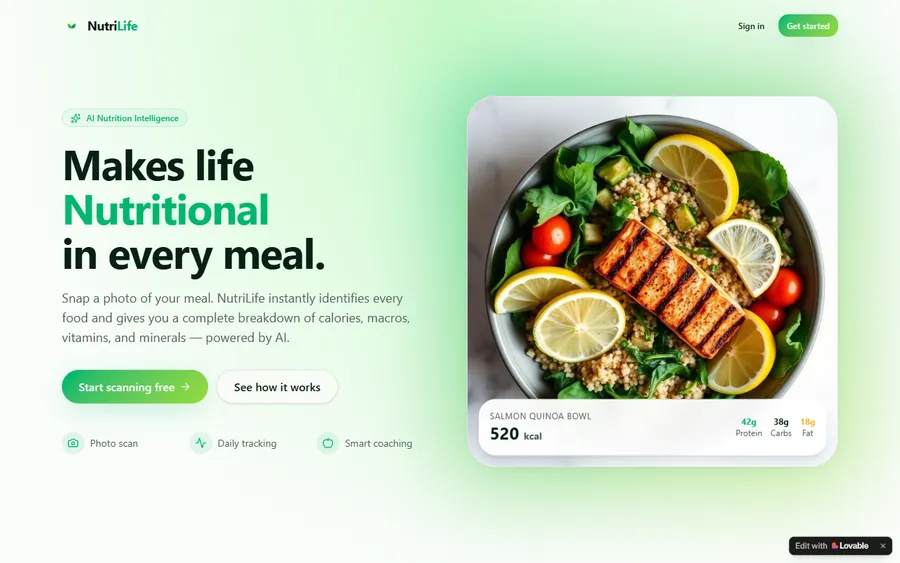
AI and ML
An AI nutrition coach that reads what you eat and works you toward a target.
AI and ML
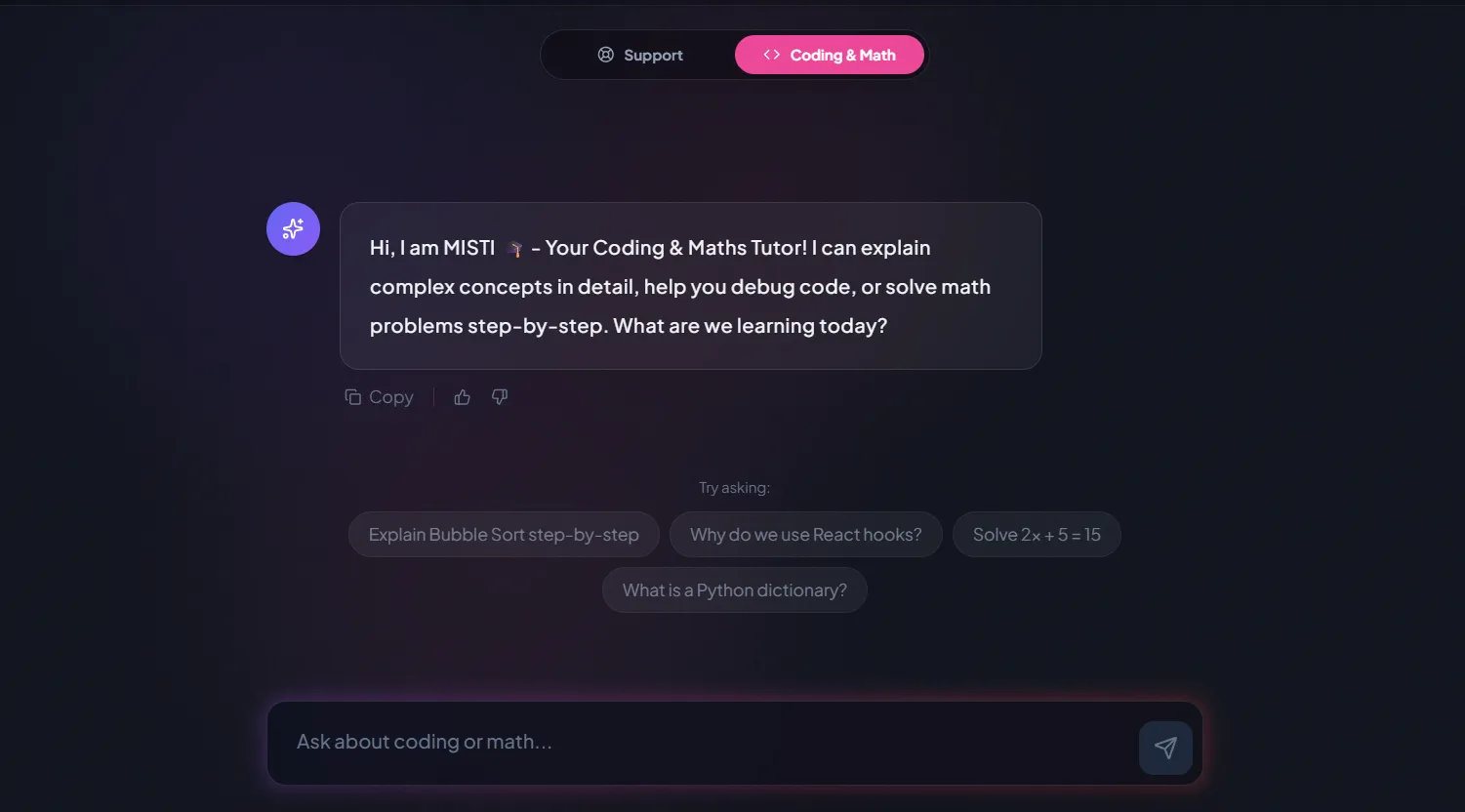
A chatbot that answers mathematics and programming questions, built and deployed by a student.

AI and ML
An assistant that helps a young person recognise unsafe situations online.
Web app
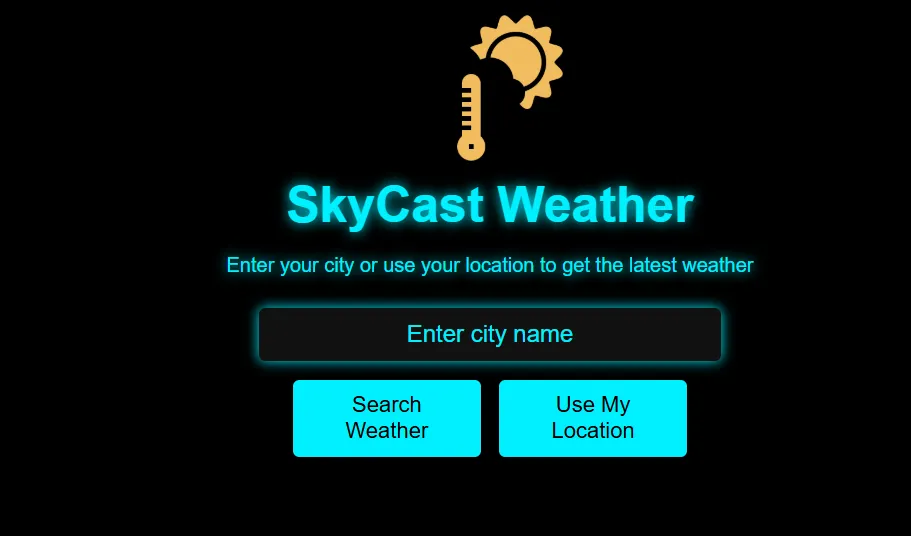
A weather forecasting site with live conditions for any location.
Fees
Every family outside India pays one monthly price in US dollars. No sign-up cost; stop whenever you want.
Group batch
USD 100
a month, billed in US dollars
One to one
USD 150
a month, billed in US dollars
What families say
Parents' Google reviews, quoted exactly.
★★★★★
"The one step solution for my son. Modern Age Coders make learning coding so simple that kids love it. The teachers explain complex concepts clearly with practical exercises and interactive content."
Ria Mukherjee
Parent
★★★★★
"Modern Age Coders has been a game-changer for me. I struggled to grasp IT concepts and coding before joining, but their classes transformed everything. I can now confidently write complex programs with ease."
Samriddha Mondal
Student
★★★★★
"One of the most wonderful education centres out there. Education is not limited to school syllabus but focuses on skill development."
Vansh Agarwal
Student
★★★★★
"My child Dhairya is really enjoying the Modern Age Coders classes. This is his first online class and he eagerly looks forward to it. I can already see his improvement, and the teachers are very cooperative."
Sonam Oswal
Parent of Dhairya
★★★★★
"Modern Age Coders have wonderful teachers who teach in a clear, easy and practical way. The teacher boosts students' confidence and inspires them to learn without hesitation."
Sonu Goyal
Parent
★★★★★
"I highly recommend this computer coding class! The teachers are incredibly knowledgeable and passionate about coding."
Ritu Kedia
Parent
Plymouth questions
Plymouth High School for Girls says children sit an English paper and a maths paper from Quest Assessments, both multiple choice. Verbal, non-verbal and spatial reasoning are not tested. DHSB adds a creative writing task.
In 2026 it was 40 minutes with 60 questions, in two sections. The school says the number of questions can vary from year to year.
Yes. For 2027 entry, English was sat on Saturday 12 September 2026 and maths on Saturday 19 September 2026.
The schools say no content beyond Year 5 of the National Curriculum is assessed, and that the focus is on full understanding and application of Year 5 content.
Yes. The schools run an optional practice exam in July, with maths and English together. Its result does not count towards allocation.
Dates for 2028 entry had not been published when we checked on 26 September 2026. The PHSG FAQ says registration normally opens in mid or late April and closes at noon on 31 August.
DHSB says it is unable to share the Quest familiarisation maths paper. Quest publishes general guidance. We write our own questions.
No. The English paper and the boys' school writing task fall outside our lessons, as do questions about applications and places.
Devonport High School for Boys, Devonport High School for Girls and Plymouth High School for Girls.
We do not charge for the trial. Continuing costs USD 100 per month in a group of five to ten, or USD 150 per month taught individually.
Related
Coding in Plymouth, the Torbay test up the coast, and our national page.
Programming for the city's children.
Torbay's grammar schools, a short way along the coast.
The national overview.
For families across the Tamar.
Maths challenges, dated.
Every nation, city and borough we have written about.
Start here
Mention the school year and whether speed or accuracy is the worry. The trial is taught like any other lesson, and you hear afterwards exactly what the teacher noticed.
Looking before you book? Syllabuses sit on every course page, a typical session is described on how we teach, and the roadmap charts the years after the 11 plus.
WhatsApp us · +91 91233 66161 · contact@modernagecoders.com
Send a WhatsApp for the fastest answer. The team and the phone line are Indian; nobody works from an office in Plymouth or anywhere in England.