RDM / I
11 plus maths preparation
Year 5 maths, paced for a July or September test.
Open the syllabusReading · Kendrick School and Reading School entrance tests · Live online, small groups or one to one
Reading has two grammar schools, and they do not share a test, a provider or even a season. Kendrick School, for girls, sets two one-hour GL Assessment papers in September of Year 6. Reading School, for boys, uses a test from Future Stories Community Enterprise (FSCE), and for 2027 entry its main sitting was on Thursday 16 July 2026, in the final weeks of Year 5. Reading School also says a candidate must be "of the standard" in each element of the test: a high score in one area does not rescue a low one in another. Put those two facts together and the maths plan for a Reading School applicant has to be finished earlier, and has to stand on its own, than almost anywhere else in England. This page sets out what both schools publish, and then teaches a Year 5 topic that FSCE names explicitly: volume and the three-dimensional shapes behind it.
Maths only · We do not teach English, reasoning or creative tasks · No link with either school
In short
Brighter Futures for Children, which runs children's services for Reading, says the town has two selective state grammar schools, Reading School (boys) and Kendrick School (girls), and that families register with each school directly. Kendrick's test is two papers of about an hour, marked and standardised by GL Assessment, covering verbal and non-verbal reasoning, English and mathematics, with no creative writing; for 2027 entry it was on Friday 18 September 2026. Reading School uses an FSCE test with multiple-choice and written questions; for 2027 entry its main sitting was on Thursday 16 July 2026, and the school says candidates must reach the standard in each element. FSCE draws on Key Stage 2 up to the end of Year 5, with no calculators. We teach that maths, live online, on a timetable that works for a July test. A trial lesson is on the house; ongoing tuition is billed monthly at USD 100 for a small group or USD 150 for individual lessons.
Where to start in Reading
For a Reading School applicant, start by spring of Year 5 at the latest. For Kendrick, the summer is still usable.
READING / 01
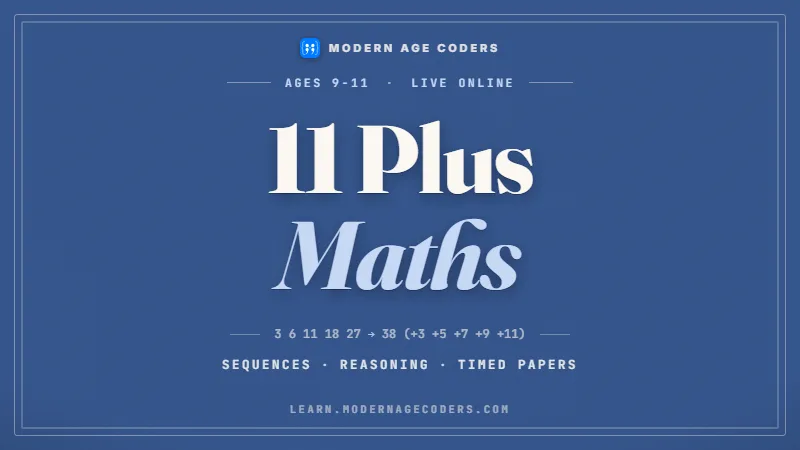
The whole Year 5 curriculum, paced to be secure by July, including the measures and shape FSCE names.
Open the syllabus →
READING / 02
For Year 4 children who need number and shape settled before the Year 5 work begins.
Open the syllabus →
READING / 03
FSCE tests maths "through written and mental methods of calculation (no calculators)".
Open the syllabus →Two schools, two tests
Each school sets and publishes its own arrangements. Read on 26 September 2026, together with Brighter Futures for Children's admissions guidance.
| Kendrick School | Reading School | |
|---|---|---|
| Provider | GL Assessment | Future Stories Community Enterprise (FSCE) |
| Registration | 1 May to midnight, 1 July 2026 | 27 March to midnight, 17 May 2026 |
| Main test date | Friday 18 September 2026 (Year 6) | Thursday 16 July 2026 (Year 5) |
| Papers | Two, about an hour each | Multiple-choice and written questions, plus a creativity element |
| Maths | Assessed alongside English and reasoning | Among the subjects FSCE may include |
| How results work | Aggregate of both age-standardised papers | Must be "of the standard" in each element |
Kendrick describes "two test papers, each approximately one hour, with questions covering a combination of verbal and non-verbal reasoning, English and mathematics". GL Assessment marks and standardises them, the layout is multiple choice, and "There is no creative writing element". Ranking is by the aggregate of the two age-standardised scores, and a qualifying score is set to two decimal places.
Kendrick's guide warns that its GL familiarisation material "is NOT definitive", and its what-to-bring list rules out rulers, calculators, protractors, compasses and scrap paper. Unusually, it also says wrist watches must not be worn; clocks are displayed in the rooms.
Reading School uses FSCE's test, which mixes multiple-choice and written response questions. FSCE says subjects "may include" mathematics among several, and its familiarisation guide has a full section on what it looks for in maths. The school notes that "there are no commercially available practice test papers for the FSCE Ltd tests".
The rule that matters most for maths is Reading School's: "To be eligible, a candidate must be 'of the standard' in each of the elements of the entrance test. They may score highly on one area but if they perform poorly on another, they will not be classed as eligible." Places and priorities after that are for each school to explain.
Sources: Brighter Futures for Children, secondary admissions; Kendrick School, admission into Year 7 in September 2027, with its admissions procedure summary and guide; Reading School, Year 7 entry, with FSCE's information and familiarisation guide. Modern Age Coders has no connection with either school, FSCE, GL Assessment or Brighter Futures for Children.
A test before Year 5 ends
Most 11 plus tests fall in September of Year 6, after a summer of practice. Reading School's main sitting this cycle came in July of Year 5.
FSCE's guide says its content comes "from KS2 subjects taught up to and including the Year 5 programme of study". For a test in mid-July, that means the whole of Year 5 has to be secure while Year 5 is still going on. Topics that a primary school teaches in the summer term may only just have been met.
That is the reverse of the problem in many areas, where a September test leaves families wondering whether Year 6 content will appear. At Reading School the question is whether the last of Year 5 will be ready in time.
For a Reading School applicant, we plan to finish the Year 5 maths curriculum by the spring half term, leaving the summer term for mixed practice and written answers. That means starting Year 5 topics in the autumn, or earlier for children who are ready.
Because each element must reach the standard, we do not let maths be the weak one. A child who is excellent at English and adequate at maths is, under this rule, at risk in a way an aggregate score would hide.
Kendrick applicants have the usual September rhythm, with the summer holiday for practice. Families applying to both schools, which happens with siblings, are effectively preparing for two tests three months apart. The maths underneath is the same; only the calendar differs. For children now in Year 5, both schools will publish their own 2028-entry dates, and we do not assume them.
The lesson
FSCE lists measuring, estimating and comparing "perimeters, volumes, areas and capacity" and geometry with 2D and 3D shapes. Year 5 is where volume is first built from cubes.
| Year 5 idea | Our question | Answer and reasoning |
|---|---|---|
| Volume by counting cubes | A cuboid is built from 1 cm cubes: 4 cubes long, 3 wide, 2 high. What is its volume? | 24 cm³: 4 × 3 = 12 in one layer, two layers |
| Same volume, different shape | Which cuboid has more cubes: 6 by 2 by 2, or 4 by 3 by 2? | Both have 24 cubes |
| Cuboids from pictures | A drawing shows a cuboid with 5 cubes visible along the front edge, 2 along the side and 3 high. How many cubes if it is solid? | 30: the hidden cubes count too |
| Capacity | A tank 10 cm by 10 cm by 10 cm holds how many millilitres? | 1,000 ml: 1,000 cm³ is one litre |
| Estimating | Is a shoebox nearer 5 cm³, 5,000 cm³ or 5 m³? | About 5,000 cm³: roughly 30 by 20 by 10 cm |
| Cube numbers | A cube has edges of 3 cm. How many 1 cm cubes make it? | 27: 3 × 3 × 3, a cube number |
The Year 5 curriculum asks pupils to "identify 3-D shapes, including cubes and other cuboids, from 2-D representations" and to "estimate volume [for example, using 1 cm³ blocks to build cuboids (including cubes)] and capacity". Formal volume formulae arrive in Year 6. So the Year 5 way is layers: count one layer, multiply by the number of layers.
That matters for a test pitched at the end of Year 5. A child who has only ever been told "length times width times height" may get the right number without understanding it, and fail the first question that shows a picture rather than giving three numbers.
The "hidden cubes" row is the classic trap. In a drawing of a solid cuboid, some cubes are behind others and cannot be seen. Children who count only what they can see always undercount. Thinking in layers, a front face times the depth, fixes it.
The capacity row connects two units children often keep apart: 1 cm³ holds 1 ml, so 1,000 cm³ is a litre. It is one of the most useful single facts in primary measures, and it turns up in science too.
Sources: national curriculum in England, mathematics, Year 5 geometry and measurement (statutory requirements); FSCE Familiarisation Guide for Parents, maths section, published by Reading School. The questions are our own.
Formats
The two tests ask for answers in different ways. Preparation has to cover both.
GL multiple choice on an answer sheet, maths mixed with English and reasoning across two papers. We practise short, varied sets with a clock on the wall and no watch, as Kendrick requires.
FSCE mixes multiple-choice with written responses. For maths we practise both: choosing from options, and writing a full answer with no options to check against.
No calculator at either. FSCE says its maths uses "written and mental methods of calculation", so compact written methods and quick mental arithmetic carry both tests.
We do not reproduce GL familiarisation booklets or FSCE guide material. Our questions are our own, written to the Year 5 curriculum and to the formats the schools describe. Kendrick and Reading School both warn that familiarisation material is not definitive, which is one more reason to prepare the content rather than a paper style.
Reading School's note that there are no commercial FSCE practice papers is worth repeating to families who have been offered them. Anything sold as an FSCE paper is someone else's imitation.
Reading School's test also includes creative and non-maths elements, and Kendrick's includes English and reasoning. We teach only the maths. Under Reading School's each-element rule, the other elements need their own preparation, and we say so plainly at the start.
We give no advice on catchment, designated areas or places. Those are published by the schools and by Brighter Futures for Children.
Reading and around it
Both schools are in Reading itself, yet their tests are entirely separate, with separate registration, dates and providers.
Some families consider both schools for different children, and some also look at the Slough Consortium schools to the east, which set a different test again. We teach the same curriculum for all of them, adjusted to each calendar.
Lessons are live on video, so a child in Caversham, Earley or Tilehurst is taught alongside children at the same level of Year 5 maths from across the country, five to ten in a group.
For the Slough schools' test, see our Slough 11 plus page. For Buckinghamshire's county test, see the Buckinghamshire page.
We have no connection with Kendrick School, Reading School, FSCE, GL Assessment or Brighter Futures for Children.
Working back from July
Planned for a Reading School test in July of Year 5; Kendrick applicants have the summer as well.
| When | Stage | You will see |
|---|---|---|
| Year 4 | 1. Foundations | Tables, place value and the four operations secure |
| Autumn, Year 5 | 2. Year 5 number and fractions | Large numbers, primes, fractions and decimals done without calculators |
| Spring, Year 5 | 3. Measures and shape | Volume by layers, 3-D shapes from pictures, area and perimeter |
| Summer term, Year 5 | 4. Both formats | Multiple-choice and written maths answered accurately under time |
For a July test, a spring start is tight but workable if the child is already secure in number. For Kendrick, a later start is more forgiving.
We will tell you honestly at the free lesson what is realistic.
Volume and shape grow into secondary geometry and science. Many children continue with maths through coding, building 3-D shapes in code.
Others take on the national challenges on our competitions calendar.
Our courses
Grouped by stage; every card opens a full syllabus.
RDM / I
Year 5 maths, paced for a July or September test.
Open the syllabusRDM / II
Number and shape foundations first.
Open the syllabusRDM / III
Calculation without a calculator.
Open the syllabusRDM / IV
A tactile route to confident arithmetic.
Open the syllabusRDM / V
Volume formulae, algebra and proof.
Open the syllabusRDM / VI
Taught to AQA, Edexcel and OCR.
Open the syllabusRDM / VII
Spatial and number puzzles that stretch.
Open the syllabusRDM / VIII
Compute volumes; draw nets.
Open the syllabusRDM / IX
Visual programming with real logic.
Open the syllabusRDM / X
When blocks feel too easy, real syntax.
Open the syllabusRDM / XI
Clever shortcuts, once the standard methods are fluent.
Open the syllabusRDM / XII
Mathematics in working software.
Open the syllabusLesson times
We teach live from India, and for primary children we keep to early evenings and weekend mornings by the UK clock. When Britain changes its clocks, our teachers move their hours.
Weekdays, just after school
Before homework and tea.
Weekend mornings
A fresh hour at the start of the day.
School holidays
Short extra sessions, useful before a July test.
The same person weekly, who learns how your child thinks.
Brief reports that include what is not working yet.
Matched by level for the right pace.
Nothing from GL or FSCE is reproduced.
For a child racing a July deadline.
No English, reasoning or creativity coaching; no admissions advice.
Student work
Four projects built and published by students at our school, all on foundations laid in primary maths. See more on the student labs page.
AI and ML
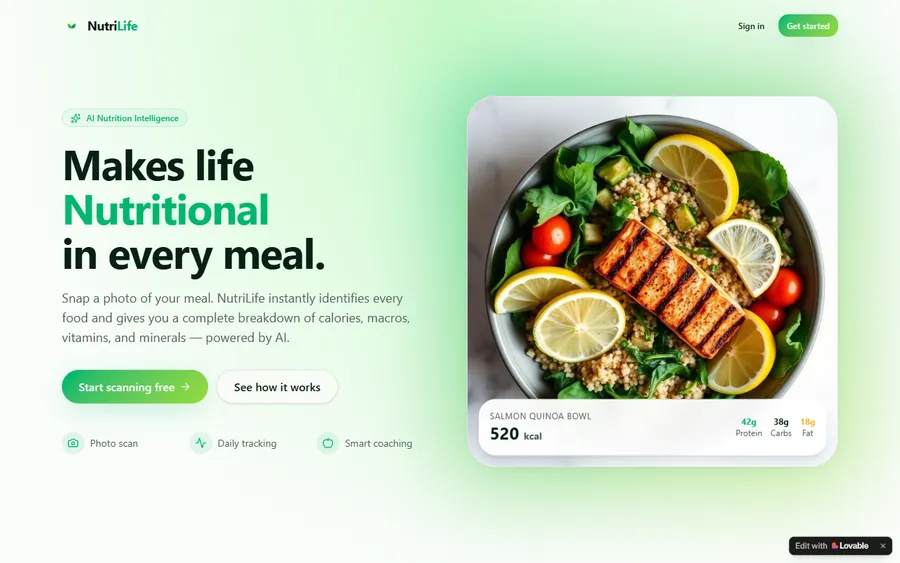
An AI nutrition coach that reads what you eat and works you toward a target.
AI and ML
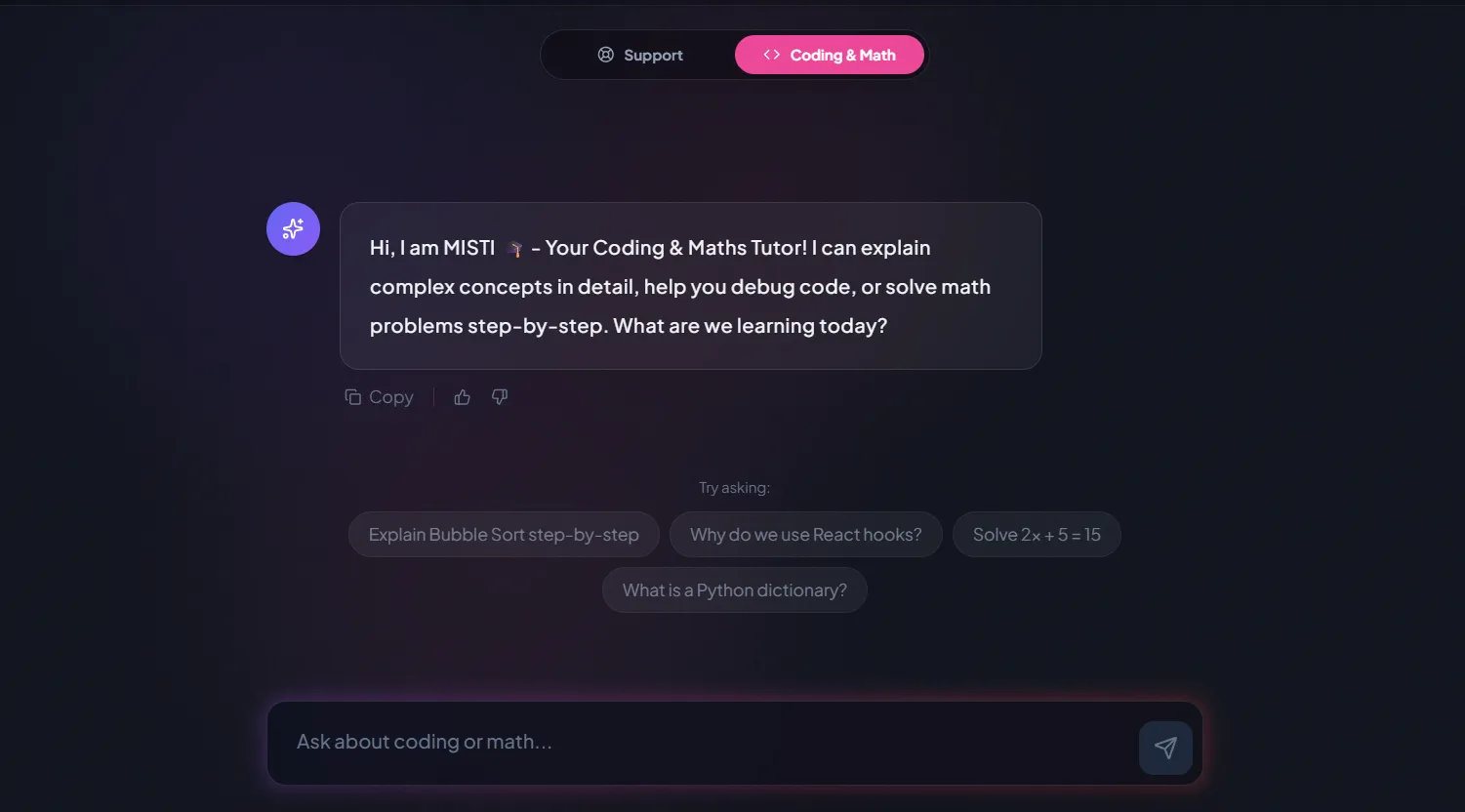
A chatbot that answers mathematics and programming questions, built and deployed by a student.

AI and ML
An assistant that helps a young person recognise unsafe situations online.
Web app
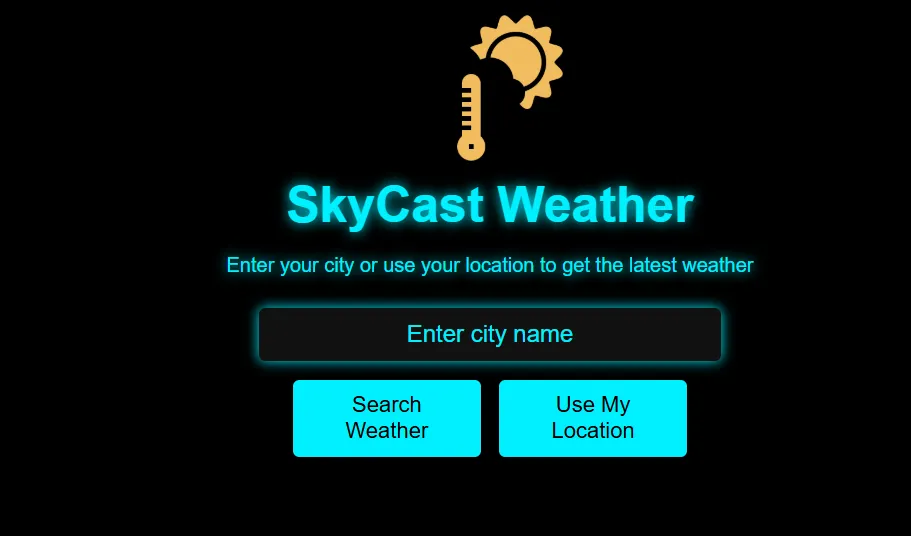
A weather forecasting site with live conditions for any location.
Fees
Families outside India all pay the same US dollar rate, month by month. There is nothing to join and nothing to sign.
Free first class
USD 0
no card required
Group batch
USD 100
a month, billed in US dollars
One to one
USD 150
a month, billed in US dollars
What families say
Parents on Google, word for word.
★★★★★
"The one step solution for my son. Modern Age Coders make learning coding so simple that kids love it. The teachers explain complex concepts clearly with practical exercises and interactive content."
Ria Mukherjee
Parent
★★★★★
"Modern Age Coders has been a game-changer for me. I struggled to grasp IT concepts and coding before joining, but their classes transformed everything. I can now confidently write complex programs with ease."
Samriddha Mondal
Student
★★★★★
"One of the most wonderful education centres out there. Education is not limited to school syllabus but focuses on skill development."
Vansh Agarwal
Student
★★★★★
"My child Dhairya is really enjoying the Modern Age Coders classes. This is his first online class and he eagerly looks forward to it. I can already see his improvement, and the teachers are very cooperative."
Sonam Oswal
Parent of Dhairya
★★★★★
"Modern Age Coders have wonderful teachers who teach in a clear, easy and practical way. The teacher boosts students' confidence and inspires them to learn without hesitation."
Sonu Goyal
Parent
★★★★★
"I highly recommend this computer coding class! The teachers are incredibly knowledgeable and passionate about coding."
Ritu Kedia
Parent
Reading questions
No. Kendrick School uses GL Assessment papers; Reading School uses a test from Future Stories Community Enterprise (FSCE). They have different dates, formats and rules.
For September 2027 entry, the main sitting for day and boarding applicants was on Thursday 16 July 2026, in Year 5. Dates for 2028 entry are published by the school.
For September 2027 entry it was on Friday 18 September 2026, with registration from 1 May to 1 July 2026. Dates for 2028 entry are published by the school.
Kendrick says its two papers of about an hour cover verbal and non-verbal reasoning, English and mathematics, marked and standardised by GL Assessment, with no creative writing.
FSCE says its content comes from Key Stage 2 up to and including the Year 5 programme of study, with written and mental calculation and no calculators. Its guide lists topics from large numbers and fractions to measures, volume and shape.
Reading School says a candidate must reach the standard in every element of its test; a high score in one cannot make up for a poor score in another. So maths needs to be secure on its own.
Reading School says there are no commercially available practice test papers for the FSCE tests. FSCE publishes familiarisation guides instead.
No. Kendrick's guide says wrist watches and digital watches must not be worn, and that clocks are displayed in the rooms.
No. Our lessons cover the mathematics; the English, reasoning and creativity elements, and every question about places or catchment, lie outside what we do.
The first lesson is free of charge. Continuing costs USD 100 a month for a group place or USD 150 a month one to one, and there is no minimum term.
Related
Neighbouring selective areas, our national 11 plus page, and coding for UK children.
The Slough Consortium test, a short drive east.
A county test with published weightings.
The general picture of 11 plus maths in England.
First steps in programming for primary pupils.
Maths challenges through the school year.
Every UK area we cover.
Start here
Tell us which school, your child's year, and how maths is going. We teach a proper lesson and then tell you straight what we saw and what the calendar allows.
Weighing things up? Our catalogue carries a syllabus for each course, the teaching page describes a typical lesson, and the roadmap sets out a route from primary maths into programming.
WhatsApp us · +91 91233 66161 · contact@modernagecoders.com
Messages on WhatsApp are answered quickest. The school behind this page is Indian, as is the phone number, and there are no premises in Berkshire or anywhere in the UK.