GLM / 1
11 plus maths, Gloucestershire
Year 5 maths in time for July.
Open the syllabusGloucestershire · Grammar Schools Entrance Test maths · Live online, small groups or one to one
If your child is in Year 5 this year, the Gloucestershire 11 plus has just changed under your feet. The seven grammar schools, known as the G7, have appointed a new provider, Future Stories Community Enterprise (FSCE), and moved the test "from September of Year 6 to the latter part of the summer term of Year 5". The date for this cohort is Saturday 3 July 2027. Registration runs from 8 February to 19 March 2027. The format changes too: three papers, and one of them, the Beacon Paper, asks for English and maths answered in "Short Written Answers". So a child has less time than older siblings had, must be ready before Year 5 ends, and will need to write maths answers exactly rather than pick them. This page sets out what the schools and FSCE publish, and then teaches a Year 5 topic where exact written answers matter most: decimals.
Maths only · We do not teach English or the Compass subjects · No connection with the G7 or FSCE
In short
Gloucestershire's seven grammar schools, Pate's, Denmark Road, Ribston Hall, Sir Thomas Rich's, The Crypt, Marling and Stroud High, share one entrance test that the schools run themselves. For September 2027 entry it was a GL Assessment test on Saturday 12 September 2026: two multiple-choice papers of about an hour, one of them non-verbal reasoning and maths. For children now in Year 5, the test changes. FSCE takes over, the test moves to Saturday 3 July 2027, registration runs from 8 February to 19 March 2027, and there are three papers: the Adventure Paper (English and maths, multiple choice), the Beacon Paper (English and maths, short written answers) and the Compass Paper (any school subject). The schools say maths and English form the main part. We teach the maths, live online, in time for July. There is a free first lesson; after that we charge USD 100 per month for a group place or USD 150 per month one to one.
Starting in Gloucestershire
With the test in July of Year 5, the time to start is this autumn. Pick by where your child is now.
GLOS / A
The Year 5 curriculum paced to finish before the summer term, for multiple-choice and written answers.
Open the syllabus →
GLOS / B
For children whose earlier maths needs securing quickly before Year 5 topics.
Open the syllabus →
GLOS / C
FSCE tests maths "through written and mental methods of calculation (no calculators)".
Open the syllabus →What has changed
Pate's Grammar School published the G7's announcement; FSCE and Pate's publish the details for 2028 entry. Gloucestershire County Council describes the arrangements. All read on 26 September 2026.
| September 2027 entry | September 2028 entry (today's Year 5) | |
|---|---|---|
| Provider | GL Assessment | Future Stories Community Enterprise (FSCE) |
| Registration | Noon 18 May to noon 26 June 2026 | Noon Monday 8 February to noon Friday 19 March 2027 |
| Test date | Saturday 12 September 2026 (Year 6) | Saturday 3 July 2027 (Year 5) |
| Papers | Two, about an hour each, multiple choice only | Three: Adventure, Beacon, Compass |
| Where maths sits | With non-verbal reasoning | In Adventure (multiple choice) and Beacon (short written answers) |
| Results | Mid-October 2026 | October 2027 |
The G7 announcement, published by Pate's, says the schools "have appointed Future Stories Community Enterprise (FSCE) as their new admissions test provider for entry to Year 7 from 2028 onwards" and have decided to "move the test date from September of Year 6 to the latter part of the summer term of Year 5". The reasons given: it "will reduce pressure on pupils beginning Year 6, and provide families with earlier results".
Pate's 2028 page puts it plainly: "If your child is currently in Year 5 and wishes to apply for a place at a Gloucestershire Grammar School, they must take this test." It lists the three papers and says "Maths and English form the main part of the assessment".
FSCE says its test focuses "solely on areas of the KS2 National Curriculum that have been taught up to the end of Year 5", and that in doing so it "aims to remove any need for tutoring". Its FAQ describes three separate papers, each typically 45 to 60 minutes, which might be sat in any order.
The county council notes that registration and administration are "all carried out by the Gloucestershire grammar schools themselves". Qualifying scores and admissions are for the schools; we do not advise on them.
Sources: Gloucestershire County Council, grammar schools; Pate's Grammar School: Year 7 entry pages for September 2027 and 2028, the 2027 FAQ and key dates, and the G7 announcement of the new provider; FSCE's information sheet and FAQ for Gloucestershire. Modern Age Coders has no connection with the G7 schools, FSCE, GL Assessment or the council.
Three papers
Pate's lists the three FSCE papers for 2028 entry. Two of them contain maths, answered in two different ways.
"English and Maths, with Multiple Choice Answer options." Maths here looks like most 11 plus maths: choose the right option and mark it.
"English and Maths, where you respond with Short Written Answers." No options. The child writes the answer, so its exact form matters.
Any school subject, from art to science, "with Multiple Choice Answer options". Maths may appear, but it is not the focus.
The Beacon Paper is the real change for maths. On a multiple-choice paper, a child who works out 2.5 when the answer is 0.25 can often spot that 2.5 is not offered and look again. On a short-written-answer paper, 2.5 simply goes down, and it is wrong.
Short written answers reward exactness: the right number of decimal places, the right unit, the right form. Those are learnable habits, and they are most easily learned on Year 5 topics where the form of the answer carries meaning, of which decimals are the clearest.
The July date changes the timing of everything. FSCE says the content is what has been "taught up to the end of Year 5", but the test is sat before Year 5 ends. Topics that a school teaches late in the summer term may only just have been met. We plan to finish the Year 5 maths curriculum by Easter, leaving the summer term for practice in both answer styles.
Registration closes on 19 March 2027, months before the test. A family deciding in the spring still has time to prepare, but not to postpone the decision.
The lesson
Year 5 is where decimals reach thousandths. The curriculum asks children to "read, write, order and compare numbers with up to 3 decimal places" and to round and scale them.
| Skill | Our question | Answer to write |
|---|---|---|
| Order | Write 0.305, 0.35, 0.3 and 0.053 in order, smallest first. | 0.053, 0.3, 0.305, 0.35 |
| Round to 1 decimal place | Round 4.67 to one decimal place. | 4.7 |
| Round to a whole number | Round 4.67 to the nearest whole number. | 5 |
| Multiply by 100 | What is 3.45 × 100? | 345 |
| Divide by 1,000 | What is 72 ÷ 1,000? | 0.072 |
| Thousandths as fractions | Write 0.007 as a fraction. | 7/1000 |
The ordering question catches most children. 0.35 looks smaller than 0.305 because 35 is less than 305. Writing them all to three places, 0.350 and 0.305, shows the truth at once. We teach that step, pad with zeros and compare, until it is automatic.
Multiplying and dividing by 10, 100 and 1,000 is the other big source of written errors. Children who were taught to "add a zero" write 3.450 for 3.45 × 100. The idea that digits move and the decimal point stays still fixes it for good.
On a short-written-answer paper, the form of the answer is part of the answer. 0.072 and 0.72 differ by a factor of ten. 4.70 and 4.7 are the same number, but a question asking for one decimal place wants 4.7. We practise writing decimals exactly as asked, every time.
The curriculum links decimals to fractions throughout Year 5, including thousandths. A child who can move between 0.007 and 7/1000, or 0.25 and a quarter, has several routes to an answer and a way to check it.
Source: national curriculum in England, mathematics, Year 5 fractions (including decimals and percentages) and multiplication and division, statutory requirements. The questions are our own.
Our approach
FSCE says its test aims to remove any need for tutoring. We take that seriously; here is what we do and do not do.
We teach the Year 5 maths curriculum properly and early, because a July test needs it finished early. We practise answers in both styles, multiple choice for the Adventure Paper and short written answers for the Beacon Paper, on the same topics so that neither becomes a weakness.
We do not claim to know what FSCE will ask. Its guides say question types and content change year to year, and we have never seen an FSCE paper. Our questions are our own.
We do not teach English, or the other subjects the Compass Paper may draw on. Families should plan those separately, and FSCE's familiarisation guides describe what each subject looks for.
For the 2027 cycle, Pate's FAQ suggested that, beyond familiarisation material, preparing well means reading books and using mathematics regularly. That remains good advice under the new provider, and it is what our lessons are built around.
FSCE is blunter than most test providers. Its Gloucestershire FAQ asks "Should my child have a tutor to prepare for the test?" and answers "No", adding that it does not want any parent to have to pay a tutor, and that "There are NO commercial 11+ books or past papers endorsed by FSCE." We think families should hear that before they hear from us. What we offer is teaching of the Year 5 maths curriculum, which many families choose for its own sake; parents who can teach it themselves do not need us for this test. Older GL-style practice books will not match the new papers either way.
The seven schools
Gloucestershire County Council lists the seven grammar schools that share the test. We reproduce the list only to show what this page covers.
| Town | School | As described |
|---|---|---|
| Cheltenham | Pate's Grammar School | 11-18 mixed |
| Gloucester | Denmark Road High School | 11-16 girls, mixed sixth form |
| Gloucester | Ribston Hall High School | 11-16 girls, mixed sixth form |
| Gloucester | Sir Thomas Rich's School | 11-16 boys, mixed sixth form |
| Gloucester | The Crypt School | 11-18 mixed |
| Stroud | Marling School | 11-16 boys, mixed sixth form |
| Stroud | Stroud High School | 11-16 girls, mixed sixth form |
Pate's 2027 FAQ says the test is the same on the same day at all seven schools, and that families register once. We expect the same under FSCE, but the schools will confirm the 2028 arrangements.
Lessons are live on video, so a child in Tewkesbury, the Forest of Dean or the Cotswolds is taught the same way, in groups of five to ten matched by level.
For coding in the county city, see our Gloucester coding page.
We have no connection with any of the seven schools, FSCE, GL Assessment or Gloucestershire County Council, and we do not advise on applications or places.
Source: Gloucestershire County Council, grammar schools, read 26 September 2026.
Working back from 3 July 2027
Registration closes on 19 March 2027 and the test is on 3 July 2027. Everything below fits inside Year 5.
| When | Stage | Evidence |
|---|---|---|
| Autumn, Year 5 | 1. Number and place value | Numbers to a million and decimals to three places read and ordered correctly |
| Winter, Year 5 | 2. Operations and fractions | Written methods reliable; fractions and decimals linked |
| Spring, Year 5 (register by 19 March) | 3. Measures, shape, data | Remaining Year 5 topics covered by Easter |
| Summer term, Year 5 | 4. Both answer styles | Multiple-choice and short written answers, timed, accurate |
A spring start is tight for a July test. We will focus on the biggest strands first and be honest about what fits.
At the free lesson we will give you our frank view.
Results come in October 2027, and Year 6 continues without an autumn test. Many children use that year for maths through coding or deeper maths.
Some try the challenges on our competitions calendar.
Courses
By stage, each linked to its syllabus.
GLM / 1
Year 5 maths in time for July.
Open the syllabusGLM / 2
Fast recall, no calculator.
Open the syllabusGLM / 3
Years 1 to 5 made secure.
Open the syllabusGLM / 4
Place value you can see.
Open the syllabusGLM / 5
Decimals, ratio and algebra.
Open the syllabusGLM / 6
Foundation and higher.
Open the syllabusGLM / 7
For children who want more.
Open the syllabusGLM / 8
Floating-point numbers, explored.
Open the syllabusGLM / 9
Blocks, logic and first games.
Open the syllabusGLM / 10
The first typed language.
Open the syllabusGLM / 11
Speed methods for fluent pupils.
Open the syllabusGLM / 12
Maths in machine learning.
Open the syllabusTimetable
Lessons are taught live from India. We schedule Gloucestershire primary pupils in the early evening or on weekend mornings, fixed in UK time, and absorb the spring and autumn clock changes ourselves.
After school, weekdays
Before the evening gets late.
Weekend mornings
A fresh start.
Easter holidays
Extra sessions before the summer term.
The same teacher all year.
Short, honest notes after lessons.
Matched by level.
No FSCE or GL material copied.
When time before July is short.
No English or Compass coaching; no admissions advice.
Student work
Four projects built by students at our school, grounded in primary maths like decimals and place value. More on the student labs page.
AI and ML
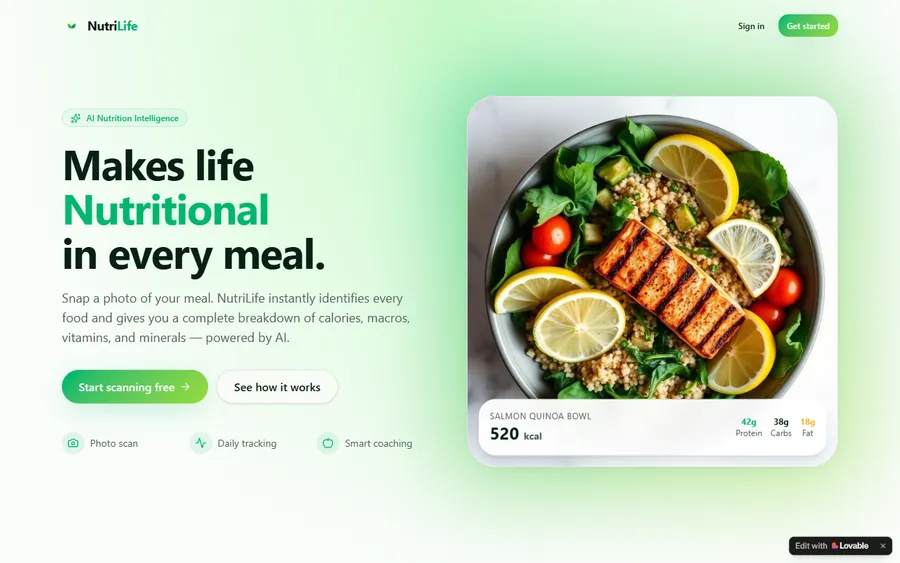
An AI nutrition coach that reads what you eat and works you toward a target.
AI and ML
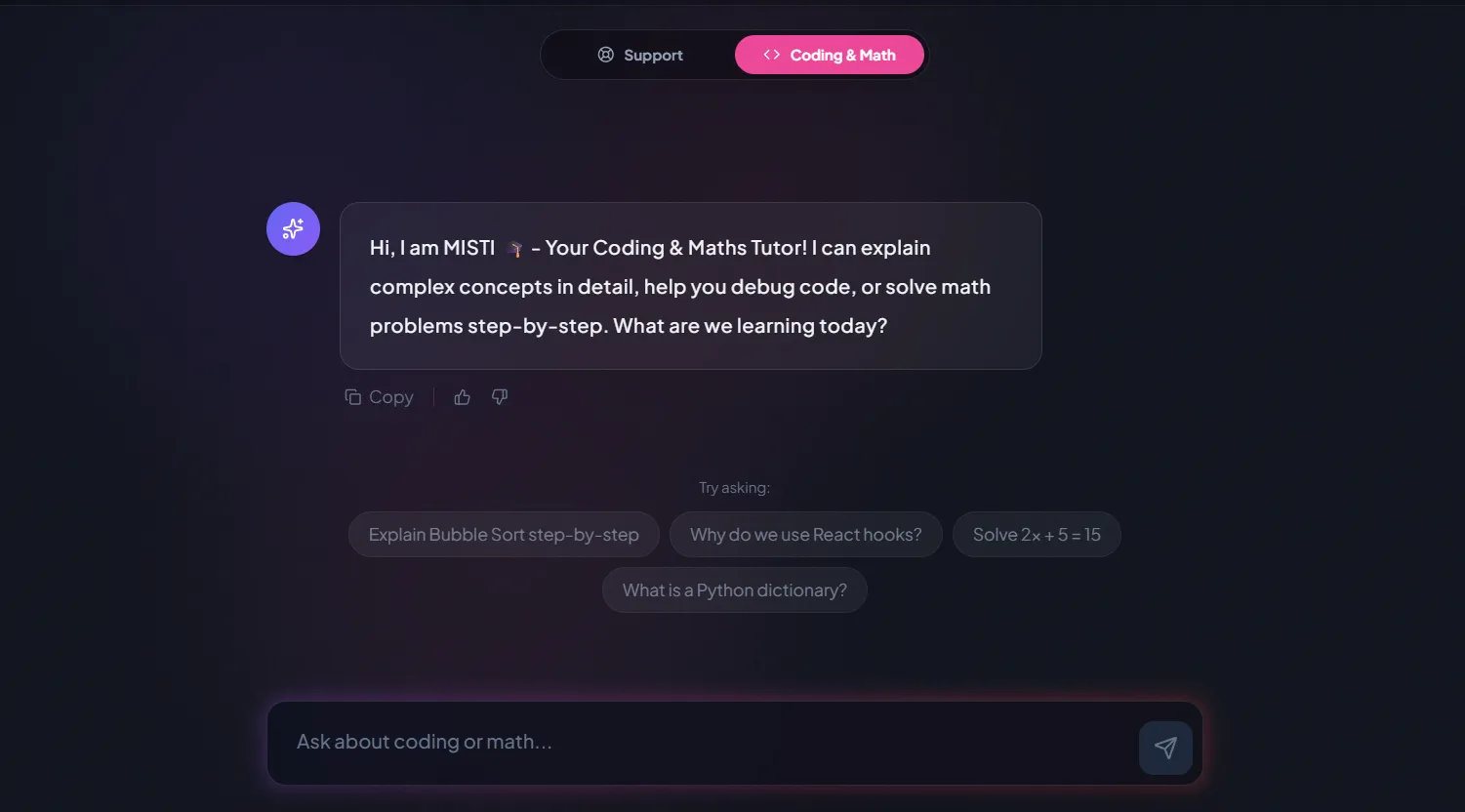
A chatbot that answers mathematics and programming questions, built and deployed by a student.
AI and ML
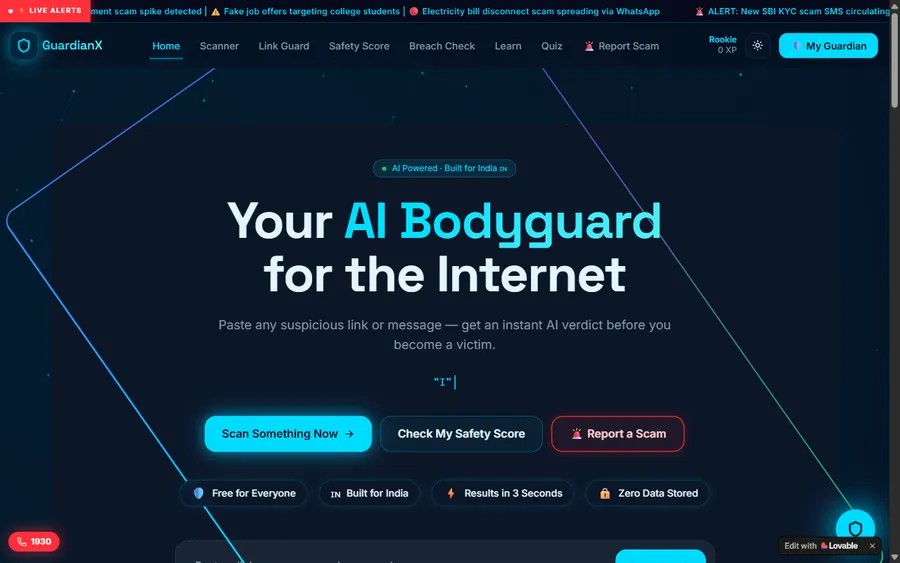
An assistant that helps a young person recognise unsafe situations online.
Web app
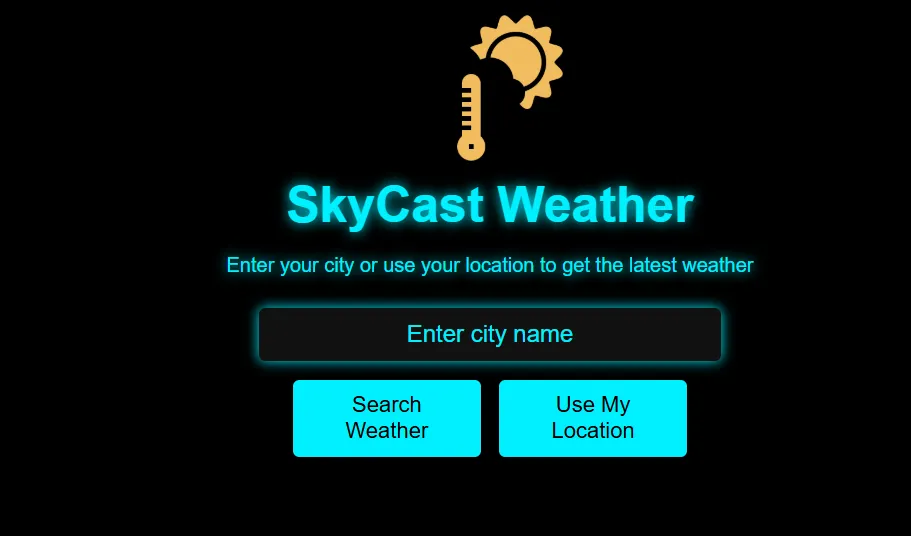
A weather forecasting site with live conditions for any location.
Fees
Families outside India all pay the same monthly US dollar fee. There is no joining charge and no minimum term.
Group batch
USD 100
a month, billed in US dollars
One to one
USD 150
a month, billed in US dollars
What families say
Parents' reviews on Google, verbatim.
★★★★★
"The one step solution for my son. Modern Age Coders make learning coding so simple that kids love it. The teachers explain complex concepts clearly with practical exercises and interactive content."
Ria Mukherjee
Parent
★★★★★
"Modern Age Coders has been a game-changer for me. I struggled to grasp IT concepts and coding before joining, but their classes transformed everything. I can now confidently write complex programs with ease."
Samriddha Mondal
Student
★★★★★
"One of the most wonderful education centres out there. Education is not limited to school syllabus but focuses on skill development."
Vansh Agarwal
Student
★★★★★
"My child Dhairya is really enjoying the Modern Age Coders classes. This is his first online class and he eagerly looks forward to it. I can already see his improvement, and the teachers are very cooperative."
Sonam Oswal
Parent of Dhairya
★★★★★
"Modern Age Coders have wonderful teachers who teach in a clear, easy and practical way. The teacher boosts students' confidence and inspires them to learn without hesitation."
Sonu Goyal
Parent
★★★★★
"I highly recommend this computer coding class! The teachers are incredibly knowledgeable and passionate about coding."
Ritu Kedia
Parent
Gloucestershire questions
Yes. The seven grammar schools have appointed FSCE as their provider for entry from 2028 and moved the test from September of Year 6 to the latter part of the summer term of Year 5.
Saturday 3 July 2027, according to Pate's Grammar School and FSCE. Registration opens at noon on Monday 8 February 2027 and closes at noon on Friday 19 March 2027.
Three: the Adventure Paper (English and maths, multiple choice), the Beacon Paper (English and maths, short written answers) and the Compass Paper (any school subject, multiple choice).
Pate's says maths and English form the main part of the assessment. No weighting has been published.
FSCE says it focuses on areas of the Key Stage 2 curriculum taught up to the end of Year 5, using written and mental calculation without calculators.
A GL Assessment test on Saturday 12 September 2026: two multiple-choice papers of about an hour, one covering verbal skills and the other non-verbal reasoning and maths.
FSCE says there are no commercial 11+ books or past papers endorsed by it, and that its familiarisation guides contain all the relevant test information and sample questions.
No. We teach maths only, and we do not advise on applications or places.
No. FSCE's Gloucestershire FAQ says a tutor is not needed and that it does not want parents to pay for one. If you choose lessons with us, it should be because you want your child's Year 5 maths taught well and early, which a July test makes more pressing.
Lesson one is free. After that, a small-group place is USD 100 a month and private lessons USD 150 a month.
Related
Coding in Gloucester, another FSCE test area, and our national page.
Programming for Gloucester children.
Reading School also uses an FSCE test in July.
The overall picture of 11 plus maths.
A September GL test not far north.
Maths challenges through the year.
Every UK area.
Start here
Tell us your child's year and how comfortable they are with decimals and fractions. We teach a real lesson, then give you an honest view of the months to July.
Would you like to look around first? The course syllabuses are online, how we teach explains our approach, and the roadmap shows the path ahead.
WhatsApp us · +91 91233 66161 · contact@modernagecoders.com
Message us on WhatsApp for the quickest reply. We are an Indian school with an Indian number and no UK office.