MDM / 1
11 plus maths for Medway
Year 5 maths for a 50-minute paper.
Open the syllabusMedway · Medway Test mathematics paper · Live online, small groups or one to one
The Medway Test treats maths more generously than almost any other 11 plus. It has a paper of its own, fifty minutes long, and Medway Council's marking formula counts it twice: English times two, maths times two, reasoning once. And unlike tests that chop maths into short timed sections, in Medway Council's own timing table, the column headed "Timed sections" reads, for maths, "No. The whole test must be completed in the 50 minutes." Then add one rule from the familiarisation booklet: no timer of any kind, watches with a calculator included. So for fifty minutes a ten-year-old manages their own pace through a full paper of Year 5 maths, without a calculator and without a watch. This page sets out what Medway Council publishes, and teaches the written methods such a paper leans on.
Maths only · We do not teach English or reasoning · No connection with Medway Council or any school
In short
Medway Council runs the Medway Test for the six Medway grammar schools, and says it is used only by them. GL Assessment writes it "specifically for Medway Council". There are three multiple-choice papers with breaks of at least twenty minutes: English (30 minutes), Mathematics (50 minutes, with no timed sections inside it) and Reasoning (45 minutes). The council's total counts the English and Mathematics standardised scores twice and Reasoning once, so maths is two fifths of the total. Questions are based on Key Stage 2 up to and including Year 5, and calculators and timers are not allowed. For 2027 entry, registration ran from 18 May to 12 June 2026, Medway primary pupils sat the test on 15 and 16 September 2026, and results arrive on 14 October 2026. We teach the maths, live online. Try a first lesson free; after that it is USD 100 a month in a group or USD 150 a month one to one.
Medway starting points
A long, double-weighted paper rewards reliable methods. Choose by where the errors come from.
MEDWAY / 1
Year 5 content and written methods, practised in fifty-minute blocks.
Open the syllabus →
MEDWAY / 2
Quick estimates that check written answers without a calculator.
Open the syllabus →
MEDWAY / 3
For Year 4 children whose tables and place value need firming up first.
Open the syllabus →The Medway Test
Medway Council runs registration and testing and publishes the papers, timings, marking and dates. Read on 26 September 2026.
| Paper | Marked time | What it covers |
|---|---|---|
| English | 30 minutes | Comprehension, punctuation, grammar |
| Mathematics | 50 minutes, one block | Mathematical elements, Key Stage 2 to Year 5 |
| Reasoning | 45 minutes | Spatial and non-verbal (20 minutes), verbal (25 minutes) |
| Step | Date | Detail |
|---|---|---|
| Registration | Monday 18 May to Friday 12 June 2026 | The council suggests talking to the child's teacher first. |
| Test, Medway primaries | Tuesday 15 and Wednesday 16 September 2026 | At the child's own school. |
| Test, other children | Saturday 19 or Sunday 20 September 2026 | At a Medway test centre. |
| Results | Wednesday 14 October 2026 | By email, after 10am. |
The council says "These tests are written specifically for Medway Council. Our test provider is GL Assessment." It adds that materials found online or in shops, other than on GL's website, "are not official and are not supported or endorsed by GL or Medway Council".
The familiarisation booklet says "All of the tests are multiple-choice", that the maths "will cover what you have been taught in class" with some more challenging questions, and that questions are "based on the Key Stage 2 National Curriculum up to and including Year 5".
The marking formula is published: "English test standardised score x 2 + Mathematics test standardised score x 2 + Reasoning test standardised score x 1 = Total weighted score." A minimum total is set each year; the council's recent figures put about a quarter of each cohort in the grammar band. We mention that as background, never as a target.
The council says the Medway Test is used only by the six Medway grammar schools. Chatham Grammar also accepts a Kent Test assessment. Admissions after the test are for the council and the schools.
Sources: Medway Council, Medway Test (11+), including its pages on registration, dates, results, how the test is marked and children outside Medway; the Medway Test familiarisation booklet (GL Assessment, 2026). Modern Age Coders has no connection with Medway Council, GL Assessment or any Medway school.
Fifty minutes, one block
Most 11 plus maths comes in short sections with an audio file or an invigilator calling time. Medway's does not.
For its maths paper, the council's timing table is plain: "No. The whole test must be completed in the 50 minutes." The familiarisation booklet lists among things not allowed "any type of timer" and a calculator "including watches and any other device with this facility".
So a child meets fifty minutes of maths as one stretch, and the decisions about speed are theirs. Some children rush the first half and run out of care; others linger on an early question and never reach the last page.
We build stamina in steps: twenty-minute maths blocks in the autumn, thirty-five by spring, the full fifty by summer. Children learn to check the time only at natural points, such as the end of each page, using whatever clock the test room provides, rather than constantly.
We also teach the simplest pacing rule there is: halfway through the time, be at least halfway through the questions. A child who is well behind at that moment speeds up on familiar questions and saves the longest for last.
The double weighting makes this matter. With maths counted twice in the total, a paper that goes well for thirty minutes and badly for twenty costs more than it would in a test where maths is a small section. Stamina is part of the maths here.
The lesson
With no calculator for fifty minutes, the formal written methods of Year 5 carry the paper. The curriculum asks children to "multiply numbers up to 4 digits by a one- or two-digit number using a formal written method, including long multiplication for two-digit numbers".
| Calculation | Estimate first | Exact answer |
|---|---|---|
| 347 × 26 | About 350 × 25 = 8,750 | 9,022 (6,940 + 2,082) |
| 1,208 × 7 | About 1,200 × 7 = 8,400 | 8,456 |
| 2,436 ÷ 6 | About 2,400 ÷ 6 = 400 | 406: note the zero in the tens |
| 4,005 - 1,687 | About 4,000 - 1,700 = 2,300 | 2,318 |
| 58 × 49 | 58 × 50 = 2,900, minus 58 | 2,842 |
Every row starts with an estimate, and that is deliberate. On a multiple-choice paper, an estimate often rules out most of the options before the written method starts. After the method, it confirms that the answer is the right size. It is the calculator-free equivalent of checking your work.
The division row shows the classic trap: 2,436 ÷ 6 is 406, not 46. Children who forget the placeholder zero get an answer ten times too small. The estimate, about 400, catches it at once.
The last row shows a mental shortcut the curriculum encourages: "multiply and divide numbers mentally, drawing upon known facts". 58 × 49 is 58 × 50 minus 58, which is quicker and safer than long multiplication. A fifty-minute paper rewards children who know when a written method is needed and when it is not.
Subtraction across zeros, as in 4,005 - 1,687, is where exchanges go wrong. We teach it until it is boring, which is exactly the point: boring methods do not wobble at minute forty.
Source: national curriculum in England, mathematics, Year 5 multiplication and division, and addition and subtraction (statutory requirements). The examples are ours.
Our approach
Medway Council's warning about unofficial materials shapes how we prepare children, too.
Number, fractions, measures, geometry and statistics, each taught until quick and correct. A fifty-minute paper has room for all of them.
Formal written methods for all four operations, checked by estimation, practised until they are automatic.
Timed blocks that grow towards fifty minutes, so accuracy at the end matches accuracy at the start.
The council points families to GL's website and its own familiarisation booklet for the format. Use those. We do not reproduce them, and our practice questions are written by us to the Year 5 curriculum.
English is also counted twice, and reasoning once. We teach only the maths, and families should plan for the other papers separately.
The council asks families to talk to their child's teacher before registering, to see whether the test is right for them. We agree, and our free lesson ends with an equally honest view of the maths.
Medway and Kent run different tests on different timetables; our Kent Test maths page covers the county's own test.
The six schools
Medway Council's school directory names the six grammar schools that use the Medway Test. We list them only to show which test this page covers.
| School | Note |
|---|---|
| Chatham Grammar | Also accepts the Kent Test |
| Fort Pitt Grammar School | Medway Test |
| Holcombe Grammar School | Medway Test |
| Rainham Mark Grammar School | Medway Test |
| Sir Joseph Williamson's Mathematical School | Medway Test |
| The Rochester Grammar School | Medway Test |
Lessons are live on video, so a child in Strood, Gillingham, Hoo or Walderslade is taught the same way, in groups of five to ten matched by level.
For coding in the area, see our UK page, which lists every city and county we cover.
The council says children who do not live in Medway can sit the Medway Test, and explains on a separate page what families outside Medway should consider before registering.
We have no connection with Medway Council, GL Assessment or any of these schools, and we do not advise on applications or places.
Source: Medway Council, secondary schools directory and Medway Test pages, read 26 September 2026.
Towards September 2027
For today's Year 5, registration should fall in late spring 2027 and the test early in Year 6. The council publishes the dates.
| When | Stage | What secure looks like |
|---|---|---|
| Autumn, Year 5 | 1. Number facts and place value | Tables instant, numbers to a million read and rounded correctly |
| Winter, Year 5 | 2. Written methods | Long multiplication and short division right first time, checked by estimate |
| Spring, Year 5 | 3. The rest of Year 5 | Fractions, measures, shape and data as secure as number |
| Summer holiday | 4. Fifty minutes | A full paper, paced without a watch, as accurate at the end as the start |
If time is short, methods and stamina come first: they carry the most marks on a long paper.
We will tell you honestly at the free lesson what the time allows.
Reliable written methods are the backbone of secondary maths. Many pupils continue with maths through coding.
Children who love problems can try the challenges on our competitions calendar.
Our courses
By stage, each with its full syllabus.
MDM / 1
Year 5 maths for a 50-minute paper.
Open the syllabusMDM / 2
Checks without a calculator.
Open the syllabusMDM / 3
Foundations first.
Open the syllabusMDM / 4
Number sense by hand.
Open the syllabusMDM / 5
Algebra and more.
Open the syllabusMDM / 6
Both tiers, every board.
Open the syllabusMDM / 7
Stretch for strong pupils.
Open the syllabusMDM / 8
Write long multiplication as an algorithm.
Open the syllabusMDM / 9
Logic and sequence.
Open the syllabusMDM / 10
Typed code for ready pupils.
Open the syllabusMDM / 11
Speed on secure foundations.
Open the syllabusMDM / 12
Where arithmetic ends up.
Open the syllabusLesson times
Lessons are taught live from India. Medway primary pupils have early-evening or weekend-morning slots, set in UK time, with the clock changes absorbed on our side.
Weekday, after school
Early in the evening.
Weekend, morning
For tired weekday learners.
Holidays
Extra sessions to build stamina.
The same teacher each week.
Short, honest notes for parents.
Grouped by level.
Our own questions only; no copied GL or council material.
For method gaps or pacing.
No English or reasoning coaching; no admissions advice.
Student work
Four projects built by students at our school, every one resting on reliable arithmetic. More on the student labs page.
AI and ML
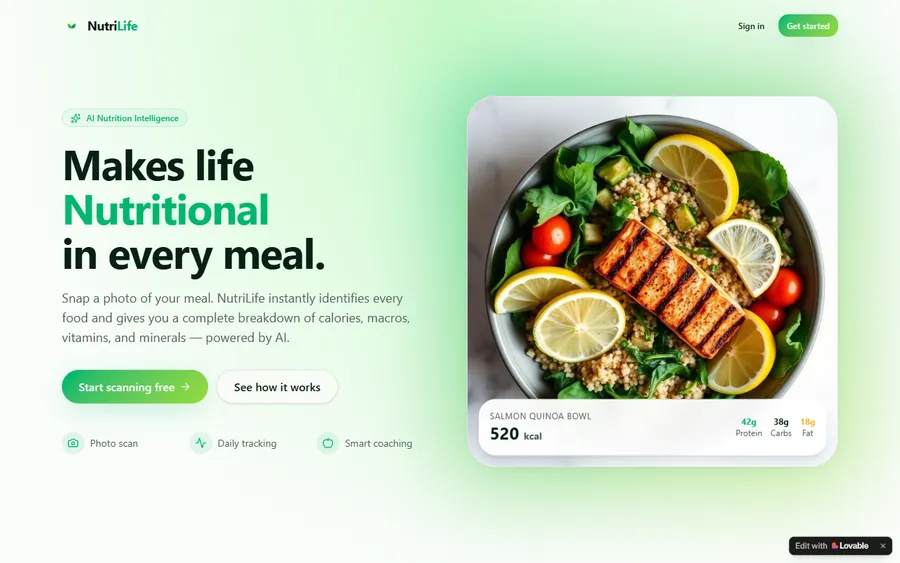
An AI nutrition coach that reads what you eat and works you toward a target.
AI and ML
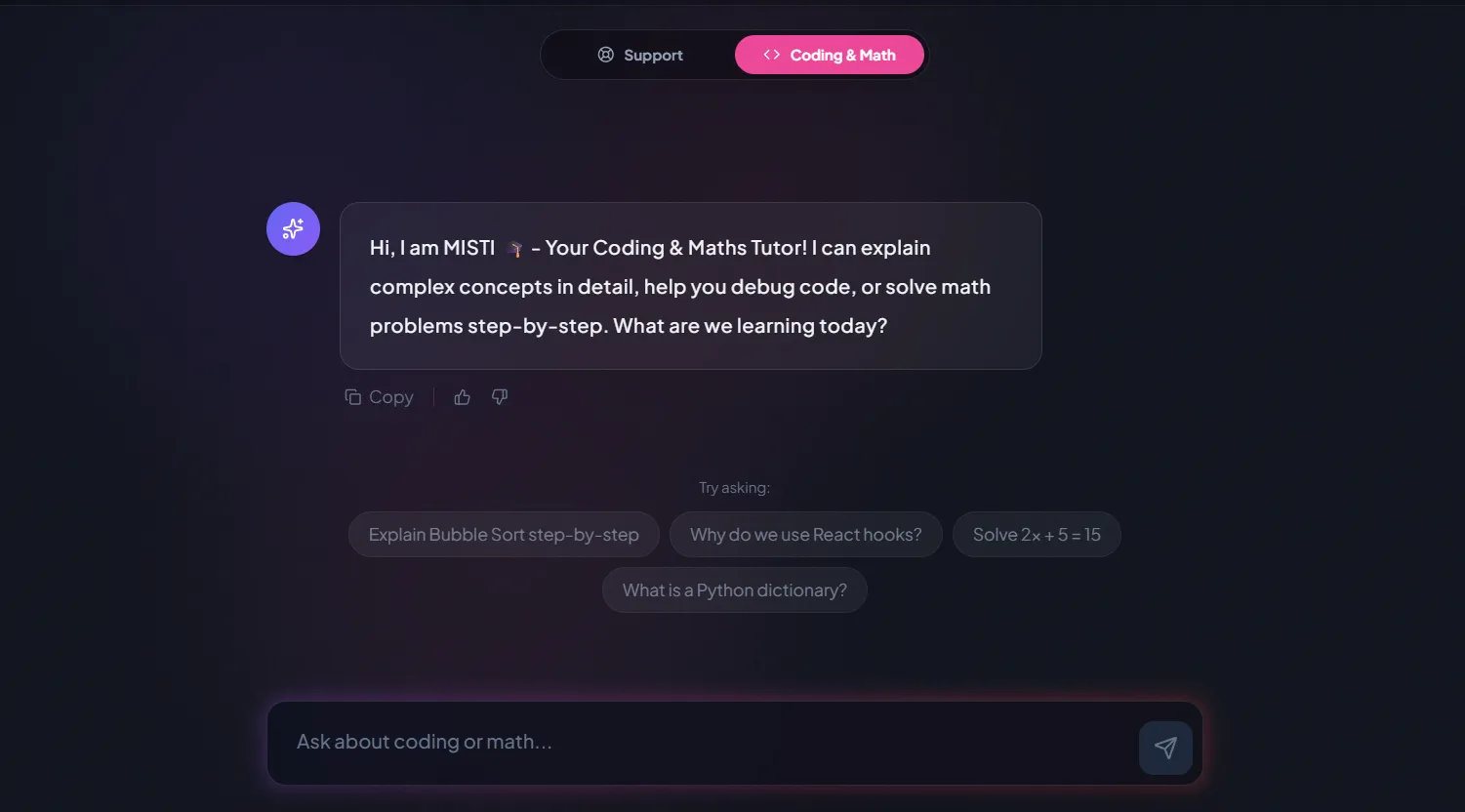
A chatbot that answers mathematics and programming questions, built and deployed by a student.

AI and ML
An assistant that helps a young person recognise unsafe situations online.

Web app
A weather forecasting site with live conditions for any location.
Fees
A single monthly US dollar fee for every family outside India. No sign-up charge; stop whenever you like.
Group batch
USD 100
a month, billed in US dollars
One to one
USD 150
a month, billed in US dollars
What families say
From parents' Google reviews, word for word.
★★★★★
"The one step solution for my son. Modern Age Coders make learning coding so simple that kids love it. The teachers explain complex concepts clearly with practical exercises and interactive content."
Ria Mukherjee
Parent
★★★★★
"Modern Age Coders has been a game-changer for me. I struggled to grasp IT concepts and coding before joining, but their classes transformed everything. I can now confidently write complex programs with ease."
Samriddha Mondal
Student
★★★★★
"One of the most wonderful education centres out there. Education is not limited to school syllabus but focuses on skill development."
Vansh Agarwal
Student
★★★★★
"My child Dhairya is really enjoying the Modern Age Coders classes. This is his first online class and he eagerly looks forward to it. I can already see his improvement, and the teachers are very cooperative."
Sonam Oswal
Parent of Dhairya
★★★★★
"Modern Age Coders have wonderful teachers who teach in a clear, easy and practical way. The teacher boosts students' confidence and inspires them to learn without hesitation."
Sonu Goyal
Parent
★★★★★
"I highly recommend this computer coding class! The teachers are incredibly knowledgeable and passionate about coding."
Ritu Kedia
Parent
Medway Test questions
Medway Council says it has three papers: English (30 minutes), Mathematics (50 minutes) and Reasoning (45 minutes), with at least twenty minutes' break between them. All are multiple choice.
The council's formula counts the English and Mathematics standardised scores twice each and Reasoning once, so maths is two fifths of the total weighted score.
No. The council says the whole maths test must be completed in the 50 minutes.
The familiarisation booklet lists any type of timer, and calculators including watches with that facility, among items not allowed. Check the booklet for the full list.
The booklet says all questions in the English and Mathematics tests are based on the Key Stage 2 National Curriculum up to and including Year 5.
Not published when we checked on 26 September 2026. For 2027 entry, registration ran from 18 May to 12 June 2026 and Medway primary pupils sat the test on 15 and 16 September 2026.
No. They are different tests. The council says the Medway Test is used only by the six Medway grammar schools, though Chatham Grammar also accepts a Kent Test assessment.
No. The council says materials found online or in retailers, other than on the GL website, are not official and not endorsed by GL or Medway Council.
No. We teach maths only, and we do not advise on applications or places.
The first lesson is free. Then it is USD 100 a month for a group or USD 150 a month for one to one.
Related
The Kent Test next door, our national page, and nearby selective areas.
The county's own test, sat in the first week of Year 6.
A London borough test just west of Medway.
The national overview.
A primary child's first steps in code.
Maths challenges through the year.
Every UK area.
Start here
Tell us your child's year and how they manage longer stretches of maths. We teach a proper lesson and then give you an honest account.
Reading first? Every course syllabus is online, how we teach explains our lessons, and the roadmap shows the path onward.
WhatsApp us · +91 91233 66161 · contact@modernagecoders.com
WhatsApp is the quickest. We teach from India, our number is Indian, and we have no office in Kent or Medway.