TBM / 01
11 plus maths, Torbay
Every Year 5 strand, no gaps.
Open the syllabusTorbay · Selective test maths · Live online, small groups or one to one
Torbay's selective test is one of the simplest in England to describe. The schools say it is two papers of about fifty minutes, one English and one maths, set by GL Assessment, and Churston Ferrers Grammar School adds: "There are no verbal or non-verbal reasoning papers." What families receive afterwards is simpler still. Torquay Boys' Grammar School's admission policy says parents "will not be told their child's actual scores"; they get a Yes or a No, and the scores "will not be disclosed at any point". There is no mark to aim at and no number to compare with a neighbour's child. The only sensible target is maths that is secure across the whole of Year 5. This page sets out what the four schools and Torbay Council publish, then teaches a Year 5 area where many children are less secure than they look: area and perimeter.
Maths only · We do not teach English for the test · No connection with any Torbay school
In short
Torbay Council says all the selective schools in Torbay use the same test results, so children sit the test once: Churston Ferrers Grammar School, Torquay Boys' Grammar School, Torquay Girls' Grammar School and the selective stream at The Spires College. The schools describe two GL Assessment papers of about fifty minutes, English and Maths, with no verbal or non-verbal reasoning, designed around primary learning up to the end of Year 5. For September 2027 entry the test was on Saturday 19 September 2026, with registration from 1 March and a preferred deadline of 15 July 2026. Families are told whether their child met the academic threshold, as a Yes or No, and not the scores. We teach the maths, live online. Lesson one costs nothing; after that tuition is USD 100 a month in a small group or USD 150 a month one to one.
Torbay starting points
Maths is one of only two papers. Choose by which parts of Year 5 your child is least sure of.
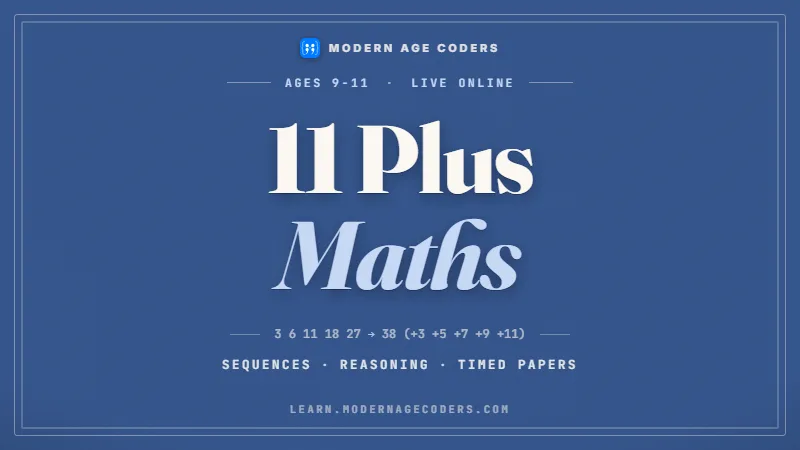
TORBAY / A
Every Year 5 strand, with measures and shape given as much time as number.
Open the syllabus →
TORBAY / B
For children whose Year 3 and 4 maths needs settling first.
Open the syllabus →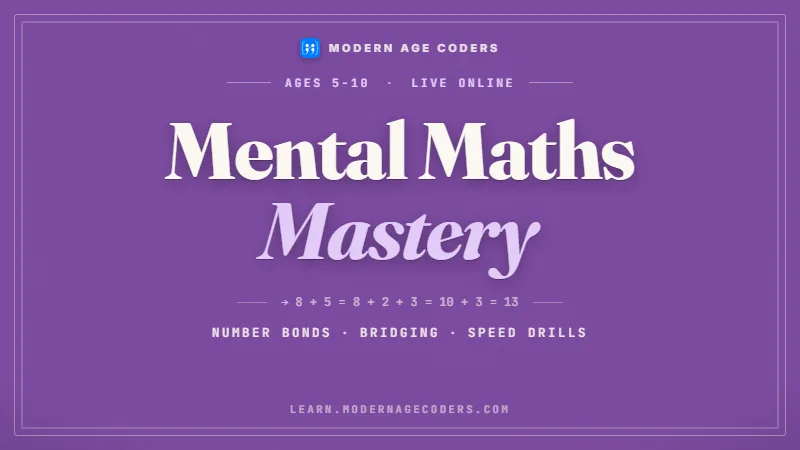
TORBAY / C
Quick, reliable arithmetic for a fifty-minute paper.
Open the syllabus →The Torbay test
Torbay Council explains the shared arrangement; the schools publish the details. Read on 26 September 2026.
| Step | Date | As published |
|---|---|---|
| Registration opens | 1 March 2026 | Registration forms go to the schools, not the council. |
| Preferred deadline | Midday, Wednesday 15 July 2026 | The council and Torquay Boys' Grammar both give this date. |
| Latest deadline | Early September 2026 | The council gives midday 2 September; Torquay Boys' Grammar gives midday 4 September. |
| Test | Saturday 19 September 2026 | One day for all the grammar schools and The Spires selective places. |
| Alternative date | Friday 25 September 2026 | Offered by Torquay Girls' Grammar for illness or another accepted reason. |
| Outcome | On or soon after 12 October 2026 | Yes or No, according to Torquay Boys' Grammar. |
Torbay Council says "All selective schools in Torbay use the same test results. Students only need to sit the test once." The schools list the papers: Torquay Boys' Grammar describes "two tests (approx. 50 minutes each), one for English and one for Maths"; Torquay Girls' Grammar describes "papers designed by an external assessment authority (GL) in English and Maths".
Churston Ferrers Grammar School says the test "evaluates English and Maths. It is designed around standard primary school learning up to the end of Year 5", and that "There are no verbal or non-verbal reasoning papers". It adds that there is a standardised pass mark and that "the exact threshold changes year on year".
The latest registration deadline differs slightly between sources: the council gives midday on 2 September 2026, Torquay Boys' Grammar midday on 4 September. Both say 15 July is the date to aim for. Families should follow the school they register with and not rely on the later date.
Torquay Boys' Grammar describes its process as "testing before preference": children sit the test before families complete the council application. Places are then decided under each school's published policy, which we do not advise on.
Sources: Torbay Council, secondary applications and its application timetable; Torquay Boys' Grammar School, apply to join us, and its admission policy for 2027-8; Torquay Girls' Grammar School, admissions test; Churston Ferrers Grammar School, entry requirements. Modern Age Coders has no connection with any Torbay school, GL Assessment or Torbay Council.
A Yes or a No
Most areas send families a number. Torquay Boys' Grammar's policy says Torbay families get a word.
The policy says parents "will not be told their child's actual scores, they will be given a 'Yes' or 'No' indicating whether the child met the academic threshold to be eligible for admission". The selection test score "will not be disclosed at any point, including when places are formally offered in March".
Churston Ferrers adds that the threshold changes year to year with the cohort, and prefers to talk families through it rather than "reduce it to a number on a page".
With no score ever shown, there is nothing to compare, predict or chase. Families sometimes find that unsettling. We find it clarifying: the one thing worth working on is the maths itself, across every part of Year 5, until it is secure.
It also removes a trap. Where scores are published, preparation drifts towards squeezing extra marks from favourite topics. Where they are not, breadth matters more: a child with no weak strands is the child most likely to hear Yes.
Because English and maths are the only two papers, the maths is a large part of what the schools see. We do not know how the two are combined, and the schools do not publish it. We simply make sure the maths half is as strong as it can be.
The lesson
The Year 5 curriculum asks children to "measure and calculate the perimeter of composite rectilinear shapes" and to "calculate and compare the area of rectangles". Mixing the two up is one of the commonest primary errors.
| Idea | Our question | Answer |
|---|---|---|
| Rectangle | A rectangle is 7 cm by 4 cm. Find its perimeter and its area. | Perimeter 22 cm; area 28 cm² |
| Same area, different perimeter | Rectangles of 6 by 4, 12 by 2 and 24 by 1. Which has the longest perimeter? | 24 by 1: perimeters 20, 28 and 50, all with area 24 |
| Composite shape | A 10 m by 4 m rectangle has a 3 m square joined to the middle of one long side. Find the total area. | 40 + 9 = 49 m² |
| Its perimeter | What is the perimeter of that same shape? | 34 m: the rectangle's 28 m, plus the square's three outer sides, minus the 3 m they share |
| Estimating | An irregular shape covers 18 whole squares and 8 half squares on 1 cm paper. Estimate its area. | About 22 cm² |
The second row carries the big idea: area and perimeter are different measurements, and one does not decide the other. Three rectangles with the same area of 24 have perimeters of 20, 28 and 50. The long, thin one has the longest edge. Children who believe "bigger area means bigger perimeter" get questions like this wrong confidently.
Units make the difference visible. Perimeter is a length, in cm or m. Area counts squares, in cm² or m². Writing the unit before the number forces the child to decide which one they are finding.
The composite shape is where care pays off. Area is easy to add up. Perimeter needs a walk round the outside: the 3 m edge where the square meets the rectangle is inside the shape now, so it no longer counts. We teach children to trace the outline with a finger, or a pencil, and add only what they touch.
Estimating irregular areas, the last row, uses the Year 5 approach of counting whole squares and pairing up halves. It is quick and sensible, and it guards against answers that are wildly too big or small.
Source: national curriculum in England, mathematics, Year 5 measurement (statutory requirements). The questions are our own.
Our approach
When the result is Yes or No, gaps matter more than peaks. This is how we plan a Torbay child's year.
The first lessons find which Year 5 strands are shaky: number, fractions, measures, shape or data.
Weakest strands first, then the rest, so nothing is left thin by the summer.
Timed practice papers only in the last weeks, once the content is secure.
Torquay Girls' Grammar points families to GL's free familiarisation material for English and maths, noting those are the only two areas tested. That is the right way to see the format. We do not reproduce GL material; our questions are our own.
English is the other paper. We do not teach it for the test, and families should plan for it separately.
The Spires College uses the same test for its selective stream. The schools' results process and admissions rules are theirs; we give no advice on them.
If your child is ill on test day, Torquay Girls' Grammar describes an alternative date for accepted reasons. Check the school you registered with.
Torquay, Paignton and Brixham
Torbay Council names the four schools that use the shared test. We list them only to show what this page covers.
| School | Selective places |
|---|---|
| Churston Ferrers Grammar School | Grammar school |
| Torquay Boys' Grammar School | Grammar school |
| Torquay Girls' Grammar School | Grammar school |
| The Spires College | A selective stream |
Lessons are live on video, so a child in Paignton, Brixham, Torquay or across the Dart is taught the same way, in groups of five to ten matched by level.
For Plymouth's grammar schools, which use a different test, see our Plymouth 11 plus page.
For coding lessons across the south west and the rest of the country, our UK page lists every area.
We have no connection with any of these schools, GL Assessment or Torbay Council, and we do not advise on applications or places.
Towards September 2027
For today's Year 5, registration should open around March 2027 and the test fall in September of Year 6. The schools publish the dates.
| When | Stage | Evidence |
|---|---|---|
| Autumn, Year 5 | 1. Find the gaps | A clear picture of which Year 5 strands are weak |
| Winter and spring | 2. Fill them | Each weak strand brought up to secure, one at a time |
| Summer term | 3. Measures and shape | Area, perimeter, angles and conversions as reliable as number |
| Summer holiday | 4. Fifty minutes | A timed maths paper completed calmly |
The later the start, the more important it is to find the gaps first rather than practise papers.
We will tell you honestly at the free lesson what the time allows.
Measurement and geometry grow into secondary maths and science. Some pupils continue with maths through coding, calculating areas in code.
Others enjoy the problems on our competitions calendar.
Courses
Grouped by stage, each linked to a full syllabus.
TBM / 01
Every Year 5 strand, no gaps.
Open the syllabusTBM / 02
Earlier years, made secure.
Open the syllabusTBM / 03
Quick calculation, no calculator.
Open the syllabusTBM / 04
A tactile start for younger children.
Open the syllabusTBM / 05
Area, volume and algebra.
Open the syllabusTBM / 06
Foundation and higher.
Open the syllabusTBM / 07
Hard problems for enthusiasts.
Open the syllabusTBM / 08
Compute area and perimeter in Python.
Open the syllabusTBM / 09
Draw shapes with code.
Open the syllabusTBM / 10
A first typed language.
Open the syllabusTBM / 11
Fast methods, firmly founded.
Open the syllabusTBM / 12
Maths behind modern tools.
Open the syllabusTimetable
Our teachers are in India and teach live. Torbay primary pupils are booked into after-school or Saturday and Sunday morning slots, fixed in UK time; when the clocks change, we move, not you.
After school
An early-evening hour.
Weekend mornings
A calm start to the day.
Summer holiday
Extra sessions before September.
One teacher for the year.
What is secure and what is not, briefly.
Five to ten, grouped by level.
No GL papers copied.
For a specific strand.
No English coaching; no admissions advice.
Student work
Four things our students have built and published, each resting on primary maths like area and number. The student labs page has more.
AI and ML
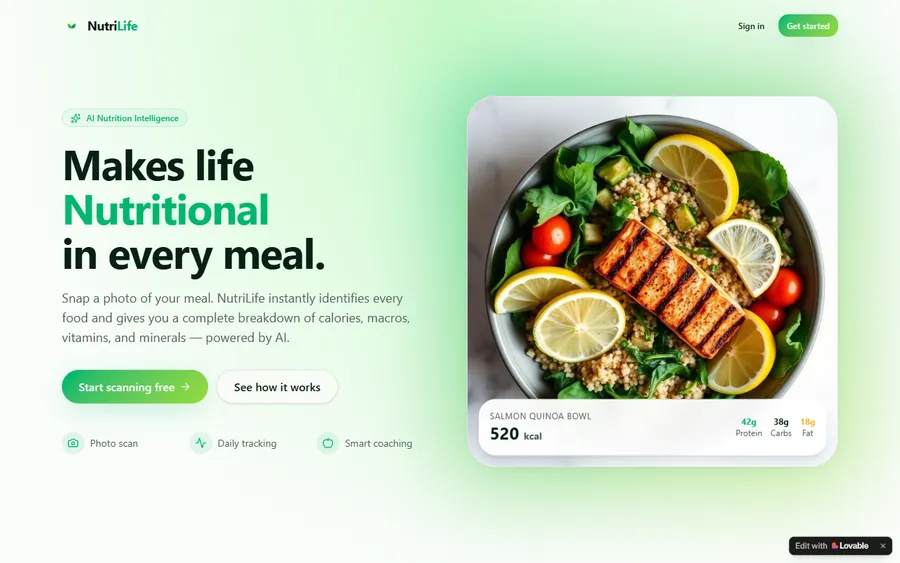
An AI nutrition coach that reads what you eat and works you toward a target.
AI and ML
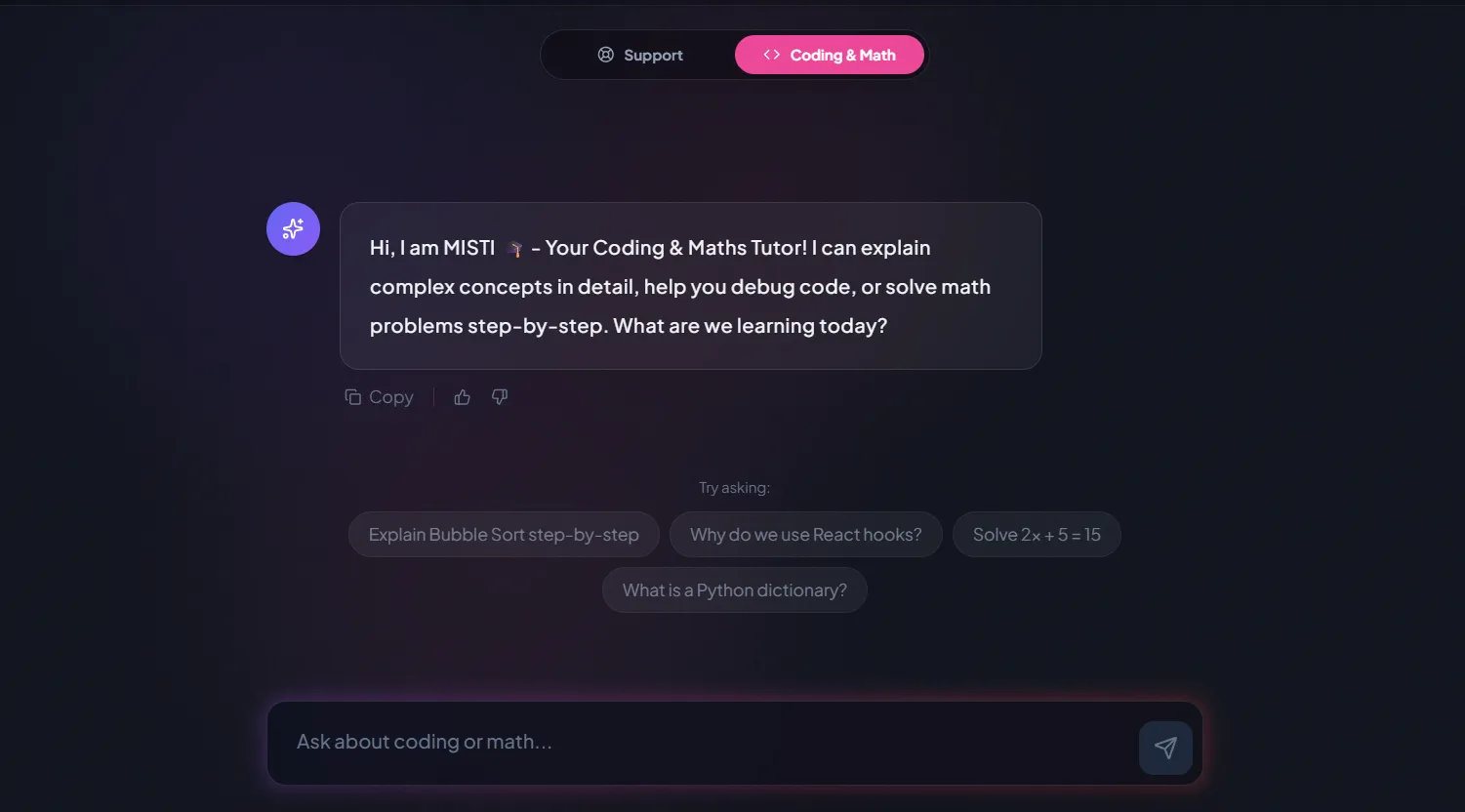
A chatbot that answers mathematics and programming questions, built and deployed by a student.

AI and ML
An assistant that helps a young person recognise unsafe situations online.
Web app
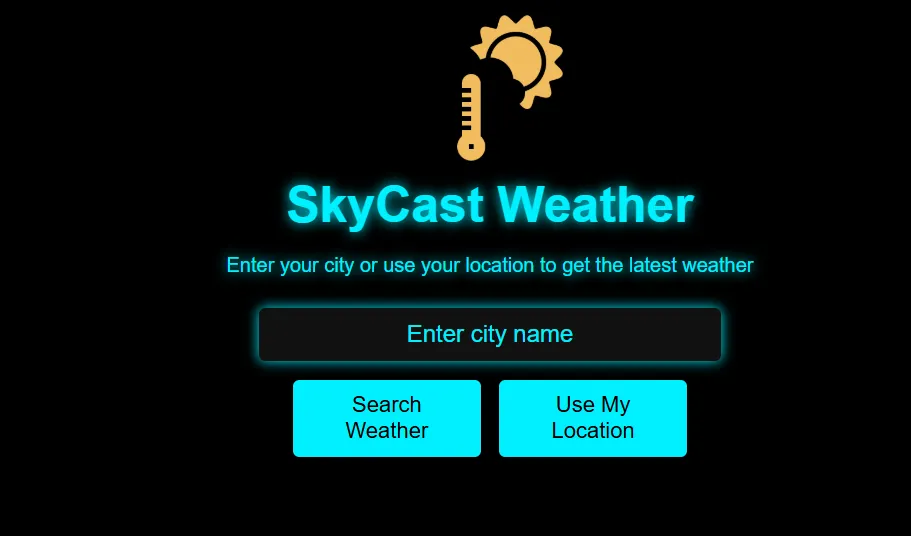
A weather forecasting site with live conditions for any location.
Fees
One monthly US dollar price for families outside India. Nothing to join; stop at any time.
Group batch
USD 100
a month, billed in US dollars
One to one
USD 150
a month, billed in US dollars
What families say
Reviews by parents on Google, copied exactly.
★★★★★
"The one step solution for my son. Modern Age Coders make learning coding so simple that kids love it. The teachers explain complex concepts clearly with practical exercises and interactive content."
Ria Mukherjee
Parent
★★★★★
"Modern Age Coders has been a game-changer for me. I struggled to grasp IT concepts and coding before joining, but their classes transformed everything. I can now confidently write complex programs with ease."
Samriddha Mondal
Student
★★★★★
"One of the most wonderful education centres out there. Education is not limited to school syllabus but focuses on skill development."
Vansh Agarwal
Student
★★★★★
"My child Dhairya is really enjoying the Modern Age Coders classes. This is his first online class and he eagerly looks forward to it. I can already see his improvement, and the teachers are very cooperative."
Sonam Oswal
Parent of Dhairya
★★★★★
"Modern Age Coders have wonderful teachers who teach in a clear, easy and practical way. The teacher boosts students' confidence and inspires them to learn without hesitation."
Sonu Goyal
Parent
★★★★★
"I highly recommend this computer coding class! The teachers are incredibly knowledgeable and passionate about coding."
Ritu Kedia
Parent
Torbay questions
The schools describe two GL Assessment papers of about 50 minutes each, one English and one Maths. Churston Ferrers says there are no verbal or non-verbal reasoning papers.
No. Torbay Council says all selective schools in Torbay use the same test results, so children only sit it once.
Torquay Boys' Grammar's policy says parents are told Yes or No, whether the child met the academic threshold, and that scores are not disclosed at any point.
Churston Ferrers says the test is designed around standard primary school learning up to the end of Year 5.
For 2027 entry, the council and Torquay Boys' Grammar asked for registration by 15 July 2026, with a latest date in early September (2 September according to the council, 4 September according to the school).
Dates for 2028 entry had not been published when we checked on 26 September 2026. For 2027 entry, the test was on Saturday 19 September 2026.
Yes, for its selective stream, according to Torbay Council.
No. We teach maths only, and we do not advise on applications or places.
No. We write our own questions. GL publishes free familiarisation material for the format.
The first lesson is free. After that, USD 100 per month in a small group or USD 150 per month individually.
Related
Plymouth's test, our national page, and coding for children.
A different test, with maths on its own Saturday.
The national picture.
Programming for Devon children.
A primary child's first steps in code.
Maths challenges, dated.
Every nation, city and county we cover.
Start here
Tell us your child's year and which parts of maths feel least secure. We teach a real lesson and give you an honest verdict afterwards.
Reading first? See every syllabus, how we teach, and the roadmap.
WhatsApp us · +91 91233 66161 · contact@modernagecoders.com
WhatsApp is the quickest route. We are in India, with an Indian number and no office in Devon.