Math is the one subject where last year's gap quietly sinks this year's grade.
History or English forgive a shaky chapter. You can still follow the next one. Math doesn't. If fractions never really clicked in 6th grade, algebra feels impossible in 8th, and by 10th grade a capable teenager has decided they're "bad at math." They're not. They're standing on one missing brick.
Cramming makes this worse. A student memorizes enough to survive the test, the understanding never forms, and the gap widens silently until the next exam exposes it.
A class of thirty can't pause for the one student who's lost on step two. A tutor who only checks homework answers can't see why the answer was wrong.
We work the other way around. One student, one mentor, and a diagnosis first: we find the exact idea that broke, fix it, and watch the current work get easier without us ever touching it directly.
Reasoning first, so the test takes care of itself.
Memorized steps fail under pressure. Understood ideas don't. Every lesson is built that way.
Diagnose the real gap
Before we touch the current chapter, we find the earlier idea that's actually missing. That's almost always where the trouble started.
Derive, don't dictate
We show your teen where a formula comes from. A formula you can rebuild is a formula you can't forget, and one you can adapt when a problem looks unfamiliar.
Make them do the talking
Your teen explains the reasoning back and works problems live while the mentor watches the thinking, not just the final answer.
Then build speed and exam technique
Once the idea is solid, we drill for fluency and, when relevant, train SAT/ACT pacing and the specific traps each test sets.
The quadratic formula: where it actually comes from.
What most teens get: a formula to memorize, x = (−b ± √(b² − 4ac)) / 2a, with no idea why it's true. So when they forget a sign or a square root, there's nothing to fall back on.
How we do it. The formula is just what happens when you solve any equation of the form ax² + bx + c = 0 by "completing the square", turning the left side into a perfect square you can undo. We do it once, in the open:
divide by a: x² + (b/a)x + c/a = 0
move c/a over: x² + (b/a)x = −c/a
complete the square (add (b/2a)²):
(x + b/2a)² = b²/4a² − c/a = (b² − 4ac) / 4a²
take the square root, isolate x:
x = (−b ± √(b² − 4ac)) / 2a
Now the formula isn't a magic spell. It's the recorded result of a procedure your teen can run themselves. The "± √" suddenly makes sense (a square root has two signs), and so does the discriminant b² − 4ac telling you how many real solutions exist. This is the difference between a grade that survives one test and understanding that survives the year.
The thinking behind good code is the thinking behind good math.
Decomposition
A hard problem is solved by breaking it into smaller ones. A multi-step word problem and a software feature are attacked the exact same way.
Abstraction
A function in algebra, input goes in, output comes out, is the same idea as a function in code. Teens who get one get the other for free.
Debugging your reasoning
"Where did this go wrong?" is a skill. We teach teens to trace their own logic and find the error themselves, instead of waiting for a red mark.
We're Modern Age Coders. We've spent years teaching teenagers to think like builders. Math is where that thinking is sharpest. A teen who learns math as logic walks into computer science, physics and economics already fluent in the way those subjects actually think.
The full middle and high school sequence.
From the pre-algebra that sets everything up to the pre-calc that opens the door to college math.
Pre-algebra (grades 6–8)
Integers and negatives, ratios and proportion, percentages, expressions and the leap into variables, the bridge most students cross too quickly.
Algebra 1 & 2
Linear equations and systems, quadratics, polynomials, exponentials and logarithms, functions and their graphs, taught from where they come from, not as rules to recite.
Geometry
Proof as logical argument, congruence and similarity, circles, coordinate geometry, area and volume, the course where "show your reasoning" finally has teeth.
Trigonometry & pre-calculus
The unit circle that ties it together, identities, sequences and series, and the function fluency that makes calculus possible.
SAT & ACT math readiness
Because the tests reward the same understanding we build, plus the timing, format and traps unique to each, sharpened as test day nears.
Confidence under pressure
How to read a hard problem without panicking, show working that earns method marks, and stay calm when the first approach doesn't work.
The right fit: and an honest word on what to expect.
This fits the teen who's falling behind and losing confidence, the one coasting on memory who's about to hit a wall, and the strong student aiming for top SAT/ACT math or the hardest classes their school offers. We teach the whole range.
What's realistic. The first thing most parents notice is their teen stops dreading math and starts attempting problems instead of freezing. Grade improvements come over a term of steady twice-weekly work as the foundations rebuild. Anyone promising a letter-grade jump in two weeks is selling something we won't.
What we won't do
- Hand out answers so homework looks done.
- Teach test tricks with no understanding beneath them.
- Push ahead while old gaps stay buried.
- Promise a grade or score we can't honestly back.
Consistent, one-to-one, and built around school.
1:1, live
One teen, one mentor, real-time video with a shared whiteboard. No recordings, no autopilot.
8 classes a month
Two each week, usually 60 minutes. We work from your teen's own syllabus and tests.
Your time zone
Mentors in all six US zones. Two weekly slots after school, evenings, or weekends.
You stay informed
A note after each class and a progress summary every few weeks, in plain language.
One simple price. No contract.
1:1 Private Mentorship
$150 / month
- 8 live one-to-one classes a month (2 per week, 1 hour each)
- 4 live one-to-one classes a month (1 per week, 1 hour each)
- The same dedicated mentor throughout
- Plan built from your teen's syllabus & goals
- Notes after every class · cancel any time
Small-Group Cohort
$100 / month
- 8 live small-group classes a month (2 per week, 1 hour each)
- A few students working at the same level
- Same teaching approach, lower price
- A solid first step · cancel any time
Want every unit, project and milestone laid out? Explore the High School Mathematics Masterclass →
Mentors who can explain the same idea five different ways.
Teenagers can tell instantly when a teacher only knows one route through a problem. Our mentors are chosen because they know the material deeply enough to find the explanation that works for this student, and because they don't make a teen feel stupid for asking.
The same mentor stays with your teen all year. That continuity is what makes a 15-year-old willing to say "I still don't get it", the sentence that every real improvement starts with.
"My child Dhairya is really enjoying the classes. This is his first online class, and he eagerly looks forward to it. I can see his improvement."
Sonam Oswal, mother of Dhairya · verified Google review
How we differ from the alternatives.
| What matters | Modern Age Coders | Homework-help apps | A typical tutor |
|---|---|---|---|
| Fixes the root gap | Diagnoses & rebuilds it | No, answers only | Sometimes |
| Teaches reasoning | Always | Rarely | Varies |
| Same teacher each time | Yes, all year | N/A | Often |
| SAT/ACT readiness | Built in | Add-on app | Varies |
| Monthly price | $150 (1:1) / $100 (group) | $10–20 | $240–700+ |
Apps are fine for a quick answer. A private local tutor is great if you can afford it. We give the live, one-to-one attention of a tutor at a price closer to an app.
Everything you might be wondering.
What grades and ages do you teach?
Grades 6 through 12, roughly ages 11 to 18. We cover pre-algebra, algebra 1, geometry, algebra 2, trigonometry and pre-calculus, and place each student by what they can actually do, not just their grade.
My teen is failing math. Where do you start?
By finding the exact topic where things stopped making sense, usually one or two missing ideas from an earlier year. We fix the foundation first, then the current work gets much easier on its own.
Do you prepare students for the SAT and ACT?
Is it aligned with my teen's school and Common Core?
Yes. We follow Common Core and your state's high-school standards, and can work directly from your teen's syllabus, tests and homework so tutoring supports school.
How much does it cost?
The fees for private 1-on-1 and small-group classes are shown in your own currency in the pricing section of this page. Billing is monthly, there is no contract and you can cancel any time.
Can we try a class before enrolling?
Yes. Book a Priority Demo: a full live class of about 45 to 60 minutes, today or tomorrow, with a mentor reserved for your child. After the class the mentor sends a written skill report and a personal learning roadmap on WhatsApp. If you enrol, the demo fee is adjusted against your first month's fee.
Will my teen keep the same tutor?
Yes, one mentor all year, which matters for older students who need to trust someone before admitting what they don't understand.
What time zones do mentors cover?
All six US time zones. Your teen picks two weekly slots in your own zone, after school, evenings or weekends.
Are classes live or pre-recorded?
Live, one-to-one, with a shared whiteboard. A recording can't catch a student nodding along without understanding, a live teacher can.
Can tutoring help raise my teen's grade?
Usually, over a term of steady work rather than a week. When the underlying ideas make sense, scores tend to follow. We won't promise a specific jump on a timeline.
Do you help with homework and test prep?
Yes, using your teen's own homework and tests as the material, teaching the reasoning so they can do the next one alone, not just handing over answers.
Can we start mid-semester?
Yes. Most families come mid-semester because a specific unit went wrong. We start exactly there and catch up the rest as needed.
Book a Priority Demo for your teen.
Your teen meets the mentor, we find the gap that's actually holding the grade down, and you decide afterward. No card needed, no pressure.
More math tutoring from Modern Age Coders.
Real student projects
What our students actually build
Every one is a real, live project shipped by a Modern Age Coders student. Explore more in Student Labs.
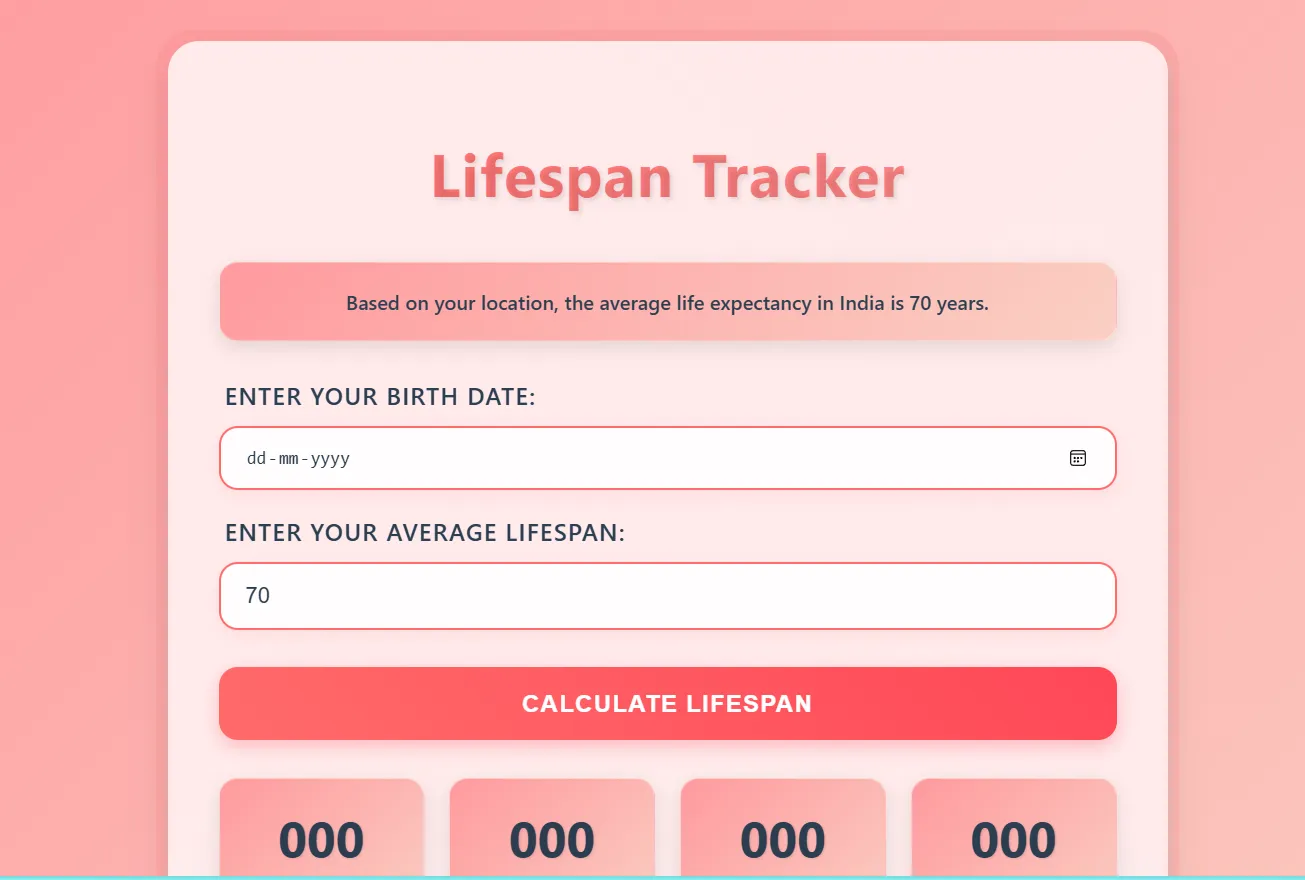 ToolLife Span TrackerAn interactive web tool that calculates expected lifespan, shows days, months and years lived, and visualises remaining time to motivate better habits.by ManayOpen the live project ↗
 AI & MLHugSelle: AI Smile GeneratorA heartwarming AI-powered web app that detects your mood and generates uplifting quotes and visuals to make you smile, a creative blend of technology and positivity.by AnuragOpen the live project ↗
 Web AppMoxo: Company Landing PageA stunning modern landing page with smooth parallax scrolling, advanced GSAP animations and elegant section transitions that bring the brand to life.by IshaOpen the live project ↗
Parent & student voices
What our families say
Real, verified reviews from Modern Age Coders families. Read hundreds more on our Wall of Love.
“The classes are excellent. The teachers explain concepts very clearly and make code fun and easy to understand. The sessions are interactive and fun. They also help students boost their confidence. We not only focus on academics, but also on logic building and problem solving.”
Parent
“Modern Age Coder have wonderful teachers who teach in a clear, easy and practical way. The teacher boosts students' confidence, keeps them updated with technology, and inspires them to learn without hesitation.”
Parent
“Mivaan enjoys the class. He understands the concepts and completes his tasks with excitement. He started taking interest in coding… truly amazing class.”
Parent of Mivaan