Pick the course. Start this week.
Every mentor teaches from a structured programme, adapted live to your child. Open a course to see the full syllabus and enroll in minutes, or start with a Priority Demo and let the placement pick for you.
 Best fit
Scratch Programming Complete
KS1-KS2 depth: the ideas school Scratch never has time for, from first sprite to shipped game.
$100/mo group · $150/mo 1-on-1
View course & enroll
Python & AI for Kids
The KS3 bridge and beyond: real Python taught gently, with the GCSE CS runway in sight.
$100/mo group · $150/mo 1-on-1
View course & enroll
Vibe Coding for Kids
Blocks, game builds and AI tools in one joyful arc: the KS2-to-KS3 bridge years, covered.
$100/mo group · $150/mo 1-on-1
View course & enrollGood online coding classes for a British child work with the national curriculum, not around it: they deepen the Scratch years of KS2, carry the child properly into text-based programming before KS3 demands it, and build the runway to GCSE Computer Science for those who want it. That is what we do: 8 live one-hour classes a month with a dedicated mentor, at UK-friendly evening and weekend slots, 1-on-1 or small group, priced in your currency, billed in USD, Priority Demo first.
First country to mandate computing. Still an hour a week.
Britain did something genuinely admirable in 2014: computing became a statutory national-curriculum subject from Key Stage 1, algorithms at five, programs designed and debugged through KS2, two languages including a text-based one by KS3. On paper, the most ambitious school computing framework in the world.
The classroom reality is thinner: roughly an hour a week where the timetable allows, primary teachers asked to deliver a subject most were never trained in, and computing squeezed by everything else. Children arrive at secondary school having "done Scratch" without owning the ideas inside it, and GCSE Computer Science, the subject's big payoff, stays a minority choice partly because the runway was never built.
Which means British kids are in an unusual position: the appetite is already lit, school made sure of that, and what is missing is exactly what a dedicated mentor supplies. Depth. Two full taught hours a week, the same teacher month after month, ideas before recipes, and projects your child actually ships.
The logistics happen to be ideal: UK after-school and evening hours sit squarely inside our mentors' prime teaching window, so the good slots, weekday 4 to 8 pm, weekend mornings, are genuinely available. And the price is arithmetic rather than magic: our cost base is global, so a month of eight one-hour classes costs about what a single hour of UK private tutoring does.
Six to fourteen, mapped to the key stages.
| Age & stage | The right work | Where it leads |
|---|---|---|
| 6-8 (KS1-early KS2) | Scratch taught properly: the ideas inside the blocks, through games and stories | School computing suddenly makes sense; the love of building takes root |
| 8-11 (KS2) | Bigger Scratch builds, game craft, first text code, exactly where school Scratch runs out of depth | Arrives at secondary already fluent where classmates are starting over |
| 11-13 (KS3) | Real Python, ahead of the curriculum's text-language requirement, plus honest AI literacy | KS3 computing becomes easy; the GCSE choice becomes informed instead of intimidating |
| 13-14+ (pre-GCSE) | Deeper Python, projects and problem-solving in the GCSE Computer Science style | A confident GCSE CS candidate, and our teen tracks take over from here |
Every rung taught by the same school, so climbing never means starting over. The Priority Demo places your child by evidence, not year group alone.
Eight signs it is time for proper coding classes.
School computing is one thin hour
The curriculum lit the spark; the timetable cannot feed it. Two real hours a week with a mentor can.
"Done Scratch", owns nothing
KS2 Scratch often teaches following, not thinking. We teach the ideas inside the blocks, and it shows within weeks.
Code Club ended, appetite did not
Volunteer clubs are brilliant and brief. A dedicated mentor is the continuation the appetite deserves.
KS3 text coding looms
The jump from blocks to Python defeats many Year 7s. Crossing it early, with a guide, removes the cliff entirely.
GCSE CS is on the maybe list
The subject rewards children who arrive fluent. A year of real Python beforehand turns maybe into confident yes, or informed no.
Weekly help felt out of reach
Paying by the hour for two lessons a week adds up fast. Here a month of eight taught hours is one flat fee, and you can see a full class first with a Priority Demo.
Screens are winning the evenings
The hours happen anyway; two of them a week can become building instead of watching.
Your child asked
The best sign there is. The demo is free and answers it better than any prospectus.
The blocks-to-Python bridge, crossed on purpose.
Python: for turn in range(10):
print("Hello!")
time.sleep(1)
The school version of this moment: Year 7, a new language, a blank editor, and syntax errors punishing every typo. Many children decide "coding is not for me" in exactly this term.
Our version: the child sees their own Scratch blocks and the Python side by side, and the mentor asks: "which line is the repeat block? which is the say block?" The child maps their existing ideas onto the new costume, types it, fixes the missing colon with the mentor naming the error kindly, and runs it. The bridge is crossed in one lesson, months before school demands it under pressure.
This single crossing, done early and gently, is the highest-value hour in British childhood coding. Everything after it, GCSE CS included, is a road instead of a wall.
How the classes fit UK life.
UK evenings, genuinely available
Weekday 4-8 pm and weekend mornings sit inside our mentors' prime window. You pick two weekly slots and they stay yours.
Curriculum-aware teaching
Mentors know the key-stage shape: what KS2 Scratch should have taught, what KS3 assumes, what GCSE CS rewards.
The same mentor, for years
The piano-lesson model: one teacher who knows your child's pace, gaps and spark, compounding term after term.
Projects, shipped and shown
Real builds on our Student Labs wall, demoed to family: identity fuel for a young maker.
Coding and maths, one school
Our mentors teach both, and plenty of UK families run one coding and one maths slot per week, including GCSE maths support.
Honest reads, on request
Recordings of every class, progress notes, and a straight answer about GCSE CS readiness when you want one.
Who this genuinely fits, and who it does not.
A strong fit if…
• Your child is 6-14, curious about screens and games, and you want that curiosity built into a real, lasting skill.
• Paying a tutor by the hour made twice-weekly help feel impossible, and the apps went stale in three weeks.
• You want one mentor who knows your child by name, not a rotating cast or a video library with a mascot.
• You care about the long game: the KS3 text-coding jump and the GCSE Computer Science runway that starts, quietly, in KS2.
Honestly not the fit if…
• Your child cannot yet engage with a screen and a teacher for a full hour. By age 6 nearly every child can, provided the hour is genuinely interactive, and ours are.
• You want projects built for the child so the portfolio looks good. Our mentors ask questions and coach; the child does the building, which is slower in week one and the whole point by month three.
• You want homework done for the child or a portfolio inflated. Our mentors coach; the child builds, which is slower in week one and the whole point by month three.
A real teacher. One honest price.
You are paying for a real teacher, live, for a full hour, twice a week, the format private tutors in the UK charge for by the hour. Here it is one flat monthly fee.
1:1 Private Mentorship
$150 / month
- 8 live one-hour classes a month, 2 per week4 live one-hour classes a month, 1 per week
- A dedicated mentor who knows your child by name
- Projects chosen with, and built by, your child
- Class recordings for revision · cancel any time
Small-Group Class
$100 / month
- 8 live one-hour classes a month, 2 per week
- A handful of children at the same level
- Same teaching method, gentle peer energy
- Recordings included · cancel any time
That is $18.75 per dedicated hour of 1-on-1 teaching, or $12.50 in a small group. No registration fee, no contract, and you can see a full class first with a Priority Demo. Read our zero-risk promise or compare with what US kids coding costs in 2026.
Mentors who teach the why, in classes kids wait for.
Our mentors are trained in one method: ideas before recipes, the child's hands on the keyboard, and the child talking more than the teacher. They teach both coding and mathematics, which matters more than it sounds, because a mentor who can smuggle fractions into a scoring system and coordinate geometry into a game map is teaching two subjects in one after-school hour.
And because the same mentor stays with your child month after month, teaching compounds: they know which ideas landed, which need another costume, and exactly when your child is ready for the next stretch.
"My child Dhairya is really enjoying the classes. This is his first online class, and he eagerly looks forward to it. I can see his improvement."
Sonam Oswal, mother of Dhairya · verified Google review
"My son struggled with math for years. Integrating it into coding projects has transformed his understanding and confidence. Highly recommended!"
Shewta Singh, mother of Ishan · verified Google review
Your real UK options, compared honestly.
| Option | Typical cost | What it really is | Best for |
|---|---|---|---|
| Modern Age Coders | $100-$150 / month | Live one-hour classes with a dedicated mentor, ideas-first, projects the child owns | Building a real young programmer, with the GCSE CS road open |
| Private coding tutors | Charged by the hour | Quality varies; twice-weekly sessions add up quickly | Families who have found, and can keep, a proven local gem |
| Franchise clubs and camps | A monthly fee, or a day rate for camps | Group sessions of varying depth, plus the drive | Children who focus better out of the house |
| Code Club / CoderDojo | Free | Volunteer-run, brilliant and brief: an hour a week while term and volunteers last | Always take these too; they complement real tuition |
| Self-paced apps | A small monthly subscription | Gamified puzzle tracks, no teacher, no one to ask why | Extra practice between real lessons |
Competitor figures are typical published UK prices as of July 2026. See our full comparisons: vs Outschool · vs Tynker · best online coding classes for kids 2026.
Everything UK parents ask.
How do class timings work for UK families?
Ideally, as it happens: UK after-school and evening hours, roughly 4 to 8 pm, sit squarely inside our mentors' prime teaching window, and weekend mornings work too. You pick two weekly slots and they stay yours, adjusted around half-terms and holidays rather than cancelled by them.
Does this follow the national curriculum?
It works with it rather than repeating it: mentors know what KS1-2 computing should have taught, what KS3 assumes (two languages including a text-based one), and what GCSE Computer Science rewards. Your child's classes deepen and stay ahead of school, so computing lessons become the easy hour of their week.
My child did Scratch at school and seems bored of it. Now what?
School Scratch often teaches following rather than thinking, and boredom usually means recipes ran out, not that blocks did. Depending on age we either reopen Scratch properly, real ideas, the child's own projects, or cross the bridge to Python early and gently. The demo placement settles which.
How does this help with GCSE Computer Science?
GCSE CS rewards children who arrive already fluent in a text language, usually Python, and comfortable with algorithmic thinking. Our ladder builds exactly that runway through KS2-3, and our teen tracks support the GCSE itself. A year of real Python beforehand turns the subject from gamble into stroll.
Is Code Club not enough?
Code Club and CoderDojo are brilliant, and we say so without reservation, but they are an hour a week of volunteer-led group time while term and volunteers last. If your child's appetite has outgrown that, a dedicated mentor twice a week is the natural next step. Many of our UK students came to us exactly this way.
What does it cost in pounds?
The fees for private 1-on-1 and small-group classes are shown in your own currency in the pricing section of this page. Billing is monthly, there is no contract and you can cancel any time. For calibration: one hour with a typical UK private tutor costs about the same as our entire month of group classes.
Are the mentors comfortable teaching British kids?
Yes, the UK is one of our largest cohorts, and evening-slot chemistry helps: your child gets a mentor at their sharpest hours. Classes run in English, and the method, interactive, question-driven, project-first, is precisely the depth the timetable never had room for.
What equipment does my child need?
A computer with a browser and stable internet. Scratch and Python need nothing else; game-platform projects need a machine that runs those tools, confirmed at the demo. Nothing to purchase.
Do you also teach maths?
Yes, it is half of what we do, same mentors and method, including GCSE and IGCSE maths tracks. Plenty of UK families run one coding and one maths slot per week.
Can we try a class before enrolling?
Yes. Book a Priority Demo: a full live class of about 45 to 60 minutes, today or tomorrow, with a mentor reserved for your child. After the class the mentor sends a written skill report and a personal learning roadmap on WhatsApp. If you enrol, the demo fee is adjusted against your first month's fee.
More for British families from Modern Age Coders.
Watch one full hour of real teaching. Free.
Book the demo class. Your child gets a real lesson with a real mentor, builds something real inside the hour at a UK evening slot, and you get an honest placement on the ladder. If your child does not leave the hour asking when the next class is, walk away with our thanks.
Real student projects
What our students actually build
Every one is a real, live project shipped by a Modern Age Coders student. Explore more in Student Labs.
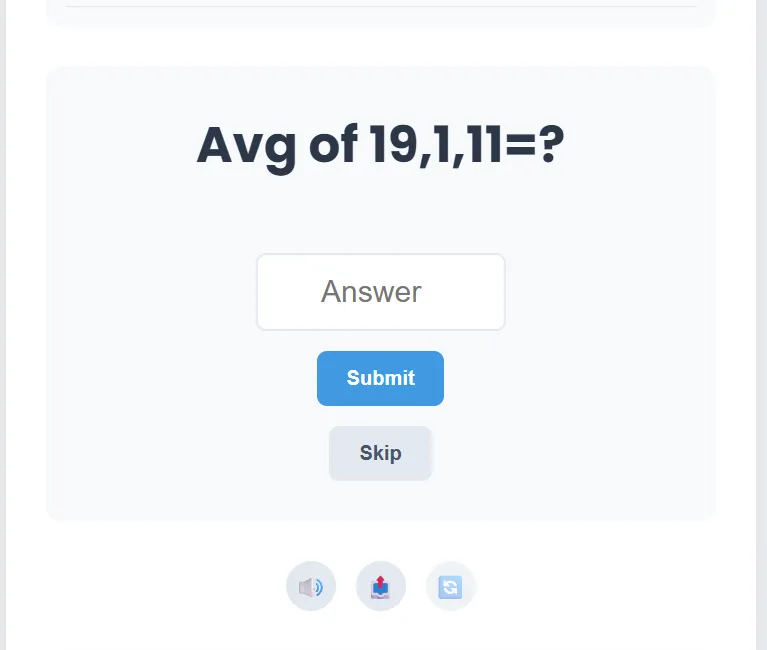 GameBabu: 90 Second Maths ChallengeAn exciting 90-second maths challenge with random problems under time pressure, and a dynamic leaderboard powered by Firebase/MongoDB with real-time score updates.by Modern Age CodersOpen the live project ↗
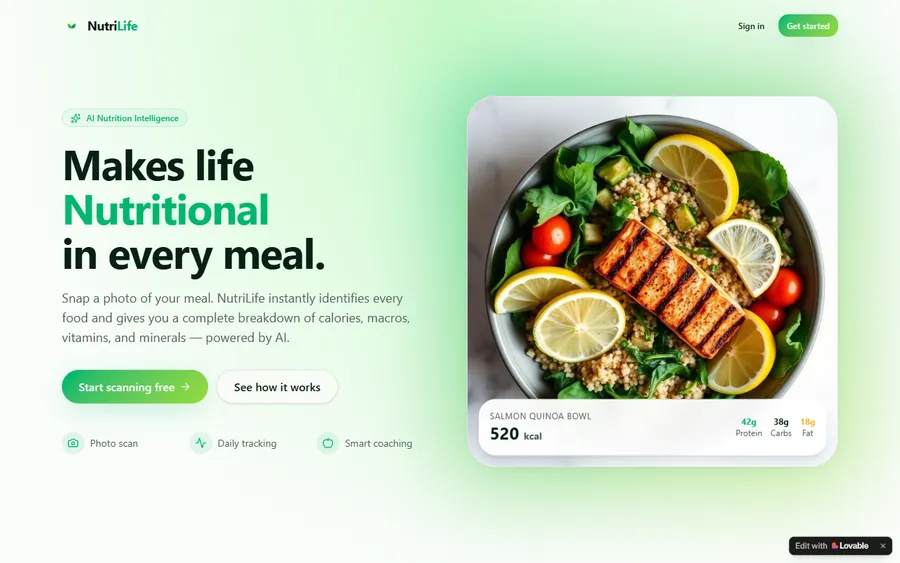 AI & MLNutriLife: AI Nutrition CoachSnap a photo of any meal and NutriLife instantly names every food, then breaks down the calories, macros, vitamins and minerals, powered by AI. Bhavya vibe-coded it from a single idea: shaped the app in prompts, then wired up the AI food-recognition, daily tracking and smart coaching by hand.by BhavyaOpen the live project ↗
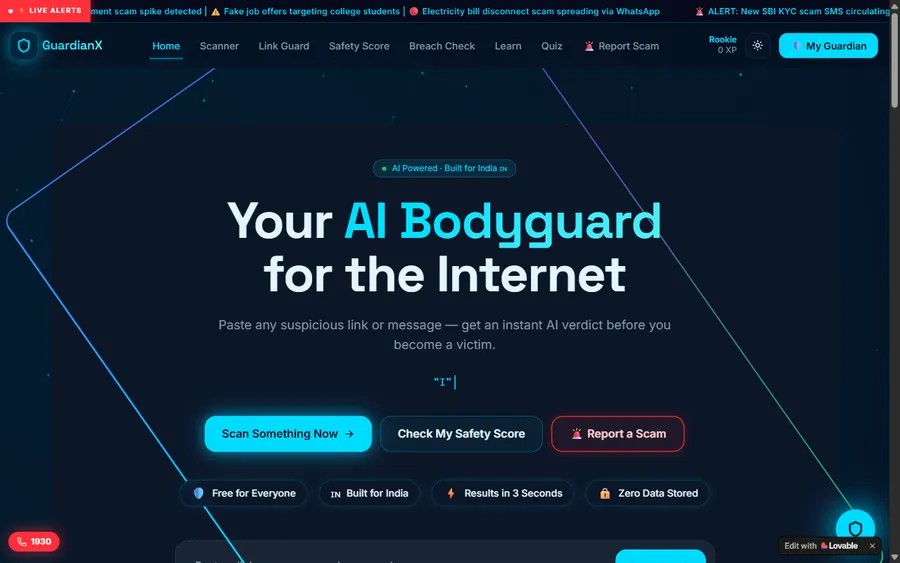 AI & MLGuardianX: AI Bodyguard for the InternetPaste any suspicious link or message and GuardianX returns an instant AI verdict before you become a victim, plus a link scanner, safety score, breach check and live scam alerts built for India. Vibe-coded from idea to working product through prompts, then refined until it genuinely understands how phishing and scams work.by VivaanOpen the live project ↗