Pick the course. The junior calendar is unforgiving.
Every mentor teaches from a structured programme, adapted live to your teen and their test dates. Open a course to see the full syllabus and enroll in minutes, or start with a Priority Demo and let the diagnostic build the plan.
 Best fit
High School Mathematics Mastery
The course-and-tests-as-one-skill approach this page describes, run by a dedicated mentor.
$100/mo group · $150/mo 1-on-1
View course & enroll
SAT Math 800 Prep Course
The junior-year test machine: Desmos strategy, adaptive pacing and full mock cycles.
$100/mo group · $150/mo 1-on-1
View course & enroll
AP Calculus AB & BC Exam Prep
For juniors already in calculus: the FRQ-rubric track with a score-5 goal.
$100/mo group · $150/mo 1-on-1
View course & enrollGood 11th grade math tutoring treats the junior year as one campaign, not three emergencies: Algebra 2 taught for ownership (it is the SAT's core content anyway), the test calendar planned backward from application season, and every study hour engineered to pay both the GPA and the score. That is what we do: live one-hour classes with a dedicated mentor, in small groups (8 a month) or private 1-on-1, priced for your country and shown in your local currency, Priority Demo first.
Three clocks, one student, zero slack.
Count the clocks running on a junior. The course clock: Algebra 2 (or precalculus for the accelerated), the hardest common course on the transcript, in the GPA year colleges weight most. The test clock: October's PSAT/NMSQT, the one with National Merit money attached, then SAT sittings in spring, timed so a retake stays possible senior fall. The application clock, already ticking underneath both.
Most families respond with three separate solutions, a tutor for the course, a prep class for the SAT, panic for the rest, and the student pays the overhead: three planners, three homework streams, zero coordination.
The coordinated version is simply better math: Algebra 2 IS the SAT's core content. Quadratics, functions, exponentials, systems, the course and the test examine the same body of skill from two angles. One mentor teaching that body deeply, then adding each exam's specific craft, gets both outcomes from the same hours.
That is our junior-year design: the course taught for ownership week to week, test craft layered on the same concepts, the calendar planned backward from your teen's actual dates, and one adult keeping the whole campaign coherent. Junior year stays heavy, that is its nature, but it stops being chaotic, which is what actually breaks students.
The junior-year campaign, mapped.
| Front | What it demands | The double-pay opportunity |
|---|---|---|
| Algebra 2 core | Function families, quadratics at depth, polynomials, rational and radical expressions | Every unit is SAT Advanced Math content wearing school clothes |
| Exponentials & logarithms | The course's famous wall: logs as "what exponent?", growth models, equation solving | SAT exponential-model questions, and the precalculus foundation, in one buy |
| Trigonometry | Unit circle, graphs, identities (depth varies by school) | The precalculus head start that makes senior year lighter |
| PSAT/NMSQT (October) | The National Merit sitting: real stakes, narrow window | A focused September sharpens it; the work is SAT prep anyway |
| SAT (spring sittings) | Adaptive modules, Desmos fluency, pacing craft on Algebra 1-2 content | Course mastery converts to score with 8-12 weeks of test-specific craft |
| The GPA itself | Junior grades weigh heaviest in admissions reads | Teaching to the school's test calendar protects it in real time |
Juniors in precalculus or AP Calculus run the same campaign shape with different content, our precalculus and AP Calculus pages cover those roads in depth.
One technique, two exams: completing the square.
x² + 6x + 2 → (x + 3)² - 7 → vertex (-3, -7)
SAT, May: find the center of the circle x² + y² + 6x - 4y = 12
(x + 3)² + (y - 2)² = 25 → center (-3, 2), radius 5
Same move, two costumes. The student who learns completing-the-square as an idea, rebuilding a perfect square and paying back the correction, owns both questions. The student who learned it as a Friday-test ritual meets the circle question in May as a stranger.
This is what "every hour pays twice" means in practice: we teach the Algebra 2 unit deeply enough that the SAT version comes free, then add only the test-specific craft (Desmos shortcuts, pacing, answer-choice strategy) on top. Multiply across the whole syllabus and the junior year gets lighter without getting thinner.
One campaign, one mentor, every hour paying twice.
The backward calendar
PSAT, SAT sittings, finals and AP dates mapped in week one, and the whole year planned backward from them.
Course-first, test-smart
Algebra 2 taught for ownership, with each unit's SAT twin shown alongside, one body of skill, two scoreboards.
Craft in its season
Desmos fluency, module pacing and mock cycles arrive as sittings approach, layered on mastery instead of replacing it.
The GPA protected live
School quizzes and tests drive weekly pacing, so the transcript benefits now, not just in a future score report.
Triage, honestly
When weeks get brutal, the mentor calls priorities out loud, this test matters more than that quiz, so your teen never has to guess.
One adult holding the map
The same mentor all year, watching load and morale as closely as marks: coherence is the real junior-year product.
From September to sitting, without the chaos.
Class 1 · The Priority Demo diagnostic
Course position, gap inventory, test dates on the table, and the backward calendar drafted before any teaching begins.
Fall · Course depth + the PSAT sharpening
Algebra 2's core taught for ownership, with a light September polish for October's National Merit sitting.
Winter · The hard units, doubled
Exponentials, logs and trig owned deeply, each with its SAT twin alongside, while the GPA stays protected through midterms.
Spring · The SAT season
Mock cycles, Desmos craft and pacing plans peak into the chosen sitting, with the course finale covered in the same motion.
Summer handoff · Senior year, pre-decided
An honest read: retake or bank the score, precalculus or calculus road, and what senior fall should look like.
What one full hour looks like, at sixteen.
0-10 min · Retrieval + calendar check
Last idea re-derived, and the week's real priorities named out loud.
10-35 min · The unit, taught deep
Today's Algebra 2 territory built from meaning, with its SAT twin shown in the same breath.
35-50 min · Reps at real difficulty
School-test or SAT-format problems on a light clock, reviewed for where reasoning bent.
50-60 min · Explain-back and the week
Your teen teaches the idea back, and the week's work leaves with a stated purpose.
Junior year rewards coherence over heroics. Watch the difference in a real class: the demo is free. See exactly how we teach →
Who this genuinely fits, and who it does not.
A strong fit if…
• Algebra 2 and the SAT calendar have collided, and the current approach is three uncoordinated solutions instead of one campaign.
• The junior GPA is wobbling in the year colleges weight most, and the fix needs to land on this semester, not a someday score.
• Your teen is coasting at school and needs depth and challenge before boredom becomes a habit.
• You want one mentor who knows your teen, not a rotating cast or an app with streaks.
Honestly not the fit if…
• You want a score promised by a date. We build documented progressions and honest targets; invented numbers are the other guys.
• You want homework done for your teen. We teach your teen to do it, which is slower on night one and far faster by week four.
• You expect the crunch year without the crunch. Two focused hours a week buys coherence, not exemption, and we say so upfront.
Premium teaching. One honest price.
You are paying for a real teacher, live, for a full hour, twice a week, the same format US tutoring centers charge $300 to $450 a month for. Our cost base is global, so the price is not.
1:1 Private Mentorship
$150 / month
- 8 live one-hour classes a month, 2 per week4 live one-hour classes a month, 1 per week
- A dedicated mentor who knows your teen by name
- Diagnostic-led plan against the full 11th grade map
- Class recordings for revision · cancel any time
Small-Group Class
$100 / month
- 8 live one-hour classes a month, 2 per week
- A handful of children at the same level
- Same teaching method, gentle peer energy
- Recordings included · cancel any time
That is $18.75 per dedicated hour of 1-on-1 teaching, or $12.50 in a small group. No registration fee, no contract, and you can see a full class first with a Priority Demo. Read our zero-risk promise or compare with what US math tutoring costs in 2026.
Mentors who teach the why, in classes kids wait for.
Our mentors are trained in one method: understanding before procedure, concrete before abstract, the student talking more than the teacher. They teach both math and coding, which matters more than it sounds, because a mentor with both toolkits has engagement moves a worksheet never will.
And because the same mentor stays with your teen month after month, teaching compounds: they know exactly which ideas landed, which need another costume, and when the next stretch is due.
"My child Dhairya is really enjoying the classes. This is his first online class, and he eagerly looks forward to it. I can see his improvement."
Sonam Oswal, mother of Dhairya · verified Google review
"My son struggled with math for years. Integrating it into coding projects has transformed his understanding and confidence. Highly recommended!"
Shewta Singh, mother of Ishan · verified Google review
Your real options for a 11th grade student.
| Option | Typical cost | What it really is | Best for |
|---|---|---|---|
| Modern Age Coders | $100–$150 / month | Live one-hour classes with a dedicated mentor, understanding-first teaching | Rebuilding understanding and confidence, sustained progress |
| Mathnasium center | $300-$450 / month + enrollment fee | Drop-in worksheet floor with rotating instructors | Children who focus better out of the house |
| Kumon | $150-$220 / subject / month | Daily worksheet packets, brief check-ins, no taught lessons | Building a drill habit and calculation speed |
| Local private tutor | $35-$80 / hour | Quality varies; twice-weekly quickly costs $280-$640 a month | Short-term help when you have found a gem nearby |
| Math apps | $10-$20 / month | Gamified practice, no teacher, no accountability | Casual practice between real lessons |
Competitor figures are typical published US prices as of July 2026. See our full comparisons: vs Mathnasium · vs Kumon · best online math tutoring 2026.
Everything families ask about 11th grade math tutoring.
Should we get a course tutor and a separate SAT prep program?
Usually not, and the reason is mathematical rather than commercial: Algebra 2 IS the SAT's core content, so separate programs pay twice for the same concepts while doubling your teen's overhead. One mentor teaching the body of skill deeply, then layering each exam's craft in its season, gets both outcomes from the same hours. The exception: a teen whose course is secure and who only needs test craft, then our SAT course alone fits.
When should the SAT actually be taken?
The standard smart calendar: first sitting in spring of junior year (March through June), leaving senior fall for a retake if wanted. The PSAT/NMSQT in October of junior year is its own event, National Merit consideration rides on it, so a September sharpening is worth it for strong testers. We plan backward from your teen's actual dates in week one.
My junior's grade is fine but the practice SAT score is not. What gives?
School rewards showing work over a unit; the SAT rewards speed and structure-recognition across two adaptive modules. The gap is craft, not content: pacing, Desmos fluency, and knowing the fastest honest route. That is precisely the layer our test-season work adds on top of course mastery.
Is it too late to fix a shaky Algebra 1 base in junior year?
No, but it changes the plan: the base gets repaired inside current Algebra 2 problems (where fixes stick), prioritized by what the SAT and the course both lean on most, fractions, exponents, equation habits. Six to ten weeks of that inline repair typically unlocks everything downstream.
My junior is in precalculus or AP Calculus, not Algebra 2. Same program?
Same campaign shape, different content: the course taught deeply, the SAT layered in season, the calendar run backward. Our precalculus and AP Calculus pages describe those roads; the demo places your teen by course, not grade label.
How do you handle the stress? Junior year breaks kids.
Structurally, not with pep talks: a visible plan (chaos is the real stressor), triage called out loud so your teen never guesses what matters, load flexed around brutal weeks, and one adult holding the whole map. Parents tell us the mood changes before the marks do.
What does it cost?
Pricing is set for each country and shown on this page in your own currency. Group plans include 8 live one-hour classes a month and 1-on-1 plans run private weekly sessions, all billed month to month. To see a class first, book a Priority Demo. No registration fee, no contract, and no separate "SAT package" upsell, the campaign is the product.
What about SAT Subject-style depth or AP exams in May?
AP-track juniors get the rubric-and-mock machinery of our AP Calculus prep alongside course work, sequenced so May and the SAT sittings do not collide blindly. It is exactly the kind of calendar conflict the backward plan exists to solve.
Can we try a class before enrolling?
Yes. Book a Priority Demo: a full live class of about 45 to 60 minutes, today or tomorrow, with a mentor reserved for your child. After the class the mentor sends a written skill report and a personal learning roadmap on WhatsApp. If you enrol, the demo fee is adjusted against your first month's fee.
More math help from Modern Age Coders.
Watch one full hour of real teaching. Free.
Book the demo class. Your teen gets a real lesson with a real mentor, you get a diagnostic against the full 11th grade map. If your teen does not leave the hour lighter about math, walk away with our thanks.
Real student projects
What our students actually build
Every one is a real, live project shipped by a Modern Age Coders student. Explore more in Student Labs.
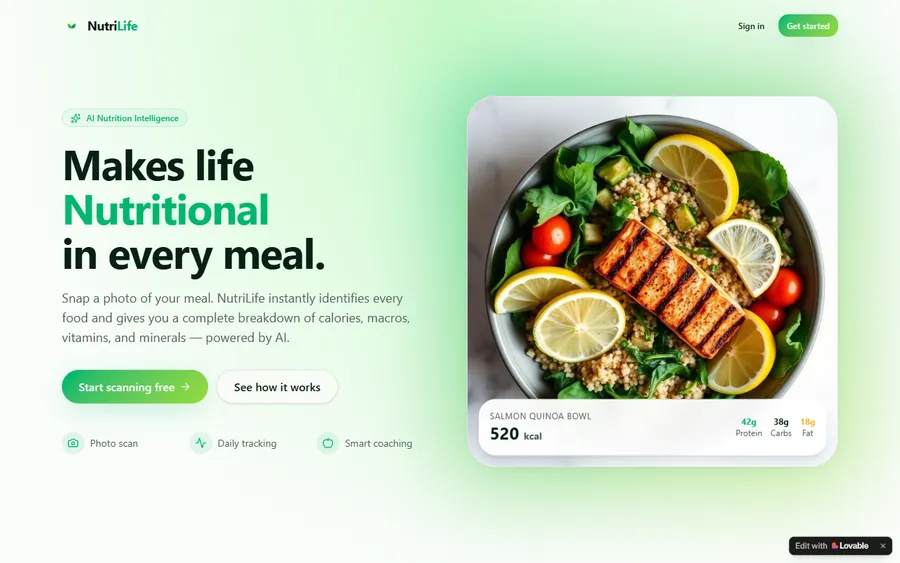 AI & MLNutriLife: AI Nutrition CoachSnap a photo of any meal and NutriLife instantly names every food, then breaks down the calories, macros, vitamins and minerals, powered by AI. Bhavya vibe-coded it from a single idea: shaped the app in prompts, then wired up the AI food-recognition, daily tracking and smart coaching by hand.by BhavyaOpen the live project ↗
 AI & MLGuardianX: AI Bodyguard for the InternetPaste any suspicious link or message and GuardianX returns an instant AI verdict before you become a victim, plus a link scanner, safety score, breach check and live scam alerts built for India. Vibe-coded from idea to working product through prompts, then refined until it genuinely understands how phishing and scams work.by VivaanOpen the live project ↗
 GamePalm Arcana: Summon the ElementsOpen your palms to the webcam and computer vision turns your gestures into real magic, the left palm throws a fireball, the right crackles with lightning. A wild blend of hand-tracking AI, creative coding and pure imagination, vibe-coded into a playable browser experience.by AarushOpen the live project ↗