Pick the course. Start this week.
Every mentor teaches from a structured programme, adapted live to your child. Open a course to see the full syllabus and enroll in minutes, or start with a Priority Demo and let the diagnostic pick the level for you.
 Best fit
PSLE Maths Mastery
Model method as thinking, problem-sum families and Paper 1 fluency, at Singapore evening hours.
$100/mo group · $150/mo 1-on-1
View course & enroll
Elementary Mathematics Masterclass
Counting to advanced problem solving: number sense, fractions, geometry and word problems, built concrete-first.
$100/mo group · $150/mo 1-on-1
View course & enroll
Olympiad & Competition Mathematics
Contest-level problem solving for the student who wants more than the syllabus.
$100/mo group · $150/mo 1-on-1
View course & enrollGood online maths tuition for a Singapore student is MOE-syllabus exact: model method and heuristics for primary, PSLE paper technique (including the no-calculator Paper 1), the E Maths versus A Maths reality at secondary, and understanding-first teaching throughout, the way the syllabus was designed. That is what we do: 8 live one-hour classes a month in Singapore-friendly evening slots, 1-on-1 or small group, priced in your currency, Priority Demo first.
The tuition arms race is real. The queues and worksheets are optional.
No country takes maths more seriously than Singapore, and no exam concentrates that seriousness like the PSLE. Problem sums engineered to separate thinkers from drillers, Achievement Levels where a single AL decides posting outcomes, and a Paper 1 that strips away the calculator: the pressure arrives at age twelve and does not really leave, it just changes names, E Maths, A Maths, O-Levels, and the new common national certificate arriving from 2027.
Singapore's answer has been tuition at industrial scale: centres with waitlists, classes of eight to fifteen, another weekly commute added to a child who already has CCA, and stacks of assessment books. It works, partly, for some children. But a centre teaches its batch, not your child, and the child who needed help with this week's misunderstanding waits for the schedule to come around.
Here is what we bring that is genuinely different: the method, taught 1-on-1, without the commute. Our mentors teach concrete-pictorial-abstract natively, the philosophy underneath the MOE syllabus, with model drawing and heuristics as living tools rather than memorized templates. One full hour, twice a week, where your child does the thinking aloud and the mentor adapts in real time, at Singapore evening hours that fit around school and CCA.
And the honest economics: Singapore centre tuition commonly runs SGD 250 to 500 a month for group classes, and private tutors SGD 40 to 90 an hour. Our 1-on-1 plan costs less, not because the teaching is lighter, but because our cost base is global. Quality first; the price is simply what lets you verify that claim without risk.
The Singapore maths road, mapped.
| Stage | What the syllabus demands | Where children actually struggle |
|---|---|---|
| Primary 1-4 | Number sense, model method foundations, fractions, early heuristics | Model drawing learned as a template instead of a thinking tool; the gap surfaces at P5 |
| Primary 5-6 → PSLE | Fractions of remainder, ratio, percentage, speed, geometry, and the famous multi-step problem sums; Paper 1 without a calculator, AL scoring | Problem sums that chain three ideas; time pressure; the difference between AL2 and AL4 is usually method, not knowledge |
| Secondary (G2/G3) | E Maths for all; A Maths for those keeping the door to H2 Maths open; Full Subject-Based Banding shapes the mix | Algebra replacing models as the language; A Maths pace; deciding too late that A Maths mattered |
| O-Level / new SEC (from 2027) | E Maths (and A Maths) papers with engineered mark schemes | Method marks donated through skipped working; panic on unfamiliar problem framings |
| JC: H1/H2 Maths | A-Level mathematics with genuine depth, calculus, vectors, statistics | The A Maths-to-H2 jump; students who memorized their way here hit the wall |
Exam structures and scoring evolve, AL bands, Full SBB, the common SEC certificate from 2027; we verify current MOE and SEAB documentation for your child's cohort and year.
Eight signs the current arrangement is not working.
Problem sums are the wall
Computation fine, but the multi-step P5/P6 problem sums produce blank stares. This is a model-method depth issue, and it is teachable.
Models drawn as ritual
Your child draws bars because school demands it, without the bars actually carrying the reasoning. Template without thinking.
Paper 1 bleeds marks
Calculator-free arithmetic is slow or shaky, and PSLE Paper 1 charges for it, question after question.
The centre teaches the batch
Fifteen children, one pace. Your child's specific misunderstanding waits weeks for its turn, if it ever comes.
Assessment books multiply, marks do not
Volume practice repeats errors. A stuck score means an understanding gap upstream that no book stack repairs.
The A Maths question looms
Keeping H2 Maths and engineering doors open needs A Maths, and A Maths punishes weak algebra brutally.
The schedule is eating the child
School, CCA, commute, centre, homework. An online hour at home gives back two hours of childhood a week.
Confidence is going before marks do
"I am just bad at maths" said at ten predicts the next six years, unless someone rebuilds the understanding underneath.
Recognize your child? One Priority Demo, at a Singapore evening hour, shows you exactly what 1-on-1 method teaching changes.
A PSLE-style problem sum, solved the way examiners intend.
and 1/2 of the remainder in the afternoon. She had 36 cookies left.
How many cookies did she bake?
The drilling child multiplies the fractions in sight, 2/5, 1/2, gets tangled in what "the remainder" refers to, and guesses.
The model-trained child draws the whole as 5 units, shades 2 for the morning, sees 3 units remain, and halves the remainder:
afternoon sold 1/2 of remainder → 1.5 units → left = 1.5 units
easier: split whole into 10 parts → morning 4, remainder 6, afternoon 3, left 3
3 parts = 36 → 1 part = 12 → whole = 10 parts = 120 cookies ✓
The re-cutting move, from fifths into tenths so the halving lands on whole parts, is exactly the flexibility PSLE problem sums reward and templates cannot supply. It comes from understanding what the model means, which is precisely what a live mentor builds and a worksheet cannot.
The method underneath the syllabus, taught 1-on-1.
Model method as thinking
Bar models taught as reasoning tools, part-whole, comparison, before-after, re-cutting, not as a ritual the school demands.
Heuristics, explicitly
Work backwards, guess-and-check with discipline, restate the problem, spot patterns: the MOE heuristics taught as named, reusable moves.
Paper 1 fluency
Calculator-free arithmetic and estimation trained in every class, because AL bands are lost one careless Paper 1 mark at a time.
The algebra handover
At secondary, models translate into equations side by side, so algebra arrives as new notation for old understanding, the A Maths insurance policy.
Exam craft, honestly
Real past papers, real mark schemes, time discipline and presentation of working, taught to your child's actual cohort and format.
One mentor, your child's pace
The same teacher every class, planning each hour against your child's specific gaps, something no batch of fifteen can offer.
An A Maths question, where the idea does the work.
is tangent to the curve y = x² + 3.
The memorizing student knows "tangent means discriminant equals zero" as an incantation, substitutes wrongly, and loses the thread when the framing shifts.
The understanding-trained student knows why: tangency means the line meets the curve exactly once, so the intersection equation must have exactly one solution.
x² - 2x + (3 - k) = 0
one solution → discriminant = 0
(-2)² - 4(3 - k) = 0 → 4 - 12 + 4k = 0 → k = 2
When the exam re-frames the question, "find the range of k for which the line misses the curve", the incantation fails and the idea survives: no intersection means discriminant below zero, k < 2. A Maths is a course of ideas wearing procedures; we teach the ideas, and the procedures stop being fragile.
From diagnostic to exam day, mapped.
Class 1 · The Priority Demo diagnostic
A real lesson at a Singapore evening hour, plus an audit: model-method depth, Paper 1 fluency, and where the problem sums actually break.
Month 1 · The method, rebuilt properly
Models re-taught as thinking tools at your child's level, heuristics named and practised, calculator-free fluency started as a habit.
Months 2-4 · Problem-sum craft
The P5/P6 canon, remainders, ratio, percentage, speed, taught by structure family, so new problems look like old friends in disguise.
Exam runway · Papers and pacing
Timed past papers for your child's cohort, mark-scheme discipline, and the calm that comes from having met every question shape before.
Beyond · Secondary and the A Maths door
The same mentor carries your child across the algebra handover, into E Maths and A Maths, momentum intact.
What one full hour looks like, at your dining table.
Every class is a full 60 minutes, live and interactive, scheduled for Singapore evenings, no commute, no waiting room:
0-10 min · Paper 1 warm-up
Calculator-free arithmetic and estimation at exam tempo, the fluency that protects AL bands, built in daily doses.
10-35 min · The day's structure
One problem-sum family or syllabus topic taught from the idea underneath, your child drawing, deciding and explaining aloud.
35-50 min · Exam-condition reps
Real past-paper questions on the clock, then the review that matters: where did the method wobble, and why.
50-60 min · Explain-back and the week's plan
Your child teaches the idea back, and the week's practice is set with a purpose they can state, not another stack of pages.
Children wait for these classes, which surprises Singapore parents most of all. Watch one before believing us: the demo is free. See exactly how we teach →
Who this genuinely fits, and who it does not.
A strong fit if…
• Your child faces the PSLE, or the E Maths and A Maths years, and the marks do not match what their effort deserves.
• Problem sums are the wall, Paper 1 bleeds careless marks, or the centre batch simply is not teaching your child.
• Maths has become a nightly battle and you want a calm MOE-syllabus-fluent expert to take over the teaching.
• You want one mentor who knows your child and their cohort, not a rotating centre cast or an app with streaks.
Honestly not the fit if…
• Your child cannot yet engage with a screen and a teacher for a full hour. By Primary 3 nearly every child can, provided the hour is genuinely interactive, and ours are.
• You want homework done for the child. We teach the child to do it, which is slower on night one and far faster by week four.
• You want a two-week miracle before the exam. A fortnight buys paper technique, real AL movement takes a term of understanding work, and we will tell you honestly which one time allows.
The courses behind the tutoring.
Every mentor teaches from a structured curriculum, adapted live to your child. If you prefer to see the full syllabus before you start, these are the programmes Singapore students join, matched to level.
Premium teaching. One honest price.
You are paying for a real teacher, live, for a full hour, twice a week, the format Singapore private tutors bill SGD 40 to 90 an hour for. Our cost base is global, so the price is not.
1:1 Private Mentorship
$150 / month
- 8 live one-hour classes a month, 2 per week4 live one-hour classes a month, 1 per week
- A dedicated mentor who knows your child by name
- Diagnostic-led plan for your child's level and cohort
- Class recordings for revision · cancel any time
Small-Group Class
$100 / month
- 8 live one-hour classes a month, 2 per week
- A handful of children at the same level
- Same teaching method, gentle peer energy
- Recordings included · cancel any time
That is $18.75 per dedicated hour of 1-on-1 teaching, or $12.50 in a small group. No registration fee, no contract, and you can see a full class first with a Priority Demo. Read our zero-risk promise or compare with what maths tutoring costs in 2026.
Mentors who teach the why, in classes kids wait for.
Our mentors are trained in one method: understanding before procedure, concrete before abstract, the child talking more than the teacher. They teach both maths and coding, which matters more than it sounds, because a mentor who can turn "4 groups of 6" into a model your child wants to build has engagement tools a worksheet never will.
And because the same mentor stays with your child month after month, teaching compounds. They know that your daughter rushes when unsure, that your son shuts down after two wrong answers, and exactly which idea to revisit before it becomes a gap.
"My child Dhairya is really enjoying the classes. This is his first online class, and he eagerly looks forward to it. I can see his improvement."
Sonam Oswal, mother of Dhairya · verified Google review
"My son struggled with math for years. Integrating it into coding projects has transformed his understanding and confidence. Highly recommended!"
Shewta Singh, mother of Ishan · verified Google review
Your real options in Singapore.
| Option | Typical cost | What it really is | Best for |
|---|---|---|---|
| Modern Age Coders | $100-$150 / month | Live one-hour 1-on-1 classes, MOE-syllabus exact, model method taught as thinking, no commute | A child who needs teaching aimed at them, not at a batch |
| Tuition centres | SGD 250-500+ / month | Group classes of 8-15, fixed pace, waitlists at the famous ones, plus the weekly commute | Children who thrive on batch energy and are near the class's exact level |
| Private home tutors | SGD 40-90+ / hour | Quality varies widely; twice weekly runs SGD 320-720+ a month | Families who have found, and can keep, a proven tutor |
| Star "super tutors" | SGD 100-300+ / hour | Famous names with waitlists and premium rates | Final-sprint polish for students already near the top |
| Assessment books alone | SGD 10-30 each | Endless practice with nobody correcting the thinking behind the errors | Disciplined students already at their target level |
Competitor figures are typical published Singapore prices as of July 2026. See our full comparisons: what maths tutoring costs · best online math tutoring 2026.
Everything Singapore families ask.
Do you actually teach the MOE syllabus, or a generic international one?
The MOE syllabus, specifically: model method and heuristics at primary, PSLE paper structure including the no-calculator Paper 1, E Maths and A Maths content at secondary, and the JC H1/H2 road beyond. Our mentors teach concrete-pictorial-abstract as their native method, which is exactly the philosophy underneath Singapore maths. We verify current SEAB formats for your child's cohort, including the changes arriving with the common national certificate from 2027.
How do the class timings work from Singapore?
Comfortably. Singapore evenings, after school and CCA, map to our mentors' prime teaching hours, so slots like 6 to 9 pm SGT are genuinely available, not squeezed in. Weekend mornings work too. You pick the two weekly slots that fit your family and they stay yours.
My child attends a tuition centre already. Why would online 1-on-1 be better?
Sometimes it is not, a child near the top of a good batch, thriving on the energy, should stay. The switch makes sense when the batch pace is wrong for your child in either direction: the struggling child whose specific gaps never get airtime, or the capable child rehearsing what they already know. 1-on-1 aims every minute at your child, and removes a commute besides.
Can you fix problem sums specifically? That is where all the marks go.
Yes, and problem sums are the most teachable "talent" in Singapore maths. They break down into structure families, remainder problems, before-after, ratio-change, speed, each with a model shape and a heuristic. We teach the families, then the flexibility to re-cut models when the numbers demand it. A term of that work changes what your child sees when they read a problem.
What about PSLE Paper 1, without the calculator?
Every class opens with calculator-free arithmetic and estimation at exam tempo, because AL bands are protected one careless mark at a time. Fluency is a habit built in small daily doses, not a cram, and it pays again at secondary when algebraic manipulation needs clean arithmetic underneath.
Should my child take A Maths at upper secondary?
If H2 Maths, engineering, or computing is even a possibility: yes, because A Maths is the door to them. It punishes weak algebra, which is why we treat lower-secondary algebra as A Maths insurance. And if your child is already in A Maths and struggling, the fix is almost always upstream, in the algebra, not in more A Maths drilling.
Is the AL scoring system something you prep for specifically?
We prep for understanding first, then exam craft against the actual format: time allocation, presentation of working, and the discipline of banking secure marks before wrestling the hardest problem sums. The AL bands reward consistency, which is a trainable behavior, not a personality trait.
What does it cost, honestly, compared to what we pay now?
The fees for private 1-on-1 and small-group classes are shown in your own currency in the pricing section of this page. Billing is monthly, there is no contract and you can cancel any time. Most Singapore families currently pay more for group classes at a centre, and substantially more for private tutoring at SGD 40 to 90 an hour.
My child is aiming at GEP / DSA / competition maths. Do you go beyond the syllabus?
Happily. Mentors extend strong students into olympiad-style problem solving, the same reasoning depth, harder puzzles, through our competition mathematics track. It is also the best preparation for the thinking-heavy questions that top schools use to separate the strong from the drilled.
Who teaches, and do they understand Singapore's system?
Mentors who teach both mathematics and coding, trained in concrete-pictorial-abstract teaching and briefed on MOE structures, PSLE, Full SBB, E and A Maths, and who verify your child's exact cohort details rather than assuming. Meet the team on our team page, and read our 547 Google reviews.
Can we try a class before enrolling?
Yes. Book a Priority Demo: a full live class of about 45 to 60 minutes, today or tomorrow, with a mentor reserved for your child. After the class the mentor sends a written skill report and a personal learning roadmap on WhatsApp. If you enrol, the demo fee is adjusted against your first month's fee.
More maths help from Modern Age Coders.
Watch one full hour of real teaching. Free.
Book the demo class at a Singapore evening hour. Your child gets a real lesson with a real mentor, you get a diagnostic against their level and cohort, one full hour, free. If your child does not leave the hour lighter about maths, walk away with our thanks.
Real student projects
What our students actually build
Every one is a real, live project shipped by a Modern Age Coders student. Explore more in Student Labs.
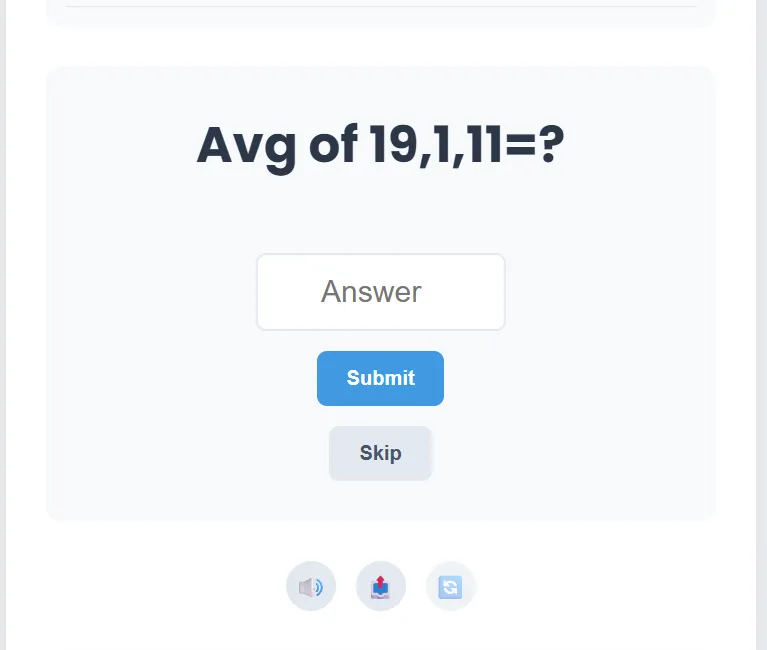 GameBabu: 90 Second Maths ChallengeAn exciting 90-second maths challenge with random problems under time pressure, and a dynamic leaderboard powered by Firebase/MongoDB with real-time score updates.by Modern Age CodersOpen the live project ↗
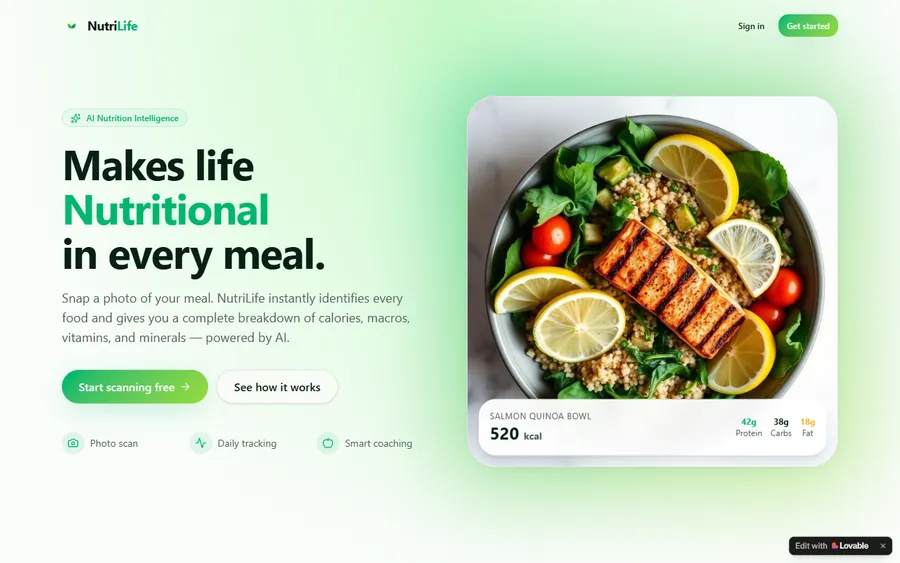 AI & MLNutriLife: AI Nutrition CoachSnap a photo of any meal and NutriLife instantly names every food, then breaks down the calories, macros, vitamins and minerals, powered by AI. Bhavya vibe-coded it from a single idea: shaped the app in prompts, then wired up the AI food-recognition, daily tracking and smart coaching by hand.by BhavyaOpen the live project ↗
 AI & MLGuardianX: AI Bodyguard for the InternetPaste any suspicious link or message and GuardianX returns an instant AI verdict before you become a victim, plus a link scanner, safety score, breach check and live scam alerts built for India. Vibe-coded from idea to working product through prompts, then refined until it genuinely understands how phishing and scams work.by VivaanOpen the live project ↗