Pick the course. Start this week.
Every mentor teaches from a structured programme, adapted live to your child. Open a course to see the full syllabus and enroll in minutes, or start with a Priority Demo and let the placement pick for you.
 Best fit
Early Math Foundations (K-2)
The K-2 arc this year sits inside: bonds, stories and place-value beginnings, taught playfully.
$100/mo group · $150/mo 1-on-1
View course & enroll
Mental Maths Mastery for Kids
The fluency engine: bonds and strategies through games, exactly what first grade runs on.
$100/mo group · $150/mo 1-on-1
View course & enroll
Elementary Mathematics Masterclass
The full grades 1-5 road, with the same mentor carrying your child rung by rung.
$100/mo group · $150/mo 1-on-1
View course & enrollGood 1st grade math tutoring builds three things: strategies to replace counting-everything (counting on, making ten, using doubles), fact fluency within 10 through games rather than flashcard grind, and place value that means something, tens and ones as bundles, not columns. That is what we do: live one-hour classes with a dedicated mentor, in small groups (8 a month) or private 1-on-1, priced for your country and shown in your local currency, Priority Demo first.
The year strategies are born, or never are.
First grade math has one real job: moving a child from counting everything from one to using what they know. Watch a first grader do 8 + 3. The counting-all child goes "1, 2, 3… 8" on fingers, then "9, 10, 11", eleven touches for one fact. The strategy child holds 8 in their head and counts on: "9, 10, 11." Three moves. The known-fact child just says 11.
That progression, count-all to count-on to known, is the entire architecture of the year, and it does not happen by drilling. It happens when someone notices which stage a child is at and teaches the next move as a discovery.
Classrooms of twenty-five cannot watch each child compute, so children get sorted by worksheets: right answers pass, however they were reached. A child can finish first grade with correct answers and a counting-all habit that will collapse under second grade's bigger numbers, the most common invisible gap we find at seven and eight.
Our mentors watch the fingers, literally. Strategies are taught as games, no finger is ever shamed (fingers are the right tool until they are outgrown), and fluency arrives the durable way: through understanding plus joyful repetition. By year's end the child owns the facts within 10 and, more importantly, owns the idea that numbers can be worked with cleverly.
What 1st grade math actually covers.
| Territory | What it means at six | Where the gaps hide |
|---|---|---|
| Addition & subtraction within 20 | Strategies (count on, make ten, doubles), fluency within 10, and the +/- relationship | Counting-all disguised as competence; subtraction taught as a separate mystery instead of addition's twin |
| Word problems | Join, separate, compare stories, acted and drawn before symbols | Children taught to hunt keywords instead of imagining the story |
| Place value to 120 | Tens and ones as real bundles; 10 more and 10 less without counting | Digits as positions memorized, the bundle idea missing, resurfaces painfully in grade 2 regrouping |
| Comparing & equality | Greater, less, equal, and the equals sign as "same value as" | The equals sign read as "answer goes here", a misconception that haunts algebra a decade later |
| Measurement & time | Length in units, time to the hour and half hour | Mostly fun; time-telling gaps are common and easily closed |
| Shapes & halves | Attributes, composing shapes, halves and quarters as fair shares | Fractions met kindly here, or feared later |
The make-ten moment: 9 + 5, discovered.
"That 9 looks so close to filling its frame. What would make it 10?"
Child slides one blue counter over: 10 and 4.
"So 9 + 5 is the same as…?" → "10 + 4… FOURTEEN!"
What just happened: the child discovered make-ten, the single most powerful strategy in early arithmetic, by physically moving one counter. Nobody said "memorize this"; the frames made it obvious.
Next class it becomes a game (which teen facts can you make-ten your way through?), then a mental move, then, weeks later, just a known fact with understanding underneath. That is the difference between fluency built and fluency crammed: one survives second grade, the other does not.
Strategies as discoveries, fluency as games.
The finger-watching diagnostic
We literally watch how your child computes: count-all, count-on or known. The stage decides the teaching, every class.
Ten-frames and bundles
Make-ten discovered on frames, place value built with real bundles of ten: the pictures that make first grade obvious.
Stories before symbols
Word problems acted with toys and drawn before any equation, so "imagine the story" beats keyword-hunting forever.
Fluency through play
Bonds and facts arrive via games with beat-your-own-record energy, never child-versus-child pressure or flashcard grind.
The equals sign, done right
"Same value as", taught with balances and true/false number sentences, a two-week investment that pays off in algebra.
Parents get the playbook
Tiny home prompts, car-ride number talks, and honest notes on which stage your child is at and what comes next.
From counting-all to strategy-strong.
Class 1 · The Priority Demo
Games that double as diagnostics: computation stage, bond fluency, story-problem instincts, and an honest placement.
Months 1-3 · Counting on, and bonds of 10
The first great strategy built as discovery, and the bonds every later fact leans on, through games.
Months 4-6 · Make-ten and the teens
Ten-frames unlock 9+5-style facts, subtraction joins as addition's twin, and stories carry every new idea.
Months 7-9 · Place value for real
Tens and ones as bundles, numbers to 120, ten-more-ten-less as a mental move, and two-digit courage begins.
Months 10-12 · Second-grade runway
Fluency within 10 solid, strategies owned and explained, and a child who walks into grade 2 ahead of its famous regrouping wall.
What one full hour looks like, at six.
0-10 min · Fluency games
Bond and fact play at your child's exact stage, the daily-dose engine of the whole year.
10-30 min · The day's discovery
Today's strategy or idea built with frames, bundles and questions, the child doing, the mentor asking.
30-45 min · Stories and stretch
Word problems acted and drawn, then one notch harder, watching how your child meets challenge.
45-60 min · Explain-back and quest
The child teaches the move back, and a tiny game-quest goes home for between classes.
One hour, built for six-year-old attention with variety, and defended by the children themselves within weeks. Watch one: the demo is free. See exactly how we teach →
Who this genuinely fits, and who it does not.
A strong fit if…
• Your first grader gets right answers slowly, all fingers, counting everything from one, the strategy gap this page describes.
• Homework brings tears or stalling, and you want the counting-on and make-ten moves built before second grade raises the stakes.
• Your child is coasting at school and needs depth and challenge before boredom becomes a habit.
• You want one mentor who knows your child, not a rotating cast or an app with streaks.
Honestly not the fit if…
• Your child cannot yet engage with a screen and a teacher for a full hour. By six nearly every child can, provided the hour is genuinely interactive, and ours are.
• You want homework done for your child. We teach your child to do it, which is slower on night one and far faster by week four.
• You want flashcard-drill speed at any cost. Fluency crammed without strategies collapses in grade 2, and we will say so rather than sell it.
Premium teaching. One honest price.
You are paying for a real teacher, live, for a full hour, twice a week, the same format US tutoring centers charge $300 to $450 a month for. Our cost base is global, so the price is not.
1:1 Private Mentorship
$150 / month
- 8 live one-hour classes a month, 2 per week4 live one-hour classes a month, 1 per week
- A dedicated mentor who knows your child by name
- Diagnostic-led plan against the full 1st grade map
- Class recordings for revision · cancel any time
Small-Group Class
$100 / month
- 8 live one-hour classes a month, 2 per week
- A handful of children at the same level
- Same teaching method, gentle peer energy
- Recordings included · cancel any time
That is $18.75 per dedicated hour of 1-on-1 teaching, or $12.50 in a small group. No registration fee, no contract, and you can see a full class first with a Priority Demo. Read our zero-risk promise or compare with what US math tutoring costs in 2026.
Mentors who teach the why, in classes kids wait for.
Our mentors are trained in one method: understanding before procedure, concrete before abstract, the student talking more than the teacher. They teach both math and coding, which matters more than it sounds, because a mentor with both toolkits has engagement moves a worksheet never will.
And because the same mentor stays with your child month after month, teaching compounds: they know exactly which ideas landed, which need another costume, and when the next stretch is due.
"My child Dhairya is really enjoying the classes. This is his first online class, and he eagerly looks forward to it. I can see his improvement."
Sonam Oswal, mother of Dhairya · verified Google review
"My son struggled with math for years. Integrating it into coding projects has transformed his understanding and confidence. Highly recommended!"
Shewta Singh, mother of Ishan · verified Google review
Your real options for a 1st grade student.
| Option | Typical cost | What it really is | Best for |
|---|---|---|---|
| Modern Age Coders | $100–$150 / month | Live one-hour classes with a dedicated mentor, understanding-first teaching | Rebuilding understanding and confidence, sustained progress |
| Mathnasium center | $300-$450 / month + enrollment fee | Drop-in worksheet floor with rotating instructors | Children who focus better out of the house |
| Kumon | $150-$220 / subject / month | Daily worksheet packets, brief check-ins, no taught lessons | Building a drill habit and calculation speed |
| Local private tutor | $35-$80 / hour | Quality varies; twice-weekly quickly costs $280-$640 a month | Short-term help when you have found a gem nearby |
| Math apps | $10-$20 / month | Gamified practice, no teacher, no accountability | Casual practice between real lessons |
Competitor figures are typical published US prices as of July 2026. See our full comparisons: vs Mathnasium · vs Kumon · best online math tutoring 2026.
Everything parents ask about 1st grade math tutoring.
My first grader still counts on fingers. Is that a problem?
At six, fingers are the right tool, the problem is only staying at counting-ALL when counting-ON should be arriving. We watch exactly how your child computes and teach the next stage as a discovery. Fingers retire on their own once better moves exist; shaming them early just teaches hiding.
How do you build fact fluency without flashcard drilling?
Strategies first, then joyful repetition: make-ten discovered on ten-frames, doubles as anchors, and games with beat-your-own-record energy. Fluency built this way survives second grade; crammed fluency famously does not, because nothing sits underneath it.
What should a first grader know by year end?
The honest checklist: facts within 10 known (not re-counted), counting-on and make-ten owned as moves, tens-and-ones understood as bundles, simple join/separate/compare stories solved by imagining them, and the equals sign read as "same value as". Our year map on this page is exactly that list.
My child hates math homework already. Can that change at six?
Faster than at any later age. Homework hatred at six is almost always the frustration of missing tools, all effort, no traction. Give the child the counting-on move and the bonds of ten, and homework shrinks from a battle to minutes. Parents usually see the mood shift within 4-6 weeks.
Is this aligned with what school teaches?
Yes, the map covers standard first-grade territory (operations within 20, place value to 120, measurement, time, shapes), and the mentor aligns pacing with your school so classes reinforce rather than confuse. What we add is the understanding layer a class of twenty-five cannot watch for.
What does it cost?
Pricing is set for each country and shown on this page in your own currency. Group plans include 8 live one-hour classes a month and 1-on-1 plans run private weekly sessions, all billed month to month. To see a class first, book a Priority Demo. No registration fee, no contract. US tutoring centers charge $300 to $450 a month for less individual attention.
Group or 1-on-1 at this age?
Both work at six; 1-on-1 wins when there are gaps to repair or attention is tender, while a tiny group of well-matched children adds lovely energy for sociable kids. The demo mentor recommends honestly.
What happens after first grade?
The same mentor carries your child up the grades 1-5 road, our Elementary Mathematics Masterclass, with second grade's regrouping wall already prepared for. Continuity is half the value.
Can we try a class before enrolling?
Yes. Book a Priority Demo: a full live class of about 45 to 60 minutes, today or tomorrow, with a mentor reserved for your child. After the class the mentor sends a written skill report and a personal learning roadmap on WhatsApp. If you enrol, the demo fee is adjusted against your first month's fee.
More math help from Modern Age Coders.
Watch one full hour of real teaching. Free.
Book the demo class. Your child gets a real lesson with a real mentor, you get a diagnostic against the full 1st grade map. If your child does not leave the hour lighter about math, walk away with our thanks.
Real student projects
What our students actually build
Every one is a real, live project shipped by a Modern Age Coders student. Explore more in Student Labs.
 Web AppMyDay: Social Productivity OrganizerA beautifully designed productivity platform to organise daily tasks, set goals and stay consistent, with a community feed of others' plans for inspiration.by VedantOpen the live project ↗
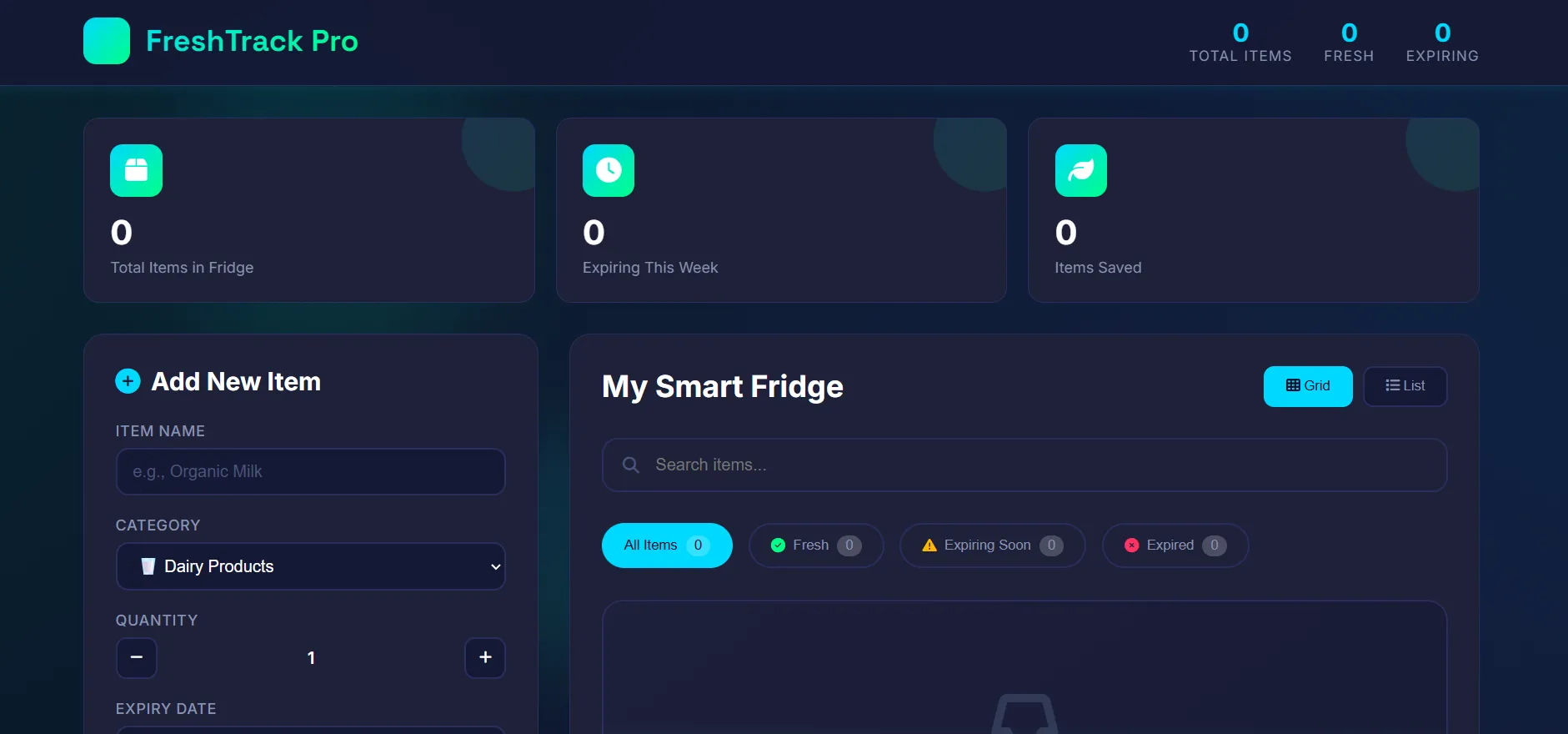 Web AppFreshTrack: Food Expiry TrackerA smart food-management system to track expiry dates, add, update and delete items while the app checks expiry automatically, online and offline.by TanishOpen the live project ↗
 Web AppPracy: Coding Practice & Quiz PlatformAn all-in-one coding-practice site with interactive challenges, quizzes and score tracking across multiple languages to strengthen logic and problem-solving.by RohanOpen the live project ↗