NL / KIDS / 01
Python and AI for Kids
Typed Python inside the first month for a groep 6 to 8 child: turtle drawings, small games, and a first program that learns a rule from examples. No blocks, no dragging.
Open the syllabusNetherlands · Live online · Ages 6 to 67
On 10 October 2025 SURF announced that the Netherlands would get its own AI factory in Groningen: 70 million euros from Europe, 70 million from the ministries, 60 million from the north's Nij Begun fund, an expertise centre opening in 2026 and a supercomputer at full capacity in 2027. In the same year the curriculum institute SLO published that informatica is offered at 238 of 774 havo schools and 236 of 761 vwo schools, and taken by 8.9 percent of havo and 12.6 percent of vwo exam candidates. The machine is being built; the ladder up to it is optional. This page is the ladder: hand-written Python, then data, then models with a measured error, then agents, then a public repository.
Teaching since 2020 · 10,000+ students across 25+ countries · nothing pre-recorded
In short
Modern Age Coders teaches a live online Python and AI track to learners in the Netherlands aged six to sixty-seven, in English, in batches of fifteen to twenty or one to one. It is neither a blocks-and-robots club nor a prompting course. A student on it writes Python by hand, cleans data that came from somewhere real, trains a model and states its error in a unit that means something, builds an agent whose mistakes are visible, and publishes the result on GitHub. The first lesson costs nothing; after it, USD 100 a month buys a group place and USD 150 private tuition.
Start here
One for a child in the last years of the basisschool, one for a teenager anywhere from havo 3 to vwo 6, one for a student or a working adult. The card opens the syllabus, the timetable and the fee for that course alone.
NL / 01
Typed code from the first weeks for a groep 6 to 8 child: turtle graphics, small games, and the first program that works out a rule from examples nobody gave it.
Open the syllabus →
NL / 02
The spine of the teenage track for a school that does not timetable informatica, or one that does and never reaches a trained model: Python first, then the statistics underneath, then decision trees, networks, images and text.
Open the syllabus →
NL / 03
For the student or professional who wants to know what a factory full of GPUs is for: how language models are trained, grounded against documents you control, and constrained into agents that fail loudly.
Open the syllabus →The reason this page exists
These are SLO's own figures, published in July 2025 as the starting point for a two-year revision of the subject. They are the most useful piece of context a Dutch parent has about this field, and almost nobody states them.
Informatica in the Netherlands is a profile elective: in the Nature and Technology profile a pupil may pick it in place of wiskunde D, NLT or biologie, and in every other profile it can be taken in the free space. Schools are not obliged to offer it. There is no central exam; the subject ends with a school examination, which SLO notes leaves little view of what is actually taught beyond the results of those exams.
The current examination programme dates from 2019. The subject carries 320 study-load hours in havo and 440 in vwo, a compulsory core with a skills domain and five conceptual domains, and elective themes. SLO describes it as a constructing discipline, a field in which making things is central, and observes that valid assessment of that kind of learning needs forms of testing that are not yet common in Dutch schools.
Now the arithmetic a parent actually needs. Of 774 havo schools, 238 offer informatica, 30.7 percent. Of 761 vwo schools, 236 offer it, 31.0 percent. SLO's phrase is that the subject is offered at almost a third of havo and vwo schools. So for roughly two pupils in three, the question of whether to take it never arises, because the timetable does not contain it.
Where it is offered, uptake is a minority choice. In 2024, 4,849 havo exam candidates sat informatica, 8.9 percent of 49,234, and 4,506 vwo candidates, 12.6 percent of 35,690, on DUO's examination data. Put the two constraints together and the share of a Dutch cohort that leaves secondary school having studied the subject formally is small, in a country that has just decided to build a national AI supercomputer.
None of this is a complaint about Dutch schools; the revision now under way is precisely because the field has moved. It is a description of a gap, and a gap is where a ladder goes.
| Measure | Havo | Vwo | What it tells a parent |
|---|---|---|---|
| Schools offering the subject | 238 of 774 (30.7 percent) | 236 of 761 (31.0 percent) | For two pupils in three, the choice never arises |
| Exam candidates who sat it | 4,849 of 49,234 (8.9 percent) | 4,506 of 35,690 (12.6 percent) | Where it is offered, roughly one in ten takes it |
| Study load | 320 hours | 440 hours | Equivalent to a modest elective, spread across the bovenbouw |
| Examination | School exam only | School exam only | No national paper, so no national view of what was learned |
| Programme in force since | 2019 | 2019 | A revision began in 2025 because the field has moved |
Source: SLO, Startnotitie informatica bovenbouw voortgezet onderwijs, July 2025, tables 1 and 2 (DUO 2024 examination data) and section 2.1 on the legal framework. The document is in Dutch; the figures above are quoted as published. Verified 7 September 2026.
The other half of the gap
The Dutch AI factory is not a metaphor. It is a building in Groningen with a budget, a consortium and two dates, and the people it is being built for are exactly the people this ladder is meant to produce.
On 10 October 2025 SURF, the Dutch research computing cooperative, announced that the EuroHPC Joint Undertaking had awarded 70 million euros to a Netherlands AI factory. The Dutch ministries add 70 million and the north's Nij Begun programme 60 million, for a total of 200 million euros. The factory sits in Groningen. Its expertise centre opens in 2026 and its supercomputer reaches full capacity in 2027.
The consortium is the Stichting Nederlandse AIfabriek, SURF, TNO, the Dutch AI Coalition and Samenwerking Noord, with Nij Begun and several ministries cooperating. SURF's own announcement lists who it is for: startups, SMEs, researchers, education and government. The Dutch AI Coalition's description of the facility puts the purpose plainly: to develop AI responsibly and in line with European rules, to keep sensitive data inside the Netherlands, and to reduce dependence on American and Chinese technology platforms.
Read those two paragraphs beside the SLO table above and the shape of the country's position is clear. The Netherlands is one of nineteen AI factories the EuroHPC programme has selected across Europe, with thirteen smaller antennas alongside them. It has decided that building models, not only using them, is a national capability worth two hundred million euros. And the school subject that would feed that capability is optional, offered by a third of schools and chosen by a tenth of pupils.
A supercomputer does not do anything by itself. Somebody has to write the Python that loads the data, define the model that trains on it, measure whether the model is any good, and wrap the result in something that can act. Those are the five rungs below, in the order they have to be climbed. A Dutch teenager who has climbed them arrives at a university, a startup or that expertise centre able to use the thing the country has paid for. One who has not arrives able to prompt it.
We are not connected to the factory, to SURF or to any consortium member, and we do not claim to be. We are the ladder a family can start on this month.
| Item | Figure | Source |
|---|---|---|
| EuroHPC Joint Undertaking award | 70 million euros | SURF announcement |
| Dutch ministries | 70 million euros | SURF announcement |
| Nij Begun programme (Groningen) | 60 million euros | SURF announcement |
| Total investment | 200 million euros | SURF announcement |
| Location | Groningen | SURF, Dutch AI Coalition |
| Expertise centre | opens 2026 | SURF announcement |
| Supercomputer at full capacity | 2027 | SURF announcement |
| Intended users | startups, SMEs, researchers, education, government | SURF announcement |
| AI factories selected across Europe | 19, plus 13 antennas | EuroHPC JU |
Sources: SURF, Netherlands gets AI factory, European funding awarded, 10 October 2025; Dutch AI Coalition, the Dutch AI Factory; EuroHPC Joint Undertaking, AI Factories. The GPU count and storage capacity of the Groningen machine were not published in any source we could read and are not stated here. Verified 7 September 2026.
What the published numbers show
A national competition with four places at the top, a curriculum table with a third in it, and a budget line with nine zeros: between them they describe the opening in front of a Dutch student who can actually build.
The Nederlandse Informatica Olympiade is the national programming competition for secondary pupils, run by its own foundation with Windesheim, Eindhoven University of Technology, Leiden University and the University of Twente among its partners. It runs in three rounds, and its four winners go to the International Olympiad in Informatics, hosted by a different country each year. Four places, for a country of roughly 85,000 havo and vwo exam candidates a year.
That is not a lament. It is a description of how empty the top of the pyramid is. A pupil who arrives at the first round with a year of hand-written Python and a repository of working programs is not competing against thousands of peers with the same preparation, because the SLO table above says most of those peers were never offered the subject.
The same is true one level down. A university admissions tutor, a startup on the Groningen expertise centre's doorstep, an employer in Eindhoven or on the Zuidas: each of them meets far more applicants who have used an AI tool than applicants who can show a model they trained, a stated error rate, and a link. The second group is small enough that membership of it is noticed.
And delivery is not the constraint. The Netherlands is among the most connected countries in Europe, English is the working language of its universities and its technology sector, and a live class taught in English into a Dutch living room needs nothing the household does not already have.
Sources: Nederlandse Informatica Olympiade (three rounds, four winners to the International Olympiad in Informatics, partner institutions); exam candidate totals from the SLO table above. Verified 7 September 2026.
Where we point this
The general coding pages for the Netherlands are already written city by city, and the academy pages for the largest cities now sit beside them, beginning with Groningen.
The country has three concentrations of families for whom this track is the obvious next step: the knowledge-migrant households of Amstelveen, the engineering households of Eindhoven and Brainport, and the international-school and ministry households of The Hague. Each of those pages sets out the schools by name and the local argument for a live online class; this page sets out the track itself.
Amsterdam, Rotterdam, Utrecht and Almere have their own pages too, the academy page for Amsterdam is written, as is the one for Eindhoven and The Hague, and Utrecht has one too, as does Rotterdam; the one for Groningen, the factory's own city, is written already.
Why online, put narrowly. Not because a screen beats a room, but because a group of fifteen to twenty learners at one level, in one specialised subject, free at one hour, is almost impossible to gather from a single Dutch town and straightforward to gather from twenty-five countries. When a tenth of pupils take the subject, the pool of classmates is the thing being sold.
A family that wants general programming rather than this track should start at coding classes in the Netherlands. One that wants machine learning worked on Dutch data should read AI and machine learning classes in the Netherlands. For one age group at a time, the door pages are coding classes for kids in the Netherlands, coding classes for teens in the Netherlands, coding and AI classes for adults in the Netherlands, coding for college students in the Netherlands and the AI agents course for professionals in the Netherlands. Topic pages cover building real AI projects in the Netherlands, machine learning for school students in the Netherlands, the AI and Python academy for girls in the Netherlands, the AI agents course for students in the Netherlands, coding alongside informatica in havo and vwo and vibe coding versus building AI. Track pages include Python classes in the Netherlands, Java classes in the Netherlands, the full stack software development course, the data science course, the app development course and one-to-one coding classes in the Netherlands. The argument that holds this whole family of pages together is set out at Learn to Build AI.
The five rungs
Five rungs, and the sequence is the point. Each one depends on the rung below it in a way that cannot be skipped, which is why a course that opens with the exciting-sounding top rung tends to produce students who can show something and cannot say why it works.
| Rung | Roughly | What the student actually does |
|---|---|---|
| 1. Python by hand | Groep 6 to 8, brugklas | Types real syntax instead of dragging blocks: loops, functions, files, and error messages the student reads and repairs alone |
| 2. Data | Onderbouw, years 1 to 3 | Opens a file that came from somewhere real, repairs it, draws it, and hunts down the single row that would have wrecked the answer |
| 3. Machine learning | Havo 3 to vwo 6 | Fits a model to data, reports how wrong it is in a unit a parent would recognise, and checks it beats a dumb guess |
| 4. Agents | Bovenbouw and beyond | Writes a program that receives a goal instead of instructions, chooses its own route, uses tools, and makes its mistakes where they can be seen |
| 5. GitHub and the write-up | Any of the above | Puts the code somewhere public with a plain paragraph on what it does, how well, and where it gives up |
The mistakes that matter in a model live in the data, so a student who has never cleaned a file cannot judge a model. An agent that cannot measure its own output is a confident random number generator, so a student who has never evaluated anything cannot be trusted to build one. And work that lives only on a laptop persuades nobody: what a university or an employer responds to is a repository a stranger can open, run and check.
The order in which we teach every subject on the site, with the reasons, is on the coding roadmap. A Dutch-specific version, written by school year with what a parent should expect to see at home at each stage, is the Python to AI roadmap for students in the Netherlands.
For a pupil at one of the 238 havo or 236 vwo schools that offer informatica, this track runs beside the subject and goes past where it stops: the school exam programme ends with a constructed artefact, and rung 3 is where a student learns to say how good the artefact is. For the two pupils in three whose school does not offer it, the track is the subject.
For a groep 8 child in the doorstroomtoets year, we say the same thing the coding pages say: keep the routine light, and do not add a new subject in the weeks before the test. For a student in the profielkeuze year, a term on rung 1 before the choice is the cheapest way to find out whether the Nature and Technology profile with informatica is the right one.
The catalogue
Three curricula written for three different lives, not one syllabus taught at three speeds. Each card leads to the full course page with its own schedule and its own fee.
NL / KIDS / 01
Typed Python inside the first month for a groep 6 to 8 child: turtle drawings, small games, and a first program that learns a rule from examples. No blocks, no dragging.
Open the syllabusNL / KIDS / 02
What a chatbot actually is, why its confidence and its accuracy are separate dials, and three checks a ten-year-old can run before believing it. The habit survives every product launch.
Open the syllabusNL / KIDS / 03
The child asks a tool for a game, gets one back, and then has to find which parts are broken and mend them. Asking is the easy half; the mending is the course.
Open the syllabusNL / TEEN / 01
Two years from Python to a model the student trained, measured and can defend, taken beside whatever the school does or does not timetable: statistics, classical learners, neural networks, images and text, each with a working artefact at the end.
Open the syllabusNL / TEEN / 02
The part that has to come before any model: reading files, joining them, drawing them, and learning to spot the one row that would have wrecked the result, on datasets the student can go and check for themselves.
Open the syllabusNL / TEEN / 03
A blank file to advanced Python over two years. The entry for a teenager who arrives with nothing and whose parents would rather the AI work sat on a foundation than on enthusiasm.
Open the syllabusNL / TEEN / 04
Steering coding agents through real software and then reading every line that came back. The student holds their own subscription to the tools, within the age terms those tools set.
Open the syllabusNL / PRO / 01
The complete route at adult pace: supervised and unsupervised methods, deep architectures, disciplined training, evaluation that survives a hostile question, and deployment.
Open the syllabusNL / PRO / 02
What a language model is, how it is adapted and grounded against documents you control, and how an agent is boxed in so that when it fails, it fails where you can see it.
Open the syllabusNL / PRO / 03
Aimed at whatever already eats the working week: the return assembled by hand each month, the spreadsheet nobody trusts, the report that costs two days.
Open the syllabusNL / PRO / 04
Reverse-engineered from a job advertisement: statistics, SQL, feature engineering, modelling, and a portfolio a hiring manager can judge in ten minutes.
Open the syllabusNL / PRO / 05
The wall most technical interviews put up, and the reason code that copes with a thousand rows still copes with ten million. Taught as reasoning, not as a list to memorise.
Open the syllabusNL / PRO / 06
Building and governing agents on Microsoft Copilot Studio. Private tuition only, which is why it carries the one-to-one rate rather than the group one.
Open the syllabusHow the classes run
The Netherlands changes its clock twice a year and India, where the teaching operation sits, never does. So a Dutch afternoon is three and a half hours behind the teacher in summer and four and a half in winter, and the slots below are the ones that work at both ends. The recurring time is agreed on the free class, not promised on a page.
After school
Netherlands time, mid to late afternoon. Groep 6 to 8 and the onderbouw, while concentration is still there; late evening for the teacher.
Early evening
Netherlands time, after dinner. The main block for havo and vwo pupils and for university students; the teacher's late night.
Weekend
Saturday and Sunday, Netherlands time, morning or afternoon. Working adults, and families whose weekday evenings are already full.
Free, and a lesson rather than a sales call. The learner is handed one problem and the teacher watches how they go at it, which fixes the starting rung better than any form could.
Grouped by what a learner has shown they can do, drawn from twenty-five countries, so a strong student in Almere is never held to a local average and a beginner in Leiden is never lost in one.
For a narrow adult goal, an examination year that is already full, or the Copilot Studio courses, which are only ever taught one to one.
Both screens shared, so a misunderstanding is caught while it is forming rather than discovered in homework a week later.
Groep, havo, vwo, profielkeuze and informatica are used as the school uses them. The libraries, the documentation and the error messages are in English anyway.
Every lesson's work goes into the student's own GitHub repository that day. What they leave with is a history, not a folder of files.
Student work
Four things students built and left running at public addresses. Open any of them and try to break it. There are more on the student labs page.
AI and ML
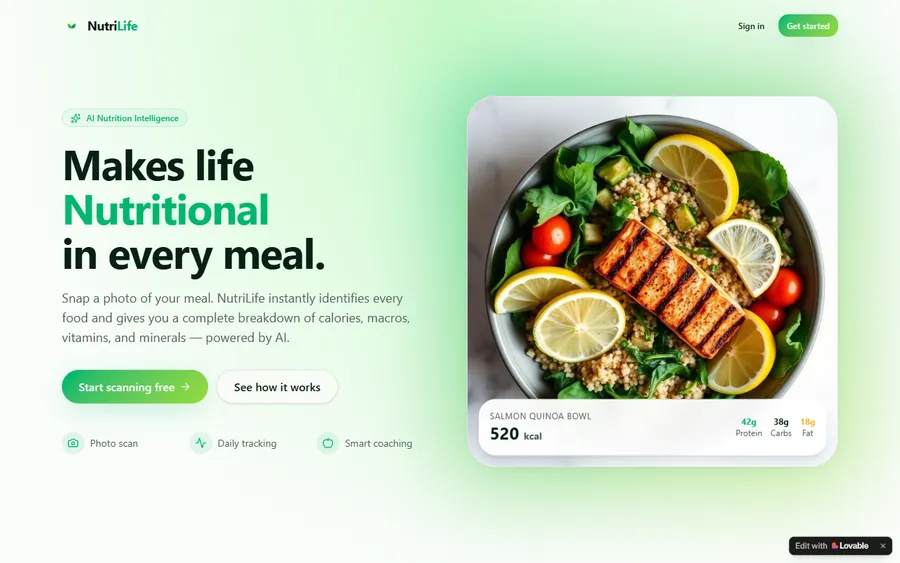
An AI nutrition coach that reads what you eat and works you toward a target.
AI and ML
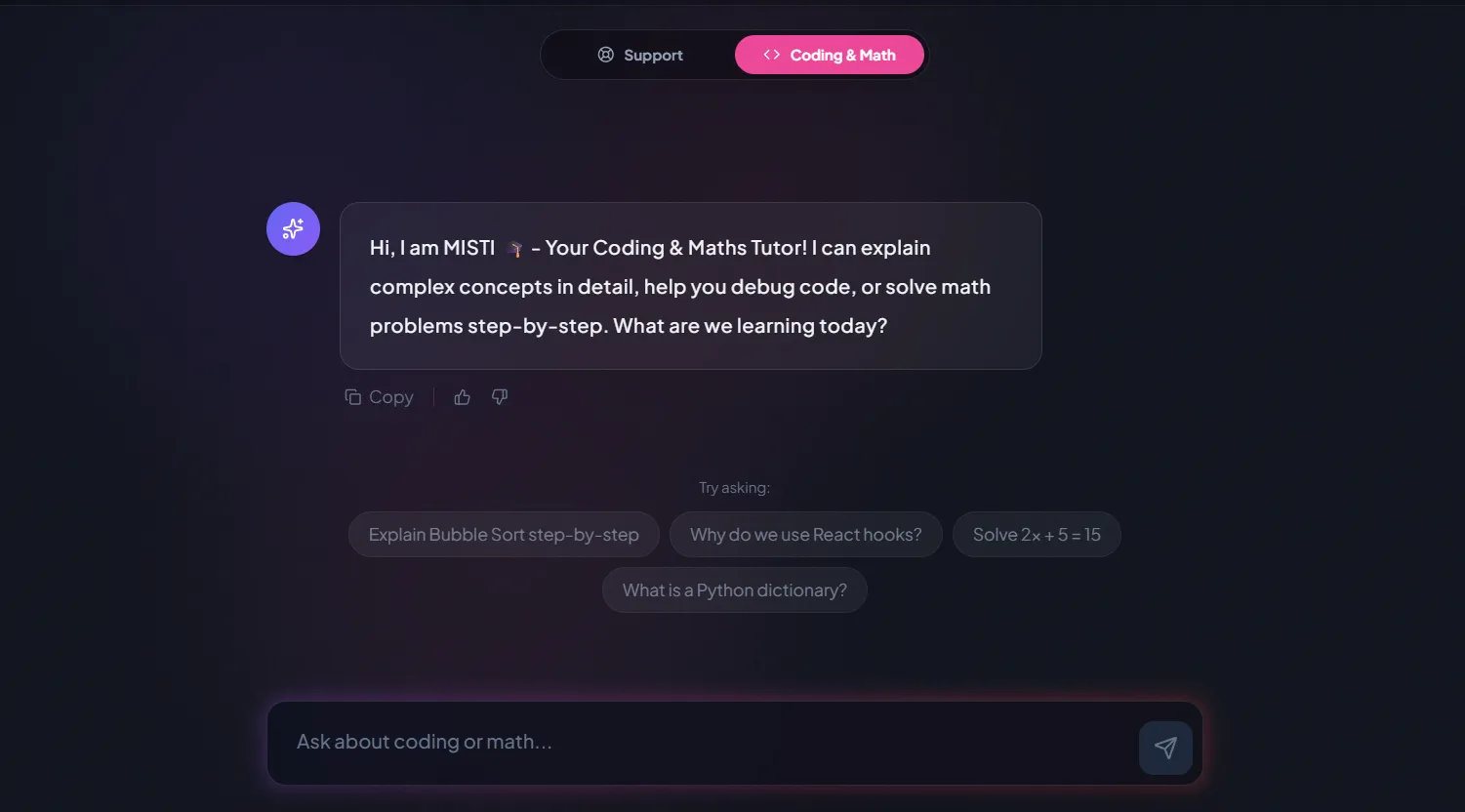
A chatbot that answers mathematics and programming questions, built and deployed by a student.
AI and ML
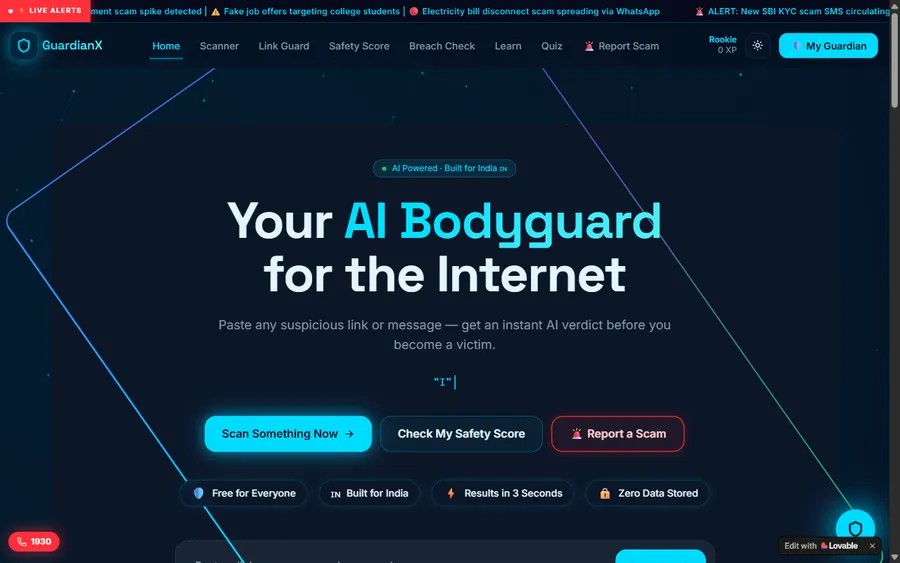
An assistant that helps a young person recognise unsafe situations online.
Web app
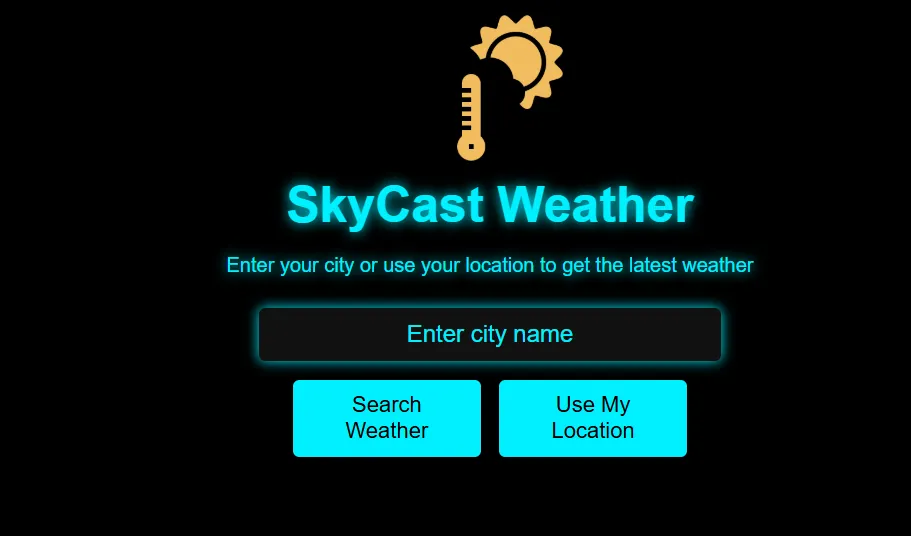
A weather forecasting site with live conditions for any location.
Fees
Billed monthly in US dollars at the same two rates we charge everywhere outside India. There is no Dutch tariff, nothing added for the Netherlands and nothing to join. The agent courses are priced the same way; the Copilot Studio courses are private tuition by design and so carry the one-to-one figure.
Free first class
USD 0
no card required
Group batch
USD 100
a month, billed in US dollars
One to one
USD 150
a month, billed in US dollars
What families say
Reproduced from Google as written. Nobody at Modern Age Coders writes, edits or pays for them.
★★★★★
"The one step solution for my son. Modern Age Coders make learning coding so simple that kids love it. The teachers explain complex concepts clearly with practical exercises and interactive content."
Ria Mukherjee
Parent
★★★★★
"Modern Age Coders has been a game-changer for me. I struggled to grasp IT concepts and coding before joining, but their classes transformed everything. I can now confidently write complex programs with ease."
Samriddha Mondal
Student
★★★★★
"One of the most wonderful education centres out there. Education is not limited to school syllabus but focuses on skill development."
Vansh Agarwal
Student
★★★★★
"My child Dhairya is really enjoying the Modern Age Coders classes. This is his first online class and he eagerly looks forward to it. I can already see his improvement, and the teachers are very cooperative."
Sonam Oswal
Parent of Dhairya
★★★★★
"Modern Age Coders have wonderful teachers who teach in a clear, easy and practical way. The teacher boosts students' confidence and inspires them to learn without hesitation."
Sonu Goyal
Parent
★★★★★
"I highly recommend this computer coding class! The teachers are incredibly knowledgeable and passionate about coding."
Ritu Kedia
Parent
Questions from the Netherlands
It is the majority position. SLO's July 2025 starting note gives 238 of 774 havo schools and 236 of 761 vwo schools offering the subject in 2024, just under a third, and 8.9 percent of havo and 12.6 percent of vwo exam candidates sitting it. Whether it matters depends on what the student wants: for a child aiming at anything involving models, data or agents, this track is the subject their school does not have.
No, and it is designed to sit beside the subject. The school programme is worth 320 study-load hours in havo and 440 in vwo, ends with a school examination rather than a central one, and is built around constructing digital artefacts. Rung 3 of this ladder is where a student learns to say how good an artefact is, with an error stated in a real unit. That is the part the school exam programme, by SLO's own account, finds hardest to assess.
A 200 million euro facility in Groningen announced by SURF on 10 October 2025: 70 million from the EuroHPC Joint Undertaking, 70 million from Dutch ministries and 60 million from the Nij Begun programme, with an expertise centre opening in 2026 and a supercomputer at full capacity in 2027. SURF lists education among its intended users alongside startups, SMEs, researchers and government. We have no connection to it and make no promise about access; what we teach is what a person needs to know to make use of such a thing.
A club teaches a child to make a program do a thing. This track teaches a student to build something that makes a decision, and then to find out whether the decision was right. That is a different education, and it has an order: Python first, then data, then a model with a measured error, then an agent, then a repository a stranger can open. Blocks are a good place to be at seven and a poor place to still be at fifteen.
A program that is handed a goal rather than a list of steps, works out its own steps, calls tools or other programs to carry them out, and can be stopped and corrected while it does so. Students build one in Python after the data and model rungs, and build it so that its wrong turns show up on screen rather than passing silently. The two dedicated agent courses are in the catalogue above; the Copilot Studio one is taught privately only.
Gently, or after the doorstroomtoets. The test sits between late January and mid-February with results in March, and a new subject in those weeks is a bad trade. A child who is already on rung 1 can keep a light routine through the year; a child who is not should start in the spring, when the school advice is settled and the brugklas is a known quantity.
Yes, for the right meaning of the words. A child does not need calculus to watch a program derive a rule from examples and then get a case wrong that the child chose. Below about ten the work is sequencing, prediction and argument; from groep 7 or 8 it becomes Python written by hand; and the mathematics turns up later to explain something the student has already watched happen on their own screen, which is the only order in which it ever sticks.
A URL and a GitHub repository. Whatever the student finished is live somewhere a stranger can visit, its source is readable, and a short paragraph beside it says what it does, how well it performs and where it breaks down. That paragraph is the difference between engineering and a demo, and it is the part universities and employers actually read.
USD 100 a month for a place in a group of fifteen to twenty, USD 150 a month for a teacher to yourself, both charged in US dollars at the rate every family outside India pays. No euro price list, no joining fee, no contract for the year, and nothing at all for the first lesson.
Somebody rings you at a Dutch hour to set up the free lesson, and that is all that happens. No card, no charge, no seat held anywhere, no enrolment. The course, the format and the weekly time are settled in that conversation, and money comes into it only after the family has watched a lesson and decided.
Elsewhere on this site
This academy is the top layer of a stack that already exists. Some of what is underneath it will be more useful to a family than this page.
The country page for general programming, with the digital literacy curriculum and the school system explained.
The country-level machine learning page, worked on published Dutch data.
The capital, its eight districts, the school lottery and the two international schools.
Brainport, the campus next door, and the schools an engineering family actually uses.
The case for constructing these systems rather than operating them, which is what every page in this family rests on.
All of the courses, by age and by subject, each with its syllabus.
Start here
Leave a number and someone rings you at a Dutch hour. The first session is taught, on real material, by a real teacher, and by the end of it we know which rung the learner starts on. That is the only thing worth finding out first: a term at the wrong level is the most expensive mistake in this subject, and no form can prevent it.
Prefer to read before you call? Start with the full catalogue, then how we teach, then the case for this whole family of pages at Learn to Build AI.
WhatsApp us · +91 91233 66161 · connect@modernagecoders.com
WhatsApp is the quickest route from the Netherlands and costs nothing. The number is an Indian one; there is no Dutch office and we hold no premises in the country.
A priority demo is a full class of about 45 to 60 minutes. After the class the mentor sends a written skill report and a personal learning roadmap on WhatsApp. If you enrol, the demo fee is adjusted against your first month's fee. Share your demo Order ID with us on WhatsApp and we take it off.
Book a priority demo