What time do the live classes run in Dutch time?
Evening slots at 17:00, 18:45 and 20:30 Dutch time, plus a Saturday morning batch. The Netherlands moves between CET in winter and CEST in summer, while Indian Standard Time never shifts at all. That means our teaching operation sits 3 hours 30 minutes ahead of you in summer and 4 hours 30 minutes ahead in winter, so a Dutch evening lands comfortably inside our teaching day in both halves of the year. Your slot stays where it is; the gap moves, not the lesson.
How is this different from the AI courses already sold in the Netherlands?
Most of them teach prompting. A student finishes able to phrase a request well and unable to say whether the answer is correct. We teach the layer underneath: finding data, cleaning it, choosing a model, training it, measuring the error in units a non-specialist can check, and then improving it. Prompting is knowledge of one product in one year. Model building rests on statistics, linear algebra and code, and none of those get a version bump.
What does it cost?
A group batch of fifteen to twenty students is USD 100 a month and one to one teaching is USD 150 a month, billed in US dollars, the same flat figures everywhere outside India. There is no enrolment fee, no annual contract, and the first class is free without a card.
My child is in VWO. Does this compete with school or support it?
It supports it, and the overlap is real rather than marketing. Dutch secondary education splits into VMBO, HAVO and VWO, and informatica is an elective rather than a compulsory subject, so a motivated student can leave school without ever having trained a model. Our teens track covers the Python, the statistics and the linear algebra that a VWO student meets in mathematics anyway, applied to data instead of exercises. Students on international, IB and British curricula in the Netherlands follow the same ladder.
What will my child actually build?
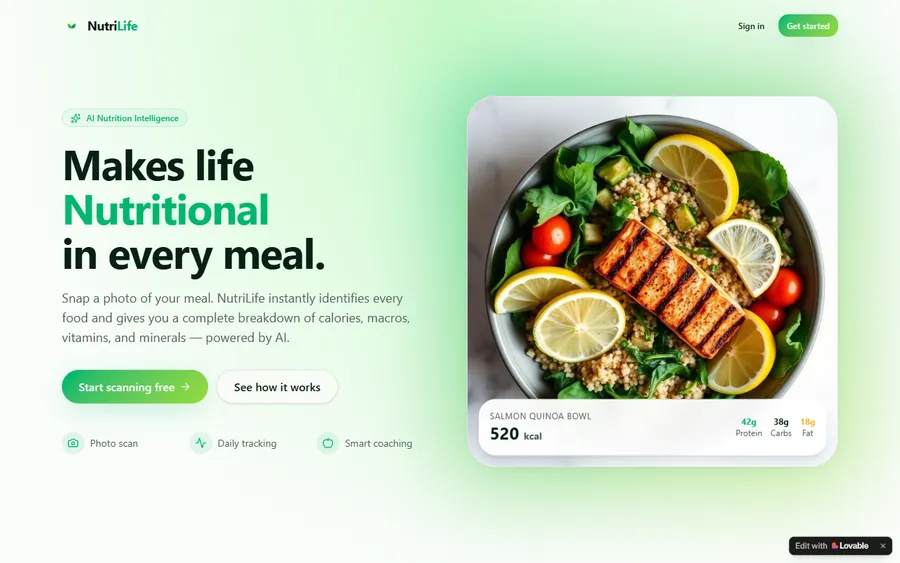
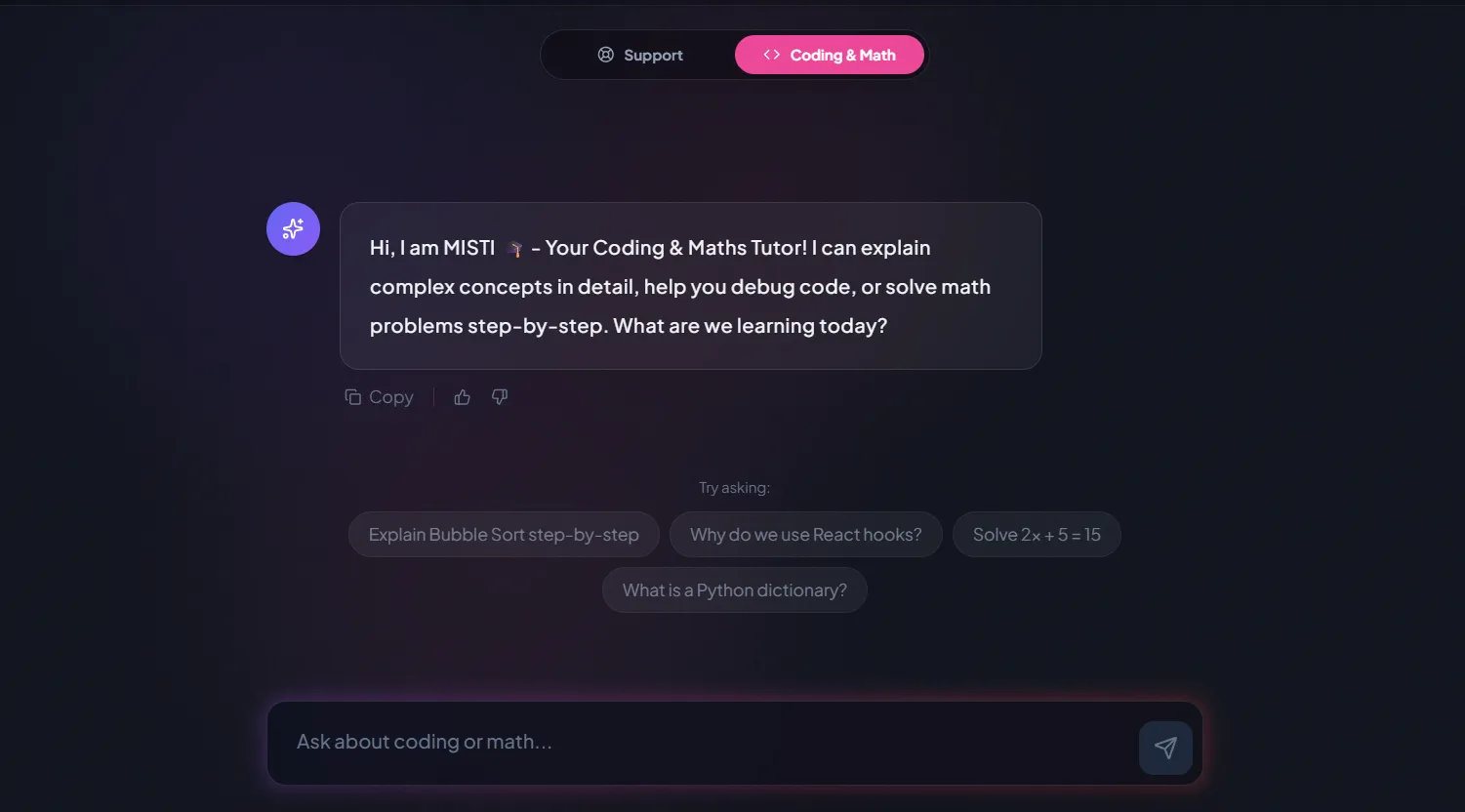
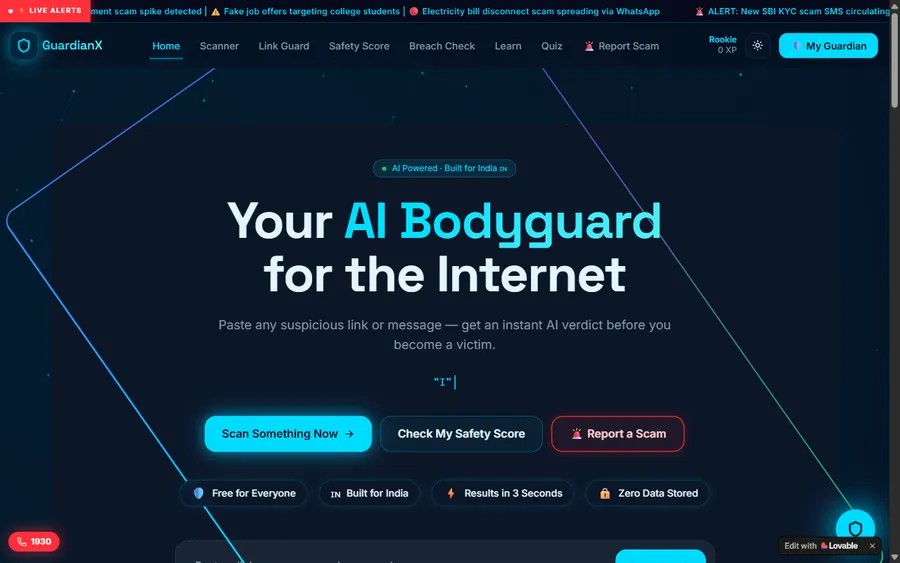
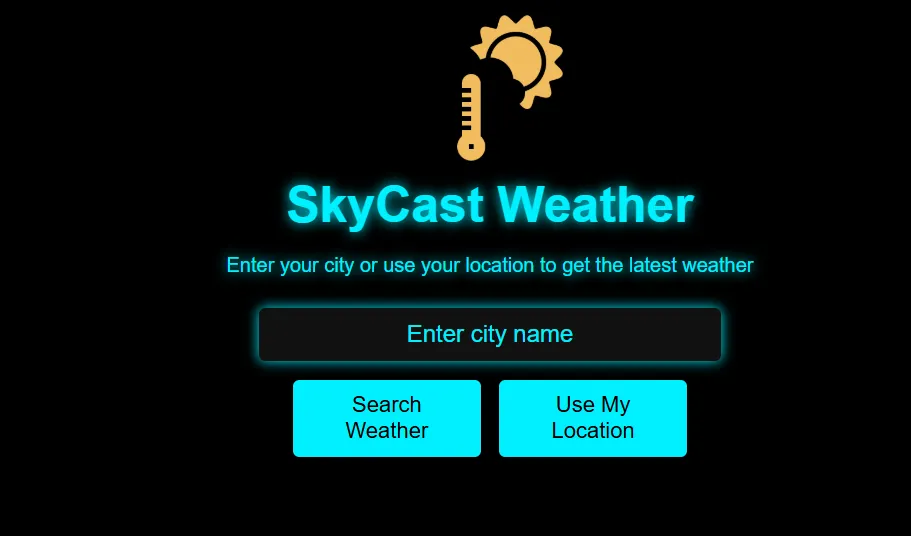
Working things at a real web address. The first Dutch project models how far the country cycles, using Statistics Netherlands travel data, and it is deliberately chosen because the honest answer is not the obvious one. After that students move to their own ideas. Past students have shipped an AI nutrition coach, a chatbot that explains mathematics and coding, an online safety assistant and a weather application, all live and inspectable.
Does my child need to be good at mathematics first?
No, and waiting until they are is the common mistake. The working set is linear algebra for how data is shaped, calculus for how a model corrects itself, and statistics for whether a result means anything. We introduce each one at the moment it explains something the student has already watched happen on their own screen, which is a very different experience from meeting it as a chapter. Children who believe they are bad at mathematics usually revise that view once it stops being abstract.
Do the classes run in English or Dutch?
English. That is worth saying plainly rather than hiding, because it is a real decision for a Dutch family. In practice it suits this subject: the libraries, the documentation, the error messages and the research are all in English, so a student who learns machine learning in English is not translating anything later. For younger children we go slowly with vocabulary and check understanding rather than assuming it.
When in the Dutch school year do families usually start?
Most often in the fortnight before the school year opens in late summer, or during the Christmas break, because a new weekly commitment settles more easily when the school timetable is quiet around it. Dutch school holidays are staggered by region, with the north, middle and south taking the main breaks at different times, so we set start dates per family rather than running one national intake. Admission is continuous, so there is no closed cohort to wait for.