UTR / KIDS / 01
Python and AI for Kids
Typed Python for children of nine to twelve, from pictures and games to a small program that seems to understand and plainly does not.
Open the syllabusUtrecht · Live online · Ages 6 to 67
Utrecht University teaches artificial intelligence in a way it says no other Dutch university does. Alongside programming, its students learn philosophy, psychology and linguistics, because, in the programme's own words, that helps you understand the core of intelligent behaviour. It is a useful idea for anyone meeting today's chatbots. Whether a system is intelligent is not only a question about its code. It is also a question about what thinking is, about why people are so ready to believe a machine understands them, and about what the machine is actually doing with words. Alan Turing asked the first of those in 1950. Joseph Weizenbaum ran into the third in the 1960s, when people confided in a simple program called ELIZA. This page teaches AI and Python from a child's first program upward, and teaches learners to ask all four questions, live online for learners in Utrecht.
Live classes since 2020 · 10,000+ learners taught · a teacher in every lesson
In short
For learners in Utrecht between six and sixty-seven, Modern Age Coders teaches a live online AI and Python track: Python typed by hand, real data, models with a measured error, and agents. Alongside the code, learners practise four questions borrowed from the way Utrecht University frames its own AI degree: how does this system work, what would count as thinking, why do people believe it, and what is it doing with language? The signature project is a small ELIZA, the 1960s conversation program, built in Python and then tested on real people. Classes run in English, in groups of five to ten learners or one to one. The first lesson costs nothing; after it, group classes are USD 100 a month and private tuition USD 150.
Start here
A first course for a child who wants to make the computer talk back, a second for a teenager ready for real models, a third for the adult who wants to know what a language model is. Every card leads to that course's full page.
UTR / 01
A child types the rules for a small talking program, watches it answer, and then finds the sentence that makes it say something silly, the first lesson in how a machine can seem to understand.
Open the syllabus →
UTR / 02
From Python to neural networks and text models, with every result questioned: what did it learn, what did it miss, and would a person be fooled?
Open the syllabus →
UTR / 03
What a large language model does when it writes, how it is grounded in real documents, and why fluent text is not the same as understanding.
Open the syllabus →Four disciplines
Utrecht University's bachelor in Kunstmatige intelligentie teaches programming alongside filosofie, psychologie en taalkunde. We borrow that shape for four questions any learner can put to any AI system.
The university's programme page puts it simply: in this broad bachelor you learn to write intelligent programs, and you also learn about philosophy, psychology and linguistics, which helps you understand the core of intelligent behaviour. It describes the breadth as unique in the Netherlands. The degree is taught in Dutch over three years, in monumental buildings around the Domkerk, and its study association is called Incognito.
Its structure shows how seriously the breadth is meant. The major is 135 EC: two base packages worth 60 EC, a specialisation package of 45 EC, two compulsory disciplinary courses worth 15 EC that place the subject in its wider scientific and social setting, and a thesis with a preparatory course. A further 45 EC of profileringsruimte is left for the student to shape. Admission includes compulsory matching, and registration closes on 1 May.
The four questions below come from those four disciplines. None needs a degree to ask. A twelve-year-old can ask them of a chatbot, and an adult choosing an AI tool for work should.
We have no connection with Utrecht University, and our classes are not part of or preparation for its programme, which is taught in Dutch while ours are in English. What we take from it is the idea that AI is understood best from more than one side.
| Discipline | The question | What a learner does to answer it |
|---|---|---|
| Programming | How does it actually work? | Builds a small version and reads the rules or the model behind it |
| Philosophy | What would count as thinking? | Writes down a test before deciding, as Turing did in 1950 |
| Psychology | Why do people believe it? | Watches real users react to a system whose simplicity they know |
| Linguistics | What is it doing with language? | Separates fluent sentences from correct or meaningful ones |
Sources: Universiteit Utrecht, bachelor Kunstmatige intelligentie (disciplines, language, length, location, association); study programme (135 EC major, packages, profileringsruimte); admission (matching, 1 May). Read 15 September 2026; the pages are in Dutch and are translated here.
Build an ELIZA
Two old texts still answer the newest questions about chatbots better than most commentary. Our learners read about both and then build the second.
In October 1950 the journal Mind published Alan Turing's paper Computing Machinery and Intelligence (volume LIX, issue 236, pages 433 to 460). It opens: I propose to consider the question, can machines think? Rather than argue about definitions, Turing replaced the question with a test he called the imitation game, in which an interrogator, reading only typed answers, tries to tell a machine from a person. It was the philosopher's move: before deciding whether something thinks, decide what would count as evidence.
Between 1964 and 1967, at MIT, Joseph Weizenbaum wrote ELIZA. Its best-known script, DOCTOR, imitated a Rogerian psychotherapist. It worked by pattern matching and substitution, which, the encyclopaedia notes, gave users an illusion of understanding.
The illusion was stronger than its author expected. His own secretary, the encyclopaedia records, asked him to leave the room so that she and ELIZA could have a real conversation. Weizenbaum later wrote that he had not realised that extremely short exposures to a relatively simple computer program could induce powerful delusional thinking in quite normal people, and in 1976 he published Computer Power and Human Reason.
The tendency he saw now has a name, the ELIZA effect: people reading understanding into programs that have none. It is the psychologist's question, and today's chatbots, vastly more capable than ELIZA, make it more pressing, not less.
| If the user writes | The program replies | What it shows |
|---|---|---|
| I feel [something] | Why do you feel [something]? | Substitution: the words are reused, not understood |
| My [someone] [does something] | Tell me more about your [someone]. | A keyword triggers a stock reply |
| I am [something] | How long have you been [something]? | I becomes you: grammar, not meaning |
| anything else | Please go on. | A default that sounds attentive and says nothing |
A learner who has written those four rules in Python, perhaps thirty lines, then tries the program on a friend or a parent. The results are usually the lesson. Some people play along, some are charmed, a few are briefly unsettled. The learner knows exactly how little is behind each reply, and watches someone else supply the understanding themselves.
Then the four questions: how does it work (four rules), would it pass Turing's test (no, not for long), why did the friend believe it for a moment (the ELIZA effect), and what did it do with language (it rearranged it). Asked of a modern chatbot, the first answer is far longer and the others are harder, which is exactly why they are worth practising on a program the learner wrote.
Sources: A. M. Turing, Computing Machinery and Intelligence, Mind LIX (236), October 1950, 433 to 460; ELIZA, encyclopaedia entry (dates, DOCTOR, method, the secretary, Weizenbaum's remark, the 1976 book). Read 15 September 2026. The rule table is our own example, written in the style of the original.
At every age
The questions scale. A child asks them about a talking program of their own; an adult asks them about the AI assistant their employer has just bought.
A primary-school child builds a program that answers back and learns, in the building, that answering is not the same as understanding. That single insight protects a child better than any list of rules about chatbots.
A teenager reaches real models and real text. The questions become sharper: what did this model learn from, would a careful reader be fooled, and is this sentence true or only well formed? A teenager weighing a future in AI, psychology or linguistics finds out quickly which of the four questions interests them most.
Adults in Utrecht bring the questions to work. Before an AI tool drafts letters to clients or summarises a report, it is worth knowing how it works, what it cannot do, and why its fluency is so persuasive. Many adults take this one to one.
For the city itself, see coding classes in Utrecht; for the surrounding province, the province of Utrecht and Amersfoort. The national academy page sets out the national picture.
The five rungs
The rungs follow one another for a reason. A learner who has never built a simple rule-based program cannot see what a trained model adds, and one who has never measured a model cannot judge a chatbot's claims.
| Rung | Typically | Built, and asked |
|---|---|---|
| 1. Python by hand | Groep 6 to 8, or an adult starting out | A small ELIZA; how does it work? |
| 2. Data | Brugklas to the third year | Real text collected and cleaned; what is in the language it learns from? |
| 3. Models | Havo 4 to vwo 6, students, adults | A trained text model; what would count as it doing well? |
| 4. Agents | Upper school and beyond | A tool-using assistant; why do users trust it, and should they? |
| 5. Publishing | At every stage | Code and a plain account of what the system can and cannot do |
ELIZA is a program of explicit rules, and building one first makes the step to machine learning visible: instead of writing the rules, the learner lets a model find patterns in data, and can then ask what the model found that the rules missed, and what it copied that it should not have.
How we order every subject is set out on the coding roadmap.
The final years of the basisschool are the time for rung 1, with the weeks of the doorstroomtoets left quiet. For a pupil drawn to both the Nature and the Culture profiles, rung 2 is a good way to test whether AI is the bridge between them.
University students and working adults tend to start at rung 3, often in private lessons fitted around study or work.
The catalogue
Grouped by stage of life rather than by difficulty. Behind every card is a full course page with its own timetable and fee; the free lesson, not this grid, decides where a learner begins.
UTR / KIDS / 01
Typed Python for children of nine to twelve, from pictures and games to a small program that seems to understand and plainly does not.
Open the syllabusUTR / KIDS / 02
How chatbots produce their answers, why a smooth reply can still be wrong, and why it is fine to ask a machine to explain itself.
Open the syllabusUTR / KIDS / 03
Children describe a game to an AI tool, get something back, and learn to spot and repair what it misunderstood.
Open the syllabusUTR / TEEN / 01
Statistics, classical methods, neural networks and text, with each model judged on what it learned and where it would mislead a reader.
Open the syllabusUTR / TEEN / 02
A thorough grounding in Python over two years, for a teenager who wants to build conversational programs and understand every line of them.
Open the syllabusUTR / TEEN / 03
Building web and AI projects with AI help, then reading and testing what the assistant produced instead of trusting it.
Open the syllabusUTR / TEEN / 04
Getting real work out of AI tools for study and projects, with a clear sense of when fluency is covering for a wrong answer.
Open the syllabusUTR / PRO / 01
The mechanics of large language models, grounding them in trusted documents, and designing assistants whose limits are stated up front.
Open the syllabusUTR / PRO / 02
Machine learning from first methods to deep networks for adult learners, with evaluation given as much time as training.
Open the syllabusUTR / PRO / 03
Python from zero to advanced at an adult pace, a solid base for anyone moving towards AI from another field.
Open the syllabusUTR / PRO / 04
For people who do not code: spreadsheets, reporting tools and AI assistants, used with a clear view of what each one can be trusted with.
Open the syllabusHow the classes run
India does not use summer time, so the gap to Utrecht is four and a half hours in the Dutch winter and three and a half from late March to late October. Late afternoon and the weekend therefore fit both sides easily; a weekday evening depends on the teacher. The recurring time is chosen together at the free lesson.
Late afternoon
After school in Utrecht, evening for the teacher. Popular with primary pupils and the lower years of secondary school.
Evening
Utrecht evenings by agreement, for older pupils, university students and people coming home from work.
Weekend
Saturday and Sunday, any reasonable Utrecht hour. Usually the choice of adults and families with full weeks.
Not a sales conversation but a lesson: the learner works on something real and the teacher sees how they think, which settles the starting rung.
Five to ten learners from several countries who can already do the same things, so no one in Utrecht waits for others or races to keep up.
For students with changing timetables, adults with a specific goal, and the Copilot Studio courses, taught only one to one.
The teacher follows the learner's screen as code is written and questions are answered, so confusion never gets a week to settle.
All teaching is in English. Words like groep, brugklas, havo and vwo stay Dutch, the way Utrecht families say them.
The code from each lesson lands in the learner's own GitHub repository, next to a short note on what the program can and cannot do.
Student work
Four live projects, open to anyone. Try them, ask them awkward questions, see where they break; more are on the student labs page.
AI and ML
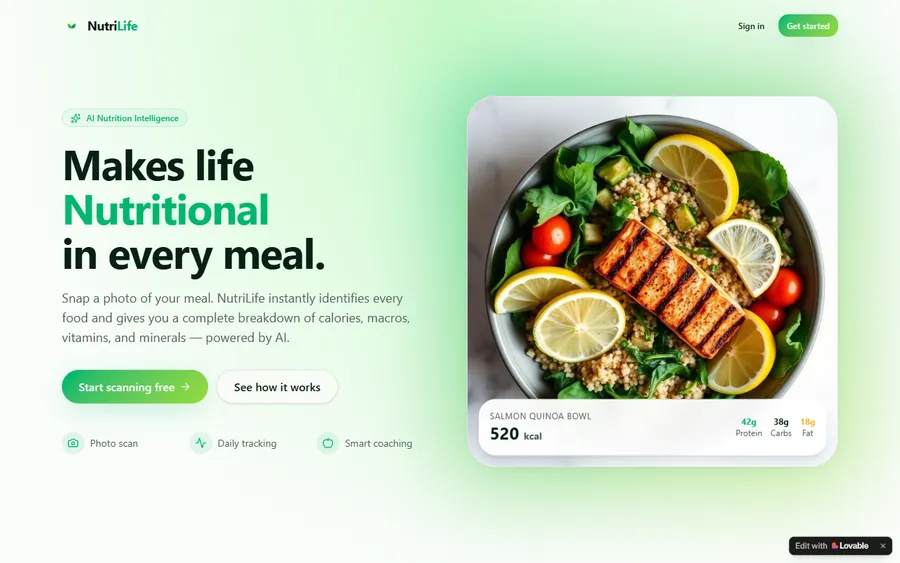
An AI nutrition coach that reads what you eat and works you toward a target.
AI and ML
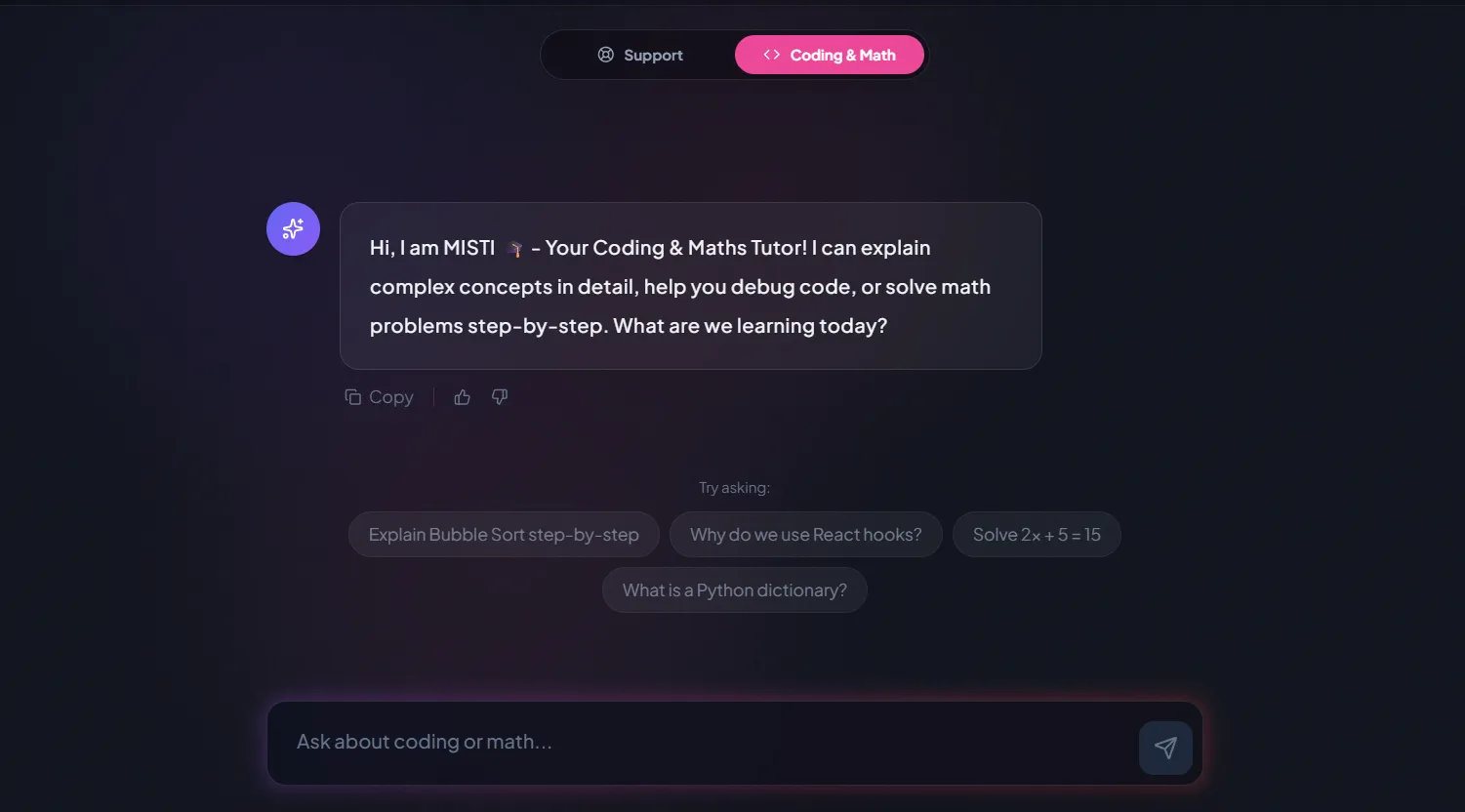
A chatbot that answers mathematics and programming questions, built and deployed by a student.
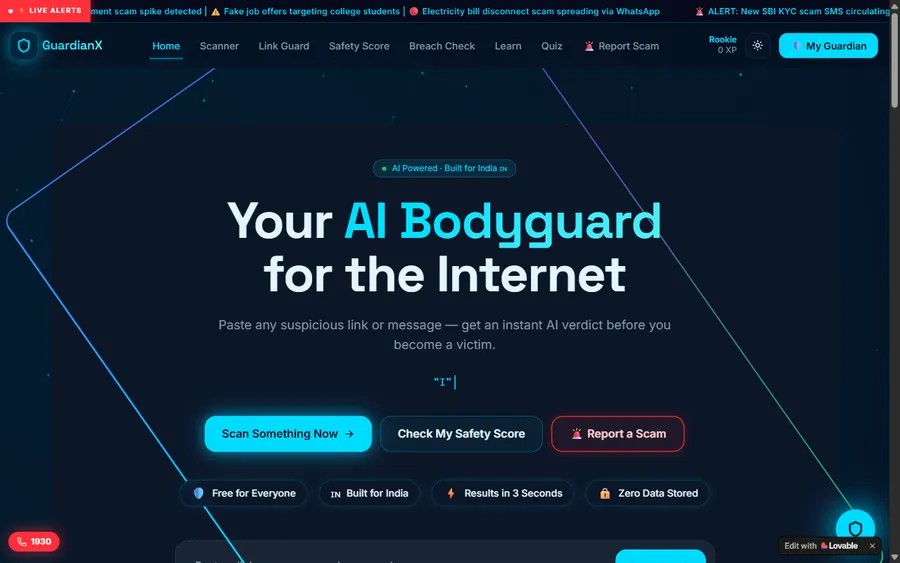
AI and ML
An assistant that helps a young person recognise unsafe situations online.
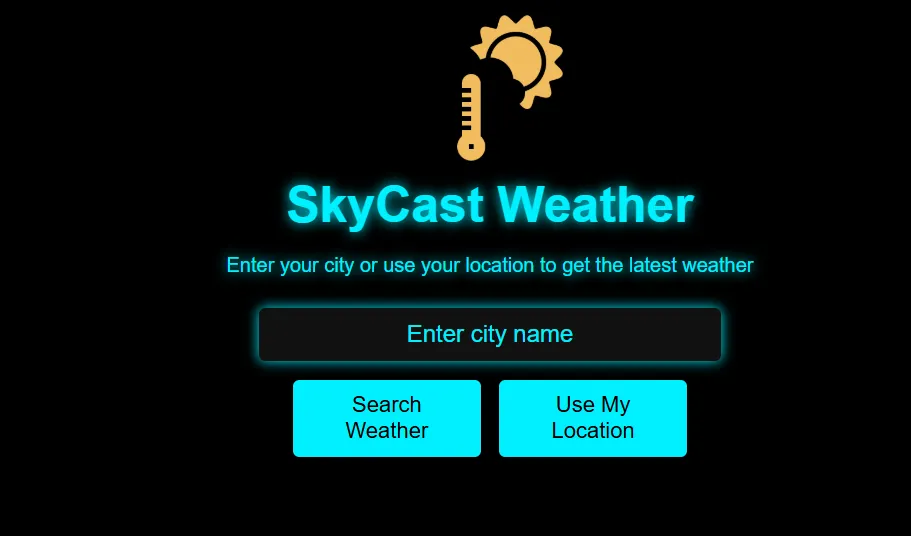
Web app
A weather forecasting site with live conditions for any location.
Fees
Billed each month in US dollars at the rate we use for every country outside India. Utrecht pays nothing extra, there is no registration fee, and nobody signs up for a year. The Copilot Studio courses exist only as private lessons, so they use the private rate.
Free first class
USD 0
no card required
Group batch
USD 100
a month, billed in US dollars
One to one
USD 150
a month, billed in US dollars
What families say
Copied from Google word for word. Nobody at Modern Age Coders writes, edits or rewards them.
★★★★★
"The one step solution for my son. Modern Age Coders make learning coding so simple that kids love it. The teachers explain complex concepts clearly with practical exercises and interactive content."
Ria Mukherjee
Parent
★★★★★
"Modern Age Coders has been a game-changer for me. I struggled to grasp IT concepts and coding before joining, but their classes transformed everything. I can now confidently write complex programs with ease."
Samriddha Mondal
Student
★★★★★
"One of the most wonderful education centres out there. Education is not limited to school syllabus but focuses on skill development."
Vansh Agarwal
Student
★★★★★
"My child Dhairya is really enjoying the Modern Age Coders classes. This is his first online class and he eagerly looks forward to it. I can already see his improvement, and the teachers are very cooperative."
Sonam Oswal
Parent of Dhairya
★★★★★
"Modern Age Coders have wonderful teachers who teach in a clear, easy and practical way. The teacher boosts students' confidence and inspires them to learn without hesitation."
Sonu Goyal
Parent
★★★★★
"I highly recommend this computer coding class! The teachers are incredibly knowledgeable and passionate about coding."
Ritu Kedia
Parent
Questions from Utrecht
No. We borrow the idea that AI is best understood through programming, philosophy, psychology and linguistics from the way the university describes its own bachelor, and we quote its public pages. We have no relationship with the university, and our classes do not count towards its degree.
Because the programming languages, libraries, documentation and most AI tools are in English, and our groups bring together learners from several countries. Dutch school terms are kept as they are.
A conversation program written by Joseph Weizenbaum at MIT between 1964 and 1967. Its DOCTOR script imitated a psychotherapist using simple pattern matching, yet some users felt understood by it. Building a small version shows a learner exactly how little can lie behind a convincing reply.
The test Alan Turing proposed in his 1950 paper Computing Machinery and Intelligence: an interrogator, reading only typed answers, tries to tell a machine from a person. Turing used it to replace the vaguer question of whether machines can think.
Very possibly. Language is at the centre of today's AI, and the question of what a program does with words is a linguist's question as much as a programmer's. The coding still has to be learned, and we start it gently.
Usually the generative AI course or the analytics course for non-programmers, depending on whether you want to build or to use. Both include the habit of asking how a tool works and what it cannot be trusted with.
Around groep 5 with blocks and games, and from groep 6 to 8 with typed Python. The first talking program usually comes within a few months.
Group classes cost USD 100 a month and private lessons USD 150 a month, billed in US dollars with no joining fee and no yearly contract. The first lesson is free.
In India. They teach live over video, four and a half hours ahead of Utrecht in winter and three and a half in summer, which is why late afternoons and weekends are easiest to arrange.
Someone rings you back at a Dutch hour to arrange the free lesson. Money only comes into it later, after the family has seen the lesson and chosen to continue.
Elsewhere on this site
Other pages that cover what this one leaves out.
Programming for every age in the city, with its schools and neighbourhoods.
From Amersfoort to Veenendaal, every municipality around the city.
The province's second city, with a page of its own.
The national view: how few Dutch schools offer informatica, and what the country is building.
Why a model's mistakes must be counted group by group.
The argument for building AI systems rather than only operating them.
Start here
Send us a phone number and a member of the team will call at a Dutch hour to fix a time. The lesson itself is taught by a teacher on real material, and it ends with the starting rung decided, the choice that matters most.
Rather read first? Browse the courses, read how we teach, or see why we teach people to build AI at Learn to Build AI.
WhatsApp us · +91 91233 66161 · contact@modernagecoders.com
From a Dutch phone, WhatsApp costs nothing and is the fastest way to reach us. The number is Indian, and we have no office, address or premises in Utrecht or anywhere else in the Netherlands.