Vibe Coding for Kids, Creative, Fun & Future-Ready
Where Imagination Meets Code, Build Games, Stories & AI Projects!
Syllabus updated August 2026
Recordings are free with a Google sign-in. These recordings show how we teach, not the exact syllabus of this course.
How long this course takes
This course runs 3 months (12 weeks) at 4-6 hours/week. The range allows for background and pace: a complete beginner uses the full span, and a student with prior knowledge finishes sooner. The syllabus below is planned to the shorter end, with margin kept for revision.
For personalised duration planning, call +91 91233 66161 and we'll map a schedule to your goals.
At a glance
- Who it is for
- Complete Beginner (Ages 8-12). Age: 8-12 years old.
- Prerequisites
- Absolutely none, complete beginner friendly
- Format
- Live, interactive classes with a real instructor, never pre-recorded videos. Live classes run about one hour.
- Language
- English or Hindi, depending on the batch.
- Duration
- 3 months (12 weeks)
- Weekly commitment
- 4-6 hours/week
- Class size
- Group batches of 5 to 10 students, mini batches of 3 to 4, or 1-on-1.
- Certificate
- Vibe Coder, Kids Level Certification
- Watch first
- Free recordings of real classes for ages 6 to 12, free with a Google sign-in. These recordings show how we teach, not the exact syllabus of this course.
- Live demo
- Optional. Enroll directly on this page, or book a free live demo if you would like to meet a mentor first.
How we teach
Deep understanding. Real projects. Expert guidance.
Learn coding, AI and maths through careful explanations, practical demonstrations, and hands-on problem-solving. Our instructors guide you from the foundations to advanced ideas, helping you understand what happens, why it happens, and how to build it yourself.
You will explore concepts step by step, write and improve code, investigate mistakes, ask questions, and apply your knowledge to meaningful projects. Lessons are designed around active participation, thoughtful feedback, and growing independence.
Expert-led live teaching, with practical participation built into every lesson.
- Students explain their thinking.
- Instructors demonstrate, then guide practice.
- Learners code, solve, or build during lessons.
- Questions and misconceptions get attention.
- Assignments receive useful feedback.
- Progress is checked before advancing.
Ready to Master Vibe Coding for Kids: AI, Scratch & Game Dev (Ages 8-12)?
Choose your plan and start your journey into the future of technology today.
Rated 4.9 across 547 Google reviews. Enroll directly, or take a free live demo first if you like. No card needed for the demo. Monthly billing, cancel anytime.
International Students (Outside India)
Billed monthly in US dollars, the same price in every country. Contact us with any questions.
Program Overview
Vibe Coding for Kids is the ultimate 3-month beginner coding journey designed specifically for children aged 8 to 12. 'Vibe Coding', a term coined by AI pioneer Andrej Karpathy in 2025, means telling a computer what you want to build in plain English and letting AI create the code for you. It's the future of how software gets made, and your child can start learning it now.
Through playful, visual, and project-driven learning, kids discover the magic of creating their own games, animated stories, music with code, and real AI-powered apps, no complex typing required to get started! Kids begin with visual block coding (Scratch) to learn how computers think, then graduate to actual vibe coding using tools like Replit, Bolt.new, and Google Gemini, the same AI tools professionals use today.
At Modern Age Coders, we believe every child is a natural creator. Our expert instructors blend visual block programming, creative exploration, and real AI app-building tools to make coding feel like play. By the end of 12 weeks, your child will have built 15+ original projects, including apps they built by talking to AI, and gained real digital superpowers.
What Makes This Program Different
- 100% project-based, kids build something real every single week
- Age-appropriate content designed for 8-12 year olds
- No prior experience or technical knowledge needed
- Visual block coding (Scratch, Code.org), no complex syntax to start
- Real vibe coding: kids build apps by talking to AI (Replit, Bolt.new)
- Includes AI tools, music coding, and creative art projects
- Live classes with expert instructors, never pre-recorded videos
- Weekly written progress notes to parents
- Portfolio of 15+ completed projects at course end
- Fun, encouraging, and bully-free classroom environment
Your Learning Journey
Career Progression
Detailed Course Curriculum
Explore the complete week-by-week breakdown of what you'll learn in this comprehensive program.
Topics Covered
- What is Vibe Coding?, Telling computers what to build using your words (coined by AI scientist Andrej Karpathy in 2025)
- The two ways to code: Block Coding (Scratch) and Vibe Coding (talking to AI), we'll learn both!
- How computers think, understanding instructions step by step
- Introduction to Scratch 3.0, navigating the interface
- Sprites, stages, and backdrops, building your digital world
- Basic motion blocks: move, turn, glide
- Looks blocks: say, think, costumes, effects
- Sound blocks: play music, record your voice
- Your first animation: Make a character walk and talk
- Saving and sharing your Scratch project
- Online safety and being a kind digital citizen
- Setting up your Vibe Coder profile
Projects You Build
- Animated Greeting Card, make a character say hello to the world
- Dancing Pet, a sprite that moves to your favourite music
- About Me Story, an interactive presentation about yourself
Practice & Assignments
Build a mini dance party in Scratch where your sprite changes costume and moves each time you press an arrow key, then show someone at home.
Topics Covered
- Creating multi-scene stories with backdrop changes
- Broadcasting messages between sprites, making characters talk to each other
- Using the 'ask and answer' block for interactive dialogue
- Timing animations, wait blocks and synchronized stories
- Creating sprite costumes for character emotions
- Adding background music and sound effects
- Text-to-speech: making your characters speak in different voices
- Importing your own images and drawings as sprites
- Drawing custom sprites with the Scratch paint editor
- Story planning: beginning, middle, and end
- Sharing your story with family and friends
Projects You Build
- A 3-Scene Adventure Story, hero, challenge, and victory
- Interactive Storybook, click to turn pages
- Talking Animal Show, two animals have a funny conversation
Practice & Assignments
Create a two scene story where characters talk to each other using broadcast messages and ask the viewer one question with the ask block.
Topics Covered
- Event blocks: when green flag clicked, when key pressed, when sprite clicked
- Keyboard controls, making characters move with arrow keys
- Mouse events, click-to-activate actions
- Creating clickable buttons and navigation menus
- Introduction to conditionals: If-Then logic blocks
- Touching and color detection, collision basics
- Creating interactive art, drawing with mouse movements
- Building a virtual musical keyboard
- Combining multiple events for complex interactions
- User input with 'ask' and storing answers
- Debugging basics: What to do when something goes wrong
Projects You Build
- Virtual Piano, play notes by pressing keyboard keys
- Click-and-Colour Art Canvas, draw with code
- Interactive Quiz, 5 questions with right/wrong feedback
Practice & Assignments
Make a clickable pet that reacts differently to a click, a key press and the green flag, using at least one if then block.
Topics Covered
- Forever loops, making things go on and on
- Repeat loops with a specific number of times
- Nested loops, loops inside loops for complex patterns
- Drawing geometric shapes with pen blocks
- Creating spirals, stars, and kaleidoscopes with loops
- The Stamp tool, making repeating patterns
- Color effects and graphic transformations
- Thinking like a computer: breaking big tasks into small loops
- Efficiency, doing more with less code
- Creating a looping background animation
- Phase 1 Review & Project Planning
Projects You Build
- Geometric Art Machine, generates beautiful patterns automatically
- Spinning Galaxy, looping space animation
- Pattern Puzzle, create a design and challenge friends to recreate it
Practice & Assignments
Draw a star, a spiral and one invented pattern with pen blocks inside repeat loops, and name your favorite creation.
Topics Covered
- What are variables? Understanding data storage in simple terms
- Creating score, lives, and timer variables
- Changing variable values, adding points, losing lives
- Using random numbers, the element of surprise in games
- Countdown timers and time-based challenges
- Displaying variables on screen as a score HUD
- Win conditions: What happens when you reach a goal?
- Game Over conditions: Lives system and health bars
- High score saving basics
- Creating power-ups that boost your score
- Playtesting your games, the 'fun factor' check
Projects You Build
- Catch the Falling Stars, catch sprites to earn points
- Number Guessing Game, with hints and score tracking
- Speed Challenge, collect 10 items before the timer runs out
Practice & Assignments
Add a score, lives and a countdown timer to a simple catch the apple game and play test it three times.
Topics Covered
- Touching detection, sprites interacting with each other
- Color collision, detecting when you touch a wall or obstacle
- Gravity simulation using loops and variables
- Jumping mechanics, platformer physics basics
- Enemy movement, creating obstacles that move and follow
- Projectile mechanics, shooting and throwing
- Boundary detection, keeping sprites inside the screen
- Creating a scrolling background effect
- Power-up pickups and damage effects
- Sound effects for collisions, wins, and game over
- Making your game feel satisfying, game juice basics
Projects You Build
- The Endless Runner, dodge obstacles as you run
- Space Invaders Jr., shoot incoming aliens
- Trampoline Jump, bounce as high as you can game
Practice & Assignments
Give your game character a gravity powered jump and one moving enemy that ends the game on touch.
Topics Covered
- What makes a great game level? Flow, challenge, and reward
- Designing level 1, level 2, and level 3 with increasing difficulty
- Using backdrops as levels, switching on game events
- Creating boss levels and final challenges
- Save and load game states using cloud variables
- Cutscenes and story sequences between levels
- Sound design, choosing music for different game moods
- UI design: Start screen, game over screen, victory screen
- Multiple character selection screens
- Accessibility in games, making your game easy to understand
- Beta testing with classmates and collecting feedback
Projects You Build
- 3-Level Maze Adventure, escape each dungeon to advance
- Fruit Ninja Clone, 3 difficulty levels with progressive speed
- Boss Battle Game, survive the final boss to win
Practice & Assignments
Design level 1 and a harder level 2 for your game using two backdrops that switch when the player wins.
Topics Covered
- Game design document, planning your game on paper first
- Asset creation, custom sprites, backgrounds, and sounds
- Implementing full game loop: start, play, lose, win
- Bug hunting and debugging strategies
- Game polishing, making it look professional
- Writing game instructions for players
- Creating a game thumbnail and cover art
- Publishing your game to the Scratch community
- Presenting your game to classmates
- Getting featured on the Modern Age Coders showcase
- Reflecting on your journey from Week 1 to Week 8
Projects You Build
- PHASE 2 CAPSTONE, My Dream Game: A complete, original game with: custom sprites, 2+ levels, score system, sound effects, start and end screens
Assessment
Phase 2 Game Development Assessment, completed game review with instructor feedback
Topics Covered
- What is Artificial Intelligence? A fun, simple explanation
- What is Vibe Coding?, The story of Andrej Karpathy and how AI writes code for you
- The vibe coding loop: Describe → AI Builds → You Test → You Improve
- Machine Learning, teaching computers by showing examples
- Google Teachable Machine: train your first image model
- Training an AI to recognize your hand gestures
- Training an AI to recognize sounds
- Using your trained model in a Scratch project
- Introduction to Google Gemini, chatting with AI safely
- How to write good prompts, being clear and specific with AI
- What is bias in AI? Why AI needs diverse data
- Machine Learning for Kids (ML4Kids) platform
- AI ethics for kids, being responsible with technology
- The future of AI, jobs, creativity, and possibilities
Projects You Build
- Rock Paper Scissors AI, a computer that plays against you using real ML
- Emotion Detector, AI that reads your facial expression
- AI Chat Experiment, ask Google Gemini to explain your favourite topic and fact-check its answers
Practice & Assignments
Train a Teachable Machine model to tell two hand signs apart using ten photos of each, then test it and count how many it gets right.
Topics Covered
- Welcome to real vibe coding!, building apps by describing them in English
- Introduction to Replit, your browser-based coding playground
- Replit Agent, tell it what to build and watch it create your app live
- Writing great prompts: being specific about what you want (colours, buttons, features)
- Building your first vibe-coded app: a simple calculator
- Introduction to Bolt.new, type what you want, see it instantly
- Building a game with Bolt.new, describe the rules, AI codes it
- Testing your AI-built app, does it do what you asked?
- Fixing problems by telling AI what went wrong (iterating)
- Understanding the code AI wrote, reading what it made for you
- Comparing: Scratch (you drag blocks) vs. Vibe Coding (you describe in words)
- When AI makes mistakes, learning to spot and fix errors
Projects You Build
- My Calculator App, tell Replit Agent to build a colourful calculator and customize it
- Quiz Game App, describe a quiz game to Bolt.new with topics you love
- Vibe-Coded Story App, describe an interactive story app and watch AI build it
Practice & Assignments
Describe a tiny app to Replit Agent, like a compliment generator, then ask it for two improvements: a new color and an extra button.
Topics Covered
- Introduction to Sonic Pi, coding music like a DJ
- Notes, beats, and rhythms in code, loops for musical patterns
- Live coding music, composing a 30-second original track
- Using AI to help compose: describe a mood, get a melody suggestion
- Introduction to AI image generation for kids (safe, educational tools)
- Design principles for kids: colour, space, balance, contrast
- Canva for Kids, templates, elements, and publishing
- Creating game covers and posters for your projects
- Vibe coding a portfolio: use Bolt.new to build your own showcase page
- Adding your Scratch games and vibe-coded apps to your portfolio
- Presentation design, making your showcase slides look amazing
- Building your Digital Portfolio, showcasing all 12 weeks of work
Projects You Build
- My Vibe Track, compose an original beat in Sonic Pi
- Vibe-Coded Portfolio Website, tell Bolt.new to create a page showcasing your best projects
- Game Cover Design, a professional-looking cover for your dream game in Canva
Practice & Assignments
Compose a 30 second Sonic Pi loop with two different beats and generate one AI artwork to be its album cover.
Topics Covered
- Finalizing your capstone Vibe Project, choosing your best idea
- Combining everything: block coding, vibe coding, AI, design, and music
- Project polishing and bug-free testing
- Writing a project description, SEO basics even for kids!
- Recording a demo video of your project
- Creating a 2-minute presentation pitch
- Peer review, giving kind and helpful feedback
- Receiving your Vibe Coder Kids Certification
- Sharing your work on the Modern Age Coders Hall of Fame
- What's next?, Preview of Vibe Coding for Teens
- Celebration and graduation ceremony
Projects You Build
- GRAND CAPSTONE 'Vibe Project': An original multi-element creation combining Scratch game OR a vibe-coded app (built with Replit/Bolt.new), AI model, original music, and Canva design, presented live to parents and peers
Assessment
Final Capstone Assessment + Vibe Coder Kids Certification awarded
Projects You'll Build
Build a professional portfolio with 15+ creative projects + Grand Vibe Showcase Capstone real-world projects.
Weekly Learning Structure
Certification & Recognition
Technologies & Skills You'll Master
Comprehensive coverage of the entire modern web development stack.
Support & Resources
Career Outcomes & Opportunities
Transform your career with industry-ready skills and job placement support.
Prerequisites
Who Is This Course For?
Career Paths After Completion
Course Guarantees
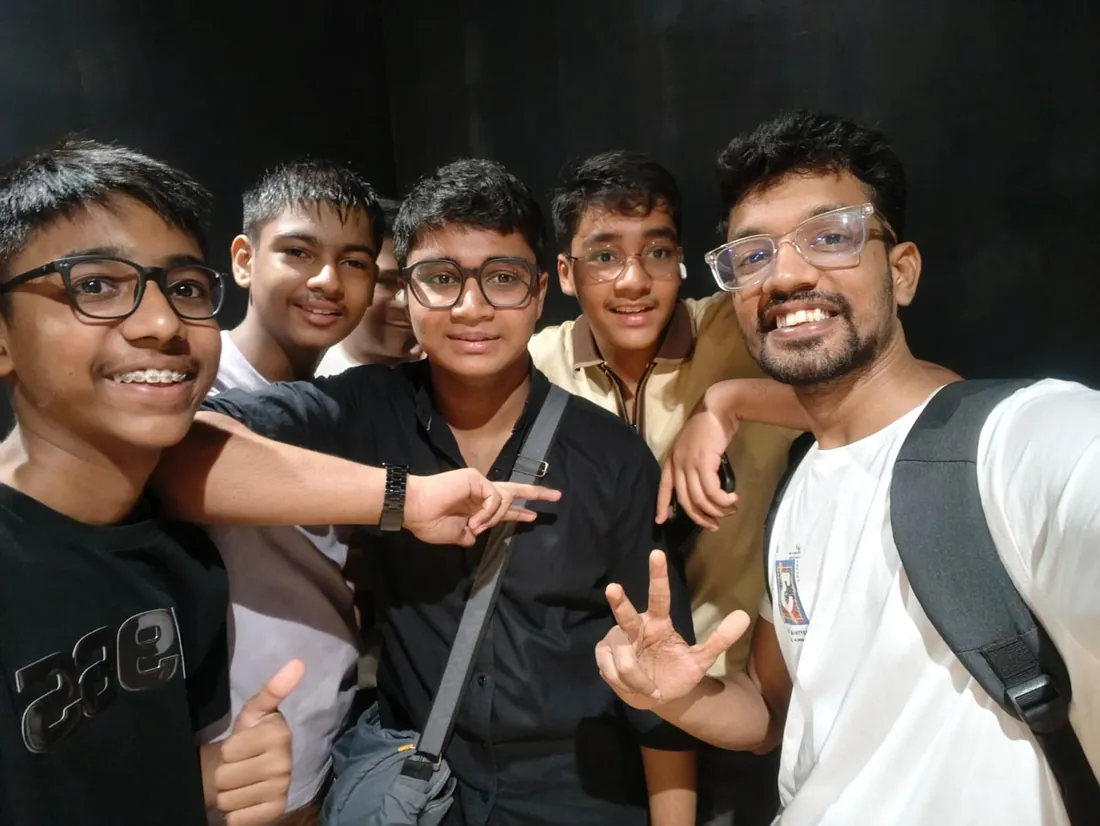
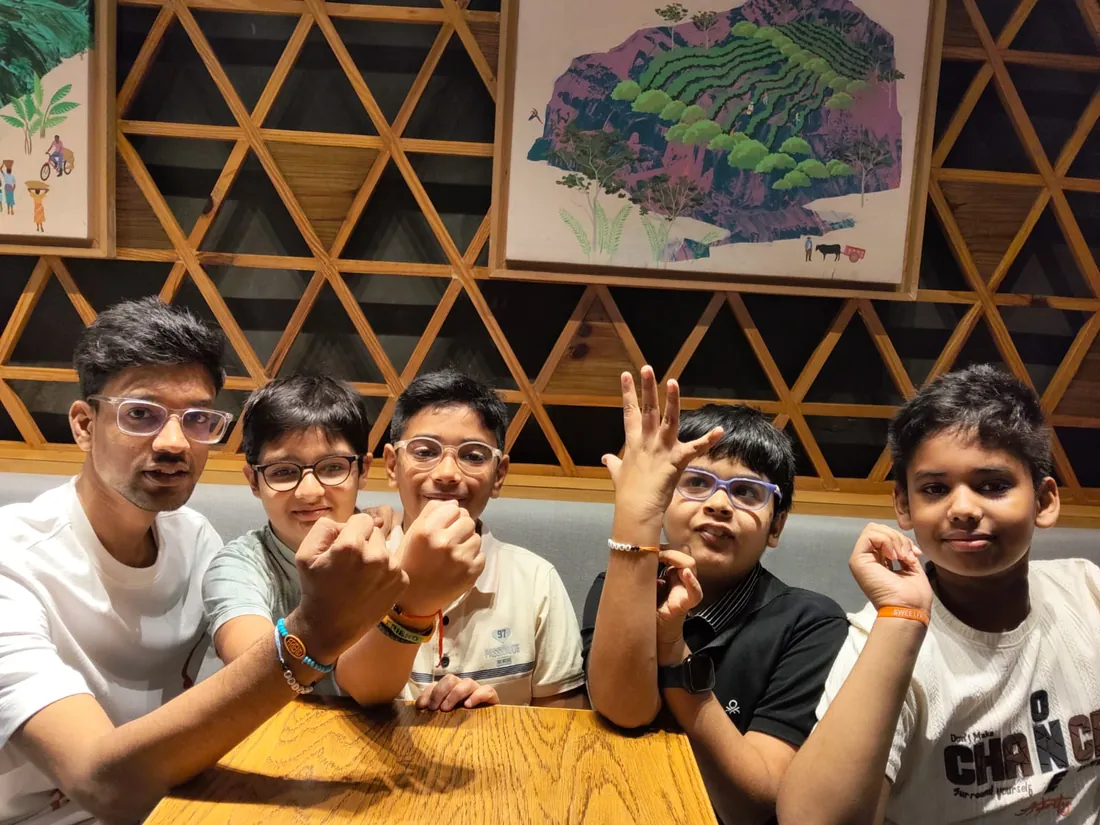
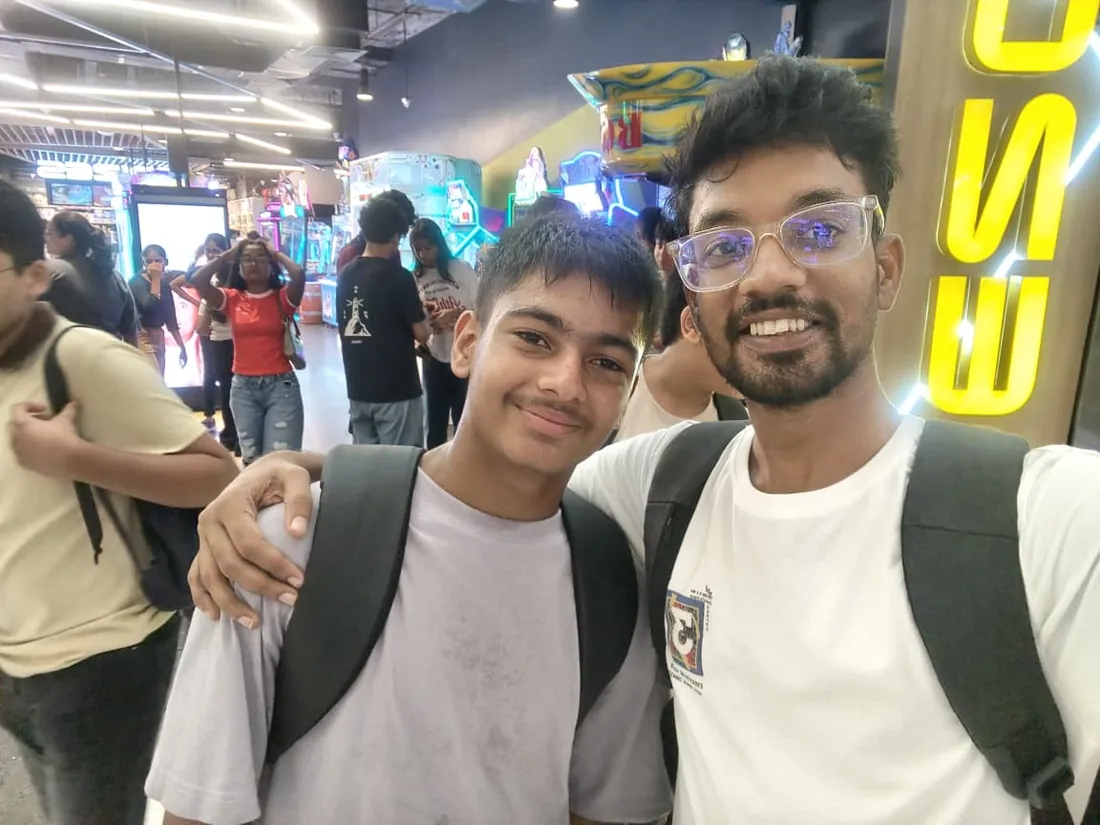
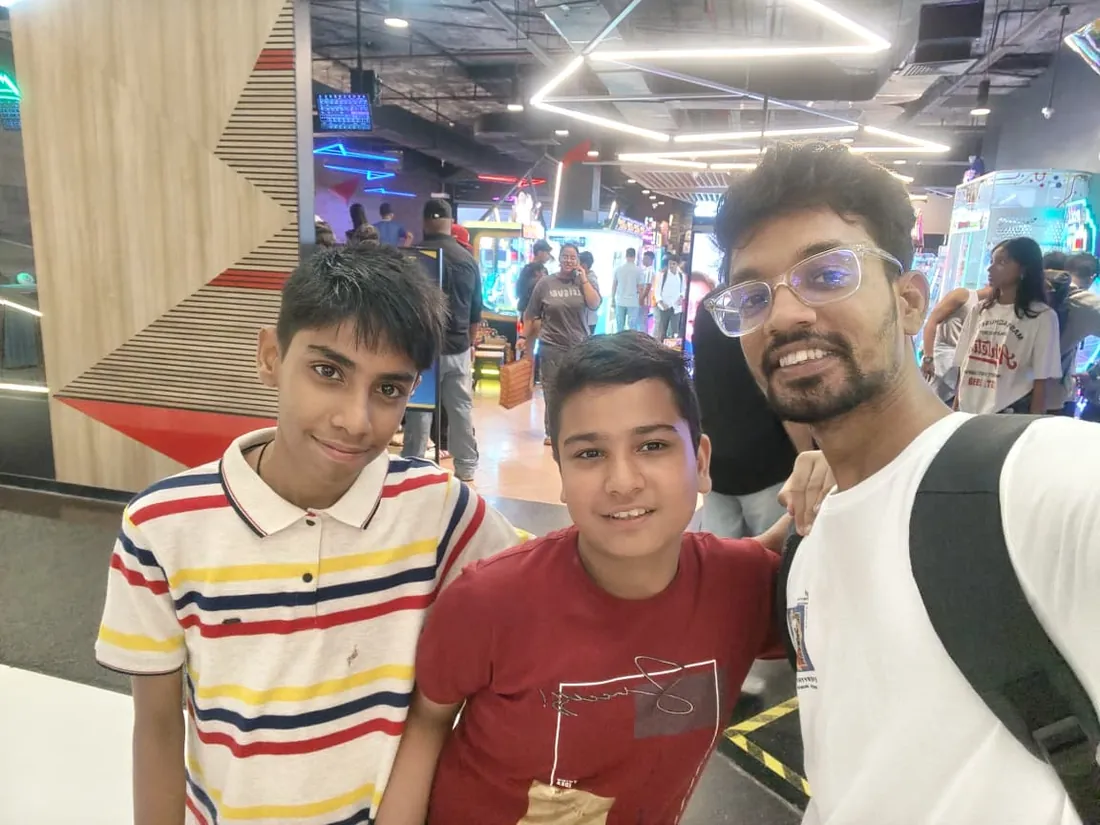
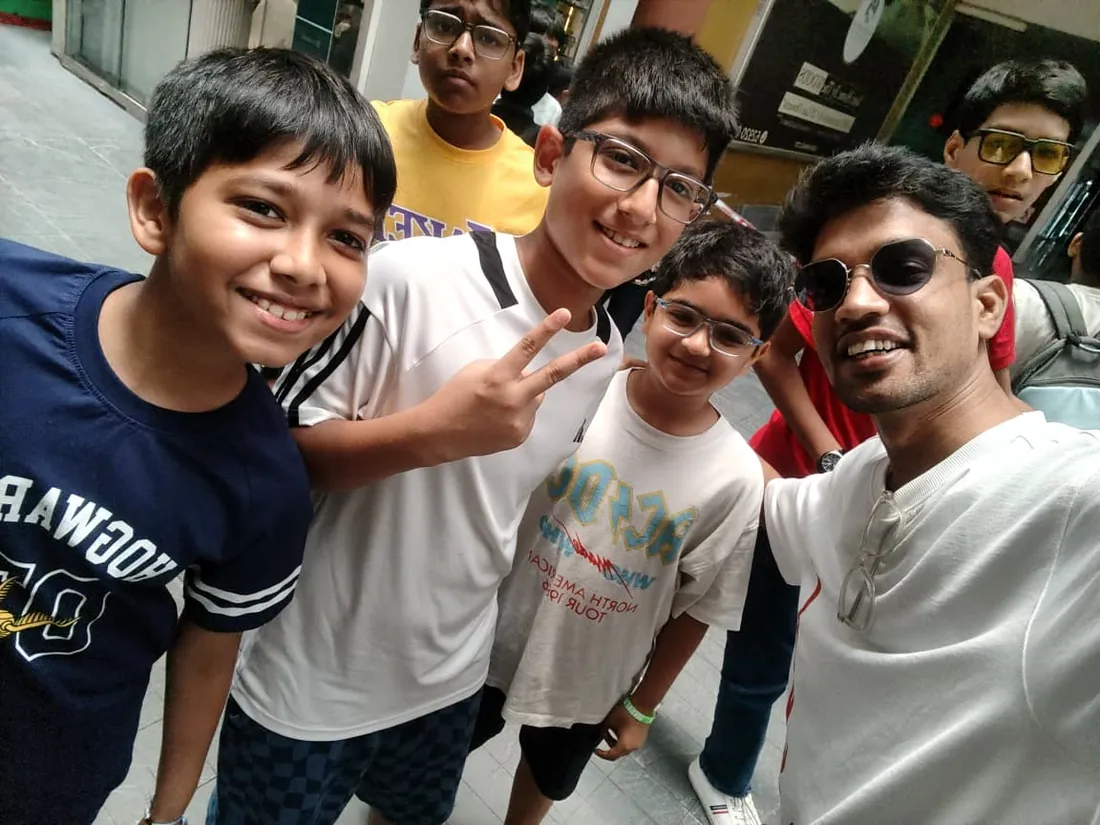
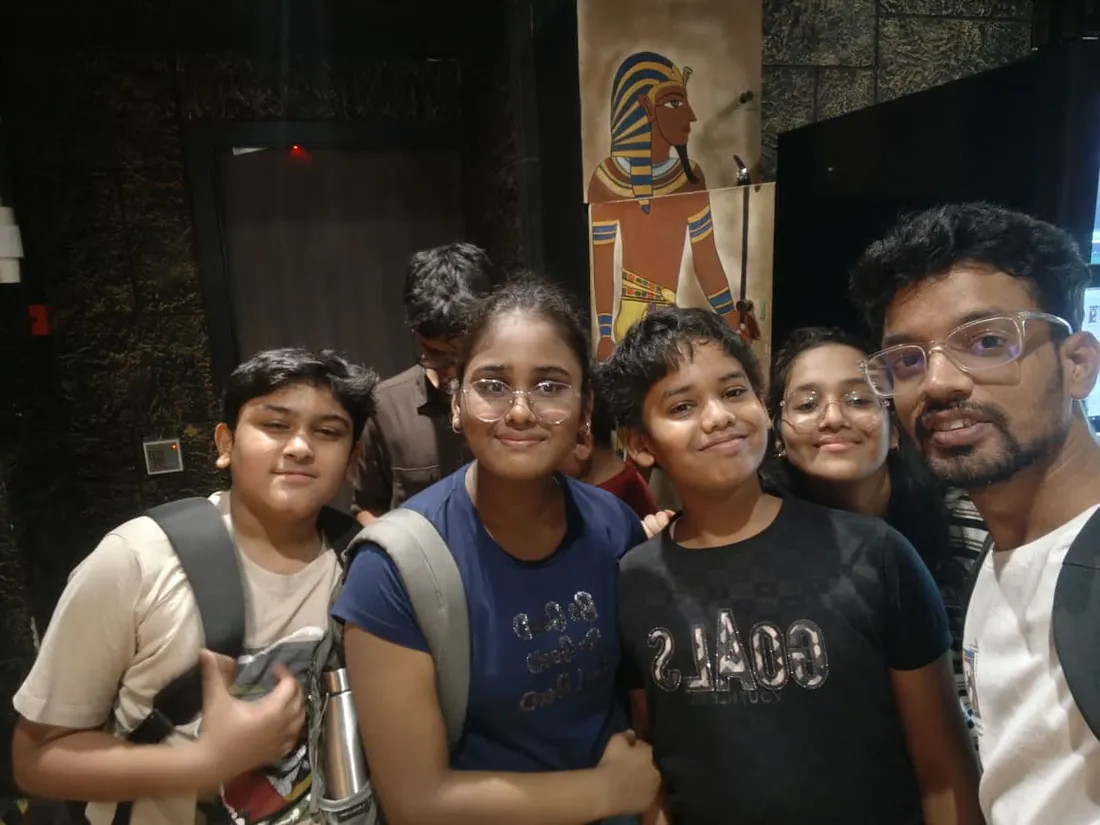
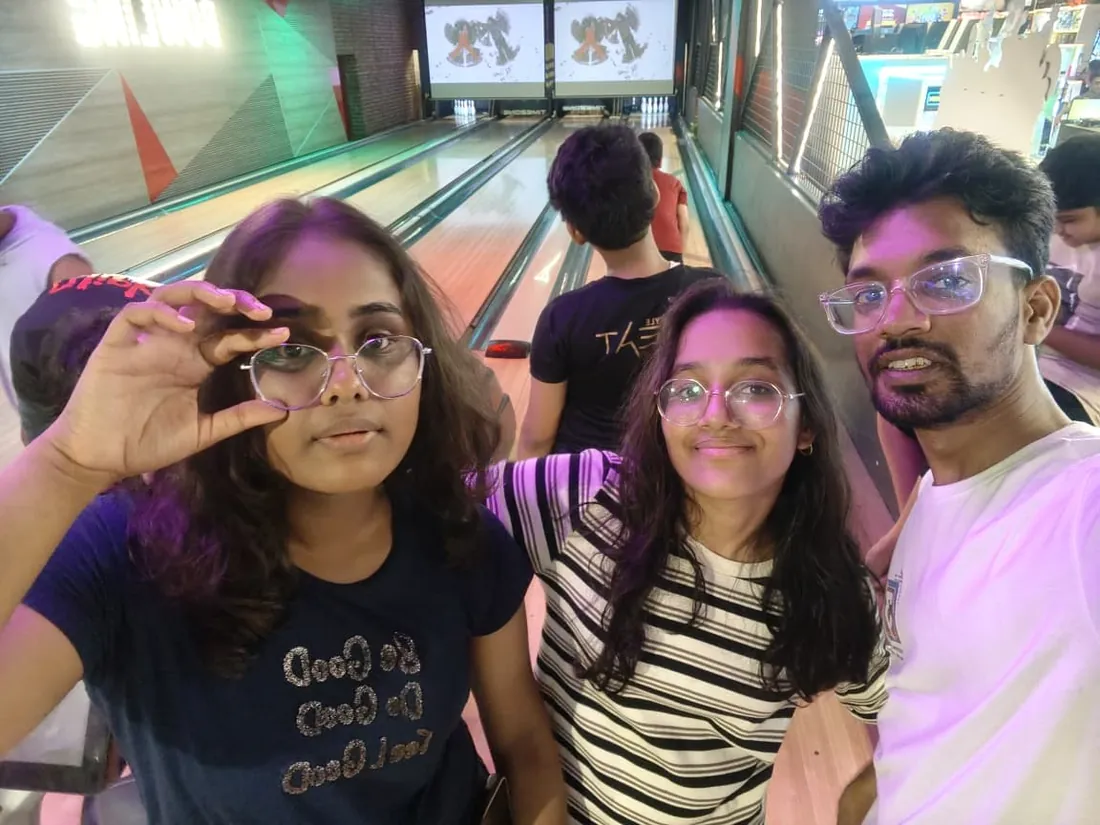
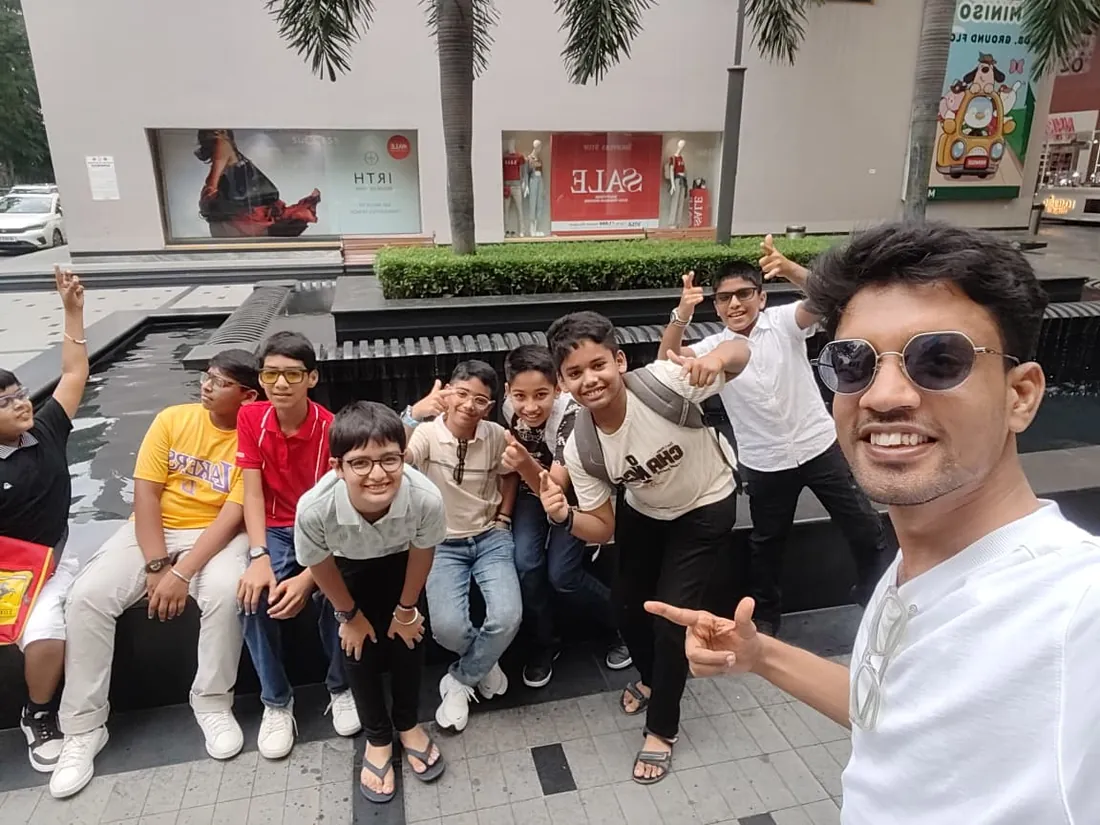
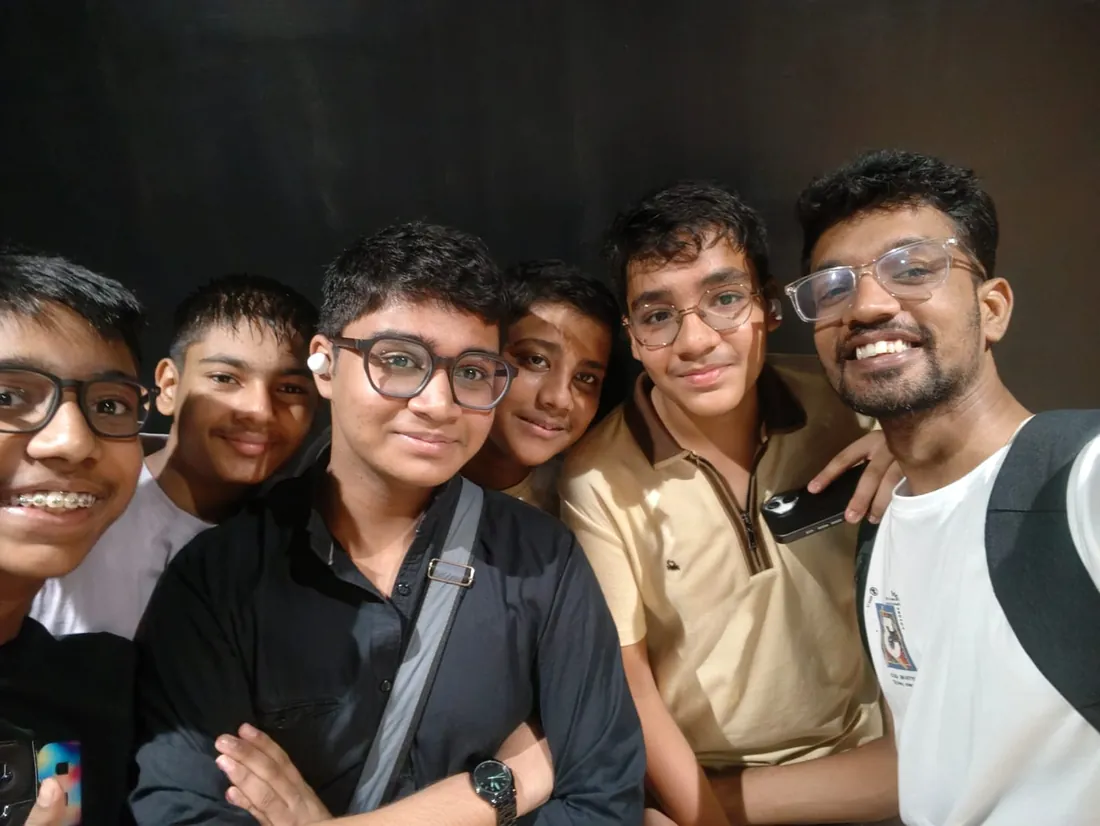
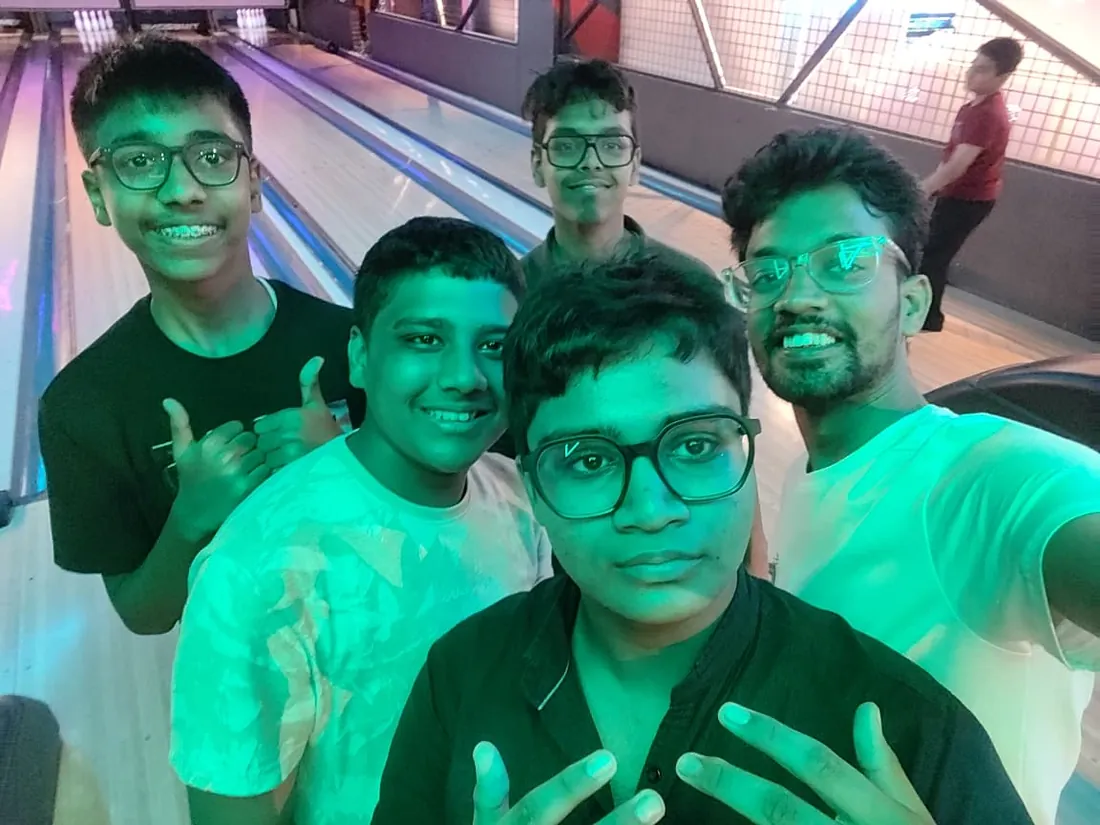
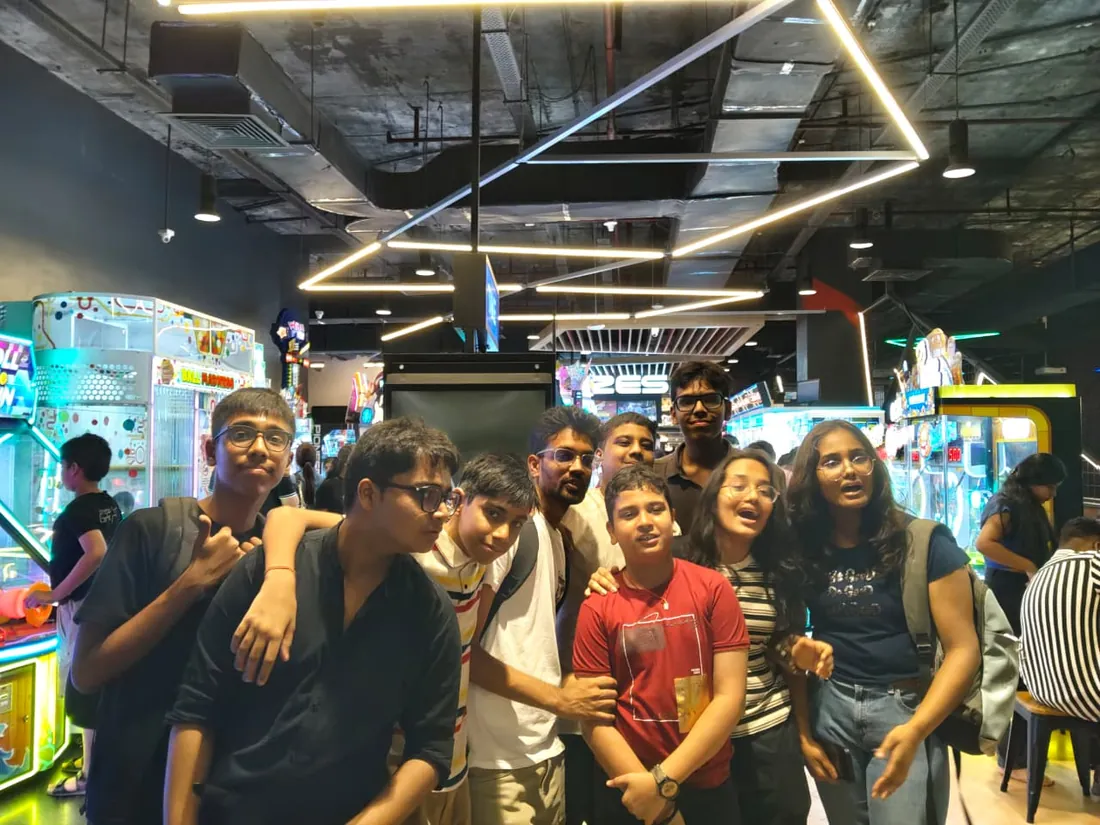
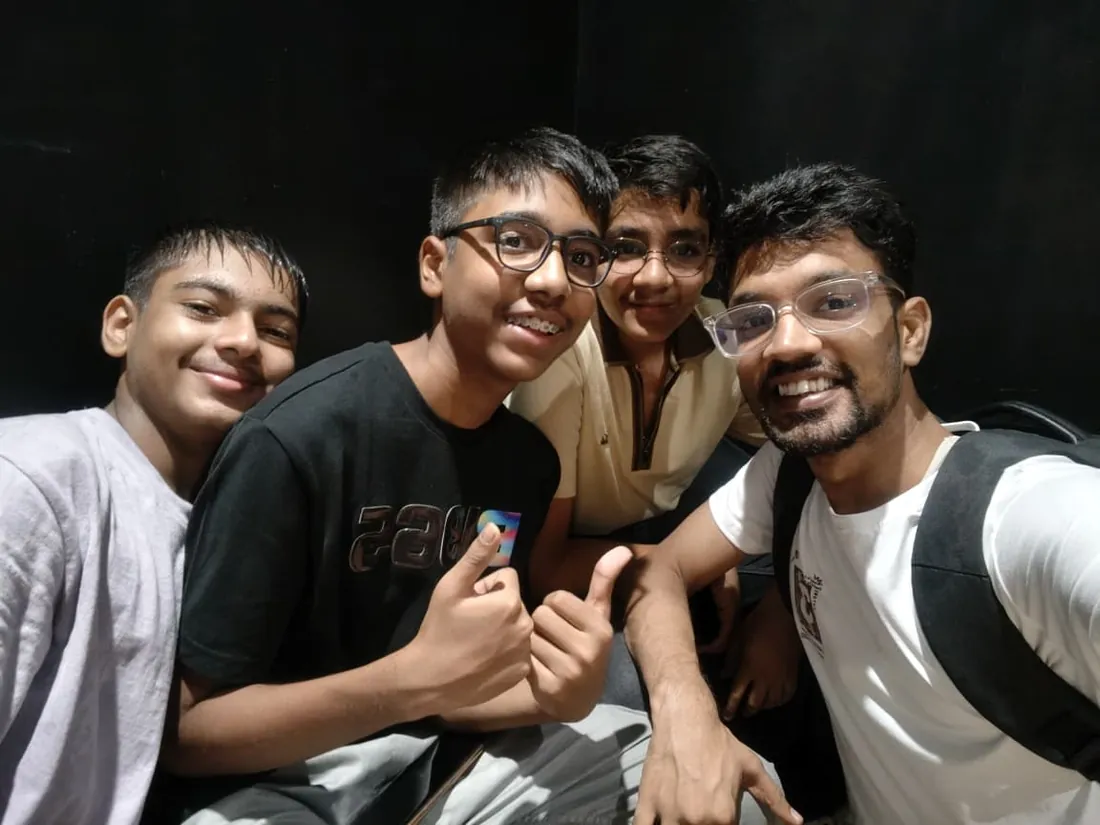
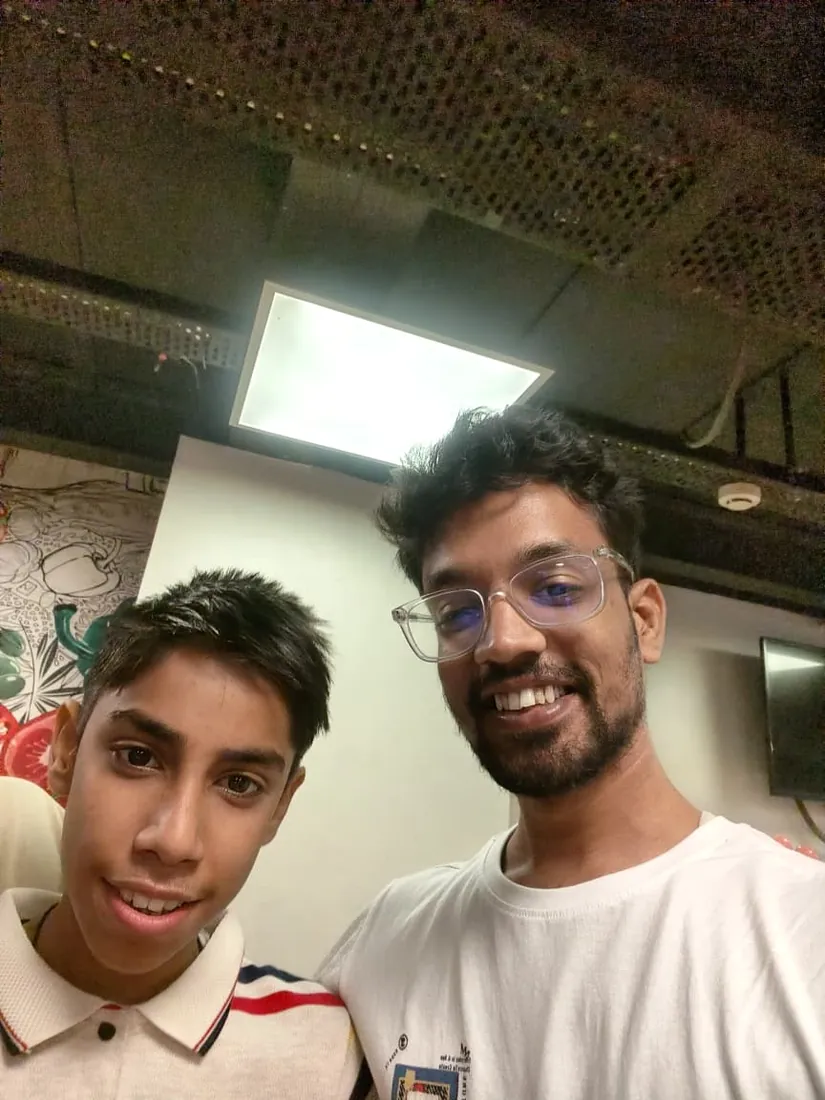
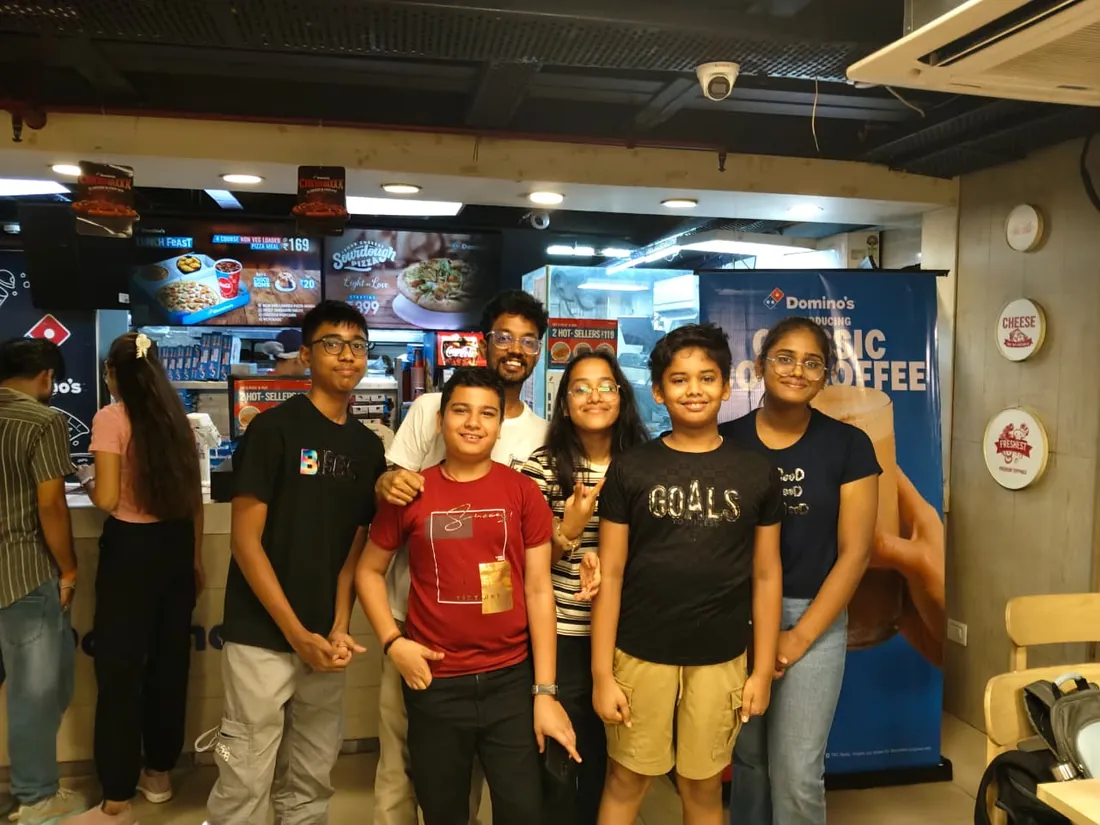
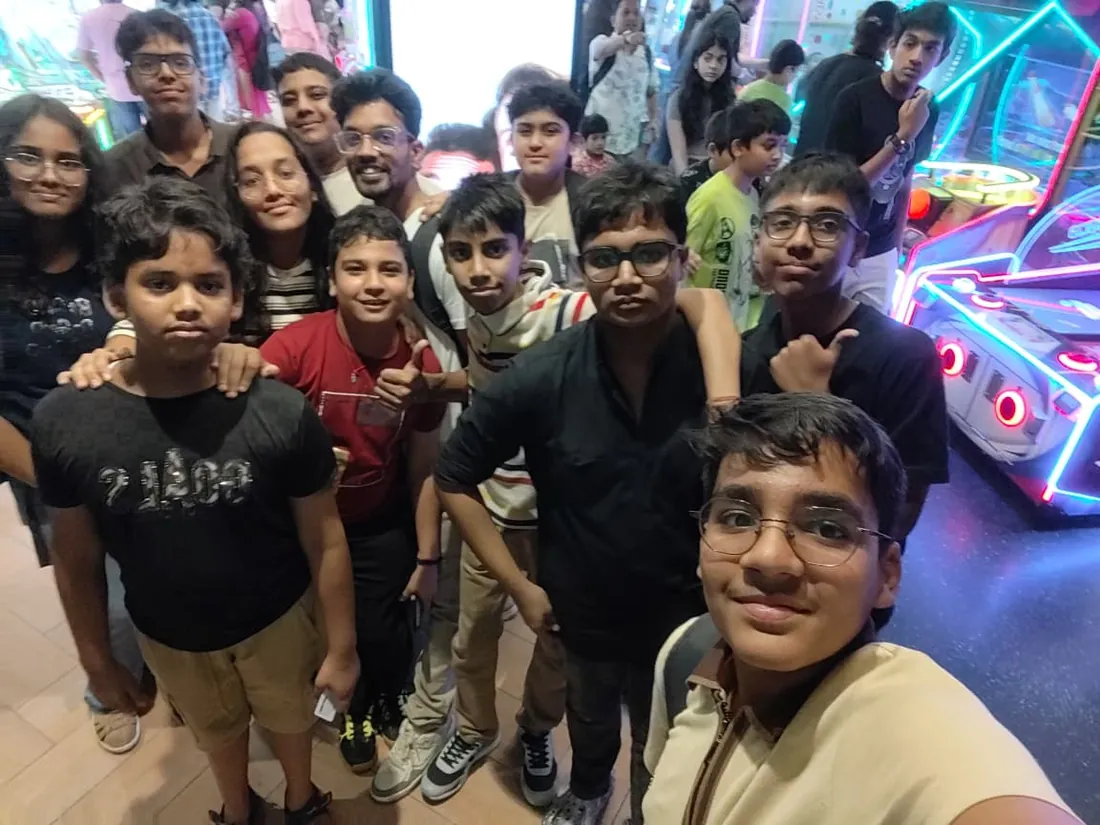
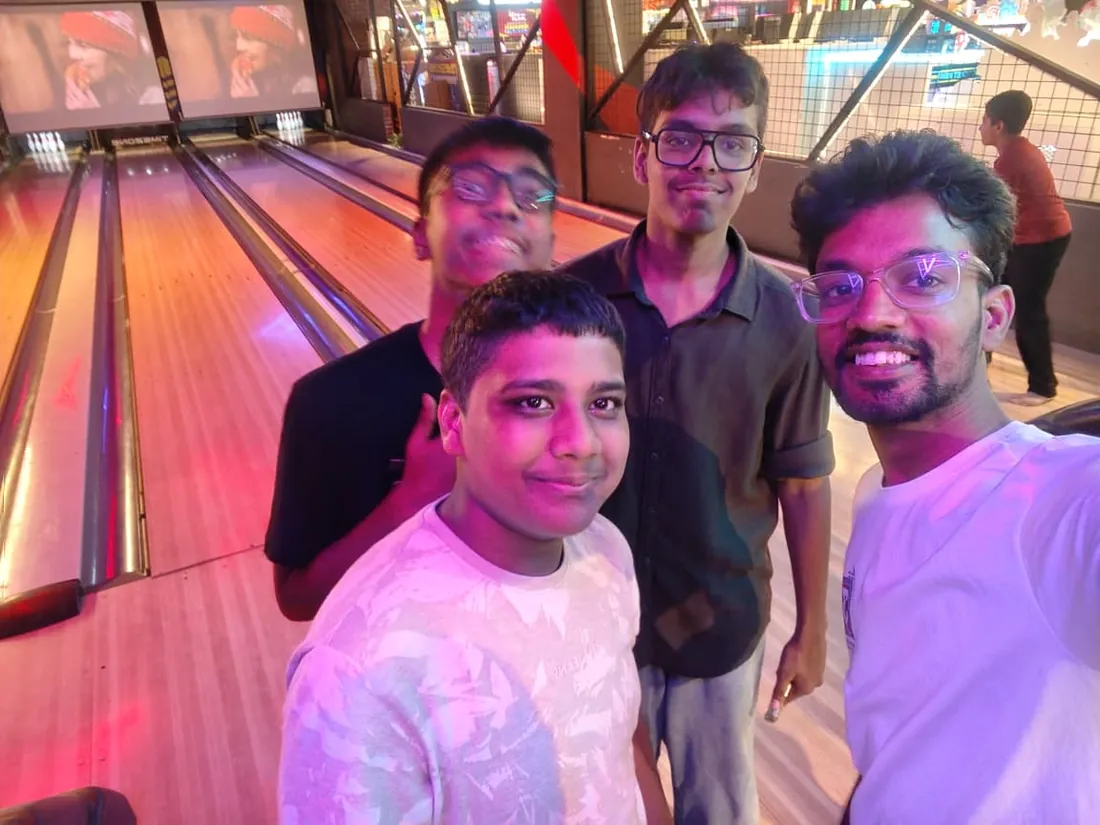
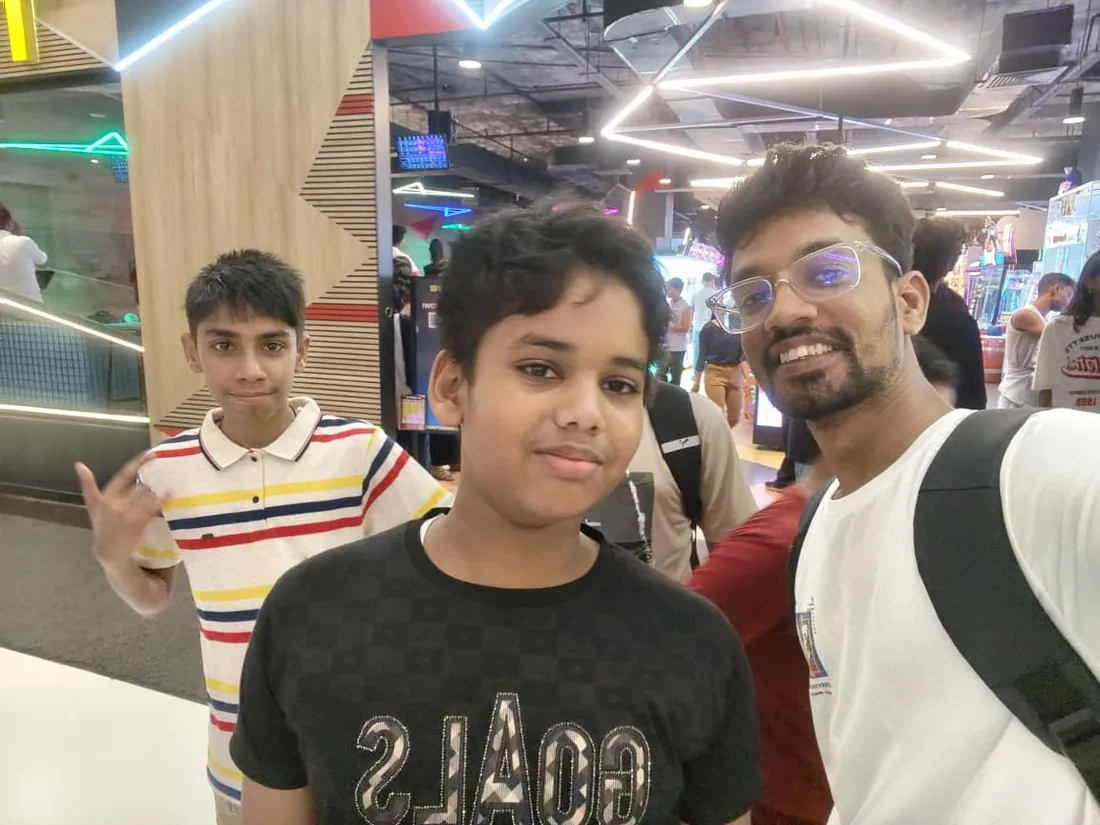
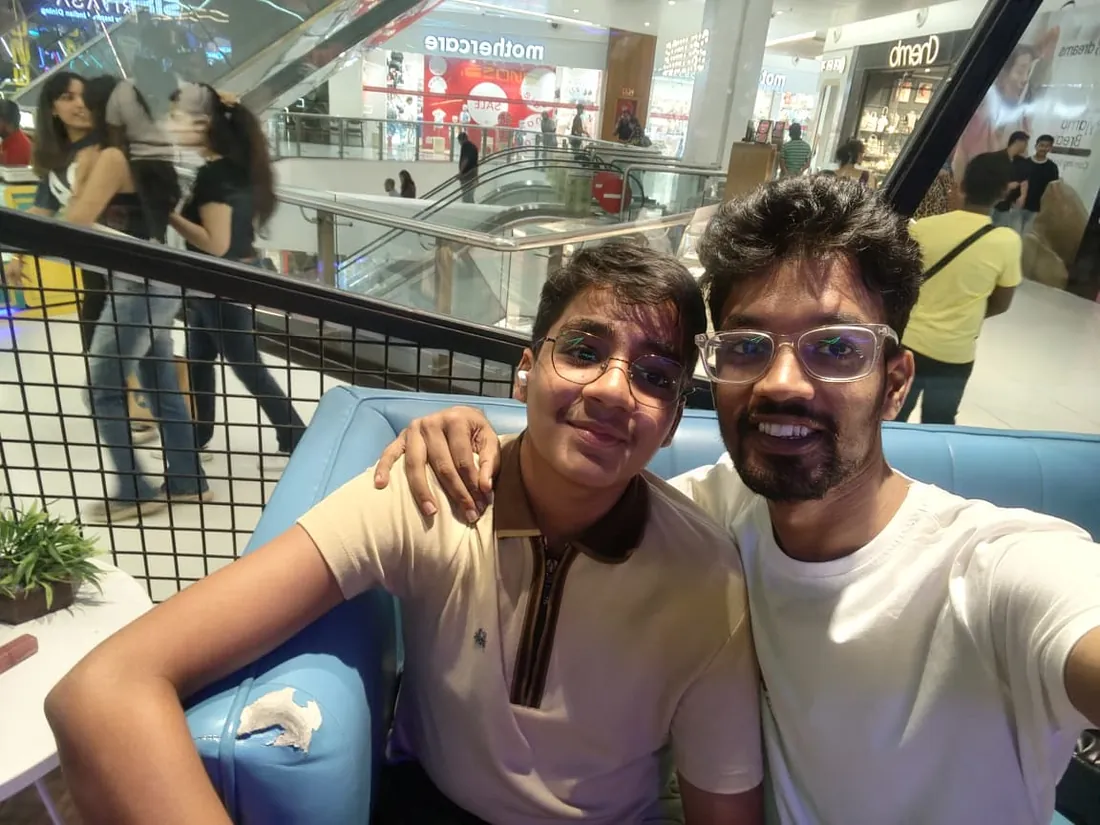
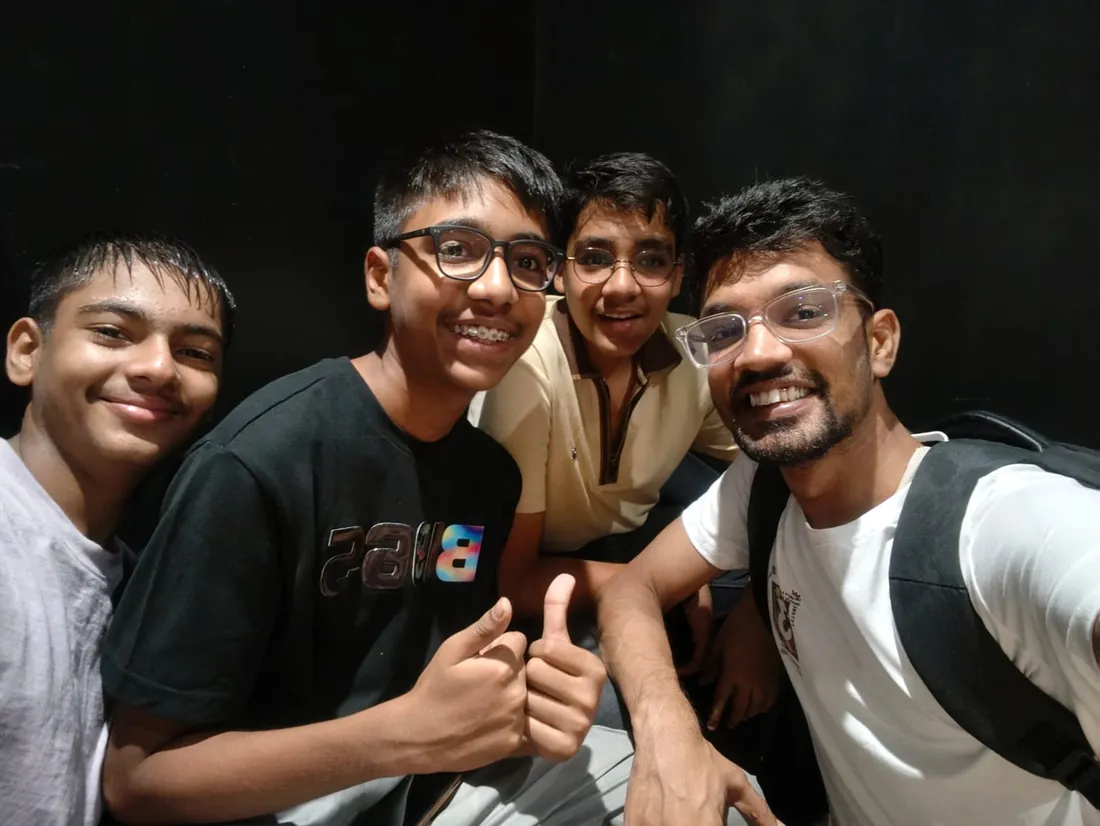
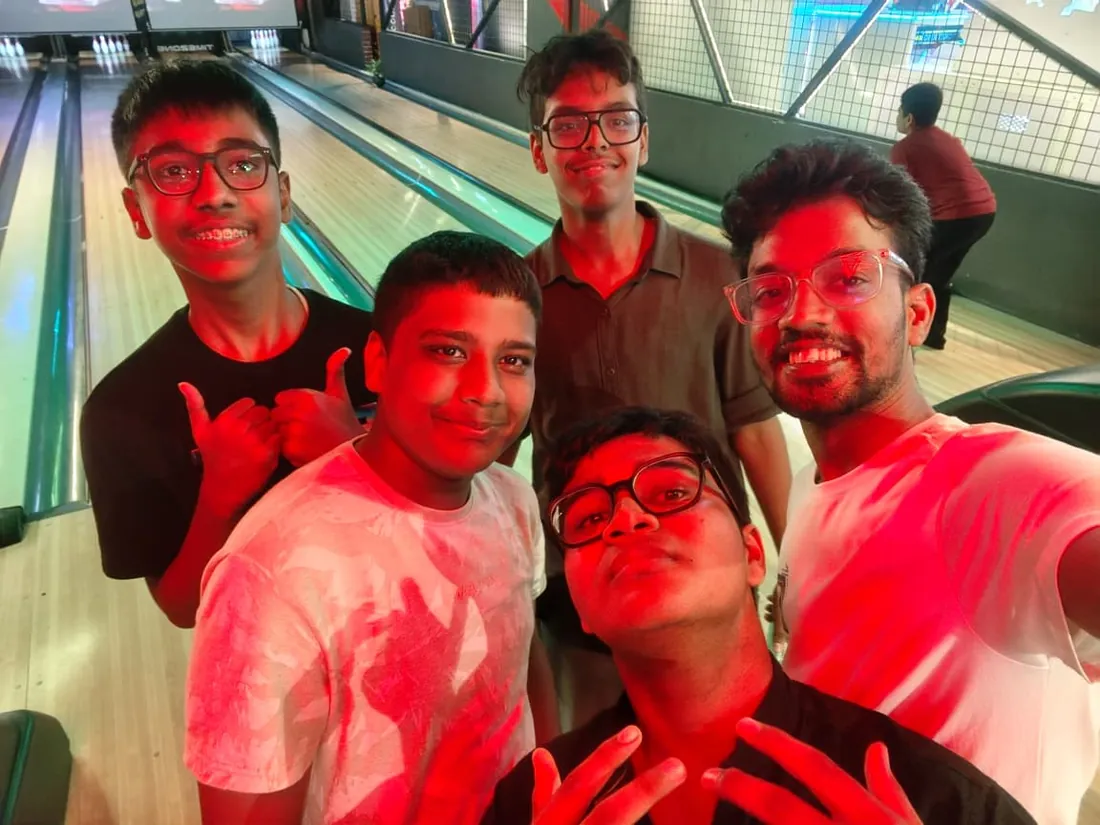
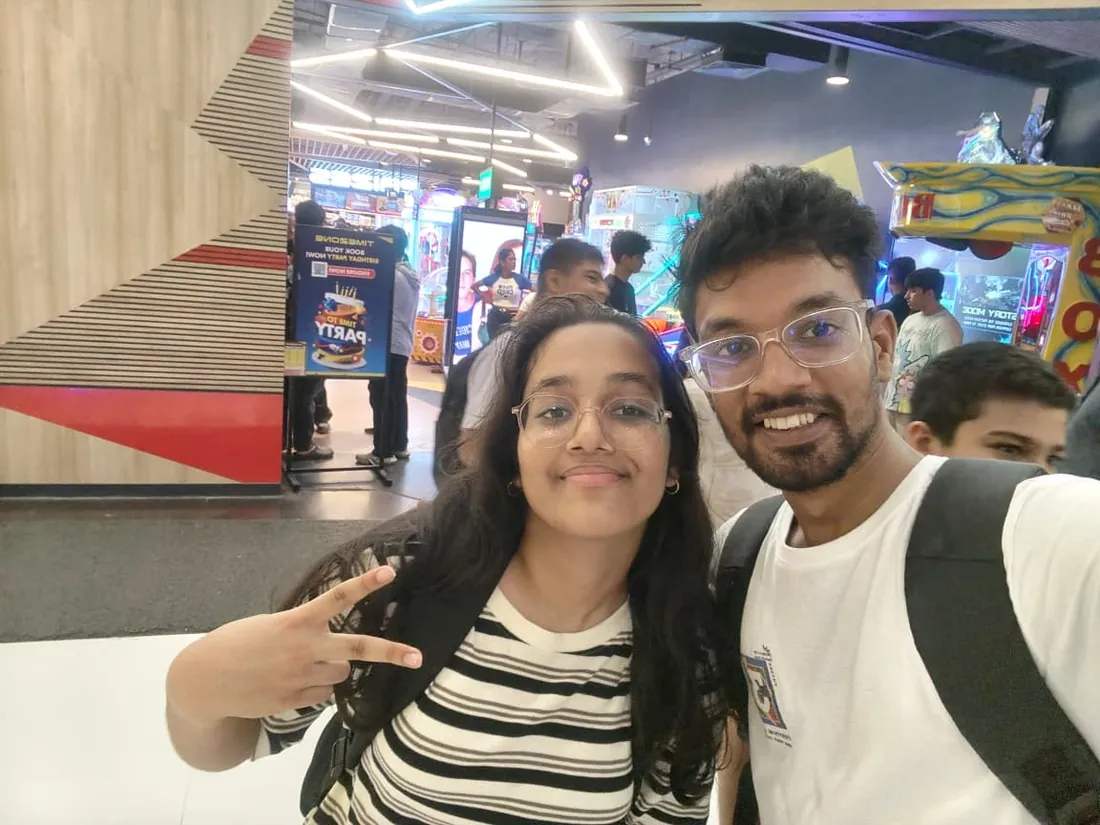
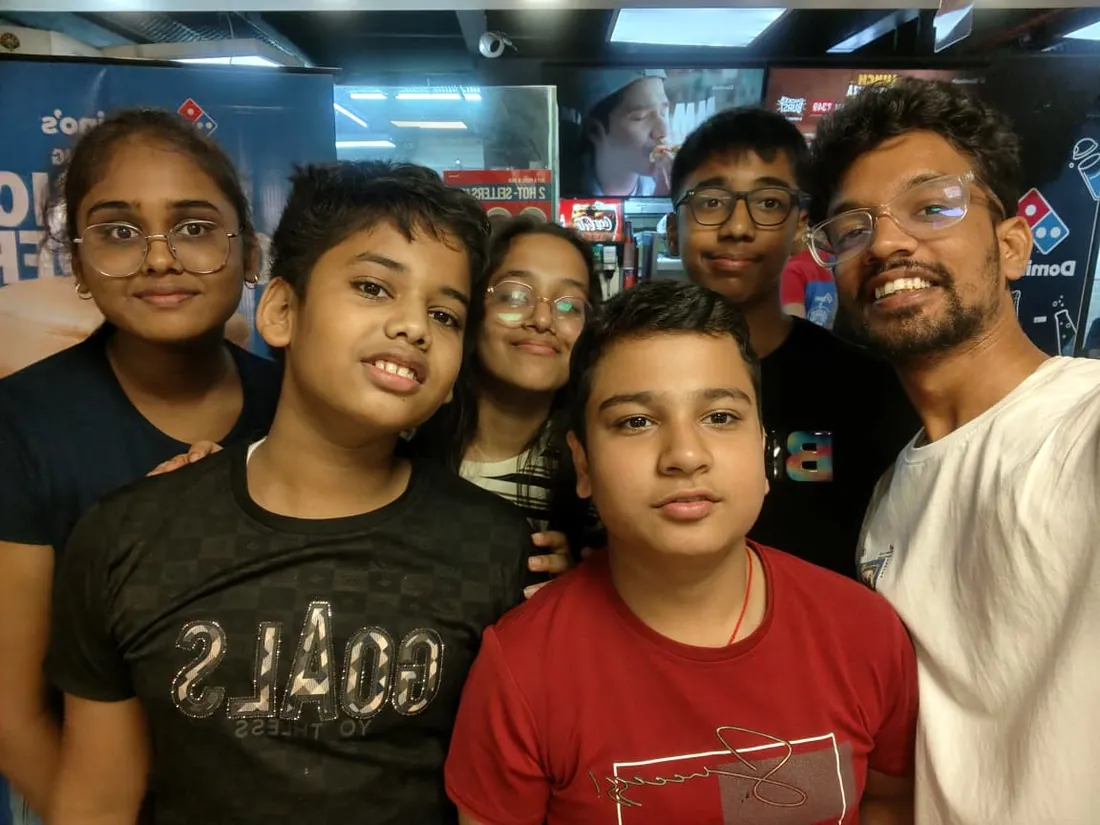
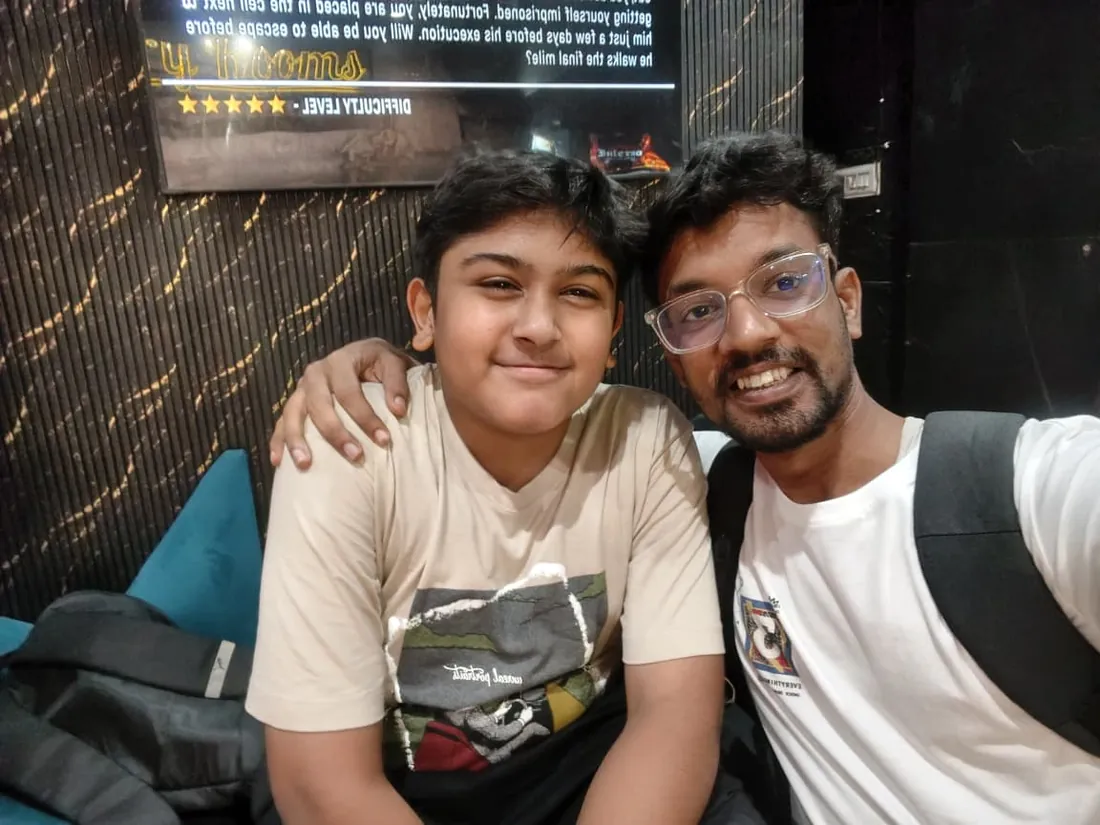
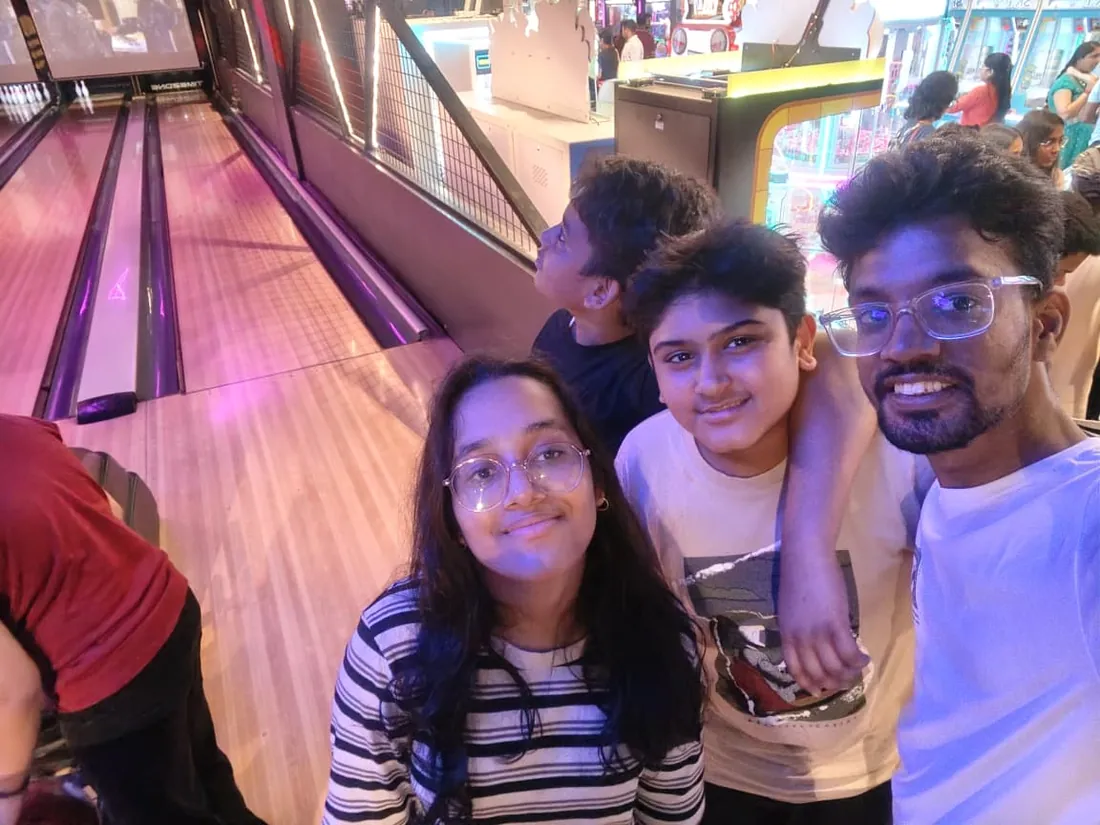
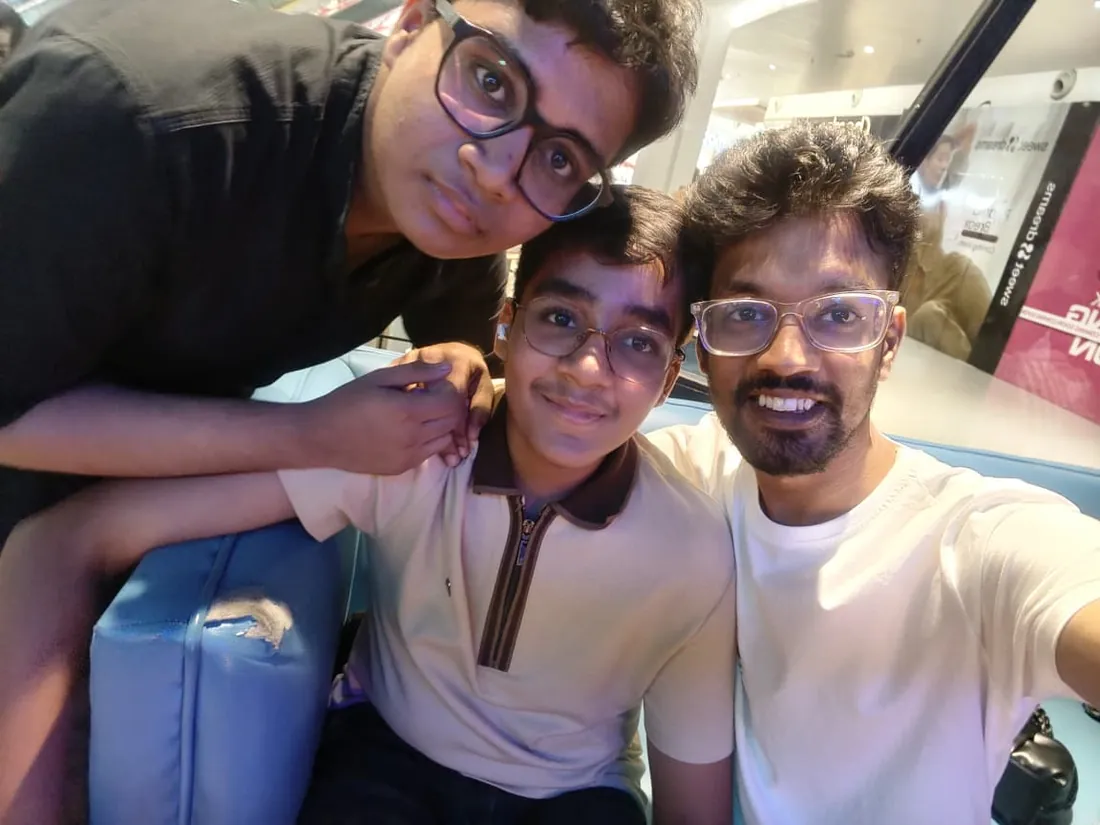
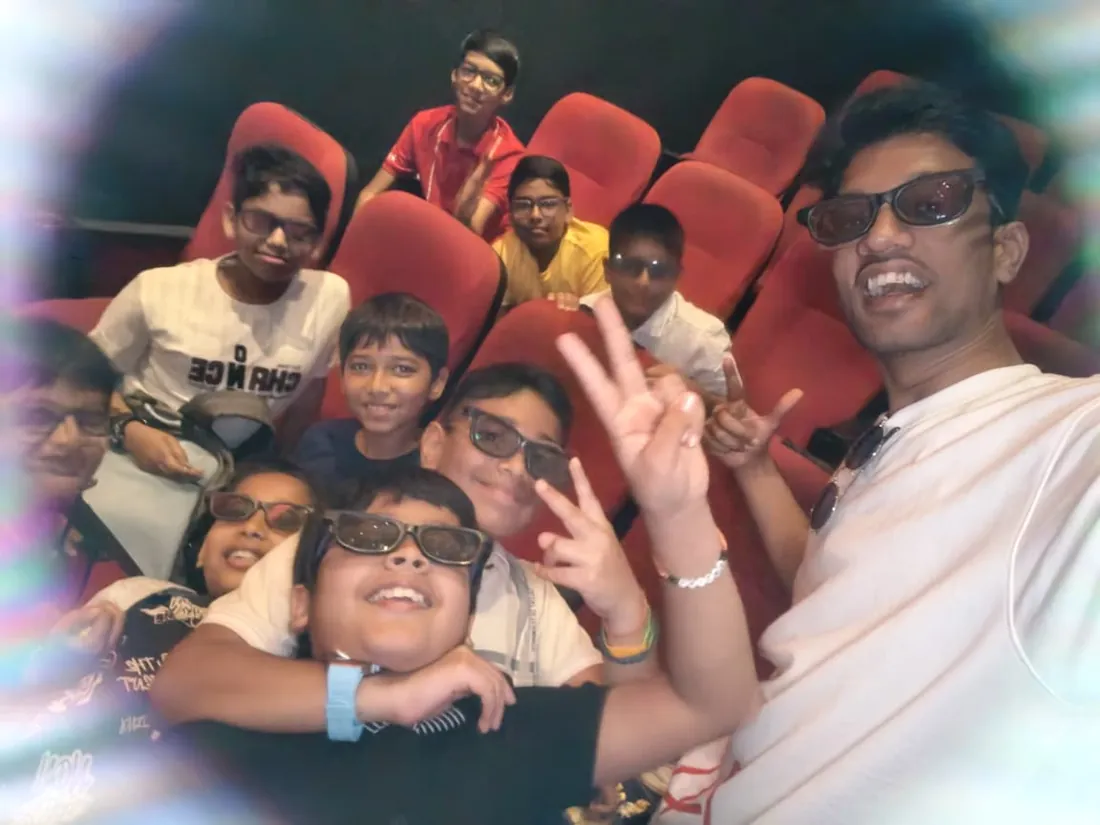
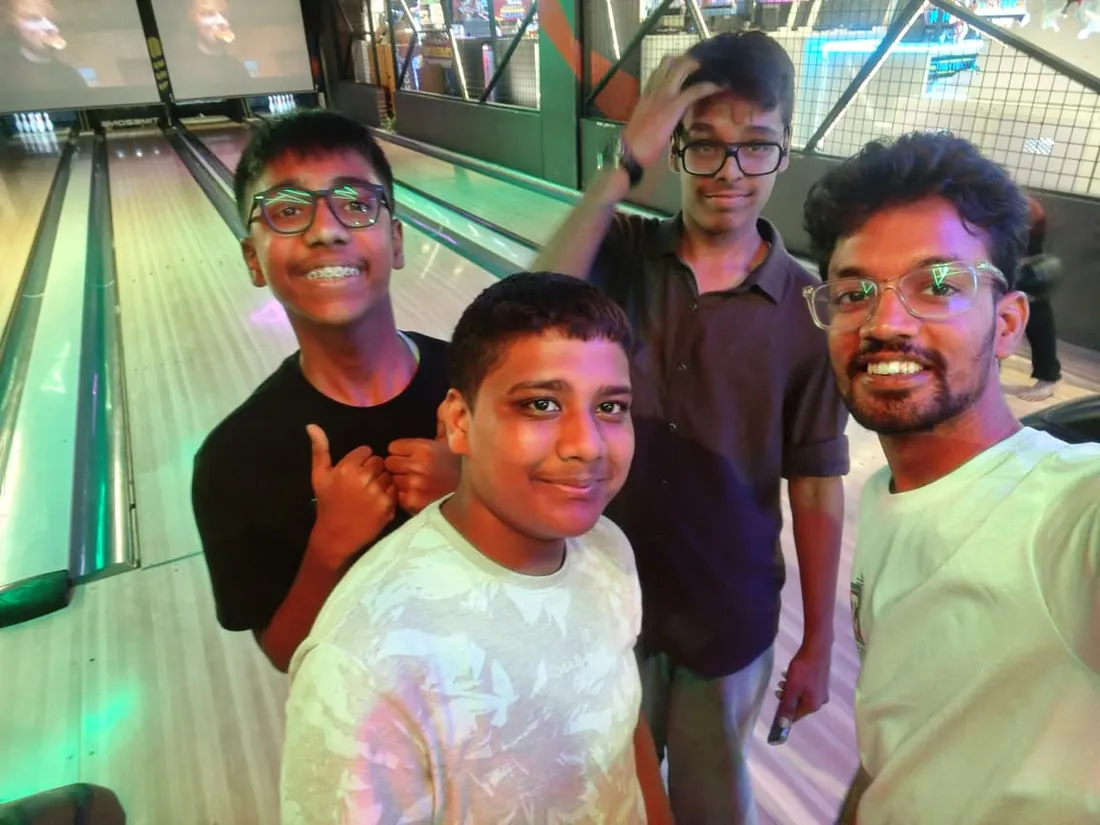
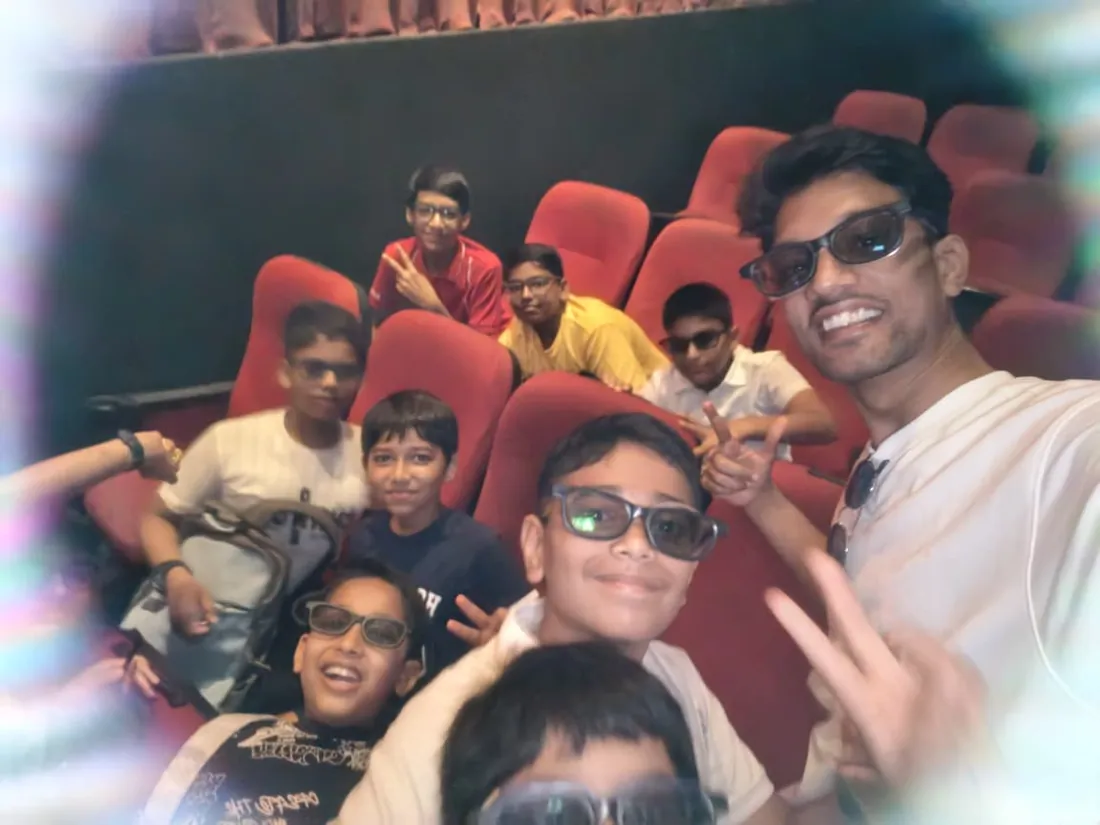
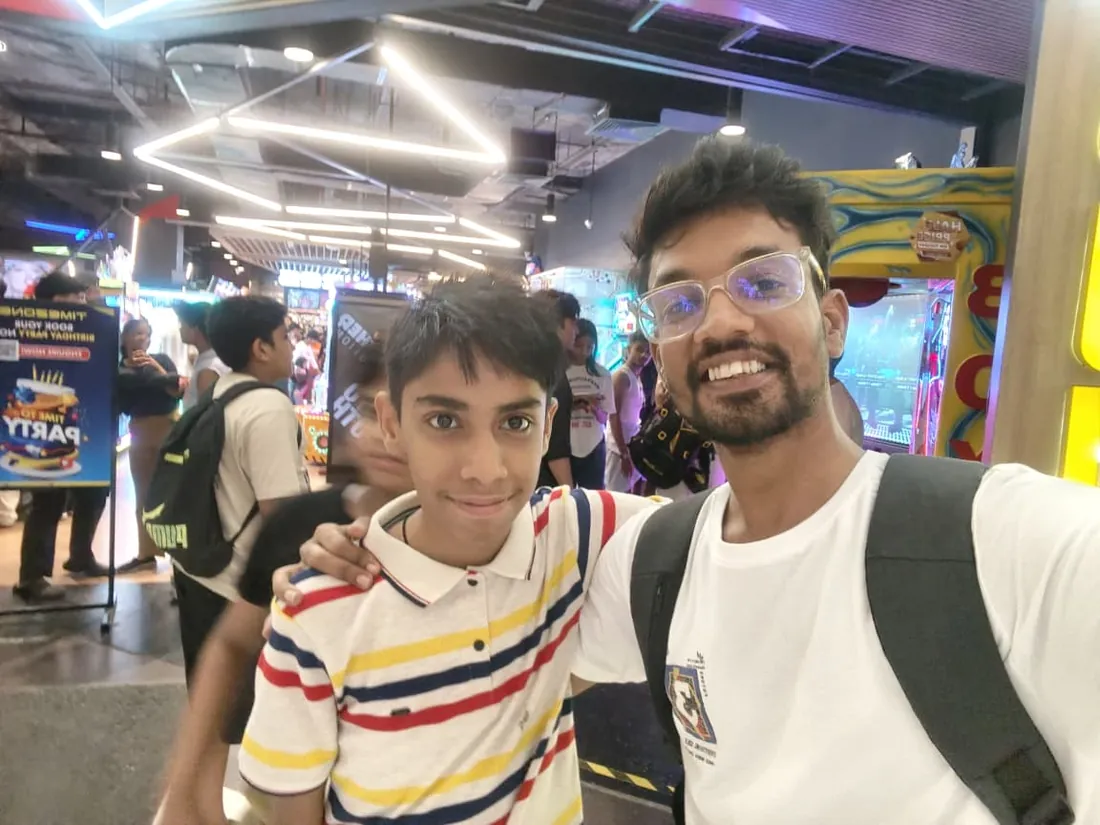
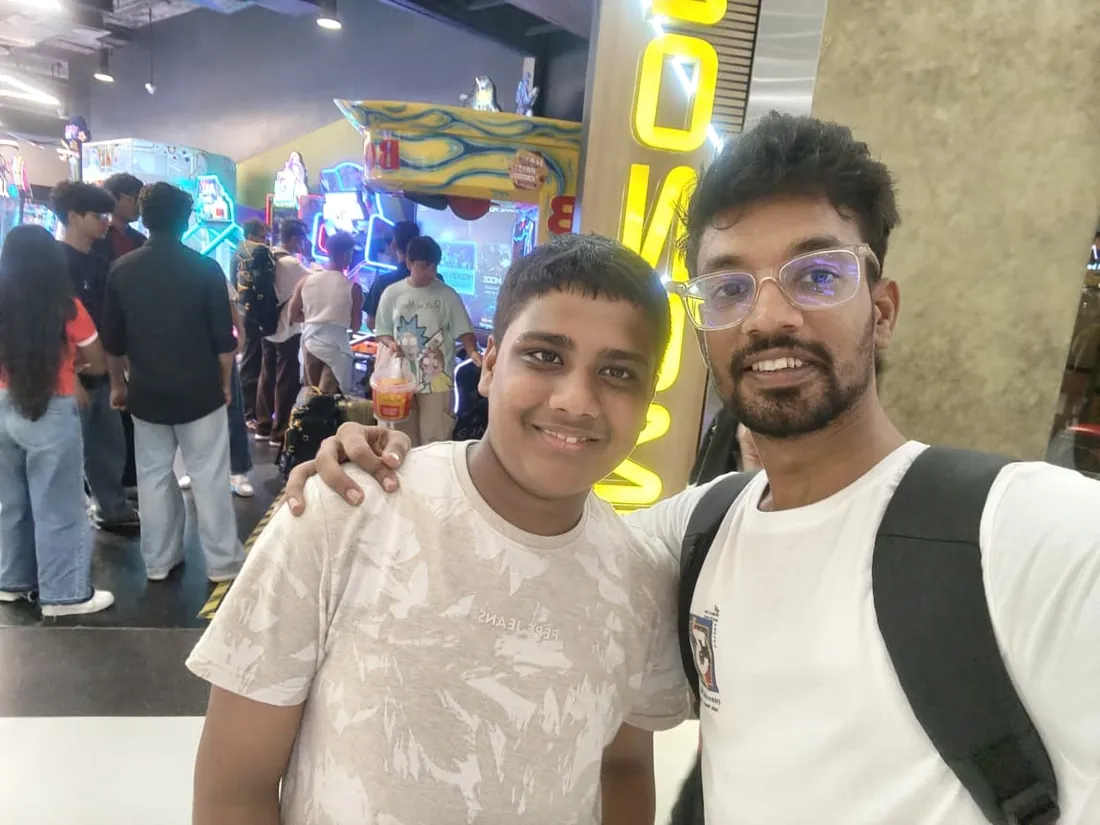
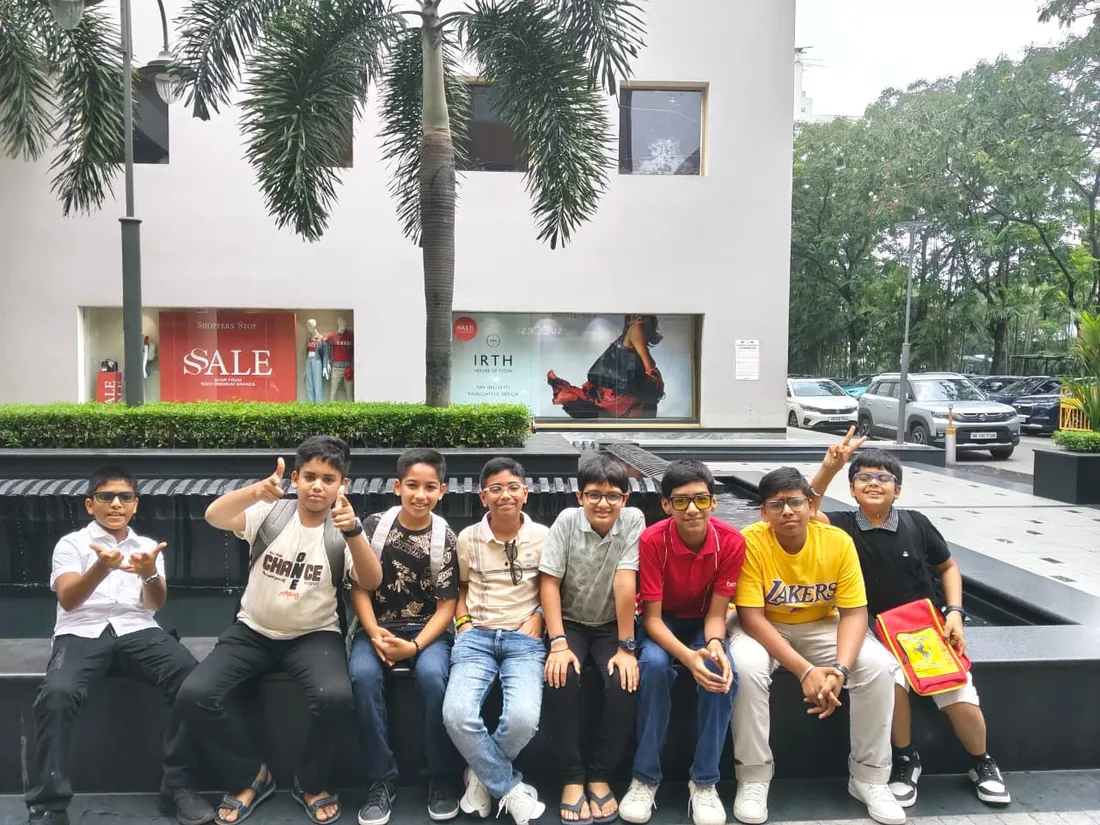
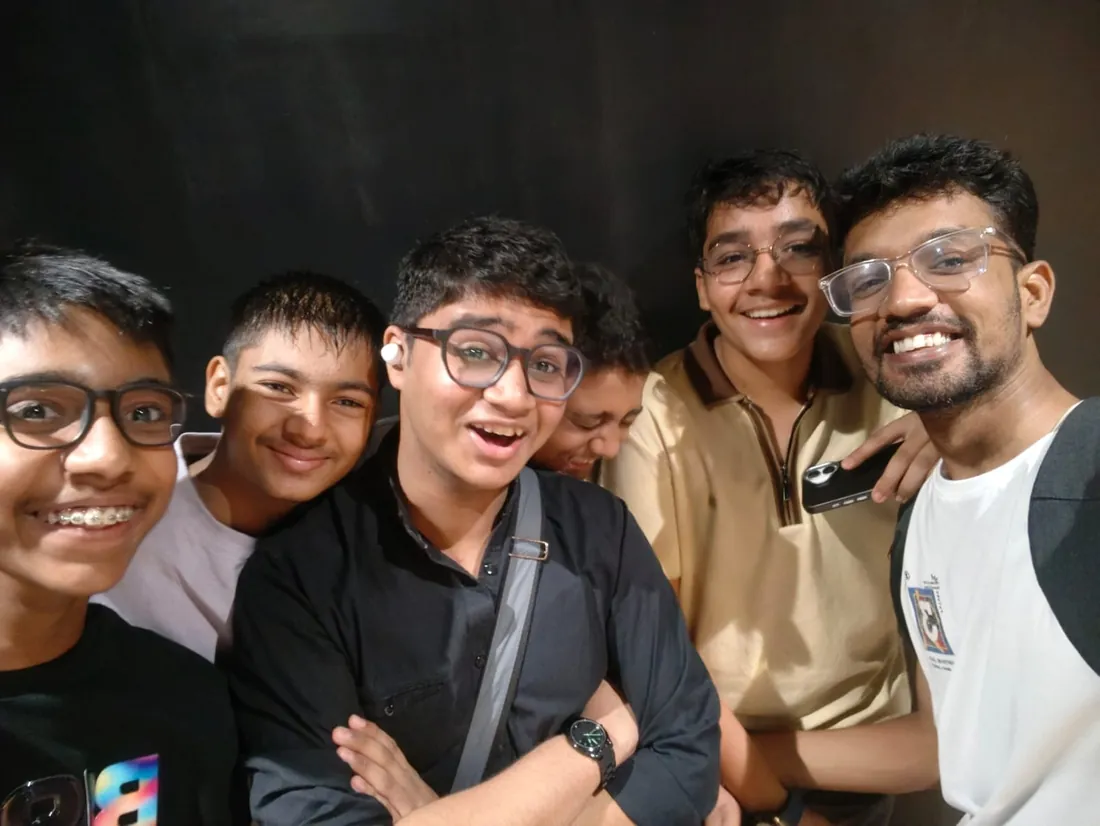
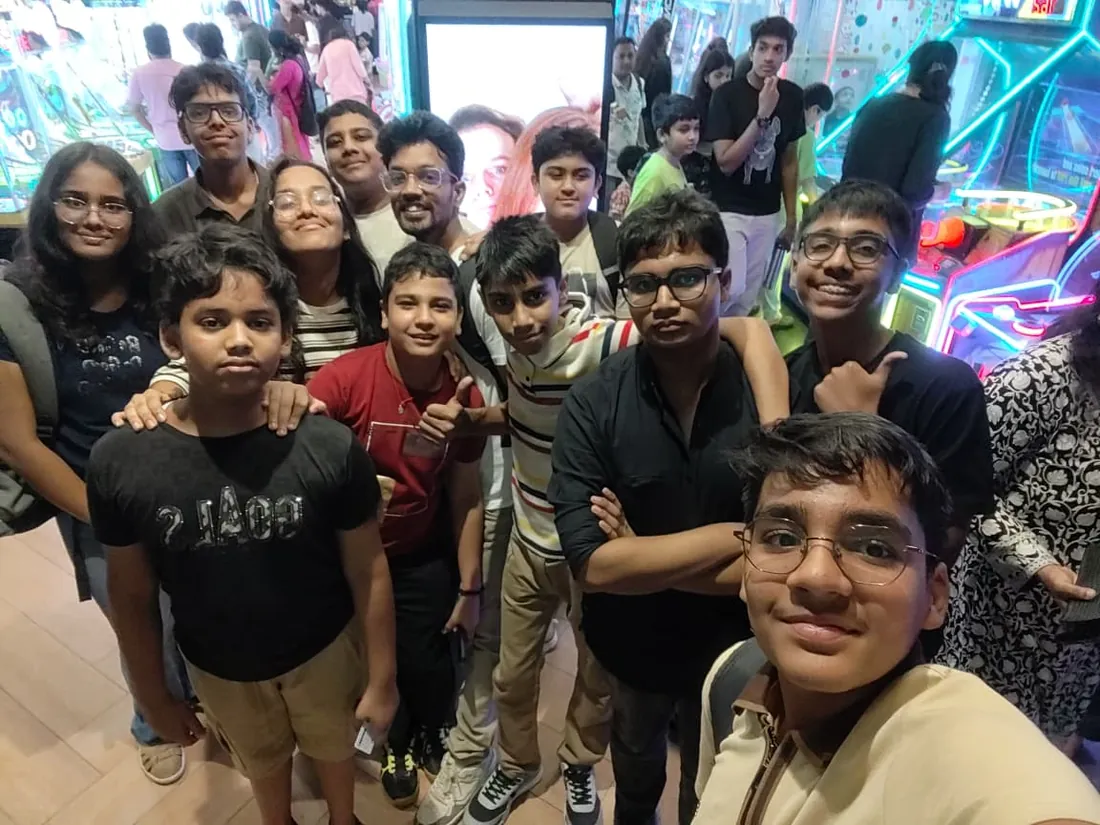
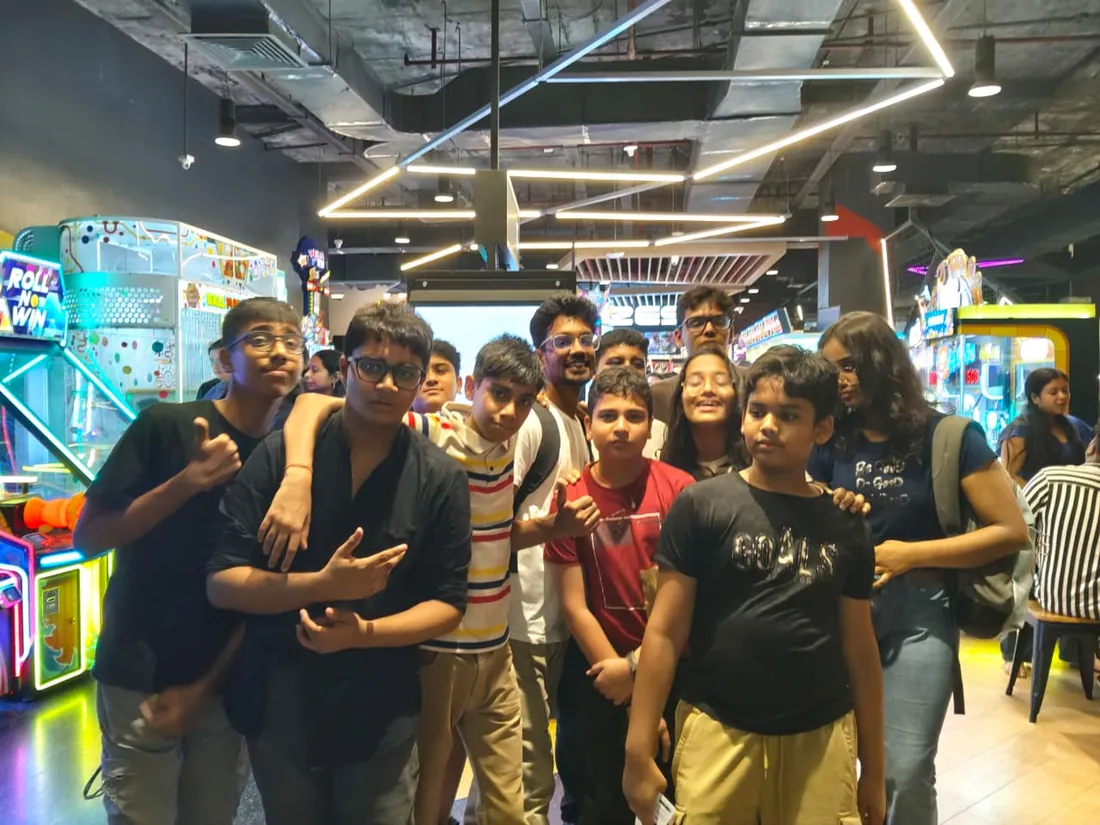
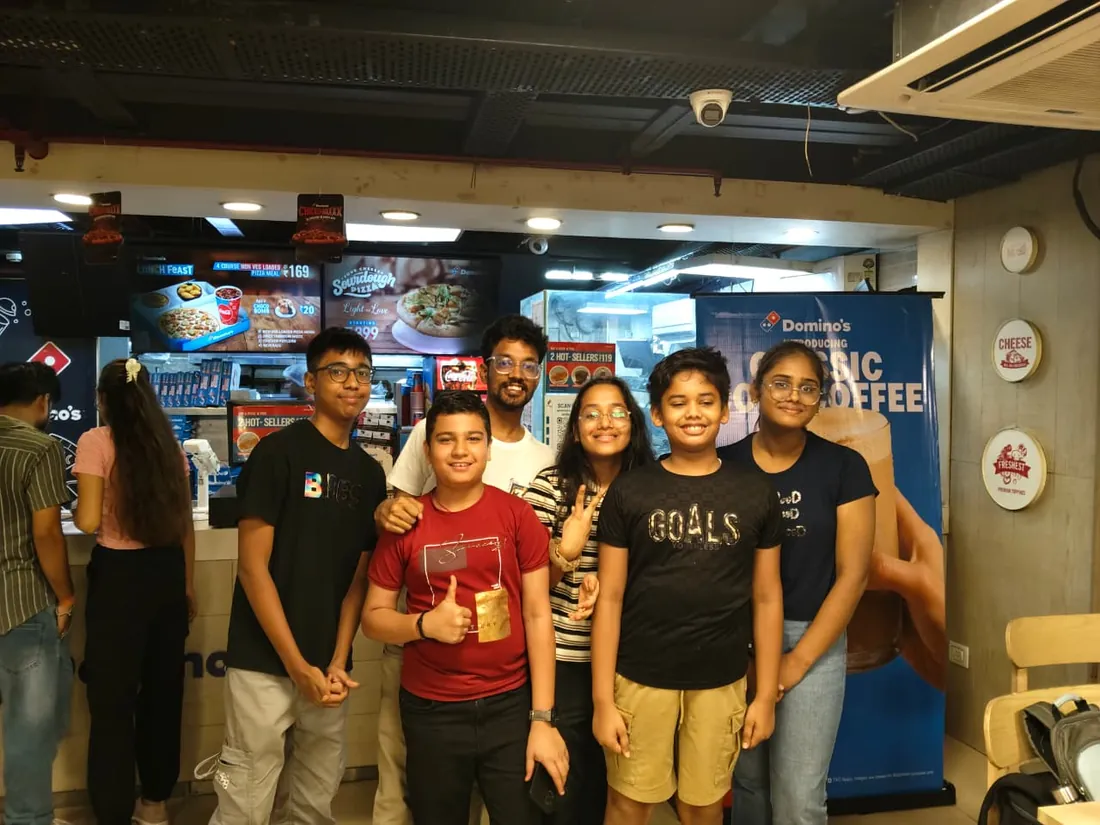
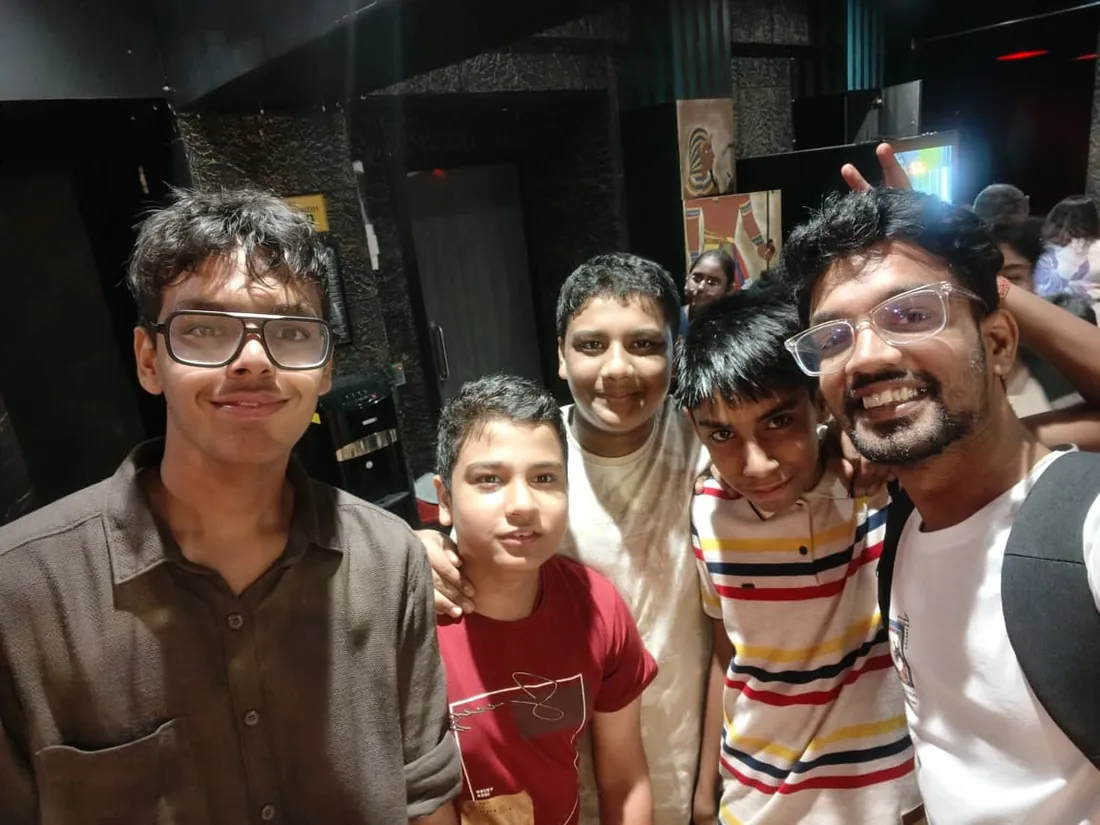
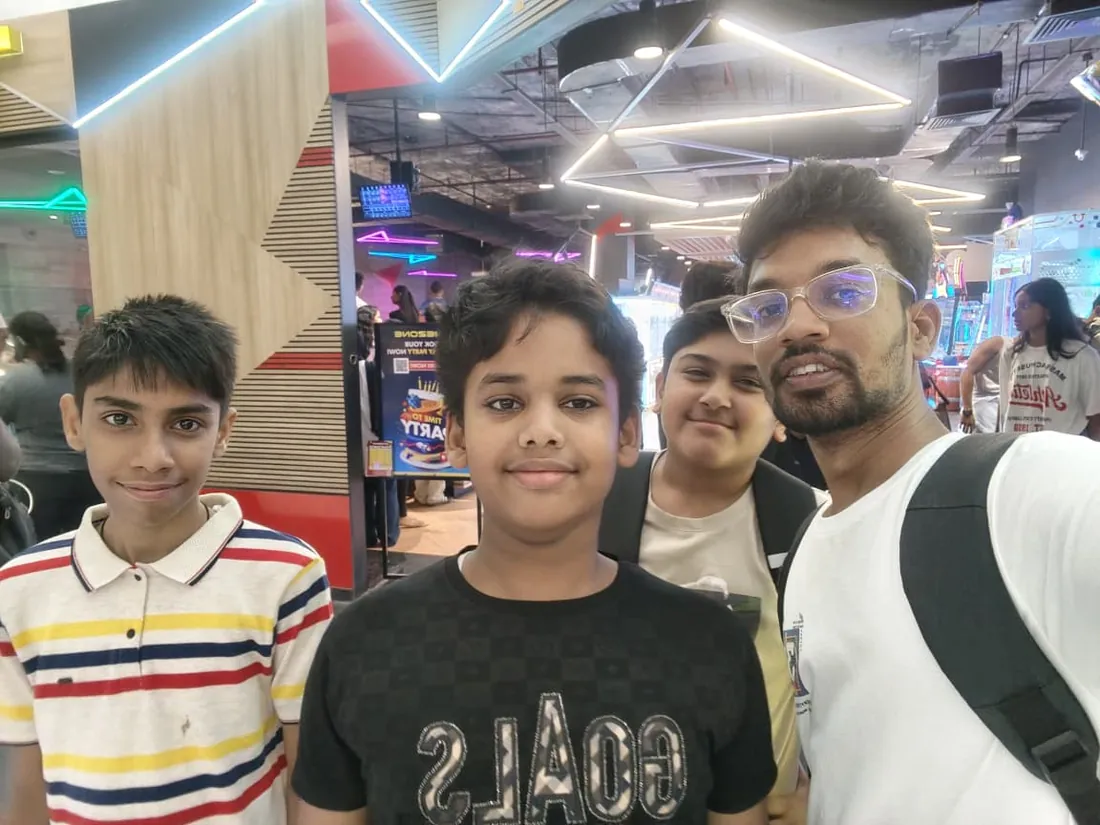
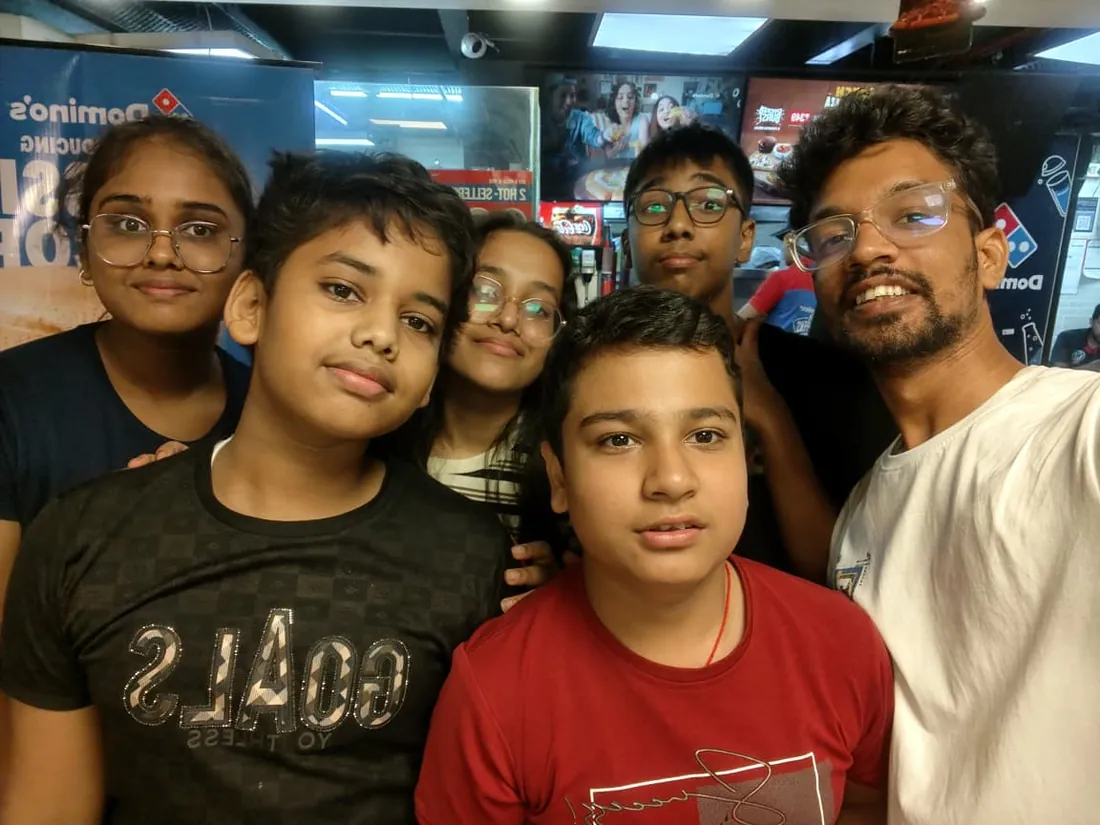
Real students. Real moments. Real joy.
These are our actual student meetups. No stock photos, no filters. Swipe through and meet the community you'll be joining.
What families say
Straight from the parents and students who learn with us. Rated 4.9 across 547 Google reviews.
“Mivaan enjoys the class. He understands the concepts and completes his tasks with excitement. He started taking interest in coding… truly amazing class.”
“I absolutely love it here! I made new friends and learned important valuable coding skills while having the fun of my life. It's not just coding here, it's outings, bonding and most importantly preparing you for your future. Definitely five stars.”
“What stands out most is how excited my son is before every class. He looks forward to learning, problem-solving, and sharing what he's built. I've noticed a big boost in his confidence!”
“Modern Age Coders has been a game-changer for me! I struggled to grasp IT concepts and coding before joining, but their classes transformed everything. I'm now the topper in my class and can confidently write complex programs with ease.”
“Modern Age Coder have wonderful teachers who teach in a clear, easy and practical way. The teacher boosts students' confidence, keeps them updated with technology, and inspires them to learn without hesitation.”
“The one step solution for my son. Modern Age Coders make learning coding so simple that kids love it.”
“Coding classes here make learning very interesting and conceptual. The teachers teach us in a very easy-to-understand and efficient manner.”
“One of the most wonderful education centres out there. Education is not limited to school syllabus but focuses on skill development. Learning here has been a wonderful journey and still continuing.”
“I highly recommend this computer coding class! The teachers are incredibly knowledgeable and passionate about coding. They make every session engaging and insightful.”
“My child Dhairya is really enjoying the Modern Age Coder IT classes. This is his first online class, and he eagerly looks forward to it.”
“Very good classes. Don't worry about coding. They teach the best, especially Shivam sir.”
“Very good classes. Makes learning very easy and interactive.”
Hear it from our students
Real parents and students in their own words, on our public YouTube channel.
Straight answers about Vibe Coding for Kids: AI, Scratch & Game Dev (Ages 8-12)
- Who should take this course?
- Complete Beginner (Ages 8-12). Age: 8-12 years old. It suits children aged 8-12 who are curious about how games and apps are made; kids who love drawing, storytelling, music, or building things; parents who want to turn screen time into productive learning time.
- What will they learn and build?
- Vibe Coding for Kids is the ultimate 3-month beginner coding journey designed specifically for children aged 8 to 12. 'Vibe Coding', a term coined by AI pioneer Andrej Karpathy in 2025, means telling a computer what you want to build in plain English and letting AI create the code for you. It's the future of how software gets made, and your child can start learning it now.
- How deeply are topics covered?
- The course runs 3 months (12 weeks) at 4-6 hours/week, across 3 phases listed week by week in the syllabus below. A structured, well-paced curriculum taught step by step, with hands-on practice in every session.
- Who teaches it?
- Modern Age Coders mentors, who teach the live classes themselves. You can watch them at work in the free class recordings before you decide.
- How do practice, feedback and assessment work?
- Weekly build challenges and a final showcase project: real creations, really finished. Doubt support between classes over WhatsApp, so you are never left stuck. A course-completion certificate you can share.
- What does it cost?
- Three monthly plans: a group batch, a mini batch and 1-on-1. Prices are shown in your currency in the plans section. Monthly billing, cancel any time.
- When can classes take place?
- Live classes are scheduled around your week. Group batches meet at a fixed weekly slot; 1-on-1 students choose their own. International students are scheduled in their own timezone. Ask on WhatsApp for the current slots.
- Can I watch the teaching before deciding?
- Yes. Full recordings of real 6 to 12 classes are free to watch, free with a Google sign-in. These recordings show how we teach, not the exact syllabus of this course. Some classes are in English and some in Hindi; everyone follows at their own pace. Watch a class end to end, like you are in it. Sessions are interactive and each moment builds on the last.
- Can I enroll without a live demo?
- Yes. Choose a plan on this page and enroll directly; a booking or a demo is not required. A free live demo is optional, for anyone who wants to meet a mentor first. Outside India, our team confirms the plan and completes payment with you over WhatsApp, so allow a little time for that step.
Common Questions About Vibe Coding for Kids: AI, Scratch & Game Dev (Ages 8-12)
Get answers to the most common questions about this comprehensive program
Still have questions? We're here to help!
Contact UsRelated Courses You May Like
Continue your learning journey with these recommended programs
 Kids Coding
Game Development for Kids: Scratch, Roblox and Minecraft
Game development course for kids aged 8-12: live online classes building real games in Scratch, then...
Explore Course Kids Coding
Coding for Kids: Scratch to Games, Apps and AI
Coding for kids aged 6-12: live online classes from first Scratch game to mobile apps, Minecraft and...
Explore CourseRelated Articles & Guides
Deepen your knowledge with these hand-picked articles
 Artificial Intelligence
7 min read
Artificial Intelligence
7 min read
Vibe Coding vs Learning to Code Properly
Vibe coding vs learning to code properly: why vibe coding is a great tool but a poor teacher, and ho...
Read Article Education
8 min read
Education
8 min read
The Ultimate Guide to Teaching Kids Coding in 2025
Effective strategies, tools, and best practices for teaching kids coding. Perfect guide for parents ...
Read ArticleReady to start Vibe Coding for Kids: AI, Scratch & Game Dev (Ages 8-12)?
Book a free demo class to meet your mentor and see how we teach, with no commitment. Or enrol now and start this week.