VIBE / TOOL / 01
Vibe Coding for Kids
Games and stories with blocks and AI help, for ages eight to twelve.
Open the syllabusNetherlands · Generative AI · Live online
Vibe coding means describing what you want to an AI tool and letting it write the code. It is quick, it is fun, and it gets beginners to a working app in an afternoon. Building AI means something else: understanding how a model learns, testing whether it is right, and knowing when not to trust it. The Dutch government has walked the line between the two in public. In December 2023 it took a cautious provisional position on generative AI; in January 2024 it presented a vision on the technology as one of the first EU member states to do so; in April 2025 it gave civil servants more room, on condition of clear risk analyses and reliable models, and called its guidance a living document. The lesson for a learner is the same one the government drew: the tools are worth using, and someone has to understand them well enough to judge them. This page explains both skills and how our live online classes teach them, in that order.
Live classes since 2020 · 10,000+ students · AI tools used, and understood
In short
Vibe coding is building software by describing it to an AI tool; building AI is understanding, training and testing the models themselves. Modern Age Coders teaches both, live online to learners in the Netherlands, and in that order: learners start by making real things with AI assistants, then learn to read and write the code themselves in Python, then train and evaluate models of their own, so that by the end they can judge what an AI tool gives them rather than simply accept it. Classes run in English, in groups of five to ten at one level or one to one. There is no charge for the first lesson; from then on it is USD 100 a month in a group or USD 150 a month one to one.
Start here
The first puts AI tools to work, the second teaches how models learn, the third opens up the generative models behind the tools. Each card leads to its own syllabus.

VIBE / 01
Real projects built with AI assistants, and the Python and web basics to understand what the assistant wrote.
Open the syllabus →
VIBE / 02
Models trained on real data, tested against a simple guess and written up honestly.
Open the syllabus →
VIBE / 03
How large language models work, and how to build and evaluate applications on top of them.
Open the syllabus →The government route
The steps below come from two Rijksoverheid news items and from the letter to parliament of 22 April 2025, signed by Zsolt Szabó, state secretary for digitalisation. They are quoted or closely paraphrased; nothing is added.
| When | What happened |
|---|---|
| 2023 | The cabinet asked the Landsadvocaat, the state's lawyer, what room current law left for using generative AI that is available online, and asked the Autoriteit Persoonsgegevens, the data protection authority, for advice |
| December 2023 | Both advices became the basis of a provisional position on generative AI for the national government |
| 18 January 2024 | The cabinet presented a vision on generative AI as one of the first EU member states to do so, with six action lines; among its measures was a Rijks AI validatieteam to assess available AI applications on, for example, non-discrimination |
| 22 April 2025 | A government-wide position and a practical guide followed; government organisations had said the provisional position was unclear on some points and often too restrictive |
| 22 April 2025 | Civil servants were given more room to use generative AI, with clear risk analyses and reliable models, and with applications developed in Europe and open-source options encouraged |
| Same letter | The guide was called a living document, to be updated regularly as developments require |
The route is instructive. A government that started by asking its lawyers what was allowed ended by writing its own guide and promising to keep rewriting it. Neither the ban nor the free-for-all survived; what survived was a demand for judgement: risk analyses, reliable models and people who know what they are doing.
The 2024 vision was explicit about people. Minister Robbert Dijkgraaf said that making full use of the opportunities of generative AI means investing in more knowledge and more skills.
The same letter looks further ahead. Following a motion by the member of parliament Six Dijkstra, Kamerstuk 26 643, nr. 1293, the state secretary would examine how policy could be shaped so that AI models, not only generative ones, in principle run locally on government systems. Running a model locally is not vibe coding; it is building and operating AI.
We quote these documents because they show, in public and in writing, why understanding AI matters as much as using it. This page describes public documents and gives no legal advice.
Sources: Kabinet presenteert visie op generatieve AI (18 January 2024); Kamerbrief, Overheidsbreed standpunt generatieve AI (22 April 2025); Overheid verruimt standpunt inzet generatieve AI (22 April 2025), all Rijksoverheid.nl, in Dutch. Read 15 September 2026.
The difference
Both are worth learning. They answer different questions, and they fail in different ways.
| Vibe coding | Building AI | |
|---|---|---|
| What you do | Describe the program you want and accept or adjust what the tool writes | Collect data, train a model, test it and decide whether to use it |
| What you need to know | What you want, and enough code to check the result | Programming, statistics and how models learn and fail |
| How it goes wrong | Code that runs but hides errors, leaks secrets or cannot be maintained | A model that looks accurate but is biased, overfitted or tested on the wrong data |
| Who notices | Someone who can read the code | Someone who can evaluate the model |
| Where it leads | Faster prototypes and a first taste of building | The ability to build, run and judge AI systems |
For a beginner, seeing an idea become a working app in an hour is powerful. We use AI assistants early, because motivation matters and because these tools are now part of how software is written.
An assistant writes plausible code, not guaranteed code. A learner who cannot read what it wrote cannot tell a clever solution from a subtle bug, and cannot fix the program when the assistant gets stuck.
Training a small model by hand, and watching it fail on data it has not seen, teaches more about AI than a hundred prompts. It is also what lets a learner judge the big models everyone uses.
This comparison is our teaching view. It describes skills, not any particular AI product.
Judgement
Tools change every few months. The ability to decide whether their output is right does not go out of date.
Think of the conditions the government set in 2025: a clear risk analysis before use, and models that can be relied on. A learner meets the same questions on a small scale. Does this code do what I asked, and only that? What happens with unexpected input? Where does my data go when I paste it into a tool? Which of these answers can I check?
Those questions can only be answered by someone who understands code and models. That is why our route moves from using AI to understanding it, and why the final rung is judging, not prompting.
For younger learners the start is gentle; what is vibe coding and the parents' guide to vibe coding explain it in plain terms. For school pupils who want to go further, machine learning for school students covers model building.
Students ready to build systems that plan and act can continue with the AI agents course for students, and the language underneath everything is on Python classes in the Netherlands.
The ladder
Five rungs, each resting on the one below. The free lesson shows where a learner already stands.
| Rung | What the learner can do |
|---|---|
| 1. Describe | Build a small working app with an AI assistant from a clear description |
| 2. Read | Explain every line the assistant wrote, and find the bug in code that almost works |
| 3. Write | Write the same kind of program by hand in Python, without the assistant |
| 4. Build | Train a model on real data and show whether it beats a simple guess |
| 5. Judge | Assess an AI tool or model: what it is for, where it fails and what data it touches |
Learners who have vibe coded already have programs in front of them. Reading those programs line by line is the fastest route into real programming, because every line answers a question the learner actually had.
Where these rungs sit among all our subjects is shown on the coding roadmap.
Children spend longer on the first two rungs, with blocks before typed code. Teenagers usually climb to the fourth rung within a school year or two, and adults at a pace set by work.
The fifth rung is never finished; each new tool is a new thing to judge.
The catalogue
Three bands: vibe coding done properly, the foundations beneath it, and building AI. Each card leads to a syllabus and timetable; a trial lesson decides the first one.
VIBE / TOOL / 01
Games and stories with blocks and AI help, for ages eight to twelve.
Open the syllabusVIBE / TOOL / 02
Web and Python projects built with AI assistants, and read line by line.
Open the syllabusVIBE / TOOL / 03
Full stack projects with AI tools, backed by algorithms and data structures.
Open the syllabusVIBE / BASE / 01
The language most AI tools write, learned so it can be read and checked.
Open the syllabusVIBE / BASE / 02
The main AI tools used well and safely, for learners from thirteen.
Open the syllabusVIBE / BASE / 03
AI tools for study and work, with their limits made clear.
Open the syllabusVIBE / BUILD / 01
From statistics to neural networks, each model tested on unseen data.
Open the syllabusVIBE / BUILD / 02
The adult route through machine learning, deep learning and evaluation.
Open the syllabusVIBE / BUILD / 03
Language models understood from the inside, and applications built on them.
Open the syllabusHow the classes run
Teachers work from India, which does not use summer time, so they sit three and a half hours ahead of the Netherlands from spring to autumn and four and a half ahead in winter. Children and teenagers usually take lessons after school, adults in the evening or at the weekend, at a regular time fixed in the trial lesson.
After school
Late afternoon, Dutch time, for children and teenagers.
Evening
By arrangement, for students and working adults.
Weekend
Saturday or Sunday, for longer building sessions.
The learner builds something with an AI assistant and then explains it to the teacher, which shows quickly which rung they are on.
Five to ten learners at the same stage, from several countries, comparing what their tools produced.
For a learner far ahead of their age, a specific project, or an adult with a deadline.
Assistants are part of the lesson, not a secret. The teacher shows when to use them and when to switch them off.
Learners are taught what not to paste into an online tool, from passwords to other people's personal data.
Projects go into the learner's own GitHub repository, with notes on what the AI wrote and what they changed.
Student work
Four live projects by our students. More on the student labs page.
AI and ML
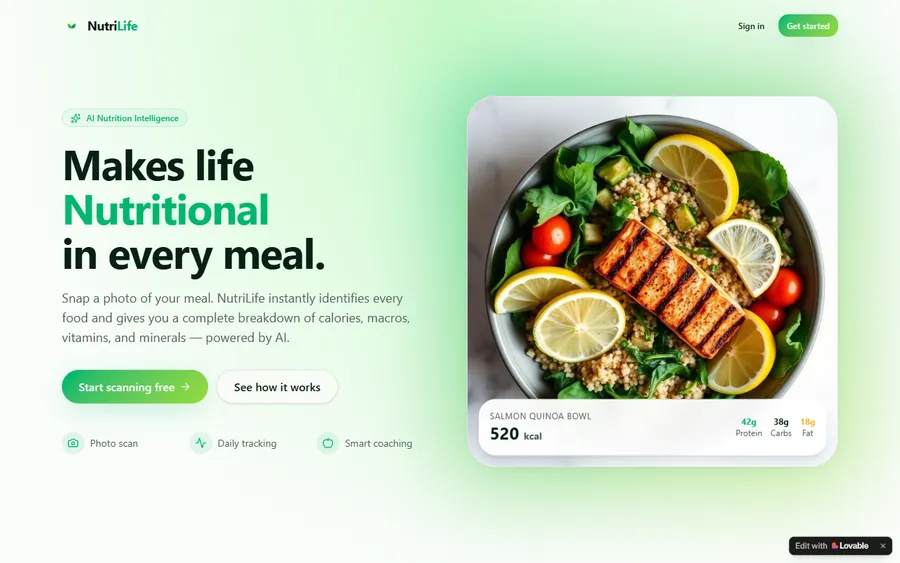
An AI nutrition coach that reads what you eat and works you toward a target.
AI and ML
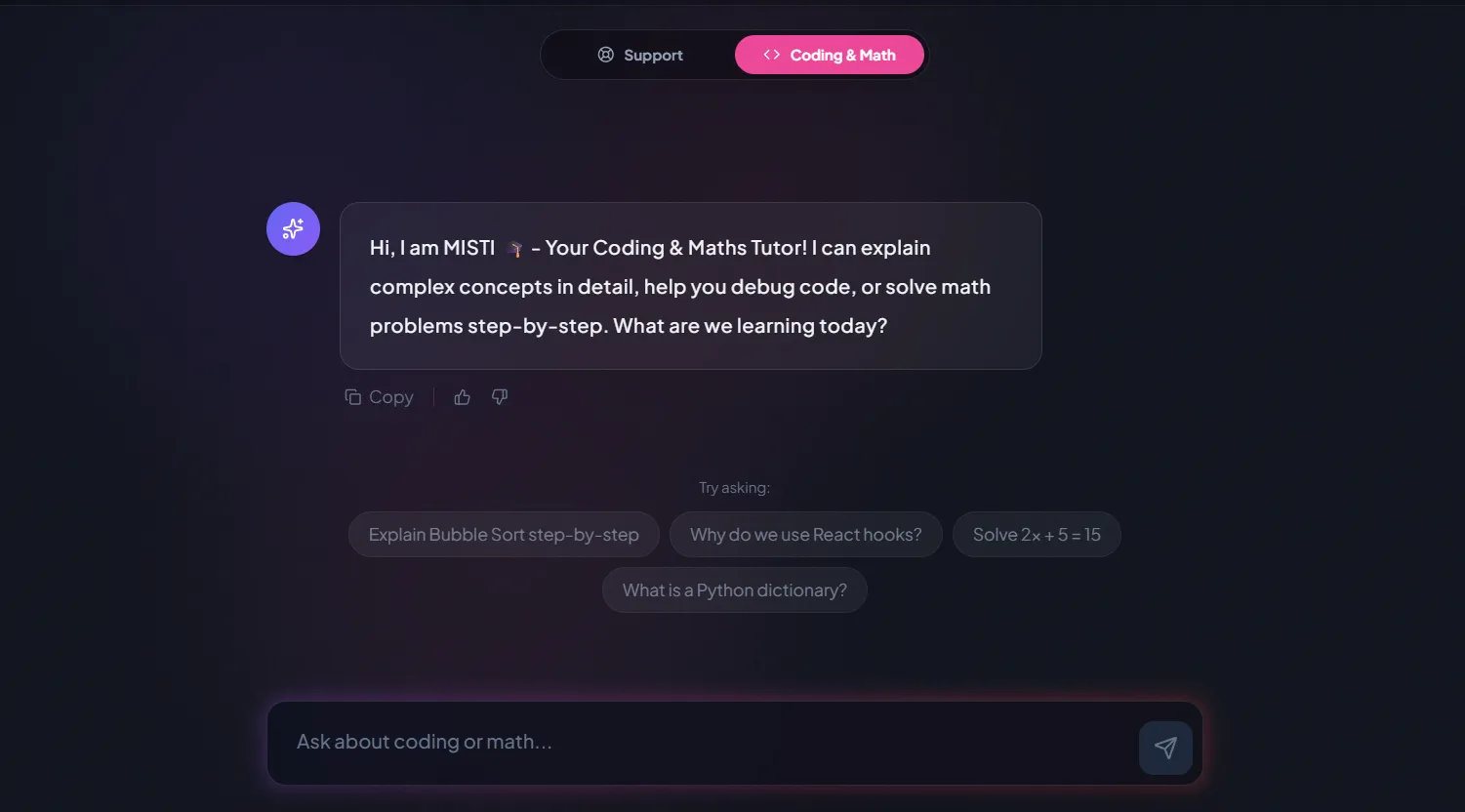
A chatbot that answers mathematics and programming questions, built and deployed by a student.
AI and ML
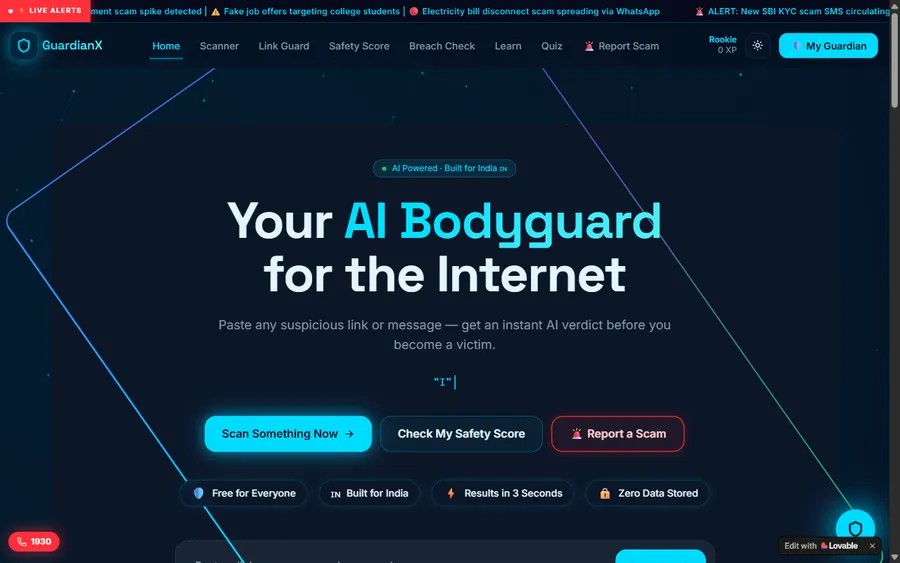
An assistant that helps a young person recognise unsafe situations online.
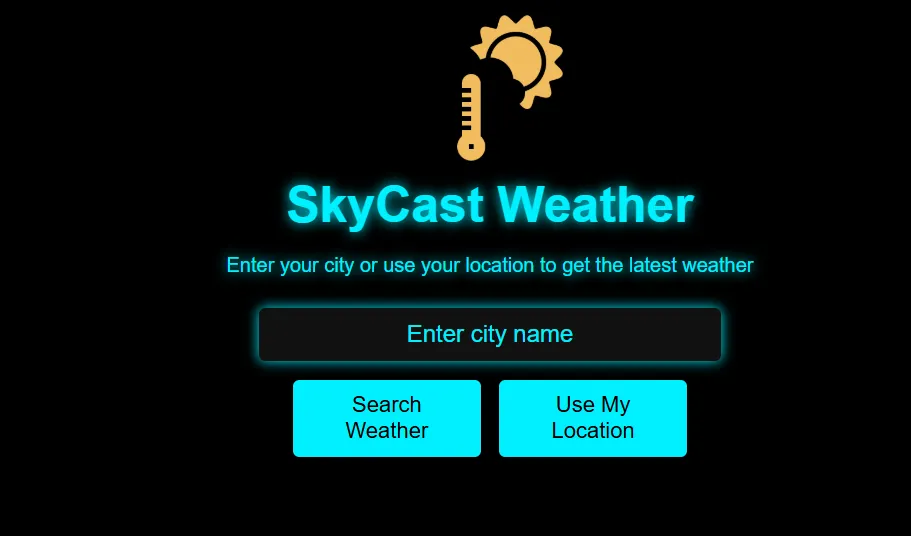
Web app
A weather forecasting site with live conditions for any location.
Fees
One monthly rate in US dollars for every country outside India, whether a learner is on the first rung or the fifth. There is no joining fee and nothing to sign for a year.
Free first class
USD 0
no card required
Group batch
USD 100
a month, billed in US dollars
One to one
USD 150
a month, billed in US dollars
What families say
Taken from Google without edits. We do not write or pay for reviews.
★★★★★
"The one step solution for my son. Modern Age Coders make learning coding so simple that kids love it. The teachers explain complex concepts clearly with practical exercises and interactive content."
Ria Mukherjee
Parent
★★★★★
"Modern Age Coders has been a game-changer for me. I struggled to grasp IT concepts and coding before joining, but their classes transformed everything. I can now confidently write complex programs with ease."
Samriddha Mondal
Student
★★★★★
"One of the most wonderful education centres out there. Education is not limited to school syllabus but focuses on skill development."
Vansh Agarwal
Student
★★★★★
"My child Dhairya is really enjoying the Modern Age Coders classes. This is his first online class and he eagerly looks forward to it. I can already see his improvement, and the teachers are very cooperative."
Sonam Oswal
Parent of Dhairya
★★★★★
"Modern Age Coders have wonderful teachers who teach in a clear, easy and practical way. The teacher boosts students' confidence and inspires them to learn without hesitation."
Sonu Goyal
Parent
★★★★★
"I highly recommend this computer coding class! The teachers are incredibly knowledgeable and passionate about coding."
Ritu Kedia
Parent
Questions
Building software by describing what you want to an AI tool and letting it write the code. It is a quick way to start, and it works best when the person using it can read the result.
No. It is a useful way in, and professionals use AI assistants every day. The risk is stopping there, with programs nobody involved can check or repair.
Vibe coding uses AI to write ordinary programs. Building AI means making and testing the models themselves: collecting data, training, measuring errors and deciding whether to trust the result.
Because its own route shows the point. It moved from a provisional position that organisations found too restrictive to more room for civil servants, on condition of risk analyses and reliable models, and called its guide a living document.
Children from about eight can start with blocks and AI help. Typed code and model building come later, when they are ready.
Not in our lessons. Every program an assistant writes is read and explained, and learners also write programs by hand without it.
Common coding assistants and chat tools, chosen by age and course. Some tools set their own age limits, and we follow them.
Nothing for the first lesson. After that, USD 100 per month buys a place in a group of five to ten and USD 150 per month buys lessons with a teacher to yourself, both charged in US dollars, with no joining fee and no annual contract.
After school, in the evening or at the weekend, in Dutch time. Teachers are three and a half hours ahead in summer and four and a half in winter.
Someone from our team calls back when it suits you in the Netherlands and books the trial lesson. You only pay if the learner carries on.
Elsewhere on this site
Explanations for newcomers, and pages for learners ready to go further.
A plain explanation for newcomers.
What families should know before a child starts.
Our vibe coding courses for every age.
Building models while still at school.
Systems that plan, use tools and act.
The national ladder this page belongs to.
Start here
Leave a number and a member of our team calls back at a suitable Dutch hour. In the trial lesson the learner builds something with an AI assistant and then explains it, and by the end the teacher can say which rung to start on.
Curious first? Read what vibe coding is, how we teach, or browse every course.
WhatsApp us · +91 91233 66161 · contact@modernagecoders.com
On a Dutch phone, WhatsApp is free and usually the quickest option. The number belongs to our team in India; there is no office or premises in the Netherlands.