OM / KIDS / 01
Python and AI for Kids
Typed code within the first weeks rather than dragged blocks. Turtle graphics, small games, and the moment a program works out a rule from examples nobody gave it.
Open the syllabusOman · Live online · Ages 6 to 67
In February 2021 the Ministry of Education and Omantel signed an agreement to put an IT and coding curriculum into Grades 1 to 4, for three academic years from 2021/2022. A child who sat that in Grade 1 is now around Grade 5. We went looking for what comes after it and could not find a published answer. This is our answer: a ladder that runs from hand-written Python through data and machine learning to AI agents and a public GitHub repository.
Teaching since 2020 · 10,000+ students across 25+ countries · nothing pre-recorded
In short
Modern Age Coders runs a live online Python and AI track for learners in Oman between six and sixty-seven, in batches of five to eight or one to one. It is deliberately not a blocks-and-robots programme: students write real Python, handle real data, train and measure models, build agents that take actions, and publish the result on GitHub where somebody else can read it. Group teaching is USD 100 a month and private teaching USD 150, and the first class is free.
The reason this page exists
This is worth reading carefully, because it is the single most useful piece of context a parent in Oman has and almost nobody states it.
On record: in February 2021 the Ministry of Education and Omantel signed an agreement to develop an IT and coding curriculum for primary students, at a cost of 50,000 Omani rial, roughly 130,000 US dollars. It was signed by the Minister of Education, Dr Madeeha bint Ahmed al Shaibaniyah, and Omantel's chief executive, Talal bin Saeed al Maamari.
The scope was specific. It applied to Grades 1 to 4 in public schools, single-language private schools, Diwan schools, the Royal Omani Orchestra school and Royal Oman Police schools, and it ran for three academic years starting 2021/2022. The stated purpose was to give students the skills of the Fourth Industrial Revolution in line with Oman Vision 2040 and a knowledge-based economy.
Now do the arithmetic a parent actually cares about. Three academic years from 2021/2022 runs through 2023/2024. A child who was in Grade 1 at the start of it is, in the 2026 school year, somewhere around Grade 5. A child who was in Grade 4 is around Grade 8.
We searched for what follows and found no published record of a renewal or a successor programme. That is a statement about our search on 18 August 2026, not a statement that nothing exists; ask your school directly, because they will know and we will not. But if you are a parent holding a child who met coding at seven and has met nothing structured since, you are not imagining the gap.
There is a second thing worth saying about that curriculum, and it is not a criticism. What Grades 1 to 4 can absorb is foundations: sequence, condition, repetition, debugging. It is the right content for that age. It is also, by definition, the bottom of a ladder, and a ladder with one rung is a step.
Source: the February 2021 Ministry of Education and Omantel agreement, its value of 50,000 Omani rial, the Grades 1 to 4 scope, the named school categories, the three-academic-year term from 2021/2022 and the Vision 2040 framing, as reported in contemporaneous coverage of the signing. The absence of a published renewal is the result of our own search on 18 August 2026 and is stated as such. Verified 18 August 2026.
The five rungs
Every page in this family points back at this ladder. The order is not a marketing device, it is a dependency chain: each rung is unusable without the one beneath it, which is exactly why skipping straight to the interesting-sounding end produces students who can demonstrate and cannot explain.
| Rung | Roughly | What the student actually does |
|---|---|---|
| 1. Python by hand | Age 9 to 12 | Writes real syntax, not blocks. Loops, functions, files, errors read and fixed |
| 2. Data | Age 11 to 14 | Loads a messy file, cleans it, plots it, and finds the row that would have poisoned the result |
| 3. Machine learning | Age 12 to 16 | Trains a model, states its error in a real unit, and compares it against a baseline |
| 4. Agents | Age 13 to 18 | Builds a program that is given a goal, picks its own steps, calls tools, and fails loudly |
| 5. GitHub and the write-up | Any of the above | Publishes the code and a short honest account of what it does and where it breaks |
You cannot evaluate a model without data handling, because the interesting errors are all in the data. You cannot build a trustworthy agent without evaluation, because an agent that cannot measure itself is a random number generator with a confident voice. And none of it is worth much unattached to a repository, because the thing that persuades a university or an employer is not that a student did the work but that a stranger can open it and check.
The full teaching sequence, with the reasoning for each step, is on the coding roadmap. The Oman-specific version, with ages and what a parent should expect to see at home, is on the Python to AI roadmap.
Rung 4 is the one most people mean when they say AI now, and it is covered in depth on the AI agents course page. Rung 3 is on machine learning for school students. Rung 5, the part almost nobody teaches, is on build real AI projects.
If you have arrived here because a child has been using an AI tool to produce code and you are unsure whether that counts as learning, read vibe coding versus building AI before anything else. It is the most common question we get and the answer is more interesting than yes or no.
The catalogue
Three separate curricula rather than one course delivered at three speeds. Every card opens the full syllabus with its own schedule and fees.
OM / KIDS / 01
Typed code within the first weeks rather than dragged blocks. Turtle graphics, small games, and the moment a program works out a rule from examples nobody gave it.
Open the syllabusOM / KIDS / 02
Why a system can be fluent and wrong in the same sentence, and what a ten year old can do to check it. The habit outlives whichever product is current.
Open the syllabusOM / KIDS / 03
The child instructs a tool, gets something back, and then has to find which parts are broken and repair them. Issuing the instruction is the easy half.
Open the syllabusOM / TEEN / 01
The main route on this page. Python, the mathematics it needs, classical algorithms, neural networks, vision and language, with something trained and measured at every stage.
Open the syllabusOM / TEEN / 02
Everything that has to happen before any modelling can. Reading files, joining them, drawing them, and developing an eye for the one bad row.
Open the syllabusOM / TEEN / 03
Two years from a blank file to genuinely advanced Python. The right entry if a teenager arrives with no code and you would rather the AI work stood on something solid.
Open the syllabusOM / TEEN / 04
Directing coding agents to build real software, then reviewing what came back line by line. Requires the student to hold a subscription to the tools used.
Open the syllabusOM / PRO / 01
The long route taken seriously. Labelled and unlabelled methods, deep architectures, training discipline, evaluation that survives questioning, and deployment.
Open the syllabusOM / PRO / 02
How language models are trained, adapted and grounded against documents you control, and how an agent is constrained so its failures are loud rather than quiet.
Open the syllabusOM / PRO / 03
Pointed at what is already eating the working week: the monthly return assembled by hand, the spreadsheet nobody trusts, the report that takes two days.
Open the syllabusOM / PRO / 04
Built backwards from a job description. Statistics, SQL, feature engineering, modelling, and a portfolio written for a hiring manager to read in ten minutes.
Open the syllabusOM / PRO / 05
The barrier nearly every technical interview puts up, and the real reason code that copes with a thousand rows survives ten million. Taught as thinking, not recall.
Open the syllabusOM / PRO / 06
Building and governing agents on Microsoft Copilot Studio. Taught one to one only, so it is priced as private teaching rather than as a group batch.
Open the syllabusWhat the published numbers show
Two national competitions and one connectivity figure tell a parent most of what they need to know about the opportunity in front of an Omani student who can actually build something.
| What Oman publishes | The number | What it tells a parent |
|---|---|---|
| National Olympiad, 2025/26 intake | 250+ students | The national stage for this exists, and the queue for it is short |
| Supervising teachers and specialists | 108 | Roughly one adult for every two or three students on that stage |
| Projects entered, across four fields | 70 | Information Technology is one field of four, so the IT slice is smaller again |
| Collegiate Programming Contest 2025 | 194 contestants | From 65 teams and 21 universities and colleges |
| That contest, by sex | 97 and 97 | An exact half. Competitive programming in Oman is not a boys club |
| Internet penetration, start of 2025 | 95.3 per cent | Delivery is not the constraint. 5.14 million people are online |
The Ministry of Education inaugurated the National Olympiad for Scientific Innovations, Robotics and Artificial Intelligence for 2025/26 on 1 December 2025 at the Oman Convention and Exhibition Centre. It drew more than 250 students and 108 supervising teachers and specialists from directorates across the governorates, with 70 projects in four fields: Engineering Sciences and Energy, Information Technology, Biological and Environmental Sciences, and Science and Mathematics.
Read that as an opportunity rather than as a shortfall. A country of 5.40 million puts a few hundred students on its national science and AI stage each year, and Information Technology is one field out of four. A student who arrives with a working, measured, documented project is not competing against thousands of them.
At university level the picture is the same shape. The 2025 Oman Collegiate Programming Contest, its eighth edition, ran on 9 and 10 April with 194 contestants in 65 teams from 21 universities and colleges, organised by the Ministry of Transport, Communications and Information Technology with Sultan Qaboos University, the University of Technology and Applied Sciences, the Programming Academy and OQ as technical partner.
One figure in that contest deserves to be quoted more often than it is. The 194 contestants were 97 male and 97 female, an exact half. Whatever assumptions a family might carry about who does this subject in the Gulf, Oman's own competitive programming numbers do not support them. There is a page on that: the academy for girls.
And delivery is not the obstacle. At the start of 2025, 95.3 per cent of Oman was online, 5.14 million people, up 222,000 in a year.
Sources: the 2025/26 National Olympiad launch, participation and project counts as reported by Muscat Daily; the 2025 Oman Collegiate Programming Contest participation, team and institution counts and the 97 male and 97 female split from the Ministry of Transport, Communications and Information Technology; connectivity from DataReportal Digital 2025 Oman. Verified 18 August 2026.
Where we point this, and where we do not
Muscat has options. A family in the capital can find in-person robotics and beginner coding without much difficulty, and we are not going to pretend otherwise in order to sell you something. What Muscat has less of is the layer above that, and what the rest of the country has less of is both.
So the three pages we have written hardest are for Salalah in Dhofar, Sohar in North Al Batinah, and Nizwa in Ad Dakhiliyah. Each is a real city with a university, an economy of its own and a school-age population, and each is far enough from the capital that a twice-weekly drive is not a serious plan.
The honest version of the online argument is narrower than the one usually made. It is not that online is more convenient. It is that a batch of five to eight learners at the same level in the same subject free at the same hour is very hard to assemble from one city and trivial to assemble from twenty-five countries. For a subject this specialised, the pool is the product.
If what you want is general coding rather than this track, that already exists in depth: coding classes in Oman, and city guides for Salalah, Sohar and Nizwa. The thesis behind this whole family of pages is at Learn to Build AI.
How the classes run
Oman keeps Gulf Standard Time all year and India, where the teaching operation sits, keeps Indian Standard Time all year. The gap is a permanent thirty minutes, which is why the evening slots below are genuine evening slots at both ends rather than a compromise.
16:30 to 18:00
Oman time. Primary age children, straight after school while concentration is still there.
18:30 to 20:00
Oman time. The main teenage block, after dinner and after school work.
20:30 to 22:00
Oman time. University students and working adults on weeknights.
Free, taught rather than sold, and it settles which rung the learner starts on. One problem, watched rather than marked.
Grouped on demonstrated ability across twenty-five countries, so a strong student in Nizwa is never held to a local average.
For a narrow adult goal, a crowded examination year, or the Copilot Studio courses, which are private by design.
Screens shared both ways, so a misconception is caught as it forms rather than found in homework.
Gulf Standard Time and Indian Standard Time both hold all year, so an agreed slot never needs revisiting.
Work is committed as it is written. A student leaves with a history, not a folder.
Student work
Not mockups. Each has a live address and you are welcome to go and break them. More in Student Labs.
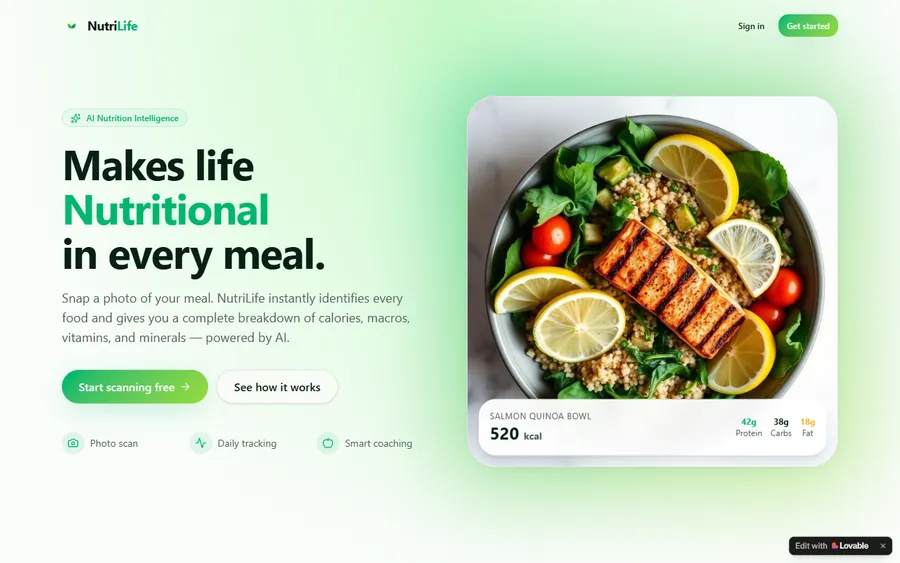
AI and ML
An AI nutrition coach that reads what you eat and works you toward a target.
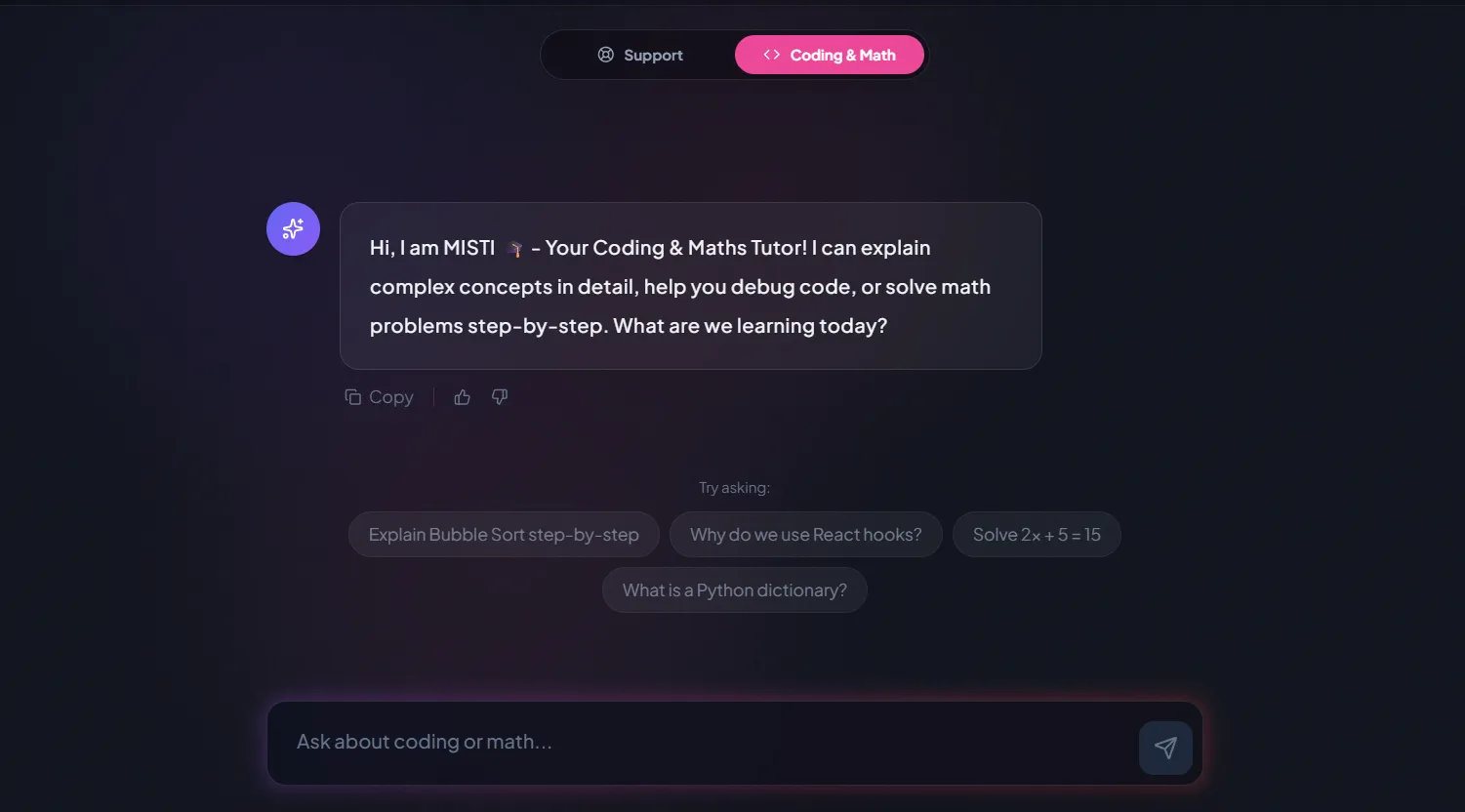
AI and ML
A chatbot that answers mathematics and programming questions, built and deployed by a student.
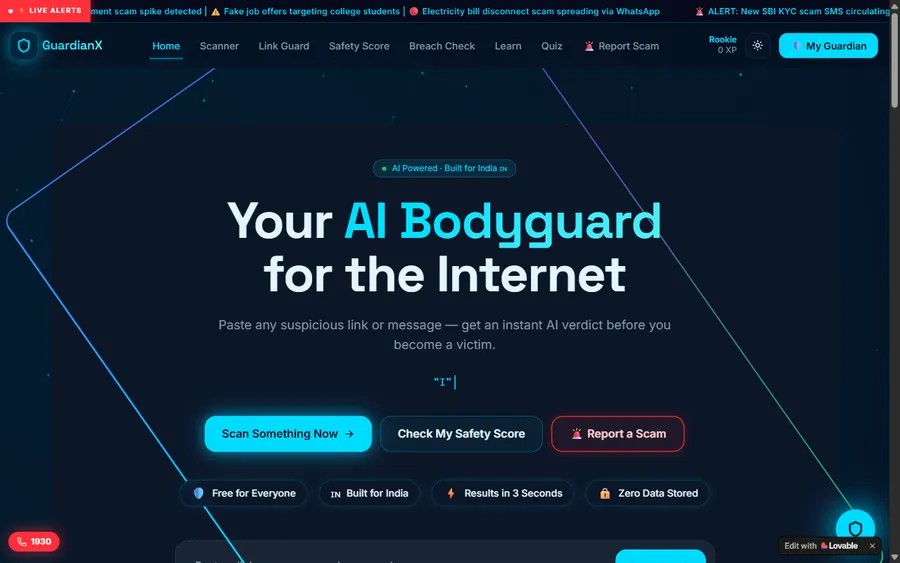
AI and ML
An assistant that helps a young person recognise unsafe situations online.
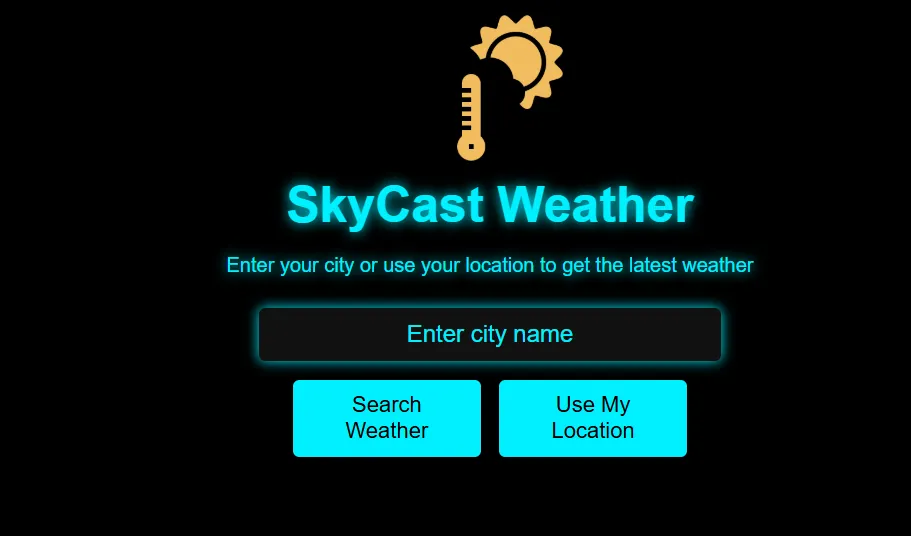
Web app
A weather forecasting site with live conditions for any location.
Fees
Two figures, charged monthly in US dollars, identical in every country we teach outside India. The AI agent courses sit at the same figures; the Copilot Studio courses are taught one to one only and are therefore private-rate by design.
Free first class
USD 0
no card required
Group batch
USD 100
a month, billed in US dollars
One to one
USD 150
a month, billed in US dollars
What families say
Real reviews from real families. We neither write nor commission them.
★★★★★
"The one step solution for my son. Modern Age Coders make learning coding so simple that kids love it. The teachers explain complex concepts clearly with practical exercises and interactive content."
Ria Mukherjee
Parent
★★★★★
"Modern Age Coders has been a game-changer for me. I struggled to grasp IT concepts and coding before joining, but their classes transformed everything. I can now confidently write complex programs with ease."
Samriddha Mondal
Student
★★★★★
"One of the most wonderful education centres out there. Education is not limited to school syllabus but focuses on skill development."
Vansh Agarwal
Student
★★★★★
"My child Dhairya is really enjoying the Modern Age Coders classes. This is his first online class and he eagerly looks forward to it. I can already see his improvement, and the teachers are very cooperative."
Sonam Oswal
Parent of Dhairya
★★★★★
"Modern Age Coders have wonderful teachers who teach in a clear, easy and practical way. The teacher boosts students' confidence and inspires them to learn without hesitation."
Sonu Goyal
Parent
★★★★★
"I highly recommend this computer coding class! The teachers are incredibly knowledgeable and passionate about coding."
Ritu Kedia
Parent
Questions from Oman
An ordinary coding class teaches a child to make a program do something. This teaches a student to build a system that decides something, then to prove whether the decision was any good. The ladder runs Python, then data, then machine learning, then agents that take actions, then putting the work on GitHub where somebody else can read it. Blocks and robots are a fine way to start at seven. They are not a destination at fourteen, and the gap between the two is what this academy exists to fill.
With a task, not an assumption. Under a February 2021 agreement between the Ministry of Education and Omantel, an IT and coding curriculum was applied to Grades 1 to 4 for three academic years beginning 2021/2022, so a number of Omani children genuinely did meet this early. What that gave them was foundations, and foundations vary enormously between one child and the next. The free first class hands the learner one problem and the teacher watches how they approach it, which settles the level in fifteen minutes far more reliably than any school record would.
We teach them, and we are specific about what the word means here. An agent is a program that is given a goal, chooses its own steps, calls tools or other programs to carry them out, and can be interrupted and corrected. Students build one in Python once they have the data and model work underneath, and they build it so that its failures are visible rather than quiet. There are also dedicated courses in coding agents and in Copilot Studio, the second of which is taught one to one only.
A group batch of five to eight students is USD 100 a month and one to one teaching is USD 150 a month, billed in US dollars, the same flat figures everywhere outside India. The agent courses sit at those same figures. There is no enrolment fee, no annual contract, and the first class is free without a card.
Nothing about the class, and quite a lot about why families outside the capital write to us. Provision in this subject is thinner once you leave Muscat, and driving a teenager somewhere twice a week is a commitment that tends to collapse by the second month. Every group here is assembled from ability across twenty-five countries rather than from a catchment, so a student in Salalah, Sohar or Nizwa sits with people at their own level. There are pages for each of those three.
Probably not, and the honest answer depends on what you mean by it. Nobody needs calculus to watch a program work out a rule from examples and then be wrong about a case they chose themselves. Under about ten the work is sequencing, prediction and argument. From roughly eleven it becomes Python written by hand. The mathematics arrives when it explains something the student has already seen happen on their own screen, which is a very different experience from meeting it as a chapter.
A public link and a repository. Every student finishes work that runs at an address somebody else can open, with the code readable on GitHub and a short written account of what it does, how well it does it, and where it fails. That last part matters more than it sounds: a project that states its own error rate reads as engineering, and a project that does not reads as a demonstration.
English, said plainly rather than left for you to discover. For this subject it is also the practical choice, because the libraries, the documentation, the error messages and the research are all in English, so nothing a student learns has to be translated afterwards. With younger children we introduce vocabulary slowly and check understanding out loud instead of assuming it.
Comfortably, and it never shifts. Oman keeps Gulf Standard Time all year and India keeps Indian Standard Time all year, so the difference is a permanent thirty minutes. An evening class in Oman is an evening class for the teacher too, which is why we can offer real evening slots here rather than the awkward hours some international providers end up with.
A mentor telephones you at an Omani hour to arrange the free session. No card is requested and nothing is charged. To be plain about what sending it does: it opens a conversation rather than an enrolment, and it holds no seat in any class. The course, the format and the evening are all agreed in that conversation before money is raised.
Elsewhere on this site
This academy is the newest layer. There is a good deal underneath it, some of it more useful to a family than this page.
The general guide to the country, with the school system and the curriculum context set out at length.
The country-level machine learning page, with its own worked project on Omani published data.
For families in the capital, where in-person options genuinely do exist and we say so.
The thesis behind every page in this family: constructing these systems rather than operating them.
The site-wide teaching order across every subject, not just this track.
Every course we run, sorted by age and subject, with the syllabus behind each one.
Start here
Leave a number and a mentor calls you back at an Omani hour. The first session is a lesson rather than a pitch, taught by a real teacher on real material, and by the end of it we know which of the five rungs the learner starts on. That is the part that matters: nobody should spend a term at the wrong level, and no form can work it out.
Rather read first? The full catalogue, how we teach, and the argument behind this family of pages at Learn to Build AI.
WhatsApp us · +91 91233 66161 · connect@modernagecoders.com
WhatsApp reaches us fastest from Oman and costs nothing to use. The number is Indian, not an Oman office; we hold no premises in the country.