EHV / KIDS / 01
Python and AI for Kids
Typed Python for ages nine to twelve: turtle drawings, small games and a first program that learns from examples.
Open the syllabusEindhoven · Live online · Ages 6 to 67
Most AI that people meet lives on a screen: a chatbot, a recommendation, a filter. Eindhoven builds the other kind. Its university's AI institute studies data and algorithms inside machines, robots, autonomous cars and medical equipment, and its student teams build autonomous drones, race cars and the soccer robots that have won eight world titles in RoboCup's Middle Size League. AI in a machine meets problems a chatbot never does. Its training images may have to be manufactured. Its sensors drift after a collision in the middle of a match. And the simulator it learned in is never quite the pitch it plays on. This page teaches the Python, data and models underneath that kind of AI, with those problems in view from the first rung, live online for learners in Eindhoven.
Teaching live since 2020 · 10,000+ students so far · nothing pre-recorded
In short
Modern Age Coders runs a live online AI and Python track for learners in Eindhoven aged six to sixty-seven: Python typed by hand, then data, then models with a measured error, then agents. Because Eindhoven's AI is so often AI in machines, the track keeps three real-world problems in view throughout: training data that has to be made, systems that drift and must recalibrate, and the gap between a simulation and reality. Teaching is in English, in groups of five to ten or one to one. The first lesson is free; after that a group place is USD 100 a month and one-to-one tuition USD 150.
Start here
One for a child who wants to make things move on screen, one for a teenager ready to train an image model, one for the student or engineer who needs deep learning done properly. Each card opens its own syllabus and timetable.
EHV / 01
Python's turtle module is the gentlest robot there is: a child types commands, a turtle moves, and a mistake shows up at once as a wrong line on the screen.
Open the syllabus →
EHV / 02
From Python to neural networks and image models, with a teenager testing what they trained on photos taken in different light, the same test a robot faces.
Open the syllabus →
EHV / 03
Deep learning, careful evaluation and deployment for students and engineers whose models will run on hardware, not only in a notebook.
Open the syllabus →AI in machines
The university's own descriptions make the local emphasis plain. Here AI is mostly about systems that sense, decide and act in the physical world.
The Eindhoven Artificial Intelligence Systems Institute, EAISI, is the central hub for AI research at Eindhoven University of Technology. By its own description it focuses on the use of data and algorithms in machines, such as robots, autonomous cars and medical equipment, and on the interaction between people and systems, including trustworthy and transparent methods. It counts 300 academic staff and 600 PhD candidates, organises its work in three domains, data and algorithms, engineering systems, and humans and ethics, and applies it to health, mobility and industry.
Its teaching counterpart is the master in Artificial Intelligence and Engineering Systems, a two-year, 120 EC programme in English run jointly by seven departments and more than 40 research groups, with tracks from high-tech systems and robotics to mobility, healthcare and smart manufacturing.
Then there are the student teams, which TU/e lists on its own site: 21 of them at the time of reading. Serpentine works on artificial intelligence; Aero Team Eindhoven develops an autonomous drone network for zero-emission air delivery; Team Daedalus a solar-powered autonomous drone for long surveillance flights; InMotion race cars; Solar Team Eindhoven the sustainable mobility of the future.
And Tech United, which represents TU/e in RoboCup. Its soccer robots have become world champions eight times in the Middle Size League. In July 2024 RoboCup came to Eindhoven itself: three hundred teams from forty countries across five leagues, including RoboCupJunior for school pupils, and Tech United won the final 6-1 against BigHeroX.
| What | Published detail | The kind of AI it involves |
|---|---|---|
| EAISI | Central AI hub; 300 academic staff, 600 PhD candidates | Data and algorithms in robots, cars and medical equipment |
| AI and Engineering Systems master | Two years, 120 EC, seven departments, 40+ research groups | AI methods combined with engineering systems |
| Tech United | Middle Size League since 2006; 14 world finals, 8 titles | Vision, a world model, strategy and motion, in real time |
| Serpentine | Student team working on artificial intelligence | AI projects and competitions |
| Aero Team Eindhoven | Autonomous drone network for zero-emission delivery | Navigation and control in the air |
| Team Daedalus | Solar-powered autonomous drone for long flights | Autonomy with a tight energy budget |
Sources: TU/e, EAISI; TU/e, Master Artificial Intelligence and Engineering Systems; TU/e, Explore TU/e Student Teams; TU/e news, 21 July 2024. Read 11 September 2026. We have no connection with TU/e, EAISI or any student team.
Three problems
Tech United's robots are called TURTLEs, short for Tech United Robocup Team: Limited Edition, now in their fifth generation. The team's 2025 description, written for RoboCup, is an unusually honest account of AI leaving the screen.
A vision model learns from thousands of labelled images, and labelling them by hand is, in the team's words, a long and gruelling process prone to error. So they manufacture the images: a few smartphone photos of a ball or robot become a photorealistic 3D model within an hour, placed in Unreal Engine with randomised lighting, angles and lens settings. Each labelled synthetic image takes about one second. A YOLOv8 detector trained on about 2,500 of them reached a precision of 0.953 on real match footage. The limit is also stated: the synthetic images contain no motion blur, and a real match is full of it.
Ball detection depends on the lighting, and collisions, which still happen often in a match, knock the shooting mechanism slightly out of line with the camera. So the robots now recalibrate themselves: when a robot passes, it tracks where the ball actually went, compares that with where it meant to send it, and corrects its shooting angle. When it decides one of its values is no longer right, it asks to be substituted so it can be fine-tuned at the side of the pitch. A system that knows when it is wrong is worth more than one that is right most of the time.
The team is building a four-legged goalkeeper from an MIT Mini Cheetah, trained with hierarchical reinforcement learning in simulation, with masses, frictions and forces randomised so that the policy would transfer to the real robot. It did transfer, but a delay in fetching camera images and the remaining gap between simulation and reality meant it covered 23 percent of the goal area with a side-step skill. The next step is retraining on the real hardware. Every model trained in a simulator meets that gap sooner or later.
| Module | What it does on the robot | What a learner practises |
|---|---|---|
| Vision | Finds the ball, the robots and the field in camera images | Image data, detection models, testing in bad light |
| Worldmodel | Combines what each robot sees into one picture of the match | Keeping state, merging noisy measurements |
| Strategy | Decides what the team does next | Rules, planning and agents that choose actions |
| Motion | Turns decisions into movement | Control, timing and the cost of being late |
The modules exchange information through a real-time database, and the order matters: a decision made on an old picture of the match is a wrong decision, however clever the strategy. That is the deepest difference between AI in a machine and AI on a screen. A chatbot that takes an extra second is slow; a goalkeeper that sees the ball a moment late has already let it in.
The team also says which mistake it fears more. In robot soccer, it writes, precision matters more than recall, because a false positive, such as seeing a background object as the ball, leads straight to a wrong decision. Choosing which error to accept is an engineering decision, and it depends on what the machine does next.
Source: Tech United Eindhoven Team Description 2025 (robot platform, software modules, synthetic data generation, automatic calibration, Mini Cheetah goalkeeper), read 11 September 2026. The lessons drawn for learners are ours, not the team's.
At a learner's size
Nobody needs a soccer robot to learn these lessons. Each has a version that fits a laptop, and meeting it early changes how a learner thinks about every model afterwards.
A child steering Python's turtle across the screen is already solving the motion problem: turn too far and the line goes wrong, and the error is visible at once. Add a simple sensor in code, stop at the edge, and the program starts to react instead of just following orders. That is the first step from a script to a machine.
A teenager can meet all three problems in one project. Train an image model to recognise an object, then photograph the object in a darker room and watch the accuracy fall; that is drift. Generate extra training images by rotating and recolouring the originals; that is manufactured data. Build a small simulation, then compare it with the real measurements; that is the gap.
Adults in Eindhoven often meet the same problems at work under other names: a model that was accurate at launch and slipped as conditions changed, a dataset that had to be built because none existed, a test environment that behaved better than the factory floor. The upper rungs give those problems their proper names and methods.
For the city's schools, neighbourhoods and figures, see coding classes in Eindhoven; for the towns around it, Helmond and Noord-Brabant. The national academy page covers the country as a whole.
The five rungs
The rungs come in a fixed order because each supplies what the next needs. A learner who has never cleaned data cannot judge a vision model, and one who has never measured an error cannot tell whether a simulation was good enough.
| Rung | Usually | What the learner builds |
|---|---|---|
| 1. Python by hand | Groep 6 to 8, or any adult beginner | Programs from an empty file, starting with a turtle that moves and turns |
| 2. Data | Brugklas to the third year | Real measurements, cleaned and plotted, with noise and gaps noticed |
| 3. Models | Havo 4 to vwo 6, students, engineers | Image and prediction models, tested in conditions they were not trained on |
| 4. Agents | Upper school and beyond | Programs that sense, decide and act in a loop, and know when to stop |
| 5. Publishing | At every stage | A public repository with results, limits and failures written down |
Meeting noisy data and drifting conditions on rung 2 saves a great deal of disappointment on rung 3. A learner who expects the world to differ from the training set tests for it; one who does not is surprised by every deployment.
The wider order we teach in, subject by subject, is on the coding roadmap.
Rung 1 fits the last years of the basisschool, kept light around the doorstroomtoets. The profielkeuze year is the moment to try rung 2, especially for a pupil weighing the Nature and Technology profile and a technical degree.
Engineers and students usually start at rung 3 and take it one to one, around project deadlines.
The catalogue
Grouped by stage of life. Every card opens the full course with schedule and fee, and the free lesson decides the starting point.
EHV / KIDS / 01
Typed Python for ages nine to twelve: turtle drawings, small games and a first program that learns from examples.
Open the syllabusEHV / KIDS / 02
Games built from blocks for the youngest learners, with sprites that sense the edge of the stage and react to it.
Open the syllabusEHV / KIDS / 03
How AI systems work, why they get things wrong, and how a child can tell a confident answer from a correct one.
Open the syllabusEHV / TEEN / 01
Statistics, classical models, neural networks and image recognition, each project tested outside the conditions it was trained in.
Open the syllabusEHV / TEEN / 02
The two-year foundation in Python, for a teenager who wants to build machines that think one day and needs solid code first.
Open the syllabusEHV / TEEN / 03
Measurements, noise and missing values handled properly, the unglamorous work every sensor-driven system depends on.
Open the syllabusEHV / TEEN / 04
Working with AI coding agents on real code and checking every change. Students hold their own accounts, within each tool's age limits.
Open the syllabusEHV / PRO / 01
The complete machine learning route, from classical methods to deep networks, with evaluation and deployment treated as seriously as training.
Open the syllabusEHV / PRO / 02
Statistics, linear algebra and the calculus of learning, written as code, for engineers whose maths is rusty or was never applied.
Open the syllabusEHV / PRO / 03
Python from the basics to advanced use at adult pace, for engineers moving from other languages or from spreadsheets.
Open the syllabusEHV / PRO / 04
Language models, grounding and agents, with the same attention to limits and failure that physical systems demand.
Open the syllabusHow the classes run
The Netherlands switches between CET and CEST and India does not, so the teacher is three and a half hours ahead in summer and four and a half in winter. Late afternoons and weekends are easy, weekday evenings are arranged case by case, and the regular time is agreed during the free lesson.
Late afternoon
Eindhoven time, after school. Suits children and younger teenagers; evening in India.
Evening
Eindhoven time, by arrangement. For older pupils, students and engineers after the working day.
Weekend
Saturday or Sunday, Eindhoven time. The easiest slot for adults and for families with busy weeks.
The learner tackles an actual problem while the teacher watches. That shows the right starting rung better than any placement test.
Learners from many countries grouped by ability, so a strong Eindhoven pupil is challenged and a newcomer is not rushed.
For irregular project hours, a specific technical goal, or anyone who prefers the pace set around them.
Screens are shared both ways, so the teacher catches a misunderstanding while it is still small.
Lessons, documentation and error messages are in English. Dutch school terms are used as families use them.
Every lesson ends with committed code in the learner's own GitHub repository, with results and limits written beside it.
Student work
Four projects our students built and left online. Open them, push them, find where they fail; the student labs page has more.
AI and ML
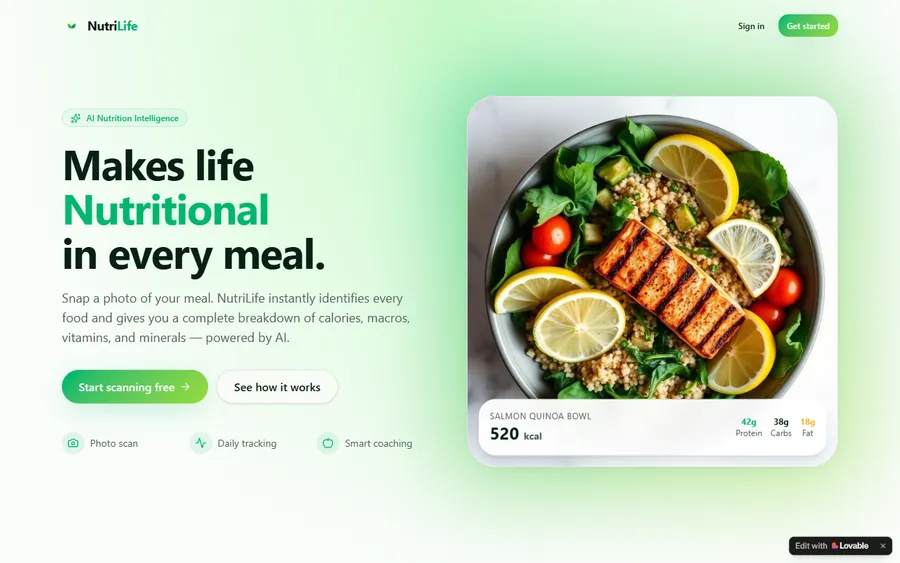
An AI nutrition coach that reads what you eat and works you toward a target.
AI and ML
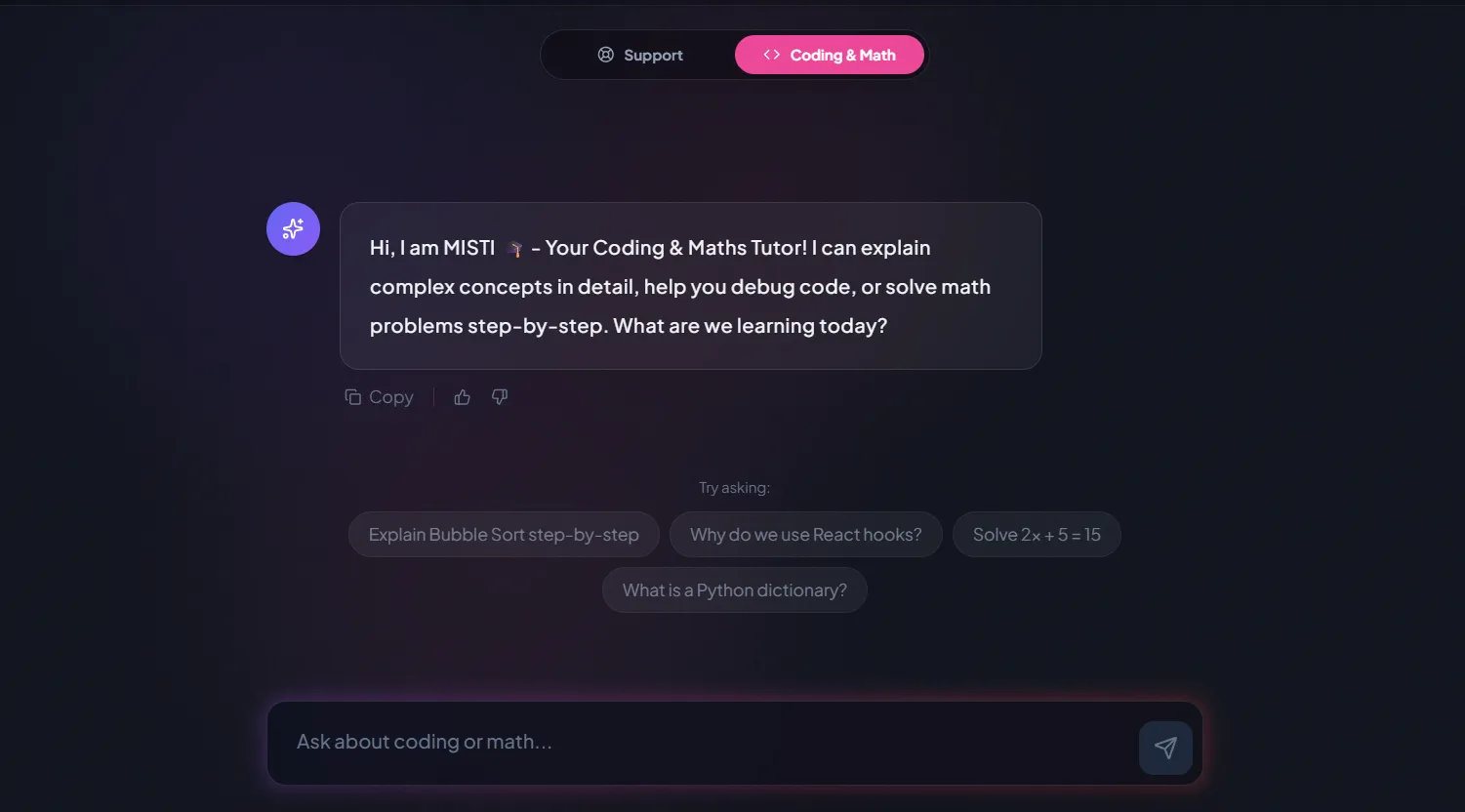
A chatbot that answers mathematics and programming questions, built and deployed by a student.
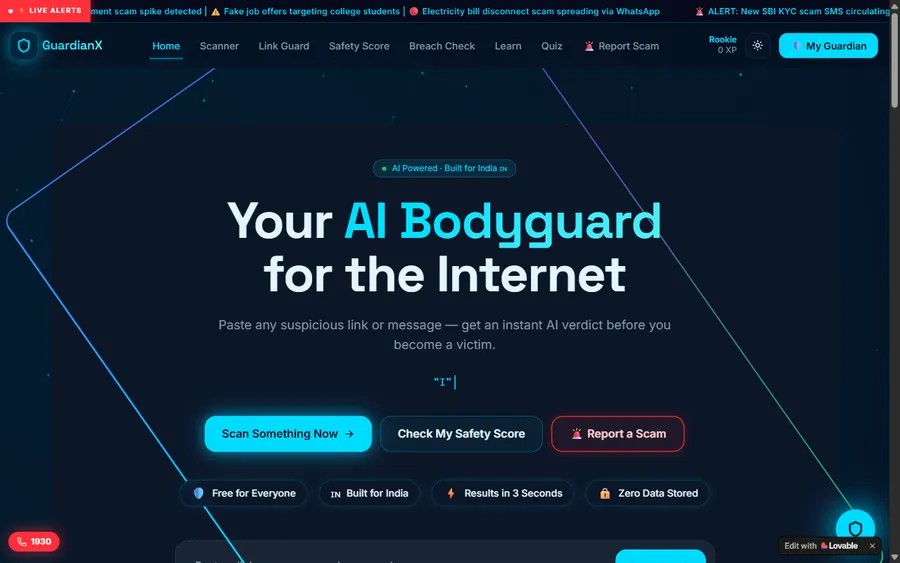
AI and ML
An assistant that helps a young person recognise unsafe situations online.
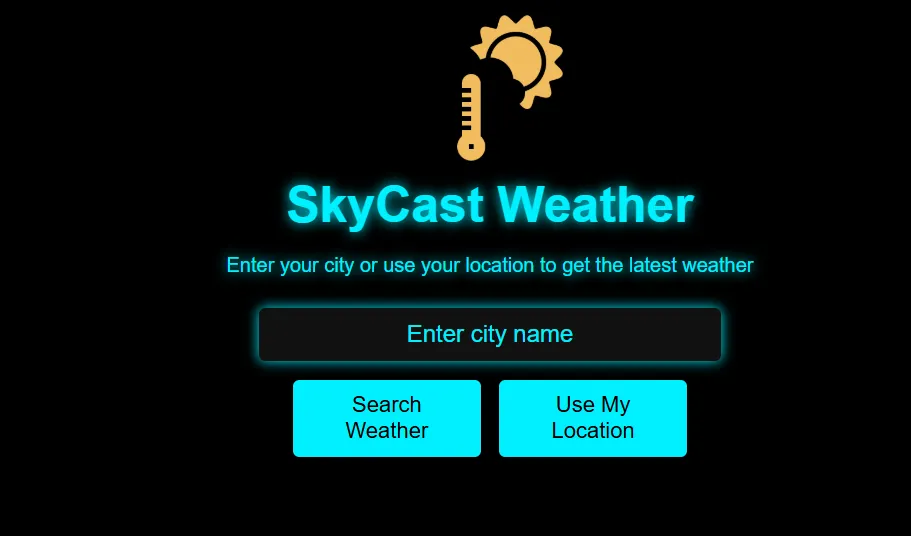
Web app
A weather forecasting site with live conditions for any location.
Fees
Monthly, in US dollars, at the same two rates as every country outside India. Nothing extra for Eindhoven or the Netherlands, no sign-up fee, no annual contract. Copilot Studio courses are private tuition only and use the one-to-one rate.
Free first class
USD 0
no card required
Group batch
USD 100
a month, billed in US dollars
One to one
USD 150
a month, billed in US dollars
What families say
Reproduced from Google exactly as posted. We neither write nor edit nor pay for them.
★★★★★
"The one step solution for my son. Modern Age Coders make learning coding so simple that kids love it. The teachers explain complex concepts clearly with practical exercises and interactive content."
Ria Mukherjee
Parent
★★★★★
"Modern Age Coders has been a game-changer for me. I struggled to grasp IT concepts and coding before joining, but their classes transformed everything. I can now confidently write complex programs with ease."
Samriddha Mondal
Student
★★★★★
"One of the most wonderful education centres out there. Education is not limited to school syllabus but focuses on skill development."
Vansh Agarwal
Student
★★★★★
"My child Dhairya is really enjoying the Modern Age Coders classes. This is his first online class and he eagerly looks forward to it. I can already see his improvement, and the teachers are very cooperative."
Sonam Oswal
Parent of Dhairya
★★★★★
"Modern Age Coders have wonderful teachers who teach in a clear, easy and practical way. The teacher boosts students' confidence and inspires them to learn without hesitation."
Sonu Goyal
Parent
★★★★★
"I highly recommend this computer coding class! The teachers are incredibly knowledgeable and passionate about coding."
Ritu Kedia
Parent
Questions from Eindhoven
No. Lessons are live online, and learners work in Python on their own computers. What we teach is the software side that physical systems depend on: data, vision models, decision loops and testing against conditions a model was not trained on. Many of those skills are practised in simulation first, as they are in university labs.
One of the five leagues at RoboCup, the one for school pupils. RoboCup 2024 was held in Eindhoven with three hundred teams from forty countries. We have no connection with RoboCup, but a pupil who wants to take part will find the Python and data skills from our ladder useful.
Python written by hand, then data, then the first models, in that order. For a technical degree, fluent programming and the habit of measuring errors matter more than any particular framework. We have no connection with TU/e and cannot influence admission.
The difference between how a system behaves in a simulator and how it behaves in the real world. Tech United's goalkeeper, trained in simulation, covered 23 percent of the goal area on the real robot, and the team plans to retrain it on the hardware. Every model trained on artificial data faces the same question.
Probably not if you start at the right rung. Engineers usually begin with the mathematics or the machine learning masterclass, often one to one, and move quickly past what they already know. The free lesson decides the level.
Children start from around groep 5 with blocks and from groep 6 to 8 with typed Python. A turtle that moves on the screen is a real program, and a child who writes one is already learning to control a machine.
Yes, as the technical world around Eindhoven largely is. Dutch school terms such as brugklas, havo and vwo are used as they are.
USD 100 a month for a group place, USD 150 a month for one-to-one lessons, billed in US dollars. No joining fee, no yearly contract, and the first lesson is free.
From India, live over video. The time difference with Eindhoven is three and a half hours in summer and four and a half in winter, so late afternoons and weekends are easiest.
We call at a Dutch hour to set up the free lesson. Nothing is charged and no place is held until the family has seen that lesson and chosen.
Elsewhere on this site
This page covers the AI track and one local emphasis. These cover the rest.
The city page for general programming, with its districts, schools and figures.
The town east of Eindhoven, with a page of its own.
Every municipality in the province.
The national academy page, with the school figures and the country's AI plans.
The academy page built around a university AI degree.
The academy page built around the public algorithm register.
Start here
Leave a number and we will ring at a Dutch hour. The first session is a real lesson with a real teacher, and at its end we know the learner's starting rung, which matters more than anything else in this subject.
Would rather read first? See the course catalogue, how we teach, and why we teach building AI at Learn to Build AI.
WhatsApp us · +91 91233 66161 · contact@modernagecoders.com
WhatsApp is free from the Netherlands and usually quickest. Our number is Indian; there is no office or address of ours in Eindhoven or elsewhere in the country.