AI and ML
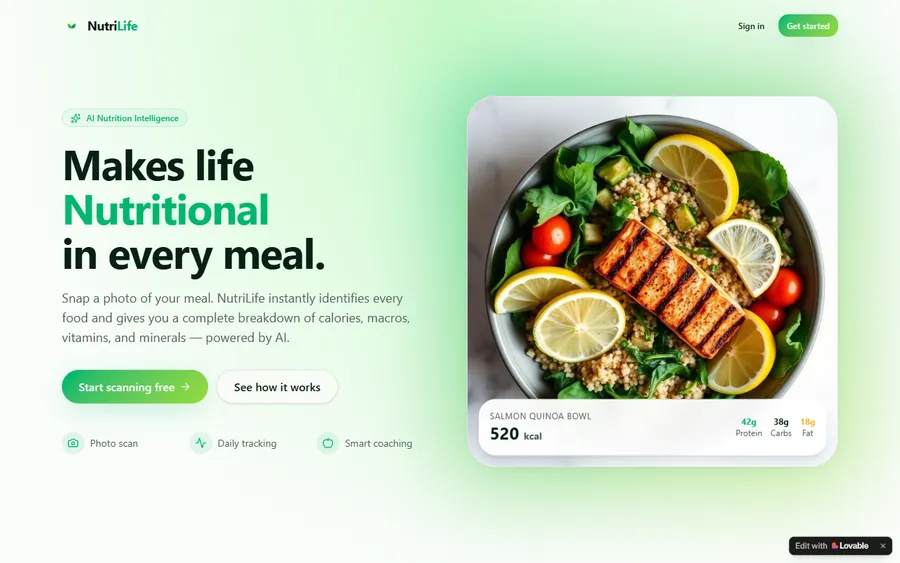
NutriLife
An AI nutrition coach that reads what you eat and works you toward a target.
Sohar, North Al Batinah · Live online · Ages 6 to 67
Predictive maintenance, scheduling, load forecasting, defect detection. That is where most working machine learning engineers spend their careers, and it is unusually easy to explain to a teenager who has grown up beside a port and an industrial estate. This track teaches that half properly: Python written by hand, data that has not been tidied for you, models with a stated error, and agents that act on what the model says.
Teaching since 2020 · 10,000+ students across 25+ countries · nothing pre-recorded
Courses
The same ladder, taught live, with the first class free and no centre anywhere in Oman.
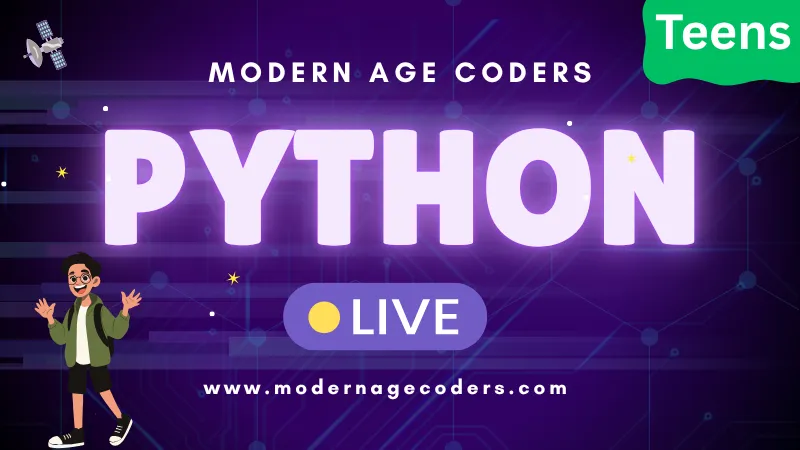
LADDER / 01
Typed code, real errors, and the habit of reading a traceback instead of asking for help.
Open the syllabus →
LADDER / 02
Where the AI actually gets built rather than demonstrated, one measured model at a time.
Open the syllabus →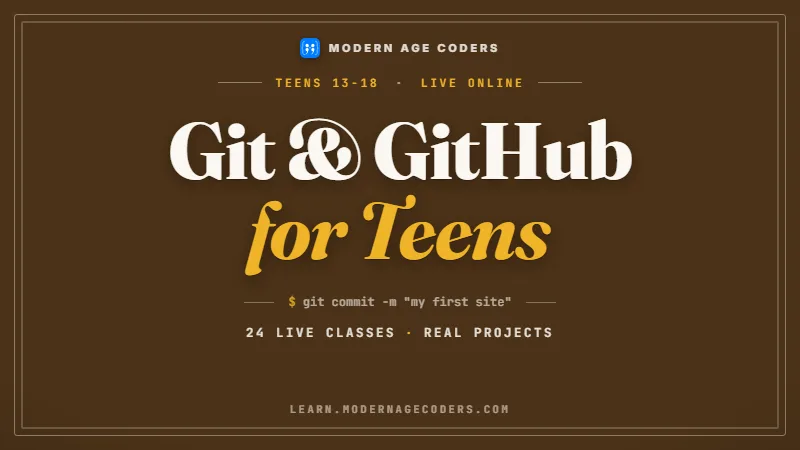
LADDER / 03
The habit that turns two years of work into a repository somebody can open and assess.
Open the syllabus →The full ladder is Python and AI for Kids · AI Literacy for Kids · Python for Teens · AI and Machine Learning for Teens · Data Science for Teens · Git and GitHub · AI and ML Masterclass · Generative AI: LLMs, RAG and Agents. The full list is on the catalogue.
In short
Modern Age Coders teaches a live online Python and AI track to learners in Sohar and across North Al Batinah, aged six to sixty-seven, in batches of five to eight or one to one. The emphasis is the applied end: models that predict something a student can check, and agents that act on the prediction. Group teaching is USD 100 a month, private USD 150, and the first class is free. We hold no premises in Oman and claim no connection to any company in the governorate.
The advantage Sohar has and does not use
North Al Batinah is where a large part of Omani industry physically operates. For a teenager in Sohar that is not scenery, it is the difference between an abstract subject and one with a visible purpose.
The applied end of machine learning is unglamorous and enormous. Predicting when a bearing will fail before it fails. Deciding which container moves next. Spotting the defect a tired human eye misses on the fourteenth hour of a shift. Forecasting a load so that a plant does not run a furnace hotter than it needs to. None of that is speculative technology; it is ordinary industrial software, and it is what a very large share of working machine learning engineers actually do.
A student in a port and industrial city has an advantage over a student anywhere else when they meet those problems, and it is not access. It is intuition. They already know that a crane has a queue, that a shift has a handover, that a delay propagates. Those are the mental models the mathematics is describing, and a learner who has them absorbs the subject noticeably faster.
We are going to be careful about what we do not claim. We have no arrangement with any company in Sohar, we place no students into any of them, and nothing on this page should be read as a route into a particular employer. What we offer is teaching, and the local context is a teaching resource rather than a promise.
What that context does change is the project a student picks. A learner who has watched lorries queue is far more likely to build something that models a queue than one who has only ever seen a tutorial about handwritten digits. Projects chosen from a student's own surroundings get finished, because the student can tell when the answer is wrong. That is worth more to their learning than any dataset we could hand them.
What a Sohar student builds
None of these needs a company's data. Every one can be built from figures a student generates, simulates or collects themselves, which is deliberate: the point is the reasoning, and waiting for somebody to grant you access to a real dataset is how a project dies.
A student simulates a set of machines with wear that accumulates, logs their readings, and trains a model to flag the ones about to fail. Then comes the interesting part: what does a false alarm cost, and what does a missed failure cost? Those two numbers are not equal, and the moment a learner internalises that, they stop optimising accuracy and start optimising consequence.
Given a queue of items with different sizes, deadlines and priorities, in what order should they be handled? This is scheduling, it is genuinely hard, and a fourteen year old can write a rule that beats first come first served on their own data within an afternoon. They can also discover that their rule collapses when one item is enormous, which is the lesson.
Image classification, taught on images the student photographs themselves rather than a tidy academic set. Real photographs come with bad light, odd angles and classes that are not balanced, and every one of those problems teaches more than a clean dataset would.
A time series, a baseline that simply repeats yesterday, and a model that has to beat it. Most beginner forecasts do not beat yesterday, and finding that out is the single most useful hour in the course, because it installs the habit of comparing against a baseline before believing anything.
Not because it is bad. Because in a city whose economy runs on process and logistics, the more useful early intuition is about systems that decide rather than machines that move. A robot that follows a line teaches control. A model that predicts a failure teaches uncertainty, and uncertainty is the harder and more transferable idea.
The rungs and the ages they land at are set out on the Python to AI roadmap. If your child is younger and you want the general route into coding first, North Al Batinah has a guide already: coding classes in Sohar.
Once a student can train and measure a model, the next question is what should happen when the model says something. An agent is the part that acts: given a goal, it chooses steps, calls tools, and reports what it did. In an industrial frame that is scheduling, alerting and escalation, and the engineering problem is making the failures loud.
That is a full course rather than a section, and it is here: the AI agents course for students in Oman.
How a term runs from North Al Batinah
Gulf Standard Time and Indian Standard Time both hold every month, so the gap between Sohar and the teacher is a permanent half hour and nothing needs rescheduling when a season turns.
16:30 to 18:00
Sohar time. Primary age children, straight after school.
18:30 to 20:00
Sohar time. The main teenage block, after dinner and school work.
20:30 to 22:00
Sohar time. University students and working adults on weeknights.
Free, taught rather than sold. One task, and by the end of it we know which rung the learner belongs on.
Sorted by demonstrated ability across an intake from twenty-five countries, never by postcode or school year.
A shift pattern, a narrow adult objective, or an examination year with nothing spare in it.
Ninety minutes each, with the teacher watching the code being written rather than reading it afterwards.
No clock changes at either end, so a Tuesday slot agreed in March is still a Tuesday slot in December.
Commits happen during the term. What a student leaves with can be opened and read by a stranger.
Student work
AI and ML
An AI nutrition coach that reads what you eat and works you toward a target.
AI and ML
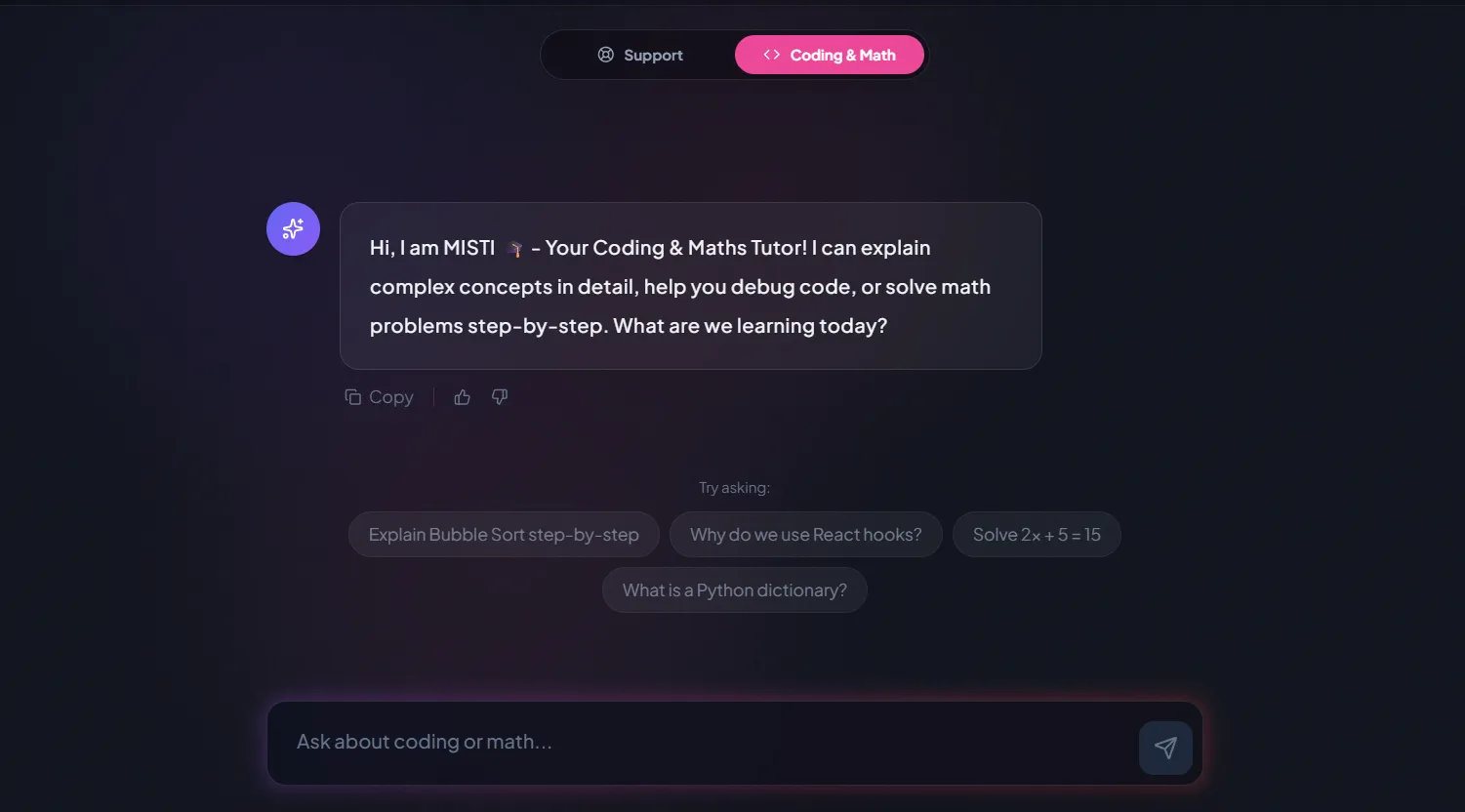
A chatbot that answers mathematics and programming questions, built and deployed by a student.
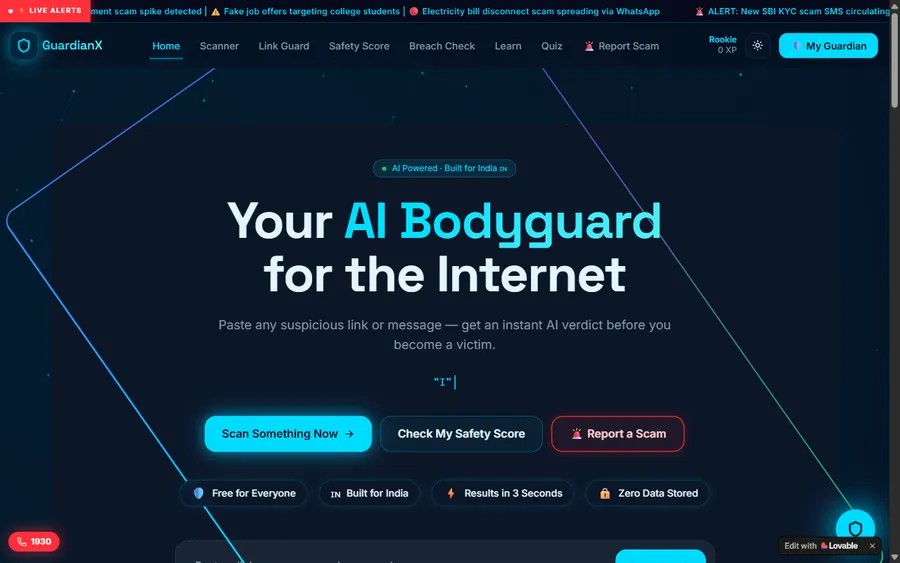
AI and ML
An assistant that helps a young person recognise unsafe situations online.
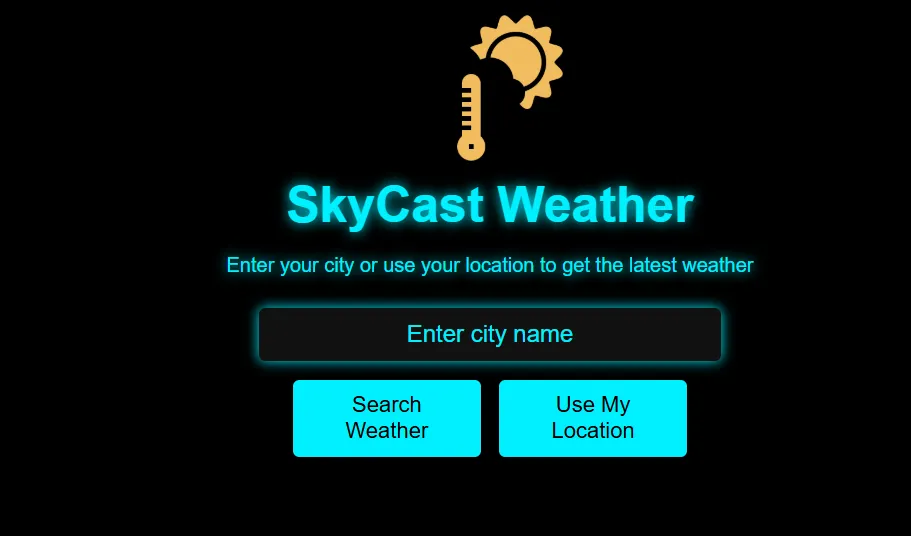
Web app
A weather forecasting site with live conditions for any location.
AI and ML
An AI nutrition coach that reads what you eat and works you toward a target.
AI and ML
A chatbot that answers mathematics and programming questions, built and deployed by a student.
AI and ML
An assistant that helps a young person recognise unsafe situations online.
Web app
A weather forecasting site with live conditions for any location.
Fees
Free first class
USD 0
no card required
Group batch
USD 100
a month, billed in US dollars
One to one
USD 150
a month, billed in US dollars
Free first class
USD 0
no card required
Group batch
USD 100
a month, billed in US dollars
One to one
USD 150
a month, billed in US dollars
What families say
Real reviews from real families. We neither write nor commission them.
★★★★★
"The one step solution for my son. Modern Age Coders make learning coding so simple that kids love it. The teachers explain complex concepts clearly with practical exercises and interactive content."
Ria Mukherjee
Parent
★★★★★
"Modern Age Coders has been a game-changer for me. I struggled to grasp IT concepts and coding before joining, but their classes transformed everything. I can now confidently write complex programs with ease."
Samriddha Mondal
Student
★★★★★
"One of the most wonderful education centres out there. Education is not limited to school syllabus but focuses on skill development."
Vansh Agarwal
Student
★★★★★
"My child Dhairya is really enjoying the Modern Age Coders classes. This is his first online class and he eagerly looks forward to it. I can already see his improvement, and the teachers are very cooperative."
Sonam Oswal
Parent of Dhairya
★★★★★
"Modern Age Coders have wonderful teachers who teach in a clear, easy and practical way. The teacher boosts students' confidence and inspires them to learn without hesitation."
Sonu Goyal
Parent
★★★★★
"I highly recommend this computer coding class! The teachers are incredibly knowledgeable and passionate about coding."
Ritu Kedia
Parent
Questions from North Al Batinah
No, and we would rather say that bluntly than let a page imply otherwise. We have no arrangement with any employer in the governorate, we place nobody, and nothing here should be read as a pathway into a particular company. The industrial context on this page is used as a teaching resource, because it makes the subject concrete for a local student, and for nothing else.
The framing is, the work is not. At twelve the actual activity is Python written by hand and data handled honestly, and the industrial examples are simply the stories the problems are dressed in. A queue of lorries is a more legible idea to a Sohar twelve year old than a queue of abstract jobs, which is the entire reason we use it. The mathematics arrives later and arrives gradually.
None here and none anywhere in Oman. Teaching is delivered as a live video call originating in India, and the number printed on this page rings in India too. What is needed at your end is a computer rather than a phone, a connection that carries ninety minutes of video, working audio, and a reasonably current browser.
A group batch of five to eight students is USD 100 a month and one to one teaching is USD 150 a month, billed in US dollars, the same flat figures everywhere outside India. There is no enrolment fee, no annual contract, and the first class is free without a card.
Sequence, and not much rivalry. Robotics teaches control and feedback through something a child can hold, which is a good start and we have no criticism of it. This track teaches uncertainty: training a model, stating how wrong it is, comparing it against a baseline, and then building an agent that acts on the result. A student who has done robotics tends to find those ideas easier, not redundant.
Evening slots at 16:30, 18:30 and 20:30 Oman time, with the exact days agreed with your household on the free call. Oman and India both hold one clock all year, so the difference stays at thirty minutes permanently and a recurring slot never has to be renegotiated because a season changed.
No, and that is deliberate rather than a limitation. Every project in this track is built from data a student generates, simulates or collects themselves, because waiting for permission to use somebody's real dataset is the most common way a student project dies. It also means the learner knows the ground truth, which is the only way to find out that their model is confidently wrong.
It runs alongside and certifies nothing beyond completion. What it supplies is weeks of unbroken time on one build, supervised by somebody who can read failing code and explain the failure, which no timetable can easily hand to a single subject. Where the honest advice is to reduce the load during a certificate year, we give it.
Frequently, and almost always one to one. Ages six to sixty-seven are taught. The usual shape is somebody with a recurring manual task, a report or a reconciliation, who wants it automated and finished rather than to study the subject indefinitely. Those goals normally take a few months rather than a few years.
A mentor calls you at an Omani hour to arrange the free session. Nothing is charged and no card is requested. To be plain: sending the form starts a conversation, not an enrolment, and it reserves no place in any batch. The course, the format and the evening are all decided in that conversation, before money is raised.
Also worth reading
The industrial framing on this page is one way in. These cover the same ground from other directions.
The general coding guide for the city, with the port and university context and its own data project.
The governorate page, for families outside Sohar itself.
The language side of the applied work described on this page, taught as its own subject.
The general method behind the four project ideas above.
A hands-on route through the same material for somebody who wants to start immediately.
The national page, with a different worked project on Omani published figures.
Start here
Nothing is charged for the opening session and nothing is sold during it. A learner is handed one problem chosen for their age, and what the teacher reads is how they approach it rather than whether they finish. Tell us on the call what your child is actually curious about, because in this city that is often something concrete, and a project chosen from a student's own surroundings is the one that gets finished.
Prefer to read first? The academy hub for Oman, the general coding guide for Sohar, or how we teach.
WhatsApp us · +91 91233 66161 · connect@modernagecoders.com
WhatsApp reaches us fastest from Oman and costs nothing to use. The number is Indian, not a Sohar office; no premises anywhere in the country are claimed.