PRO / CONF / 01
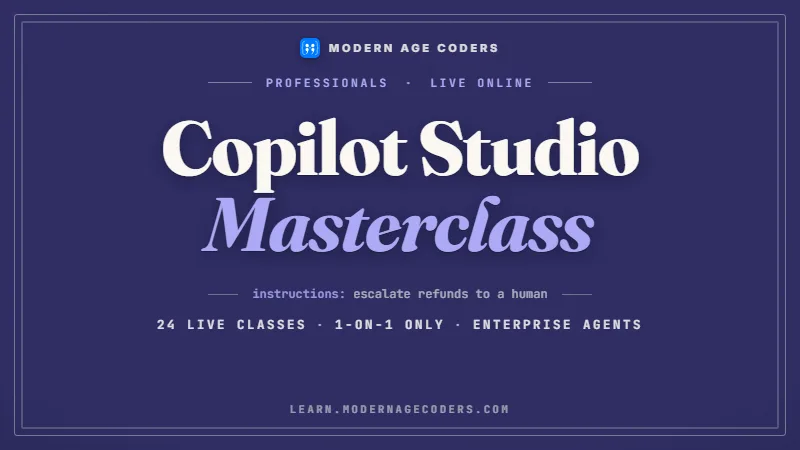
Copilot Studio Agent Masterclass
Agents in Microsoft Copilot Studio, from design to testing and governance, built around your organisation's own data and permissions.
Open the syllabusNetherlands · Professionals · Live online
On 2 February 2025 a new duty reached every Dutch organisation that builds or uses AI. Under the EU AI Act they must now make sure the people who work with those systems know enough about them to use them responsibly: how the technology works, where its opportunities lie and what risks it brings. At the same time, AI agents, programs that take a goal, plan their own steps and act through tools, have moved from demonstrations into ordinary office software. The professional who can build an agent in Copilot Studio, direct a coding agent through a real codebase, and explain to a manager or an auditor what the agent may and may not do, now has a skill the law itself asks organisations to have. This page is for professionals in the Netherlands, many of them international, who want that skill properly, live online and mostly one to one.
Live teaching since 2020 · 10,000+ students taught · agent courses taught live by specialists
In short
Modern Age Coders teaches working professionals in the Netherlands to build, direct and govern AI agents, live online. There are three routes: Microsoft Copilot Studio for agents inside an organisation's own tools, taught one to one; Codex and Claude Code for professionals who write or manage software; and a generative AI route for those who want to design agent systems from the model up. Every route includes what the AI Act now expects of organisations: knowing what a system does, what it must not do, and who is accountable. Group places are USD 100 a month and one-to-one tuition USD 150; the Copilot Studio courses are taught only one to one, and the first lesson is free.
Start here
One for agents inside Microsoft tools, one for agents that write code, one for professionals who want to design agent systems themselves. Each opens its own page with full syllabus, format and fee.
PRO / 01
Building, testing and governing agents in Microsoft Copilot Studio, taught one to one around the systems your organisation already runs.
Open the syllabus →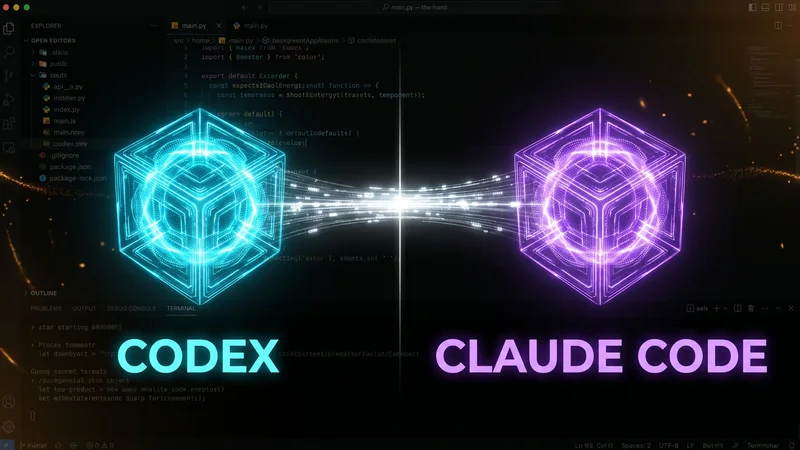
PRO / 02
Directing AI coding agents through real software, reviewing every change they make, and knowing when to stop them. Learners use their own subscriptions to the tools.
Open the syllabus →
PRO / 03
Language models, retrieval over company documents and agent design from first principles, for professionals who want to build rather than configure.
Open the syllabus →The AI Act
The EU AI Act is being phased in. Two parts took effect in February 2025, and the Dutch government has published what they mean for organisations here.
According to the government's Digitale Overheid site, since 2 February 2025 the AI Act has obliged organisations, public ones included, to work on AI-geletterdheid, AI literacy. It applies to providers and deployers of AI systems: in practice, any organisation that develops or uses them. AI literacy is described as knowledge and skill in the field of AI: knowing at a basic level how the technology works, where the opportunities are and what risks come with it, including social, ethical and practical aspects, not only technical ones.
The steps the government describes are concrete. An organisation should list the AI systems it uses and the knowledge it already has, then make sure that people who develop or buy AI systems understand how they work and what can go wrong, that those responsible for using a system know how and for what it should be used, and that everyone involved has general knowledge of AI and algorithms. The article setting this out was published on 26 February 2025.
The same day, 2 February 2025, a set of prohibitions came into force across the EU. The government's announcement lists among them social scoring, emotion recognition in workplaces and education, manipulative techniques that harm behaviour, real-time biometric identification in public spaces for law enforcement with limited exceptions, and predicting crime from profiling alone. The minister of Economic Affairs, Dirk Beljaarts, said the aim was AI models that work according to European norms and values.
The timetable the government published then runs on: requirements for general-purpose AI models from 2 August 2025, for high-risk applications from 2 August 2026, the full act from 2 August 2027, and high-risk AI in public organisations by 2 August 2030. Timetables can be revised, so organisations should check the current one.
| Who | What they should know | Where our courses fit |
|---|---|---|
| People who develop or buy AI systems | How the system works and what risks it can bring | The generative AI and coding agent routes |
| People responsible for using a system | How and for what it should be used, and the risks of that use | Copilot Studio, taught around your own processes |
| Everyone who works with AI | General knowledge of AI and algorithms | AI tools and analytics courses for colleagues |
Sources: Digitale Overheid, Wat je moet weten over AI-geletterdheid, 26 February 2025; Rijksoverheid, Europese verboden op ongewenste AI-toepassingen ingegaan, 3 February 2025. Read 15 September 2026. This is general information, not legal advice; our courses do not certify legal compliance.
Dutch firms
CBS figures show how quickly AI has entered Dutch business, and where. They are the context in which the AI literacy duty lands.
| Measure | Figure |
|---|---|
| Companies using one or more AI technologies, 2024 | 23 percent |
| The same, 2023 | 14 percent |
| Companies with 500 or more workers, 2024 | 59 percent |
| Companies with 10 to 19 workers, 2024 | nearly 18 percent |
| Most used: written text analysis (text mining), 2024 | 14 percent |
| Next: written or spoken text generation, 2024 | 12 percent |
| EU average, 2024 | 13 percent |
The jump from 14 to 23 percent in a single year, and the lead of large firms at 59 percent, mean that many professionals now work in organisations where AI systems are already in use, and where someone has to understand, configure and answer for them. Text analysis and text generation, the two most common uses, are exactly the jobs that agents built on language models now take on.
Dutch companies are also well ahead of the European average of 13 percent, which puts professionals here closer to the front of the curve than most.
Many of those professionals came to the Netherlands to work. For highly skilled migrants, the IND's salary criteria from 1 January 2026 are a gross monthly 5,942 euros for those aged 30 and over and 4,357 euros for those under 30, excluding holiday allowance, with 3,122 euros under the reduced criterion for recent graduates. The same 5,942 euros applies to the EU Blue Card.
For an international professional, skills that an employer is now legally expected to have in its workforce are a practical kind of security. We give no immigration or tax advice; the figures are here as context.
Sources: CBS, The Netherlands in Numbers 2025, How many companies in the Netherlands are using AI?; IND, required amounts income requirements. Read 15 September 2026.
The three routes
Professionals come to agents from different directions. The free lesson decides which route fits.
Configuring agents in Copilot Studio suits professionals whose organisation runs on Microsoft 365: analysts, operations staff, team leads and IT administrators. It is taught only one to one, because every organisation's data, permissions and processes differ, and the lessons are built around yours.
Directing coding agents suits developers, data engineers and technical managers. Codex and Claude Code can write and change large amounts of code; the course teaches how to set them tasks, review every change, keep their work inside a safe boundary and recognise when they are confidently wrong. The global agentic coding classes page covers this route further.
Designing agent systems suits professionals who want to understand the whole stack: how language models work, how retrieval grounds them in an organisation's own documents, and how an agent is constrained so that its failures are visible. The broader AI agents course page and AI agents and automation set out the ideas.
All three routes include governance: what the agent may do on its own, what needs a human, how its actions are logged, and how it would be explained to a colleague, a manager or a supervisor. The Amsterdam academy page shows how a Dutch city documents its own algorithms.
The rungs for professionals
Professionals rarely need every rung, but the order holds. An agent built by someone who cannot evaluate a model, or deployed by someone who cannot say what it may do, is a liability the AI Act now makes visible.
| Rung | Who usually needs it | What it adds |
|---|---|---|
| 1. AI literacy | Everyone who works with AI | What systems do, where they fail, what must stay private |
| 2. Configuring agents | Analysts, team leads, IT staff | Agents in Copilot Studio around real processes |
| 3. Directing coding agents | Developers and technical managers | Codex and Claude Code used with review and limits |
| 4. Designing agent systems | Engineers and architects | Retrieval, tools, evaluation and constraints |
| 5. Governance | Anyone accountable for an agent | Permissions, logging, human oversight and explanation |
An agent that acts on its own must have limits someone set deliberately. Writing those limits down, and being able to show them, is now part of what the AI literacy duty implies for the people closest to the system.
The wider order of subjects is on the coding roadmap.
Most professionals take one-to-one lessons at a fixed weekly time, in the evening or occasionally during the working day, and pause during busy periods.
Teams can arrange lessons for several colleagues separately, each built around their own role.
The catalogue
Grouped by route. Every card opens the course page with its format and fee; the Copilot Studio course is one to one only.
PRO / CONF / 01
Agents in Microsoft Copilot Studio, from design to testing and governance, built around your organisation's own data and permissions.
Open the syllabusPRO / CODE / 01
Setting coding agents real tasks, reviewing every change and keeping them within safe limits, on your own tool subscriptions.
Open the syllabusPRO / CODE / 02
The version control discipline that makes agent-written code reviewable, reversible and safe to merge.
Open the syllabusPRO / CODE / 03
Python for automating work with AI tools, the foundation for understanding what a coding agent produces.
Open the syllabusPRO / SYS / 01
Language models, retrieval over internal documents and agent design with evaluation and constraints built in.
Open the syllabusPRO / SYS / 02
Practical, careful use of AI tools across a team, a good first step towards the literacy the AI Act expects.
Open the syllabusPRO / SYS / 03
Data and AI assistants for colleagues who do not code, so that the whole team shares a working understanding.
Open the syllabusHow the classes run
Teaching comes from India, which has no daylight saving, so the offset to the Netherlands is three and a half hours while Dutch summer time lasts and four and a half through the winter. Professionals usually take an evening or weekend slot; some book a fixed hour inside the working day. Whatever suits is agreed at the free lesson and can be moved when work demands it.
Evening
After work, Dutch time. The usual choice for one-to-one agent lessons.
Weekend
Saturday or Sunday mornings, for longer, uninterrupted sessions.
During the day
For professionals whose employer supports training in working hours, where a specialist is available.
Bring a real process or codebase. The teacher sees where you are and proposes a route before anything is paid.
Agent work depends on each organisation's systems, so most professionals learn individually. Copilot Studio is only taught this way.
For the generative AI and automation routes, groups of five to ten at one level are available and often lively.
Lessons use your processes as examples without your organisation's confidential data; the teacher works with safe substitutes.
The language of the tools, their documentation and most international teams in the Netherlands.
Agents, prompts, evaluations and governance notes are kept in your own repository, ready to show a manager or reviewer.
Student work
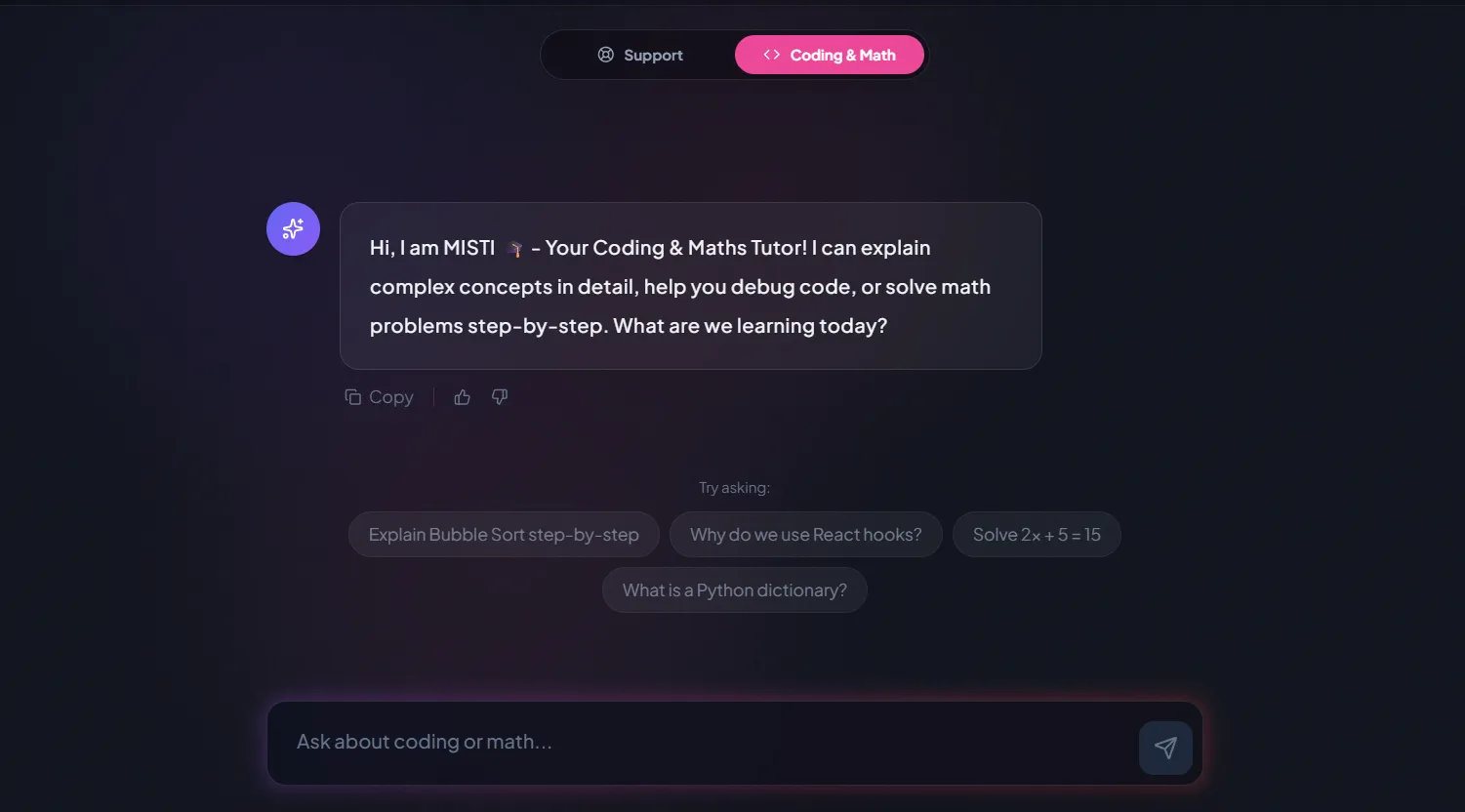
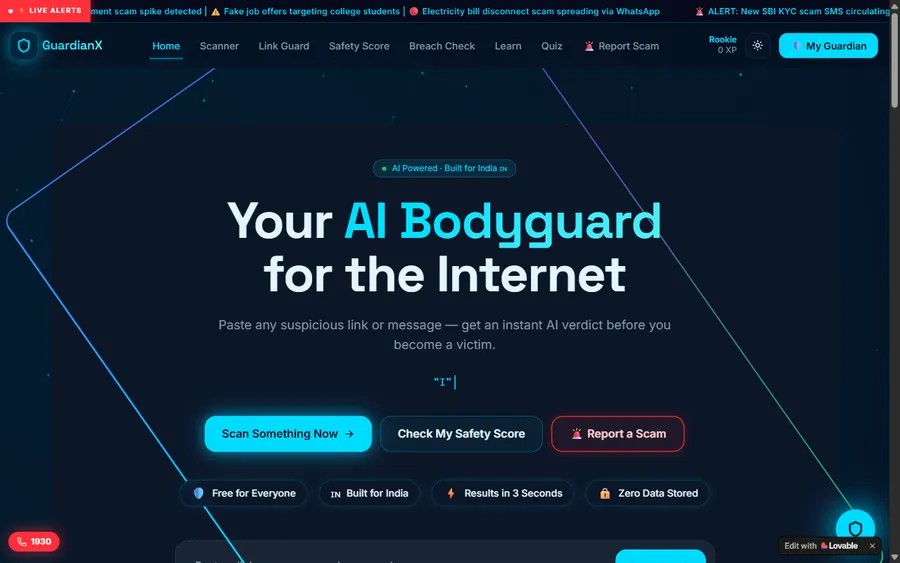
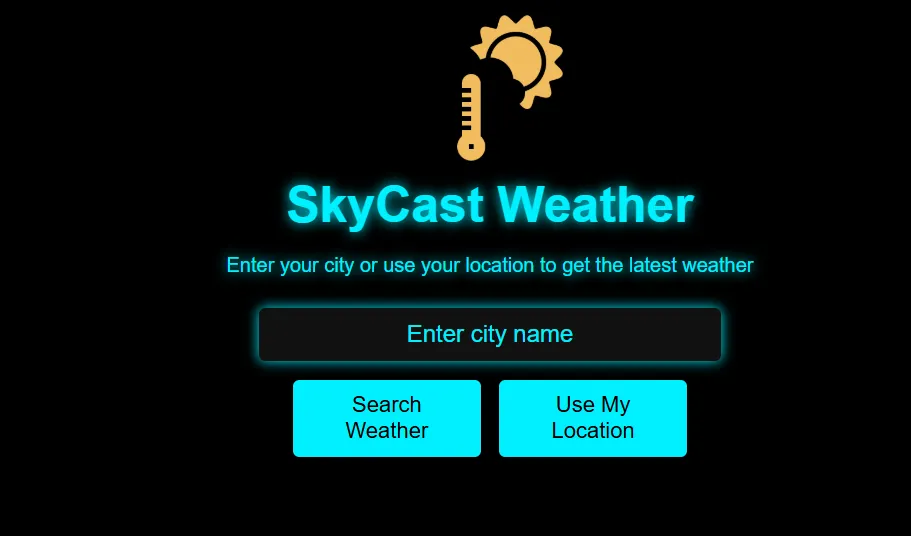
Four live projects by our students, open to anyone who wants to try them. More on the student labs page.
AI and ML
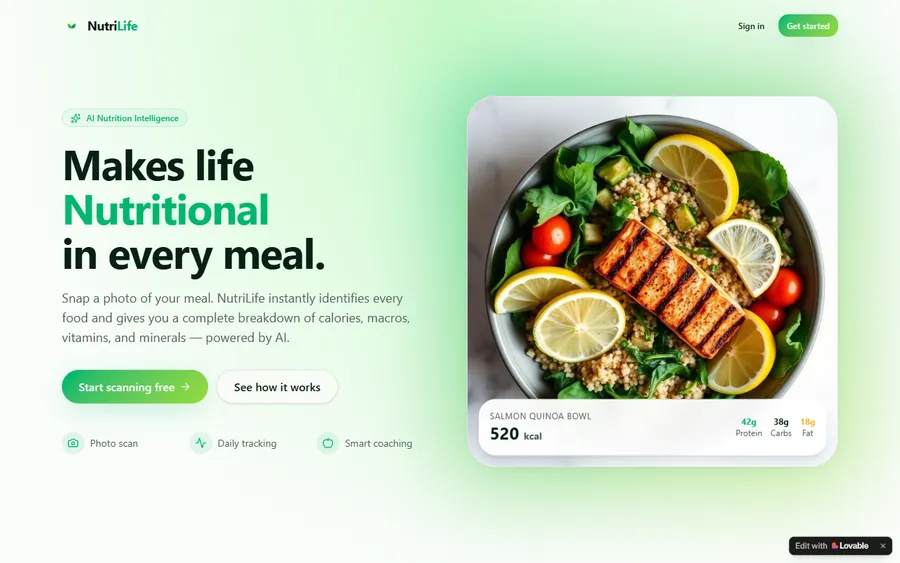
An AI nutrition coach that reads what you eat and works you toward a target.
AI and ML
A chatbot that answers mathematics and programming questions, built and deployed by a student.
AI and ML
An assistant that helps a young person recognise unsafe situations online.
Web app
A weather forecasting site with live conditions for any location.
Fees
Monthly, in US dollars. A group place is the lower rate and private tuition the higher, as in every country outside India. The Copilot Studio course is private tuition by design, so it is charged at the one-to-one rate. No joining fee, no annual contract.
Free first class
USD 0
no card required
Group batch
USD 100
a month, billed in US dollars
One to one
USD 150
a month, billed in US dollars
What families say
Taken from Google without changes. We neither write nor pay for reviews.
★★★★★
"The one step solution for my son. Modern Age Coders make learning coding so simple that kids love it. The teachers explain complex concepts clearly with practical exercises and interactive content."
Ria Mukherjee
Parent
★★★★★
"Modern Age Coders has been a game-changer for me. I struggled to grasp IT concepts and coding before joining, but their classes transformed everything. I can now confidently write complex programs with ease."
Samriddha Mondal
Student
★★★★★
"One of the most wonderful education centres out there. Education is not limited to school syllabus but focuses on skill development."
Vansh Agarwal
Student
★★★★★
"My child Dhairya is really enjoying the Modern Age Coders classes. This is his first online class and he eagerly looks forward to it. I can already see his improvement, and the teachers are very cooperative."
Sonam Oswal
Parent of Dhairya
★★★★★
"Modern Age Coders have wonderful teachers who teach in a clear, easy and practical way. The teacher boosts students' confidence and inspires them to learn without hesitation."
Sonu Goyal
Parent
★★★★★
"I highly recommend this computer coding class! The teachers are incredibly knowledgeable and passionate about coding."
Ritu Kedia
Parent
Questions from professionals
The AI Act places the duty on organisations that provide or deploy AI systems: since 2 February 2025 they must work on the AI literacy of their staff. It does not prescribe a particular course. Our courses can be part of how an employer meets that duty, but we do not certify legal compliance.
A program that is given a goal rather than step-by-step instructions, works out its own steps and uses tools to carry them out. Agents in Copilot Studio act inside Microsoft tools; coding agents such as Codex and Claude Code act on software.
Because every organisation's data, permissions and processes are different, and a useful agent has to be built around them. Group lessons cannot do that well.
Yes. The coding agents course is taught on the learner's own accounts with those tools, so that everything you build stays yours.
We do not ask for confidential data. Lessons use your processes as examples, with substitute data where needed.
Often, especially now that AI literacy is an organisational duty. We can provide a short description of the route and its outcomes after the free lesson.
We give no immigration advice. The IND salary criteria from 1 January 2026 are set out above only as context; skills in building and governing AI are simply valuable to employers here.
Group places are USD 100 a month and private tuition USD 150 a month, billed in US dollars; Copilot Studio is private tuition only. There is no joining fee or annual contract, and the first lesson is free.
Evenings, weekends or, where your employer allows, during the working day. The teacher is three and a half hours ahead of Dutch summer time and four and a half ahead of winter time.
Someone from the team rings you at a Dutch hour to set up the first lesson. It is free, and nothing is booked or charged until you decide to continue.
Elsewhere on this site
Related pages, for going deeper or for colleagues.
The global agents page: what agents are and how they are built.
Working with coding agents, in more depth.
Machine learning for people already in work.
For colleagues starting with Python, data or AI tools.
Why a model's errors must be counted group by group.
The country-wide academy and its five rungs.
Start here
Leave a number and we will ring at a Dutch hour to fix a time. Bring a process, a codebase or a question from work; the teacher will show you where to start and propose a route.
Rather look around first? The AI agents course page explains the ideas, how we teach describes a lesson, and the course list has every syllabus.
WhatsApp us · +91 91233 66161 · contact@modernagecoders.com
On WhatsApp from a Dutch phone we usually answer fastest, at no cost to you. The number is Indian; we have no office, address or premises in the Netherlands.