GRN / KIDS / 01
Python and AI for Kids
Real Python for a child of nine to twelve: drawings made by code, small games, and a program that works out a pattern from examples it was shown.
Open the syllabusGroningen · Live online · Ages 6 to 67
The University of Groningen teaches a three-year bachelor in artificial intelligence, entirely in English, and its door is unusually wide: every vwo profile is admissible, and a pupil in Cultuur en Maatschappij needs only wiskunde A or wiskunde B. What waits inside is not wide at all. Among the first-year courses are Calculus for Artificial Intelligence, Imperative Programming, Statistics and Introduction to Logic, and the binding study advice asks for at least 45 EC in the first twelve months. A student who arrives already writing code by hand and already comfortable with the mathematics in code form has room to breathe. One who arrives with neither meets both at once, in a second language, against a deadline. This page is the preparation, for the vwo pupil who wants that degree, the student already in it, and everyone else in Groningen who wants the same skills without the lecture hall.
Live classes since 2020 · more than 10,000 students taught · every lesson given in real time
In short
For learners in Groningen, Modern Age Coders runs a live online track from typed Python through the mathematics of machine learning, written as code, to trained models and AI agents, in English, in groups of five to ten or one to one, for ages six to sixty-seven. It is shaped around a concrete target: the first year of the University of Groningen's English-taught AI bachelor, which admits every vwo profile and then asks for calculus, programming, statistics and logic, with 45 EC to earn in twelve months. The same ladder serves a groep 7 child starting out and an adult retraining. The first lesson is free; after it, a group place is USD 100 a month and one-to-one tuition USD 150.
Start here
One for a vwo pupil two or three years from the application, one for the mathematics that the first semester assumes, one for the algorithms course that follows it. Each card opens that course alone, with its syllabus and its timetable.
GRN / 01
Two years from an empty file to confident Python, for a vwo 4 to 6 pupil who wants Imperative Programming to be revision rather than a shock.
Open the syllabus →
GRN / 02
Statistics, linear algebra and the calculus behind machine learning, each idea written as code and run, so a wiskunde A pupil closes the gap before the calculus course opens it.
Open the syllabus →
GRN / 03
Lists, trees, graphs and the cost of each operation, reasoned out rather than memorised, for the student facing the first-year algorithms course or already in it.
Open the syllabus →The target
These are the University of Groningen's own published details for its bachelor in artificial intelligence, read on its programme and admission pages. Nothing here is a ranking or a judgement of the degree; it is a description of what a first-year student meets.
The degree is a BSc in Kunstmatige Intelligentie, taught in English over 36 months and 180 EC, in the Faculty of Science and Engineering and connected to the Bernoulli Institute. Its research groups are named as Cognitive Modeling, Multi-Agent Systems, Human-Centered Robotics and Machine Learning, and it offers five specialisations: computational neuroscience, hybrid intelligence, language and AI, machine learning and robotics.
Admission is generous. The university lists all four vwo profiles, Natuur en Techniek, Natuur en Gezondheid, Economie en Maatschappij and Cultuur en Maatschappij, with wiskunde A or wiskunde B named for the last. Wiskunde B is therefore not a condition of entry, and neither is informatica. A voldoende for vwo English is recommended, because every lecture is in English, and applications for September 2027 close on 1 May 2027.
Then the first year. Among its courses, at 5 EC each, the programme lists Introduction to Artificial Intelligence, Calculus for Artificial Intelligence, Imperative Programming, Statistics, Introduction to Logic, Introduction to Neuroscience and Cognitive Psychology, alongside a course on algorithms and data structures and one on linear algebra and multivariable calculus. The second year brings machine learning, object-oriented programming, natural language processing and ethics; the third is electives and a 15 EC bachelor project, a small piece of research carried out under one of the researchers.
Over all of it sits the binding study advice: at least 45 EC in the first twelve months, three quarters of a normal year's 60, or the student may not continue. Put the two halves together and the shape is plain. A pupil can be admitted with wiskunde A and no programming at all, and then has a year to pass calculus, programming and logic in a second language. Many do. Arriving prepared makes it a different year.
| Item | Published detail | What it means for a pupil now |
|---|---|---|
| Degree and language | BSc in Kunstmatige Intelligentie, taught in English | The lectures, books and exams are in English from the first week |
| Length | 36 months, 180 EC | Three years of 60 EC each |
| Admission | All four vwo profiles; Cultuur en Maatschappij with wiskunde A or wiskunde B | No profile is shut out, so preparation, not the timetable, decides readiness |
| Binding study advice | At least 45 EC in the first 12 months | Most of the first year has to be passed first time |
| First-year courses (examples) | Calculus for Artificial Intelligence, Imperative Programming, Statistics, Introduction to Logic | Maths and programming arrive together, in the first semesters |
| Final year | Electives, a specialisation, a minor and a 15 EC bachelor project | Research-style work under a researcher |
| Application deadline | 1 May 2027 for September 2027 | Decisions about profile and subjects are made years earlier |
Sources: University of Groningen, Bachelor Artificial Intelligence (degree, length, faculty, institute, research groups, specialisations, binding study advice, careers); programme page (courses by year, minor, specialisation, bachelor project); admission page (profiles, mathematics, English, deadline). Read 11 September 2026. The pages are partly in Dutch; course names are quoted as published. We have no connection with the university.
The preparation
None of the first-year material is secret, and much of it can be met earlier in a gentler form. The point is not to take the degree early. It is to arrive having already done, in code, the things the degree then explains properly.
| In the first year | What can come before it | Where it sits on our ladder |
|---|---|---|
| Imperative Programming | Variables, loops, functions and files, typed by hand, with error messages read and fixed alone | Rung 1, from groep 7 or the brugklas |
| Calculus for Artificial Intelligence | Rates of change seen in code: a loop that nudges a number downhill until an error stops shrinking | Rung 3, once Python is fluent |
| Linear algebra | Lists of numbers as vectors, a table as a matrix, and a prediction as a sum of weighted inputs | Rungs 2 and 3 |
| Statistics | Averages, spread and a first honest error bar, on a dataset the pupil can check | Rung 2, the data rung |
| Introduction to Logic | Conditions, truth tables and the difference between a rule that is necessary and one that is enough | Rung 1, inside everyday programs |
| Algorithms and data structures | Searching, sorting and the cost of each, counted by the program rather than assumed | Rungs 1 and 2, continued in the DSA course |
The mathematics is where preparation pays most. A pupil with wiskunde A has met functions and statistics but rarely derivatives in the depth a machine learning course assumes, and a first semester that includes Calculus for Artificial Intelligence and a linear algebra course moves quickly. Writing gradient descent by hand in Python, a program that improves a guess step by step by following the slope of its error, makes the derivative something the pupil has watched work before anyone writes it as a formula.
Programming is the other half. Imperative Programming assumes nothing, which is fair, but the course runs at university pace alongside everything else. A student who has already written a few thousand lines, debugged their own mistakes and kept their work in a repository spends that course on the ideas instead of the syntax.
None of this replaces the degree, and we do not claim that our classes earn credits or exemptions there; they do not. What they change is the starting position. The binding study advice asks for 45 EC in a year, and the courses most likely to cost a first-year student those credits are the ones that combine unfamiliar mathematics with unfamiliar code.
The same preparation suits a pupil who ends up somewhere else entirely: computing science, econometrics, data science at a hogeschool, or no degree at all. Python, mathematics in code and a measured model are useful everywhere. The Groningen AI bachelor is simply the clearest published example of what a first year in this field demands.
The first-year course names come from the University of Groningen programme page cited above. The column on what can come first is our teaching plan, not the university's, and the university has not reviewed it.
The rest of Groningen
Most learners in Groningen will never apply for an AI bachelor, and the ladder does not assume they will. It starts at groep 6 and runs to retirement.
A child in groep 6 to 8 starts with Python typed by hand, small games and a first program that learns a rule from examples. A brugklas pupil keeps going at a steady pace alongside school. A teenager in havo or vwo reaches data and models, with or without informatica on the timetable; the national academy page sets out how thinly that subject is offered and what the country is building in Groningen at the same time, and we do not repeat it here.
Students at the city's university and hogeschool use the upper rungs as a second route through material their own courses move through quickly, or as the practical half that a theory-heavy module leaves out.
Adults are the other large group. A Groningen professional whose work now involves data, reports or AI tools can learn Python automation and the basics of machine learning without enrolling anywhere, one to one if their hours are irregular.
The general coding page for the city, coding classes in Groningen, covers the schools, the neighbourhoods and the city's own figures; the province page covers everywhere from Delfzijl to Westerkwartier. This page covers only the AI and Python track, and one target on it.
The five rungs
The order matters more than the speed. Each rung supplies something the next one cannot do without, which is why a student who jumps straight to building chatbots often cannot explain a single result.
| Rung | Typically | What the learner does |
|---|---|---|
| 1. Python by hand | Groep 7 to brugklas, or any adult beginner | Writes loops, functions and small programs from a blank file, and repairs their own errors |
| 2. Data | Onderbouw to vwo 4 | Loads a real file, cleans it, plots it, and states an average with its spread |
| 3. Models | Vwo 4 to 6, first-year students | Writes gradient descent by hand, trains a model, reports its error and compares it with a simple guess |
| 4. Agents | Vwo 6 and university | Builds a program that plans its own steps and calls tools, with every wrong turn logged |
| 5. A public repository | At every stage | Publishes the code with a short account of what it does, how well, and where it fails |
Calculus and linear algebra make sense fastest when they answer a question the learner already has. After two rungs of code and data, the question is obvious: how does a program find the best line through these points? Gradient descent answers it, and the derivative arrives as the tool that makes the answer work.
The general order we teach in, subject by subject, is on the coding roadmap.
The profielkeuze in the third year is the moment to try rung 1 if a pupil has not already: a term of Python shows quickly whether the Nature profiles and a technical degree appeal. By vwo 5 a pupil aiming at AI should be on rung 2 or 3, and the eindexamen year is best kept light.
For a first-year student already in Groningen, rungs 3 and 4 run alongside the degree and can be taken one to one around a changing timetable.
The catalogue
Grouped by stage of life rather than by difficulty. Every card opens the full course with its schedule and fee, and the free first lesson decides where a learner actually starts.
GRN / KIDS / 01
Real Python for a child of nine to twelve: drawings made by code, small games, and a program that works out a pattern from examples it was shown.
Open the syllabusGRN / KIDS / 02
How a chatbot produces its answers, why sounding sure and being right are different things, and simple checks a child can apply before trusting one.
Open the syllabusGRN / TEEN / 01
The foundation course: two years of Python from first principles to confident, well-organised programs, and the natural start for a future AI student.
Open the syllabusGRN / TEEN / 02
Statistics, classical models, neural networks, images and text, each finished with something the teenager trained and can explain to a sceptic.
Open the syllabusGRN / TEEN / 03
The groundwork every model needs: reading, joining and plotting real data, and spotting the entry that would have spoiled the result.
Open the syllabusGRN / TEEN / 04
Directing AI coding agents on real projects and reviewing every change they make. Students use their own accounts, within each tool's age rules.
Open the syllabusGRN / PRO / 01
Statistics, linear algebra and the calculus of learning, taught through code, for the student whose first-year maths is moving faster than they are.
Open the syllabusGRN / PRO / 02
How to choose the right structure and predict what an operation costs, the thinking that separates a program that works from one that scales.
Open the syllabusGRN / PRO / 03
The full machine learning route for adults: supervised and unsupervised methods, deep learning, careful evaluation and putting a model into use.
Open the syllabusGRN / PRO / 04
How large language models work, how to ground them in your own documents, and how to build agents whose mistakes are visible and contained.
Open the syllabusGRN / PRO / 05
For the professional who wants the repetitive part of the job done by a script: files, reports, web data and AI tools, joined into something reliable.
Open the syllabusHow the classes run
Groningen keeps Central European time and switches to summer time and back each year; India does not switch at all. The difference is three and a half hours in summer and four and a half in winter. Weekend and late-afternoon slots suit everyone; weekday evenings depend on the teacher, and the regular time is agreed on the free lesson rather than fixed on this page.
Late afternoon
Groningen time, after school. The usual choice for children and onderbouw pupils; evening for the teacher.
Evening
Groningen time, after dinner, arranged case by case. Suits vwo pupils and university students with a full day behind them.
Weekends
Saturday or Sunday, morning or afternoon, Groningen time. The easiest slot for working adults and busy families.
The learner works on a real problem while the teacher watches how they think. That settles the starting rung far better than a questionnaire.
Groups are formed by ability from learners in many countries, so a quick student in Groningen is stretched and a new one is not left behind.
For a first-year student with a shifting timetable, an adult with a narrow goal, or anyone who wants the pace set around them.
Lessons are live, with both screens shared, so a misunderstanding is caught while it forms rather than a week later.
The same language as the Groningen degree, the documentation and the error messages. Dutch school terms such as vwo and profielkeuze are used as they are.
Each lesson's work goes into the learner's own GitHub repository, so by the application or the first exam there is a record, not a loose folder.
Student work
Four projects our students built and left running online. Try them, look at how they fail, and see more on the student labs page.
AI and ML
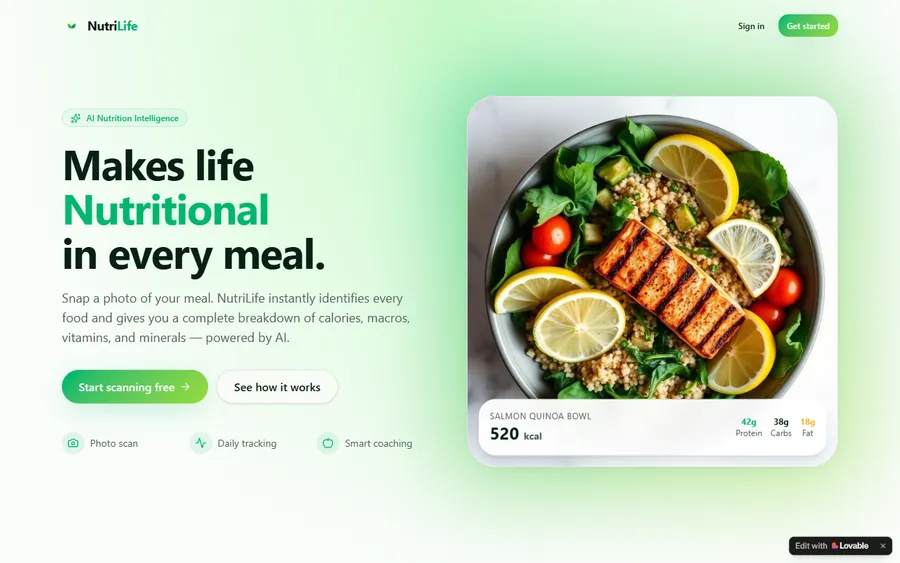
An AI nutrition coach that reads what you eat and works you toward a target.
AI and ML
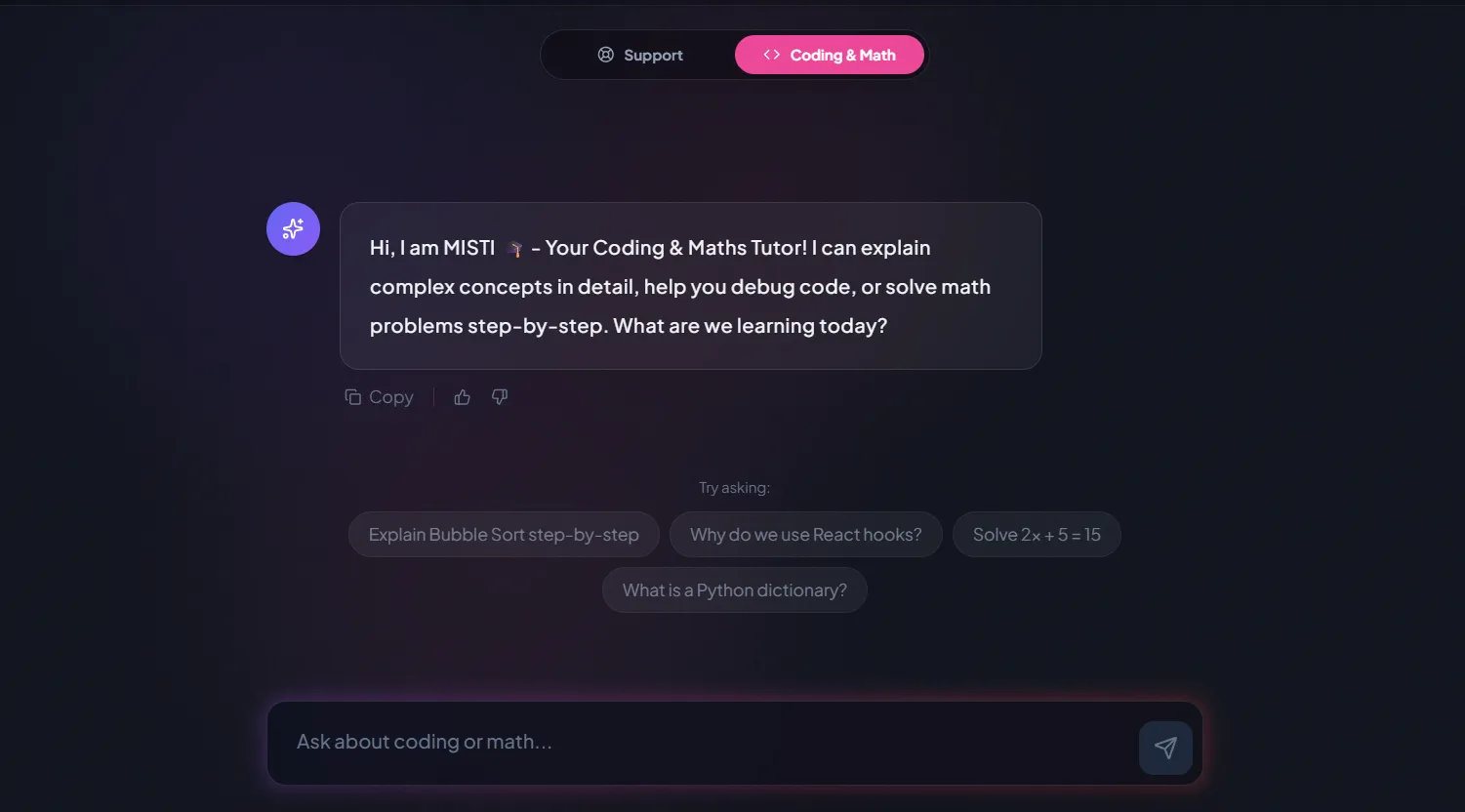
A chatbot that answers mathematics and programming questions, built and deployed by a student.
AI and ML
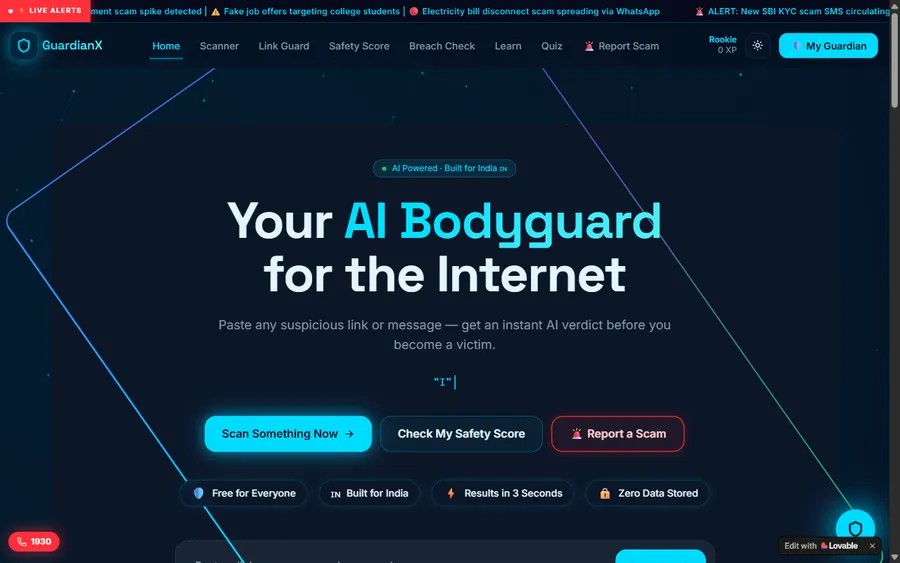
An assistant that helps a young person recognise unsafe situations online.
Web app
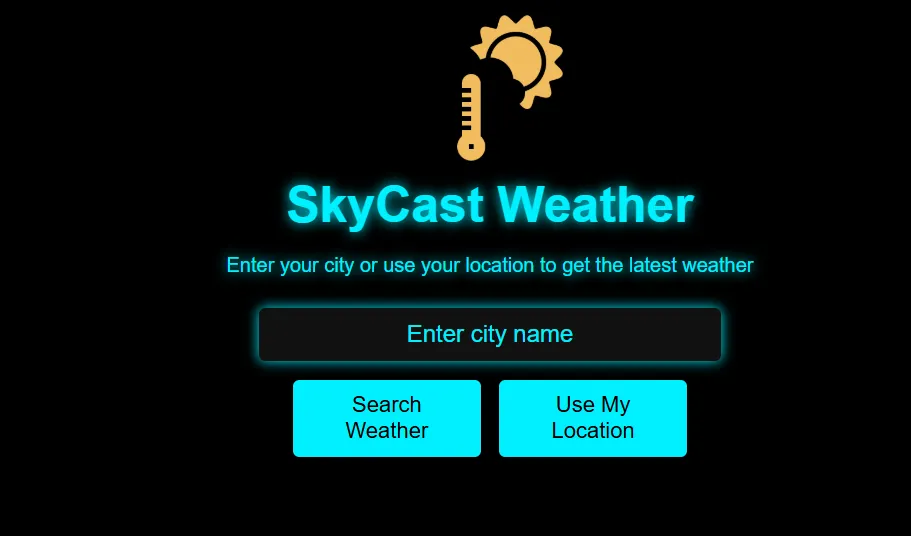
A weather forecasting site with live conditions for any location.
Fees
Charged monthly in US dollars, at the same two rates as everywhere outside India. There is no Groningen or Dutch surcharge, no joining fee and no annual contract. Copilot Studio courses are one to one by design and so use the one-to-one rate.
Free first class
USD 0
no card required
Group batch
USD 100
a month, billed in US dollars
One to one
USD 150
a month, billed in US dollars
What families say
Copied from Google as posted. We do not write, edit, reward or select the wording of any of them.
★★★★★
"The one step solution for my son. Modern Age Coders make learning coding so simple that kids love it. The teachers explain complex concepts clearly with practical exercises and interactive content."
Ria Mukherjee
Parent
★★★★★
"Modern Age Coders has been a game-changer for me. I struggled to grasp IT concepts and coding before joining, but their classes transformed everything. I can now confidently write complex programs with ease."
Samriddha Mondal
Student
★★★★★
"One of the most wonderful education centres out there. Education is not limited to school syllabus but focuses on skill development."
Vansh Agarwal
Student
★★★★★
"My child Dhairya is really enjoying the Modern Age Coders classes. This is his first online class and he eagerly looks forward to it. I can already see his improvement, and the teachers are very cooperative."
Sonam Oswal
Parent of Dhairya
★★★★★
"Modern Age Coders have wonderful teachers who teach in a clear, easy and practical way. The teacher boosts students' confidence and inspires them to learn without hesitation."
Sonu Goyal
Parent
★★★★★
"I highly recommend this computer coding class! The teachers are incredibly knowledgeable and passionate about coding."
Ritu Kedia
Parent
Questions from Groningen
Not for admission, according to the university's admission page. It lists all four vwo profiles and names wiskunde A or wiskunde B for Cultuur en Maatschappij. The first year does include Calculus for Artificial Intelligence and a linear algebra course, so a pupil with wiskunde A benefits most from meeting that mathematics early, in code.
No. The admission page does not mention it. Many Dutch schools do not offer the subject, and the programme starts programming from the beginning with Imperative Programming. Arriving with programming already practised makes that course far easier alongside the others.
A rule that first-year students must earn a minimum number of credits to continue. For the Groningen AI bachelor the published minimum is 45 EC in the first twelve months, out of the 60 a normal year carries.
No. They are preparation and support, not part of any degree, and we have no connection with the University of Groningen. What they offer is a stronger starting position and a portfolio of work the student built.
Now is a good time for rung 1 if they have not written code before, and rung 2 or 3 by vwo 5. The eindexamen year should stay light, so the earlier years are where most of the preparation happens.
It is in English, like the Groningen AI degree itself. For a vwo pupil that is practice for the lecture hall; the university recommends a voldoende for vwo English for exactly that reason.
Yes. Students usually take the mathematics or the algorithms course one to one, fitted around their own timetable, and use the lessons to work through the ideas their degree is covering.
No. The ladder starts at groep 6 and serves adults too. The Groningen AI bachelor is the clearest target for a teenager, but the same skills suit computing science, econometrics, a hogeschool course, or a job.
USD 100 a month for a place in a group of five to ten learners, or USD 150 a month for one-to-one tuition, both billed in US dollars. There is no joining fee and no yearly contract, and the first lesson is free.
A teacher contacts you at a Dutch hour to arrange the free lesson. Nothing is charged and no place is reserved until after that lesson, when the family decides.
Elsewhere on this site
This page covers one track and one target. These cover the rest.
The national academy page, with the informatica figures and the AI factory being built in Groningen.
The city page for general programming, with its neighbourhoods, schools and figures.
Every municipality in the province, from the city to the Ommelanden.
Machine learning worked through on published Dutch data.
Why we teach people to build these systems, not just to use them.
Every course by age and subject, each with its syllabus.
Start here
Leave a number and we will call at a Dutch hour. The first session is a genuine lesson with a teacher, and by its end we know which rung suits the learner. Starting at the right level matters more than anything else in this subject.
Want to read first? See the course catalogue, how we teach, and the reasoning behind this family of pages at Learn to Build AI.
WhatsApp us · +91 91233 66161 · contact@modernagecoders.com
WhatsApp is free from the Netherlands and usually fastest. Our number is Indian; we have no office, address or premises in the Netherlands.