TEEN / PY / 01
Python for Teens
Two years of Python from the first line to object-oriented programs, the course most teenagers start with.
Open the syllabusNetherlands · Ages 12 to 18 · Live online
In 2024 more than a third of Dutch 12-to-18-year-olds had used an AI program to make text, images or video, the national statistics office found. Very few of them had built anything with code. That gap is what these classes are for. A teenager who can write Python, train a small model, build an app or read what an AI coding tool has produced is in a different position from one who can only ask a chatbot for help. The Netherlands also draws some firm lines around teenagers and screens: parental consent below sixteen for many online services, no phones in secondary classrooms since January 2024, and age limits set by the tools themselves. A good course fits inside those lines. This page sets out what a Dutch teenager can learn with us, from the brugklas to the eindexamen year, live online and in English, alongside havo, vwo or an international school.
Live teaching since 2020 · 10,000+ students · every class with a teacher, never a recording
In short
Modern Age Coders teaches coding live online to teenagers across the Netherlands, aged twelve to eighteen: Python first, then data and machine learning, app and web development, Java, and AI coding tools used with care. Teenagers are placed by what they can already do, not by school year, in groups of five to ten or one to one, and every lesson is taught in English by a real teacher. Classes run after school, in the evening or at the weekend, at home on a laptop rather than on a phone in class. The first lesson is free; after it a group place is USD 100 a month and one-to-one lessons USD 150.
Start here
One foundation, one for the teenager who wants AI itself, one for the teenager who wants to ship an app. Each opens its own page with syllabus, timetable and fee.
TEEN / 01
The foundation: two years from an empty file to confident, well-structured Python, the base every other teen course here builds on.
Open the syllabus →
TEEN / 02
For the teenager who uses AI tools and wants to know how they work: statistics, models, neural networks, images and text, each trained and tested by hand.
Open the syllabus →
TEEN / 03
Real apps with React Native, from the first screen to something a friend can install and use, for the teenager who wants to make something people touch.
Open the syllabus →Teens and AI
The figures below come from the national statistics office, CBS, published on 3 September 2024. They measure who used an AI program to make text, video or images in 2024, and they show teenagers among the heaviest users in the country.
| Age group | Share | What it suggests |
|---|---|---|
| 12 to 18 | 34.0 percent | More than one teenager in three already uses AI to produce work |
| 18 to 25 | 48.7 percent | The heaviest users of all, a few years older |
| 25 to 35 | 41.5 percent | Still well above average |
| 35 to 45 | 27.6 percent | A little above the national figure |
| 45 to 55 | 21.0 percent | Many parents of teenagers |
| 55 to 65 | 12.1 percent | |
| 65 to 75 | 5.2 percent | |
| 75 and over | 1.3 percent | |
| Everyone aged 12 and over | 23 percent | The national figure |
Two things stand out. Teenagers use these tools far more than most of the adults around them: a 12-to-18-year-old was more than one and a half times as likely as someone aged 45 to 55 to have made something with AI, 34.0 percent against 21.0. And the peak comes just after school, at 48.7 percent among 18-to-25-year-olds, which is roughly where many of today's teenagers will be in five years.
Using an AI program to make a text or an image is a skill of a sort. It is not the same as understanding how the program works, spotting when it is wrong, or building something of your own.
That second set of skills is what school timetables rarely provide. Informatica is optional in Dutch secondary schools and offered by a minority of them; the national academy page sets out the figures, so they are not repeated here.
Our classes start from the other end. A teenager writes the code, then trains the model, then builds the app, and only then asks what an AI tool can add. Used that way, the tools speed a teenager up instead of standing in for what they have not learned.
Source: CBS, Bijna kwart Nederlanders gebruikt kunstmatige intelligentie zoals ChatGPT, 3 September 2024. Read 15 September 2026; the figures are quoted as published. The comparisons in the text are our own arithmetic.
Three lines
The law, the school and the tools each set limits on how teenagers use technology. None of them stands in the way of learning to code, and a course that respects all three is easier for parents to trust.
Under Article 8 of the GDPR, a child can consent alone to an online service offered directly to them from the age of 16; member states may lower that age, but not below 13. The Dutch implementing act, the UAVG, adds in its article 5 that where Article 8 does not apply, the consent of a parent or guardian is still required for anyone under sixteen. In practice, a Dutch parent is part of the decision whenever a young teenager signs up for an online tool.
Since 1 January 2024 mobile phones have not been allowed in Dutch secondary school classrooms, under a national agreement. Phones may still be used when the lesson needs them, for example in a lesson on mediawijsheid, and by pupils who depend on them for medical reasons or a disability. Each school agrees the details with its teachers, pupils and parents, and from the 2024 to 2025 school year the rule reached primary and special schools too.
Every AI tool sets a minimum age in its own terms, and the limits differ from tool to tool and change over time. Before a teenager opens an account, a parent should read that line. On our AI coding agents course for teens, the student uses tools on their own account and within those tools' age rules, never around them.
The ministry of education had the effect of the phone rule surveyed at nearly 600 secondary schools, and reported the result on 12 July 2024 under the headline that pupils were more social and more focused because of it. Whatever one makes of that, it tells a parent something useful: the school day is increasingly screen-free by design.
Learning to code does not need a phone at all. Our classes happen at home, on a laptop or desktop, at a fixed hour after school or at the weekend.
The consent rule tells parents something too. A teenager under sixteen joining our classes does so with a parent involved from the first call: we speak to the family, not only the learner, and nothing is booked without them.
None of these lines is an obstacle to building. They are a reminder that a teenager learning to create with technology should also learn where the edges are, which is part of what we teach.
Sources: GDPR Article 8(1), full text; Uitvoeringswet AVG, artikel 5; Rijksoverheid, mobile phones not allowed in the classroom; OCW research news, 12 July 2024. Read 15 September 2026. This is general information, not legal advice.
What teens build
Teenagers arrive with very different starting points and very different goals. The courses below are grouped by what a teenager wants to make, and the free lesson decides where each one starts.
Most start with Python. It is the language of data and AI, it reads almost like English, and a twelve-year-old can write something useful in the first month. From there, the teenager who wants AI moves on to data and machine learning; the one who wants to make things people use moves on to apps and the web.
For AI specifically, the global page on AI classes for teenagers goes further into the machine learning route, and the AI and ML course for teens sets out its syllabus.
Java suits the teenager heading for computer science, or a pupil at an American-curriculum school preparing for AP Computer Science A; our Java classes for teens cover it. AI coding agents, covered on AI agents for teens, come last, when a teenager can read code well enough to check what an agent writes.
The city academy pages, for example Eindhoven and Utrecht, show how the same track looks through a local lens.
The five rungs
The order is fixed because each rung needs the last. A teenager who jumps straight to AI tools can produce something that looks impressive and cannot say why it works; one who climbs in order can.
| Rung | Usually | What the teenager does |
|---|---|---|
| 1. Python by hand | Brugklas and the second year | Writes programs from a blank file and fixes their own errors |
| 2. Data | Second to fourth year | Works with real datasets: cleaning, plotting, finding the odd one out |
| 3. Models or apps | Havo 4 to vwo 6 | Trains a model and measures it, or builds an app someone can install |
| 4. Agents and tools | Upper school | Uses AI coding agents and checks every line they produce |
| 5. A public portfolio | Throughout | Keeps a GitHub repository a university or employer can open |
A teenager who writes code twice a week for a year is usually well ahead of where they thought they would be. The first rung takes patience; after it, each new subject arrives on a foundation instead of from nothing.
The complete order of subjects is laid out on the coding roadmap.
The profielkeuze in the third year is a good moment to test rung 2, because it shows quickly whether data and technology appeal. In the eindexamen year, most families keep lessons light or pause them around the exams, and pick up again after.
Pupils at international schools following IB, IGCSE or an American curriculum join the same rungs, by ability rather than grade. Younger brothers and sisters start on coding classes for kids in the Netherlands.
The catalogue
Every card leads to the full course with its own schedule and fee. The free first lesson, not the list, decides where a teenager begins.
TEEN / PY / 01
Two years of Python from the first line to object-oriented programs, the course most teenagers start with.
Open the syllabusTEEN / PY / 02
Statistics, classical models, neural networks, image and text work, each project trained, tested and explained.
Open the syllabusTEEN / PY / 03
Real datasets handled in Python: reading, cleaning, joining, plotting and a first predictive model.
Open the syllabusTEEN / PY / 04
Machine learning through visual workflows, a gentle way in for a teenager not yet comfortable with code.
Open the syllabusTEEN / APP / 01
React Native apps for phones, from the first screen to a finished app a friend can install.
Open the syllabusTEEN / APP / 02
Front end and back end together with React and Node.js, ending in a working site with its own data.
Open the syllabusTEEN / APP / 03
JavaScript and React from scratch, building interactive pages that respond to the user.
Open the syllabusTEEN / APP / 04
The language of the browser, taught through interactive sites and small games.
Open the syllabusTEEN / JAVA / 01
Java from the beginning, including the object-oriented thinking that AP Computer Science A and university courses expect.
Open the syllabusTEEN / TOOL / 01
Working with AI coding agents on real code and reading every change they make, within each tool's own age rules.
Open the syllabusTEEN / TOOL / 02
Version control from zero, so every project has a history and a portfolio grows lesson by lesson.
Open the syllabusTEEN / TOOL / 03
Ethical, defensive security: passwords, keys, encryption and how attacks are stopped, practised only on systems the learner owns.
Open the syllabusHow the classes run
Teachers work from India, where the clocks never change, while the Netherlands switches to summer time and back. The difference is three and a half hours from late March to late October and four and a half in winter. For teenagers that puts lessons naturally in the late afternoon, early evening or at the weekend; the regular time is fixed with the family at the free lesson.
After school
Late afternoon in the Netherlands, once the school day is done. The most common slot for younger teenagers.
Early evening
After dinner, arranged with the teacher. Suits older teenagers with afternoon sport or jobs.
Weekend
Saturday or Sunday. Useful in busy school periods and for teenagers who prefer a longer weekly session.
The teenager works on a real problem while the teacher watches how they think. That places them far better than a test or a school report.
Teenagers from several countries at the same level, which means a keen twelve-year-old and a beginner of sixteen can both be in the right class.
For exam years, very specific goals, irregular timetables, or a teenager who simply works better alone with a teacher.
We talk to the family before anything is booked, which also keeps us within the Dutch rule on consent for under-sixteens.
Lessons are in English, the language of programming. Dutch school words such as brugklas, havo and vwo are used as families use them.
Every lesson's code goes into the teenager's own GitHub repository, which becomes a record a university or employer can see.
Student work
Four projects our students published online, open to anyone. More are on the student labs page.
AI and ML
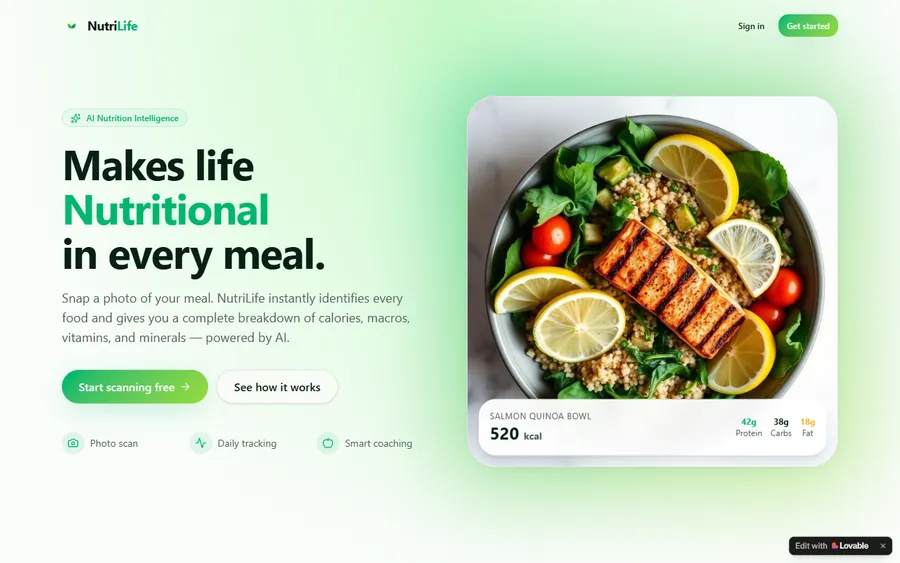
An AI nutrition coach that reads what you eat and works you toward a target.
AI and ML
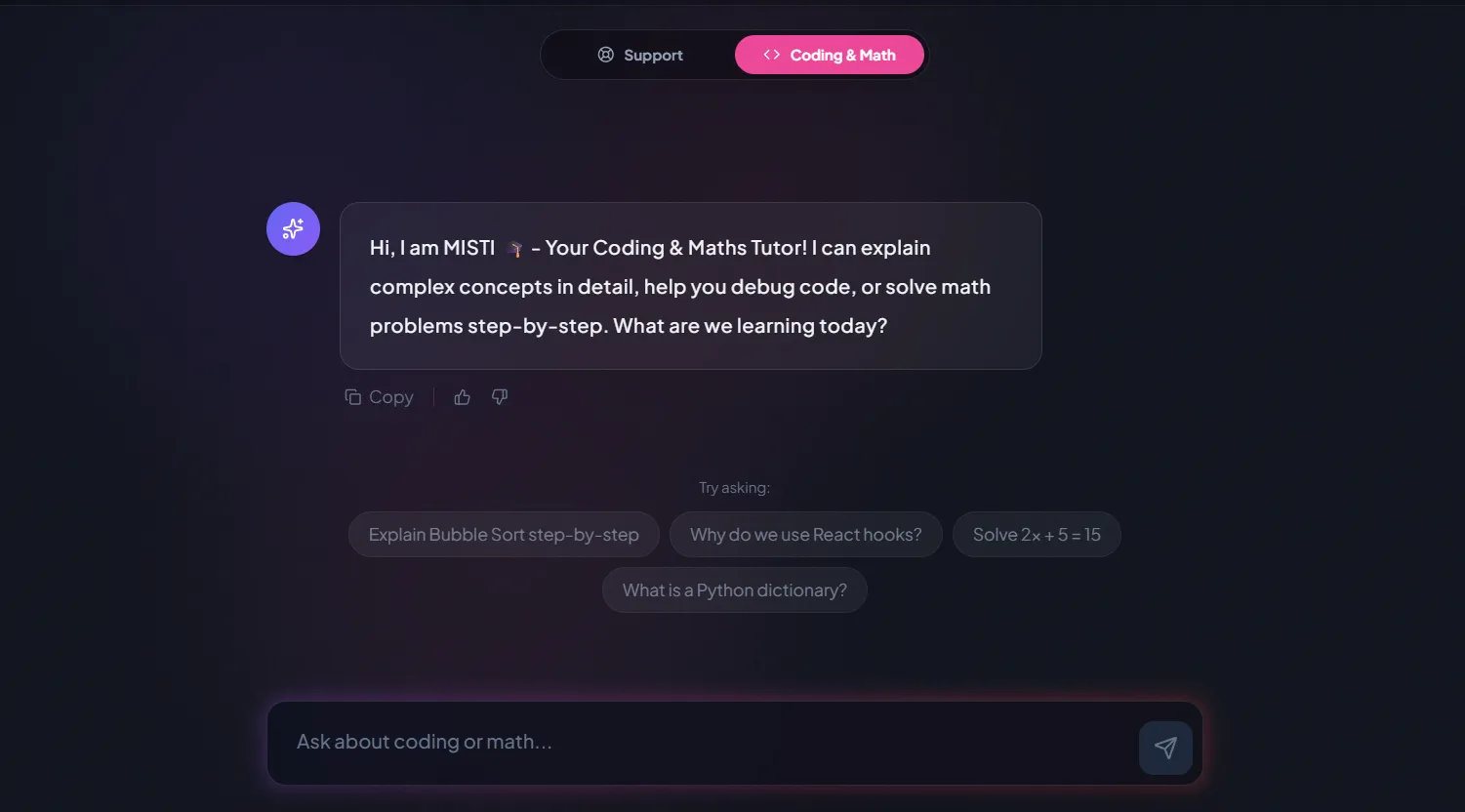
A chatbot that answers mathematics and programming questions, built and deployed by a student.
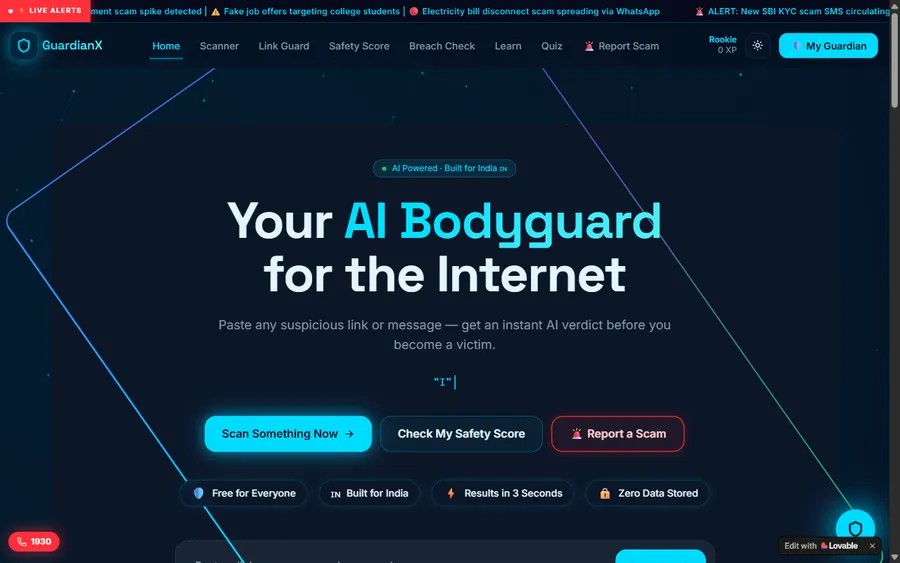
AI and ML
An assistant that helps a young person recognise unsafe situations online.
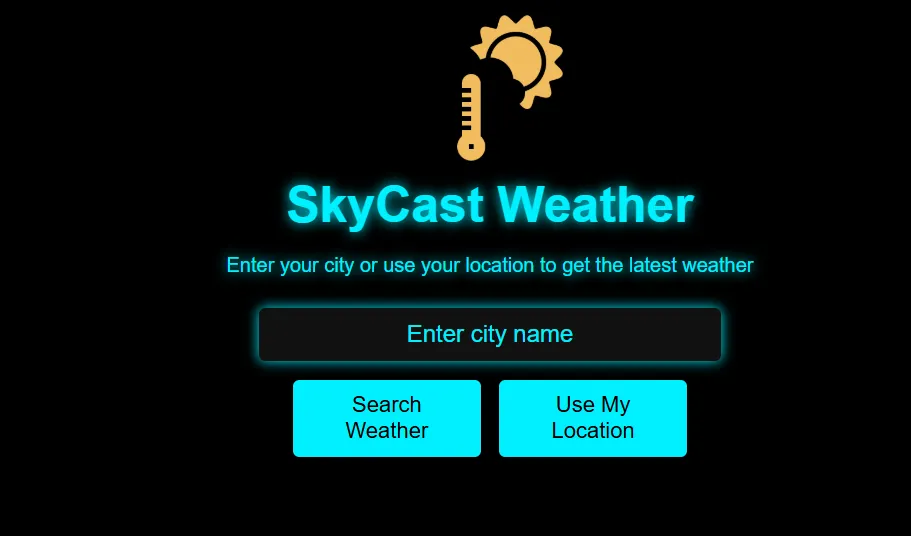
Web app
A weather forecasting site with live conditions for any location.
Fees
Monthly, in US dollars, at the same rates for every country outside India. There is no separate Dutch price, no enrolment fee and no contract for the year. The Copilot Studio courses are one to one only and use that rate.
Free first class
USD 0
no card required
Group batch
USD 100
a month, billed in US dollars
One to one
USD 150
a month, billed in US dollars
What families say
Reproduced from Google as their authors wrote them. We do not write, edit or pay for reviews.
★★★★★
"The one step solution for my son. Modern Age Coders make learning coding so simple that kids love it. The teachers explain complex concepts clearly with practical exercises and interactive content."
Ria Mukherjee
Parent
★★★★★
"Modern Age Coders has been a game-changer for me. I struggled to grasp IT concepts and coding before joining, but their classes transformed everything. I can now confidently write complex programs with ease."
Samriddha Mondal
Student
★★★★★
"One of the most wonderful education centres out there. Education is not limited to school syllabus but focuses on skill development."
Vansh Agarwal
Student
★★★★★
"My child Dhairya is really enjoying the Modern Age Coders classes. This is his first online class and he eagerly looks forward to it. I can already see his improvement, and the teachers are very cooperative."
Sonam Oswal
Parent of Dhairya
★★★★★
"Modern Age Coders have wonderful teachers who teach in a clear, easy and practical way. The teacher boosts students' confidence and inspires them to learn without hesitation."
Sonu Goyal
Parent
★★★★★
"I highly recommend this computer coding class! The teachers are incredibly knowledgeable and passionate about coding."
Ritu Kedia
Parent
Questions from Dutch families
Because using an AI tool and building with code are different skills. CBS found that 34.0 percent of Dutch 12-to-18-year-olds made text, video or images with AI in 2024. Far fewer can write a program, train a model or check what an AI tool produced. Those skills last longer than any single tool.
No. The national rule, in force in secondary schools since 1 January 2024, concerns phones in the classroom. Our lessons happen at home on a laptop or desktop, outside school hours.
Under Dutch law a parent or guardian is involved in consent for many online services until a child turns sixteen. We always speak with the family before a lesson is booked, and a parent decides whether a teenager continues after the free lesson.
Usually Python. It is readable, widely used and the language of data and AI. Java suits a teenager heading for computer science or AP Computer Science A, and JavaScript suits one who wants to build for the web.
On the coding agents course, yes, on their own account and within each tool's age rules. On every other course the teenager writes the code themselves first, which is the point.
It can sit alongside it and often goes further. For a teenager whose school does not offer informatica, it provides the subject. We follow what a teenager can do rather than the school programme.
Not at all. Lessons are in English and teenagers are placed by ability, whether they follow IB, IGCSE, an American curriculum or the Dutch system.
USD 100 a month for a place in a group and USD 150 a month for one-to-one lessons, billed in US dollars, with no joining fee and no yearly contract. The first lesson is free.
After school, in the early evening or at the weekend, Dutch time. Teachers are three and a half hours ahead in summer and four and a half in winter, and the regular slot is agreed at the free lesson.
We call a parent at a Dutch hour to arrange the free lesson. Nothing is charged and nothing is booked until the family has seen that lesson and decided.
Elsewhere on this site
Pages that go deeper into one subject or one place.
The global page on learning AI as a teenager, from Python to models.
Java for teenagers, including preparation for AP Computer Science A.
How teenagers can learn to use and build AI agents responsibly.
The national academy page, with the informatica figures for Dutch schools.
The country page, with every city and province page listed.
Machine learning worked on published Dutch data.
Start here
Leave a parent's number and we will call at a Dutch hour. The first lesson is taught by a real teacher on real material, and by the end of it we know where your teenager should start.
Want to read more first? See the full course list, how we teach, and the coding roadmap.
WhatsApp us · +91 91233 66161 · contact@modernagecoders.com
WhatsApp is free from a Dutch phone and usually quickest. Our number is Indian; we have no office or premises in the Netherlands.