PY / YOUNG / 01
Python and AI for Kids
Typed Python and a first learning program.
Open the syllabusIreland · Python · Ages 6 to 67
Python is the language most people in Ireland should learn first, and the reason is not fashion. It reads almost like English, it is what the machine learning world runs on, and, usefully for anyone here, it is the language Ireland's own public data is built for. The Central Statistics Office publishes its statistics through a portal that hands out data in formats designed to be read by code, and the CSO itself says it uses open-source Python libraries in statistical production. So an Irish learner does not have to practise on invented examples. They can pull real population figures into a program in their first month, and discover, in their second, why those figures are harder to add up than they look. This page explains how we teach Python, live and in small groups, from six year olds writing their first lines to adults automating a working week.
Live Python teaching since 2020 · 10,000+ students · taught on real data, not toy examples
In short
Python suits Irish learners of any age: readable enough for a nine year old, powerful enough for professional data work, and the language Ireland's public statistics are served up for. We teach it live online in groups of five to ten placed by level, or one to one, from first programs through functions and files to reading data straight from the Central Statistics Office and training a first model. Learners practise on real Irish datasets, which is where the important lessons live, and the traps in them are taught deliberately. The first class is free; a place afterwards is USD 100 a month in a group or USD 150 a month one to one.
Start here
The same language taught three ways, because a nine year old and a working adult need different first hours. Each card opens its syllabus.
PYTHON / 01
For children of about nine and up: typed Python through puzzles and small games, with a first program that learns from examples.
Open the syllabus →
PYTHON / 02
The whole language for secondary students, until writing a program from a blank file feels ordinary rather than daunting.
Open the syllabus →
PYTHON / 03
For college students and adults: from the first line to files, APIs, testing and the habits that make code worth keeping.
Open the syllabus →Why Python here
Three practical reasons, one of them specific to this country.
A line of Python usually says what it does. Children can read a program aloud and make sense of it, which matters enormously at the start.
The same language covers a first game, a data analysis, a website and a machine learning model, so nothing has to be unlearned at the next step.
The CSO's portal serves data in formats meant to be read by code, and the CSO says its own statistical work uses open-source Python libraries.
The CSO describes data.cso.ie as "the CSO's statistical database and open data portal, powered by PxStat", and says it lets users "automate your processes by reading data via API queries", offering JSON-stat, PX, XLSX and CSV.
That system replaced the older StatBank from 1 December 2020, which is worth knowing because plenty of blog posts and textbook examples still point at the retired one.
There is a live community here too. Python Ireland, registered as Python Ireland Developers CLG with CRO number 559983, runs meetups on the second Wednesday of every month.
Its conference, PyCon Ireland 2026, takes place in Dublin on Saturday 21 November 2026, with tracks on Python Security and on AI with Python. The date moved: it had been set for 17 October at Trinity College Dublin until the venue could no longer host it. PyCon Ireland describes itself as "Ireland's largest gathering of Python enthusiasts".
Sources, read 16 September 2026: CSO PxStat user guide; CSO, Port Visits Using Real-Time Shipping Data, methods; python.ie and 2026.pycon.ie. We have no connection with Python Ireland.
Irish data in Python
This is a lesson our students reach within a few months, and it changes how they see the language.
| Thing | Detail |
|---|---|
| Portal | data.cso.ie, the CSO's open data portal, running on PxStat |
| Formats | JSON-stat, PX, XLSX and CSV, chosen by one segment of the web address |
| Method | ReadDataset, documented on the CSO's own PxStat wiki, with anonymous access |
| Reading it in Python | The JSON-stat site names two libraries, pyjstat and jsonstat.py; plain requests and pandas also work |
| History | PxStat replaced StatBank from 1 December 2020 |
The exercise is small: fetch one table, print the population of Ireland, then plot it by year. Learners who have only ever opened a spreadsheet find it startling that four lines of code can reach a national statistical office and come back with the answer.
It also introduces a real format. JSON-stat stores its numbers in one long flat list, with the dimensions described separately, so the learner has to work out how the position of a value maps to a year, an age group and a sex. That is a proper piece of programming, and it is not made up.
From there the work becomes ordinary professional practice: cache the file rather than hammering the API, check what changed when the table is updated, and read the notes attached to it.
The population table carries one such note, and it is a good example of why they matter: "The figures for 2017 - 2022 have been revised following a detailed analysis of the Census 2022."
Sources: the CSO's PxStat API wiki, json-stat.org tools, and the PEA01 table itself, read 16 September 2026.
The lesson that sticks
Table PEA01 gives population estimates each April. Load it, group by year, add up the values, and for 2026 you get 42,800.1 thousand people. Ireland has about five and a half million. Nothing is broken; the learner asked the wrong question.
| What you add | Result | Comment |
|---|---|---|
| The official All ages row, both sexes | 5,525.6 | The right answer |
| All 27 age rows, both sexes | 21,400.0 | Nearly four times too big |
| Every row, all ages by all three sex categories | 42,800.1 | Almost eight times too big |
| Only the 18 non-overlapping five-year bands | 5,525.5 | Matches the official figure, to rounding |
The table holds totals, broad bands and five-year bands together: Under 1 and 1 to 4 both sit inside 0 to 4, and 15 years and over covers most of the rest. Adding them counts the same people repeatedly.
Both sexes is not a third group; it is the sum of male and female. Include it and every person is counted twice again, which is how four times becomes eight.
The table has 114 empty cells, all in the 0 to 4 years band, across 38 years between 1950 and 1995. In those years only the Under 1 and 1 to 4 rows carry values.
Our students do this deliberately. They write the naive version, get an absurd answer, then work out which rows are subtotals and rebuild the sum from the eighteen bands that do not overlap. When the total lands on 5,525.5 against the official 5,525.6, the lesson is done.
Teenagers and adults go further and write a check into the code: if the reconstructed total does not match the published one, the program stops rather than publishing a chart.
This is the single most transferable hour in the course. Every real dataset has subtotals hiding among its rows, and no library will warn you.
It is also why we teach on public data. A learner who has been burned once by a table like this reads the notes on every dataset afterwards, which is exactly the habit we want.
Source: CSO table PEA01, Population Estimates (Persons in April), read through the CSO API on 16 September 2026. The sums above are our own arithmetic on the published table, which is exactly the exercise students repeat.
The rungs
Ages vary enormously; the order does not. Children take the first rungs slowly and adults take them in weeks.
| Rung | The learner can |
|---|---|
| 1. First programs | Write, run and fix programs with variables, loops and conditions |
| 2. Structure | Use functions, lists and dictionaries, and split a program into parts |
| 3. The outside world | Read and write files, handle errors, and fetch data from an API |
| 4. Analysis | Clean a real dataset, check it against a known total, and chart it |
| 5. Beyond | Train a first model, automate a task, or build a small web application |
Around rung three for most adults, because that is where Python starts doing real jobs: renaming a thousand files, pulling a report, checking a spreadsheet.
Where each rung leads next is set out on the coding roadmap.
Some adult learners want a certificate at the end. We teach towards the standard Python certifications, though we are honest that a portfolio matters more to most employers.
For where Python leads in analysis, see data science in Ireland.
The catalogue
Grouped by stage. The free first class decides which course and which rung.
PY / YOUNG / 01
Typed Python and a first learning program.
Open the syllabusPY / YOUNG / 02
The language in full, over the school years.
Open the syllabusPY / YOUNG / 03
Python projects built with AI help, read line by line.
Open the syllabusPY / ADULT / 01
Zero to confident, including files and APIs.
Open the syllabusPY / ADULT / 02
Web applications in the language you know.
Open the syllabusPY / ADULT / 03
Scripts that take the repetition out of a week.
Open the syllabusPY / DEPTH / 01
The standard Python certifications, prepared properly.
Open the syllabusPY / DEPTH / 02
The associate level, for people who want the badge.
Open the syllabusPY / DEPTH / 03
Where Python meets real analysis.
Open the syllabusHow the classes run
Teaching is live rather than recorded, with teachers working from India at a weekly hour fixed in Irish time. India runs one clock all year and Ireland runs two, so the difference is four and a half hours in the Irish summer and five and a half in the winter. Children usually take an after-school slot and adults an evening one.
After school
Children and teenagers, Irish time.
Evening
Adults and college students.
Weekend
Longer sessions for data projects.
The learner writes actual Python with a teacher, who then recommends a rung and a course.
Learners at the same rung, so nobody is lost and nobody is bored.
For a focused goal, an unusual schedule, or a learner who prefers privacy.
Irish public data appears as soon as a learner can read a file, because it teaches more than invented examples.
Students learn to make a program verify its own totals rather than trusting them.
Programs live in the learner's own repository, so a year of progress is visible.
Student work
Four things our students built and put online. The full collection is on the student labs page.
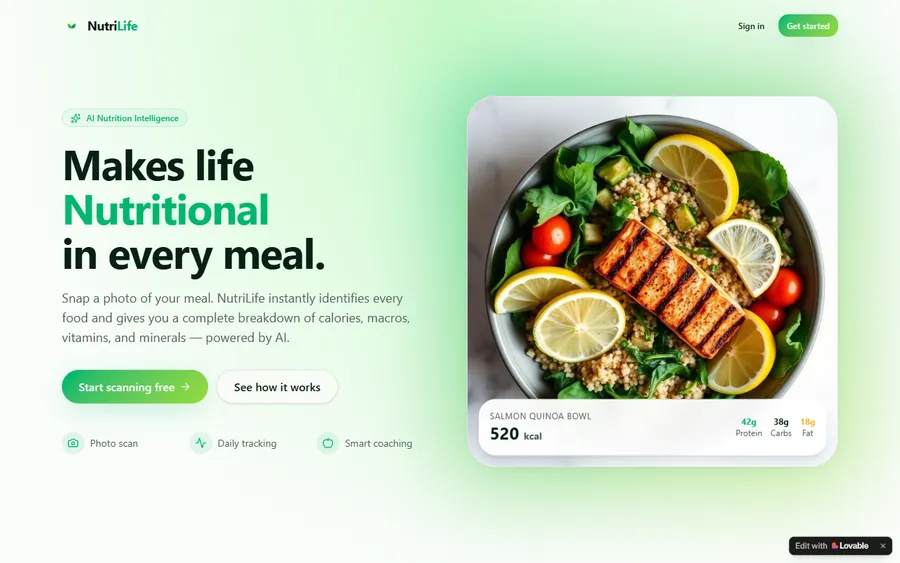
AI and ML
An AI nutrition coach that reads what you eat and works you toward a target.
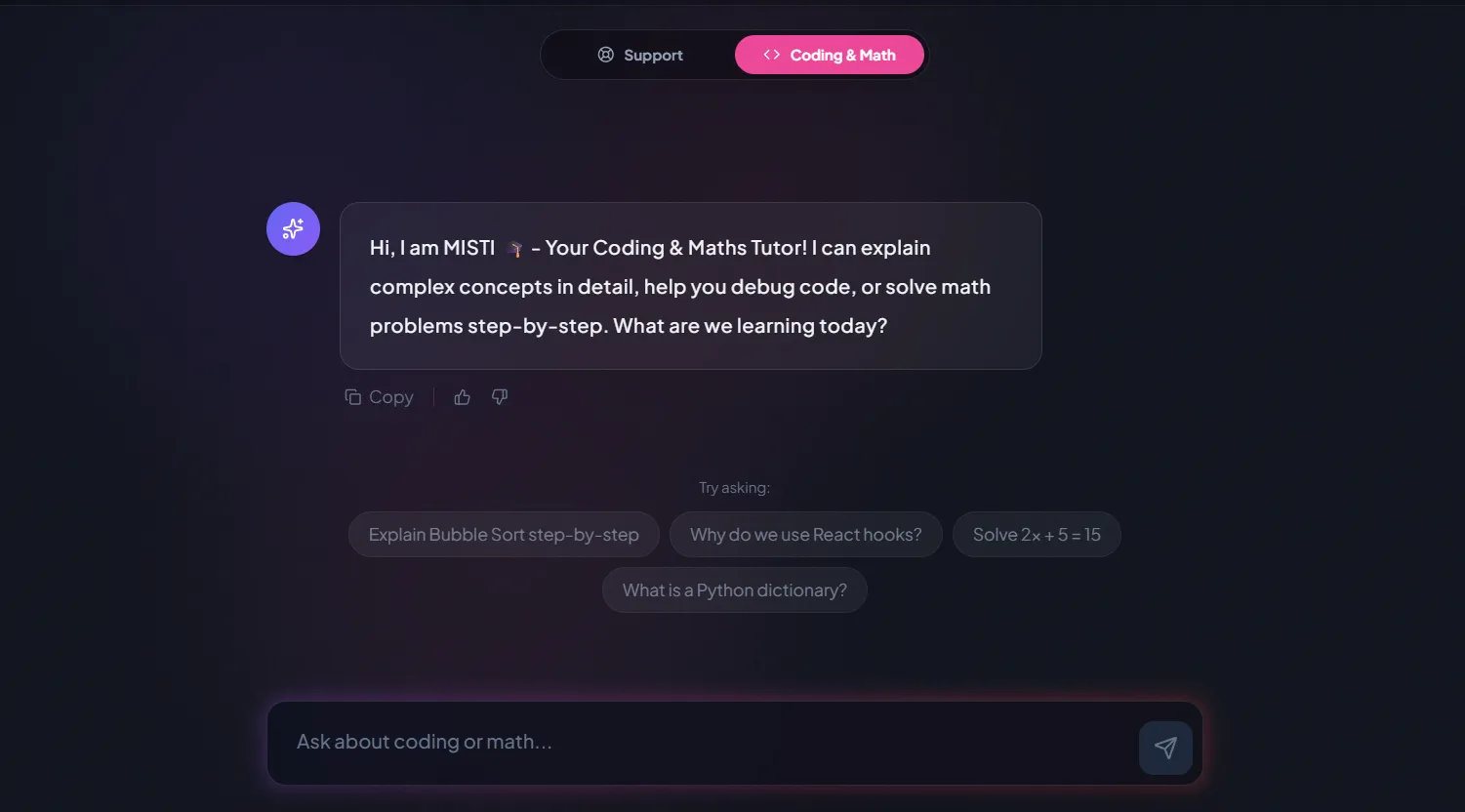
AI and ML
A chatbot that answers mathematics and programming questions, built and deployed by a student.
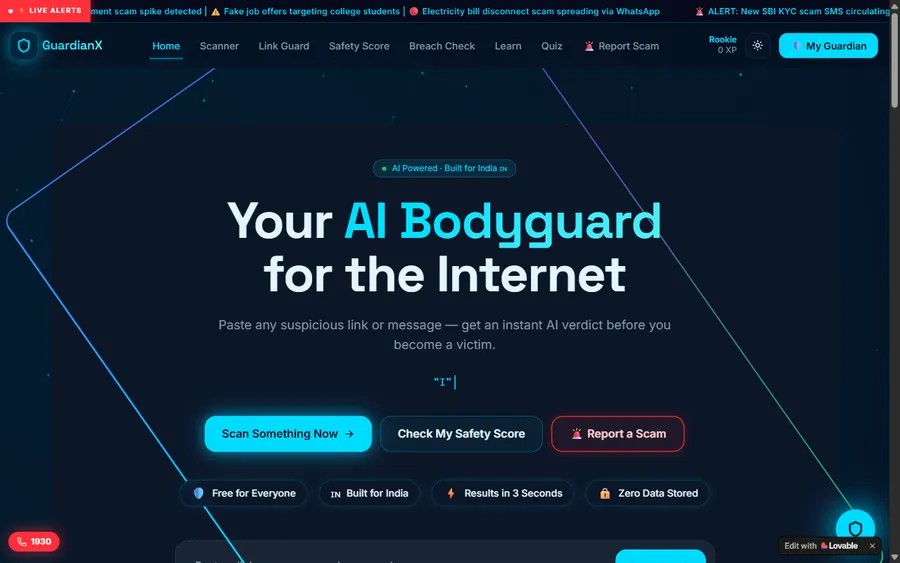
AI and ML
An assistant that helps a young person recognise unsafe situations online.
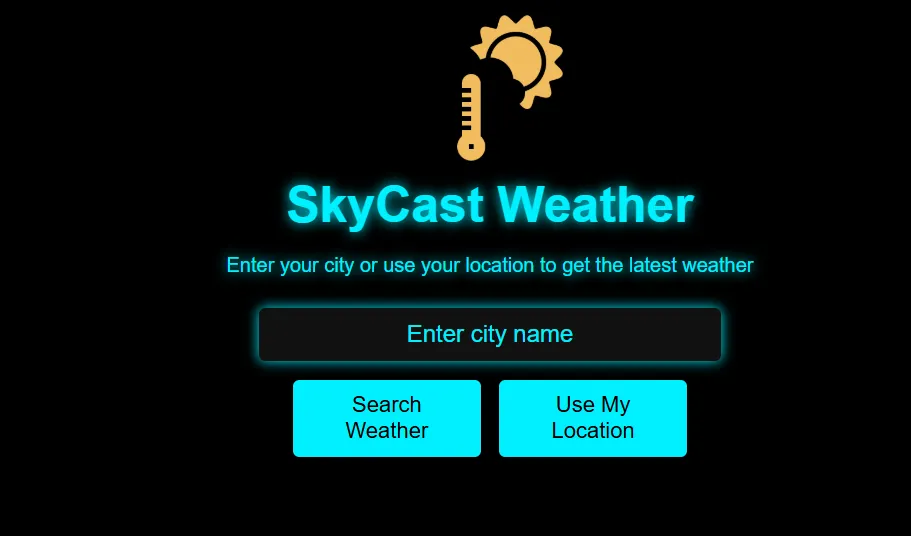
Web app
A weather forecasting site with live conditions for any location.
Fees
One monthly price in US dollars, the same in every country apart from India, whatever the age of the learner or the course. No registration fee and nothing to commit to beyond the month.
Free first class
USD 0
no card required
Group batch
USD 100
a month, billed in US dollars
One to one
USD 150
a month, billed in US dollars
What families say
Our reviews on Google, unaltered and unpaid, from students and parents.
★★★★★
"The one step solution for my son. Modern Age Coders make learning coding so simple that kids love it. The teachers explain complex concepts clearly with practical exercises and interactive content."
Ria Mukherjee
Parent
★★★★★
"Modern Age Coders has been a game-changer for me. I struggled to grasp IT concepts and coding before joining, but their classes transformed everything. I can now confidently write complex programs with ease."
Samriddha Mondal
Student
★★★★★
"One of the most wonderful education centres out there. Education is not limited to school syllabus but focuses on skill development."
Vansh Agarwal
Student
★★★★★
"My child Dhairya is really enjoying the Modern Age Coders classes. This is his first online class and he eagerly looks forward to it. I can already see his improvement, and the teachers are very cooperative."
Sonam Oswal
Parent of Dhairya
★★★★★
"Modern Age Coders have wonderful teachers who teach in a clear, easy and practical way. The teacher boosts students' confidence and inspires them to learn without hesitation."
Sonu Goyal
Parent
★★★★★
"I highly recommend this computer coding class! The teachers are incredibly knowledgeable and passionate about coding."
Ritu Kedia
Parent
Questions
Usually around nine or ten, once typing and reading are comfortable. Younger children start with block coding and move across when they are ready.
For most people, yes. It is readable, it does useful work quickly, and it leads directly into data analysis, automation and AI.
Because real data has problems invented examples do not, and the CSO publishes plenty of it in formats built for code. Learners meet subtotals, blanks and revisions early.
Nothing complicated. Beginners can start in the browser, and your teacher will set up Python properly on your own machine when the time comes.
Not to start. Ordinary school arithmetic carries you a long way, and the maths that matters later is taught as it is needed.
Yes. Django and Flask are widely used for web applications, and our web course teaches one of them properly rather than in outline.
They can help for some jobs, and we prepare students for the standard ones. Most employers still ask what you have built before they ask about certificates.
The first class is free. Then a group place is USD 100 a month and one-to-one lessons are USD 150 a month, in US dollars, with no registration fee.
After school, in the evening or at weekends, at a weekly hour set in the free class. Our teachers are four and a half hours ahead of Irish time in summer and five and a half in winter.
We ring you at a sensible Irish hour and arrange the free first class. Nothing is charged unless the learner continues.
Elsewhere on this site
Pages that build on the language.
Analysis on Irish open data.
Models that actually get evaluated.
When Python meets the web.
Python in the school years.
Starting as an adult.
The national page.
Start here
Leave a number and we will ring at a time that works in Ireland. In the free class the learner writes actual Python with a teacher and finds out which rung to start on.
Want to look around first? There is how we teach, every course syllabus, and projects our students published.
WhatsApp us · +91 91233 66161 · contact@modernagecoders.com
WhatsApp is free from an Irish phone and usually the quickest way to us. The number is Indian, as our teachers are based in India; we keep no office in Ireland.