STUDENT / CORE / 01
Python Masterclass
Python from first principles to advanced features, for students whose degree assumed it or skipped it.
Open the syllabusNetherlands · University and hbo · Live online
Three in four Dutch students aged 18 to 25 now use AI for their studies, the national statistics office reported in 2026. When nearly everyone has the same assistant, it stops being an advantage. What sets a student apart is what the assistant cannot do for them: understanding data structures and the cost of an algorithm, debugging code nobody else can see, reading a pull request, working in a team through Git, and building something real enough to show an employer. Those are the skills technical interviews and internships test, and many degree programmes teach them only in passing. This page is for students at Dutch universities and hogescholen, Dutch and international, who want those skills alongside their degree, taught live online in English, in the evenings, at weekends or one to one around a changing timetable.
Live teaching since 2020 · 10,000+ students · every lesson taught in real time
In short
Modern Age Coders teaches coding live online to students at universities and hogescholen in the Netherlands. The focus is on the skills an AI assistant cannot supply: data structures and algorithms, debugging and reading code, Git and team workflows, and projects that stand up in an interview, alongside software, data science and AI tracks for students heading into those fields. Students are placed by ability, in groups of five to ten or one to one, and lessons fit around lectures and exams. Your opening lesson costs nothing; from then on a seat in a group runs at USD 100 a month, and private tuition at USD 150.
Start here
One for the interview, one for the portfolio, one for the student heading into AI. Each opens its own page with syllabus, timetable and fee.
STUDENT / 01
The material technical interviews test, taught as reasoning: how structures behave, what an operation costs and how to explain a solution out loud.
Open the syllabus →
STUDENT / 02
A deployed application with a front end, a server and a database of its own, the kind of project an internship interviewer asks to see.
Open the syllabus →
STUDENT / 03
The complete machine learning route, with evaluation taken as seriously as training, for students whose degree touches AI only lightly.
Open the syllabus →Students and AI
The figures come from CBS, the national statistics office, in its survey of AI in Dutch society published on 25 February 2026. They describe 2025.
Of 18-to-25-year-olds in education, 74 percent said they used AI for their studies. Across all adults the figure for education or training was 10 percent, and 43 percent of people in paid work used AI in their jobs. Students, in other words, are the heaviest users of AI for learning in the country by a wide margin.
That changes what counts as an advantage. An essay drafted with AI, or code generated by it, is now the baseline. The student who stands out can explain why the code works, find the bug the assistant introduced, and design something the assistant was never asked to design.
The same survey found real doubts alongside the use: 62.5 percent of adults were worried about privacy risks from AI, and 69.5 percent about the spread of fake news. Students who hand their coursework to an AI tool without understanding it carry both risks into their degrees.
Our student courses therefore start from understanding. A student writes the data structure before using the library, reads the generated code line by line before submitting it, and keeps every project in Git so the history shows the thinking, not only the result.
| Task | AI assistant | Still the student's job |
|---|---|---|
| Writing boilerplate code | Fast and usually right | Knowing whether it fits the design |
| Explaining an error message | Often helpful | Finding the bug the error points away from |
| Choosing a data structure | Suggests a common one | Knowing what each operation costs at scale |
| Working in a team | Can draft a commit message | Branching, reviewing and resolving conflicts in Git |
| A technical interview | Not in the room | Reasoning out loud, without help |
Source: CBS, AI in de samenleving: ervaringen en opinies, 25 February 2026, read 15 September 2026. The table is our own summary for students, not a CBS finding.
International students
Many of our student learners in the Netherlands came from abroad to study. Two recent documents describe their situation.
| Measure | Figure | Change on the year before |
|---|---|---|
| International students enrolled, hbo and wo | 129,764 | 133 fewer, down 0.1 percent |
| New international students | 48,139 | 180 fewer, down 0.4 percent |
| New: university master's | 19,808 | up 559 |
| New: university bachelor's | 16,852 | down 669 |
| New: hbo bachelor's | 8,952 | down 265 |
| New: hbo master's | 2,527 | up 195 |
| International students in university engineering (Techniek) | 16,709 | up 11 percent |
| Largest country of origin, Germany | 18,241 |
Nuffic, the Dutch organisation for internationalisation in education, reports that the number of international students fell for the first time since 2006, by a small margin, and calls it a break in the trend. New enrolments from China fell by 27.5 percent, to 1,993. Engineering at university level went the other way, up 11 percent. The four types of new enrolment in the table add up exactly to the 48,139 total.
For a student from abroad, the practical point is that technical fields remain in demand even as overall numbers level off.
In parliament, the Wet internationalisering in balans, bill number 36.555, would set rules on the language of teaching in higher education, on an efficient range of programmes and on access, including the principle that teaching is in Dutch unless there is good reason otherwise. At the time of reading it was still before the Tweede Kamer, with the latest step a government letter of 3 July 2025 on motions about the bill.
Whatever the outcome, our classes are taught in English and are open to students of every nationality, with no connection to any institution's language policy.
Sources: Nuffic, Voor het eerst lichte daling internationale studentenpopulatie, 11 June 2026; Eerste Kamer, wetsvoorstel 36.555. Read 15 September 2026. The status of the bill may change after that date.
Beyond the degree
Degree programmes differ widely in how much practical coding they teach. These are the gaps students most often ask us to fill.
Data structures and algorithms come first for most, because they are what internship and graduate interviews test and what many non-computing degrees skip. They are taught here as reasoning, with every operation's cost worked out, not as a list of patterns to memorise.
Git and GitHub come next. Almost every technical team works through them, and a student who can branch, review and resolve a conflict is ready for group projects and internships. The global page on AI and ML for college students covers the machine learning route in more depth.
Then a track: software development for students heading into engineering roles, data science for students in economics, the sciences or the social sciences, and AI for those who want to build models rather than use them. C++ for college students covers the systems route.
The city academy pages show how universities here approach AI, from Groningen and Utrecht to Eindhoven.
The rungs for students
Students often want to start at the top. The rungs below exist because each one makes the next honest: a model built without knowing data structures, or deployed without Git, falls apart under questions.
| Rung | Usually | What the student can show afterwards |
|---|---|---|
| 1. Python or Java fluency | First year | Clean programs written without an assistant |
| 2. Data structures and algorithms | First or second year | Solutions reasoned out loud, with their costs |
| 3. Git and team workflow | Alongside rung 2 | A repository history a reviewer can follow |
| 4. A track: software, data or AI | Second year onwards | An application, an analysis or a measured model |
| 5. Portfolio and interview practice | Before internships | Public work and the ability to explain it |
A student who cannot write a loop, a function or a small class without help cannot judge what an assistant writes. The first rung is short for most students, but skipping it makes every later one shaky.
The complete order of subjects is on the coding roadmap.
Dutch programmes run in blocks or periods with exams at the end of each. Most students take two lessons a week and pause in exam weeks, and one-to-one lessons can move with the timetable.
Students writing a thesis with a technical part often take a short run of one-to-one lessons aimed at exactly that project.
The catalogue
Each card opens the full course with its schedule and fee. The free first lesson places the student on the right rung.
STUDENT / CORE / 01
Python from first principles to advanced features, for students whose degree assumed it or skipped it.
Open the syllabusSTUDENT / CORE / 02
Arrays to graphs, sorting to dynamic programming, with the reasoning interviews look for.
Open the syllabusSTUDENT / CORE / 03
Branching, pull requests, reviews and conflicts, the team skills group projects and internships assume.
Open the syllabusSTUDENT / SW / 01
Front end, back end and hosting together, finished as an application other people can actually use.
Open the syllabusSTUDENT / SW / 02
Modern front-end development from JavaScript fundamentals to production-ready React.
Open the syllabusSTUDENT / SW / 03
Core Java to Spring Boot, for students on computing degrees and those heading for back-end roles.
Open the syllabusSTUDENT / SW / 04
Dart and Flutter for cross-platform apps, a strong portfolio piece for a mobile-minded student.
Open the syllabusSTUDENT / AI / 01
Statistics, SQL, feature engineering and modelling, with a portfolio a hiring manager can assess quickly.
Open the syllabusSTUDENT / AI / 02
From classical methods to deep learning, with careful evaluation and deployment.
Open the syllabusSTUDENT / AI / 03
Language models from the inside, retrieval over your own sources, and agents designed so their mistakes surface in logs rather than in production.
Open the syllabusSTUDENT / AI / 04
Full stack, AI and algorithms built with AI assistance, and every line of the output read and tested.
Open the syllabusHow the classes run
Our teachers are based in India, where the clock never moves, so a student in Leiden or Enschede is three and a half hours behind them from the end of March to the end of October and four and a half behind for the rest of the year. Most students book an evening or weekend slot, set during the opening lesson and moved whenever a new block brings a new rooster.
Evening
After lectures, Dutch time, arranged with the teacher. The most common choice for students.
Weekend
Saturday or Sunday. Useful in weeks full of practicals and group work.
Daytime gaps
Where a timetable leaves a free afternoon and a teacher is available, often for one-to-one lessons.
You solve a real problem while the teacher watches your approach. That shows where to start better than your year of study does.
Students from several countries at the same level, a useful rehearsal for the international teams many graduates join.
For a thesis with a technical part, a specific project, an interview deadline, or a timetable that changes every block.
Lessons can pause during exam weeks and resume afterwards without losing your place.
The language of programming, of most Dutch master's programmes in technical fields, and of the tech industry here.
Everything goes into your own GitHub repository, with a history an employer can read.
Student work
A handful of the things our students have shipped and left running at public addresses. The full collection lives on the student labs page.
AI and ML
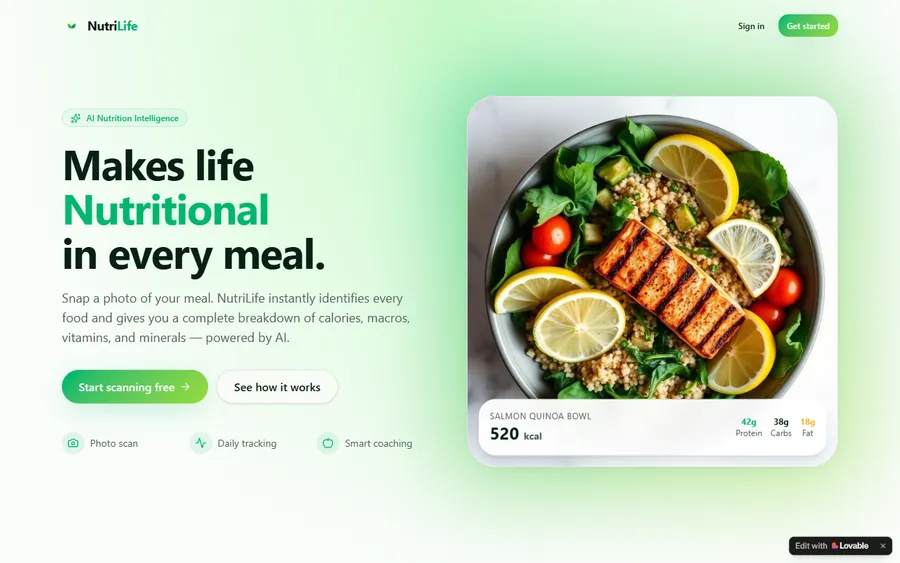
An AI nutrition coach that reads what you eat and works you toward a target.
AI and ML
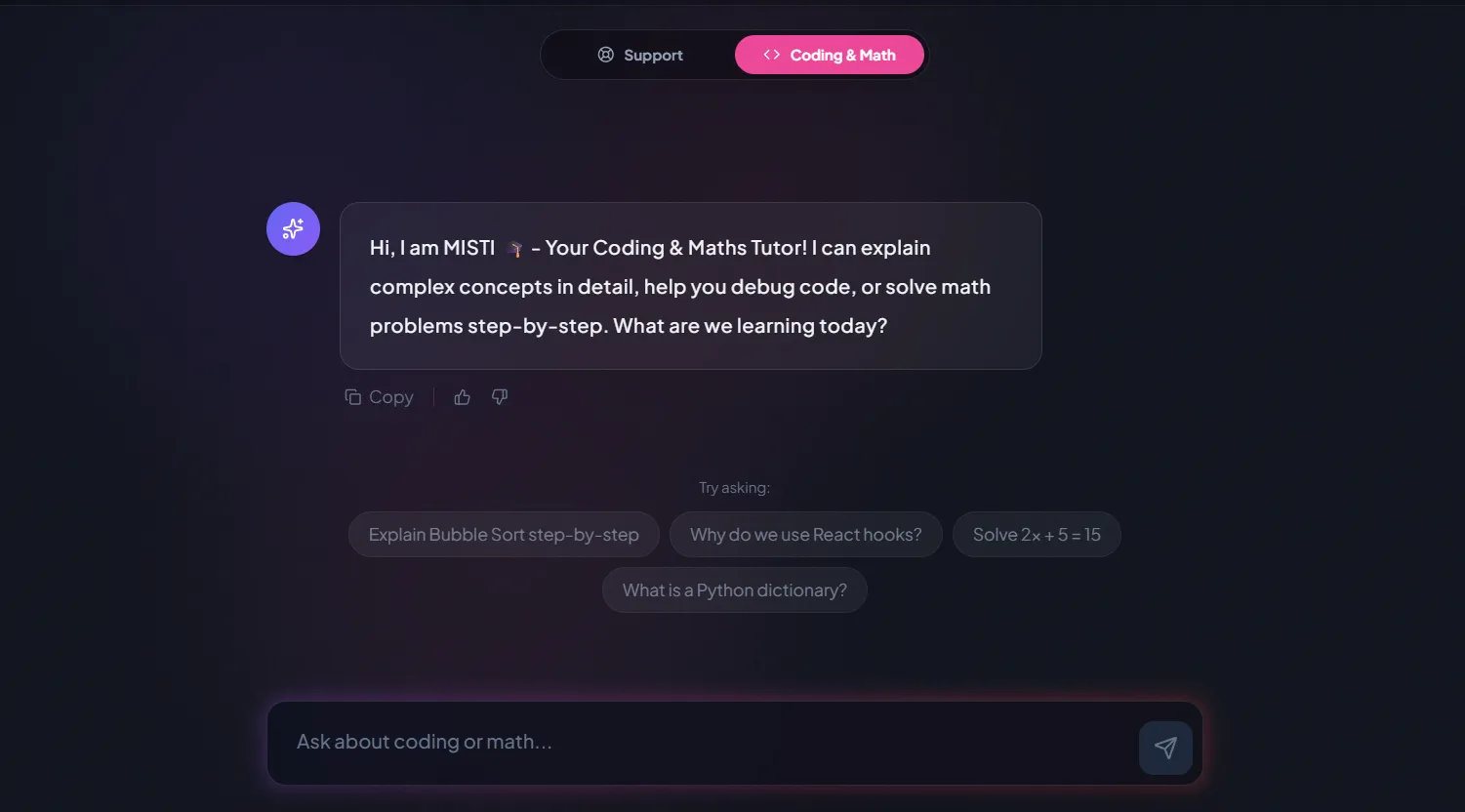
A chatbot that answers mathematics and programming questions, built and deployed by a student.
AI and ML
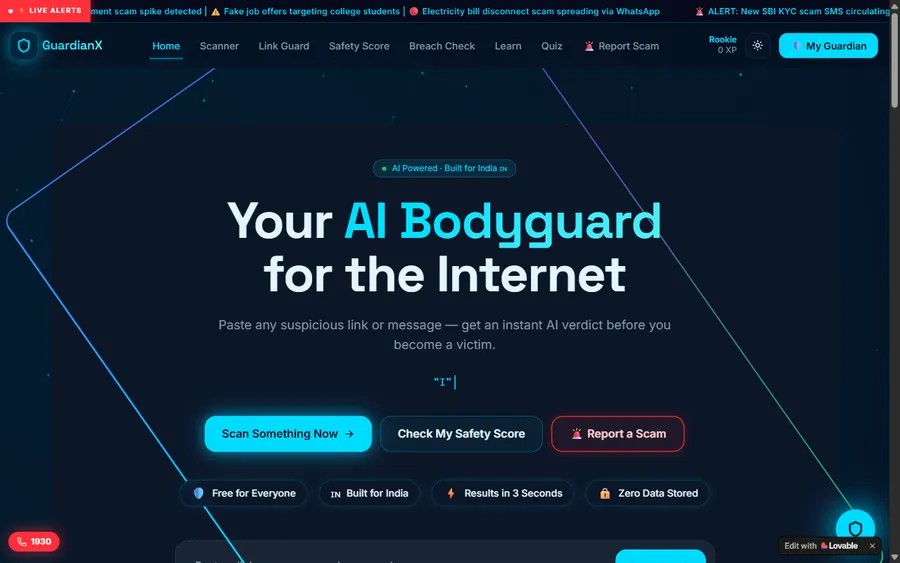
An assistant that helps a young person recognise unsafe situations online.
Web app
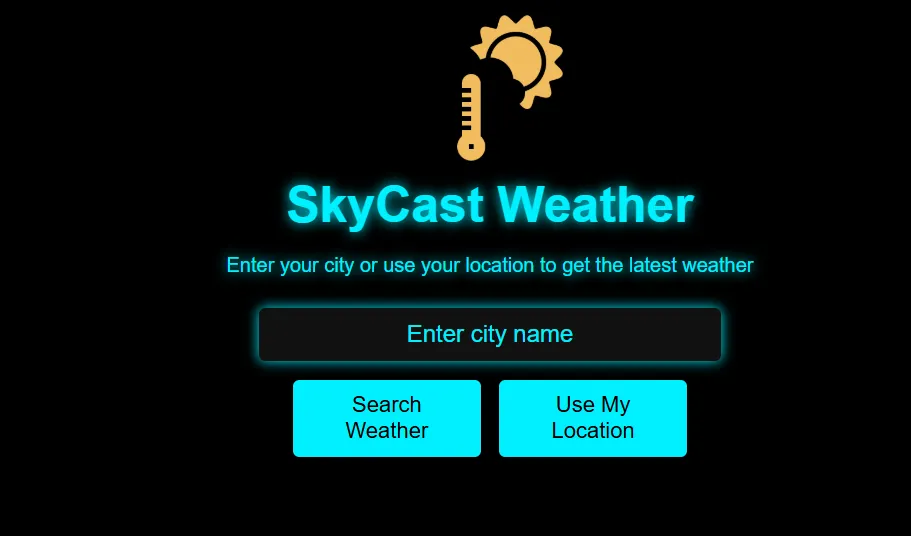
A weather forecasting site with live conditions for any location.
Fees
Monthly, in US dollars, at the same rates as every country outside India. Students here pay the international rate like everyone else, with no registration charge and no annual commitment. Copilot Studio is taught privately, so it carries the private rate.
Free first class
USD 0
no card required
Group batch
USD 100
a month, billed in US dollars
One to one
USD 150
a month, billed in US dollars
What families say
Straight from Google, in the words of the students and parents who left them; none were requested for payment or edited by us.
★★★★★
"The one step solution for my son. Modern Age Coders make learning coding so simple that kids love it. The teachers explain complex concepts clearly with practical exercises and interactive content."
Ria Mukherjee
Parent
★★★★★
"Modern Age Coders has been a game-changer for me. I struggled to grasp IT concepts and coding before joining, but their classes transformed everything. I can now confidently write complex programs with ease."
Samriddha Mondal
Student
★★★★★
"One of the most wonderful education centres out there. Education is not limited to school syllabus but focuses on skill development."
Vansh Agarwal
Student
★★★★★
"My child Dhairya is really enjoying the Modern Age Coders classes. This is his first online class and he eagerly looks forward to it. I can already see his improvement, and the teachers are very cooperative."
Sonam Oswal
Parent of Dhairya
★★★★★
"Modern Age Coders have wonderful teachers who teach in a clear, easy and practical way. The teacher boosts students' confidence and inspires them to learn without hesitation."
Sonu Goyal
Parent
★★★★★
"I highly recommend this computer coding class! The teachers are incredibly knowledgeable and passionate about coding."
Ritu Kedia
Parent
Questions from students
Because that is exactly why. CBS found 74 percent of Dutch 18-to-25-year-olds in education use AI for their studies. The advantage now lies in what AI cannot do for you: reasoning about algorithms, debugging, team workflows and explaining your work in an interview.
Yes. Many students in economics, the sciences and the social sciences take Python and data science with us, because their degree uses data but teaches little programming.
We can teach the programming and data skills a thesis needs, usually one to one and aimed at your project. We do not write coursework or theses for students.
No. Our classes are independent of any university and are taught in English to students of every nationality. The bill, 36.555, concerns the language of teaching at Dutch institutions and was still before the Tweede Kamer at the time of writing.
That is what the data structures and algorithms course is for: solving problems out loud, with their costs, the way interviews ask.
Yes. Most students pause during exams and pick up afterwards, and one-to-one lessons can move with each new block.
No. We quote public figures and pages, but we have no relationship with any university, hogeschool or student organisation.
A group seat is USD 100 per month and private lessons USD 150 per month, charged in dollars. Nobody signs up for a year, there is nothing to pay to join, and the opening lesson is free.
Usually after lectures or at the weekend. India is three and a half hours ahead of Dutch summer time and four and a half ahead of winter time.
A member of the team rings you back at a Dutch hour to fix the opening lesson. Payment and a regular slot only come up after you have sat that lesson and chosen to carry on.
Elsewhere on this site
Pages that go deeper into one track or one place.
The machine learning route for students, in more depth.
Systems programming for students on technical degrees.
The country-wide academy, with the informatica figures and the Groningen AI factory.
What a university AI first year asks of a student.
For graduates and working adults.
Every Dutch city and province page in one place.
Start here
Send us a phone number and a member of our team rings back during Dutch working hours or early evening. In the lesson itself a teacher sets you a genuine problem, and when it ends you know which rung to begin on.
Rather browse before booking? The coding roadmap shows the order of subjects, how we teach explains a lesson, and the course list has every syllabus.
WhatsApp us · +91 91233 66161 · contact@modernagecoders.com
Messaging on WhatsApp costs a Dutch student nothing and is the quickest route to a reply. It is an Indian number: there is no campus, office or address of ours anywhere in the Netherlands.