AGENTS / BASE / 01
Python Masterclass
Python to an advanced level, the language most agents are built in.
Open the syllabusNetherlands · University and hbo · Live online
Every student in the Netherlands now works under written rules for artificial intelligence. At the University of Groningen they fit on one page: use AI as a study tool if you like, say so when it produces new content, name the tool and its version, and never submit work that no longer reflects what you yourself know and can do. At the University of Amsterdam the starting point is that students must still demonstrably reach their learning goals on their own. Those rules are sensible, and they point to an important distinction. Using an agent to do your coursework may break them. Building an agent, understanding how it plans, which tools it calls, where it goes wrong and how to show your own contribution, is a subject worth studying in its own right. This page is for students who want that second thing, taught live online and in English.
Live teaching since 2020 · more than 10,000 students · agents taught by live teachers, step by step
In short
Modern Age Coders teaches students in the Netherlands to build AI agents, programs that take a goal, plan their steps and use tools, as a subject of study rather than a shortcut through coursework. Students learn how language models work, how agents call tools and retrieve documents, how to evaluate what an agent does and how to log and disclose it, in line with the kind of rules Dutch universities now publish. Lessons are live, in English, in groups of five to ten or one to one. The first lesson is free; after that a group place is USD 100 a month and one-to-one tuition USD 150, and the Copilot Studio course for students is one to one only.
Start here
One for building agents from the model up, one for building agents inside Microsoft tools, one for directing AI coding agents. Each opens its own page with syllabus, format and fee.
AGENTS / 01
How language models work, how retrieval grounds them in your own documents, and how an agent is built so that every step it takes is logged and visible.
Open the syllabus →
AGENTS / 02
Agents built in Microsoft Copilot Studio, the platform many employers use. Taught one to one only.
Open the syllabus →
AGENTS / 03
Directing AI coding agents through real software and reviewing every change, on your own tool subscriptions.
Open the syllabus →University rules
Two examples, read at the universities' own pages. Every institution and often every course has its own rules, so a student must always check theirs; these show the general shape.
| Rule | What it says, in summary |
|---|---|
| Use as a tool | AI tools may be used as an aid for general functions: as a study tool, an assistant or input for your own work, such as brainstorming, summarising, improving grammar, translating or self-study |
| Disclose new content | When generative AI creates new content, always say so, giving the tool's name and version and the purpose and manner of use |
| Course rules | Any additional rules for a course are communicated before the course begins |
| What counts as fraud | Work that no longer reflects your own knowledge and skills, or AI output submitted without proper acknowledgement or with incorrect disclosure |
| Detection tools | Scores from AI-detection tools are not evidence of fraud; examiners remain responsible for judging authenticity |
The University of Amsterdam's policy framework, updated on 3 June 2025, starts from the principle that students must still demonstrably achieve their learning goals independently. It asks programmes to explore actively what role generative AI can play in the curriculum, and leaves room for faculties and programmes to translate the policy into their own teaching.
Together the two show the shape of Dutch university policy: AI as a legitimate aid, openness about its use, and the student's own learning as the thing being assessed.
Notice the rule on detection tools. Groningen states plainly that a detector's score is not proof of fraud. That is an honest acknowledgement that such tools can be wrong, and a reminder that the best protection for a student is not hiding AI use but documenting it.
We have no connection with either university. Rules change and differ by course; always follow the ones that apply to you.
Sources: University of Groningen, basic rules for AI in education; University of Amsterdam, beleidskader en richtlijnen GenAI in het onderwijs. Read 15 September 2026. This is a summary, not advice on any particular course.
What you build
The distinction matters. The first can put a student on the wrong side of their university's rules. The second is exactly the kind of work those rules encourage: understanding the tool and being open about it.
Students build an agent in Python that receives a goal, breaks it into steps, calls tools such as a search function or a calculator, and reports what it did. Every step is written to a log, so the agent's reasoning can be inspected afterwards.
Students write a small set of tasks with known answers and measure how often the agent succeeds, where it fails and how it fails. An agent without an evaluation is a demonstration, not a result.
Every project ends with a short note: which models and versions it uses, what the student wrote and what was generated, and what the agent must not be trusted with. It is the same habit Groningen asks of students, practised on their own work.
| Activity | Usually fine | Needs care |
|---|---|---|
| Asking an assistant to explain a concept | Yes, as a study aid | Check the explanation against course material |
| Generating text or code for an assignment | Only if the course allows it | Disclose tool, version and use; make sure the work is still yours |
| Building an agent as your own project | Yes, it is your work | Disclose the models used and log what the agent did |
| Relying on an AI detector | Not as proof | Keep your own drafts and logs instead |
The table is our general guidance, based on the rules summarised above. It is not a ruling on any course; your programme's rules always come first.
Where it leads
Agents are becoming ordinary tools at work. A student who can build one, test it and explain it is ahead of most graduates.
The foundations come first: Python, Git and some data structures. The college students page covers them, and the global AI agents course page explains agents in more depth.
For students who want to direct coding agents, agentic coding classes go further.
After graduation, the same skills continue on the AI agents course for professionals, which also covers what the AI Act asks of organisations.
For a sense of what university AI study involves, the Groningen academy page sets out a first year.
The rungs for student agent builders
Agents sit near the top of the ladder for a reason. A student who cannot evaluate a model cannot judge an agent, and one who cannot program cannot see what the agent is doing.
| Rung | What the student learns |
|---|---|
| 1. Python fluency | Programs written without an assistant |
| 2. Git and logs | Versioned work and a record of every change |
| 3. Language models | What a model does, how it is prompted and grounded |
| 4. Agents | Planning, tool calls, retrieval and limits |
| 5. Evaluation and disclosure | Measured success rates and an honest account of the work |
Being able to say exactly what you built, what a model generated and how you checked it is a skill. Dutch universities now ask for it; employers value it; and it protects the student.
The complete order of subjects is on the coding roadmap.
Students usually take two lessons a week and pause during exam weeks. A thesis with an agent component is often best done one to one.
The Copilot Studio course is taught one to one only.
The catalogue
Grouped by stage. Every card opens the course page with its format and fee.
AGENTS / BASE / 01
Python to an advanced level, the language most agents are built in.
Open the syllabusAGENTS / BASE / 02
Versioned work and a visible history, the backbone of honest disclosure.
Open the syllabusAGENTS / BASE / 03
The reasoning that lets a student judge what an agent's code costs.
Open the syllabusAGENTS / BUILD / 01
Language models, retrieval and agent design, with evaluation built in.
Open the syllabusAGENTS / BUILD / 02
The machine learning underneath, for students who want to go deeper.
Open the syllabusAGENTS / BUILD / 03
Agents in Microsoft Copilot Studio; one to one only.
Open the syllabusAGENTS / CODE / 01
Setting coding agents tasks and reviewing their changes, on your own subscriptions.
Open the syllabusAGENTS / CODE / 02
Building with AI help across the stack, and reading every line it produces.
Open the syllabusHow the classes run
The teachers are in India, which does not change its clocks, so they are three and a half hours ahead of Dutch summer time and four and a half ahead of Dutch winter time. Students usually take evening or weekend lessons, at a time set in the free lesson and adjusted when a new block starts.
Evening
After lectures, Dutch time, by arrangement.
Weekend
Saturday or Sunday, good for longer agent-building sessions.
Daytime gaps
Where a timetable leaves space and a teacher is free, often one to one.
You build a very small agent with a teacher, who sees your level and proposes a route.
Students at the same level, useful for comparing how different agents fail on the same task.
For a thesis or project with an agent component, and for the Copilot Studio course.
Every agent writes a log from its first run, so evaluation and disclosure are never an afterthought.
The language of the models, the tools and most technical master's programmes here.
Agents, evaluations and disclosure notes live in your own GitHub repository.
Student work
Four live projects by our students. More on the student labs page.
AI and ML
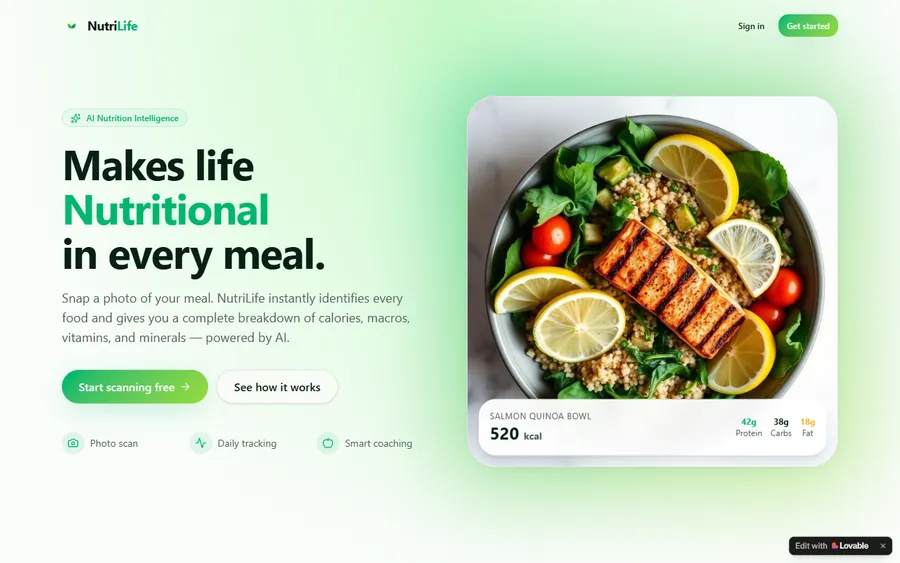
An AI nutrition coach that reads what you eat and works you toward a target.
AI and ML
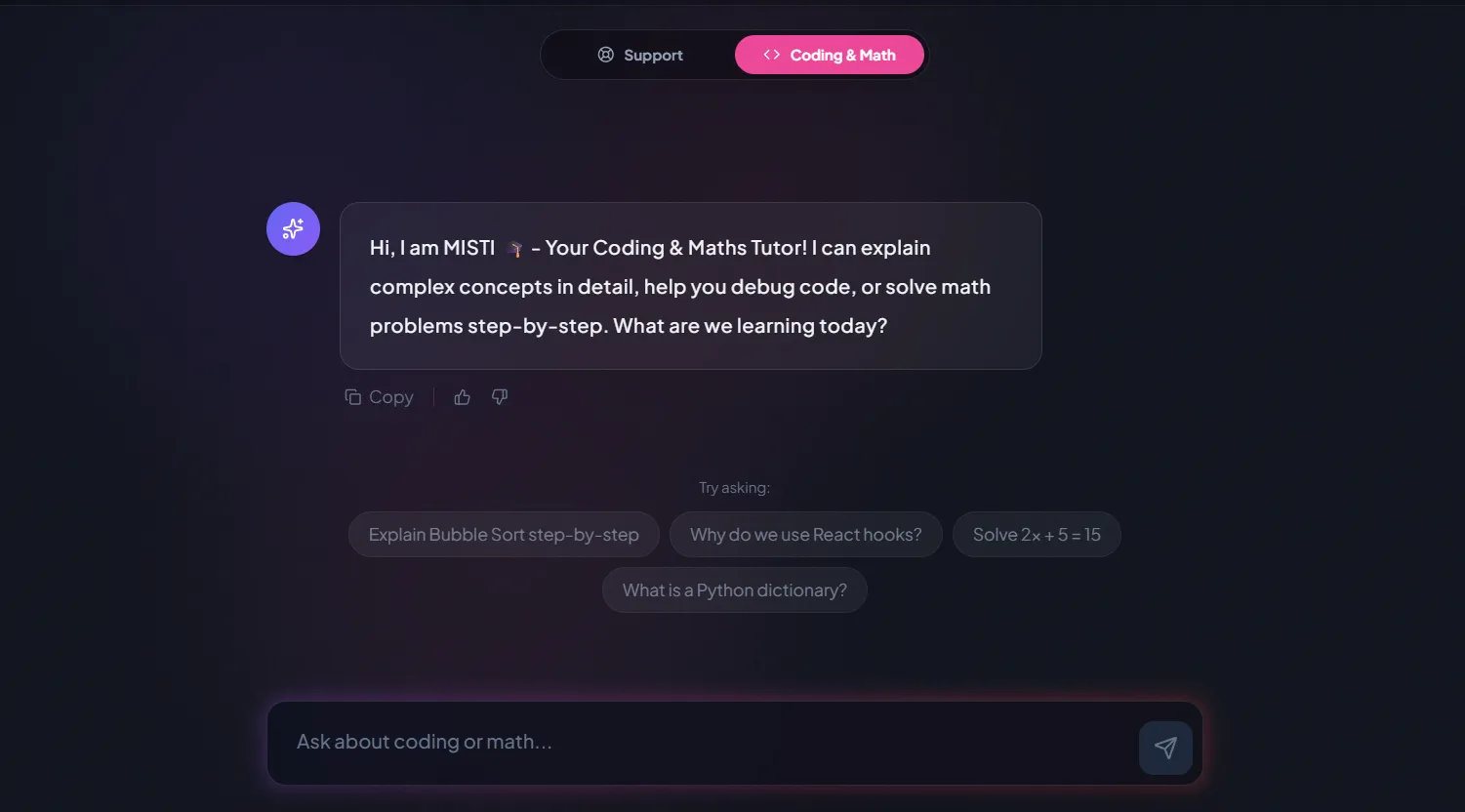
A chatbot that answers mathematics and programming questions, built and deployed by a student.
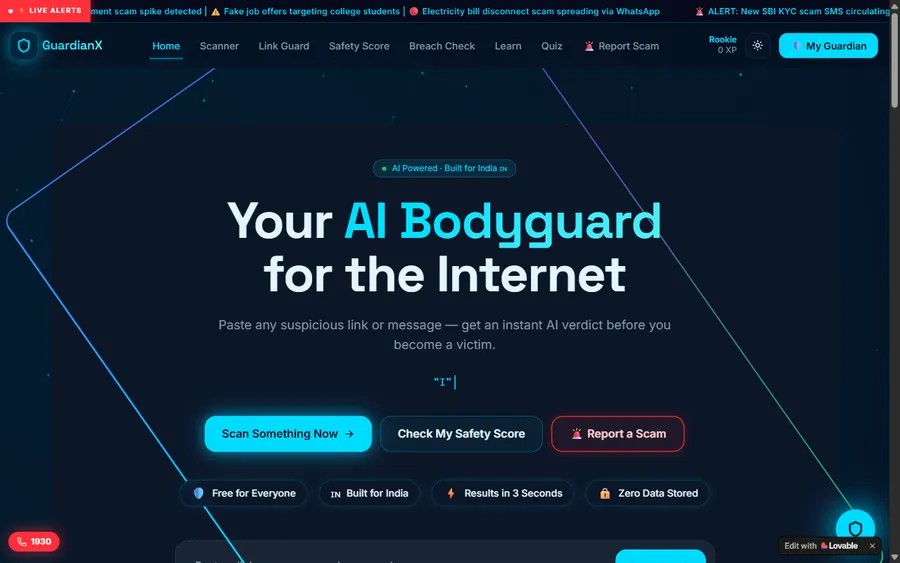
AI and ML
An assistant that helps a young person recognise unsafe situations online.
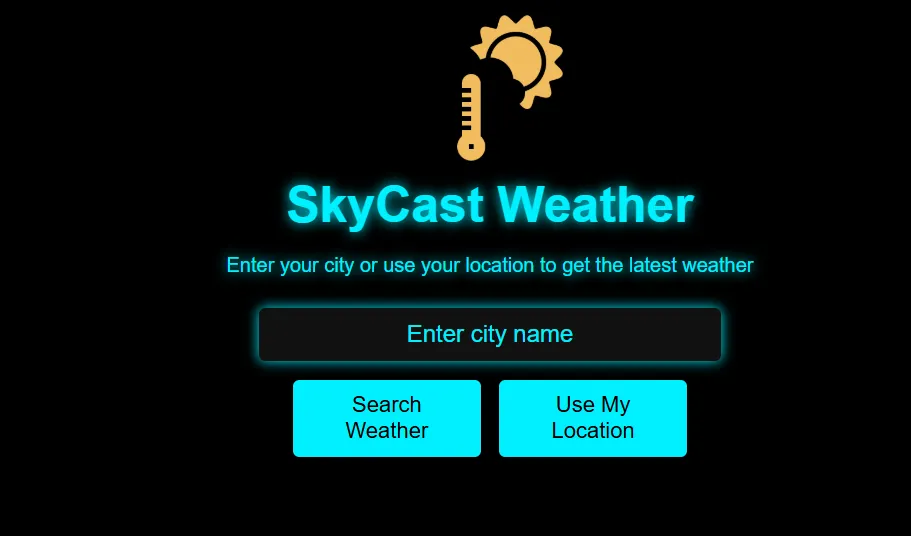
Web app
A weather forecasting site with live conditions for any location.
Fees
Monthly, in US dollars, at the same rates as every country outside India. No enrolment fee and no annual contract. The Copilot Studio course is private tuition only and uses the one-to-one rate.
Free first class
USD 0
no card required
Group batch
USD 100
a month, billed in US dollars
One to one
USD 150
a month, billed in US dollars
What families say
As posted on Google. We do not write, edit or pay for reviews.
★★★★★
"The one step solution for my son. Modern Age Coders make learning coding so simple that kids love it. The teachers explain complex concepts clearly with practical exercises and interactive content."
Ria Mukherjee
Parent
★★★★★
"Modern Age Coders has been a game-changer for me. I struggled to grasp IT concepts and coding before joining, but their classes transformed everything. I can now confidently write complex programs with ease."
Samriddha Mondal
Student
★★★★★
"One of the most wonderful education centres out there. Education is not limited to school syllabus but focuses on skill development."
Vansh Agarwal
Student
★★★★★
"My child Dhairya is really enjoying the Modern Age Coders classes. This is his first online class and he eagerly looks forward to it. I can already see his improvement, and the teachers are very cooperative."
Sonam Oswal
Parent of Dhairya
★★★★★
"Modern Age Coders have wonderful teachers who teach in a clear, easy and practical way. The teacher boosts students' confidence and inspires them to learn without hesitation."
Sonu Goyal
Parent
★★★★★
"I highly recommend this computer coding class! The teachers are incredibly knowledgeable and passionate about coding."
Ritu Kedia
Parent
Questions from students
That depends on your university and course. At the University of Groningen, for example, AI may be used as a study tool, and generated content must be disclosed with the tool's name and version. Always check your own programme's rules.
No. It teaches you to build and understand agents as your own work. Using an agent to produce assessed work can count as fraud under Dutch university rules if the work no longer reflects your own knowledge and skills.
The University of Groningen states that AI-detection scores are not evidence of fraud. Keeping your own drafts, logs and disclosure notes is the better protection.
A program given a goal rather than instructions, which plans its own steps and uses tools, such as search or code execution, to carry them out.
Yes, at least the basics. If you do not, the free lesson will point you to the right starting course.
No, it is taught one to one only, because agents are built around specific systems and permissions.
Yes, for the coding agents course you use your own accounts, so everything you build is yours.
USD 100 a month for a group place and USD 150 a month for one-to-one lessons, billed in US dollars, with no enrolment fee and no yearly contract. The first lesson is free.
Evenings and weekends, Dutch time, around your timetable. The teacher is three and a half hours ahead in summer and four and a half in winter.
We call you at a Dutch hour to arrange the free lesson. Nothing is charged unless you decide to continue.
Elsewhere on this site
Related pages for foundations and for what comes after.
The foundations every agent builder needs.
The same skills at work, with the AI Act in view.
The global page on what agents are and how they are built.
Working with coding agents in depth.
What a university AI first year asks.
The national ladder from Python to agents.
Start here
Leave a number and we will call at a Dutch hour. In the free lesson you build a very small agent with a teacher, and by the end you know which rung to start on.
Would you like to read first? See the AI agents course page, how we teach and the course list.
WhatsApp us · +91 91233 66161 · contact@modernagecoders.com
WhatsApp from a Dutch number is free and usually fastest. The number is Indian; we have no office or premises in the Netherlands.