PMC / NUM / 01
Primary maths, Years 1 to 5
Every primary topic, taught until it is automatic.
Open the syllabusUnited Kingdom · Ages 9 to 11 · 9 to 20 November 2026
Most children meet the Primary Maths Challenge as a surprise: a paper handed out one November morning, twenty-five questions, forty-five minutes, and a teacher saying to have a go. It is a generous competition, run by mathematics teachers for nine to eleven year olds, and nothing about it needs a tutor. But it has a shape worth understanding before the morning arrives, because twenty of its questions offer answers to choose from and the last five do not, and those five are the hardest on the paper by design. A child who knows that is not being coached. They are being told what the room looks like before they walk into it.
Organiser facts, dated · No past paper reproduced · No promise about any score
In short
The Primary Mathematics Challenge is sat in school between 9 and 20 November 2026 by pupils aged 9 to 11. The organiser describes a paper of 25 questions with 45 minutes to answer them: "20 of these are multiple choice. The questions are graded; starting with easy ones and graduating to harder questions. The final five require an answer where no choices are given." Papers are marked in school and the results returned electronically, each pack carries one gold, two silver and three bronze certificates, and pupils who do well are invited to a Bonus Round in February, with the cut-off score announced in December. Schools enter; families cannot enter a child directly, and neither can we. What we teach is the arithmetic and problem solving the paper draws on, in live online classes for ages 6 upwards. A first class is free, a group place is USD 100 a month and one-to-one teaching USD 150.
Where to start
Pick by how settled the arithmetic is, not by how near November is.
PMC / 01
The whole primary ladder, taught properly, for a child whose number work still needs a pencil.
Open the syllabus →
PMC / 02
Number sense rather than tricks, which is what buys thinking time in a forty-five minute paper.
Open the syllabus →
PMC / 03
For a child who finds the school paper easy and wants problems that fight back.
Open the syllabus →The paper
Everything here is quoted or summarised from the organiser's own pages, read on 20 September 2026.
| Part | What the organiser says | What it means on the day |
|---|---|---|
| Who it is for | "aimed at pupils aged 9 - 11, children must be in Primary school", with younger or older pupils entered at the school's discretion | Year 5 and Year 6 in England and Wales, and the equivalent primary years elsewhere |
| When | Held between 9 and 20 November 2026 | A window, not a fixed morning: the school picks its slot |
| The paper | 25 questions, graded from easy to hard, 45 minutes to answer them | Roughly 108 seconds a question if the time were spread evenly, which it should not be |
| The first twenty | "20 of these are multiple choice" | Answers are on the page; the work is choosing between them |
| The last five | "The final five require an answer where no choices are given" | The hardest questions, with nothing to eliminate and nothing to recognise |
| Marking | Marked in school, "the paper is marked automatically, and teachers can then access pupils answers" | Results go back to the organiser electronically |
| Certificates | Each pack of ten papers holds 1 gold, 2 silver and 3 bronze certificates, with a "Took the Challenge" certificate available electronically | Six of ten children in a pack take something home |
Notice what is not in that table. The organiser does not publish, on the pages we could read, how many options each multiple-choice question offers or whether a wrong answer costs anything. So this page gives no advice about guessing. Anyone who tells you the odds of a guess on the PMC is working from an assumption, and an assumption about marking is the kind that quietly teaches a child the wrong habit.
What is in the table is enough to prepare well. Twenty-five questions, graded, forty-five minutes, five of them open at the end.
It is also worth saying what the challenge is not. It is not an entrance exam, it does not feed into secondary school admissions, and no school we know of uses it to set a child. It is a paper handed to children who like maths, in a subject where the pleasant surprises tend to come from being allowed to find something hard.
The packs of ten are a clue to the spirit of it: most schools enter a handful of children, not a year group.
Sources: Primary Mathematics Challenge, its about page and its FAQs, read 20 September 2026. Modern Age Coders is not connected with the Primary Mathematics Challenge or the Association for Mathematics in Education.
The method
This section is arithmetic on the organiser's published numbers. It makes no claim about how quickly any particular child works.
Twenty-five questions and forty-five minutes come to 108 seconds a question if a child spreads the time evenly. Almost nobody should. The questions are graded from easy to hard, and the five hardest are the five with no choices, which are also the five a child cannot shortcut by recognising an answer. So the interesting question is how much time the first twenty can bank for the last five, and that is a sum a ten-year-old can do.
| Pace on the first twenty | Time that leaves | Per question on the last five |
|---|---|---|
| 30 seconds each | 35.0 minutes | 7 minutes each |
| 40 seconds each | 31.7 minutes | 6 minutes and 20 seconds each |
| 50 seconds each | 28.3 minutes | 5 minutes and 40 seconds each |
| 108 seconds each, the even split | 9.0 minutes | 1 minute and 48 seconds each |
The bottom row is what happens without a plan, and it is the single biggest difference between two children of the same ability. Spread the time evenly and the hardest five get under two minutes apiece. Move briskly through the first twenty, which are graded to be the easier ones, and the same child arrives at those five with half an hour in hand.
This is not a trick and it is not coaching. It is the reason an experienced teacher tells a class to do the ones they can do first. Putting numbers on it makes it concrete enough for a child to feel.
The practical version for a ten-year-old is three sentences. Go through once and answer everything you are sure of. Do not stop to be certain on the easy ones. Then spend what is left on the end of the paper, where there is nothing to choose from and the only way through is to work it out.
The counterpart at home is arithmetic that does not need paper. A child who computes 25 per cent of 48 in their head has bought themselves forty seconds; a child who sets it out in columns has spent them.
The pace figures are ours, computed from the 25 questions and 45 minutes the organiser publishes. They describe a budget, not a child.
What to practise
In that order, and for about twenty minutes a week rather than an hour the night before.
Tables to twelve, doubles and halves, fraction and decimal equivalents, ten and twenty-five per cent of round numbers. These should arrive, not be worked out.
The same idea dressed differently each week: a sharing problem as a recipe, an area problem as a patio, a sequence hidden in a story about stairs.
Practice where nothing is offered to choose from, so a child gets used to producing a number from nothing and checking it themselves.
That third habit is the one most preparation skips, because multiple-choice practice is easier to set and easier to mark. It is also the habit the last five questions of the paper are built to test. A child who has only ever chosen between four printed numbers has had no practice at the part of the paper that separates the top of the room.
Checking is part of it. If a child can say why an answer is about the right size before writing it, they catch the slips that cost more marks than any missing method.
We write our own practice problems in the spirit of the challenge, and we do not reproduce PMC questions. The organiser sells its own past papers and practice material, which is the proper place to meet the real style, and the money goes to the people who write it.
If a child finds the whole thing enjoyable rather than stressful, the useful next step is not more PMC practice. It is harder mathematics of any kind: the competitions calendar has what comes after primary school.
After November
Two things happen after the paper: a cut-off is published, and most children find out they are better at this than they thought.
| Stage | When | What the organiser says |
|---|---|---|
| Cut-off announced | December | The score that qualifies for the Bonus Round is set after the papers are in |
| Bonus Round | February | "an invite-only opportunity for those pupils who did well in the first round, to extend and challenge their maths skills" |
| Certificates | With the pack | One gold, two silver and three bronze per pack of ten, plus an electronic certificate for taking part |
| Bonus Round awards | After February | Certificates for participants, with stickers from the Mathematics Association for award winners |
Because the cut-off is set after the event, no one can tell a family in October what score will qualify. Anyone who does is guessing, and a target invented in October is a good way to make a child anxious about a paper meant to be enjoyable.
The honest thing to say to a nine-year-old is that the Bonus Round exists, that it is an invitation rather than a prize, and that the February paper is there to be interesting rather than to rank anyone again.
A bronze certificate from a pack of ten is not a consolation. It means a child was in the top six of the group their school chose to enter, and those groups are usually the children who already like maths.
The one thing worth watching for afterwards is the child who says the last five were the good bit. That is the child to point at harder problems, whatever their score was.
Getting ready
Where a child starts depends on their arithmetic, not on which year they are in.
| Stage | Rung | The sign it is secure |
|---|---|---|
| Year 3 to 4 | 1. Recall | Tables and number bonds arrive without counting or writing |
| Year 4 to 5 | 2. Methods | Multiplication, division and fractions come out right when the numbers are awkward |
| Year 5 | 3. Unfamiliar shapes | Reads a wordy question and can say what kind of maths it is before starting |
| Year 5 to 6 | 4. Open answers | Produces and checks a number with nothing offered to choose from |
Two habits are worth more than any amount of content in the last month: answer what you can quickly, and practise questions that offer no choices.
Nothing about a low score in November means a child is not good at mathematics. The paper is graded to be hard at the end on purpose.
After primary school the UKMT Junior Mathematical Challenge is the usual next step, and the competitions calendar lays out the whole ladder.
Children who like the puzzle side often take to programming quickly, which is what maths through coding is for.
The full list
Grouped by what a child needs next, with the syllabus behind every card.
PMC / NUM / 01
Every primary topic, taught until it is automatic.
Open the syllabusPMC / NUM / 02
Number sense, so calculation stops costing time.
Open the syllabusPMC / NUM / 03
From first beads to calculating with none.
Open the syllabusPMC / NUM / 04
Speed methods for the arithmetic underneath.
Open the syllabusPMC / SOLVE / 01
Problems that do not announce their method.
Open the syllabusPMC / SOLVE / 02
The same upper primary content, under time pressure.
Open the syllabusPMC / SOLVE / 03
For a Year 6 child already working beyond primary.
Open the syllabusPMC / CODE / 01
Python as a way of seeing why a method works.
Open the syllabusPMC / CODE / 02
A first language, built on the same logic.
Open the syllabusPMC / CODE / 03
Games, apps and a first look at AI.
Open the syllabusPMC / NEXT / 01
Typed code once the ideas are comfortable.
Open the syllabusPMC / NEXT / 02
For a younger sibling starting from the beginning.
Open the syllabusHow lessons run
Teaching is live on video from India, which runs five and a half hours ahead of the UK in winter and four and a half in summer. Primary children take an early evening slot and never a late one.
Early weekday evening
Straight after school, before the day runs out.
Weekend morning
For families who keep weeknights clear.
Half term and holidays
Shorter sessions, more often, while school is out.
A child's mistakes only get fixed by someone who has seen them before.
Practice is written by us in the spirit of the challenge. No PMC paper is copied.
Enough for a child to hear a better method than their own, few enough that nobody hides at the back.
A short, plain note on what went well and what did not, rather than a score to put on the fridge.
For a child who freezes in a group, or has one specific gap to close.
No certificate, no Bonus Round place and no score is promised by us or anyone honest.
Student work
Four published projects by students at our school, most of them older than this, all of them once nine. More on the student labs page.
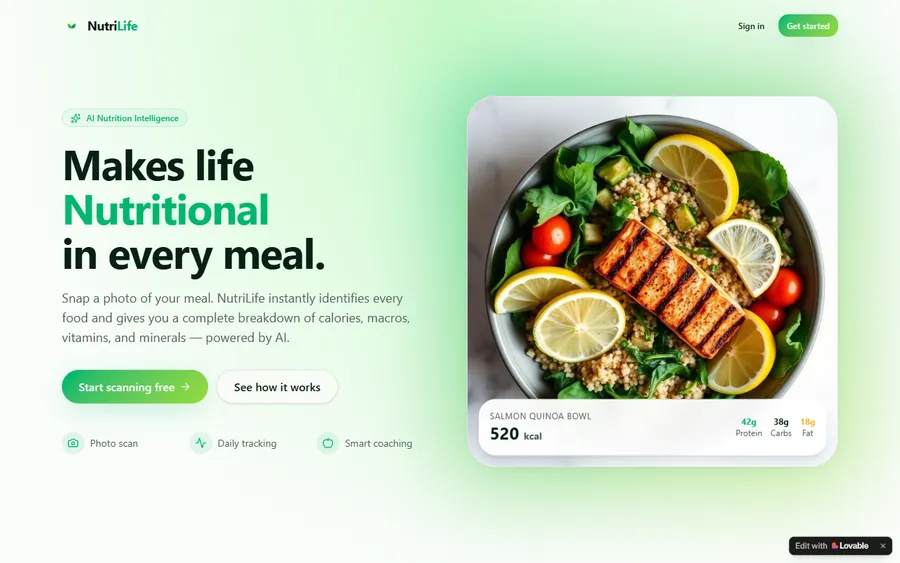
AI and ML
An AI nutrition coach that reads what you eat and works you toward a target.
AI and ML
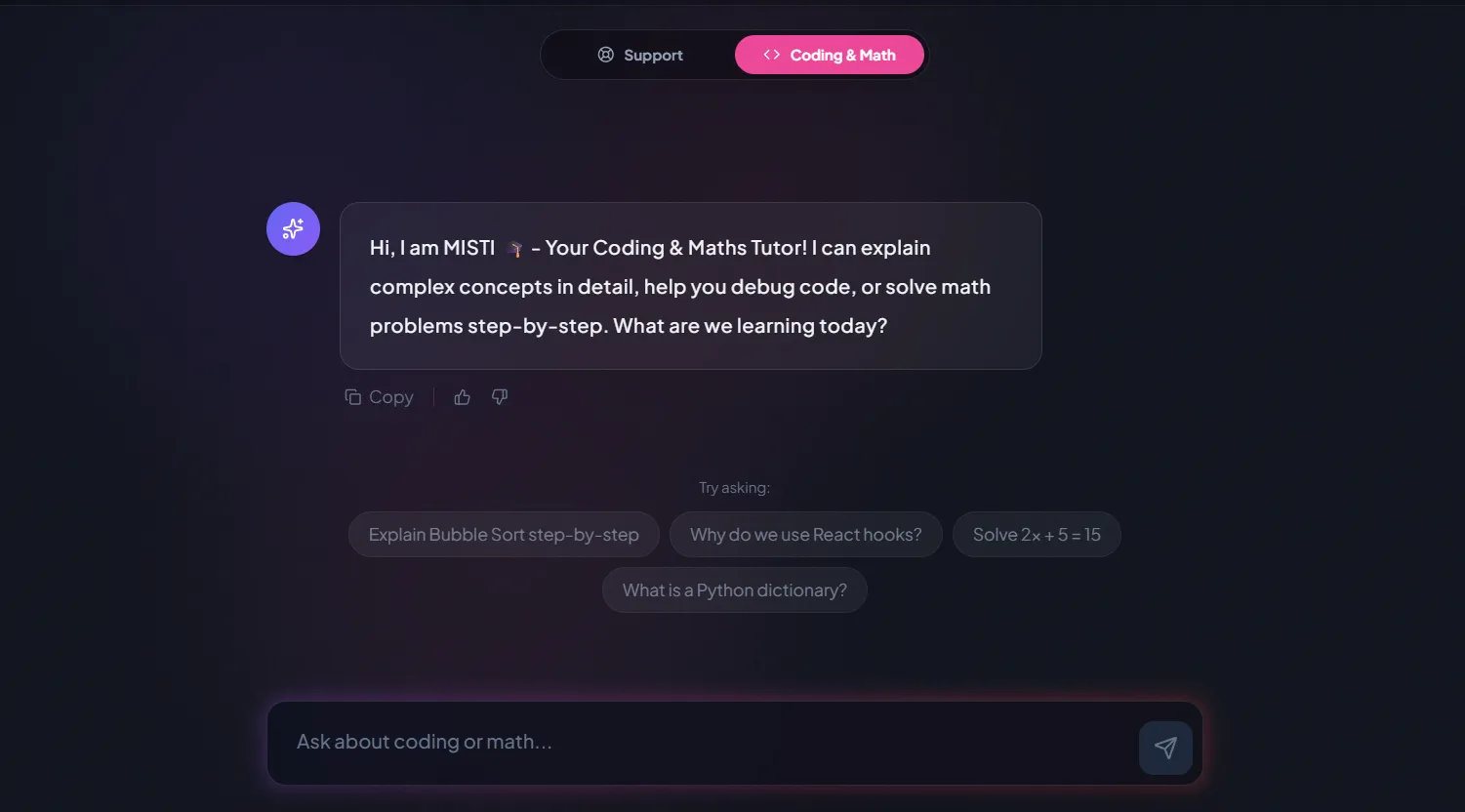
A chatbot that answers mathematics and programming questions, built and deployed by a student.

AI and ML
An assistant that helps a young person recognise unsafe situations online.
Web app
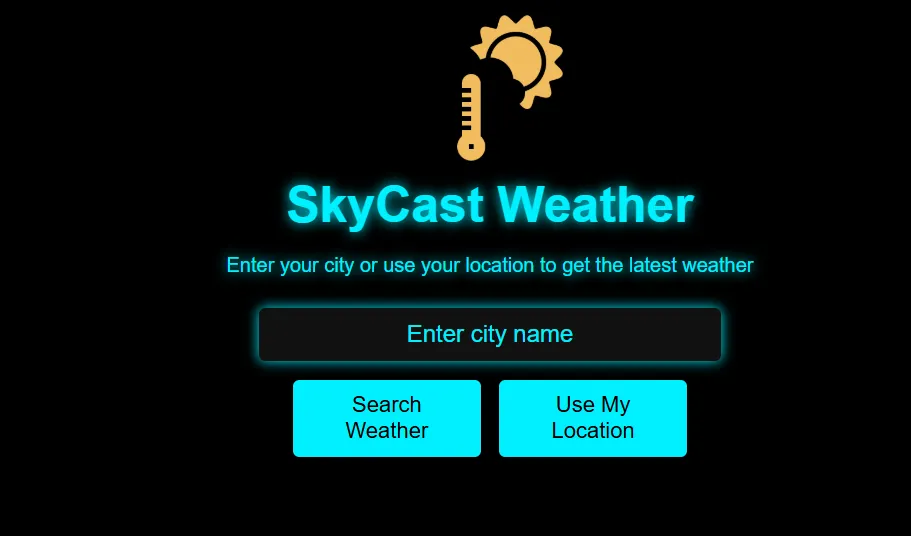
A weather forecasting site with live conditions for any location.
Fees
A monthly rate in US dollars, the same for every country outside India. Nothing to join and nothing to cancel.
Free first class
USD 0
no card required
Group batch
USD 100
a month, billed in US dollars
One to one
USD 150
a month, billed in US dollars
What families say
Parents' own words, taken from our Google profile without edits.
★★★★★
"The one step solution for my son. Modern Age Coders make learning coding so simple that kids love it. The teachers explain complex concepts clearly with practical exercises and interactive content."
Ria Mukherjee
Parent
★★★★★
"Modern Age Coders has been a game-changer for me. I struggled to grasp IT concepts and coding before joining, but their classes transformed everything. I can now confidently write complex programs with ease."
Samriddha Mondal
Student
★★★★★
"One of the most wonderful education centres out there. Education is not limited to school syllabus but focuses on skill development."
Vansh Agarwal
Student
★★★★★
"My child Dhairya is really enjoying the Modern Age Coders classes. This is his first online class and he eagerly looks forward to it. I can already see his improvement, and the teachers are very cooperative."
Sonam Oswal
Parent of Dhairya
★★★★★
"Modern Age Coders have wonderful teachers who teach in a clear, easy and practical way. The teacher boosts students' confidence and inspires them to learn without hesitation."
Sonu Goyal
Parent
★★★★★
"I highly recommend this computer coding class! The teachers are incredibly knowledgeable and passionate about coding."
Ritu Kedia
Parent
Primary Maths Challenge questions
The organiser publishes a window rather than a single morning: the challenge is held between 9 and 20 November 2026, and each school chooses its slot inside that fortnight.
The organiser says it is aimed at pupils aged 9 to 11 who must be in primary school, and that entering a younger or older pupil who would benefit is at the school's discretion.
Twenty-five, with 45 minutes to answer them. Twenty are multiple choice and, in the organiser's words, "the final five require an answer where no choices are given". The questions are graded from easy to hard.
Not evenly. Twenty-five questions in 45 minutes is 108 seconds each if the time is spread flat, which leaves under two minutes for the hardest five. Moving through the first twenty at around 40 seconds each banks nearly 32 minutes for the end of the paper.
We do not give guessing advice, because the organiser does not publish the number of options or whether a wrong answer costs anything on the pages we could read. Any rule of thumb you are offered about this rests on an assumption.
An invite-only round in February for pupils who did well in November, described by the organiser as a chance "to extend and challenge their maths skills". The qualifying cut-off is announced in December, after the papers are marked.
No. Schools order the packs and run the paper, each pack holding ten question papers. Neither a family nor a tutor can enter a child directly, and we have no role in the process.
No. We write our own problems in the same spirit, and point families to the organiser's own material for the real thing.
The first is free. A place in a group is then USD 100 a month and one-to-one teaching USD 150, with nothing to pay to join.
A weekly slot is agreed after the free lesson, and for primary children we keep to early evening. Our teachers work five and a half hours ahead of the UK in winter and four and a half in summer, and every time is confirmed in UK time.
Related pages
What comes after primary school, what runs beside it, and where the whole calendar lives.
Every contest we could confirm, month by month.
For families north of the border, where the school year differs.
The same upper primary content, with a selective test attached.
The national page for grammar and independent entry.
Four school systems, and every UK page.
Questions worth asking any provider, ours included.
Start here
Tell us the school year and how your child feels about maths. The free lesson teaches something real, and afterwards we say honestly what we saw.
Prefer to read first? Each course keeps its syllabus on its own course page, our method is described on how we teach, and the roadmap shows what follows what.
WhatsApp us · +91 91233 66161 · contact@modernagecoders.com
WhatsApp is usually the quickest way to reach us and costs a UK mobile nothing. Our number is Indian, as we say everywhere, and we keep no office in Britain.