Pick the course. Start this week.
Every mentor teaches from a structured programme, adapted live to your child. Open a course to see the full syllabus and enroll in minutes, or start with a Priority Demo and let the diagnostic pick the level for you.
 Best fit
High School Mathematics Mastery
Algebra through precalculus and calculus readiness, with exam craft for the courses that decide admissions.
$100/mo group · $150/mo 1-on-1
View course & enroll
AP Calculus AB & BC Exam Prep
Three ideas taught like ideas, then trained against real FRQ rubrics. Score 5 goal.
$100/mo group · $150/mo 1-on-1
View course & enroll
Olympiad & Competition Mathematics
Contest-level problem solving for the student who wants more than the syllabus.
$100/mo group · $150/mo 1-on-1
View course & enrollA good precalculus tutor does three things: teaches the unit circle as three triangles, not thirty memorized points, so trigonometry becomes reconstruction instead of recall; makes function behavior visual, asymptotes, end behavior, composition, inverses, because calculus is entirely about function behavior; and keeps the AP or college placement target in view from week one. That is what we do: live one-hour classes in small groups (8 a month) or private 1-on-1, priced for your country and shown in your local currency, Priority Demo first.
A mile wide, and deeper than it looks.
Precalculus has a scope problem: it is the last stop before calculus, so everything calculus needs gets loaded onto it. Advanced function analysis. Trigonometry from zero to identities. Polar coordinates, parametric equations, vectors, conics, sequences, and a first taste of limits. Most students describe it as the fastest-moving course they have taken, and they are right.
The speed creates a specific failure mode: survival by memorization. Thirty unit-circle values, a page of trig identities, asymptote rules, inverse function procedures, all flashcarded for Friday and evaporated by June. The student passes precalculus and then discovers, three weeks into AP Calculus, that the bridge they crossed no longer exists behind them.
The alternative is structural: almost everything in precalculus compresses into two pillars. Pillar one: how functions behave, growth, asymptotes, transformations, composition, inversion. Pillar two: the unit circle, from which every trig value, graph and identity can be rebuilt on demand. A student who owns the two pillars can derive the mile-wide surface as needed.
That is how our mentors teach it: derive, reconstruct, verify, until recall becomes unnecessary. It is also the honest AP preparation, because AP Calculus does not test whether you memorized precalculus. It tests whether you understood it.
Nine signs a precalculus student needs help now, not later.
The unit circle is thirty flashcards
If sin(150°) requires recall instead of a ten-second reconstruction, trig is a memory stunt waiting to fail.
Radians are resisted
Converting everything back to degrees signals radians never became real, and calculus speaks only radian.
Identities are matched, not derived
Hunting the identity sheet for a lookalike instead of deriving from Pythagoras means the identities own the student.
Asymptotes are rule-recitals
"Degree bigger on bottom means y equals zero" chanted without knowing why leaves every variant question a coin flip.
Composition and inverses blur
f(g(x)) versus f⁻¹(x) confusion is fatal in calculus, where the chain rule lives on exactly this distinction.
Graphs come from calculators only
If no graph can be sketched without the machine, function behavior, the whole point, was never internalized.
Word problems are skipped
Modeling with sinusoids or logistic-style growth left blank signals formula-holding, and the AP exam is modeling-heavy.
The pace is winning
Falling one unit behind in precalculus compounds weekly, because every unit leans on the last two.
AP Calc next year worries you both
If readiness for the fall is a guess, that is a diagnostic question, and it deserves a real answer before schedules lock.
Three or more of these? A diagnostic hour maps the gaps against both pillars. A Priority Demo doubles as that diagnostic: a full live class, with a written skill report afterwards.
Two pillars, everything else derived.
The unit circle from three triangles
30-60-90 and 45-45-90, reflected around the circle. Every value reconstructible in seconds, no flashcards involved.
Identities from one ancestor
Pythagoras on the unit circle generates the family. Students derive before they memorize, so the sheet becomes optional.
Function behavior as pictures
Asymptotes, end behavior and inverses taught by reasoning about what the function does, with the rule as the summary.
Radians as distances
Radian measure taught as arc length walked around the circle, so it stops being a conversion chore and starts being natural.
Calculus previews, honestly labeled
Limits, rates and the derivative idea introduced gently where they belong, so the fall opens familiar.
Live, interactive, out loud
One full hour of deriving, sketching and defending, with a mentor tracking both pillars against the AP calendar.
sin(150°) in ten seconds, with zero memorization.
The flashcard version: recall row 150 from a memorized table. Under test pressure, rows swap and signs flip, and the student cannot tell their answer is wrong because there is no meaning to check against.
How our mentor teaches it: 150° lives in the second quadrant, 30° short of 180°. Drop the reference triangle: it is the same 30-60-90 triangle from the first quadrant, just reflected. Height stays positive in quadrant two.
sin is the HEIGHT on the unit circle
height of the 30° triangle: 1/2
quadrant II: height still positive
sin(150°) = 1/2
Three triangles, four quadrants, one question: "height or width, and what sign here?" That machine answers every unit-circle question the course or the AP exam will ever ask, and it cannot be forgotten over the summer, because it was never memorized in the first place.
Every unit, and what mastery looks like in each.
| Unit | What mastery actually looks like |
|---|---|
| Functions, advanced | Composes and inverts fluently, handles piecewise definitions, and analyzes domain and range by reasoning rather than rules. |
| Polynomial and rational functions | Sketches from zeros, multiplicity and end behavior; locates vertical, horizontal and slant asymptotes knowing why each exists. |
| Exponential and logarithmic functions | Models growth and decay, solves equations both directions, and moves between forms without friction. |
| Trigonometry: the unit circle | Reconstructs any value from the three reference triangles, works natively in radians, and reads the circle as a graph generator. |
| Trig graphs and modeling | Graphs sinusoids with amplitude, period and shifts, and models tides, daylight and rotation problems with them. |
| Trig identities and equations | Derives the identity family from Pythagoras, verifies identities strategically, and solves trig equations over intervals. |
| Inverse trig functions | Understands the restricted domains, evaluates compositions, and knows why arcsin(sin x) is not always x. |
| Polar coordinates and parametrics | Converts between systems, graphs polar curves, and reads parametric motion, the calculus BC on-ramp. |
| Vectors | Adds, scales and dots vectors, and applies them to force and velocity problems. |
| Conic sections | Recognizes and manipulates circles, ellipses, parabolas and hyperbolas from equations and geometry both. |
| Sequences, series and limits preview | Handles arithmetic and geometric sums, sigma notation, and the informal limit ideas calculus will formalize. |
Sequencing varies by school and by AP-track intent; the mentor aligns with your teen's syllabus and target while teaching every unit from the two pillars.
Asymptotes from meaning, not from a rule sheet.
The rule-recital version: "degrees equal, so divide leading coefficients; bottom zero, so vertical asymptotes." Correct, and hollow, and it collapses on the first slant-asymptote or hole question.
How our mentor teaches it: ask what the function is doing. Near x = 2, the denominator shrinks toward zero while the numerator sits near 9: dividing by almost-nothing explodes, hence the vertical asymptote. For huge x, the +1 and the −4 become pocket change next to the x² terms, so the function behaves like 2x²/x² = 2.
as x → ±∞: f(x) ≈ 2x²/x² = 2 → horizontal asymptote y = 2
This is limit thinking, the exact reasoning calculus formalizes next year, being learned a year early with no extra effort. Students taught this way meet limits in AP Calculus and recognize an old friend. That is what "precalculus" was supposed to mean all along.
A journey with a map, not an endless subscription.
Weeks 1-2 · Diagnose and win
The Priority Demo maps both pillars, function behavior and trig readiness, plus the Algebra 2 machinery underneath. Early wins first.
Month 1 · Function behavior, mastered
Composition, inverses, asymptotes and end behavior taught by reasoning, aligned with whatever unit the class is running.
Month 2 · The unit circle, owned
Three triangles, radians as distances, graphs generated from the circle, and identities derived from one ancestor.
Month 3 · The wide middle
Trig equations, modeling, and the school's chosen extras, polar, vectors, conics, each hung on the two pillars.
Ongoing · The AP handoff
Limits previewed honestly, readiness assessed honestly, and the same mentor available into AP Calculus. Monthly billing throughout.
Who this genuinely fits, and who it does not.
A strong fit if…
• Your child is behind on both pillars built to reconstruction strength, Algebra 2 repaired inline, and the AP target in view from week one, not re-drilled.
• Your child is coasting at school and needs depth and challenge before boredom becomes a habit.
• Homework has become a nightly negotiation and you want a calm expert to take over the teaching.
• You want one mentor who knows your teen, not a rotating cast or an app with streaks.
Honestly not the fit if…
• Your child cannot yet engage with a screen and a teacher for a full hour. By grade 4 nearly every child can, provided the hour is genuinely interactive, and ours are.
• You want homework done for the child. We teach the child to do it, which is slower on night one and far faster by week four.
• You are looking for a test-cram sprint. Precalculus crossed on flashcards leaves no bridge behind it; derivation is the only durable crossing and we will say so.
The courses behind the tutoring.
Every mentor teaches from a structured curriculum, adapted live to your teen. If you prefer to see the full syllabus before you start, these are the programmes precalculus students join.
Premium teaching. One honest price.
You are paying for a real teacher, live, for a full hour, twice a week, the same format US tutoring centers charge $300 to $450 a month for. Our cost base is global, so the price is not.
1:1 Private Mentorship
$150 / month
- 8 live one-hour classes a month, 2 per week4 live one-hour classes a month, 1 per week
- A dedicated mentor who knows your teen by name
- Diagnostic-led plan against the full precalculus plan
- Class recordings for revision · cancel any time
Small-Group Class
$100 / month
- 8 live one-hour classes a month, 2 per week
- A handful of children at the same level
- Same teaching method, gentle peer energy
- Recordings included · cancel any time
That is $18.75 per dedicated hour of 1-on-1 teaching, or $12.50 in a small group. No registration fee, no contract, and you can see a full class first with a Priority Demo. Read our zero-risk promise or compare with what US math tutoring costs in 2026.
Mentors who teach the why, in classes kids wait for.
Our mentors are trained in one method: understanding before procedure, concrete before abstract, the child talking more than the teacher. They teach both maths and coding, which matters more than it sounds, because a mentor who can turn "4 groups of 6" into a game your teen wants to build has engagement tools a worksheet never will.
And because the same mentor stays with your teen month after month, teaching compounds. They know that your daughter rushes when unsure, that your son shuts down after two wrong answers, and exactly which idea to revisit before it becomes a gap.
"My child Dhairya is really enjoying the classes. This is his first online class, and he eagerly looks forward to it. I can see his improvement."
Sonam Oswal, mother of Dhairya · verified Google review
"My son struggled with math for years. Integrating it into coding projects has transformed his understanding and confidence. Highly recommended!"
Shewta Singh, mother of Ishan · verified Google review
Your real options for a precalculus student.
| Option | Typical cost | What it really is | Best for |
|---|---|---|---|
| Modern Age Coders | $100–$150 / month | Live one-hour classes with a dedicated mentor, concrete-first teaching | Rebuilding understanding and confidence, sustained progress |
| Mathnasium center | $300-$450 / month + enrollment fee | Drop-in worksheet floor with rotating instructors | Children who focus better out of the house |
| Kumon | $150-$220 / subject / month | Daily worksheet packets, brief check-ins, no taught lessons | Building a drill habit and calculation speed |
| Local private tutor | $35-$80 / hour | Quality varies; twice-weekly quickly costs $280-$640 a month | Short-term help when you have found a gem nearby |
| Math apps | $10-$20 / month | Gamified practice, no teacher, no accountability | Casual practice between real lessons |
Competitor figures are typical published US prices as of July 2026 (tutors.com, brighterly.com). See our full comparisons: vs Mathnasium · vs Kumon · best online math tutoring 2026.
Everything families ask about precalculus.
Is precalculus actually necessary for calculus?
Two parts of it are non-negotiable: fluent function behavior (composition, inverses, asymptotes) and native trigonometry in radians, because calculus differentiates and integrates exactly those objects. A student solid on the two pillars finds AP Calculus surprisingly gentle. The rest of the course, conics, polar, vectors, matters by track: BC and physics-bound students need more of it.
My teen memorized the unit circle and still struggles. Why?
Because thirty memorized points decay and cannot generalize. We rebuild the circle from three reference triangles so any value reconstructs in seconds, permanently. Students are usually startled by how small the real content is once derivation replaces recall.
Should my teen take precalculus over the summer to skip ahead?
Sometimes, and we will be honest about which case yours is. A strong Algebra 2 student with a real reason (scheduling, AP timeline) can genuinely learn the two pillars in an intensive summer. A student who found Algebra 2 hard should strengthen instead; skipping on a weak base buys a title and a crisis.
How long until the grade moves?
The current-unit grade usually stabilizes within two to four weeks since we teach to the class calendar. Reconstruction strength on the two pillars, the thing that survives into AP, takes a term. Monthly billing means you watch evidence and re-decide every four weeks.
Do you prepare for AP Calculus readiness or placement tests?
Yes. We track both pillars against AP-readiness explicitly, preview limits honestly, and tell you straight whether AB, BC or another year of foundations is the right fall move. The same mentor can then carry your teen into the AP year.
What does it cost?
The fees for private 1-on-1 and small-group classes are shown in your own currency in the pricing section of this page. Billing is monthly, there is no contract and you can cancel any time.
Who teaches precalculus?
Mentors who teach both mathematics and programming. At this level that pairing shines: students who also code meet sine waves as animations, parametrics as motion paths, and functions as living objects, which is precisely the intuition calculus rewards. Meet the team on our team page.
Does the course follow my teen's school syllabus?
Yes. Precalculus varies more school to school than any other course, so the mentor aligns with your teen's actual syllabus and test calendar while teaching everything from the two pillars.
My teen is strong. Can you stretch them instead?
Happily: deeper identity work, BC-flavored parametrics and polar, competition trigonometry, and early differential calculus for the genuinely ready.
Can we try a class before enrolling?
Yes. Book a Priority Demo: a full live class of about 45 to 60 minutes, today or tomorrow, with a mentor reserved for your child. After the class the mentor sends a written skill report and a personal learning roadmap on WhatsApp. If you enrol, the demo fee is adjusted against your first month's fee.
More math help from Modern Age Coders.
Watch one full hour of real teaching. Free.
Book the demo class. Your child gets a real lesson with a real mentor, you get a diagnostic against one full hour of real precalculus teaching, free. If your teen does not leave the hour lighter about math, walk away with our thanks.
Real student projects
What our students actually build
Every one is a real, live project shipped by a Modern Age Coders student. Explore more in Student Labs.
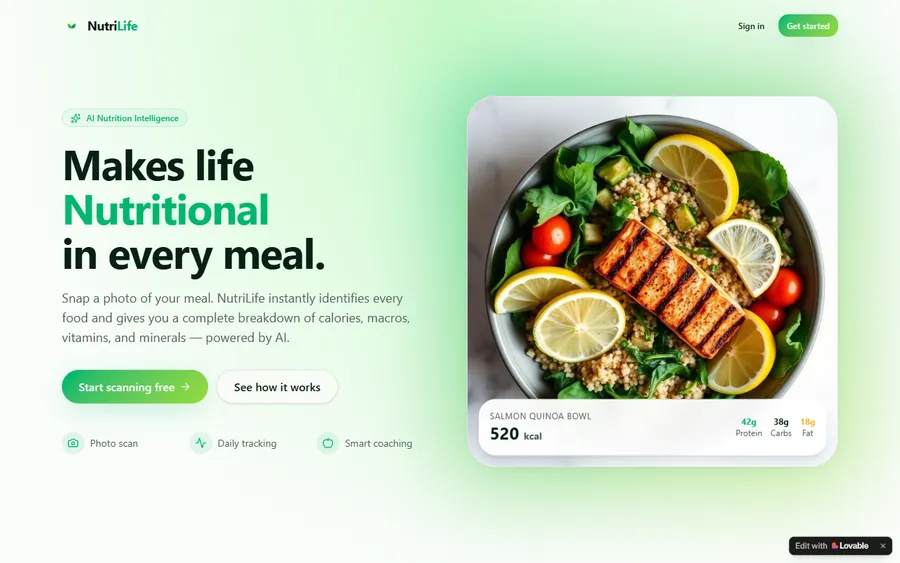 AI & MLNutriLife: AI Nutrition CoachSnap a photo of any meal and NutriLife instantly names every food, then breaks down the calories, macros, vitamins and minerals, powered by AI. Bhavya vibe-coded it from a single idea: shaped the app in prompts, then wired up the AI food-recognition, daily tracking and smart coaching by hand.by BhavyaOpen the live project ↗
 AI & MLGuardianX: AI Bodyguard for the InternetPaste any suspicious link or message and GuardianX returns an instant AI verdict before you become a victim, plus a link scanner, safety score, breach check and live scam alerts built for India. Vibe-coded from idea to working product through prompts, then refined until it genuinely understands how phishing and scams work.by VivaanOpen the live project ↗
 GamePalm Arcana: Summon the ElementsOpen your palms to the webcam and computer vision turns your gestures into real magic, the left palm throws a fireball, the right crackles with lightning. A wild blend of hand-tracking AI, creative coding and pure imagination, vibe-coded into a playable browser experience.by AarushOpen the live project ↗