You were probably never bad at math. You were rushed past the part that would have made it click.
School math moves on a schedule. If percentages or fractions went by too fast one year, the topic was marked "done" and you were expected to keep up anyway. The gap never closed. It just got covered over, and "I'm not a math person" became a story you told yourself for decades.
Then life hands you a reason to need it: a promotion that involves data, a nursing program with dosage math, a college course with a stats requirement, a graduate exam with a quant section.
The good news is that adults are excellent math learners. You have context, patience and a clear reason, three things a distracted teenager doesn't. What you need isn't a classroom; it's someone to fill the specific gaps and explain the parts that were never explained.
That's the entire job here. One mentor, your goal, and the freedom to ask "wait, why does that work?" as many times as it takes.
Built around your goal, not a generic syllabus.
Adults don't need to relearn everything, only the pieces that matter for what you're trying to do.
Start with your why
A job task, a course, an exam, or simply confidence. We shape the whole plan around the outcome you actually want.
Find and fill the real gaps
We work out which earlier ideas are missing and rebuild just those, so we're never wasting your limited time on what you already know.
Teach the meaning, not the memory trick
You'll understand why a method works, which is what lets you use it confidently at work or under exam pressure, and remember it long after.
Apply it to your real situations
We practise on the kind of problems your goal involves, from spreadsheets to test questions, so the skill transfers immediately.
What a percentage really is: so financial math stops being scary.
What trips adults up: percentages feel like a bag of unrelated rules, "of means multiply", "percent change", "reverse percentage", each memorized separately and easily mixed up under pressure.
How we do it. A percent is just a fraction with a fixed bottom of 100. "%" literally means "per hundred." Once that single idea is solid, every percentage question becomes the same question.
18% of a $1,250 bill: 0.18 × 1250 = $225
a price rose from $80 to $150, what % change?
change ÷ original = 20/80 = 0.25 = 25% up
There's no separate trick for "of," "increase" or "discount". It's one idea (per hundred) applied with a little reasoning. Adults who see this stop fearing tips, taxes, interest, markups and budgets, because they're all the same move. This is the foundation we build statistics and financial math on.
The same clear thinking runs through math, money and modern work.
Break it down
A scary budget or a scary problem set both get simple once you split them into steps. Decomposition is the skill, and it transfers everywhere.
Reason from rules
Understanding why a formula works, in a spreadsheet or on a test, is the same logic that lets a programmer trust their code.
Sanity-check the answer
"Does that number make sense?" catches errors at work and on exams alike. We make it a habit, not an afterthought.
We're Modern Age Coders, and we teach adults to code as well as to compute. The reasoning is identical, which is why so many of our adult math students find that data, spreadsheets and even a bit of programming stop feeling out of reach.
Whatever your goal actually needs.
We don't make you sit through topics you'll never use. We focus on yours.
Foundations refresher
Arithmetic, fractions, decimals, percentages, ratios and the algebra basics, rebuilt cleanly so everything above them holds.
Statistics for work
Averages, spread, probability, reading charts, and what a result actually means, the data literacy nearly every modern role now expects.
Financial math
Interest, loans, budgets, markups and margins, and the everyday money math that pays for itself the first time you use it.
GRE & GMAT quantitative
The fundamentals rebuilt, then the specific question types, pacing and traps of each exam, because strong basics are what move a quant score.
Course & license requirements
Math for a college class, a nursing or trade program, or a professional exam, focused exactly on what you must pass.
Plain confidence
For some adults the goal is simply to stop feeling stupid around numbers. That's a real, achievable goal, and a good one.
The right fit: and an honest word on what to expect.
This fits the career-changer, the parent who wants to help their kids without freezing up, the professional whose role now involves data, the returning college student, and the GRE/GMAT candidate. If you've ever said "I'm just bad at math," this is built for you.
What's realistic. Confidence usually comes quickly, within a few sessions of gaps being named and filled. Concrete goals like a quant score or clearing a course take a few months of steady work, and we'll give you an honest timeline for yours rather than a sales pitch.
What we won't do
- Make you feel behind or talked down to.
- Teach memory tricks with no understanding.
- Waste your limited time on topics you don't need.
- Promise an exam score we can't honestly support.
Designed to fit a working life.
1:1, live
One adult, one mentor, real-time video and a shared whiteboard. Private, relaxed, no audience.
8 classes a month
Two each week, around an hour, focused entirely on your goal.
Times that work
Early mornings, evenings and weekends across all six US time zones.
Flexible focus
Your plan shifts when your goal does, finish a course, then pivot to the GMAT.
One simple price. No contract.
1:1 Private Mentorship
$150 / month
- 8 live one-to-one classes a month (2 per week, 1 hour each)
- 4 live one-to-one classes a month (1 per week, 1 hour each)
- The same patient mentor throughout
- A plan built entirely around your goal
- Flexible times · cancel any time
Small-Group Cohort
$100 / month
- 8 live small-group classes a month (2 per week, 1 hour each)
- A few adults working toward similar goals
- Same teaching approach, lower price
- Great for a refresher · cancel any time
Need the practical math of business and finance laid out fully? Explore the Business & Finance Mathematics course → or the Data Analytics Mathematics course.
Mentors chosen for patience first.
Teaching an adult who's anxious about math takes a particular kind of teacher, one who never sighs, never rushes, and genuinely believes you can do this. We hire for exactly that, then check it. A mentor who makes a learner feel small doesn't last here.
You keep the same mentor, who learns your goal and your pace and adjusts the plan as life changes. That relationship is what turns "I'm bad at math" into "actually, I get this now."
"I avoided math for 25 years. I needed statistics for a promotion. Three months in, I'm the one explaining the dashboards in meetings."
: Operations manager, returning learner, Florida
How we differ from the alternatives.
| What matters | Modern Age Coders | Self-study videos | Test-prep course |
|---|---|---|---|
| Adapts to your exact goal | Fully | No, fixed playlist | Only the test |
| Fills your specific gaps | Yes, diagnosed live | No | Rarely |
| Patient with math anxiety | Built for it | You're on your own | Group-paced |
| Same mentor each time | Yes | N/A | Usually not |
| Monthly price | $150 (1:1) / $100 (group) | Free–$30 | $300–2,000+ |
Free videos are great if you already know what's missing. We add a mentor who finds the gaps for you and stays patient while you close them.
Everything you might be wondering.
I haven't done math in years. Is it too late?
No. Adults often learn faster than they expect, because they bring context and clear motivation. We start wherever you are, rebuild the foundations, and never make you feel behind.
What can you actually help me with?
Rebuilding the basics for confidence or a course; the practical math of work (statistics, data, financial math); and standardized test quant such as the GRE or GMAT, all tailored to your goal.
I have real math anxiety. Will this be uncomfortable?
The one-to-one setting is exactly what helps, no class watching, no being put on the spot. We go at your pace and treat every question as reasonable. Most people relax within a couple of sessions.
Can you prepare me for the GRE or GMAT quant section?
Yes. We rebuild the underlying arithmetic, algebra and data skills, then train the question types, pacing and traps. Solid fundamentals are what move a quant score.
How much does it cost?
The fees for private 1-on-1 and small-group classes are shown in your own currency in the pricing section of this page. Billing is monthly, there is no contract and you can cancel any time.
Can we try a class before enrolling?
Yes. Book a Priority Demo: a full live class of about 45 to 60 minutes, today or tomorrow, with a mentor reserved for your child. After the class the mentor sends a written skill report and a personal learning roadmap on WhatsApp. If you enrol, the demo fee is adjusted against your first month's fee.
Will I have the same teacher each time?
Yes, one mentor who learns your goal and pace and builds the plan around your life.
When can I take classes? I work full time.
Early-morning, evening and weekend slots across all six US time zones. You pick two weekly times.
Are classes live?
Yes, live, one-to-one, with a shared whiteboard. Being able to ask "wait, why?" in the moment is the point.
I need math for a specific job or license. Can you focus on that?
Yes, dosage math for nursing, statistics for data work, financial math for accounting, measurement for a trade. We focus on exactly what your goal requires.
How long until I see progress?
Confidence usually within a few sessions. Bigger goals like a GRE score or clearing a course track a few months of steady work. We'll give you an honest timeline.
Can I change focus partway through?
Of course. Finish a course requirement, then pivot to the GMAT. Your mentor simply re-points the plan.
Book a Priority Demo.
Tell us your goal, a course, a test, a work skill, or just confidence. We'll show you how we'd get you there, and you decide. No card needed, no pressure.
More math tutoring from Modern Age Coders.
Real student projects
What our students actually build
Every one is a real, live project shipped by a Modern Age Coders student. Explore more in Student Labs.
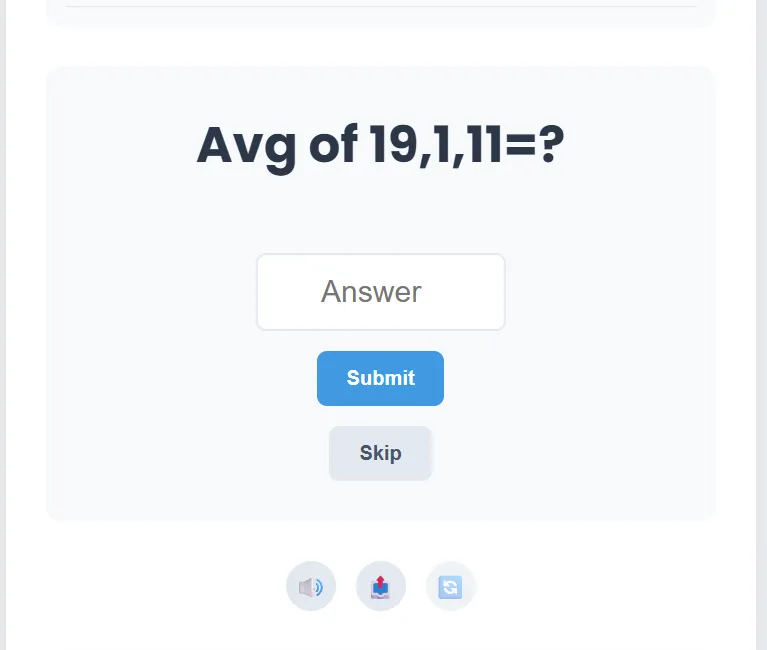 GameBabu: 90 Second Maths ChallengeAn exciting 90-second maths challenge with random problems under time pressure, and a dynamic leaderboard powered by Firebase/MongoDB with real-time score updates.by Modern Age CodersOpen the live project ↗
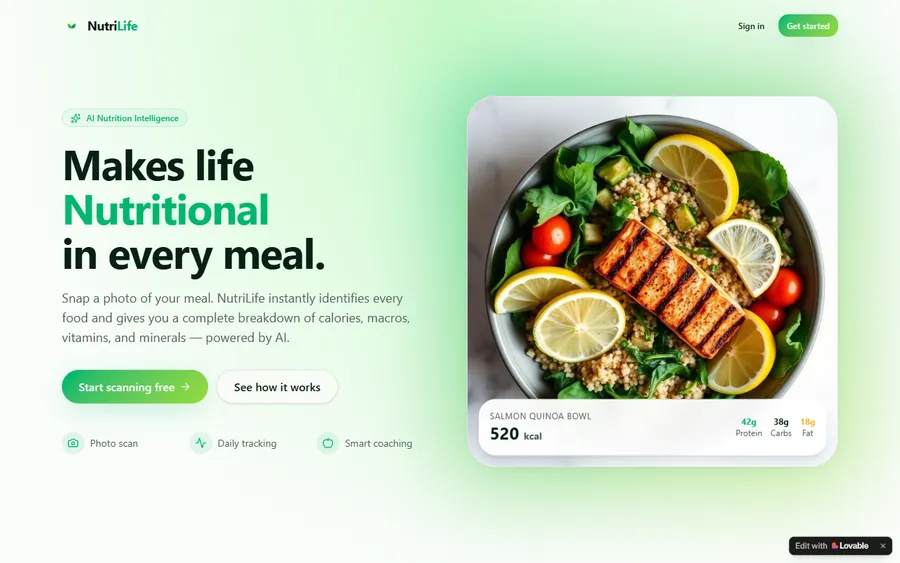 AI & MLNutriLife: AI Nutrition CoachSnap a photo of any meal and NutriLife instantly names every food, then breaks down the calories, macros, vitamins and minerals, powered by AI. Bhavya vibe-coded it from a single idea: shaped the app in prompts, then wired up the AI food-recognition, daily tracking and smart coaching by hand.by BhavyaOpen the live project ↗
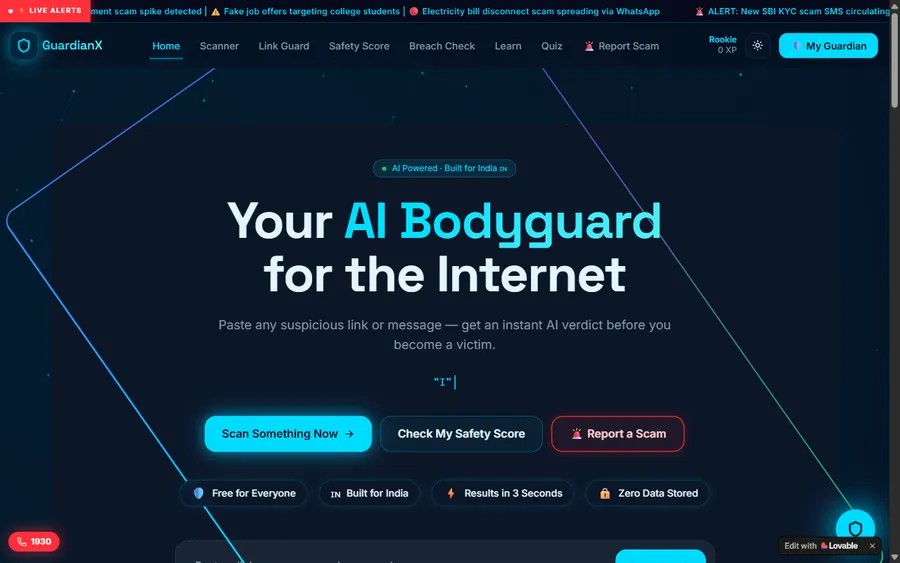 AI & MLGuardianX: AI Bodyguard for the InternetPaste any suspicious link or message and GuardianX returns an instant AI verdict before you become a victim, plus a link scanner, safety score, breach check and live scam alerts built for India. Vibe-coded from idea to working product through prompts, then refined until it genuinely understands how phishing and scams work.by VivaanOpen the live project ↗
Parent & student voices
What our families say
Real, verified reviews from Modern Age Coders families. Read hundreds more on our Wall of Love.
“The classes are excellent. The teachers explain concepts very clearly and make code fun and easy to understand. The sessions are interactive and fun. They also help students boost their confidence. We not only focus on academics, but also on logic building and problem solving.”
Parent
“My child Dhairya is really enjoying the Modern Age Coder IT classes. This is his first online class, and he eagerly looks forward to it. I can see his improvement, and I believe he will grow even more interested in the subject. The teachers are very cooperative and listen to our suggestions. Overall, I am very happy with the class.”
Parent of Dhairya
“The one step solution for my son. Modern Age Coders make learning coding so simple that kids love it. Teachers make it so simple with clear explanations, practical exercises, and interactive content. As per my son, the coding class is very helpful and engaging. Sir explains complex concepts clearly. The projects were challenging and rewarding.”
Parent