BMO / O / 01
Olympiad and competition maths
Invariants, pigeonhole, bounding and colouring, practised.
Open the syllabusUnited Kingdom · Full-time secondary education · 18 November 2026 and 20 January 2027
Three and a half hours for six problems is the most generous time limit in British school mathematics, and the first time most students meet a paper where finishing everything is not the goal. BMO1 falls on 18 November 2026 and BMO2 on 20 January 2027, both sat in a student's own school, both marked by hand: around sixty people gather in December to read every BMO1 script over three days. That last fact is worth more than it looks. At this level a solution is not compared with an answer key by a machine. It is read by a mathematician who is looking for one thing, and this page is about how to give it to them.
Every figure quoted from BMOS or UKMT · Our own problems · No promise of a threshold or a place
In short
The British Mathematical Olympiad has two rounds. BMOS describes BMO1 as a "3 1/2-hour paper" of "6 problems (the first being intended to be more accessible than the rest)" and BMO2 as a "3 1/2-hour paper" of "4 problems", both "taken by students in their own schools". UKMT's calendar puts BMO1 on 18 November 2026, the same day as the Andrew Jobbings Senior Kangaroo, and BMO2 on 20 January 2027, after the Senior Mathematical Challenge on 7 October 2026. BMOS says both "are open entry competitions for students in full time secondary education", with automatic qualification for those who reach a published threshold. BMO1 scripts are marked by "a team of around 60 markers" over three days in December; BMO2 by around twenty people. The top scorers go to a training camp at Trinity College, Cambridge, from which an IMO squad and then a team of six is chosen. We teach proof technique, live online: the first class is free, a group place is USD 100 a month and one-to-one teaching USD 150.
Where to start
At this level the limit is technique and stamina, not syllabus.
BMO / 01
Invariants, extremal arguments, number theory and geometry, with solutions written to a standard a marker would accept.
Open the syllabus →
BMO / 02
For a student whose algebra or geometry is still doing the slowing down.
Open the syllabus →
BMO / 03
The school course running underneath, taught so that it stops competing for the same evenings.
Open the syllabus →The two rounds
Quoted from BMOS and UKMT, read on 20 September 2026.
| BMO1 | BMO2 | |
|---|---|---|
| Date | 18 November 2026 | 20 January 2027 |
| Length | A "3 1/2-hour paper" | A "3 1/2-hour paper" |
| Questions | "6 problems (the first being intended to be more accessible than the rest)" | "4 problems" |
| Where | "taken by students in their own schools" | "taken by students in their own schools" |
| Marking | "A team of around 60 markers gathers in December to mark all the scripts over a 3-day period" | Marking is "carried out by around 20 people" |
| Who can sit it | An "open entry" competition for students in full-time secondary education | The same, with automatic qualification by threshold |
The parenthesis in the BMO1 description is the single most useful sentence on this page for a first-time candidate: the first problem is "intended to be more accessible than the rest". The organisers have deliberately left the door open. A student who sits down, reads all six, panics at questions three to six and never seriously attempts question one has misread the paper, not failed it.
Three and a half hours for six problems is fifty minutes each if spread evenly, and again, nobody should. Two complete solutions on a BMO1 paper is a real result for a first attempt.
Sixty markers over three days tells you what a script is for. Nothing is auto-marked, nothing is compared with a key, and partial credit is decided by a person reading an argument. Presentation is not politeness here; it is the mechanism by which marks are awarded at all.
Both papers are sat in the candidate's own school, on an ordinary school day, which is worth arranging early with a teacher. The Senior Kangaroo falls on the same day as BMO1, and they are different papers for different people.
Sources: the British Mathematical Olympiad site, its eligibility policy, and the UKMT competitions calendar, all read 20 September 2026. We have no connection with UKMT or the BMO Subtrust.
The method
Olympiad papers ask a question school papers never do: show that something is impossible. There is a standard way in, and it is worth an evening.
Try this. Write the numbers 1 to 8 on a board. Rub out any two of them and write down the positive difference instead. Repeat until one number is left. What can that last number be? Play it a few times and the answers look random: 0, then 6, then 2, then 4. The question feels unanswerable. It is not.
| Numbers on the board | Sum at the start | Final numbers we saw | Parity wrong in |
|---|---|---|---|
| 1 to 4 | 10, even | 0, 2, 4 | 0 runs |
| 1 to 5 | 15, odd | 1, 3, 5 | 0 runs |
| 1 to 8 | 36, even | 0, 2, 4, 6, 8 | 0 runs |
| 1 to 9 | 45, odd | 1, 3, 5, 7, 9 | 0 runs |
| 1 to 10 | 55, odd | 1, 3, 5, 7, 9 | 0 runs |
Across twenty thousand games the final number varied wildly and its parity never did. Start with an even total and you finish even; start odd and you finish odd, every time.
Replacing a and b by their difference changes the total by a + b minus the difference, which is twice the smaller number. An even change never alters whether a total is odd or even.
Now impossibility questions have an answer. Cannot reach 0 from 1 to 9? The sum is 45, odd, and it stays odd, so the last number cannot be 0. Two lines, complete.
That is an invariant: a quantity that no permitted move can change. Finding one turns a question about infinitely many possible sequences of moves into a question about a single number, and it is the technique behind a large share of olympiad problems that ask whether something can be done.
The experiment matters as preparation in a way that reading about invariants does not. A student who has watched twenty thousand games refuse to change parity will look for the invariant first next time.
It also models the right relationship with computing. The simulation did not prove anything: twenty thousand games are twenty thousand examples, and the junior olympiad page has a case where forty examples in a row lie. The proof is the two-line argument about twice the smaller number. The program told us where to look.
Students who enjoy that division of labour tend to enjoy informatics olympiads too, where the program is the answer rather than the scout.
The game, the runs and the argument are ours, written and run on 20 September 2026: 20,000 random games over boards of 1 to n for n between 4 and 10, with no run whose final parity differed from the parity of the starting sum.
How to practise
BMO preparation is unlike revision. It is closer to training for distance than for a sprint.
| Worth the hours | Why | The trap it avoids |
|---|---|---|
| Sitting one problem for an hour without help | Olympiad problems are built to resist a first reading | Learning to abandon anything that does not yield in five minutes |
| Attempting question one seriously | BMOS says it is meant to be more accessible | Spending the paper on problems written to be hard |
| Writing solutions out in full, then rereading them cold | Sixty people mark by hand; an argument has to survive a stranger | Working that convinces the author and nobody else |
| Learning techniques as a repertoire | Invariants, extremal cases, pigeonhole, colouring, bounding | Hoping a flash of insight arrives on the day |
| Reading BMOS's own published solutions | They show what a complete argument looks like at this level | Guessing the standard of rigour expected |
The mental adjustment is the hard part. Strong students arrive at BMO1 having always finished papers, and a three-and-a-half-hour paper on which they complete two questions feels like failure. It is not: it is a normal good performance, and the students who accept that early do better than those who keep score against a school-exam standard.
Stamina is trainable and most candidates never train it. Three and a half hours of concentrated mathematics is a physical skill; a student who has never worked for more than forty minutes at a stretch will lose the last hour.
Nothing in a BMO paper requires content beyond school mathematics, which surprises people. What it requires is technique, patience and the willingness to write an argument that could be wrong.
For a student in the year below, the Cayley, Hamilton and Maclaurin papers are the same sport over two hours, and everything learned there carries straight up.
What follows
BMO2 is not the end of the ladder. It is the point at which the ladder becomes a selection process.
| Stage | What happens |
|---|---|
| Senior Mathematical Challenge, 7 October 2026 | The multiple-choice paper from which thresholds are set |
| BMO Round 1, 18 November 2026 | Six problems, three and a half hours, sat in school |
| BMO Round 2, 20 January 2027 | Four problems, three and a half hours, for those above the threshold |
| Training camp | Top BMO2 scorers are invited to a camp at Trinity College, Cambridge |
| The squad | An IMO squad is selected from the camp |
| The team | Further training and selection tests narrow the squad to six, plus reserves |
Eligibility to sit the papers and eligibility to represent the UK are two different things, and BMOS sets them out separately. The papers are open entry for students in full-time secondary education. To be selected for the IMO team, a candidate must hold British citizenship or "will have completed at least 3 full years of full-time secondary education in the UK at the time they leave school".
BMOS also states that refugees, stateless persons and asylum seekers may apply for UK qualified status through UKMT and BMOS, which is worth knowing and is rarely mentioned anywhere else.
For almost everyone who sits BMO1, none of this will apply, and that is the right way to think about the paper. Around sixty markers spend three days in December reading scripts from students who will never go to Cambridge for a training camp, and the reading is the point.
The whole season, every competition we could confirm with its organiser, is on the competitions calendar.
Getting ready
A candidate moves up when the previous habit has become automatic, not when a year has passed.
| Stage | Rung | The sign it is secure |
|---|---|---|
| Years 9 to 10 | 1. Fluent technique | Algebra and geometry never interrupt the thinking |
| Years 10 to 11 | 2. A repertoire | Recognises when to try an invariant, a bound or an extremal case |
| Years 11 to 12 | 3. Stamina | Works one problem for an hour without losing the thread |
| Years 12 to 13 | 4. Writing that survives | Produces arguments a stranger can mark without asking questions |
Sit a full past paper under timed conditions once, then spend the remaining weeks writing up the problems from it properly.
Practise question one specifically. BMOS says it is meant to be more accessible, and a complete solution to it is worth more than four half-attempts.
The same techniques run all the way to the International Mathematical Olympiad, and the squad is chosen from BMO2 by way of Cambridge.
Students who like proving impossibility often like the informatics olympiad, where the impossible thing is usually a running time.
The full list
Four groups, chosen by what is currently in the way.
BMO / O / 01
Invariants, pigeonhole, bounding and colouring, practised.
Open the syllabusBMO / O / 02
Counting arguments made rigorous.
Open the syllabusBMO / O / 03
Technique that should never be the obstacle.
Open the syllabusBMO / S / 01
Pure, mechanics and statistics, taught to the exam.
Open the syllabusBMO / S / 02
For a younger candidate finishing the qualification.
Open the syllabusBMO / S / 03
The international route through the same content.
Open the syllabusBMO / C / 01
Simulate first, then prove what the simulation suggested.
Open the syllabusBMO / C / 02
Enough programming to explore a conjecture in an evening.
Open the syllabusBMO / C / 03
The informatics version of the same discipline.
Open the syllabusBMO / N / 01
Where proofs meet running times.
Open the syllabusBMO / N / 02
Mathematics with a use case attached.
Open the syllabusBMO / N / 03
Statistics done on real data rather than exercises.
Open the syllabusHow lessons run
Teaching is live on video from India, five and a half hours ahead of the UK in winter and four and a half in summer, at a time agreed and kept in UK time.
Weekday evening
The usual slot for Years 11 to 13.
Weekend morning
Long enough to work one problem to the end.
Holiday intensives
For building stamina before November.
A lesson often contains a single question, taken from first reading to a written argument.
Invariants, extremal arguments, pigeonhole and bounding are taught as a repertoire, not as tricks.
Small enough that every write-up is read, large enough for two approaches to collide.
Written by us in the olympiad idiom. BMOS publishes its own past papers and solutions.
For a candidate far beyond their year group or preparing for BMO2.
No threshold, no squad place and no medal is promised by us, and nobody honest promises one.
Student work
Four published projects by students at our school, built outside any competition. More on the student labs page.
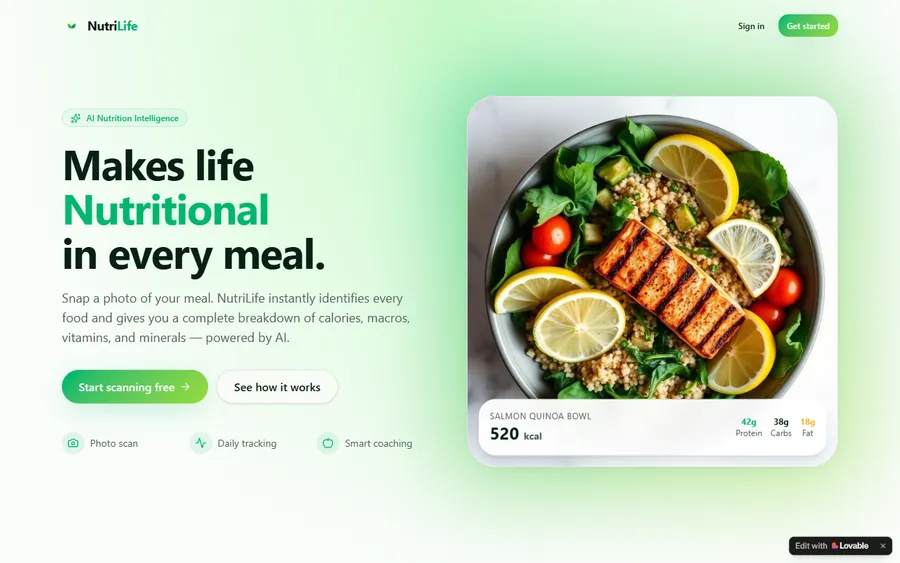
AI and ML
An AI nutrition coach that reads what you eat and works you toward a target.
AI and ML
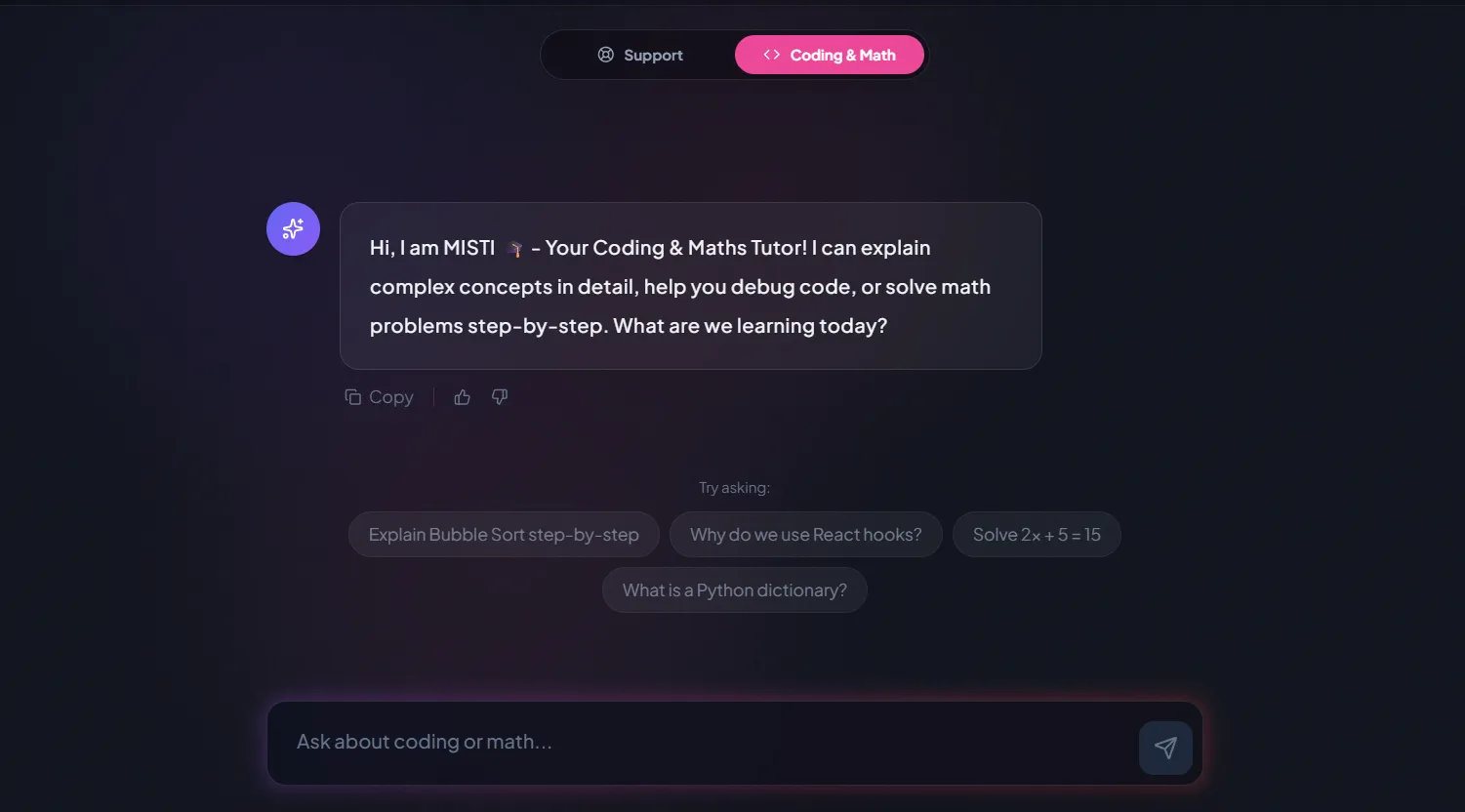
A chatbot that answers mathematics and programming questions, built and deployed by a student.
AI and ML
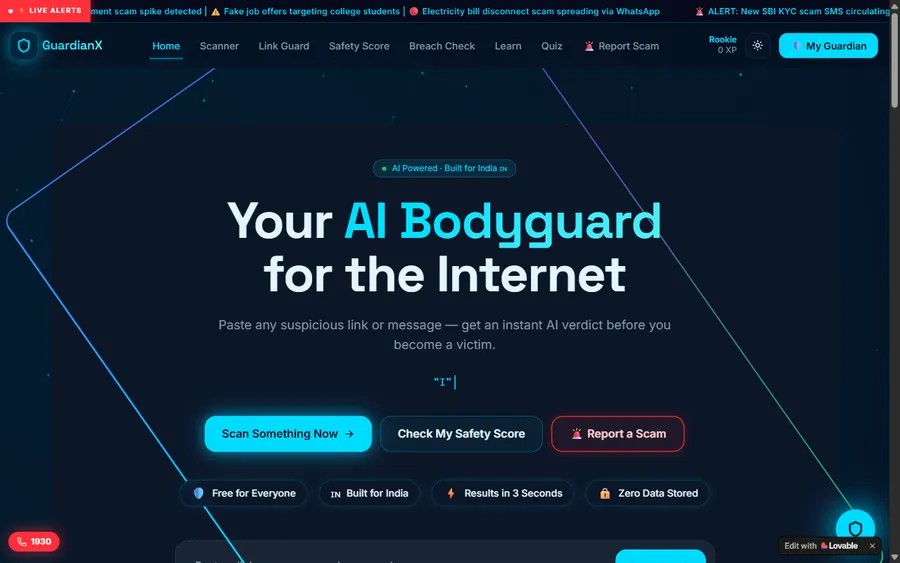
An assistant that helps a young person recognise unsafe situations online.
Web app
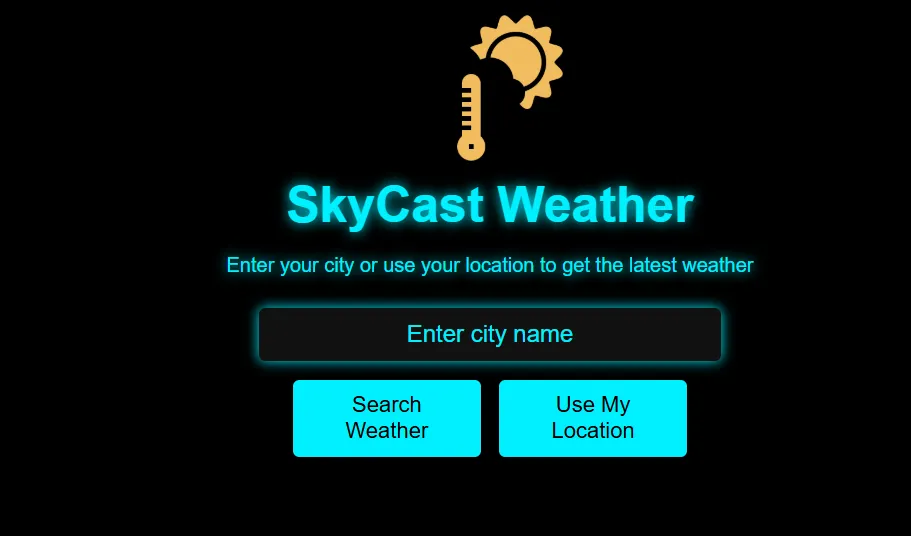
A weather forecasting site with live conditions for any location.
Fees
A monthly rate in US dollars, the same in every country outside India. No joining fee and no fixed term.
Free first class
USD 0
no card required
Group batch
USD 100
a month, billed in US dollars
One to one
USD 150
a month, billed in US dollars
What families say
Six reviews from our Google profile, printed exactly as they were left.
★★★★★
"The one step solution for my son. Modern Age Coders make learning coding so simple that kids love it. The teachers explain complex concepts clearly with practical exercises and interactive content."
Ria Mukherjee
Parent
★★★★★
"Modern Age Coders has been a game-changer for me. I struggled to grasp IT concepts and coding before joining, but their classes transformed everything. I can now confidently write complex programs with ease."
Samriddha Mondal
Student
★★★★★
"One of the most wonderful education centres out there. Education is not limited to school syllabus but focuses on skill development."
Vansh Agarwal
Student
★★★★★
"My child Dhairya is really enjoying the Modern Age Coders classes. This is his first online class and he eagerly looks forward to it. I can already see his improvement, and the teachers are very cooperative."
Sonam Oswal
Parent of Dhairya
★★★★★
"Modern Age Coders have wonderful teachers who teach in a clear, easy and practical way. The teacher boosts students' confidence and inspires them to learn without hesitation."
Sonu Goyal
Parent
★★★★★
"I highly recommend this computer coding class! The teachers are incredibly knowledgeable and passionate about coding."
Ritu Kedia
Parent
British Mathematical Olympiad questions
UKMT's calendar puts BMO Round 1 on 18 November 2026, the same day as the Andrew Jobbings Senior Kangaroo, and BMO Round 2 on 20 January 2027.
BMOS describes both rounds as a three-and-a-half-hour paper: six problems in BMO1 and four in BMO2, taken by students in their own schools.
BMOS says "BMO1 and BMO2 are open entry competitions for students in full time secondary education", with automatic qualification for those who reach the published threshold and are eligible.
BMOS says the first of the six BMO1 problems is "intended to be more accessible than the rest". A first-time candidate should read it carefully rather than skimming past it.
By hand. BMOS says around 60 markers gather in December to mark all the BMO1 scripts over three days, and that BMO2 marking is carried out by around 20 people. Nothing is machine-marked, so a written argument has to convince a reader.
Two complete solutions on BMO1 is a genuine result for a first attempt. The paper is not designed to be finished, and judging it by school-exam standards is the commonest way to feel bad about a good performance.
A quantity that no allowed move can change. If you write 1 to 9 on a board and repeatedly replace two numbers by their difference, the parity of the total never changes, so the last number left must be odd. That kind of argument is how olympiad problems prove something is impossible.
BMOS sets a separate rule: a candidate must hold British citizenship, or will have completed at least three full years of full-time secondary education in the UK by the time they leave school. Refugees, stateless persons and asylum seekers may apply for UK qualified status through UKMT and BMOS.
Top scorers are invited to a training camp at Trinity College, Cambridge. An IMO squad is chosen from the camp, and further training and selection tests narrow it to a team of six plus reserves.
The first lesson is free. A group place is then USD 100 a month and one-to-one teaching USD 150, with nothing to join and no minimum term.
Related pages
The rungs below, the informatics equivalent, and the whole season in one table.
Two hours and six problems, split by school year.
Where the written solutions start, at Year 8.
The whole season, organiser by organiser.
The same discipline, with a compiler as the marker.
The four school systems, and every UK page.
Seven things to ask before a card comes out.
Start here
Tell us the year group and which round is next. The free lesson takes one hard problem from the first reading to an argument that would survive a marker.
Rather read first? Course syllabuses are on the course pages, the teaching approach on how we teach, and the order of topics on the roadmap.
WhatsApp us · +91 91233 66161 · contact@modernagecoders.com
A WhatsApp message is free from a UK mobile and usually the quickest route to us. Our number is Indian, which we state everywhere, and we keep no British office.