JMO / M / 01
Olympiad and competition maths
Unfamiliar problems and the writing that finishes them.
Open the syllabusUnited Kingdom · Year 8 and below · 15 June 2027
A pupil who does well in the Junior Mathematical Challenge in May is invited, six weeks later, to sit something that looks nothing like it. The Challenge is multiple choice and rewards a good eye. The Olympiad is six questions in two hours with nothing to choose from, and it rewards something a twelve-year-old has usually never been asked for: an argument that closes the door on every other answer. That step is the whole of JMO preparation. It is not harder topics, and it is certainly not more speed. It is learning that finding the answer is the beginning of the question.
UKMT facts, dated · No past paper reproduced · No promise of a medal or a score
In short
The Junior Mathematical Olympiad is run by the UK Mathematics Trust and is described by UKMT as a "2 hour Challenge consisting of 6 Olympiad style questions". It falls on 15 June 2027. Eligibility is "England, Wales and Overseas: Year 8 and below", "Scotland: S2 or below" and "Northern Ireland: Year 9 or below". Entry is by invitation based on a qualifying score in the Junior Mathematical Challenge, sat on 5 May 2027, or by discretionary entry; UKMT says around 1,200 students qualify from the JMC each year and that automatic qualifiers pay nothing. The Junior Kangaroo falls on the same day, 15 June 2027. Schools enter pupils; families cannot, and neither can we. What we teach is the mathematics and the writing the paper asks for, live online. The first class is free; a group place is USD 100 a month and one-to-one teaching USD 150.
Where to start
Choose by what the pupil can already write down, not by what they can work out in their head.
JMO / 01
The core: unfamiliar problems, and solutions written so that someone else is convinced.
Open the syllabus →
JMO / 02
The algebra, geometry and number the olympiad questions are built out of.
Open the syllabus →
JMO / 03
For the pupil who likes checking a claim on a thousand cases before trying to prove it.
Open the syllabus →The paper
Facts read at UKMT's own pages on 20 September 2026.
| Part | What UKMT says | What it means for a pupil |
|---|---|---|
| Format | A "2 hour Challenge consisting of 6 Olympiad style questions" | Twenty minutes a question, and every one written out in full |
| Date | 15 June 2027 | Six weeks after the Junior Mathematical Challenge on 5 May 2027 |
| England, Wales and Overseas | "Year 8 and below" | Usually Year 8, sometimes a very strong Year 7 or younger |
| Scotland | "S2 or below" | The Scottish stages, not translated year groups |
| Northern Ireland | "Year 9 or below" | One year higher than England and Wales, matching the NI school year |
| How to get in | "by invitation based on a qualifying JMC score, or by discretionary entry" | The Challenge in May is the normal route |
| How many | "Around 1,200 students qualify from the JMC each year" | A small paper: the whole country fits in a large school hall |
| Cost | Automatic qualifiers are free; discretionary entries carry a fee set by UKMT | We do not print the fee; UKMT publishes it in pounds |
The Junior Kangaroo is sat on the same day, 15 June 2027. It is the other follow-on from the Junior Mathematical Challenge and it is multiple choice, which makes it a different kind of afternoon entirely. A pupil and a teacher should know which paper is coming, because preparing for one is not preparing for the other.
Around 1,200 qualifiers is worth holding onto as well. Whatever a pupil scores in June, being in that room at all puts them among a few hundred per year group nationally.
Two hours for six questions is generous by exam standards and tight by olympiad standards. Most pupils will not finish all six, and that is normal and expected: a full, correct, well-written solution to three questions is a good paper.
The temptation this creates is the one to resist. A pupil who writes hurried partial answers to all six usually scores less than one who writes three properly, because olympiad marking rewards complete arguments, not coverage.
Sources: UKMT competitions calendar and the Junior Mathematical Olympiad page, read 20 September 2026. Modern Age Coders is not connected with the UK Mathematics Trust.
The method
The single idea that separates a Challenge pupil from an Olympiad pupil, in one worked case.
Take the expression n × n + n + 41 and try whole numbers. At n = 0 it gives 41, a prime. At n = 1, 43, prime. At n = 2, 47, prime. Keep going. It is prime at n = 3, at n = 10, at n = 25, at n = 39. Forty values in a row, every single one prime. Any reasonable twelve-year-old would now say the rule always gives primes, and any reasonable twelve-year-old would be wrong.
| n | n × n + n + 41 | Prime? |
|---|---|---|
| 0 | 41 | Yes |
| 1 | 43 | Yes |
| 10 | 151 | Yes |
| 25 | 691 | Yes |
| 39 | 1601 | Yes, the fortieth in a row |
| 40 | 1681 | No: 1681 is 41 times 41 |
Put n = 41 in and every term has a factor of 41; at n = 40 the same thing happens a step early. Once you see it, the failure is obvious. Before you see it, forty examples look like certainty.
That the right answer is among five printed options, so checking a couple of cases and choosing is a good strategy. It is a good strategy, for that paper.
A sentence explaining why nothing else is possible. Examples can support an argument; they can never be one.
This is the conversation to have in the week after the Challenge results arrive, and it takes about ten minutes. Most pupils find it genuinely startling, which is the point: the habit of trying cases until convinced is exactly what has served them well until now.
The follow-up question is the useful one. If forty cases are not enough, what would be? The answers a twelve-year-old can reach are already real mathematics: try every possibility when there are few enough, split into cases that cover everything, or find the reason rather than the pattern.
Our demonstration was checked in code before it went on this page, which is itself the smaller half of the lesson. Testing a claim on a thousand cases is a good way to decide whether to believe it. It is not a way to prove it, and the pupils who go furthest learn to want both.
For a pupil who enjoys that side, the same instinct runs straight into programming: the British Informatics Olympiad is built on it.
The values were computed by us on 20 September 2026 and checked individually: every n from 0 to 39 gives a prime, and n = 40 gives 1681, which is 41 squared.
How to practise
Olympiad preparation looks slow from the outside and is. Six weeks is enough if it is spent on the right thing.
| Worth doing | Why | Not worth doing |
|---|---|---|
| Writing full solutions to problems already solved | The writing is the part being marked, and it is the part nobody has practised | Working more problems and never writing any up |
| Reading UKMT's published solutions | They model the standard of explanation expected | Only checking whether the final answer matched |
| Working one hard problem for an hour | Olympiad questions are meant to resist a first look | Twenty quick questions to feel productive |
| Learning to say "suppose not" | Half of junior olympiad questions yield to assuming the opposite | Memorising named techniques by rote |
| Stopping when it stops being fun | A tired twelve-year-old learns nothing and remembers the mood | Daily drilling in the fortnight before |
The most common mistake families make is to buy harder material. The mathematics in a JMO question is rarely beyond a good Year 8 pupil; it is the packaging that is unfamiliar. A pupil who can already do the arithmetic and the algebra needs practice at unpacking, not at topics.
The second most common is to treat June as an exam. It is not one: nothing depends on it, no school place turns on it, and a pupil who enjoys it will come back next year at a higher level.
UKMT publishes past papers and full solutions free on its own site. That archive is better than any purchased course, and it is the reason we do not reproduce a single UKMT question here or in our lessons: the real ones are already available from the people who wrote them.
What a teacher adds is reading. A pupil can tell whether their answer is right; they usually cannot tell whether their explanation is convincing, and that is the thing worth an hour a week of somebody else's attention.
The route
The junior olympiad is one rung of a ladder that reaches the international olympiad, and almost nobody climbs it in a straight line.
| Round | Date | Who sits it |
|---|---|---|
| Junior Mathematical Challenge | 5 May 2027 | Year 8 and below, entered by the school |
| Junior Kangaroo | 15 June 2027 | A follow-on from the Challenge, multiple choice |
| Junior Mathematical Olympiad | 15 June 2027 | Around 1,200 qualifiers, six written questions |
| Intermediate Mathematical Challenge | 27 January 2027 | The next year group up |
| Cayley, Hamilton and Maclaurin | 18 March 2027 | The intermediate olympiads, by school year |
A Year 8 pupil who sits the JMO in June moves into the intermediate rounds the following year, where the same habit of writing proofs is worth even more. The Cayley, Hamilton and Maclaurin papers are the next stop, split by school year rather than by score.
Nothing about the ladder is compulsory and no rung is a verdict. Plenty of strong mathematicians sit one olympiad, find it uncomfortable, and come back to it at sixteen.
For a pupil in Scotland, the Scottish Mathematical Challenge runs alongside all of this on its own timetable and marks explanations too, which makes the two a good pairing.
And the whole year, every competition we could confirm with its organiser, is laid out on the competitions calendar.
Getting ready
Progress here is measured in what a pupil writes, not in topics covered.
| Stage | Rung | The sign it is secure |
|---|---|---|
| Year 6 to 7 | 1. Confident arithmetic | Algebra and fractions do not slow the thinking down |
| Year 7 | 2. Unfamiliar problems | Will sit with a problem for twenty minutes without asking for a hint |
| Year 7 to 8 | 3. Written solutions | Writes an explanation a classmate could follow without being told |
| Year 8 | 4. Closed arguments | Can say why no other answer is possible, not just that this one works |
Take three problems the pupil has already solved and write them up properly. That is the fastest available gain, and it takes an evening.
Do not add topics in the last fortnight. Nothing in a junior olympiad needs content a Year 8 pupil has not met.
The intermediate rounds follow the next year, and the writing habit is worth more at every level above this one.
Pupils who enjoy proving things often take to programming for the same reason, which is what maths through coding is built around.
The full list
Arranged by what a pupil is ready for, with the syllabus behind every card.
JMO / M / 01
Unfamiliar problems and the writing that finishes them.
Open the syllabusJMO / M / 02
Pre-algebra and geometry, argued not drilled.
Open the syllabusJMO / M / 03
For a younger pupil whose foundations still wobble.
Open the syllabusJMO / S / 01
Calculation that stops costing thinking time.
Open the syllabusJMO / S / 02
Speed methods for the arithmetic underneath.
Open the syllabusJMO / S / 03
Timed upper primary work, for a younger candidate.
Open the syllabusJMO / C / 01
Test a claim on a thousand cases, then prove it.
Open the syllabusJMO / C / 02
A first typed language for a curious Year 7.
Open the syllabusJMO / C / 03
Reasoning about method, in code.
Open the syllabusJMO / N / 01
Algebra through to calculus, for a pupil racing ahead.
Open the syllabusJMO / N / 02
Foundation and higher, to the board the school uses.
Open the syllabusJMO / N / 03
For the pupil who wants to build as well as prove.
Open the syllabusHow lessons run
Lessons are live on video from India, where the clock runs five and a half hours ahead of Britain in winter and four and a half in summer. Times are agreed and kept in UK time.
Early weekday evening
The usual slot for Years 7 and 8.
Weekend morning
For a long session on one problem.
Holiday weeks
Short and frequent, while school is out.
The teacher reads what the pupil wrote and says where a reader would stop being convinced.
Written by us in the olympiad spirit. UKMT past papers stay where UKMT publishes them.
Small enough for every solution to be looked at, large enough for two methods to meet.
Being stuck for twenty minutes is the work, not a sign that something is wrong.
For a pupil working far above their year, or one who will not speak in a group.
No qualification, medal or score is promised by us, and nobody honest promises one.
Student work
Four published projects by students at our school, none of them competition entries. More on the student labs page.
AI and ML
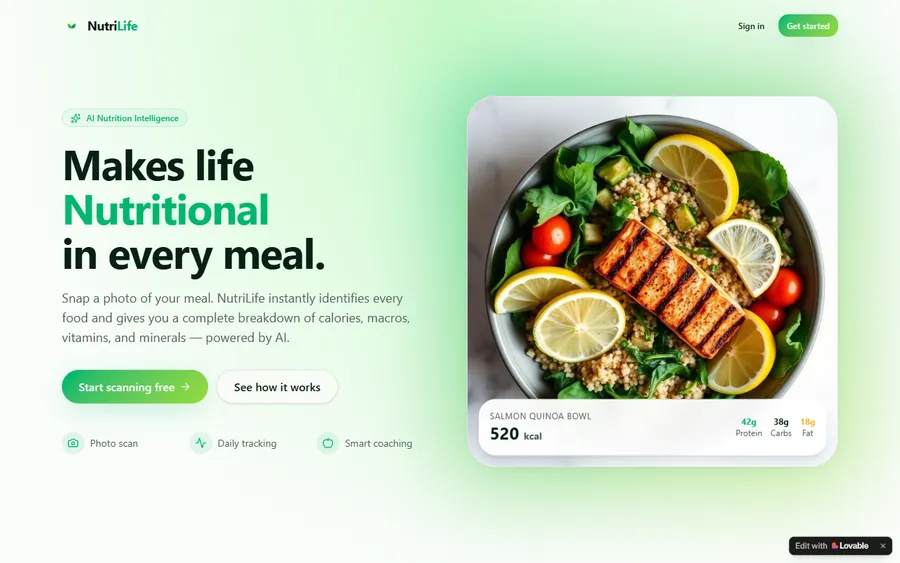
An AI nutrition coach that reads what you eat and works you toward a target.
AI and ML
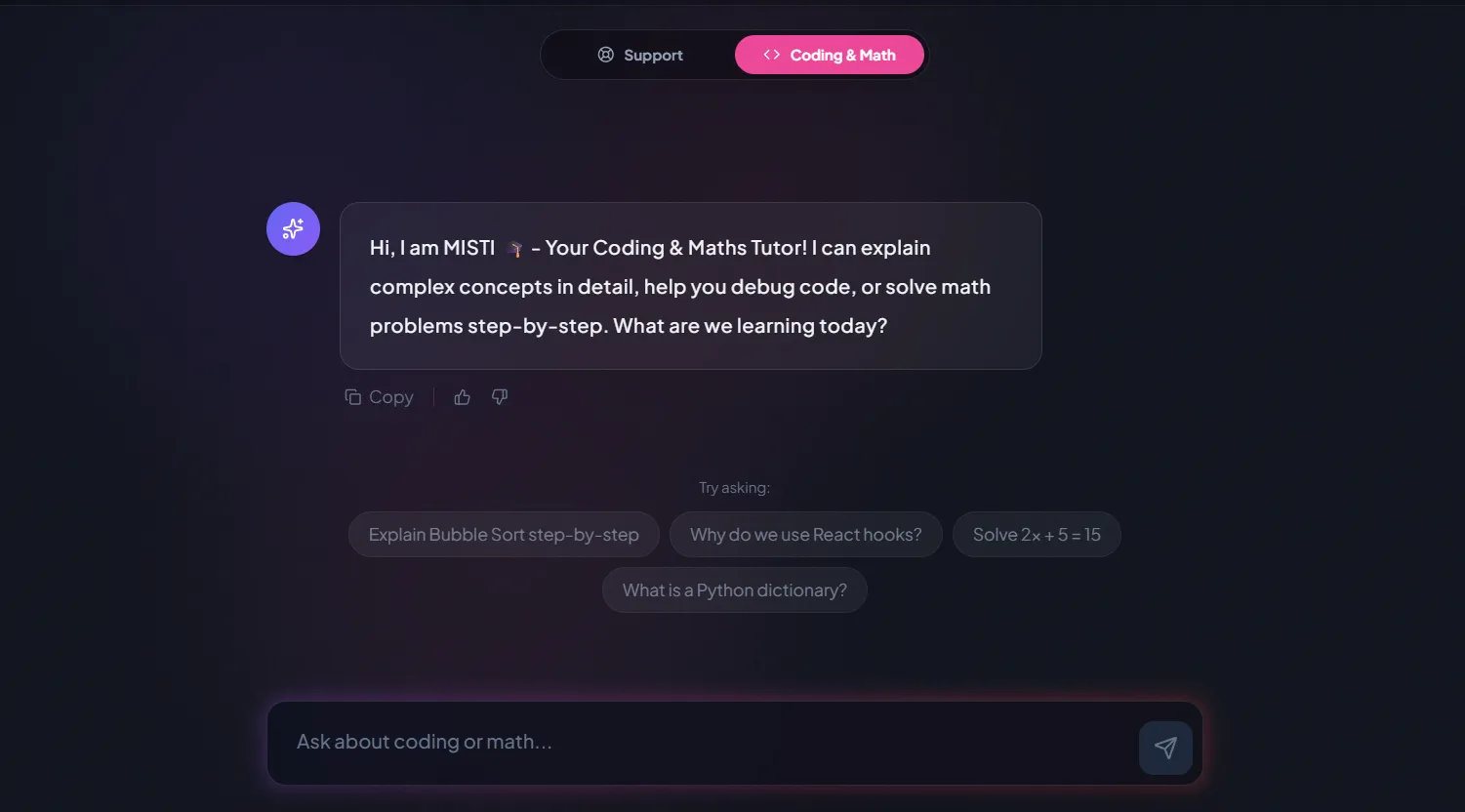
A chatbot that answers mathematics and programming questions, built and deployed by a student.

AI and ML
An assistant that helps a young person recognise unsafe situations online.
Web app
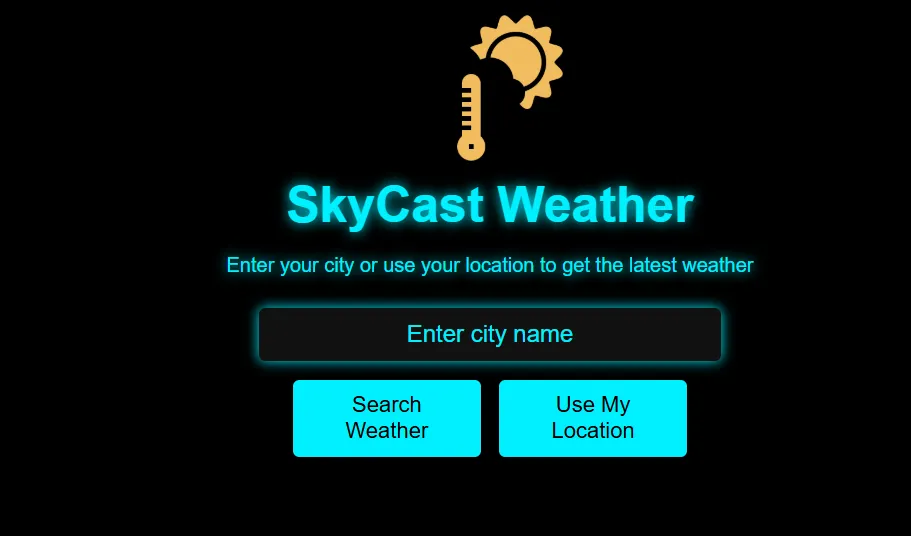
A weather forecasting site with live conditions for any location.
Fees
A monthly rate in US dollars, the same outside India everywhere. No joining fee and no fixed term.
Free first class
USD 0
no card required
Group batch
USD 100
a month, billed in US dollars
One to one
USD 150
a month, billed in US dollars
What families say
From our Google profile, in families' own words.
★★★★★
"The one step solution for my son. Modern Age Coders make learning coding so simple that kids love it. The teachers explain complex concepts clearly with practical exercises and interactive content."
Ria Mukherjee
Parent
★★★★★
"Modern Age Coders has been a game-changer for me. I struggled to grasp IT concepts and coding before joining, but their classes transformed everything. I can now confidently write complex programs with ease."
Samriddha Mondal
Student
★★★★★
"One of the most wonderful education centres out there. Education is not limited to school syllabus but focuses on skill development."
Vansh Agarwal
Student
★★★★★
"My child Dhairya is really enjoying the Modern Age Coders classes. This is his first online class and he eagerly looks forward to it. I can already see his improvement, and the teachers are very cooperative."
Sonam Oswal
Parent of Dhairya
★★★★★
"Modern Age Coders have wonderful teachers who teach in a clear, easy and practical way. The teacher boosts students' confidence and inspires them to learn without hesitation."
Sonu Goyal
Parent
★★★★★
"I highly recommend this computer coding class! The teachers are incredibly knowledgeable and passionate about coding."
Ritu Kedia
Parent
Junior Mathematical Olympiad questions
UKMT's competitions calendar gives 15 June 2027, six weeks after the Junior Mathematical Challenge on 5 May 2027.
UKMT publishes it by nation: Year 8 and below in England, Wales and overseas; S2 or below in Scotland; Year 9 or below in Northern Ireland.
By invitation based on a qualifying score in the Junior Mathematical Challenge, or by discretionary entry. UKMT says around 1,200 students qualify from the JMC each year, and that automatic qualifiers pay nothing.
UKMT describes a two-hour challenge of six olympiad-style questions. There is nothing to choose from: each answer is written out in full, and the reasoning is what is marked.
It is different rather than simply harder. The content is within reach of a strong Year 8 pupil; what is new is being asked to prove that no other answer is possible.
Not all six, usually. Three complete, well-written solutions is a good paper, and hurried partial answers to all six generally score less.
The Junior Kangaroo, also on 15 June 2027, which is the multiple-choice follow-on from the Junior Mathematical Challenge. A pupil should know which paper they are sitting.
By writing up solutions to problems the pupil has already solved, reading UKMT's published solutions for the standard of explanation, and spending a long time on single problems. Not by adding topics.
No. UKMT publishes its own past papers and full solutions free, which is the right place for them. Our practice problems are written by us in the same spirit.
The first lesson is free. After it, a group place is USD 100 a month and one-to-one teaching USD 150, with nothing to join and no minimum term.
Related pages
The rungs above and below, and the whole competition year in one table.
Every contest we could confirm, month by month.
The rung below, for ages 9 to 11.
Marks for the explanation, on a Scottish timetable.
The same instinct, applied to programs.
Four school systems, and every UK page.
What to ask any provider before paying.
Start here
Tell us the year group and whether your child has sat the Challenge. The free lesson works on one real problem, all the way to a written solution.
Rather read first? Syllabuses sit on the course pages, the teaching method on how we teach, and the order of topics on the roadmap.
WhatsApp us · +91 91233 66161 · contact@modernagecoders.com
WhatsApp costs a UK mobile nothing and usually reaches us first. Our number is Indian, as we say on every page, and there is no office in Britain.