TMC / A / 01
Mental maths for kids
Arithmetic that arrives rather than being worked out.
Open the syllabusUnited Kingdom · Teams of four · Years 8 to 13
Every other competition on this site is sat alone. The Team Maths Challenges are not, and that changes what a good performance is made of. Four students share a table, one round has them working in pairs with each answer feeding the next question, another has them running answers to a marker, and the mathematics is deliberately no harder than the school course. What separates teams is accuracy and communication, in that order, and the shuttle round exists to punish anybody who has only ever been fast.
Quoted from UKMT with the date we read it · Our own practice material · Nothing promised about a regional final
In short
UKMT runs two team competitions. In the Team Maths Challenge "each team consists of four students, with a maximum of two students from the older year group", drawn from "Year 8 and Year 9" in England and Wales, S1 to S3 in Scotland and Years 9 and 10 in Northern Ireland, and it has four rounds: The Group, The Crossnumber, The Shuttle and The Relay. The Senior Team Maths Challenge has "teams of four students" from Years 12 and 13 in England and Wales, Years 13 and 14 in Northern Ireland and S5 and S6 in Scotland, with "three rounds - The Group, The Crossnumber and The Shuttle" plus non-scoring starters. Senior registration opened on Thursday 10 September 2026, regional finals run through November 2026 and the national final is in February 2027. Regional finals are hosted in schools, and high-scoring teams are invited to the national final. We teach the mathematics and the accuracy, live online. A first class is free; a group place is USD 100 a month and one-to-one teaching USD 150.
Where to start
Team rounds reward reliable mathematics done quickly, not clever mathematics done slowly.
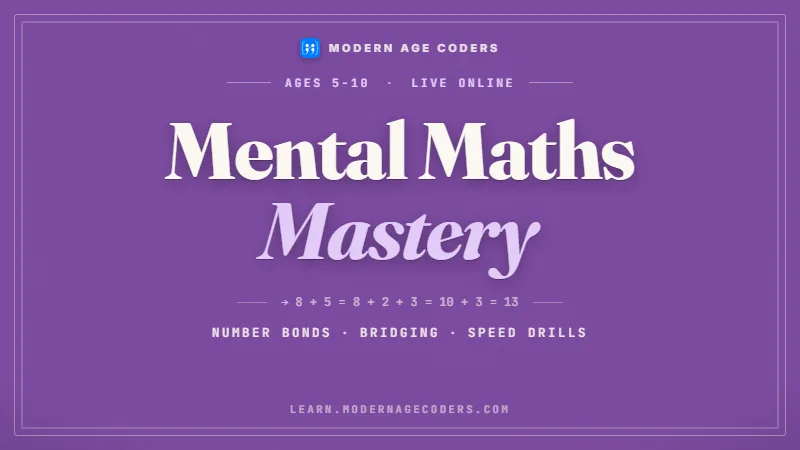
TMC / 01
For Year 8 and 9 squads: arithmetic that arrives, because in a relay the clock is the opponent.
Open the syllabus →
TMC / 02
The ratio, algebra and geometry the junior rounds are built from, taught to reliability.
Open the syllabus →
TMC / 03
For senior squads: the sixth-form content the Group and Crossnumber rounds draw on.
Open the syllabus →The rounds
Facts read at UKMT's own pages on 20 September 2026.
| Team Maths Challenge | Senior Team Maths Challenge | |
|---|---|---|
| Team | "Each team consists of four students, with a maximum of two students from the older year group" | "Teams of four students", no more than two from the older year |
| England and Wales | "Year 8 and Year 9 (with a maximum of two Year 9 pupils)" | Year 12 and 13 |
| Scotland | S1, S2 and S3 | S5 and S6 |
| Northern Ireland | Year 9 and Year 10 | Year 13 and 14 |
| Rounds | The Group, The Crossnumber, The Shuttle and The Relay | "three rounds - The Group, The Crossnumber and The Shuttle", plus starter questions that do not count |
| Regional finals | "Regional Finals take place in host schools" | Throughout November 2026, at venues around the UK |
| National final | In June, by invitation | February 2027, venue to be confirmed |
The closest thing to an ordinary paper: the team works together on a set of questions, and the only novelty is that four people have to agree.
A crossword with numbers, split so that two students hold the across clues and two the down. Neither pair can see the other's clues, so the grid is filled by inference and conversation.
The two rounds that make this a team sport. In the shuttle, answers feed forward from one question to the next; in the relay, a runner carries answers to a marker against the clock.
UKMT's 2026-27 competitions calendar does not print dates for the team challenges, so this page gives the shape of a year rather than inventing one. For the junior challenge the published cycle is registration in October, regional finals from February to the Easter break and an invite-only national final in June. For the senior challenge UKMT has published this season: registration opened on Thursday 10 September 2026, regional finals run through November 2026 and the national final is in February 2027.
Entry is a school matter and entry prices are published by UKMT in pounds, which we do not print. A teacher registers a team; nothing a family or a tutor does can put a child in one.
The team composition rule is worth reading twice. A junior team is four students with at most two from the older year group, which means a squad cannot simply be the four best mathematicians in Year 9. Building a team is itself a constrained problem, and the schools that do well at this tend to be the ones that start with Year 8 the previous year.
A school may enter only one team per senior regional event, so internal selection matters more at sixth form than most pupils expect.
Sources: UKMT, Team Maths Challenge and Senior Team Maths Challenge, read 20 September 2026. We have no connection with the UK Mathematics Trust.
The method
The shuttle round feeds each answer into the next question. That one design decision changes what a team should practise.
On an ordinary paper the questions are independent: get one wrong and you lose one mark. In a shuttle the answer to the first question is an input to the second, so a slip at the start does not cost one answer. It costs every answer after it. That sounds obvious and its arithmetic is not, because people badly underestimate how quickly reliability drains away when steps depend on each other.
| If each question is right this often | Independent: expected right out of 4 | Chained: all four right |
|---|---|---|
| 95 per cent of the time | 3.8 | 81.5 per cent of the time |
| 90 per cent of the time | 3.6 | 65.6 per cent of the time |
| 85 per cent of the time | 3.4 | 52.2 per cent of the time |
| 80 per cent of the time | 3.2 | 41.0 per cent of the time |
A team that is right nine times out of ten, which sounds excellent, completes a four-link chain only about two thirds of the time. Drop to eight in ten, which still sounds respectable, and the chain holds in only four rounds out of ten.
Now compare the two columns. Going from 80 to 95 per cent accuracy is worth about half a mark on an independent paper and doubles the chance of a clean chain. Nothing else a team can practise has that kind of leverage.
Check the first answer of a chain harder than the last. Teams instinctively rush the early questions because they are easier, which is exactly backwards: the early answers carry the most weight.
Say the answer out loud before passing it on, and have the receiving pair repeat it back. Most shuttle failures we hear about are transcription rather than mathematics: a 6 read as a 5, a sign dropped in the handover.
None of this is exam craft dressed up. It is the same reasoning that makes engineers worry about long chains of dependent steps, and a fourteen-year-old who has felt it in a shuttle round understands something about reliability that a lot of adults do not.
The figures are ours, computed on 20 September 2026 from the stated accuracies. They describe arithmetic, not any particular team.
Regionals and finals
The competition is built around regional events rather than a single national paper, which changes the experience completely.
| Stage | Junior | Senior |
|---|---|---|
| Registration | Opens in October | Opened Thursday 10 September 2026 |
| Regional finals | February to the Easter break, in host schools | Throughout November 2026, at venues around the UK |
| Who goes through | "The winning team from the Regional Finals will be invited to participate in the National Final" | High-scoring teams from the regional finals are invited |
| Other invitations | High scoring second place teams, or teams showing exceptional teamwork | Not stated |
| National final | June, invitation only | February 2027, venue to be confirmed |
| Teams per school | Not stated | One team per regional event |
The line about "teams that have shown exceptional teamwork" is unusual enough to be worth pointing at. Most competitions promote on score alone. UKMT reserves the option to invite a team because of how it worked, which tells you what the organisers think the competition is for.
A regional final in a host school is also a very different day from a paper sat at a desk. There is noise, there is a runner, there are other schools in the room, and a squad that has only ever practised quietly at lunchtime can find the atmosphere itself a surprise.
The most useful preparation, and the cheapest, is to run the rounds. A teacher with eight pupils can split them into two teams and run a crossnumber with the clues divided; nothing about that needs a tutor or a purchase.
What we add is the mathematics underneath: arithmetic that does not wobble under time pressure, and the habit of checking an answer that something else depends on. The rest belongs to the school.
Getting ready
Team performance is built from individual reliability, then communication, then pace.
| Stage | Rung | The sign it is secure |
|---|---|---|
| Year 7 to 8 | 1. Reliable arithmetic | Gets the ordinary questions right when hurried |
| Year 8 | 2. Working out loud | Can explain a step to a teammate mid-question without losing it |
| Year 8 to 9 | 3. Checking what matters | Checks an answer harder when something depends on it |
| Year 9 and up | 4. Pace under noise | Keeps accuracy in a room with a clock and other teams in it |
Run a shuttle round in practice and record where it broke. In our experience the answer is almost always the handover, not the mathematics.
Practise the crossnumber with the clues genuinely split. Doing it with all the clues visible teaches none of the skill the round is testing.
Individual papers ask for something different, and the competitions calendar lays them all out.
Pupils who like the relay pace often like competitive programming, which is the same sport with a compiler.
The full list
Grouped by what a squad member needs, with each syllabus a click away.
TMC / A / 01
Arithmetic that arrives rather than being worked out.
Open the syllabusTMC / A / 02
Speed methods for the calculation underneath.
Open the syllabusTMC / A / 03
From first beads to calculating with none.
Open the syllabusTMC / B / 01
Ratio, algebra and geometry taught to reliability.
Open the syllabusTMC / B / 02
For the questions that do not announce a method.
Open the syllabusTMC / B / 03
The school course, taught to the board in use.
Open the syllabusTMC / C / 01
Sixth-form content at the pace a group round needs.
Open the syllabusTMC / C / 02
The qualification running alongside.
Open the syllabusTMC / C / 03
Including how quickly reliability drains in a chain.
Open the syllabusTMC / D / 01
The relay round with a compiler as the marker.
Open the syllabusTMC / D / 02
Programs that check the answer you were about to hand over.
Open the syllabusTMC / D / 03
Searching, sorting and how long a method takes.
Open the syllabusHow lessons run
Lessons are live on video from India, where the clock sits five and a half hours ahead of Britain in winter and four and a half in summer. Times are agreed and kept in UK time.
Early weekday evening
For Year 8 and 9 squad members.
Later weekday evening
For sixth-form squads.
Weekend morning
For a longer session on a full set of rounds.
We work on getting it right when hurried, which is the thing a chained round actually tests.
Every answer is stated and repeated back, which is the habit that stops shuttle handovers going wrong.
A group is large enough that two methods meet and small enough that every answer is heard.
Practice rounds written by us. UKMT publishes its own past material and that is where the real thing lives.
For a squad member with one specific weakness to close before a regional.
We cannot register a team or influence selection, and we promise no result.
Student work
Four published projects by students at our school, built outside any competition. More on the student labs page.
AI and ML
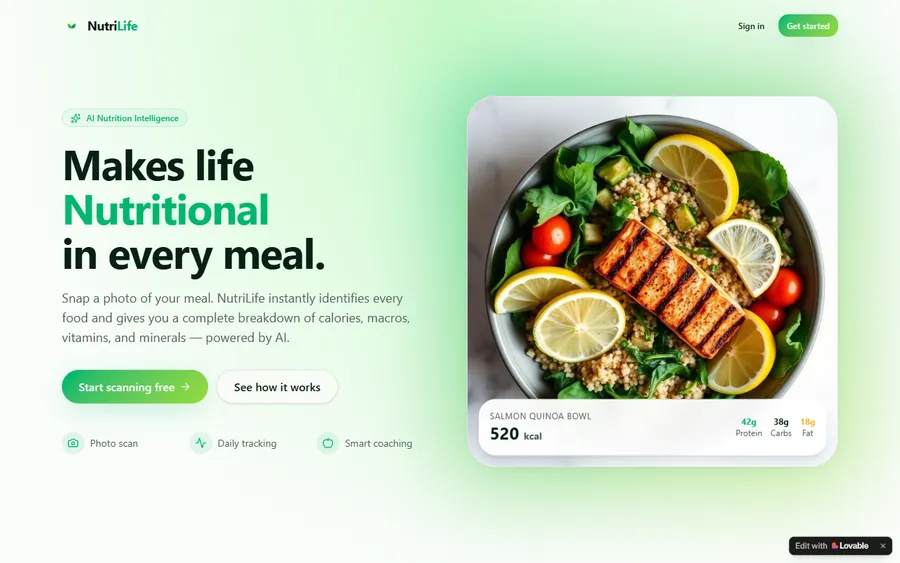
An AI nutrition coach that reads what you eat and works you toward a target.
AI and ML
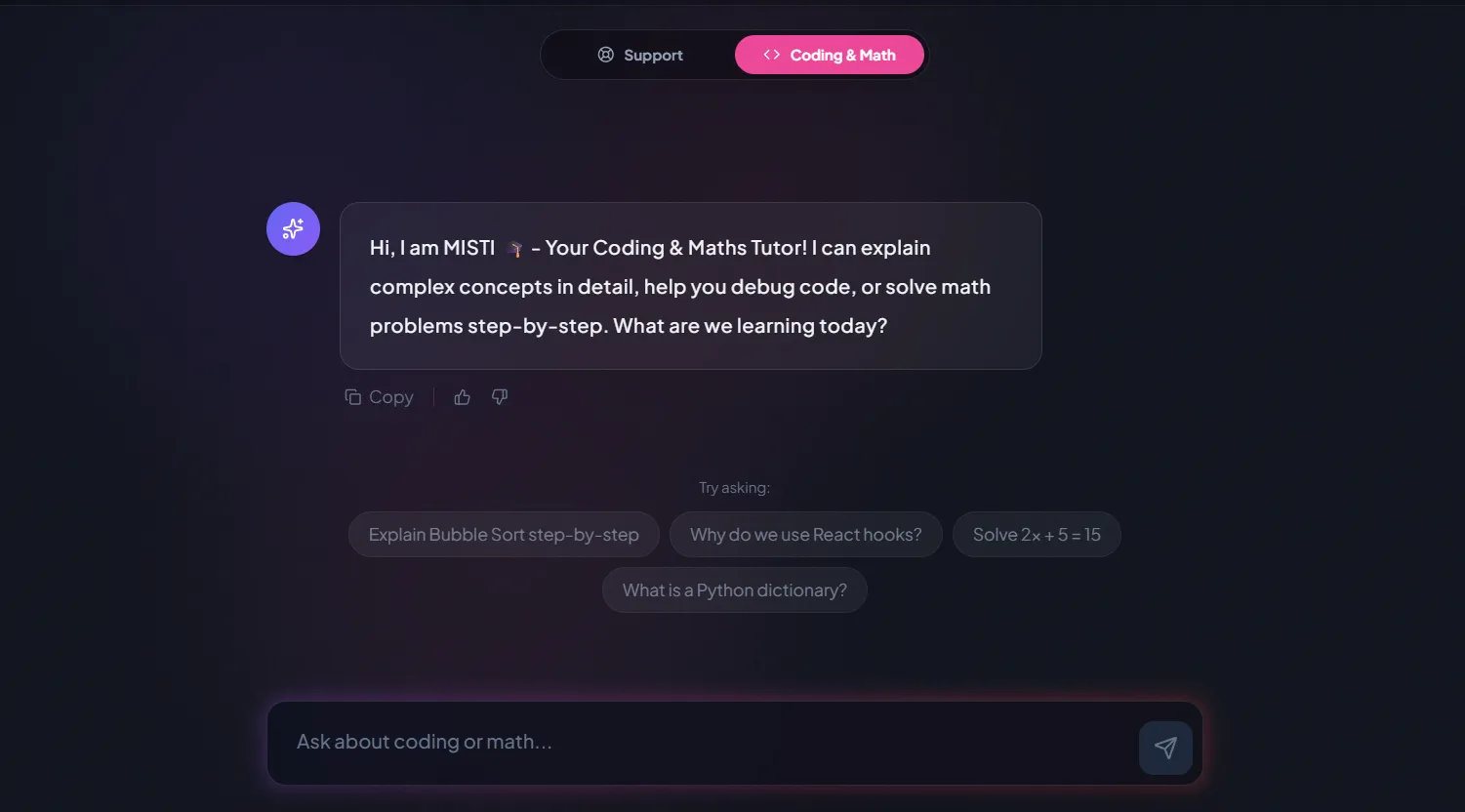
A chatbot that answers mathematics and programming questions, built and deployed by a student.

AI and ML
An assistant that helps a young person recognise unsafe situations online.
Web app
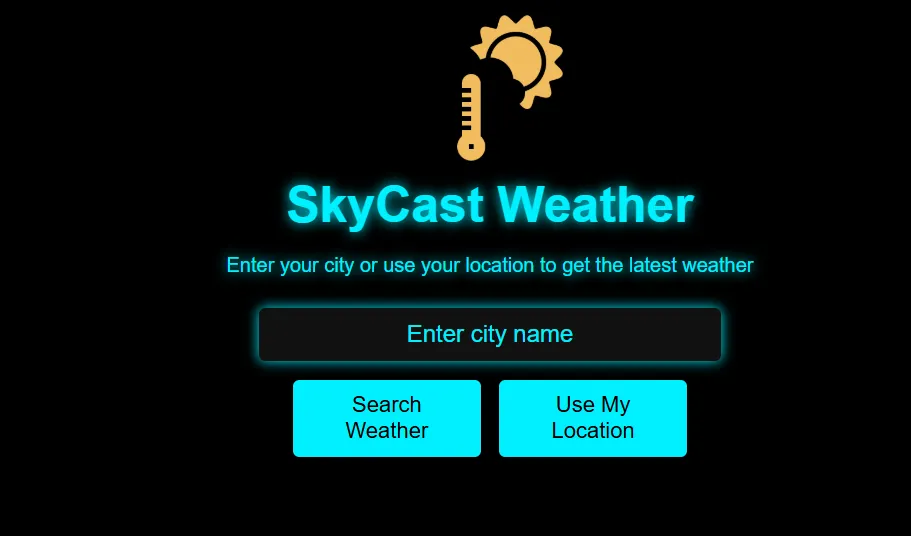
A weather forecasting site with live conditions for any location.
Fees
One monthly rate in US dollars for families outside India. No registration fee and no minimum number of months.
Free first class
USD 0
no card required
Group batch
USD 100
a month, billed in US dollars
One to one
USD 150
a month, billed in US dollars
What families say
Google reviews left by families, reproduced with nothing changed.
★★★★★
"The one step solution for my son. Modern Age Coders make learning coding so simple that kids love it. The teachers explain complex concepts clearly with practical exercises and interactive content."
Ria Mukherjee
Parent
★★★★★
"Modern Age Coders has been a game-changer for me. I struggled to grasp IT concepts and coding before joining, but their classes transformed everything. I can now confidently write complex programs with ease."
Samriddha Mondal
Student
★★★★★
"One of the most wonderful education centres out there. Education is not limited to school syllabus but focuses on skill development."
Vansh Agarwal
Student
★★★★★
"My child Dhairya is really enjoying the Modern Age Coders classes. This is his first online class and he eagerly looks forward to it. I can already see his improvement, and the teachers are very cooperative."
Sonam Oswal
Parent of Dhairya
★★★★★
"Modern Age Coders have wonderful teachers who teach in a clear, easy and practical way. The teacher boosts students' confidence and inspires them to learn without hesitation."
Sonu Goyal
Parent
★★★★★
"I highly recommend this computer coding class! The teachers are incredibly knowledgeable and passionate about coding."
Ritu Kedia
Parent
Team challenge questions
Four students, with a maximum of two from the older year group. In England and Wales that means Year 8 and Year 9 with at most two Year 9 pupils; in Scotland S1 to S3; in Northern Ireland Years 9 and 10.
The junior challenge has four: The Group, The Crossnumber, The Shuttle and The Relay. The Senior Team Maths Challenge has three, The Group, The Crossnumber and The Shuttle, plus starter questions that do not count towards the score.
A round in which each answer feeds into the next question, so a mistake early on carries forward. It is the round that makes the competition about accuracy rather than speed.
Because reliability compounds when steps depend on each other. Four questions each answered correctly nine times out of ten would give 3.6 right on an ordinary paper, but chained they are all correct only about two thirds of the time.
UKMT says senior registration opened on Thursday 10 September 2026, regional finals run throughout November 2026, and the national final is in February 2027 with the venue to be confirmed.
UKMT's 2026-27 competitions calendar does not list team dates. The cycle the junior page describes is registration in October, regional finals from February to the Easter break, and an invite-only national final in June, so a school should check with UKMT for this season's dates.
The winning team from a regional final is invited, and UKMT says high scoring second place teams or teams that have shown exceptional teamwork may also be invited. At senior level, high-scoring teams from the regional finals are invited.
At senior level UKMT says a school may enter only one team per regional event. The junior pages we read do not state a limit, so ask UKMT.
By running the rounds, especially the crossnumber with the clues genuinely split between pairs, and by recording where a shuttle chain broke. In practice it is usually the handover rather than the mathematics.
The first lesson is free. A group place is then USD 100 a month and one-to-one teaching USD 150, with nothing to pay to register.
Related pages
The individual rounds a squad member is likely to sit as well, and the whole season in one table.
Twenty-five multiple-choice questions in an hour.
Six written questions for Year 8 and below.
The intermediate olympiads, split by school year.
Dates for every contest, checked with the people who run them.
The four school systems, and every UK page.
How to tell a serious provider from a well-designed one.
Start here
Tell us the year group and which round a squad member struggles with. The free lesson is a real one, and afterwards we say plainly where the errors are coming from.
Rather read first? The syllabus for each course is on its own course page, the approach is on how we teach, and the roadmap puts the topics in order.
WhatsApp us · +91 91233 66161 · contact@modernagecoders.com
WhatsApp is free from a UK mobile and tends to reach us soonest. Our number is an Indian one, which we state on every page, and no British office exists.