APZ / A / 01
Scratch for kids
Sequence, loops and colour, without typing.
Open the syllabusUnited Kingdom · Under 19 · Deadline 22 March 2027
A child writes a short Python program at a kitchen table in Cardiff, and a few weeks later it runs on a computer aboard the International Space Station while the station is somewhere over the Pacific. That is not a metaphor and it is not a competition in the usual sense: there is no ranking, no pass mark and nothing to win. Astro Pi Mission Zero takes about an hour, it is free, and every entry that follows the rules runs in space and comes back with a certificate saying where the station was at the time. This page covers both missions, what the Python actually has to do, and the one detail that has cost British schools an entry: the deadline is not set in UK time.
Quoted from the organiser with the date we read it · No Astro Pi material reproduced · Nothing promised beyond what the organiser offers
In short
"Astro Pi is an ESA Education project run in collaboration with the Raspberry Pi Foundation", described by the organisers as "a free challenge where kids run their code in space". There are two missions, both for young people aged "19 and under". Mission Zero takes about an hour: a team of "up to 4 young people", supervised by a mentor who may be a teacher, educator, parent or code club leader, writes a Python program that shows a personalised, nature-inspired image on an Astro Pi computer aboard the International Space Station, using a colour and luminosity sensor reading to set the background colour. It is written in a web browser with no special hardware. Mission Space Lab takes two to six hours and runs a longer program on the station. The 2026/27 Mission Zero cycle launched on 14 September 2026, closes on "22 March 2027, 12:00 noon CET", runs in May 2027 and issues certificates in June, each signed by an ESA astronaut and showing where the station was. We teach the Python. A first class is free; a group place is USD 100 a month and one-to-one teaching USD 150.
Where to start
Mission Zero needs about an hour of Python. Mission Space Lab needs rather more.
APZ / 01
The right starting point for most Mission Zero entrants: a first typed language, taught so that the program can be read back before it runs.
Open the syllabus →
APZ / 02
For Mission Space Lab: files, loops, sensors and structure, which is where a longer program needs real technique.
Open the syllabus →
APZ / 03
For a younger child who wants to take part but has never written a line: the logic first, the typing after.
Open the syllabus →The two missions
Facts read at the organiser's own pages on 20 September 2026.
| Mission Zero | Mission Space Lab | |
|---|---|---|
| What it is | "Send a personalised image to the astronauts on the International Space Station!" | "Run your program on board the International Space Station" |
| How long | About one hour | Two to six hours |
| Age | "Age 19 and under" | Under 19 |
| Team | "Up to 4 young people", with a mentor | A team with a mentor |
| Written in | Python, in a web browser, no special hardware | Python, with more of it |
| The task | A personalised, nature-inspired image, with a colour and luminosity sensor reading setting the background colour | A longer program that runs on the station |
| Cost | Free | Free |
Mission Zero is the one to start with, and its design is unusually generous. There is no competition in it: every entry that follows the rules and meets the deadline is run on the station, and every participant receives a certificate showing the location of the ISS when their program ran, with the exact start and end times, signed by an ESA astronaut.
That means a child cannot fail at Mission Zero except by missing the deadline or breaking a rule. For a nine-year-old who has never finished anything technical, that is a rare and valuable thing.
The sensor reading is the detail that makes it real programming rather than a drawing exercise. The program asks the Astro Pi computer what the colour and light levels are and uses the answer to set the background, so the image that appears depends on conditions aboard the station at the moment it runs.
Mission Space Lab is the longer sibling, two to six hours, for teams who want to write a program that does something with the station's sensors rather than show a picture. It suits a school club with a term rather than an afternoon.
Sources: Astro Pi and its Mission Zero pages, read 20 September 2026. Modern Age Coders is not connected with ESA Education or the Raspberry Pi Foundation.
The method
The organiser publishes the Mission Zero deadline as "22 March 2027, 12:00 noon CET". For a British school that sentence needs converting, and the conversion is not the one most people assume.
The instinct is to think that noon in Europe is around eleven in Britain in winter and around noon in summer, and to guess that March is close enough to summer not to matter. It matters. The precise question is whether the clocks have changed by the deadline day, and the answer is no, by six days.
| Question | Answer | Why it matters |
|---|---|---|
| What day is 22 March 2027? | A Monday | A school day, so the deadline falls in lesson time |
| When do the clocks change? | The last Sunday of March, which in 2027 is 28 March | Both the UK and continental Europe change on the same day |
| So on 22 March 2027? | The UK is still on winter time and CET is one hour ahead of it | The gap between the two is one hour, not zero |
| What is noon CET in the UK? | 11am | A class submitting at 11.30 UK time on the day has missed it |
Deadlines in another country's local time look harmless. The error only appears on the day, when there is no time left to fix it, and it is invisible to anyone reading the date alone.
When a deadline is published in someone else's time, convert it once, in writing, and check whether a clock change falls between now and then. Both halves matter.
Treat the deadline as the Friday before. Nothing about Mission Zero requires the last hour, and a program submitted early still runs in May.
This is a small thing that teaches a large one. Almost every system a young programmer will ever touch stores times in one zone and shows them in another, and almost every bug in that area comes from assuming the offset is fixed when it changes twice a year on dates that differ between countries.
A child who has converted one real deadline by hand, and checked the clock-change date rather than assuming it, has met the whole problem in ten minutes.
It also shows why we date every fact on these pages. The conversion above is true for the 2027 cycle, and the equivalent sentence for a later year depends on where that year's deadline falls relative to the last Sunday in March. Check it again rather than trusting this paragraph in 2029.
The related trap on our Surrey page is the same family from the other end: GPS satellites keep a clock that ignores leap seconds, so their midnight is eighteen seconds off UTC.
The conversion is ours, computed on 20 September 2026 from the deadline the organiser publishes. The last Sunday of March 2027 is the 28th; 22 March 2027 is a Monday.
Getting it done
Mission Zero is designed to be completed in a single session, and the things that stop it are rarely the programming.
| Need | Why | The thing that goes wrong |
|---|---|---|
| A mentor over 18 | The organiser requires a teacher, educator, parent or code club leader to supervise and submit | Children working alone and having nobody to submit the entry |
| A browser and an hour | The code is written in a web browser with no special hardware | Waiting for equipment that is not needed |
| An idea for the image | The entry is a personalised, nature-inspired image, so the design takes as long as the code | Half the hour spent choosing a picture |
| The sensor line understood | The background colour comes from a colour and luminosity reading taken on the station | Copying the line without knowing what it does |
| A submission well before the day | The deadline is noon CET, which is 11am UK time on 22 March 2027 | Submitting on the morning of the deadline |
For a class of thirty, the sensible shape is teams of up to four with one mentor and one hour, and a rule that the image is sketched on paper before anybody opens a browser. The programming part of Mission Zero is genuinely short; the deciding part is knowing what you want it to look like.
For a child doing it at home, a parent counts as the mentor, which is worth knowing because many families assume a school has to be involved.
For Mission Space Lab, treat it as a project rather than a session. Two to six hours of work is a half term of a lunchtime club, and it rewards a team that can plan and test rather than one that can type quickly.
Either way, the certificate is the point. A child who can say that a program they wrote ran on the International Space Station, and show where the station was at the time, has something no exam gives them.
Getting ready
Mission Zero needs rung two. Everything above it is for the longer mission and for what comes after.
| Stage | Rung | The sign it is secure |
|---|---|---|
| Ages 7 to 10 | 1. Sequence and repetition | Can predict what a short program will do before running it |
| Ages 9 to 12 | 2. First Python | Writes and fixes a dozen lines, including a colour and a loop |
| Ages 11 to 14 | 3. Input from the world | Uses a sensor reading or a data file to change what a program does |
| Ages 13 to 18 | 4. A project that finishes | Plans, tests and completes something over several sessions |
Do Mission Zero this week rather than next month. It takes an hour and the deadline is 11am UK time on 22 March 2027.
Sketch the image on paper first. It is the half of the task that actually takes the time.
Mission Space Lab is the same idea with a term behind it, and it suits a club.
The competitions calendar has everything else open to a UK child this year, including several with no age floor.
The full list
Sorted by what a child can write alone today, with the syllabus behind each card.
APZ / A / 01
Sequence, loops and colour, without typing.
Open the syllabusAPZ / A / 02
Building things that move, before anything is typed.
Open the syllabusAPZ / A / 03
The number sense a first program leans on.
Open the syllabusAPZ / B / 01
A first typed language, taught patiently.
Open the syllabusAPZ / B / 02
Colour, coordinates and patterns, in code.
Open the syllabusAPZ / B / 03
Real code, in a world a child already knows the rules of.
Open the syllabusAPZ / C / 01
Files, structure and sensors, properly.
Open the syllabusAPZ / C / 02
What to do with readings once you have them.
Open the syllabusAPZ / C / 03
For a program that has to finish in time.
Open the syllabusAPZ / D / 01
Models built and checked against reality.
Open the syllabusAPZ / D / 02
Somewhere to publish what you build.
Open the syllabusAPZ / D / 03
The qualification, with the exam board the school entered.
Open the syllabusHow lessons run
Teaching is live on video from India, five and a half hours ahead of the UK in winter and four and a half in summer, at a time agreed and kept in UK time.
Early weekday evening
For primary and lower secondary children.
Later weekday evening
For older students working on the longer mission.
Weekend morning
For a full session on one project.
Children say what a program will do before they run it, which is how a short program gets understood rather than copied.
We teach what a sensor reading actually is, so the line that sets a background colour is not magic.
Enough for ideas to cross the room, few enough that every screen gets looked at.
Written by us. The organiser publishes its own guides and we do not copy them.
For a child far ahead of their year, or one working on Mission Space Lab.
A mentor submits an Astro Pi entry. We teach the Python and have no role in the challenge.
Student work
Four projects our students finished and put online, none of them entries for anything. There are more on the student labs page.
AI and ML
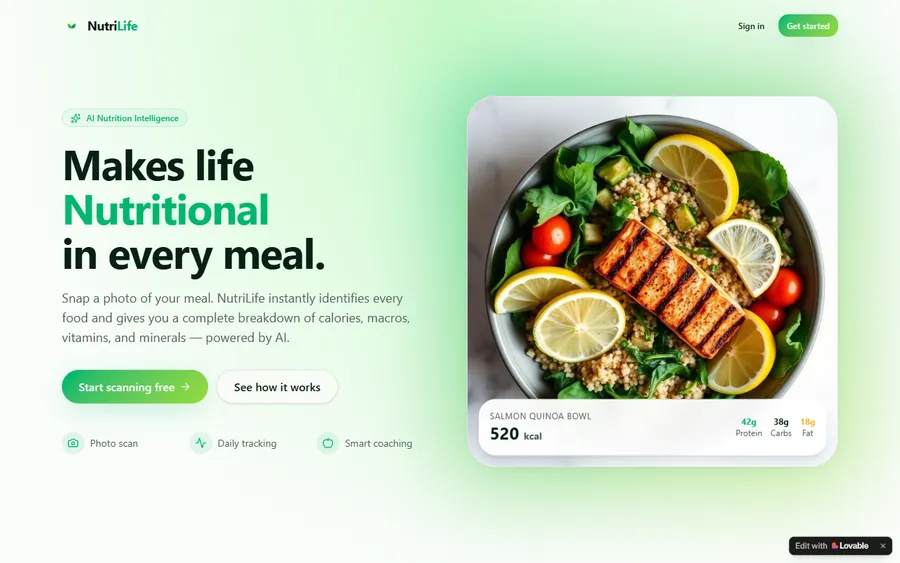
An AI nutrition coach that reads what you eat and works you toward a target.
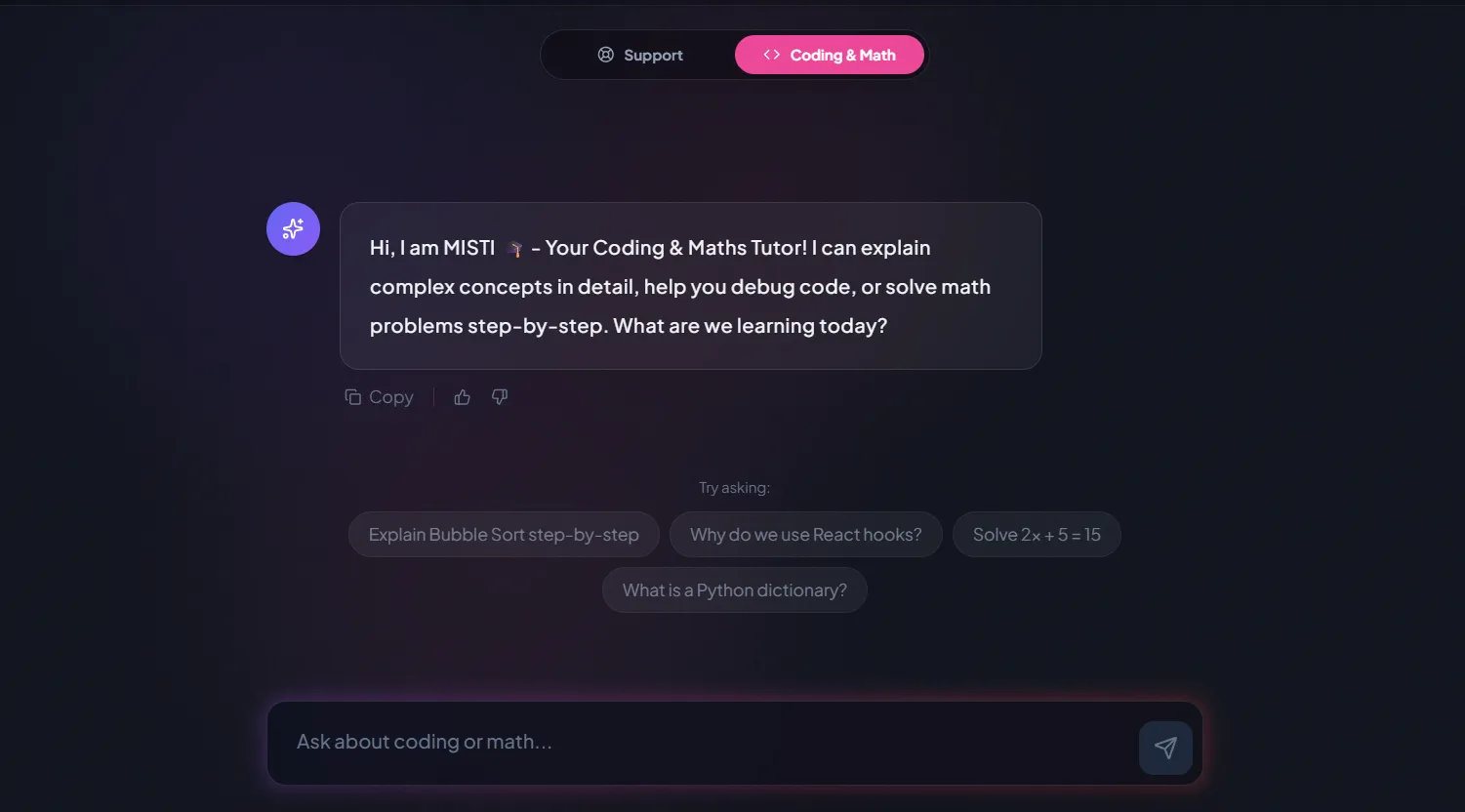
AI and ML
A chatbot that answers mathematics and programming questions, built and deployed by a student.
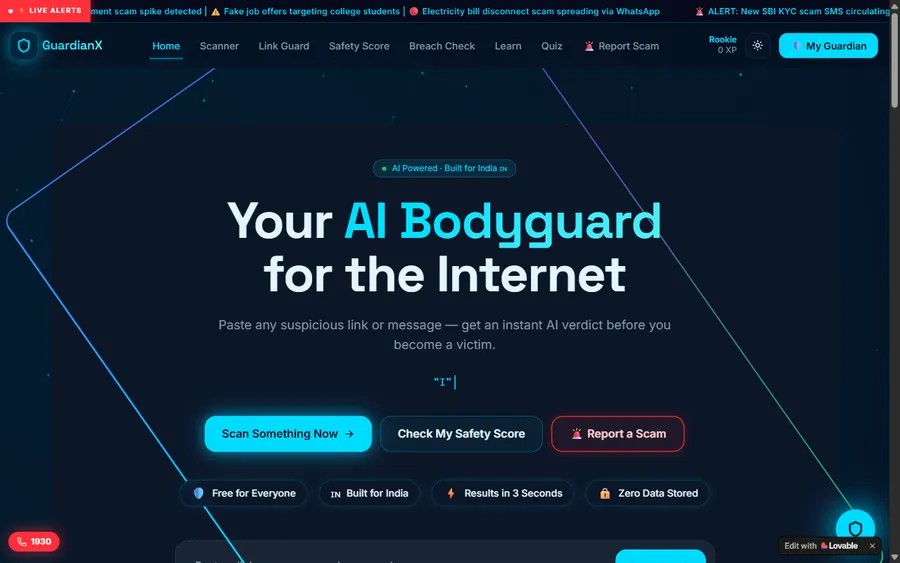
AI and ML
An assistant that helps a young person recognise unsafe situations online.
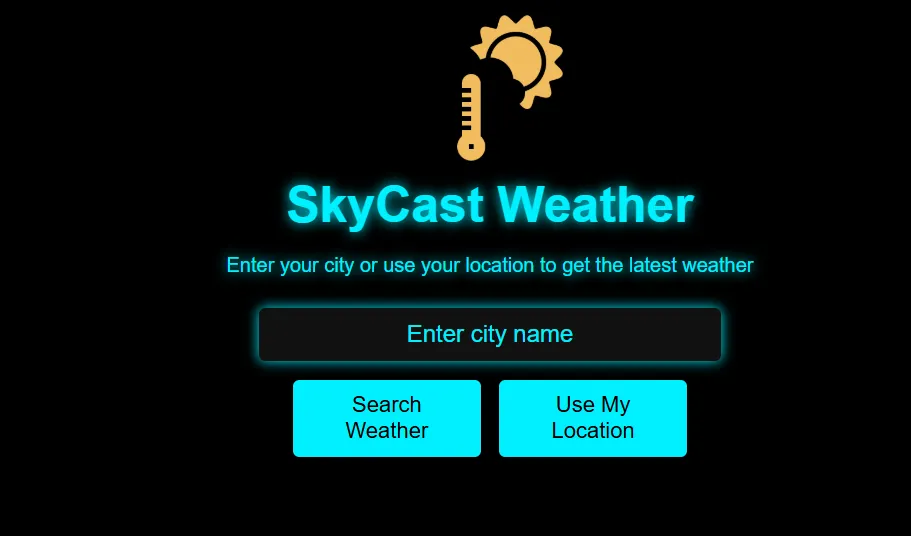
Web app
A weather forecasting site with live conditions for any location.
Fees
US dollars, charged monthly, at one rate for every country except India. No sign-up fee and no term to commit to.
Free first class
USD 0
no card required
Group batch
USD 100
a month, billed in US dollars
One to one
USD 150
a month, billed in US dollars
What families say
Reviews families left on our Google profile, printed word for word.
★★★★★
"The one step solution for my son. Modern Age Coders make learning coding so simple that kids love it. The teachers explain complex concepts clearly with practical exercises and interactive content."
Ria Mukherjee
Parent
★★★★★
"Modern Age Coders has been a game-changer for me. I struggled to grasp IT concepts and coding before joining, but their classes transformed everything. I can now confidently write complex programs with ease."
Samriddha Mondal
Student
★★★★★
"One of the most wonderful education centres out there. Education is not limited to school syllabus but focuses on skill development."
Vansh Agarwal
Student
★★★★★
"My child Dhairya is really enjoying the Modern Age Coders classes. This is his first online class and he eagerly looks forward to it. I can already see his improvement, and the teachers are very cooperative."
Sonam Oswal
Parent of Dhairya
★★★★★
"Modern Age Coders have wonderful teachers who teach in a clear, easy and practical way. The teacher boosts students' confidence and inspires them to learn without hesitation."
Sonu Goyal
Parent
★★★★★
"I highly recommend this computer coding class! The teachers are incredibly knowledgeable and passionate about coding."
Ritu Kedia
Parent
Astro Pi questions
The organisers describe it as "an ESA Education project run in collaboration with the Raspberry Pi Foundation" and "a free challenge where kids run their code in space". There are two missions, Mission Zero and Mission Space Lab.
About an hour of work: a Python program that shows a personalised, nature-inspired image on an Astro Pi computer aboard the International Space Station, with a colour and luminosity sensor reading setting the background colour. It is written in a web browser and needs no special hardware.
Young people aged 19 and under, in teams of up to four, supervised by a mentor who may be a teacher, educator, parent or code club leader.
The organiser gives 22 March 2027 at 12:00 noon CET for the 2026/27 Mission Zero cycle, which launched on 14 September 2026.
11am. Both the UK and continental Europe change their clocks on the last Sunday of March, which in 2027 is the 28th, six days after the deadline, so on the day CET is one hour ahead of UK time.
Not in the usual sense. There is no ranking or pass mark: every entry that follows the rules and meets the deadline is run on the station.
A certificate showing the location of the ISS when their program ran, with the exact start and end times, signed by an ESA astronaut. The organiser says programs run in May 2027 and certificates follow in June.
A little helps and an hour is enough for most children with a mentor beside them. A child who has never typed code can still take part; the programming is short and the image design takes as long.
The longer mission, two to six hours, in which a team writes a program that runs on board the station. It suits a school club with a term rather than a single session.
No. A mentor submits an Astro Pi entry and we have no role in the challenge. We teach the Python behind it.
Related pages
Challenges with no ranking, contests with one, and the whole year in a table.
Teams of three, hidden tests, January and March.
November, free, and no programming at all.
Dates for every contest, checked with the people who run them.
The four school systems, and every UK page.
What a primary-age child learns first, and in what order.
How to tell a serious provider from a well-designed one.
Start here
Tell us your child's age and whether they have written any code. The free lesson builds something small and real, and we say afterwards what we saw.
Rather read first? Each syllabus sits on its own course page, the method on how we teach, and the topic order on the roadmap.
WhatsApp us · +91 91233 66161 · contact@modernagecoders.com
Message us on WhatsApp if you want a quick answer; it costs a UK mobile nothing. The number belongs to India, which we never hide, and we run no office in Britain.