FLL / A / 01
Scratch for kids
Sequence, loops and conditions, visually.
Open the syllabusUnited Kingdom · Ages 5 to 16 · BIOGLOW season
The thing that makes FIRST LEGO League different from every other robotics activity a child meets is a single rule: once the match starts, nobody touches the robot. It drives out, does what it was told, and comes back, and any mistake in the programming happens in front of everybody at full speed. That rule is why teams spend their season arguing about centimetres, and it produces a lesson about the physical world that no amount of screen programming teaches. This page covers the three programmes and their ages, what the coding actually involves, and the change coming after the 2026-27 season.
Quoted from LEGO Education and the IET with the date we read it · Our own simulation, labelled · We coach the coding, not the team
In short
"The Institution of Engineering and Technology (IET) are proud to be the UK delivery partners for FIRST LEGO League." There are three programmes: Explore, "suitable for children age 6 to 10"; Challenge, "suitable for students aged 9 to 16 years old"; and the Futures Edition, "suitable for students aged 5 to 16 years old". In Challenge, "students complete missions through autonomous robot programming and present their innovation projects to judges", with options to compete at regional and national tournaments, and the 2026-27 season is called BIOGLOW, about ecosystems and protecting the planet. LEGO Education has said that "the 2026-2027 FIRST LEGO League season will be our last together", ending a partnership of nearly three decades, with its own Founders Edition running a final season in 2027/2028 and a Future Edition using computer science and AI hardware launching in 2026/2027. We teach the coding. A first class is free; a group place is USD 100 a month and one-to-one teaching USD 150.
Where to start
Robot programming is ordinary programming with consequences. Pick by what the child can already write.
FLL / 01
For Explore and younger Challenge teams: sequence, repetition and conditions in a block language.
Open the syllabus →
FLL / 02
For a team moving from blocks to typed code, which several robot platforms now allow.
Open the syllabus →
FLL / 03
For older Challenge teams: planning a mission sequence and reasoning about what can go wrong in it.
Open the syllabus →The programmes
Facts read at the IET and LEGO Education on 20 September 2026.
| Programme | Ages | What a team does |
|---|---|---|
| Explore | "children age 6 to 10" | A first structured team experience with models and simple programming |
| Challenge | "students aged 9 to 16 years old" | "Students complete missions through autonomous robot programming and present their innovation projects to judges" |
| Futures Edition | "students aged 5 to 16 years old" | The newer edition, spanning the whole age range |
| This season | All | BIOGLOW, about how the world's ecosystems thrive |
| Tournaments | Challenge | "Options to compete at Regional and National Tournaments" |
| UK delivery | All | The Institution of Engineering and Technology |
| A season | All | LEGO Education describes "16+ hours of building, coding and researching" |
Two halves, and families usually only prepare for one. The robot missions get the attention because they are visible and exciting, but Challenge teams also present an innovation project to judges, which is a research and communication task much closer to a science fair than to robotics.
A team that builds a superb robot and prepares the project in the last fortnight leaves marks on the table. The same is true in reverse, and the split is worth agreeing in September rather than in January.
The age bands overlap deliberately. A nine-year-old can be in Explore or in Challenge depending on the child and the team, and the Futures Edition spans five to sixteen, so a school running a club across year groups has a way to include everyone.
Sixteen hours of building, coding and researching is the organiser's own description of a season, which is a useful expectation to set with parents: this is a term of lunchtimes, not a weekend.
Sources: the IET on FIRST LEGO League and LEGO Education, read 20 September 2026. Modern Age Coders is not connected with the IET, LEGO Education or FIRST.
The method
A team can only program the robot in advance, so the whole season turns on one question: how wrong will it be by the end of the run? We simulated it.
Imagine a robot driving a mission as a sequence of straight legs, each thirty centimetres, turning between them. Suppose each leg is driven within two degrees of the intended heading, which is a good robot on a good surface. Two degrees is nothing. Ten legs of nothing is not nothing.
| Legs driven | Average miss | Worst of 5,000 runs |
|---|---|---|
| 2 | 1.1 cm | 3.1 cm |
| 5 | 3.6 cm | 14.2 cm |
| 10 | 9.6 cm | 43.0 cm |
| 20 | 26.0 cm | 126.2 cm |
Each heading is as likely to be two degrees left as two degrees right. There is no systematic fault to fix, and the miss still grows with every leg.
A ten-leg mission misses by about ten centimetres on average and can miss by forty. On a competition mat, forty centimetres is a different postcode.
It is to touch something known. Drive into a wall, square up against it, and the accumulated error is gone. Teams that do this run long missions; teams that do not, cannot.
This is the single most useful thing to teach a Challenge team in their first month, and it is genuinely counterintuitive. Children assume that a more accurate robot is the answer, and it is not: halving the error only delays the problem, because the miss still grows with the number of legs.
What actually works is structural. Break a long mission into short runs, re-align against a fixed feature between them, and design the attachments so that hitting a wall is safe rather than expensive.
The same reasoning runs through professional robotics, where the technique has a name, dead reckoning, and the same answer: correct against something you can measure, as often as you can afford to.
For a team who want more robotics after the season, RoboCupJunior runs three leagues, Soccer, Rescue and OnStage, for students up to age 19, with the next RoboCup in Songdo, South Korea, from 30 June to 6 July 2026. We could not confirm a current UK national organiser for it on the pages we read, so ask before planning a year around it.
The simulation is ours, run on 20 September 2026 over 5,000 trials per row. The RoboCupJunior facts are from junior.robocup.org, read the same day.
What changes
This is the fact a family should know before committing a club to several years, and it comes from LEGO Education itself.
| Statement | What it means |
|---|---|
| "The 2026-2027 FIRST LEGO League season will be our last together" | The partnership ends after this season, having run for nearly three decades |
| The 2026-2027 challenge is BIOGLOW | This season runs normally, on biodiversity and protecting the planet |
| The Founders Edition uses SPIKE technology, with a final season of 2027/2028 | Existing kit keeps a season beyond this one |
| A Future Edition using computer science and AI hardware launches in 2026/2027 | The successor programme starts alongside the last shared season |
For a club, the practical reading is that this season is normal and the one after is not yet clear. A school buying kit should ask which edition it is buying into and what tournament route it will have in 2028, rather than assuming continuity.
For a child, it changes nothing at all. The skills a Challenge team builds, programming something that must work unattended, dividing work across people, presenting a project to adults, do not belong to any brand.
We have deliberately not repeated the many second-hand accounts of what replaces what. Everything in the table above comes from LEGO Education's own page, and the rest is not ours to guess at.
The competitions calendar carries the rest of the year, and Coolest Projects takes hardware entries from any age with no ranking at all, which suits a club that loses its tournament route.
Getting ready
Rungs are about reliability, because a robot that works four times in five loses.
| Stage | Rung | The sign it is secure |
|---|---|---|
| Ages 6 to 9 | 1. Sequence | Can predict where the robot will stop before pressing go |
| Ages 9 to 11 | 2. Repeatability | Runs the same program three times and gets the same result |
| Ages 11 to 14 | 3. Re-alignment | Uses a wall or a line to cancel accumulated error mid-mission |
| Ages 13 to 16 | 4. Sensors and decisions | Programs the robot to react to what it finds, not just to what was expected |
Run every mission five times and count the failures. A mission that works four times in five is the one that will fail on the day.
Add one re-alignment against a wall in the middle of the longest mission. It is usually worth more than any code change.
The programming transfers directly: everything a Challenge team does is ordinary code with a physical consequence.
The competitions calendar lists what else is open to the same age group.
The full list
Grouped by what a child can already write, with the syllabus behind each card.
FLL / A / 01
Sequence, loops and conditions, visually.
Open the syllabusFLL / A / 02
Building things that move, before anything is typed.
Open the syllabusFLL / A / 03
Real programs without a semicolon.
Open the syllabusFLL / B / 01
The first typed language, taught patiently.
Open the syllabusFLL / B / 02
Real code, in a world a child already knows.
Open the syllabusFLL / B / 03
Angles, distances and why the arithmetic matters.
Open the syllabusFLL / C / 01
Structure, testing and debugging your own work.
Open the syllabusFLL / C / 02
Planning a sequence and reasoning about failure.
Open the syllabusFLL / C / 03
The qualification waiting at the end of the club.
Open the syllabusFLL / D / 01
Turning measurements into something a judge believes.
Open the syllabusFLL / D / 02
When the innovation project needs a model in it.
Open the syllabusFLL / D / 03
Screens and buttons, for a project with a phone in it.
Open the syllabusHow lessons run
Lessons are live on video from India, five and a half hours ahead of the UK in winter and four and a half in summer, at a time agreed and kept in UK time.
Early weekday evening
For primary-age club members.
Later weekday evening
For older Challenge teams.
Weekend morning
For a long session on mission logic.
We count how often a program works, not whether it worked once.
Children say where the robot will end up before pressing go, which is where the learning is.
Enough that two approaches meet, few enough that every program is read.
We teach the programming ideas. Whatever kit the club owns, the logic is the same.
For a team member handling the hardest missions.
We teach individuals to program. We have no role in any tournament and no relationship with the organisers.
Student work
Four pieces of finished, published work by students here, made for their own reasons. More of them sit on the student labs page.
AI and ML
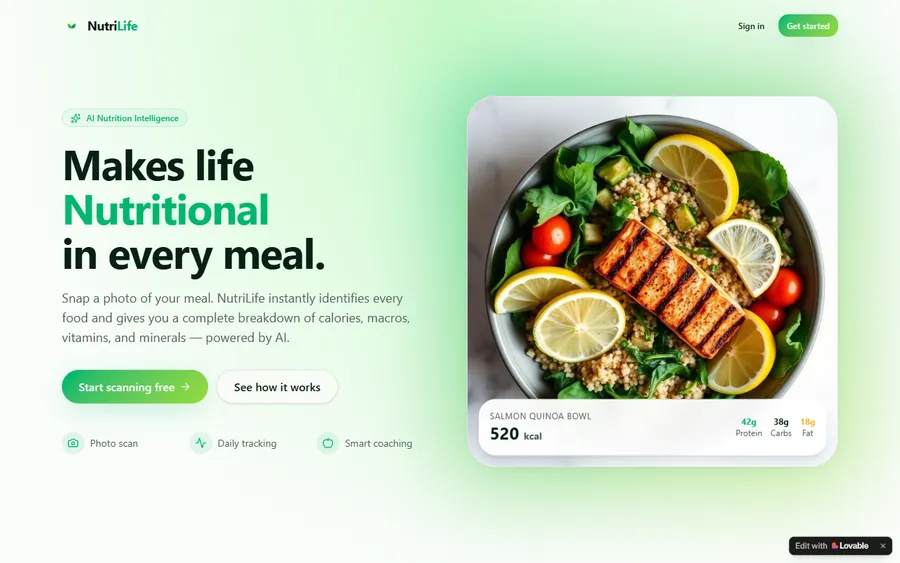
An AI nutrition coach that reads what you eat and works you toward a target.
AI and ML
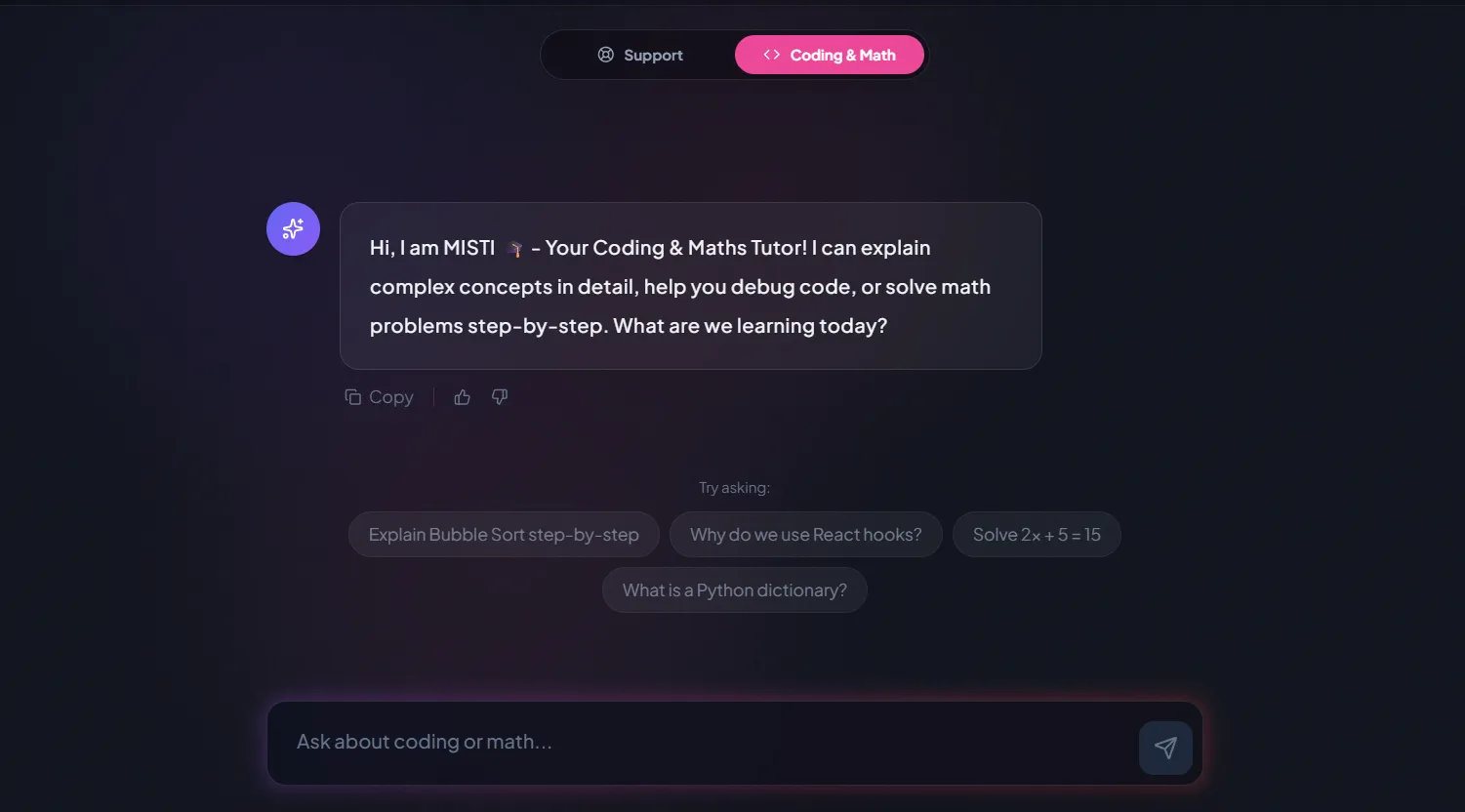
A chatbot that answers mathematics and programming questions, built and deployed by a student.
AI and ML
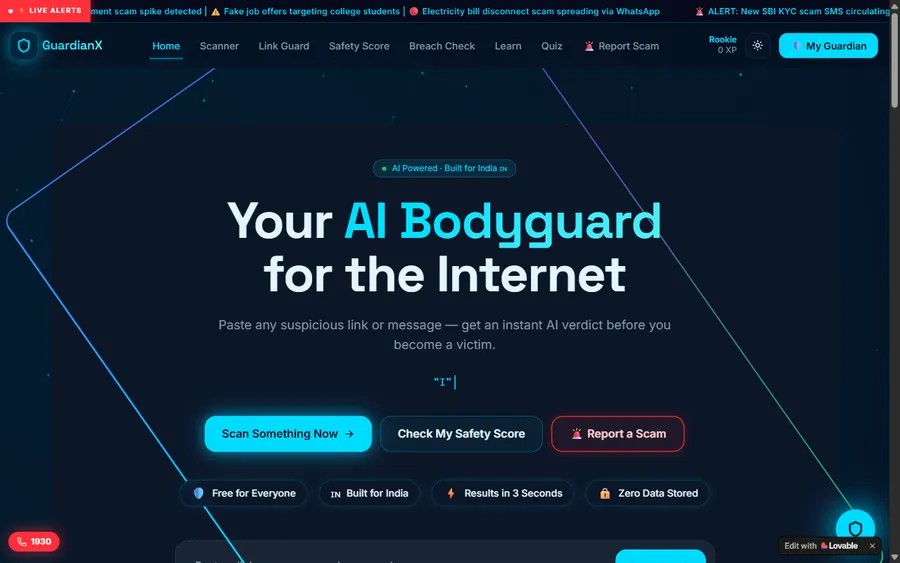
An assistant that helps a young person recognise unsafe situations online.
Web app
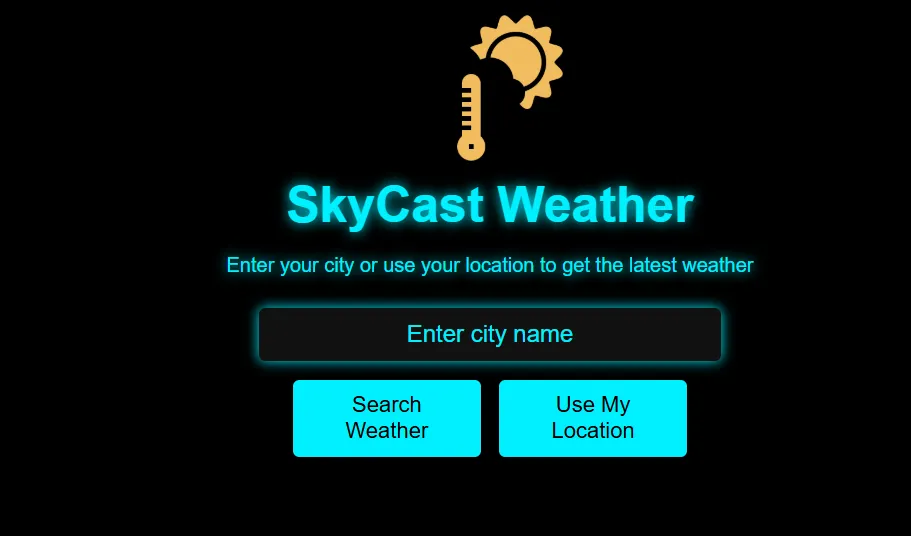
A weather forecasting site with live conditions for any location.
Fees
A single monthly rate in US dollars outside India, no registration charge, and you can stop whenever a month ends.
Free first class
USD 0
no card required
Group batch
USD 100
a month, billed in US dollars
One to one
USD 150
a month, billed in US dollars
What families say
Reviews from our Google profile, in the words families used.
★★★★★
"The one step solution for my son. Modern Age Coders make learning coding so simple that kids love it. The teachers explain complex concepts clearly with practical exercises and interactive content."
Ria Mukherjee
Parent
★★★★★
"Modern Age Coders has been a game-changer for me. I struggled to grasp IT concepts and coding before joining, but their classes transformed everything. I can now confidently write complex programs with ease."
Samriddha Mondal
Student
★★★★★
"One of the most wonderful education centres out there. Education is not limited to school syllabus but focuses on skill development."
Vansh Agarwal
Student
★★★★★
"My child Dhairya is really enjoying the Modern Age Coders classes. This is his first online class and he eagerly looks forward to it. I can already see his improvement, and the teachers are very cooperative."
Sonam Oswal
Parent of Dhairya
★★★★★
"Modern Age Coders have wonderful teachers who teach in a clear, easy and practical way. The teacher boosts students' confidence and inspires them to learn without hesitation."
Sonu Goyal
Parent
★★★★★
"I highly recommend this computer coding class! The teachers are incredibly knowledgeable and passionate about coding."
Ritu Kedia
Parent
FIRST LEGO League questions
The Institution of Engineering and Technology. The IET describes itself as the UK delivery partner for FIRST LEGO League.
The IET gives Explore as suitable for children aged 6 to 10, Challenge for students aged 9 to 16, and the Futures Edition for students aged 5 to 16.
In the IET's words, students complete missions through autonomous robot programming and present their innovation projects to judges, with options to compete at regional and national tournaments.
LEGO Education describes a season as more than 16 hours of building, coding and researching, so a term of club sessions rather than a weekend.
BIOGLOW, the 2026-27 challenge, about how the world's ecosystems thrive and protecting the planet.
LEGO Education has said that the 2026-2027 season will be its last in partnership with FIRST, after nearly three decades. Its Founders Edition runs a final season in 2027/2028 and a Future Edition using computer science and AI hardware launches in 2026/2027. We have not repeated second-hand accounts of what follows.
Because small heading errors accumulate. Our simulation of legs of 30 cm, each within 2 degrees of true, misses by about 1 cm after two legs, 9.6 cm after ten and 26 cm after twenty, with worst cases of 43 cm and 126 cm. Nothing in that is biased; the miss grows anyway.
Not with better motors. By touching something known: drive into a wall, square up against it, and the accumulated error disappears. Teams that re-align mid-mission can run long missions; teams that do not, cannot.
RoboCupJunior runs Soccer, Rescue and OnStage leagues for students up to 19, with the next RoboCup in Songdo, South Korea, from 30 June to 6 July 2026. We could not confirm a current UK national organiser, so check before planning around it.
No. We teach individuals to program, in live online classes. We have no role in any tournament and no relationship with the IET, LEGO Education or FIRST.
Related pages
Showcases, project competitions and the whole year in one table.
Hardware entries, any age, no ranking.
Teams of any size, judged on a five-minute video.
Run a Python program on the space station.
The season in one table, with each organiser named.
The four school systems, and every UK page.
What a primary-age child learns first, and in what order.
Start here
Tell us the age and what kit the club uses. The free lesson works on the programming logic, and afterwards we say plainly what we saw.
Rather read first? Syllabuses are on the course pages, the method on how we teach, and the topic order on the roadmap.
WhatsApp us · +91 91233 66161 · contact@modernagecoders.com
Send a WhatsApp if you would rather not wait; it costs a UK mobile nothing. Our number is registered in India, a fact we put on every page, and there is no British branch.