Competitive Programming for Teens
Real algorithmic problem solving, aimed squarely at the informatics olympiad path and USACO, taught by solving problems rather than watching them being solved.
Syllabus updated August 2026
Questions? WhatsApp +91 91233 66161 or email connect@modernagecoders.com
Recordings are free with a Google sign-in. These recordings show how we teach, not the exact syllabus of this course.
Fees and enrolment
How to join Competitive Programming for Teens: ZCO, INOI and USACO Track
Choose how you want to pay, pick a plan and press Enrol. We then fix your class timing with you.
Rated 4.9 across 547 Google reviews.
How would you like to pay?
Pay once for 6 months and save 20%. Same live classes, same mentor, a lower price for every session.
Group Classes
6 months · 48 sessions
One payment for all 6 months
- Paying monthly
₹1,499 × 6 months = ₹8,994- You save
- ₹1,795 (20%)
- Per session
- ₹150
₹187
2 sessions a week · 15 to 20 students
Stop early? Every session you have not taken is refunded at ₹150. Refund policy
Enrol for 6 monthsMini Batch
6 months · 48 sessions
One payment for all 6 months
- Paying monthly
₹2,999 × 6 months = ₹17,994- You save
- ₹3,595 (20%)
- Per session
- ₹300
₹375
2 sessions a week · Up to 6 students
Stop early? Every session you have not taken is refunded at ₹300. Refund policy
Enrol for 6 monthsHow your 6-month price works
- Sessions
- 24 one-to-one sessions over 6 months, fully flexible timing
- Price per session
- ₹1,000 instead of
₹1,250 - Your 6-month fee
- ₹1,000 × 24 sessions = ₹24,000
- Paying monthly instead
₹4,999 × 6 months = ₹29,994- You save
- ₹5,994 (20%)
Everything in the monthly 1-on-1 plan is included: your own mentor, flexible timing, personal dashboard, class recordings, progress reports and parent-teacher meetings.
Stop early? Every session you have not taken is refunded at ₹1,000. Refund policy
Pay once for 6 months and save 25%. Same live classes, same mentor, a lower price for every session.
Group Classes
6 months · 48 sessions
One payment for all 6 months
- Paying monthly
$100 × 6 months = $600- You save
- $151 (25%)
- Per session
- $9.35
$12.50
2 sessions a week · 15 to 20 students
Stop early? Every session you have not taken is refunded at $9.35. Refund policy
Enrol for 6 monthsHow your 6-month price works
- Sessions
- 48 one-to-one sessions over 6 months, 2 sessions a week
- Price per session
- $14 instead of
$18.75 - Your 6-month fee
- $14 × 48 sessions = $672
- Paying monthly instead
$150 × 6 months = $900- You save
- $228 (25%)
Everything in the monthly 1-on-1 plan is included: your own mentor, flexible timing, personal dashboard, class recordings, progress reports and parent-teacher meetings.
Stop early? Every session you have not taken is refunded at $14. Refund policy
Pay once for 6 months and save 25%. Same live classes, same mentor, a lower price for every session.
Group Classes
6 months · 48 sessions
One payment for all 6 months
- Paying monthly
$140 × 6 months = $840- You save
- $211 (25%)
- Per session
- $13.10
$17.50
2 sessions a week · 15 to 20 students
Stop early? Every session you have not taken is refunded at $13.10. Refund policy
Enrol for 6 monthsHow your 6-month price works
- Sessions
- 48 one-to-one sessions over 6 months, 2 sessions a week
- Price per session
- $19.60 instead of
$26.25 - Your 6-month fee
- $941
- Paying monthly instead
$210 × 6 months = $1,260- You save
- $319 (25%)
Everything in the monthly 1-on-1 plan is included: your own mentor, flexible timing, personal dashboard, class recordings, progress reports and parent-teacher meetings.
Stop early? Every session you have not taken is refunded at $19.60. Refund policy
How enrolment works
Pick a plan
Group (15 to 20 students), Mini Batch (up to 6, India only) or 1-on-1 with your own mentor. Pay monthly, or for 6 months at once and save.
Press Enrol and pay
Fill in the student's name, email and phone, then pay securely: UPI, cards or net banking in India, or a debit or credit card from any other country.
Fix your class timing
After paying, WhatsApp or call +91 91233 66161 with the student's name and your preferred time. We confirm the batch or 1-on-1 slot and send the class link.
Start learning
Join your first live class at the time you chose. Your mentor takes it from there.
Want to see a class first? Book a Priority Demo: a live class of about 45 to 60 minutes with a mentor reserved for you. If you enrol, the demo fee is adjusted against your first month's fee. Share your demo Order ID with us on WhatsApp and we take it off.
Pay monthly and cancel any time, or pay for 6 months at once and save. Stop a 6-month plan early and every session left is refunded.
International Students (Outside India)
Billed monthly in US dollars, the same price in every country. Contact us with any questions.
Questions before you enrol? Talk to our team.
Ask about class timings, the right level for your child, what they need to know already, or payment. Parents and adult learners can reach us on WhatsApp, by email or by phone.
Our promise
The world's best learning experience, open to everyone.
- World-class instructorsEvery class is taught by an instructor who specialises in that exact field.
- No compromise on qualityEvery lesson, project and piece of feedback is held to the highest standard.
- Education for everyoneLearners aged 6 to 67, from first-time beginners to working professionals, in 25+ countries.
If you want the highest quality, Modern Age Coders is the right choice.
Book a Priority DemoHow long this course takes
This course runs 6 months (24 weeks), joinable any month at 2 live classes/week + weekly problem sets and virtual contests. The range allows for background and pace: a complete beginner uses the full span, and a student with prior knowledge finishes sooner. The syllabus below is planned to the shorter end, with margin kept for revision.
For personalised duration planning, call +91 91233 66161 and we'll map a schedule to your goals.
At a glance
- Who it is for
- Teens aged 13 to 18 who can already write basic programs and want contest-level problem solving.
- Prerequisites
- None. The course starts from the beginning.
- Format
- Live, interactive online classes with a real mentor, never pre-recorded videos. Live classes run about one hour.
- Language
- English or Hindi, depending on the batch.
- Duration
- 6 months (24 weeks), joinable any month
- Weekly commitment
- 2 live classes/week + weekly problem sets and virtual contests
- Class size
- Group batches of 15 to 20 students, mini batches of up to 6, or 1-on-1.
- Certificate
- Certificate from Modern Age Coders, awarded on passing the final assessment
- Watch first
- Free recordings of real classes for ages 13 and up, free with a Google sign-in. These recordings show how we teach, not the exact syllabus of this course.
- Live demo
- Optional. Enrol directly on this page, or book a Priority Demo: a full live class of about 45 to 60 minutes with a mentor reserved for you.
- Questions
- WhatsApp +91 91233 66161 or email connect@modernagecoders.com.
How we teach
Deep understanding. Real projects. Expert guidance.
Learn coding, AI and maths through careful explanations, practical demonstrations, and hands-on problem-solving. Our instructors guide you from the foundations to advanced ideas, helping you understand what happens, why it happens, and how to build it yourself.
You will explore concepts step by step, write and improve code, investigate mistakes, ask questions, and apply your knowledge to meaningful projects. Lessons are designed around active participation, thoughtful feedback, and growing independence.
Expert-led live teaching, with practical participation built into every lesson.
- Students explain their thinking.
- Instructors demonstrate, then guide practice.
- Learners code, solve, or build during lessons.
- Questions and misconceptions get attention.
- Assignments receive useful feedback.
- Progress is checked before advancing.
Program Overview
Competitive programming is the fastest way a teenager can become genuinely good at algorithms, because a contest gives you an honest verdict in seconds. Your solution is correct and fast enough, or it is not. Nothing else in school works quite like that.
This course takes a student who can already write basic programs and builds the actual competitive toolkit: complexity analysis, the core data structures, the standard algorithm families, and the contest craft that separates a solved problem from a time-limit-exceeded verdict. In India, the informatics olympiad path runs through zonal qualifiers, ZCO and ZIO, into INOI, the Indian National Olympiad in Informatics, and onward through the training camp toward the International Olympiad in Informatics. Internationally, USACO runs its own laddered divisions from Bronze up through Silver, Gold and Platinum. Both reward the same underlying skill, so we train for the skill and prepare for both formats.
Students work in C++ or Python. C++ is the pragmatic default at higher levels because of its speed and its standard template library, and we teach it properly for students who want to go far. Python is fully supported for students who prefer it and is entirely adequate for the earlier stages. Every week ends with a timed virtual contest and a proper upsolve, because the problems you failed to solve during the contest are where nearly all the improvement actually comes from.
What Makes This Program Different
- Aimed at the real contest ladder: zonal qualifiers and INOI in India, and the USACO divisions internationally
- Taught by solving, not by watching: every class has students writing code against a judge
- Complexity analysis from week one, because most failed submissions are correct but too slow
- Weekly timed virtual contests followed by a structured upsolve, which is where the actual improvement happens
- C++ taught properly for students aiming high, Python fully supported for those who prefer it
- Live, small batches with solutions reviewed line by line, not a video library
Your Learning Journey
Career Progression
Detailed Course Curriculum
Explore the complete week-by-week breakdown of what you'll learn in this comprehensive program.
Topics Covered
- Setting up a contest environment and submitting to an online judge
- Reading a problem statement precisely, including the constraints
- Time and space complexity, and reading the limits to infer the intended solution
- Why an O(n squared) solution fails when n is 200,000
- Fast input and output, which silently costs beginners real points
Projects You Build
- Submit your first ten problems and read every verdict, including the failures
Practice & Assignments
15 warm-up problems with a written complexity estimate before each submission
Topics Covered
- Sorting with custom comparators
- Binary search on an array, and the off-by-one errors that ruin it
- Binary search on the answer, a technique that unlocks many problems
- Two pointers and the sliding window
- Recognising which of these a statement is hinting at
Projects You Build
- Solve a set of problems where binary search on the answer is the intended solution
Practice & Assignments
20 sorting and searching problems on a judge
Topics Covered
- Prefix sums and difference arrays for range queries
- String basics: frequency counts, palindromes, simple hashing ideas
- GCD, modular arithmetic and why answers are taken modulo a prime
- Sieve of Eratosthenes and simple primality
- Avoiding integer overflow, a classic silent failure
Projects You Build
- Build a small library of your own tested helper functions
Practice & Assignments
20 problems across prefix sums, strings and basic number theory
Assessment
First timed virtual contest, followed by a full upsolve
Topics Covered
- Stacks and queues and the problems that signal them
- Deques and priority queues
- Using the C++ STL containers properly, or Python's equivalents
- Choosing the right container for the operation you repeat most
- Writing clean code fast, since contests are timed
Projects You Build
- Solve a monotonic stack problem and explain why the stack is the right structure
Practice & Assignments
20 data-structure problems
Topics Covered
- Writing recursion you can reason about
- The recursion tree and its cost
- Backtracking with pruning
- Generating permutations and subsets
- When recursion is elegant and when it is simply too slow
Projects You Build
- Solve a classic constraint problem with backtracking and measure the effect of each pruning rule
Practice & Assignments
15 recursion and backtracking problems
Topics Covered
- Adjacency lists versus matrices, and when each is right
- Depth-first search and its uses
- Breadth-first search and shortest paths on unweighted graphs
- Connected components and cycle detection
- Recognising a graph problem that is not described as one
Projects You Build
- Model a described real-world scenario as a graph and solve it with BFS
Practice & Assignments
20 graph traversal problems
Topics Covered
- What makes a greedy choice valid
- Classic greedy problems: intervals, scheduling, coin-style problems
- Proving a greedy solution correct, at least informally
- Why an untested greedy hunch is the most common wrong answer
- Knowing when greedy fails and DP is required
Projects You Build
- Solve an interval-scheduling set and write a short argument for why the greedy rule works
Practice & Assignments
20 greedy problems with written justifications
Assessment
Timed contest plus upsolve, with an error log started
Topics Covered
- Reading the whole problem set first and ranking by difficulty
- Deciding fast whether to commit to a problem or move on
- Writing test cases before submitting
- Debugging under time pressure
- Handling a wrong answer without panicking
Projects You Build
- A full contest run with a written post-mortem of every decision
Practice & Assignments
Two timed contests with structured upsolve
Topics Covered
- Recognising overlapping subproblems and optimal substructure
- Memoisation versus bottom-up tabulation
- Defining the state, which is the whole difficulty
- Classic one-dimensional DP problems
- Counting the states to get the complexity right
Projects You Build
- Solve the same problem both top-down and bottom-up and compare
Practice & Assignments
20 introductory DP problems
Topics Covered
- The knapsack family and its variants
- Two-dimensional DP on grids
- Subset-sum style problems
- Reconstructing the actual answer, not just its value
- Space optimisation with rolling arrays
Projects You Build
- Solve a knapsack variant and reconstruct the chosen items
Practice & Assignments
20 knapsack and grid DP problems
Topics Covered
- Longest increasing subsequence and its faster form
- Edit distance and sequence alignment
- Interval DP
- Bitmask DP as an introduction
- Spotting the state definition from the constraints
Projects You Build
- Implement LIS in both the quadratic and the faster form and compare on large input
Practice & Assignments
20 sequence and interval DP problems
Assessment
Timed DP-focused contest with upsolve
Topics Covered
- Dijkstra with a priority queue
- Bellman-Ford and negative edges
- Floyd-Warshall for all pairs
- Minimum spanning trees
- Disjoint set union and its uses
Projects You Build
- Solve a routing problem with Dijkstra and justify the data structures chosen
Practice & Assignments
20 weighted-graph problems
Topics Covered
- Segment trees and range queries
- Binary indexed trees
- Trees: rooting, depth, subtree sums and lowest common ancestor
- String algorithms at contest level
- Choosing the simplest structure that is fast enough
Projects You Build
- Implement a segment tree from scratch and use it on a real range-query problem
Practice & Assignments
30 problems across advanced structures
Topics Covered
- Working past problems in the style of the zonal rounds and INOI
- USACO division problems from Bronze upward
- Multi-part problems and partial scoring
- Managing a long contest without losing focus
- Building a personal template and checklist
Projects You Build
- Complete full past sets under time and grade them honestly
Practice & Assignments
Weekly full-length problem sets with structured upsolve
Topics Covered
- Weekly full timed contests under real conditions
- The upsolve discipline: every unsolved problem revisited until solved unaided
- Reading the error log to find your actual weakness
- Contest-day routine and nerves
- Choosing the right target contests for your level
Projects You Build
- A full contest every week with a written post-mortem
Practice & Assignments
Continuous contest and upsolve cycle
Assessment
Final rated contest performance reviewed against your starting baseline
Projects You'll Build
Build a professional portfolio with 50+ projects real-world projects.
Weekly Learning Structure
Certification & Recognition
Technologies & Skills You'll Master
Comprehensive coverage of the entire modern web development stack.
Career Outcomes & Opportunities
Transform your career with industry-ready skills and job placement support.
Prerequisites
Who Is This Course For?
Career Paths After Completion
Course Guarantees
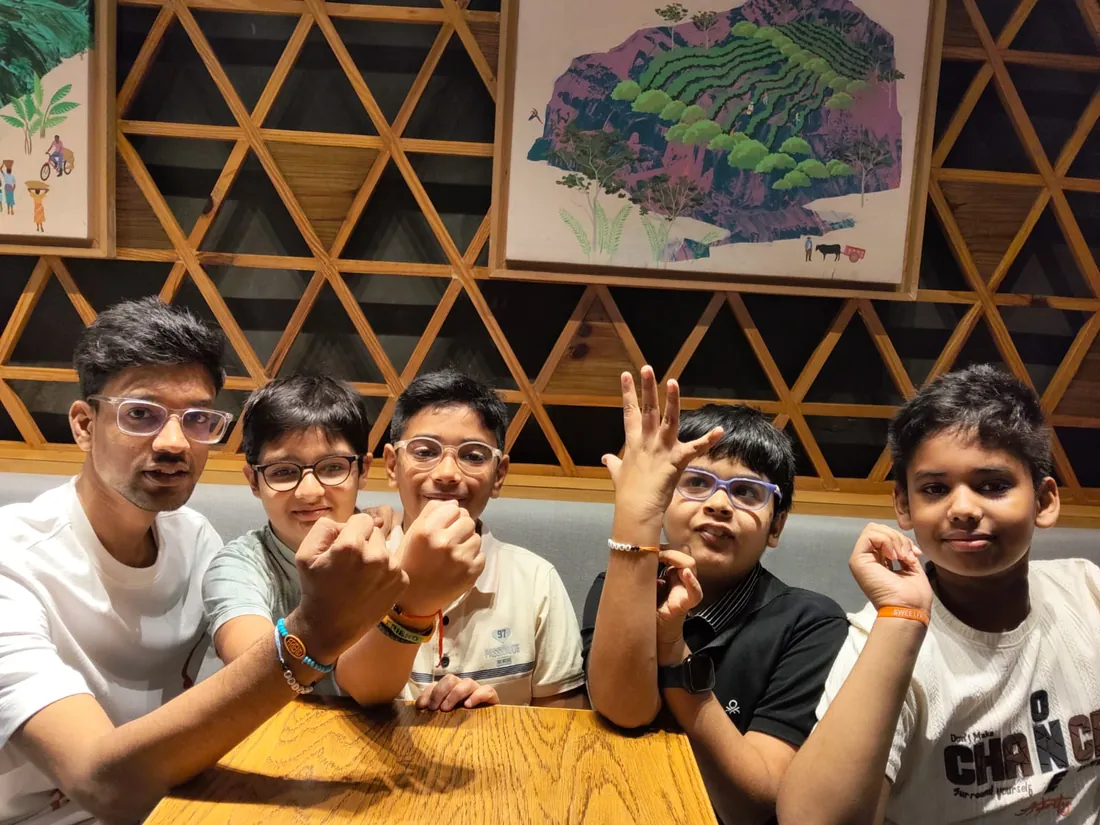
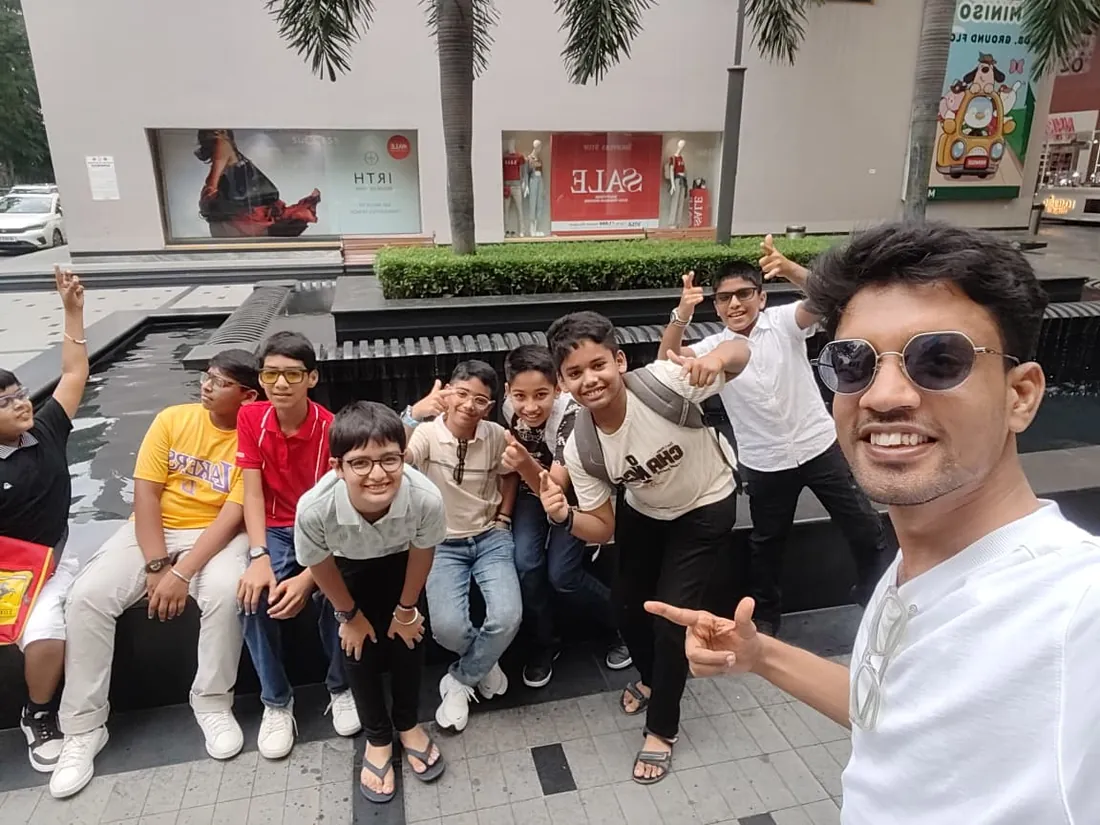
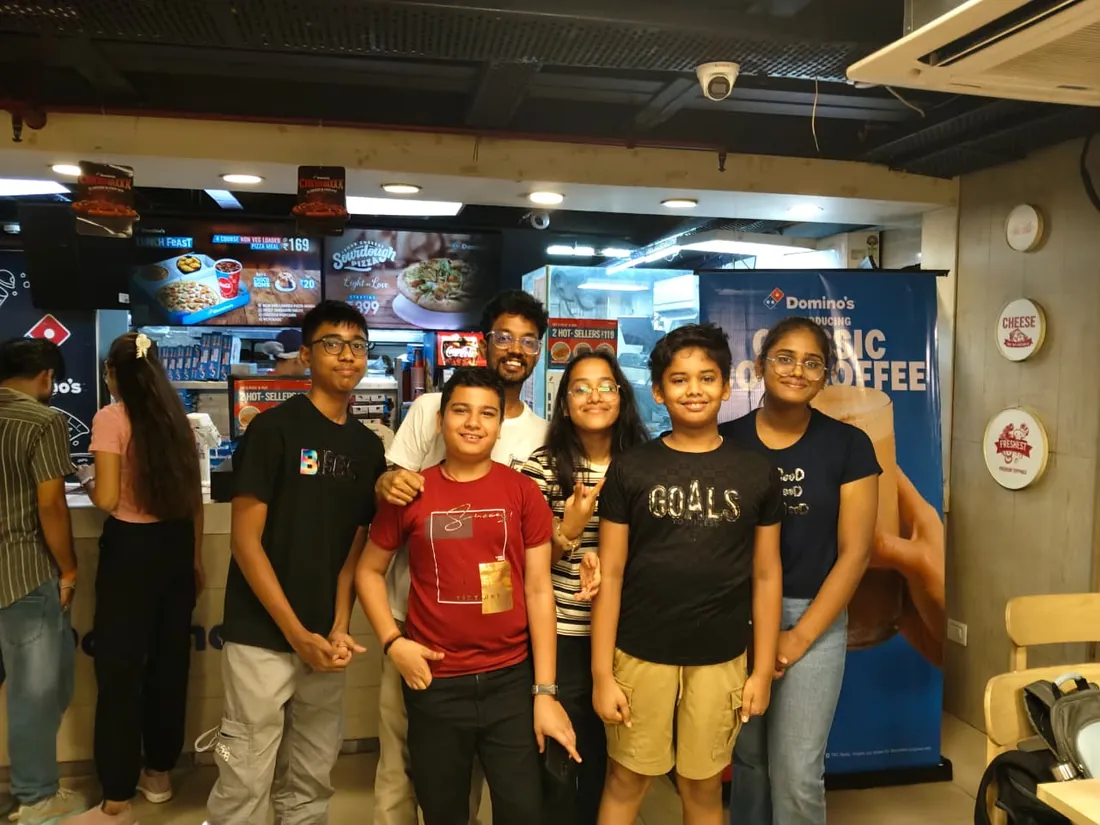
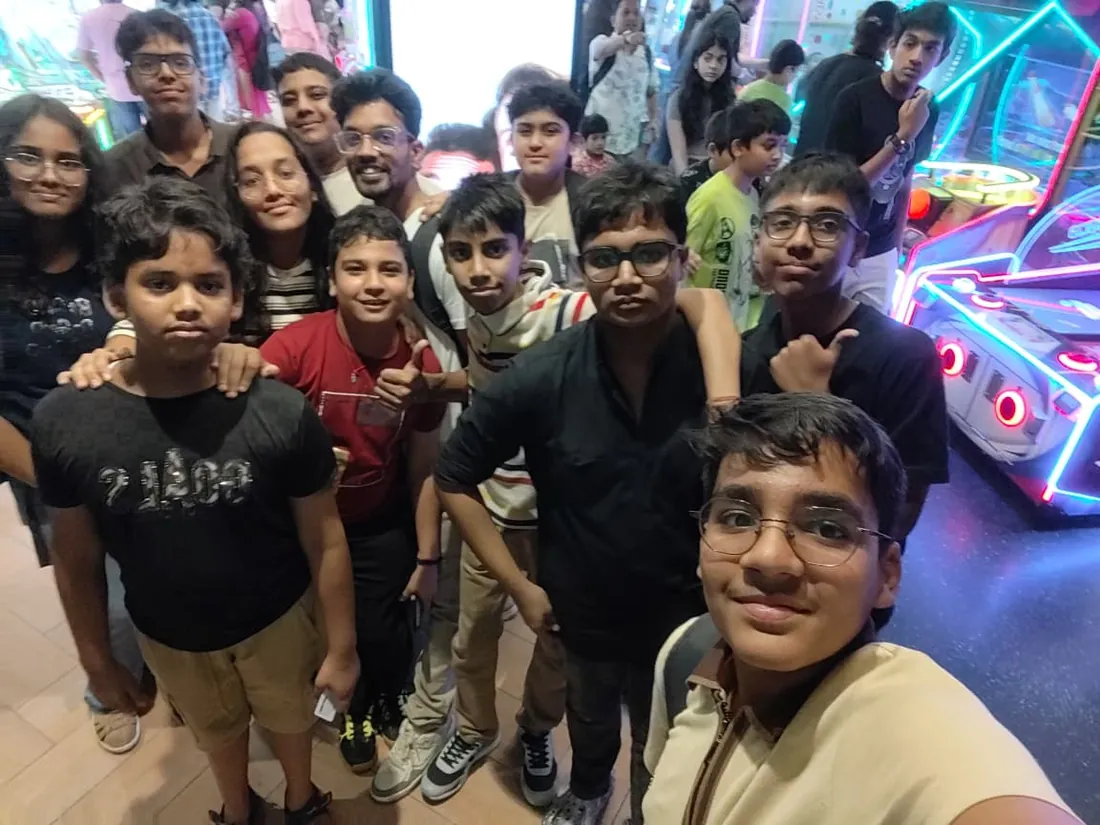
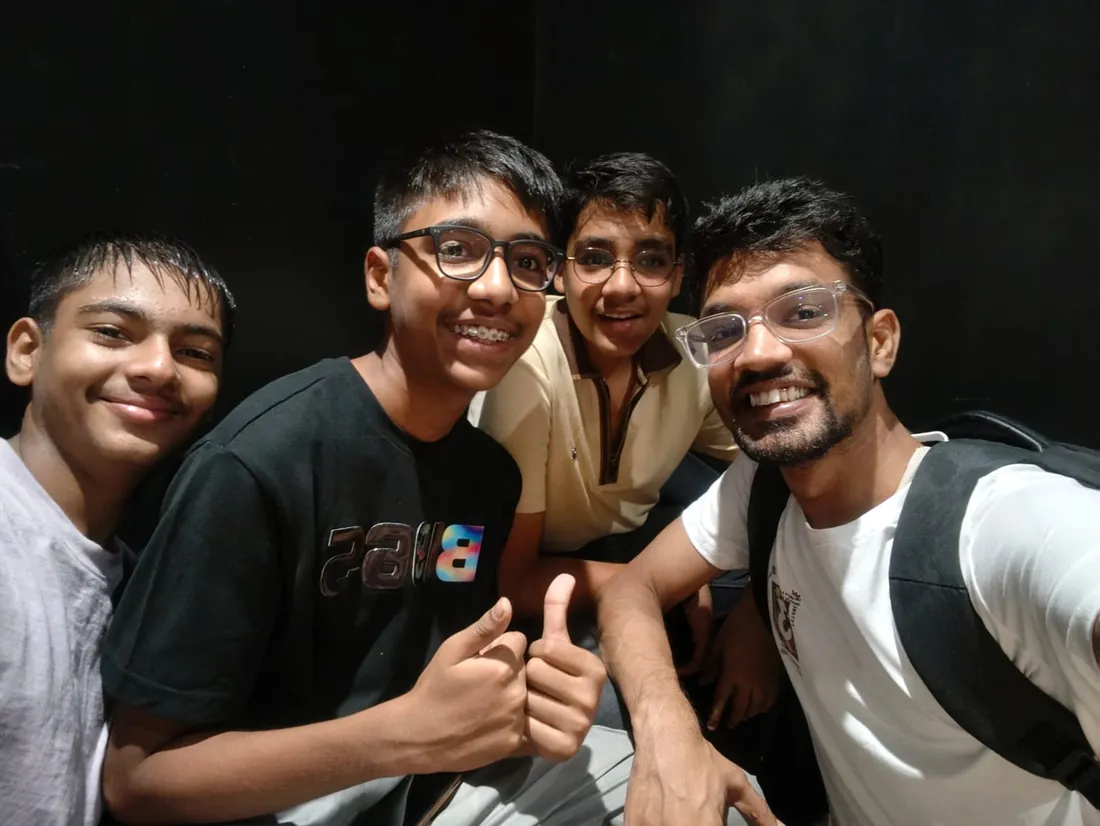
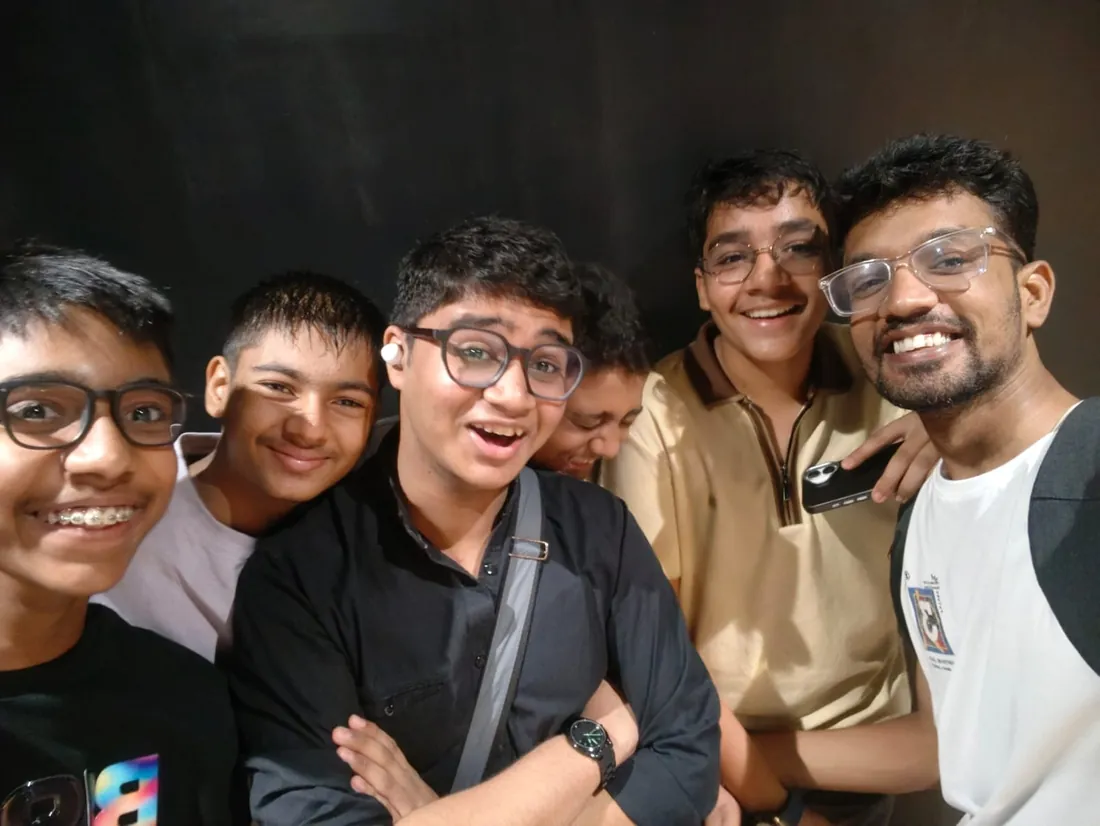
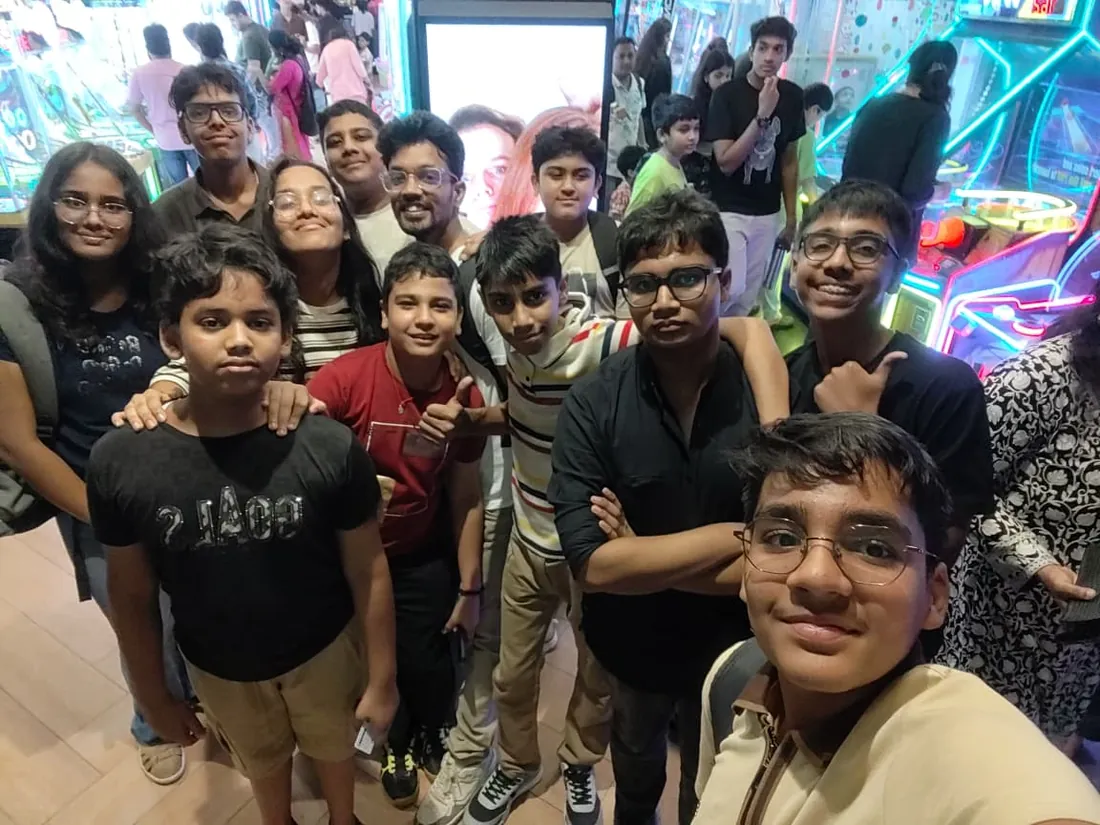
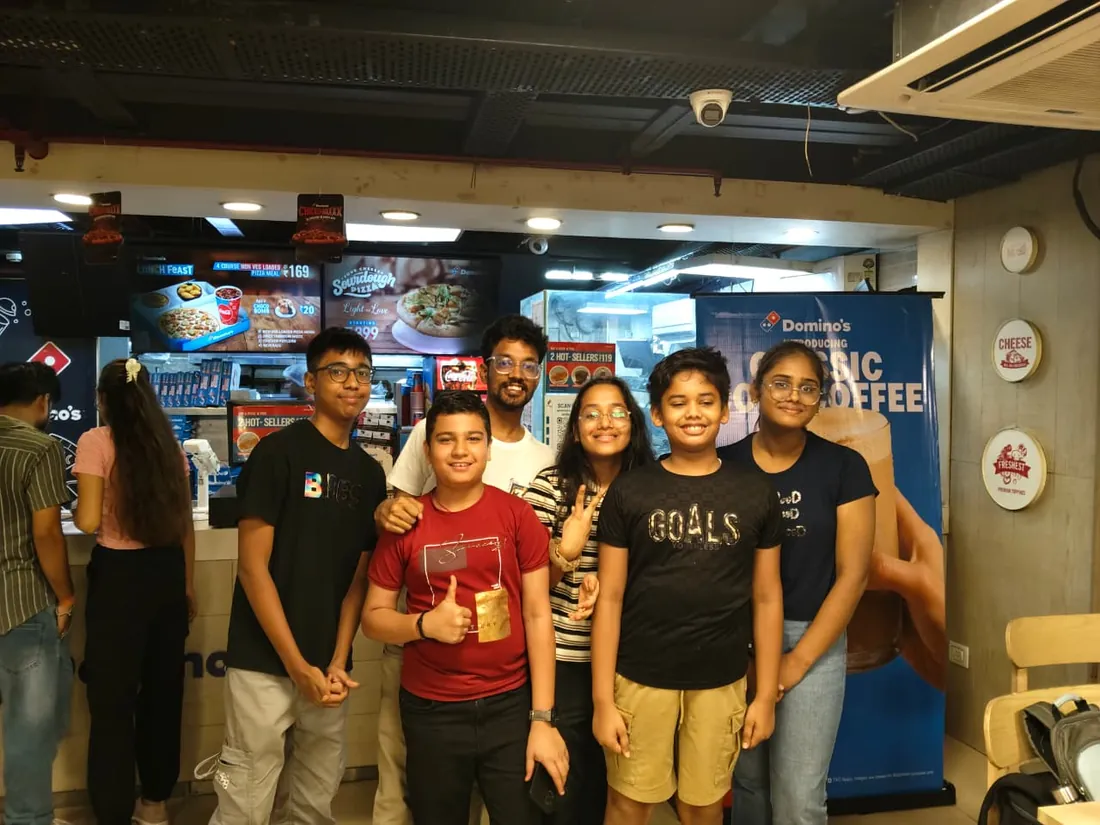
Real students. Real moments. Real joy.
These are our actual student meetups. No stock photos, no filters. Swipe through and meet the community you'll be joining.































What families say
Straight from the parents and students who learn with us. Rated 4.9 across 547 Google reviews.
“Mivaan enjoys the class. He understands the concepts and completes his tasks with excitement. He started taking interest in coding… truly amazing class.”
“I absolutely love it here! I made new friends and learned important valuable coding skills while having the fun of my life. It's not just coding here, it's outings, bonding and most importantly preparing you for your future. Definitely five stars.”
“What stands out most is how excited my son is before every class. He looks forward to learning, problem-solving, and sharing what he's built. I've noticed a big boost in his confidence!”
“Modern Age Coders has been a game-changer for me! I struggled to grasp IT concepts and coding before joining, but their classes transformed everything. I'm now the topper in my class and can confidently write complex programs with ease.”
“Modern Age Coder have wonderful teachers who teach in a clear, easy and practical way. The teacher boosts students' confidence, keeps them updated with technology, and inspires them to learn without hesitation.”
“The one step solution for my son. Modern Age Coders make learning coding so simple that kids love it.”
“Coding classes here make learning very interesting and conceptual. The teachers teach us in a very easy-to-understand and efficient manner.”
“One of the most wonderful education centres out there. Education is not limited to school syllabus but focuses on skill development. Learning here has been a wonderful journey and still continuing.”
“I highly recommend this computer coding class! The teachers are incredibly knowledgeable and passionate about coding. They make every session engaging and insightful.”
“My child Dhairya is really enjoying the Modern Age Coder IT classes. This is his first online class, and he eagerly looks forward to it.”
“Very good classes. Don't worry about coding. They teach the best, especially Shivam sir.”
“Very good classes. Makes learning very easy and interactive.”
Hear it from our students
Real parents and students in their own words, on our public YouTube channel.
Straight answers about Competitive Programming for Teens: ZCO, INOI and USACO Track
- Who should take this course?
- Teens aged 13 to 18 who can already write basic programs and want contest-level problem solving.
- What will they learn and build?
- Competitive programming is the fastest way a teenager can become genuinely good at algorithms, because a contest gives you an honest verdict in seconds. Your solution is correct and fast enough, or it is not. Nothing else in school works quite like that.
- How deeply are topics covered?
- The course runs 6 months (24 weeks), joinable any month at 2 live classes/week + weekly problem sets and virtual contests, across 3 phases listed week by week in the syllabus below.
- Who teaches it?
- Modern Age Coders mentors, who teach the live classes themselves. You can watch them at work in the free class recordings before you decide.
- How do practice, feedback and assessment work?
- Classwork in every session and homework after every class. Classwork every session, a task after every class, monthly reviews that mix in earlier topics, and a final project defended live, plus a written assessment that decides the certificate: real knowledge and real work, with a free retest after revision if needed. A certificate you earn by passing the final assessment, with a free retest after revision if needed.
- What does it cost?
- Three monthly plans: a group batch, a mini batch and 1-on-1. Prices are shown in your currency in the plans section. Monthly billing, cancel any time.
- When can classes take place?
- Live classes are scheduled around your week. Group batches meet at a fixed weekly slot; 1-on-1 students choose their own. International students are scheduled in their own timezone. Ask on WhatsApp for the current slots.
- Can I watch the teaching before deciding?
- Yes. Full recordings of real 13 and up classes are free to watch, free with a Google sign-in. These recordings show how we teach, not the exact syllabus of this course. Some classes are in English and some in Hindi; everyone follows at their own pace. Watch a class end to end, like you are in it. Sessions are interactive and each moment builds on the last.
- Can I enroll without a live demo?
- Yes. Choose a plan on this page and enrol directly; a demo is not required. If you would like to see a full class with a mentor first, book a Priority Demo.
- How do I reach you with a question?
- WhatsApp +91 91233 66161, email connect@modernagecoders.com, or call +91 91233 66161. Tell us the student's age and what they have learned so far, and we will point you to the right plan and batch.
Common Questions About Competitive Programming for Teens: ZCO, INOI and USACO Track
Get answers to the most common questions about this comprehensive program
Still have questions? We're here to help!
Contact UsRelated Courses You May Like
Continue your learning journey with these recommended programs
 Competitive Programming
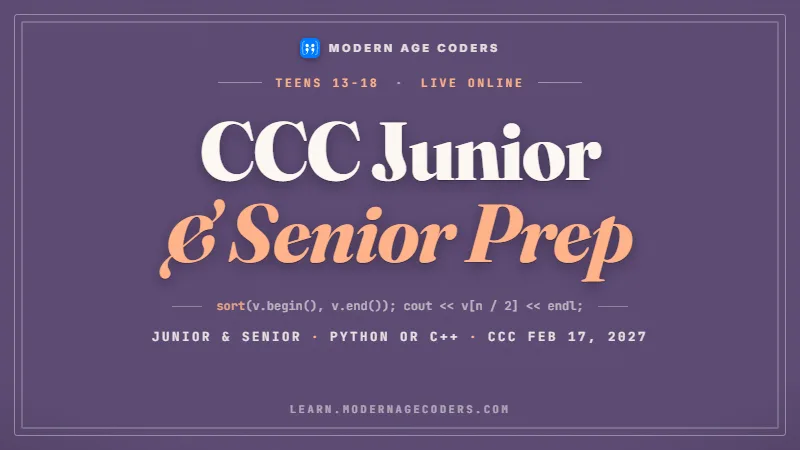
CCC Junior and Senior Preparation (Canadian Computing Competition)
Live online Canadian Computing Competition prep for ages 13 to 18: Junior and Senior tracks in Pytho...
Explore Course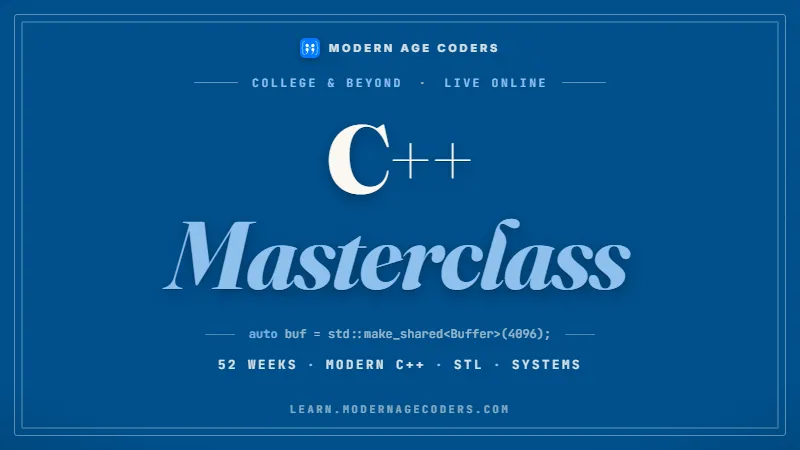 C++ Programming
C++ Masterclass: Fundamentals to Modern C++ and Systems
C++ course for college students and professionals: fundamentals, OOP, STL and templates, modern C++,...
Explore CourseRelated Articles & Guides
Deepen your knowledge with these hand-picked articles
 Programming
8 min read
Programming
8 min read
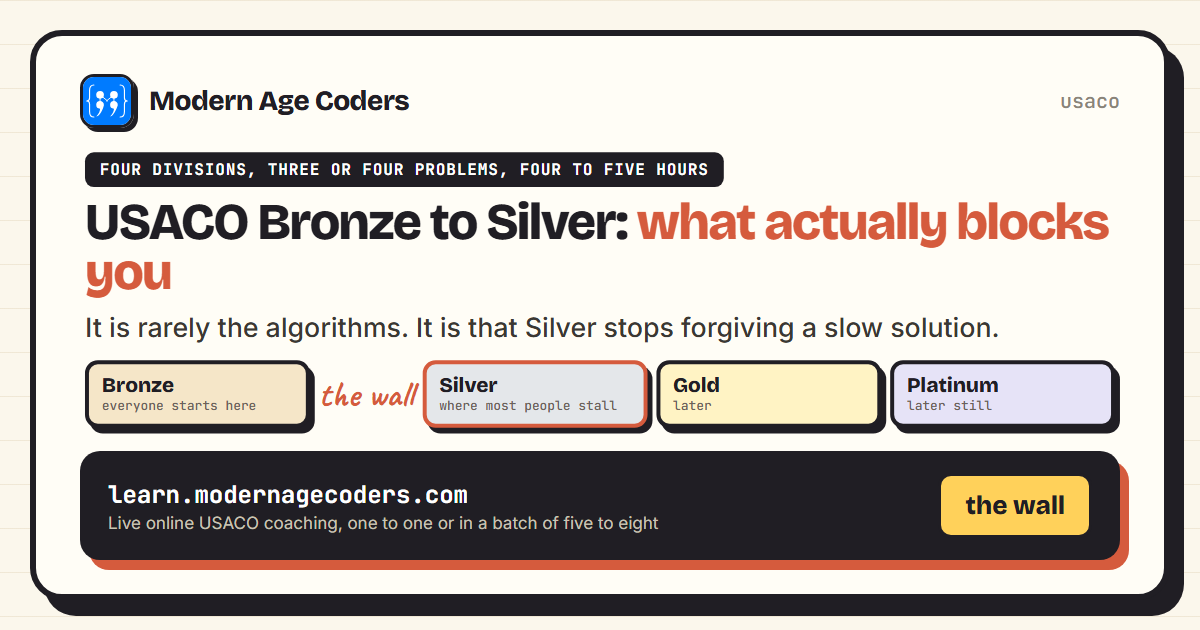
USACO Bronze to Silver: What Actually Blocks You
Most USACO students stall at Silver for one reason, and it is not the algorithm list. Here is the re...
Read Article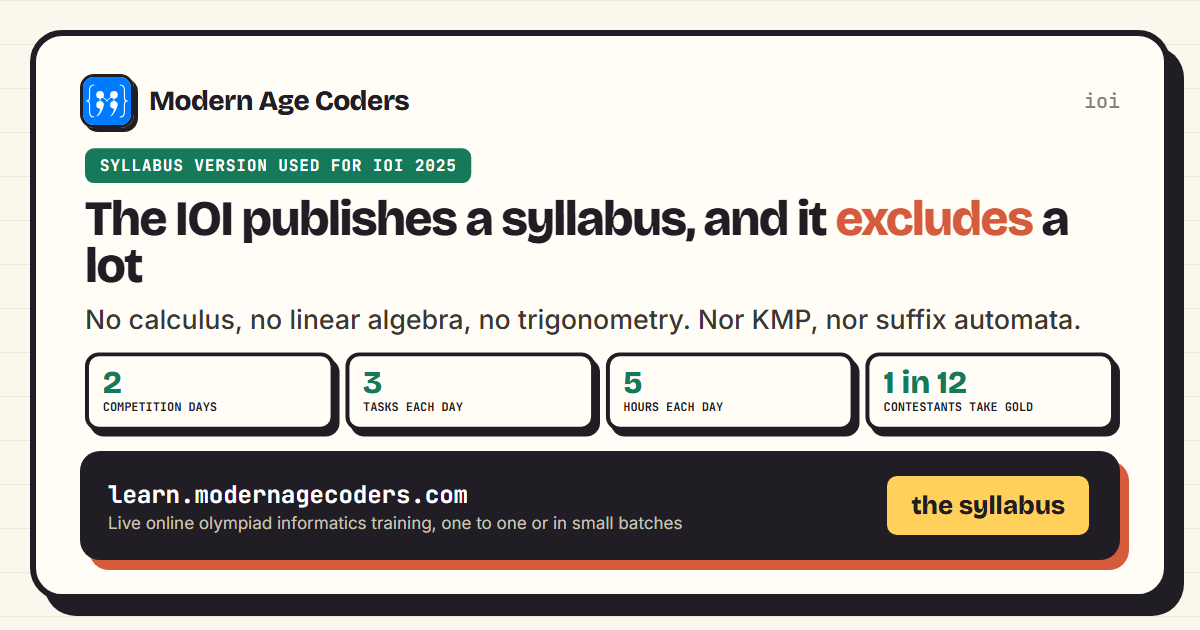 Programming
8 min read
Programming
8 min read
The IOI Syllabus Excludes More Than You Expect
The International Olympiad in Informatics publishes what is in scope and what is not. The exclusions...
Read ArticleReady to start Competitive Programming for Teens: ZCO, INOI and USACO Track?
Book a Priority Demo to see a full live class with a mentor reserved for you, today or tomorrow. Or choose a plan and enrol now.
Questions? WhatsApp +91 91233 66161 or email connect@modernagecoders.com