BBC / A / 01
Python from start to finish
The language most entries are written in.
Open the syllabusUnited Kingdom · Ages 11 to 18 · Science, engineering, technology
The Big Bang Competition is the largest project competition open to state school students in Britain, and it has an eligibility rule almost nobody mentions: it is for young people in full-time state-funded secondary education, home-educated students, or those entering through a community group. Independent school pupils are not eligible, except at SEND independent schools. Beyond that it is wide open: three streams, three age groups, teams of any size, free to enter, and judged on a written entry and a video of up to five minutes. This page is mostly about those five minutes, because they decide more than the project does.
Quoted from EngineeringUK with the date we read it · Our own arithmetic, labelled · No prize money printed
In short
The Big Bang Competition is run by EngineeringUK, operating as EUK Education, and is "free and open to students aged 11 to 18". The rules say "entrants must be aged between 11 and 18 when the project is entered" and that "they must also be in full-time state funded secondary education or home educated or be entering as part of a community group"; independent and private school students are not eligible, except SEND independent schools, with joint entries allowed where numbers are equal. "Projects can be completed by teams of any size." There are three streams, Science, Engineering and Technology, and three age categories: Junior for Years 7 to 9 in England and Wales, Intermediate for Years 10 to 11 and Senior for Years 12 to 13. Entry is online only, opening in the autumn term, with written entries and videos of up to five minutes. The titles are UK Young Engineer, UK Young Technologist and UK Young Scientist of the Year, awarded at The Big Bang Fair in June. We teach the building. A first class is free; a group place is USD 100 a month and one-to-one teaching USD 150.
Where to start
Choose by what the project needs to do, not by the year group entering it.
BBC / 01
The language most technology projects are built in, taught until a student can debug their own work.
Open the syllabus →
BBC / 02
For a project with measurements in it: collecting, cleaning and presenting data without overstating what it shows.
Open the syllabus →
BBC / 03
For a project with a trained model, including how to report what it gets wrong.
Open the syllabus →Who can enter
Facts read at EngineeringUK's own pages on 20 September 2026.
| Part | What the organiser says | What it means |
|---|---|---|
| Who runs it | EngineeringUK, operating as EUK Education | The charity behind The Big Bang Fair |
| Age | "entrants must be aged between 11 and 18 when the project is entered" | Age at entry, not at the final |
| Schools | "in full-time state funded secondary education or home educated or be entering as part of a community group" | Independent and private school students are not eligible, except SEND independent schools |
| Mixed entries | Joint entries combining independent and state school students are permitted if numbers are equal | A specific and unusual accommodation, worth knowing |
| Teams | "projects can be completed by teams of any size" | One student or a whole club |
| Streams | Science, Engineering and Technology | A coding project sits naturally in Technology |
| Age groups | Junior for Years 7 to 9, Intermediate for Years 10 to 11, Senior for Years 12 to 13 | Compared within a band, not against sixth formers |
| Entry | "entry into The Competition is through the online entry only" | No paper form and no regional heat to attend first |
| What is submitted | Written entries and, or, videos of up to five minutes, with word limits per section | The explanation is the entry |
| Titles | UK Young Engineer of the Year, UK Young Technologist of the Year and UK Young Scientist of the Year | Awarded at The Big Bang Fair in June |
The school rule is the reason to read the eligibility page before starting. Most UK competitions are open to everyone; this one is deliberately aimed at state-funded and home-educated students and at community groups, and a family at an independent school who spends a term on a project will find that out too late.
The accommodation for joint entries is unusual enough to repeat: a mixed team is allowed where the numbers from each sector are equal. A school partnership can therefore enter together, which very few competitions permit at all.
Teams of any size is the other rule worth planning around. A whole computing club can enter one project, which changes what is possible: a group of eight can build and test something none of them could finish alone, and nobody is left out for want of a place on a team of four.
Entry opens in the autumn term and closes before the spring, with awards at the Fair in June. EngineeringUK publishes the exact dates each cycle, and cash prizes in pounds, which we do not print here.
Sources: EUK Education, The Big Bang Competition and its rules and eligibility, read 20 September 2026. Modern Age Coders is not connected with EngineeringUK, Thales or Siemens.
The method
A video of up to five minutes sounds generous until a student tries to describe a year of work in one. The arithmetic below is ours, and the speaking pace in it is an assumption we state rather than a fact.
Nobody thinks of a video as having a word limit, but it does. A student speaking at a steady, unhurried pace fits a specific number of words into five minutes, and that number is smaller than almost anyone expects.
| Pace | Words in five minutes | Feels like |
|---|---|---|
| 110 a minute | 550 | Slow and clear, good for a nervous speaker |
| 130 a minute | 650 | An ordinary explaining voice |
| 150 a minute | 750 | Brisk, and hard to follow on a first hearing |
Take the middle one. Six hundred and fifty words is roughly a page and a half of writing, for an entire project. The useful move is to spend it on purpose rather than discover it at minute four, so here is a budget that answers the five questions judges actually have.
| Section | Words | Seconds at 130 a minute |
|---|---|---|
| What problem it solves | 98 | 45 |
| What you built | 195 | 90 |
| How you tested it | 162 | 75 |
| What went wrong | 130 | 60 |
| What you would do next | 65 | 30 |
Seventy-five seconds on how a project was tested is more than most entries give it, and it is the section that separates work from enthusiasm.
Students cut this first and judges want it most. A project with no failures described is either unfinished or not being described honestly.
Not three minutes. A judge needs to know what the project is for, not the history of the field.
Write the script, count the words, read it aloud once with a timer. That is the whole technique, and it takes an evening. A student who has done it sounds composed on camera because they are not deciding what to say while saying it.
The written entry has its own word limits per section, published by the organiser, and the same discipline applies. A limit is a budget, and a budget spent deliberately beats one discovered at the end.
This also happens to be the skill the rest of a technical life is made of: the design review, the job interview, the one-slide summary. A fifteen-year-old who can explain their own work in five minutes has something that outlasts any competition result.
The other project showcase on our calendar, Coolest Projects, has no ranking at all and no eligibility rule about schools, which makes it a good companion or an alternative.
The word counts are ours, computed on 20 September 2026 from the organiser's five-minute limit. The speaking paces are assumptions we have labelled, not figures from any source.
What to build
The ideas below are ours. Each is small enough to finish and has something honest to say in the testing section.
| Shape | An example | What the testing section says |
|---|---|---|
| Measure something real | A sensor logging noise or temperature in one classroom for a term | How the readings were checked against a second instrument |
| Automate a chore | A program that sorts and renames a school photo archive | What it did to the awkward filenames nobody anticipated |
| Model a decision | A tool that suggests the cheapest bus route for a school trip | Where its suggestion differed from a human's, and who was right |
| Train and evaluate | A classifier on photographs the student labelled themselves | How often it is wrong, and on which kind of picture |
| Build for somebody | An app made for one named person with a specific need | What that person said after using it for a fortnight |
Every row in that table has the same shape: something was built, and then something was found out. Judges are looking for evidence that a student learned from their own project, and the fastest way to show it is a result that surprised the person who built it.
The last row is the strongest and the least used. A project made for one real person, tested by that person, beats a more ambitious project tested by nobody, and it gives a student something to say that no one else can say.
What does not work is scale for its own sake. A project that took a year and cannot be explained in five minutes is not a better entry; it is a harder one to enter.
For younger students, the Junior band starts at Year 7 and the same rules apply, so a club project begun in September is a realistic entry by the spring.
Getting ready
The rungs are about evidence and explanation, which is what the entry form asks for.
| Stage | Rung | The sign it is secure |
|---|---|---|
| Years 7 to 8 | 1. Something built | A working thing exists, however small |
| Years 9 to 10 | 2. Something measured | The student can say how well it works, with numbers |
| Years 10 to 11 | 3. Something found out | A result surprised the person who built it |
| Years 12 to 13 | 4. Something explained | Five minutes, scripted, with the failures included |
Write the script before filming. Count the words, read it once with a timer, then record.
Do not cut the section on what went wrong. It is the part judges read most carefully.
The eligibility rules exclude independent school students except at SEND independent schools, so check before starting a term of work.
Coolest Projects has no such rule and no ranking, and every checked entry is shown.
The full list
Grouped by what the project needs to do, with the syllabus behind each card.
BBC / A / 01
The language most entries are written in.
Open the syllabusBBC / A / 02
An interface somebody who is not you can use.
Open the syllabusBBC / A / 03
A working site, with the database it needs.
Open the syllabusBBC / B / 01
Real measurements, honestly presented.
Open the syllabusBBC / B / 02
How much a result actually shows.
Open the syllabusBBC / B / 03
Checking a method rather than trusting it.
Open the syllabusBBC / C / 01
Training a model and reporting it honestly.
Open the syllabusBBC / C / 02
Choosing a method and justifying it.
Open the syllabusBBC / C / 03
The younger route into the same ideas.
Open the syllabusBBC / D / 01
The exam running underneath, board by board.
Open the syllabusBBC / D / 02
For a senior entry with modelling in it.
Open the syllabusBBC / D / 03
For a younger sibling starting out.
Open the syllabusHow lessons run
Lessons are live on video from India, five and a half hours ahead of the UK in winter and four and a half in summer, at a time agreed and kept in UK time.
Early weekday evening
For Years 7 to 9.
Later weekday evening
For GCSE-age and sixth-form entrants.
Weekend morning
For a long session on a build or a script.
Every project we teach records how it was tested, because that is the section entries lose marks on.
We help a student cut a project to something finishable, which is most of what a deadline needs.
Enough for ideas to cross the room, few enough that every project gets looked at.
We teach and review. The project is theirs and the entry is theirs to submit.
For an ambitious build or a student preparing a video.
We do not submit entries and have no relationship with EngineeringUK.
Student work
Four things our students built, finished and put online, outside any competition. They are collected on the student labs page.
AI and ML
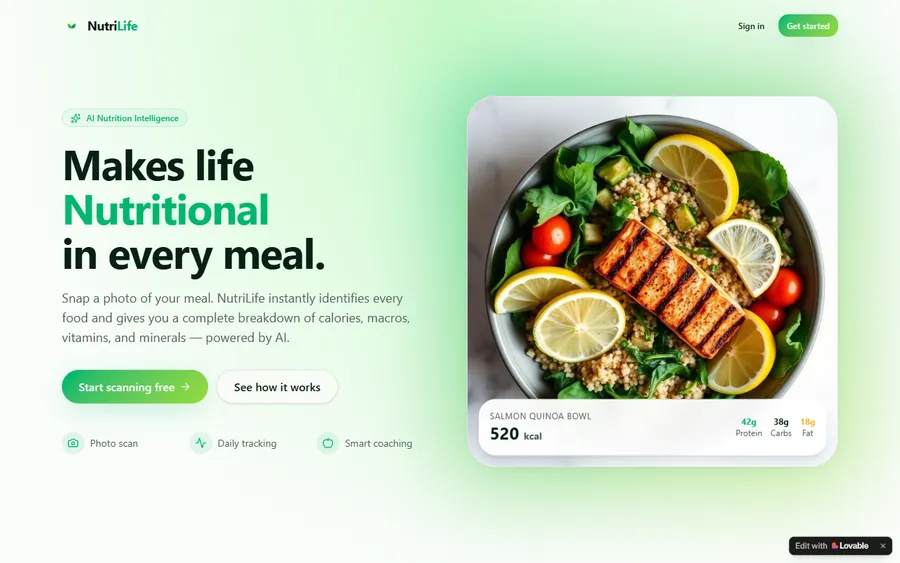
An AI nutrition coach that reads what you eat and works you toward a target.
AI and ML
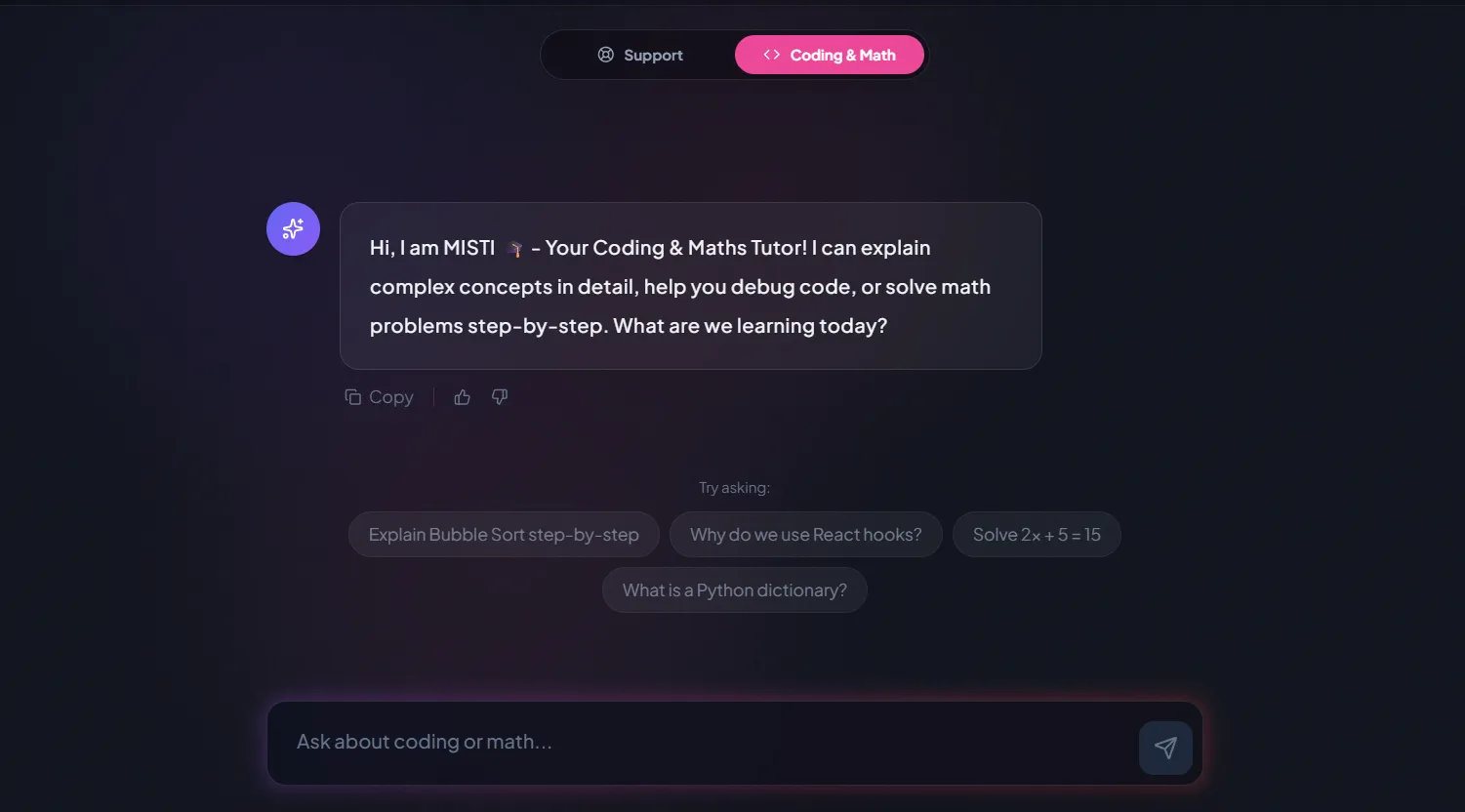
A chatbot that answers mathematics and programming questions, built and deployed by a student.

AI and ML
An assistant that helps a young person recognise unsafe situations online.
Web app
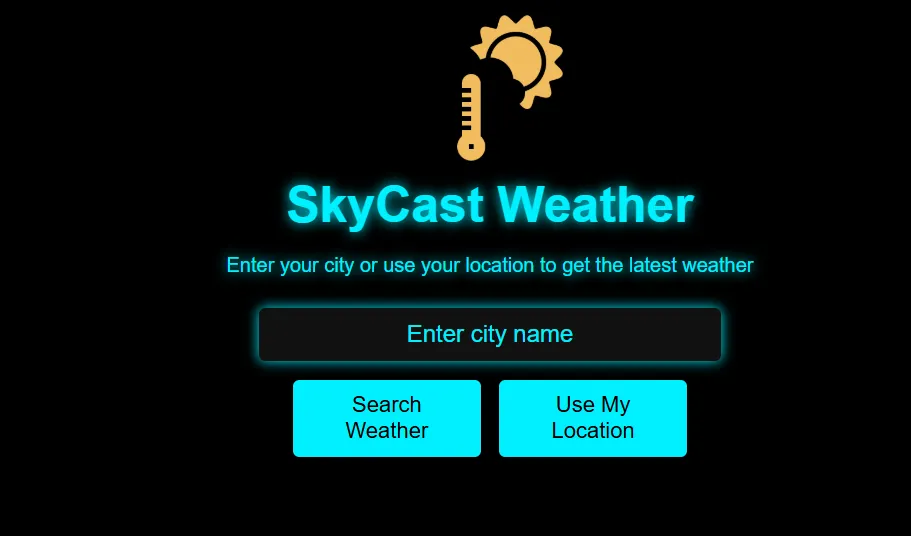
A weather forecasting site with live conditions for any location.
Fees
Charged monthly in US dollars, one rate everywhere but India, with nothing to pay up front and no term to sign.
Free first class
USD 0
no card required
Group batch
USD 100
a month, billed in US dollars
One to one
USD 150
a month, billed in US dollars
What families say
Families' reviews from our Google profile, quoted as left.
★★★★★
"The one step solution for my son. Modern Age Coders make learning coding so simple that kids love it. The teachers explain complex concepts clearly with practical exercises and interactive content."
Ria Mukherjee
Parent
★★★★★
"Modern Age Coders has been a game-changer for me. I struggled to grasp IT concepts and coding before joining, but their classes transformed everything. I can now confidently write complex programs with ease."
Samriddha Mondal
Student
★★★★★
"One of the most wonderful education centres out there. Education is not limited to school syllabus but focuses on skill development."
Vansh Agarwal
Student
★★★★★
"My child Dhairya is really enjoying the Modern Age Coders classes. This is his first online class and he eagerly looks forward to it. I can already see his improvement, and the teachers are very cooperative."
Sonam Oswal
Parent of Dhairya
★★★★★
"Modern Age Coders have wonderful teachers who teach in a clear, easy and practical way. The teacher boosts students' confidence and inspires them to learn without hesitation."
Sonu Goyal
Parent
★★★★★
"I highly recommend this computer coding class! The teachers are incredibly knowledgeable and passionate about coding."
Ritu Kedia
Parent
Big Bang Competition questions
The rules say entrants must be aged between 11 and 18 when the project is entered, and must be in full-time state funded secondary education, home educated, or entering as part of a community group.
No, except at SEND independent schools. Joint entries combining independent and state school students are permitted where the numbers from each are equal.
Yes. The organiser describes the competition as free and open to students aged 11 to 18.
Any size. The rules say projects can be completed by teams of any size, so a whole club can enter one project.
Three streams, Science, Engineering and Technology, and three age categories: Junior for Years 7 to 9 in England and Wales, Intermediate for Years 10 to 11 and Senior for Years 12 to 13.
Online only. The organiser says entry is through the online form, which opens in the autumn term, and entrants submit written entries and, or, videos of up to five minutes with word limits per section.
Up to five minutes, which is a smaller budget than it sounds. At an ordinary speaking pace of about 130 words a minute that is roughly 650 words, about a page and a half, for a whole project.
Our suggested split of 650 words is 98 on the problem, 195 on what was built, 162 on how it was tested, 130 on what went wrong and 65 on what comes next. Students cut the failures first and judges want them most.
The titles are UK Young Engineer of the Year, supported by Thales, UK Young Technologist of the Year, supported by Siemens, and UK Young Scientist of the Year, awarded at The Big Bang Fair in June. Cash prizes are published by the organiser in pounds and we do not print them.
One where something was built and then something was found out. A result that surprised the person who built it is the clearest evidence a judge can see, and a project made and tested for one real person beats a more ambitious one tested by nobody.
Related pages
A showcase with no ranking, challenges with a clock, and the whole year in one table.
No ranking, no school rule, every checked entry shown.
Run a Python program on the space station.
A free three-hour exam for secondary students.
Every competition we could confirm, laid out by month.
The four school systems, and every UK page.
Projects our own students have finished and published.
Start here
Tell us the year group and what the project is meant to do. The free lesson works on the build, and afterwards we say honestly whether it will be finished in time.
Rather read first? Syllabuses are on the course pages, the method on how we teach, and the topic order on the roadmap.
WhatsApp us · +91 91233 66161 · contact@modernagecoders.com
WhatsApp is the quickest way through and free from a UK mobile. The number is an Indian one, which we always say, and we have no premises in Britain.