MRD / A1
GCSE maths
Foundation and Higher tier, every major board.
Open the syllabusReading · Online maths tutor, ages 6 to 67 · Groups or one to one
On a typical day the River Thames carries about 23.4 cubic metres of water past Reading every second. That sounds modest until you turn it into a day: 23.4 × 86,400 seconds is 2,021,760 cubic metres, enough to fill roughly 800 large swimming pools. On its wettest day in our records it carried 302.0 cubic metres a second; on its driest, 2.189. Turning one of those numbers into the others is exactly the skill GCSE calls compound measures, and writing them neatly needs standard form. This page shows how we teach maths to Reading learners, from Key Stage 2 to A level and adult study, with the Thames as our running example.
This page covers maths only · Primary to A level and adults · Not linked to any Reading school
Maths tuition in Reading: the short version
For Reading learners from age 6 to 67 we work as an online maths tutor, teaching live by video. That covers primary arithmetic through to the Year 6 SATs, preparation for the 11 plus, Years 7 to 9, GCSE (either tier, with AQA, Edexcel or OCR), IGCSE, A level with optional Further Maths topics, and maths for grown-ups, resits included. A learner can have a teacher to themselves or join a class of five to ten who are working at the same point. Our Reading project uses Environment Agency readings of the Thames: on a typical day 23.4 cubic metres of water pass the town each second, which is about 2.02 × 10⁶ cubic metres a day. The trial costs nothing. Ongoing lessons are USD 100 a month for a class seat or USD 150 a month taught privately.
What Reading families ask for first
The three courses most often requested by Reading families. The full list follows further down.
RDG / 1
Foundation or Higher, matched to the exam board, with compound measures and standard form practised on real data.
Open the syllabus →
RDG / 2
Logarithms, calculus and data, taught so that the Thames log scales below make sense as well as the exam questions.
Open the syllabus →
RDG / 3
Quick, careful number work and multi-step reasoning for Year 5 children heading for selective tests.
Open the syllabus →Every stage, every age
Reading schools teach the national curriculum for England. The table shows the stages a Reading learner meets and where our teaching puts its weight.
| Stage | Typical age | Where our lessons put the weight |
|---|---|---|
| KS1 | 5 to 7 | Number to 100, adding and subtracting, telling the time, simple measures. |
| KS2 | 7 to 11 | All tables to 12 × 12 before the Year 4 check, then written methods, fractions and decimals on the way to the Year 6 SATs. |
| 11 plus | 9 to 11 | Fast, accurate number work and multi-step problems for grammar school tests. |
| KS3 | 11 to 14 | Algebra, ratio and proportion, units and measures, negative numbers. |
| GCSE | 14 to 16 | Either tier, any of the three big boards, with rates, compound measures and standard form given extra time. |
| A level and adults | 16 to 67 | A level Maths, Further Maths topics, GCSE maths resits and refreshers. |
At primary level we teach number until it is automatic and then until it is understood. Times tables come first because so much rests on them, from the Year 4 multiplication tables check to long division in Year 6.
For families sitting the Reading grammar school tests, our separate 11 plus maths in Reading page covers the schools and the test. This page is about maths at every other stage.
Typical ages are the usual ones for each stage in England. Grammar school test details are on our Reading 11 plus page, not repeated here.
The Reading project
Thirty-three years of daily readings from one gauge, and one unit conversion that every GCSE student should be able to do in their sleep.
The Environment Agency runs a gauge on the River Thames at Reading and publishes its daily mean flow: the average number of cubic metres of water passing each second, worked out for each day. We downloaded every daily value from 19 August 1992 to 31 December 2025.
The Agency labels each reading for quality. We kept only the 11,203 days it marks as complete and good, and left out days flagged as suspect, estimated or unchecked. Every figure below is our own calculation from those days.
The middle value, the median, is 23.4 cubic metres a second. The mean is higher, 38.19, because a few winter floods pull it up. The highest daily flow was 302.0 on 4 January 2003, and the lowest was 2.189 on 17 August 2022. The wettest day carried about 138 times as much water as the driest.
A cubic metre a second sounds small because a second is short. The question a learner should ask straight away is: per what? Change the time unit and the same river looks completely different.
| Day | Flow, m³ per second | Water in one day, m³ | In standard form | Pools of 2,500 m³ |
|---|---|---|---|---|
| Driest, 17 August 2022 | 2.189 | 189,129.6 | 1.89 × 10⁵ | 75.7 |
| Typical (median) | 23.4 | 2,021,760 | 2.02 × 10⁶ | 808.7 |
| Average (mean) | 38.19 | 3,300,000 | 3.30 × 10⁶ | 1,320.0 |
| Wettest, 4 January 2003 | 302.0 | 26,092,800 | 2.61 × 10⁷ | 10,437.1 |
One day has 24 × 60 × 60 = 86,400 seconds. So a flow of 23.4 cubic metres a second gives 23.4 × 86,400 = 2,021,760 cubic metres a day. The DfE content for GCSE asks learners to "change freely between related standard units (e.g. time, length, area, volume/capacity, mass) and compound units", and this is that skill exactly.
The pool column uses our own example pool, 50 metres long, 25 wide and 2 deep, which holds 2,500 cubic metres. Real pools vary, so treat the pool figures as a feel for size, not a measurement.
A different conversion asks how deep a day of flow would be if it were spread over all the land that drains to the gauge. Divide the volume by the area and the answer comes out in metres; multiply by 1,000 for millimetres.
UKCEH, which runs the National River Flow Archive, gives that area as 4,633.7 square kilometres. A typical day then works out at 0.436 millimetres of water, the wettest at 5.63 and the driest at 0.0408.
Data: Environment Agency hydrology data, station Reading on the River Thames, daily mean flow, read on 1 October 2026; catchment area from the UKCEH National River Flow Archive, station 39130. GCSE wording: DfE, GCSE mathematics subject content. All conversions are Modern Age Coders calculations.
Standard form and log scales
The Thames data is a good place to see why scientists write numbers in standard form and draw some graphs on a log scale.
The DfE content asks GCSE learners to "calculate with and interpret standard form". The daily volumes above run from 1.89 × 10⁵ to 2.61 × 10⁷ cubic metres. The powers of ten tell the story at a glance: the wettest day is two orders of magnitude above the driest.
Sort the 11,203 days by order of magnitude and the pattern is plain: 2,699 days had a flow below 10 cubic metres a second, 7,483 days were from 10 up to 100, and 1,021 days were 100 or more.
Draw those flows on an ordinary graph and the summer days squash into a flat line at the bottom while a few floods tower above. Draw them on a log scale, where each step up the axis multiplies by ten, and both the dry spells and the floods become readable.
At A level the same idea returns as logarithms: log₁₀ of 302.0 is about 2.48 and log₁₀ of 2.189 is about 0.34, and the gap between them, 2.14, is the number of tens you multiply by to get from one to the other.
| Daily mean flow, m³ per second | Number of days | Power of ten |
|---|---|---|
| Under 10 | 2,699 | 10⁰ up to 10¹ |
| 10 to under 100 | 7,483 | 10¹ up to 10² |
| 100 or more | 1,021 | 10² and above |
The Environment Agency lists the catchment for this gauge as 4,640.0 square kilometres. The National River Flow Archive gives 4,633.7. Both are official, and they differ by 6.3 square kilometres, about 0.14 per cent.
We do not pick a winner. We show that, for a typical day, the depth is 0.436 millimetres with either area once you round to three decimal places, so the disagreement does not change the answer at that accuracy.
At KS3 a learner converts per second to per day. At GCSE they write the answers in standard form and round to a sensible accuracy. At A level they ask why the mean is so far above the median and plot the data on a log scale.
At every level the habit is the same: say what the unit is, say which source you used, and say how accurate the answer can honestly be.
Catchment areas: Environment Agency hydrology API station record (4,640.0) and UKCEH National River Flow Archive station 39130 (4,633.7), both read on 1 October 2026. The day counts and logarithms are our calculations.
Maths in and around Reading
Families often ask what else is on offer for a child who likes maths. These are public programmes; we run none of them.
The NCETM lists Reading among the council areas of the Möbius Maths Hub, whose lead school is The Willink School in Burghfield. Maths Hubs support teachers and schools rather than families.
The Department of Mathematics and Statistics describes an outreach team: "The MathsSquad! visits local schools in Berkshire and surrounding area to deliver mathematical outreach events." Schools arrange the visits.
Reading secondary pupils often meet the UKMT maths challenge through school entries each year. How we coach for those papers is set out on our maths challenges page.
A learner who enjoys the Thames numbers will enjoy competition problems too, because both reward asking what a number really means before calculating with it.
Our competitions calendar lists national events by age, and our olympiad page covers the harder rounds.
Lessons are live on video, so learners in Caversham, Tilehurst, Earley and Whitley all join from home. We group by level rather than by area, so a classmate could be in Slough or Swindon.
Adults who walk the Thames Path often find the flow numbers the most memorable thing on this page, and a good way back into maths they last met at school.
Sources: NCETM, Möbius Maths Hub; University of Reading, Department of Mathematics and Statistics, Outreach. Both read on 1 October 2026. Modern Age Coders has no link with the NCETM, its hubs, the University of Reading, the UKMT or any Reading school.
Adult learners
Adults come to us for many reasons: a GCSE maths resit for a course, numbers at work, or the wish to help a child without confusing them.
The full GCSE content, taught again at an adult pace and starting from the weakest topic. The exam entry is made through a college or exam centre.
Practical topics such as percentages, measures, money and reading tables, in the style Functional Skills maths qualifications use. See our Functional Skills page.
Spreadsheets, rates, unit conversions and reading charts with confidence, which is the Thames project in a work setting.
Many adults tell us they were never shown why the methods work, only told to use them. We start from the reasons, which tends to make the methods stick. Our adult maths page has more.
Our teaching order
Learners join at whichever step suits them; the free lesson shows us where.
| Typical years | Stage of the climb | Ready to move on once they |
|---|---|---|
| Years 2 to 4 | 1. Place value | Read and write numbers to a million and say what each digit is worth |
| Years 5 to 7 | 2. Units | Convert between seconds, minutes, hours and days without a calculator |
| Years 8 to 10 | 3. Compound measures | Turn a rate per second into a rate per day and explain each step |
| Years 11 to 13 | 4. Standard form and logs | Write very large and small numbers as A × 10ⁿ and compare them by their powers |
A Year 11 learner who joins in spring still benefits. We check place value and units first, because standard form questions usually go wrong there.
If the gap is too wide for the time left, we will tell you honestly at the free lesson.
Anyone hooked by the river data can carry on with maths through coding, turning the Thames readings into a short program, or with our statistics and probability course.
Others try competition maths, which rewards the same careful reading.
Our maths courses
The courses UK families look for most often are first: GCSE, A level, 11 plus and IGCSE. Open any card for the syllabus.
MRD / A1
Foundation and Higher tier, every major board.
Open the syllabusMRD / A2
Pure, statistics and mechanics.
Open the syllabusMRD / A3
Speed and reasoning for selective entry papers.
Open the syllabusMRD / A4
For international exam papers.
Open the syllabusMRD / B1
All of primary maths, up to the SATs.
Open the syllabusMRD / B2
Number and shape for the youngest learners.
Open the syllabusMRD / B3
Reliable calculation without paper.
Open the syllabusMRD / B4
From beads to mental pictures.
Open the syllabusMRD / C1
Proportion, algebra and measures, the ground GCSE builds on.
Open the syllabusMRD / C2
For algebra that never quite settled.
Open the syllabusMRD / C3
Data, averages and probability.
Open the syllabusMRD / C4
Problems in the UKMT style.
Open the syllabusMRD / D1
First-year topics for adults returning to study.
Open the syllabusMRD / D2
Statistics behind data analysis.
Open the syllabusMRD / D3
Interest, rates and percentages.
Open the syllabusMRD / D4
Speedy arithmetic methods.
Open the syllabusTimetable
Our teachers are in India, which is five and a half hours ahead of Reading in winter and four and a half in British Summer Time. We agree every slot in UK time.
After school, weekdays
Primary, 11 plus and KS3.
Evenings, weekdays
GCSE, A level and adult learners.
Weekend mornings
Any stage.
The same person each week, who knows what slipped last time.
A few lines after lessons on progress and next steps.
Matched by level, so the pace suits everyone.
River flows, timetables and census tables alongside exam questions.
For a near exam or a single stubborn topic.
We explain the reason behind every method we teach.
Student work
Four projects from students whose first lessons used real numbers much like the Thames flows. The student labs show plenty more.
AI and ML
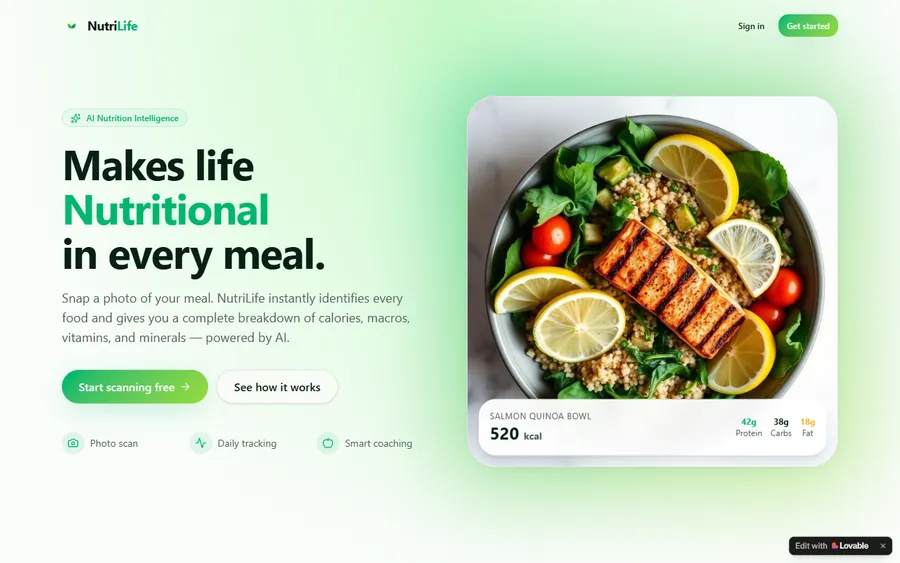
An AI nutrition coach that reads what you eat and works you toward a target.
AI and ML
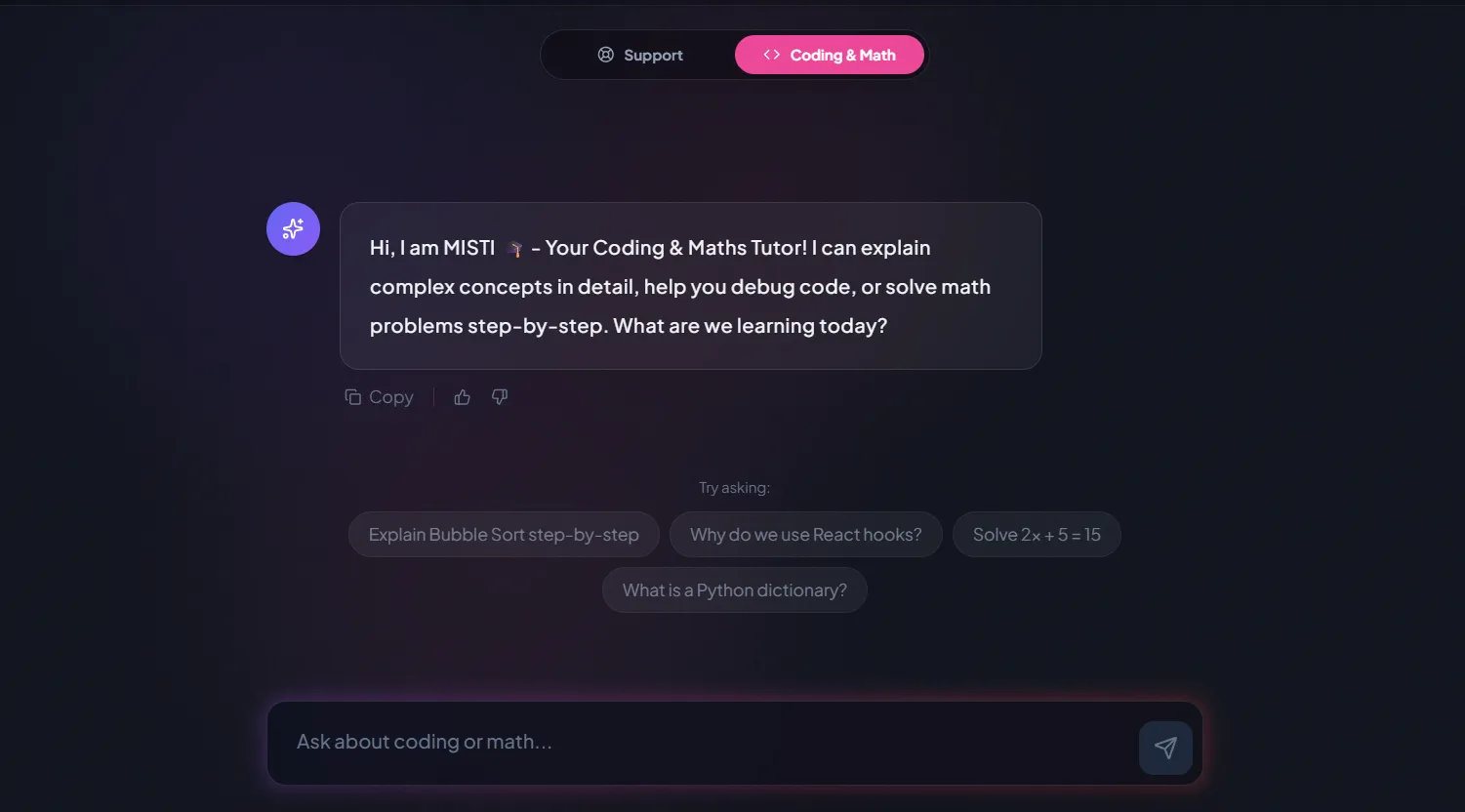
A chatbot that answers mathematics and programming questions, built and deployed by a student.

AI and ML
An assistant that helps a young person recognise unsafe situations online.
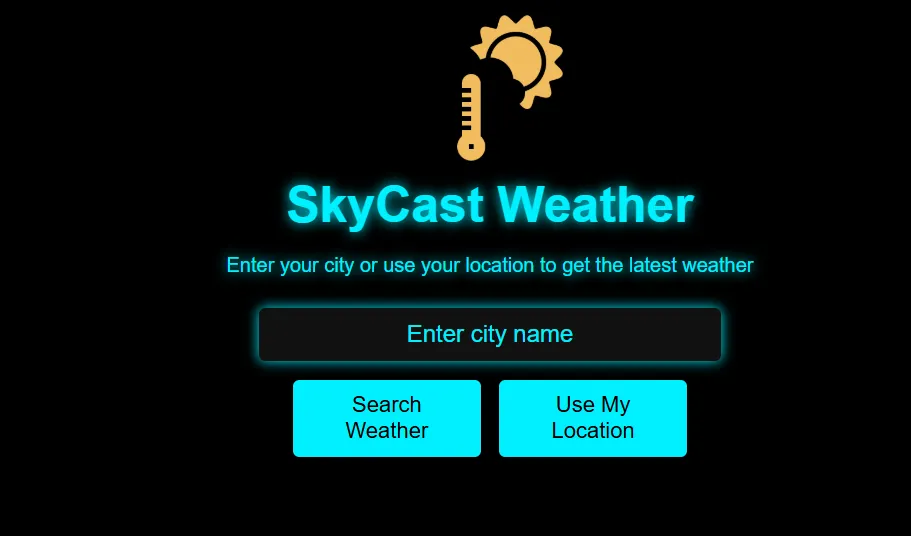
Web app
A weather forecasting site with live conditions for any location.
Fees
Charged monthly in US dollars, at the same rate for every country outside India. Nothing to pay up front and no contract.
Free first class
USD 0
no card required
Group batch
USD 100
a month, billed in US dollars
One to one
USD 150
a month, billed in US dollars
What families say
Word-for-word reviews that families and learners posted on our Google profile.
★★★★★
"The one step solution for my son. Modern Age Coders make learning coding so simple that kids love it. The teachers explain complex concepts clearly with practical exercises and interactive content."
Ria Mukherjee
Parent
★★★★★
"Modern Age Coders has been a game-changer for me. I struggled to grasp IT concepts and coding before joining, but their classes transformed everything. I can now confidently write complex programs with ease."
Samriddha Mondal
Student
★★★★★
"One of the most wonderful education centres out there. Education is not limited to school syllabus but focuses on skill development."
Vansh Agarwal
Student
★★★★★
"My child Dhairya is really enjoying the Modern Age Coders classes. This is his first online class and he eagerly looks forward to it. I can already see his improvement, and the teachers are very cooperative."
Sonam Oswal
Parent of Dhairya
★★★★★
"Modern Age Coders have wonderful teachers who teach in a clear, easy and practical way. The teacher boosts students' confidence and inspires them to learn without hesitation."
Sonu Goyal
Parent
★★★★★
"I highly recommend this computer coding class! The teachers are incredibly knowledgeable and passionate about coding."
Ritu Kedia
Parent
Reading maths questions
Standard form writes a number as A × 10ⁿ, where A is at least 1 and less than 10 and n is a whole number. So 2,021,760 is about 2.02 × 10⁶, and 0.00042 is 4.2 × 10⁻⁴.
The first lesson with us is free. Then a group place costs USD 100 a month and one to one lessons USD 150 a month, with no joining fee and no minimum term.
Yes, through our 11 plus maths course. Our separate Reading 11 plus page covers the local tests and schools.
Yes, at Foundation or Higher tier, to the exact specification of the board, and IGCSE where a school uses it.
Yes. We reteach the GCSE content from the learner's weakest topic upwards. The exam is booked through a college or exam centre.
Yes. KS3, Years 7 to 9, is where algebra and proportion are built, and many GCSE problems trace back to it, so we take it seriously.
Estimate first, then ask whether the answer is sensible. A river flowing at about 20 cubic metres a second must carry well over a million cubic metres a day, because a day has 86,400 seconds.
No, we only teach online. Each session is live, with a teacher you can see and question, and it reaches any Reading postcode with a decent connection.
Yes, as an extension of A level. Once the single-maths core is solid, a keen sixth former in Reading can work on Further Maths topics such as complex numbers and matrices with the same teacher. Name the board when you book.
No. We teach carefully and report progress honestly, but no tutor can promise a grade.
Related
Our 11 plus page for Reading, national maths pages and our coding page for the town.
The local grammar school tests, in detail.
Every tier and board.
Pure, statistics and mechanics.
Our coding page for the town.
A neighbouring town, a different project.
All our UK pages in one place.
Start here
Tell us the age or year and the topic that causes the most trouble. The trial is a full lesson, and we follow it with a clear view of where the learner stands.
Would you like to look first? See our courses and how we approach teaching.
WhatsApp us · +91 91233 66161 · connect@modernagecoders.com
WhatsApp gets the quickest reply. The number starts with India's code because the team works from India; there is no Reading office and lessons are online.
A priority demo is a full class of about 45 to 60 minutes. After the class the mentor sends a written skill report and a personal learning roadmap on WhatsApp. If you enrol, the demo fee is adjusted against your first month's fee. Share your demo Order ID with us on WhatsApp and we take it off.
Book a priority demo