Pick the course. Start this week.
Every mentor teaches from a structured programme, adapted live to your child. Open a course to see the full syllabus and enroll in minutes, or start with a Priority Demo and let the diagnostic pick the level for you.
 Best fit
IGCSE Mathematics Mastery
Cambridge and Edexcel taught syllabus-exact, with non-calculator fluency and mark-scheme craft built in.
$100/mo group · $150/mo 1-on-1
View course & enroll
Middle School Mathematics Mastery
Ratios, negatives, algebra and geometry: the make-or-break years, taught for genuine ownership.
$100/mo group · $150/mo 1-on-1
View course & enroll
Olympiad & Competition Mathematics
Contest-level problem solving for the student who wants more than the syllabus.
$100/mo group · $150/mo 1-on-1
View course & enrollGood IGCSE maths tuition is syllabus-exact: it knows whether your child sits Cambridge 0580/0980 or Edexcel International GCSE, whether they are entered for Core or Extended (the tier caps the possible grade), whether Additional Maths 0606 is in the picture, and which of their papers now ban the calculator. Then it teaches for understanding and trains past-paper technique on the real mark schemes. That is what we do: live one-hour classes in small groups (8 a month) or private 1-on-1, priced for your country and shown in your local currency, Priority Demo first.
The tier decides the ceiling before your child writes a single answer.
IGCSE maths looks like one subject and is actually a small family of decisions. The biggest: Core or Extended. Core papers are gentler, but they cap the achievable grade; a child entered for Core cannot earn the top grades no matter how perfectly they perform. Extended opens the full range, and it is what A-Level maths and competitive sixth forms effectively expect. Schools decide entries early, based on current performance, which means a wobbly year quietly becomes a capped certificate.
Then the format shifted under everyone's feet: Cambridge's updated 0580/0980 syllabus brought in a non-calculator paper for every candidate, at both tiers. A generation of students raised on calculators now faces arithmetic, fractions and surds bare-handed, and tutors who prepped the old format train the wrong reflexes.
And for strong mathematicians there is Additional Mathematics (0606), a genuinely demanding second qualification, functions, trigonometry, vectors, calculus, that behaves like an A-Level trailer. It rewards exactly the students who find regular IGCSE comfortable, and punishes anyone who treats it as "more of the same".
Our mentors work inside this exact map. They check the board and syllabus code your school actually uses (Cambridge and Edexcel differ in structure and grading, A*-G on 0580, 9-1 on 0980 and Edexcel), teach for the understanding that makes Extended reachable, train non-calculator fluency deliberately, and coach with real past papers and mark schemes from your series. The teaching itself is what we are known for: one full interactive hour, depth before drill, classes students genuinely wait for.
Core, Extended, Additional: the honest decoder.
| Dimension | Core (0580/0980) | Extended (0580/0980) | Additional Maths (0606) |
|---|---|---|---|
| Who sits it | Students for whom maths is a hurdle to clear, not a road ahead | Anyone who might want A-Level maths, sciences or a competitive sixth form | Strong Extended students, usually alongside 0580, as a second qualification |
| Grade range | Capped: the top grades are not available at this tier | The full range, up to the top grade | Its own full range; universities and sixth forms read it as a rigour signal |
| Content reach | Foundations: number, basic algebra, geometry, statistics | Everything in Core plus deeper algebra, functions, trigonometry, vectors, probability | Functions, quadratics in depth, binomial expansion, trigonometric identities, vectors, and introductory calculus |
| The honest read | A safety net that becomes a ceiling; leave it only deliberately | The default for any child with university-bound plans, made reachable by good teaching | The best A-Level preparation on the syllabus list, and a serious commitment |
Boards, codes and paper structures vary by school (Cambridge 0580/0980/0606, Edexcel 4MA1 Foundation/Higher) and syllabuses evolve; we verify your child's exact entry against the school's syllabus code and current board documentation for their exam series.
Unsure which tier your child is entered for, or fighting a Core entry you disagree with? The Priority Demo doubles as a diagnostic that gives you evidence, not opinion, to take to school.
Eight signs an IGCSE maths student needs help before entries harden.
Threatened with a Core entry
The school wants to play safe. Sometimes right, often premature: Extended is usually reachable with the gaps actually repaired.
The non-calculator paper terrifies
Fractions, percentages and surds by hand are trained skills. The new papers examine them; most students were never drilled for it.
Algebra is a costume, not a language
Rules followed without meaning collapse exactly where Extended lives: rearranging, functions, simultaneous equations in context.
Mock grades sliding as content deepens
Year 10 comfort turning into Year 11 panic is the classic signature of memorized-not-understood maths.
Multi-step questions lose the plot
Can do each step alone; cannot chain them. Extended papers are built almost entirely from chains.
Mark schemes are a mystery
Losing method marks to skipped working, or time to over-perfect answers, is fixable in weeks once the scheme's logic is taught.
Considering Additional Maths
0606 rewards preparation started early; deciding late and cramming it is the standard way to spoil a strong record.
Aiming at A-Level maths
The gap between a scraped Extended pass and A-Level's first term is enormous. Understanding-first teaching closes it in advance.
A non-calculator question, done the trained way.
The calculator-raised student stalls at the first addition, or grinds through with shaky rules and no way to check the result.
The fluency-trained student works in clean, checkable moves:
(11/12) ÷ (5/6) = (11/12) × (6/5) = 66/60 = 11/10
Answer: 11/10 (or 1 1/10), with a sanity check: slightly more than 1, as expected, since 11/12 is slightly more than 5/6.
Notice the last line: the estimate that confirms the answer. That habit, compute, then sanity-check against sense, is what the non-calculator papers actually examine, and it is built through short daily-style drills woven into every class, not through panic in the exam hall.
The papers, mapped.
| Component | What it is | What we train for it |
|---|---|---|
| Non-calculator paper | Every Cambridge 0580/0980 candidate now sits one, at both tiers | Fraction, percentage and surd fluency, estimation as a checking habit, and clean written working |
| Calculator paper | The longer structured paper at each tier | Multi-step chains, showing method for part marks, and knowing when the calculator helps versus wastes time |
| Extended-only reach | Functions, vectors, deeper trigonometry and probability appear here | Understanding-first coverage early, so the hardest topics get months of settling time, not weeks |
| Additional Maths (0606) papers | Two demanding papers with A-Level-flavoured content including introductory calculus | The pre-A-Level mindset: longer problems, algebraic stamina, and topics taught as ideas so they hold under pressure |
IGCSE marks are engineered: method marks, follow-through marks, accuracy marks. Students who understand how marks are awarded stop donating them, so every mentor teaches with real past papers and the actual mark schemes from your child's board and series.
An Extended functions question, where understanding beats memory.
(a) Find gf(x). (b) Solve gf(x) = 10.
The memorizing student half-remembers "gf means... f then g? g then f?" and gambles. Half of all lost function marks die on exactly this coin flip.
The understanding-trained student reads gf(x) as "f first, then g eats the result", because that is what the notation says: g(f(x)).
(b) (3x - 2)² + 1 = 10
(3x - 2)² = 9 → 3x - 2 = ±3
x = 5/3 or x = -1/3
Two marks live in that ±, and students who solve by understanding catch it; students racing through memorized steps take the square root and lose the negative branch. This is why we teach the idea underneath first: the marks follow the meaning.
From diagnostic to exam series, mapped.
Class 1 · The Priority Demo diagnostic
A real lesson plus an audit: board and syllabus code confirmed, tier fit assessed honestly, non-calculator fluency and algebra base checked.
Months 1-2 · Foundations that hold Extended weight
Algebra taught as a language, number fluency rebuilt calculator-free, and the gaps behind the mock grade repaired at the root.
Term 2+ · The Extended reach, with settling time
Functions, trigonometry, vectors and probability taught early enough to be owned, not crammed, the difference between a pass and a top grade.
The exam runway · Papers, by the mark scheme
Past papers from your exact board and series, timed, then reviewed for where marks actually went, method, accuracy, or the missing ±.
Beyond · Additional Maths or the A-Level bridge
Strong students extend into 0606 or pre-A-Level depth with the same mentor, so momentum survives the certificate.
What one full hour of IGCSE teaching looks like.
Every class is a full 60 minutes, live and interactive, no half-hour check-ins, no recorded lectures pretending to be tuition:
0-10 min · Non-calculator warm-up
Fractions, percentages, estimation, the bare-hands fluency the new papers demand, built in small daily doses.
10-35 min · The syllabus, taught deep
Today's topic built from the idea underneath, your child deriving and explaining aloud, not copying worked solutions.
35-50 min · Past-paper reps
Real questions from your board and tier, on the clock, reviewed against the actual mark scheme's logic.
50-60 min · Explain-back and the week's plan
Your child teaches the idea back, the error log gets updated, and the week's work is set with a purpose they can state.
Parents tell us these classes are the hour their child stops dreading maths. Watch one before believing us: the demo is free. See exactly how we teach →
Who this genuinely fits, and who it does not.
A strong fit if…
• Your teen faces IGCSE maths and the mock grades, or a threatened Core entry, do not match what their effort deserves.
• The non-calculator paper is a fear, algebra never became a language, or Additional Maths is on the table and needs a real plan.
• IGCSE maths has become a nightly grind and you want a calm syllabus-fluent expert to take over the teaching.
• You want one mentor who knows your teen and their exam series, not a rotating cast or an app with streaks.
Honestly not the fit if…
• Your teen cannot yet engage with a screen and a teacher for a full hour. Every IGCSE student can, provided the hour is genuinely interactive, and ours are.
• You want homework done for the teen. We teach the teen to do it, which is slower on night one and far faster by week four.
• You want a two-week miracle before the exam series. A fortnight buys mark-scheme technique, real grade movement takes a term of understanding work, and we will tell you honestly which one time allows.
The courses behind the tutoring.
Every mentor teaches from a structured curriculum, adapted live to your teen. If you prefer to see the full syllabus before you start, these are the programmes IGCSE maths students join.
Premium teaching. One honest price.
You are paying for a real teacher, live, for a full hour, twice a week, the same format IGCSE-specialist tutors bill $40 to $100 an hour for. Our cost base is global, so the price is not.
1:1 Private Mentorship
$150 / month
- 8 live one-hour classes a month, 2 per week4 live one-hour classes a month, 1 per week
- A dedicated mentor who knows your teen by name
- Diagnostic-led plan for your exact board, tier and series
- Class recordings for revision · cancel any time
Small-Group Class
$100 / month
- 8 live one-hour classes a month, 2 per week
- A handful of children at the same level
- Same teaching method, gentle peer energy
- Recordings included · cancel any time
That is $18.75 per dedicated hour of 1-on-1 teaching, or $12.50 in a small group. No registration fee, no contract, and you can see a full class first with a Priority Demo. Read our zero-risk promise or compare with what maths tutoring costs in 2026.
Mentors who teach the why, in classes kids wait for.
Our mentors are trained in one method: understanding before procedure, concrete before abstract, the child talking more than the teacher. They teach both maths and coding, which matters more than it sounds, because a mentor who can turn "4 groups of 6" into a model your teen wants to build has engagement tools a worksheet never will.
And because the same mentor stays with your teen month after month, teaching compounds. They know that your daughter rushes when unsure, that your son shuts down after two wrong answers, and exactly which idea to revisit before it becomes a gap.
"My child Dhairya is really enjoying the classes. This is his first online class, and he eagerly looks forward to it. I can see his improvement."
Sonam Oswal, mother of Dhairya · verified Google review
"My son struggled with math for years. Integrating it into coding projects has transformed his understanding and confidence. Highly recommended!"
Shewta Singh, mother of Ishan · verified Google review
Your real options for an IGCSE maths student.
| Option | Typical cost | What it really is | Best for |
|---|---|---|---|
| Modern Age Coders | $100–$150 / month | 8 live one-hour classes with a dedicated mentor teaching your exact board, tier and papers | Moving from Core-risk to Extended-comfortable, and Extended to the top grades |
| IGCSE-specialist tutors | $40-$100+ / hour | Genuine syllabus expertise at hourly rates; twice weekly runs $320-$800+ a month | Families for whom price is no object |
| Generic online tutoring platforms | $20-$50 / hour | Marketplace tutors of varying quality, often unaware of tiers, boards or the newer non-calculator papers | Occasional homework help on universal topics |
| School revision sessions | Free | Well-meaning group revision, rarely individual, never diagnostic | Always take these too; they complement real tuition |
| Past papers + mark schemes alone | Free online | The right practice material with nobody correcting the thinking behind the errors | Disciplined students already at their target grade |
Competitor figures are typical published prices as of July 2026. See our full comparisons: what maths tutoring costs · best online math tutoring 2026.
Everything families ask about IGCSE maths tuition.
Core or Extended: how should the decision be made?
By destination, then evidence. If A-Level maths, sciences or a competitive sixth form is even a possibility, Extended is the default, because Core caps the achievable grade and closes those doors regardless of performance. The genuine question is whether the gaps blocking Extended are repairable in the time available, and that is a diagnostic question, not a guess. A Priority Demo answers it with evidence you can take to school.
The school wants to enter my child for Core. Can that be reversed?
Schools set entries, but they respond to evidence, and entry deadlines usually leave more room than parents fear. A focused term of understanding-first teaching plus improving test scores is the argument that works. We are honest in both directions: sometimes Core genuinely is the kind choice, and we will say so.
What changed with the non-calculator papers?
Cambridge's updated 0580/0980 syllabus introduced a non-calculator paper for every candidate at both tiers, examining bare-hands arithmetic, fractions, percentages and estimation. Students raised on calculators, and tutors prepping the old format, get caught out. We train that fluency deliberately, a short drill in every class, and verify current paper structures against your school's syllabus code and series.
Cambridge or Edexcel: does it matter for tuition?
The mathematics is largely shared; the structures differ, paper patterns, tier names (Edexcel uses Foundation/Higher), grading scales (A*-G on 0580, 9-1 on 0980 and Edexcel 4MA1). It matters for past-paper training and technique, which is exactly why the first thing your mentor confirms is the board and syllabus code your school actually uses.
Should my child take Additional Maths (0606)?
If they are comfortable in Extended and A-Level maths is likely: strongly consider it. 0606 is the best A-Level preparation on the syllabus list, functions, identities, vectors and introductory calculus taught properly. But it is a genuine second subject, not extra credit, and it rewards starting early. We teach it alongside 0580 with the same mentor.
How long until the grade moves?
Mark-scheme technique and non-calculator fluency show up in weeks; understanding-level movement, the kind that jumps grade boundaries, takes a term. Monthly billing means you watch the evidence and re-decide every four weeks. And if the timeline you have left only allows technique work, we will say exactly that.
My child does past papers endlessly but the score is stuck. Why?
Because practice repeats what the student already does, including the errors. A stuck score almost always means an understanding gap upstream, algebra as memorized rules is the usual culprit, and no volume of papers repairs it. We find the gap, fix it at the root, and then past papers start converting effort into marks again.
What does it cost?
The fees for private 1-on-1 and small-group classes are shown in your own currency in the pricing section of this page. Billing is monthly, there is no contract and you can cancel any time.
Do you also cover GCSE (the UK domestic exam)?
Yes, the overlap is large and we have a dedicated GCSE maths track that respects the UK boards' structures (AQA, Edexcel, OCR) and tiers. See our GCSE maths tuition page for the specifics.
We are an international school family that moves countries. Does tuition survive a move?
Better than school does. The mentor, the plan and the schedule move with you, across every time zone we already teach in, and IGCSE's global standardization means the syllabus is the same on arrival. Continuity through a move is one of the quiet advantages of online tuition done properly.
Who teaches IGCSE maths?
Mentors who teach both mathematics and programming, which IGCSE students benefit from directly: probability simulated in code, functions animated on screen, and for 0606 students, calculus met visually before it is met formally. Meet the team on our team page.
Can we try a class before enrolling?
Yes. Book a Priority Demo: a full live class of about 45 to 60 minutes, today or tomorrow, with a mentor reserved for your child. After the class the mentor sends a written skill report and a personal learning roadmap on WhatsApp. If you enrol, the demo fee is adjusted against your first month's fee.
More maths help from Modern Age Coders.
Watch one full hour of real teaching. Free.
Book the demo class. Your teen gets a real lesson with a real mentor, you get a diagnostic against their exact board and tier, one full hour of real IGCSE maths teaching, free. If your teen does not leave the hour lighter about maths, walk away with our thanks.
Real student projects
What our students actually build
Every one is a real, live project shipped by a Modern Age Coders student. Explore more in Student Labs.
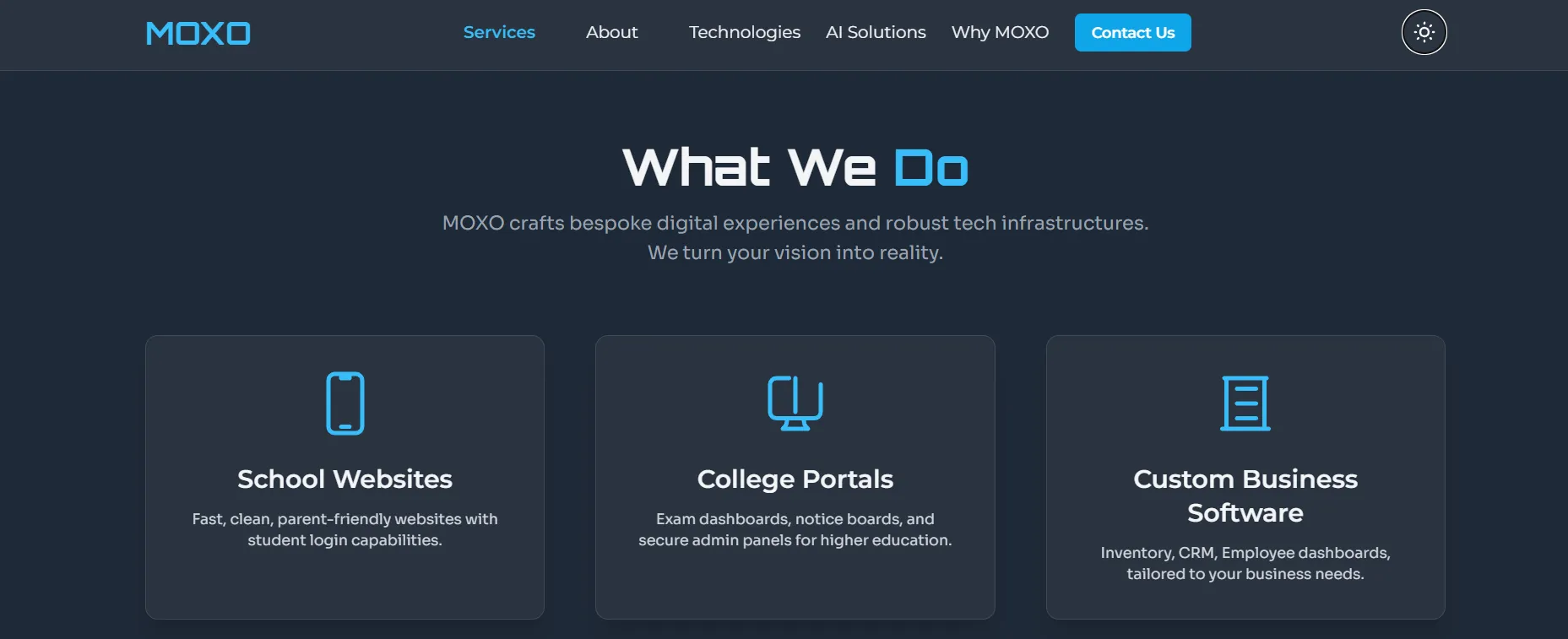 Web AppMoxo: Company Landing PageA stunning modern landing page with smooth parallax scrolling, advanced GSAP animations and elegant section transitions that bring the brand to life.by IshaOpen the live project ↗
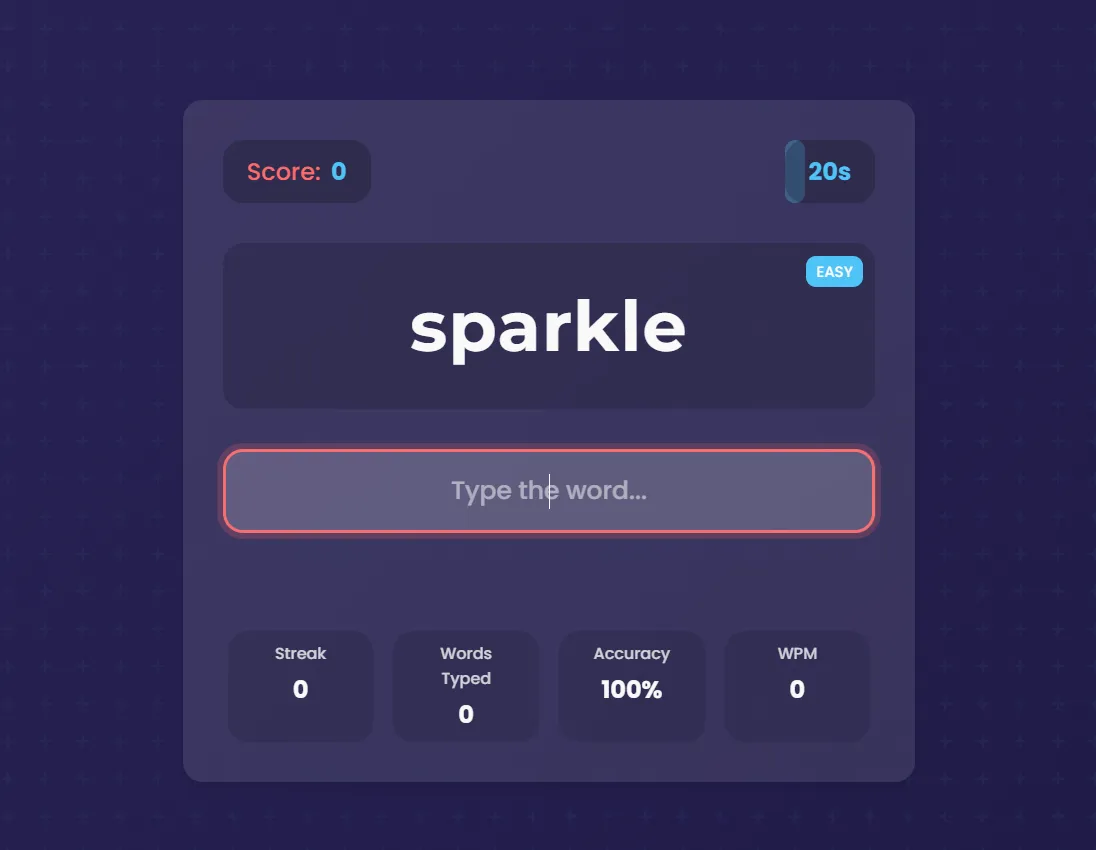 GameBaby: Typing Speed ChallengeAn engaging typing speed challenge where users test how fast and accurately they can type, with a live leaderboard connected to a MongoDB backend.by KritikaOpen the live project ↗
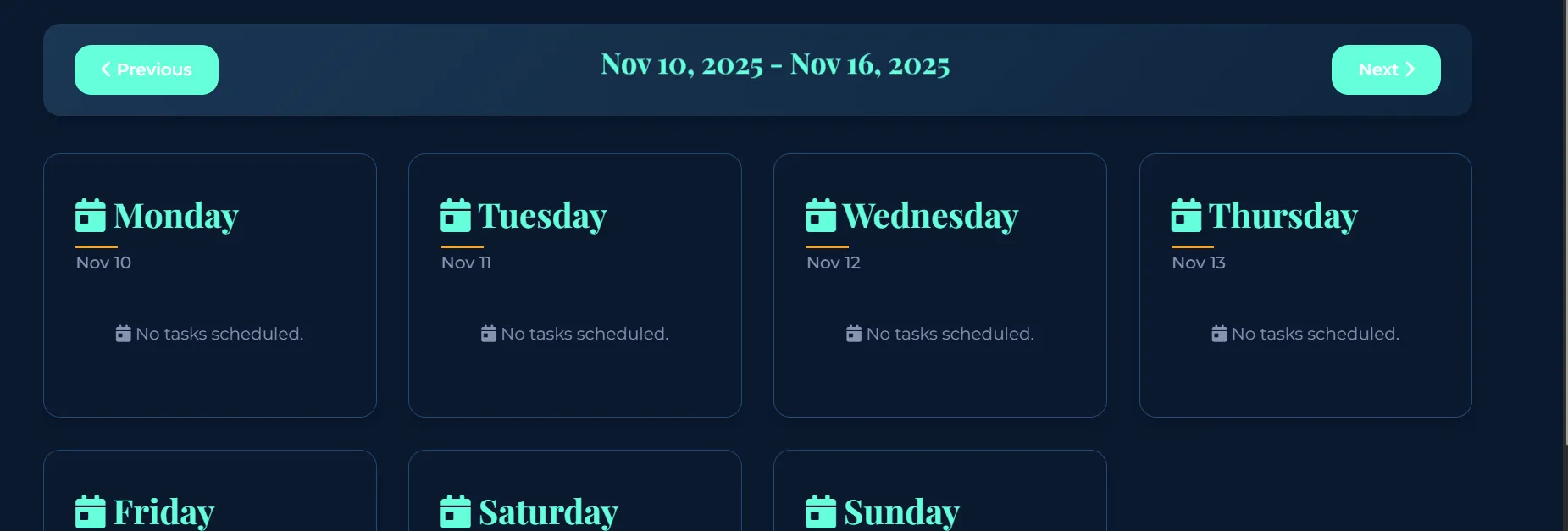 Web AppMyDay: Social Productivity OrganizerA beautifully designed productivity platform to organise daily tasks, set goals and stay consistent, with a community feed of others' plans for inspiration.by VedantOpen the live project ↗